
Palantir Technologies Inc.

Search documents
“大空头”再狙英伟达
3 6 Ke· 2025-11-27 09:12
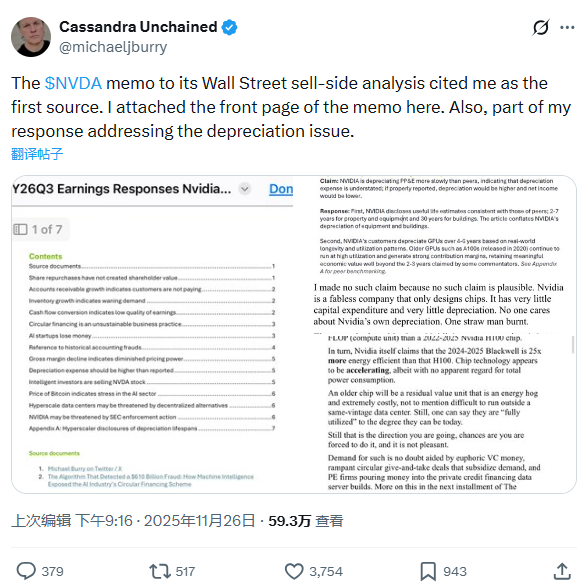
Core Viewpoint - Michael Burry, a prominent investor known for his short-selling strategies, has recently criticized Nvidia and other AI companies, claiming they are in a bubble and expressing his intention to short these stocks [1][7]. Group 1: Criticism of Nvidia - Burry has intensified his criticism of Nvidia, stating that the company's recent memo to Wall Street analysts was disappointing and filled with logical fallacies [1][2]. - He argues that the memo misrepresents his concerns, particularly regarding the depreciation of assets, which he believes is a significant issue for AI companies [5][6]. - Burry's main concern revolves around how AI companies handle depreciation accounting, suggesting that spreading costs over longer periods can artificially inflate profits and asset values [5][6]. Group 2: Market Position and Actions - Burry's hedge fund, Scion Asset Management, reportedly held $1.1 billion in put options against Nvidia and Palantir as of late September, with each option costing around $10 million [6][7]. - He has publicly stated that he is shorting both Nvidia and Palantir, indicating a bearish outlook on these companies [1][5]. - Following Nvidia's recent financial report, Burry warned that the actual demand for AI technology is significantly lower than what is currently projected, contributing to a decline in Nvidia's stock price by approximately 14% since its peak on November 3 [7]. Group 3: Broader Market Implications - Burry likens the current AI hype to the internet bubble, suggesting that Nvidia could be a precursor to a market correction in the AI sector [7]. - He highlights concerns about oversupply and insufficient demand in the AI market, which could lead to significant financial repercussions for companies involved [7].


Palantir Isn’t Just Riding the AI Boom—It’s Orchestrating It
Investing· 2025-11-27 09:09
Core Insights - The article provides a comprehensive market analysis of Palantir Technologies Inc, highlighting its recent performance and strategic positioning in the technology sector [1] Group 1: Company Performance - Palantir Technologies reported a revenue increase of 20% year-over-year, reaching $1.5 billion in the last fiscal year [1] - The company has seen a significant rise in government contracts, contributing to 60% of its total revenue, indicating strong demand for its data analytics solutions [1] - The stock price of Palantir has experienced volatility, with a recent decline of 15% over the past quarter, attributed to broader market trends and investor sentiment [1] Group 2: Market Positioning - Palantir is strategically focusing on expanding its commercial sector presence, aiming to increase the share of commercial revenue from 40% to 50% over the next two years [1] - The company is investing heavily in research and development, with a budget allocation of $300 million for innovative product offerings in the upcoming year [1] - Partnerships with key industry players are being pursued to enhance its market reach and technological capabilities, which is expected to drive future growth [1]


“大空头 vs 英伟达”论战继续!“大空头”逐条反驳英伟达回应:不敢相信这来自全球市值最高公司
华尔街见闻· 2025-11-27 07:54
Core Viewpoint - The ongoing conflict between Michael Burry, known as the "Big Short," and Nvidia highlights concerns over the AI industry's potential bubble and the company's accounting practices [1][3][12]. Group 1: Burry's Critique - Burry criticized Nvidia's internal memo as disappointing and filled with "strawman arguments," claiming it misrepresented his criticisms [1][3]. - He emphasized that he never questioned Nvidia's depreciation policy, arguing that as a chip design company, its capital expenditure is minimal, making depreciation irrelevant [4][5]. - Burry's focus is on the future obsolescence of new chips, suggesting that they may become functionally outdated between 2026 and 2028 [4][5]. Group 2: Accounting Practices and Risks - The core of Burry's argument revolves around the accounting practices of AI companies, particularly regarding the depreciation policies of hyperscalers that purchase AI chips [7]. - He warned that extending the useful life of chips and servers for accounting purposes could misrepresent profits and asset values, especially given the rapid technological advancements in AI [7]. - Burry referenced Microsoft CEO Satya Nadella's comments about slowing down data center construction due to concerns over overbuilding for a generation of AI chips [7]. Group 3: Market Context and Positioning - Burry disclosed that he continues to hold put options against Nvidia and Palantir, indicating his bearish outlook on these AI companies [3][10]. - His asset management firm, Scion Asset Management, reported holding put options with a nominal value of $1.1 billion, but the actual cost was approximately $10 million each, providing a clearer picture of his investment scale [10]. - The market has shown increased scrutiny of AI-related companies, with Nvidia's stock dropping about 14% since its peak on November 3, reflecting changing investor sentiment [3][10]. Group 4: Nvidia's Defense - In response to criticisms, Nvidia distributed a seven-page memo to Wall Street analysts, addressing allegations of accounting fraud and AI bubble concerns [12][13]. - The memo clarified that Nvidia's business is economically sound, with transparent reporting that does not compare to historical accounting fraud cases [12]. - Nvidia defended its depreciation practices, stating that customers typically set the depreciation period for GPUs at 4 to 6 years, aligning with actual usage [13].
2026 年展望:欧洲与跨区域展望 —— 关注赢家与落后者的轮动延续》-Year Ahead 2026 - Europe and Cross-Regional Outlook_ Look for winners-laggards rotation to continue. Wed Nov 26 2025
2025-11-27 05:43
Global Markets Strategy 26 November 2025 J P M O R G A N This material is neither intended to be distributed to Mainland China investors nor to provide securities investment consultancy services within the territory of Mainland China. This material or any portion hereof may not be reprinted, sold or redistributed without the written consent of J.P. Morgan. Year Ahead 2026 - Europe and Cross-Regional Outlook Look for winners-laggards rotation to continue Equity Strategy Mislav Matejka, CFA AC (44-20) 7134-97 ...
木头姐重磅发声:AI根本不是泡沫,未来十年最大财富机会才刚开始
3 6 Ke· 2025-11-27 04:46
Group 1 - The core argument is that the current AI wave is not a bubble but rather the early stage of the largest technological revolution in human history, similar to the early internet era in 1995 [3][5][9] - The number of global AI chatbot users is expected to explode to 4 to 5 billion by 2030, indicating a fivefold increase in the user base [6][7] - The annual revenue of AI foundational model companies is currently around $30 billion, with potential monetization scaling to approximately $1.5 trillion over the next decade [3][7] Group 2 - AI is seen as a catalyst for accelerating four other major innovation platforms: robotics, energy storage, blockchain, and multi-omics sequencing, potentially pushing global GDP growth to unprecedented levels of 7% to 8% [4][23] - The current market is characterized by a significant demand-supply gap, with AI delivery capabilities expected to grow by 50 times, supporting existing valuations [5][6][10] - The historical context shows that the current phase is different from past bubbles, as the technology is now mature and ready for widespread application [8][9] Group 3 - The discussion highlights the challenges of high valuations in the AI sector, emphasizing the need for companies to demonstrate revenue growth and profitability to justify their market positions [10][12] - Companies like OpenAI and Anthropic are pursuing different paths to profitability, with OpenAI focusing on consumer markets and Anthropic on B2B applications [13][14] - The shortage of chips and electricity is creating physical limitations on the expansion of AI infrastructure, indicating that the current situation is not merely speculative [16][17] Group 4 - The integration of AI with other platforms is expected to create significant economic opportunities, with the autonomous vehicle market projected to grow substantially [18][22] - The potential for AI to drive down costs in various sectors, including drug development, is highlighted as a transformative factor for the economy [22][23] - The discussion emphasizes the importance of asset allocation in light of disruptive innovations, suggesting that investors need to be aware of the risks and opportunities across different asset classes [24][25]

“大空头 vs 英伟达”论战继续!“大空头”逐条反驳英伟达回应:不敢相信这来自全球市值最高公司
美股IPO· 2025-11-27 03:38
Core Viewpoint - Michael Burry criticizes Nvidia's internal memo as disappointing and filled with "straw man arguments," emphasizing that the real risk lies in the potential asset write-downs faced by Nvidia's customers due to rapid technological obsolescence [1][3][5]. Group 1: Burry's Critique - Burry continues to hold put options on Nvidia and Palantir, each valued at approximately $10 million, indicating his bearish outlook on these AI companies [5][12]. - He argues that Nvidia's memo misrepresents his criticisms, particularly regarding depreciation policies, stating that he never questioned Nvidia's own asset depreciation [7][9]. - Burry highlights the risk of asset write-downs for companies extending the useful life of AI chips, warning that rapid technological advancements could render these assets obsolete [9][10]. Group 2: Nvidia's Response - Nvidia distributed a seven-page memo to Wall Street analysts to counter criticisms, asserting that its accounting practices are robust and transparent, with no comparison to historical accounting frauds [14]. - The company claims that its customers typically depreciate GPUs over four to six years, aligning with actual usage, countering claims of a two to three-year lifespan [15]. - Nvidia refutes allegations of circular financing, stating that its strategic investments in Q3 amounted to $3.7 billion, a small fraction of its revenue, and calls such claims baseless [16]. Group 3: Market Context - Following Burry's warnings and the onset of earnings season, Nvidia's stock has declined approximately 14% from its peak on November 3, reflecting a shift in investor sentiment towards AI-related companies [5][13]. - The ongoing debate about whether AI represents a revolutionary advancement or a speculative bubble has intensified, with Palantir's stock also experiencing a 20% drop from recent highs [13].
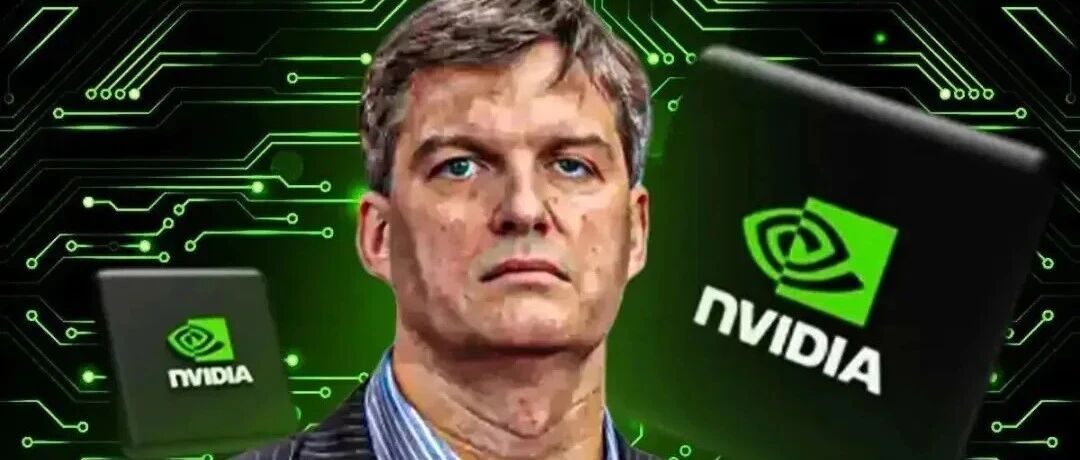
“大空头”伯里回应英伟达备忘录:仍持有其看跌期权!英伟达对他的反驳“虚伪透顶,令人失望”
Sou Hu Cai Jing· 2025-11-27 03:05
伯里在一篇题为"独角兽和蟑螂:幸运的欺诈"的帖子中写道,他无法相信英伟达的回应来自世界上最有 价值的上市公司。他说,这份文件包含了"一个又一个稻草人(偷换概念)",整个备忘录"读起来几乎像一 个骗局"。他从未暗示英伟达正在拖延其物业、工厂和设备(PP&E)的折旧,因为它主要是一家资本支出 最低的芯片设计公司,而不是一家制造商。 伯里补充说,英伟达对他的反驳"虚伪透顶,令人失望"。 他在最新的帖子中披露,他已经做空了这家 芯片制造商和另一家人工智能宠儿:"我继续持有Palantir和英伟达的看跌期权,这两家公司的看跌期权 将在下次讨论。" 【免责声明】本文仅代表作者本人观点,与和讯网无关。和讯网站对文中陈述、观点判断保持中立,不 对所包含内容的准确性、可靠性或完整性提供任何明示或暗示的保证。请读者仅作参考,并请自行承担 全部责任。邮箱:news_center@staff.hexun.com 格隆汇11月27日|电影《大空头》原型人物迈克尔·伯里加大了对英伟达和其他人工智能巨头的攻击, 并透露他正在做空英伟达和Palantir。 当地时间周二,伯里在他新推出的付费通讯Substack上发帖,指出 英伟达最近给华尔 ...

Dan Ives Once Again Rejects AI Bubble Fears, Calls Microsoft A 'Table-Pounder' Pick And Highlights Google's AI Tailwinds As Key Evidence
Yahoo Finance· 2025-11-27 02:31
Core Viewpoint - The AI market is still in its early growth stages and is not a bubble, with expectations for continued tech bull market for another two years [1][2]. Company Insights - Alphabet Inc. has seen significant benefits from AI developments, with Class A shares up 70.74% and Class C shares up 69.77% year-to-date [4]. - Apple Inc.'s partnership with Google is considered crucial for its AI strategy, particularly through the Gemini partnership [5]. - Microsoft Corp is highlighted as a top pick due to its strong position in cloud and enterprise AI services, with Q1 revenue rising 18% year-over-year to $77.7 billion, and cloud revenue reaching $49.1 billion, up 26% year-over-year [6][7]. - Palantir Technologies is noted for its real-world AI applications, despite valuation concerns [7]. Industry Developments - The US government has initiated the Genesis Mission, a program aimed at unifying federal data and advanced AI to accelerate breakthroughs in various sectors including medicine, defense, and energy [8].


“大空头 vs 英伟达”论战继续!“大空头”逐条反驳英伟达回应:不敢相信这来自全球市值最高公司
Hua Er Jie Jian Wen· 2025-11-27 01:08
Core Viewpoint - The ongoing conflict between Michael Burry, known as the "Big Short," and NVIDIA is intensifying, with Burry criticizing NVIDIA's internal memo as disappointing and filled with straw man arguments [1][3]. Group 1: Burry's Critique - Burry claims that NVIDIA's memo misrepresents his criticisms, addressing points he never made, particularly regarding the company's depreciation policies [5]. - He emphasizes that he has never questioned NVIDIA's fixed asset depreciation policy, stating that the company is primarily a chip designer with minimal capital expenditure [5]. - Burry warns that the rapid technological advancement in AI chips could lead to significant asset write-down risks for companies extending depreciation periods [8]. Group 2: Market Reaction and Positioning - Following Burry's criticisms, NVIDIA's stock has declined approximately 14% from its peak on November 3, indicating a shift in investor sentiment towards AI-related companies [2][11]. - Burry continues to hold put options against NVIDIA and Palantir, signaling his bearish outlook on these AI companies [3][10]. - The market has shown increased scrutiny of AI companies, with Palantir's stock also dropping 20% from recent highs, despite significant year-to-date gains [11]. Group 3: NVIDIA's Defense - In response to the criticisms, NVIDIA distributed a seven-page memo to Wall Street analysts, aiming to refute allegations of accounting fraud and circular financing [12]. - The company asserts that its depreciation practices align with industry standards, with customers typically depreciating GPUs over 4-6 years [14]. - NVIDIA emphasizes its leading position in the AI market, claiming to be the only company capable of running all AI models across various computing scenarios [12].
“制造+算力”或成破局关键!韩国现代集团:AI将助推美国造船业复兴
智通财经网· 2025-11-27 00:08
Group 1 - The core viewpoint is that HD Hyundai believes deploying AI can accelerate the revival of the U.S. shipbuilding industry by combining South Korea's manufacturing expertise with the U.S.'s computational capabilities [1] - South Korea has committed to investing $150 billion to revitalize the nearly stagnant U.S. shipbuilding industry, which is a key part of a broader trade agreement aimed at strengthening ties between the two countries [1] - Aerin Jungmin Lee, head of the AI strategy team at HD Hyundai, emphasizes that leveraging U.S. computational resources will significantly speed up research processes, including model development and processing, ultimately laying the foundation for building smart shipyards [1] Group 2 - AI is seen as a crucial solution to the long-term labor shortage in the shipbuilding industry, with challenges such as skilled labor shortages, inflation, and weak supply chains being highlighted [2] - HD Hyundai has introduced an AI translation tool to facilitate real-time communication among 12,000 workers from 17 countries across its three shipyards, and plans to launch the "Shipbuilding AI Master Agent" system to enhance efficiency and retain knowledge after experienced engineers retire [2] - Aerin Jungmin Lee believes that AI will accelerate global industrial restructuring and can address structural limitations not only within the company but also across South Korea, while also helping to compete with China and mitigate external uncertainties, including tariffs [2]