
百度

Search documents
独家丨新奥新智CEO郭继军离职,任庚接任
雷峰网· 2025-02-28 00:16
在职期间,郭继军凭借在To B领域多年的经验沉淀,帮助阿里云大幅提升了项目交付质量和ISV管理能力,减 轻了不少坏账压力。2022年下半年郭继军从阿里云离开后,加入新奥集团,可惜其在新奥的时间并不长。 令人意外的是任庚接任了这一职务。任庚此前分别在华为、阿里就职过,2015年加入阿里集团,先负责出 海、跨境等业务,后升至阿里云中国区总裁。在阿里云高管体系内,任庚算是比较年轻的80后高管,2022年 就曾向公司请辞,经时任阿里集团董事局主席张勇挽留续任,2023年底离开,去年曾有传闻面试了百度,但 因薪酬方面原因,双方未达成一致。而今,任庚的下家也终于尘埃落定。 想了解更多关于云大厂的一手信息和内幕故事,欢迎加入最劲爆的雷峰"云厂情报群"。群内不定期分享大厂 内幕、领导避坑、优质岗位等一手信息,本群限额100人,入群可添加作者微信 mindy1857 交流。 // 近期热门文章 " 云江湖的圈子,小得转个身就能遇见老同事? " 作者丨胡敏 编辑丨周蕾 深圳某云大厂赋能云团队解散,一场「补贴造云」运动失败? 雷峰网从多处信源获悉,新奥新智CEO兼总裁郭继军于近期离职,目前暂未入职新公司,而接替其职位的是 任庚。 ...


小米王炸!SU7 Ultra 52.99万元,让喜欢的人买得起;特斯拉中国版FSD测试屡次翻车;影石创新IPO申请获证监会批复
雷峰网· 2025-02-28 00:16
Group 1 - Xiaomi launched its high-end car model SU7 Ultra at a starting price of 529,900 yuan, significantly lower than the previous price of 814,590 yuan, and received over 6,900 orders within 10 minutes [3][4] - Xiaomi's stock price reached a historical high of 58.7 HKD per share before closing at 53.1 HKD, with a market capitalization nearing 1.5 trillion HKD [4] - Xiaomi's founder Lei Jun became the new richest person in China, with a net worth close to 440 billion yuan, primarily from his 24.2% stake in Xiaomi [4][5] Group 2 - Tesla's "China version" of FSD faced criticism after a test driver reported multiple traffic violations, highlighting that the driver remains responsible for any infractions [7][8] - Horizon Robotics was recognized by the capital market and included in the Hang Seng Technology Index and the Hang Seng Composite Index, marking a significant milestone for the company [10] - Aston Martin announced a 49% year-on-year drop in sales in the Chinese market and plans to lay off 5% of its workforce due to a 400% increase in pre-tax losses [26] Group 3 - Nvidia's GPU sales surged due to increased demand for the DeepSeek model, with prices for graphics cards rising significantly [14] - ByteDance's AI IDE, Trae, is set to launch in mainland China, offering features like AI-assisted coding and project generation [15] - Baidu and CATL announced a strategic partnership to collaborate on autonomous driving and digital intelligence [16] Group 4 - Alibaba's spring recruitment for 2026 includes over 3,000 positions, with nearly half related to AI, reflecting a strong focus on AI development [17] - Maimai announced the integration of the DeepSeek-R1 model to enhance recruitment efficiency, boasting 120 million users [18] - Cainiao implemented a long-term cash incentive plan for employees, replacing stock options with cash rewards [19] Group 5 - YingShi Innovation received approval for its IPO on the Sci-Tech Innovation Board, marking a significant entry into the capital market for the smart imaging sector [20] - Intel appointed Wang Zhizong as the Vice Chairman of Intel China, aiming to strengthen its management team [21] - Tencent's new product "Yuanbao" has integrated the full version of DeepSeek, launching a large-scale advertising campaign [22]

腾讯,重磅发布!
证券时报· 2025-02-27 12:47
Core Viewpoint - Tencent has officially launched the new generation fast-thinking model, Turbo S, which significantly improves response speed and efficiency compared to previous models [1][2]. Group 1: Model Features and Performance - Turbo S is designed to provide "instant responses," doubling the output speed and reducing the first-word latency by 44% compared to earlier models like DeepSeek-R1 and Hunyuan T1 [2]. - The model combines fast and slow thinking capabilities, allowing it to efficiently handle both intuitive and logical reasoning tasks, thus enhancing overall problem-solving intelligence [4][5]. - In various industry-standard benchmarks, Turbo S has demonstrated competitive performance against leading models such as DeepSeek-V3, GPT-4o, and Claude, particularly excelling in knowledge, mathematics, and reasoning tasks [5][6]. Group 2: Cost and Accessibility - The pricing for Turbo S has been significantly reduced, with input costs at 0.8 yuan per million tokens and output costs at 2 yuan per million tokens, making it more accessible compared to previous versions [7]. - Developers and enterprise users can access Turbo S through APIs on Tencent Cloud, while ordinary users will gradually experience it through the Tencent Yuanbao platform [2][9]. Group 3: Integration and Market Position - Tencent has integrated DeepSeek models into over ten of its products, enhancing functionalities across various applications such as WeChat, QQ Music, and Tencent Docs [10]. - The integration of DeepSeek has positioned Tencent as a key player in the AI application sector, leveraging its extensive user base and ecosystem to gain a competitive edge [11][12]. - Following the integration of DeepSeek-R1, Tencent Yuanbao quickly rose to become the second most downloaded free app in the Apple App Store in China, surpassing competitors [10]. Group 4: Strategic Implications - The emergence of DeepSeek has reshaped the competitive landscape of the AI industry, with Tencent focusing on AI applications while Alibaba leads in AI infrastructure [11]. - Tencent's strategy of combining its Hunyuan models with DeepSeek is aimed at building a robust competitive advantage in the AI application space, potentially leading to significant growth in its stock price and market valuation [11][12].


轧空?
Datayes· 2025-02-27 12:30
Core Viewpoint - The article discusses the recent volatility in Xiaomi's stock price, highlighting the significant role of foreign capital in driving the stock's performance, while domestic investors have been reducing their holdings [1][5]. Group 1: Xiaomi Stock Analysis - Xiaomi's stock experienced a sharp fluctuation, rising by 4% to a peak of 58.7 HKD before dropping by 8% to a low of 51.4 HKD [1]. - Over the past month, foreign banks like HSBC and Citibank have been the largest net buyers of Xiaomi shares, acquiring over 200 million shares combined, while domestic investors have sold approximately 52.5 million shares [1]. - The current short interest in Xiaomi remains high, with 349 million shares still shorted, indicating a potential short squeeze scenario as the stock price continues to rise [1]. Group 2: Market Trends and Sector Performance - The A-share market showed mixed performance, with the Shanghai Composite Index rising by 0.23%, while the Shenzhen Component and ChiNext Index fell by 0.26% and 0.52%, respectively [8]. - The total market turnover reached 20,422 billion CNY, an increase of 722 billion CNY from the previous day, indicating heightened trading activity [8]. - The consumer sector, particularly food and beverage stocks, saw significant gains, with several stocks hitting the daily limit up [8]. - The financing balance in the A-share market has increased significantly, reaching a total of 1,910.208 billion CNY, the highest since September 2021, reflecting strong bullish sentiment [5][6]. Group 3: Industry Insights - The top ten industries for financing purchases include electronics, computers, machinery, and electric power equipment, while non-bank financials and electronics lead in short selling [6]. - The market's preference for high-growth sectors has been bolstered by positive news regarding AI technology and significant investments from major companies like Alibaba [6]. - The upcoming "Two Sessions" in China is expected to bring policies aimed at boosting consumption, which could further influence market dynamics [8].

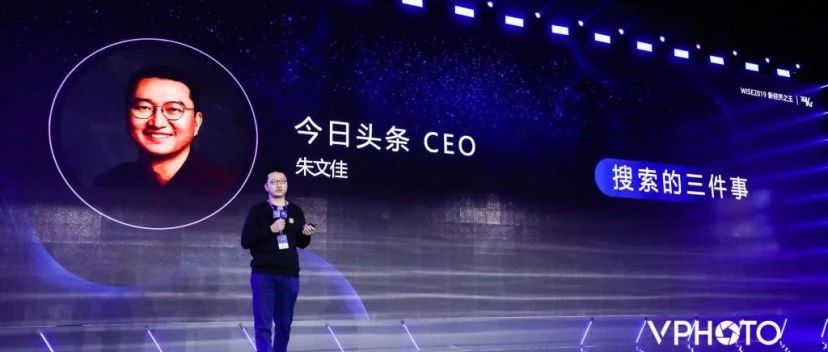
Z Waves|朱文佳:被“半架空”的字节Seed掌舵人,百度系在字节晋升最快的高管,今日头条最年轻的负责人
Z Finance· 2025-02-27 11:36
Core Viewpoint - The article highlights the significant role of Zhu Wenjia in ByteDance's AI development, particularly in leading the Seed department and the creation of the Doubao large model, amidst challenges and competition in the AI landscape [1][2][3]. Group 1: Zhu Wenjia's Background and Role - Zhu Wenjia, previously a key figure at Baidu, joined ByteDance in 2015 and quickly rose to prominence, becoming the CEO of Toutiao in 2019 [4][5]. - Under his leadership, Toutiao experienced a notable increase in daily active users (DAU), reaching 140 million by early 2020, reflecting a growth rate of 7.09% compared to February [9]. - Zhu's focus on integrating search and recommendation engines was pivotal for Toutiao's evolution into a comprehensive information platform [8]. Group 2: Challenges and Adjustments - Zhu faced challenges when Dr. Wu Yonghui, former VP at Google DeepMind, joined ByteDance, leading to structural changes in the large model team, which resulted in Zhu being partially sidelined [2][25]. - Despite setbacks, Zhu's expertise in AI and technology management remains crucial as ByteDance navigates the competitive AI landscape [23][25]. Group 3: AI Development and Achievements - In 2023, ByteDance established its first large model research team, with Zhu at the helm, leading to the launch of the "Yunque" model and the formation of the Flow department focused on AI applications [12][15]. - By November 2024, ByteDance's Doubao product achieved nearly 60 million monthly active users, surpassing competitors like Baidu's Wenxin Yiyan by approximately 50 million users, showcasing ByteDance's dominance in the AI sector [18][19]. Group 4: Future Prospects - The article suggests that Zhu Wenjia's transition towards model application indicates a strategic shift for ByteDance as it adapts to the evolving AI landscape, with expectations for continued innovation and user engagement [25][27]. - The company is positioned to leverage its extensive user data across various platforms, enhancing the synergy between its products and AI capabilities [10][11].
DeepSeek开源打碎了谁的饭碗
虎嗅APP· 2025-02-27 10:17
Core Viewpoint - The open-sourcing of DeepSeek is creating significant opportunities for mid-sized AI companies and domestic chip manufacturers, while posing challenges for established large model companies known as the "six little tigers" [1][4][8]. Group 1: Impact of DeepSeek Open-Sourcing - Many mid-sized private enterprises are rapidly transitioning to DeepSeek's base model, with over half of existing clients making the switch [1]. - The open-sourcing initiative has sparked a wave of enthusiasm in AI application entrepreneurship, leading to a twofold increase in collaboration requests for domestic chip companies [1]. - The "open-source week" plan by DeepSeek, which began on February 21, aims to share several code repositories, enhancing transparency and innovation in AI [3]. Group 2: Reactions from Industry Players - Internal debates are ongoing among the "six little tigers" regarding the implications of open-sourcing, with concerns that it could disrupt their business models [2]. - The open-source trend has prompted even traditionally closed-source companies like Baidu to consider open-sourcing their models [3]. - Industry experts suggest that while DeepSeek's innovations benefit application and chip companies, base model vendors face significant challenges [3][7]. Group 3: Market Dynamics and Future Prospects - The open-sourcing of DeepSeek is expected to benefit hardware and chip manufacturers, allowing them to engage more in training and inference businesses [7]. - The algorithms and code optimizations shared during the open-source week are designed to maximize GPU performance, enabling smaller developers to build high-performance models at lower costs [7]. - Despite the advantages, many companies may struggle to implement DeepSeek's offerings without additional support from service layer companies [7][8]. Group 4: Broader Implications - The open-source movement initiated by DeepSeek is seen as a catalyst for a broader shift in the AI ecosystem, potentially leading to a more collaborative environment [10]. - The participation of DeepSeek in major developer conferences indicates a strategic move to solidify its position in the market and expand its influence [10]. - As more companies integrate DeepSeek, questions arise regarding the commercialization and sustainability of its services [10].

UCL强化学习派:汪军与他的学生们
雷峰网· 2025-02-27 10:15
Core Viewpoint - The article discusses the evolution and significance of reinforcement learning (RL) in China, highlighting key figures and their contributions to the field, particularly focusing on Wang Jun and his influence on the development of RL research and education in China [2][46]. Group 1: Historical Context and Development - Wang Jun's journey in AI began with information retrieval and recommendation systems, where he achieved significant academic recognition [4][8]. - His transition to reinforcement learning was influenced by his experiences in advertising, where he recognized the parallels between decision-making in advertising and RL principles [12][14]. - The establishment of the RL China community marked a pivotal moment in promoting RL research and education in China, addressing the lack of resources and formal education in the field [49][50]. Group 2: Contributions and Innovations - Wang Jun and his students have made substantial contributions to RL, including the development of SeqGAN and IRGAN, which integrate RL with generative adversarial networks for improved performance in various applications [23][24]. - The introduction of multi-agent systems in RL research has been a significant focus, with applications in complex environments such as advertising and gaming [27][28]. - The establishment of MediaGamma allowed for practical applications of RL in real-time advertising, showcasing the commercial viability of RL algorithms [17][18]. Group 3: Educational Initiatives and Community Building - The formation of RL China has facilitated knowledge sharing and collaboration among researchers and students, significantly enhancing the learning environment for RL in China [49][52]. - The publication of "Hands-On Reinforcement Learning" has provided accessible educational resources, bridging the gap between theory and practice for students [53]. - Wang Jun's mentorship has fostered a new generation of RL researchers, emphasizing the importance of exploration and innovation in academic pursuits [26][43]. Group 4: Future Directions and Challenges - The integration of RL with large models and embodied intelligence represents a promising frontier for future research, aiming to address the challenges of generalization across different tasks and environments [56][62]. - The ongoing exploration of RL applications in real-world scenarios, such as robotics and automated decision-making, highlights the potential for RL to impact various industries significantly [61][62]. - Despite setbacks in some projects, the commitment to advancing RL research and its applications remains strong among Wang Jun and his students, indicating a resilient and forward-looking approach to the field [56][62].

DeepSeek官宣,猛降75%!英伟达下场,性能狂飙25倍
Zheng Quan Shi Bao Wang· 2025-02-26 23:45
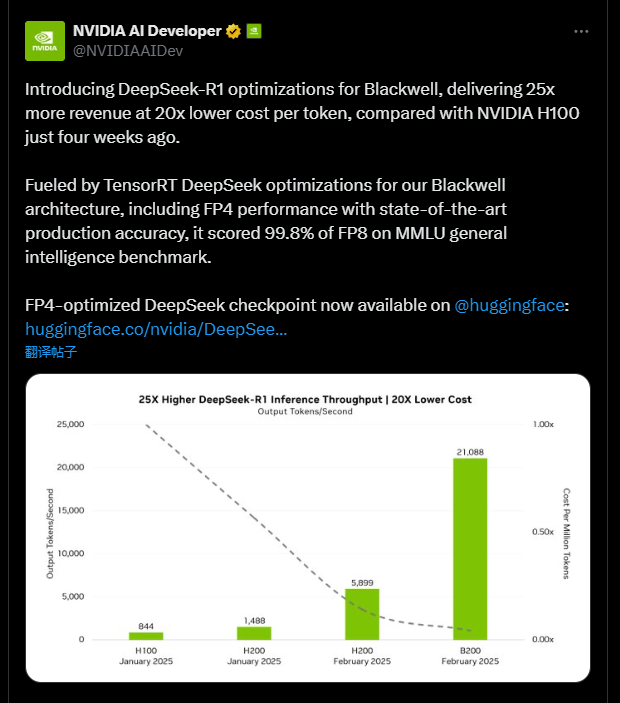
Core Viewpoint - The AI large model sector is experiencing a new wave of price reductions, driven by competition and advancements in algorithms and computing cost control [4][5]. Group 1: Price Reductions and Promotions - DeepSeek has launched a time-limited discount for its API calls, reducing DeepSeek-V3 to 50% of its original price and DeepSeek-R1 to 25% [2]. - Major companies like ByteDance, Alibaba Cloud, Tencent, and iFlytek have announced significant price cuts for their models, with ByteDance's Doubao visual understanding model dropping to 0.003 yuan per thousand tokens, an 85% reduction from the industry average [4]. - Free service strategies are being adopted by several firms, with Baidu's Wenxin Yiyan and OpenAI's ChatGPT offering free access starting April 1 [4]. Group 2: Technological Advancements - NVIDIA has open-sourced a new optimization scheme based on the Blackwell architecture, achieving a 20-fold reduction in single token costs and a 25-fold performance increase compared to the previous H100 model [2][3]. - The new FP4 quantization model reaches 99.8% performance of FP8 models in the MMLU general intelligence benchmark, showcasing significant advancements in model efficiency [3]. Group 3: Market Reactions and Investments - The A-share market has seen a surge in large model concept stocks, with 69 companies experiencing an increase, and a net inflow of 90.02 billion yuan in leveraged funds [5]. - Notable stock increases include Capital Online rising by 13.71% and several others by over 5% [5]. - China Unicom has optimized its "adaptive slow thinking" model for DeepSeek series, saving approximately 30% in inference computation [5]. Group 4: Industry Dynamics - The open-sourcing of DeepSeek's cost-reduction methodology is expected to lower training and inference costs across the industry, stimulating rapid expansion of AI applications [5]. - The competitive landscape is intensifying, with companies focusing on algorithm optimization and iteration as key strategies alongside price reductions [4].

中信建投证券2025年度-人工智能-投资策略会
2025-02-26 16:22
Summary of Key Points from the Conference Call Industry Overview - The conference focused on the **Artificial Intelligence (AI)** and **robotics** industry, particularly the advancements in humanoid robots and their market potential [1][4][11]. Core Insights and Arguments 1. **Rapid Iteration of AI Performance**: The emergence of large models and improvements in training algorithms have led to rapid iterations in AI performance, akin to Moore's Law, enhancing learning and adaptability [1][3]. 2. **Embodied Intelligence**: A significant direction in AI development is embodied intelligence, which involves interaction with the physical world for perception and decision-making. Humanoid robots are key carriers of this intelligence, with potential market sizes surpassing automotive and consumer electronics [1][4]. 3. **Advancements in Robotics Technology**: Recent progress in robotics includes faster model iterations and expanded application scenarios, laying a foundation for market growth [1][7]. 4. **Dual-System Architecture**: The application of dual-system architecture in humanoid robots has improved action fluidity and training efficiency, enabling better adaptability to new objects through zero-shot learning capabilities [1][8][9]. 5. **Market Dynamics**: The humanoid robot industry is characterized by intense competition, with various companies making strides in human-robot interaction and training, while supply chain costs are rapidly decreasing, accelerating commercialization [1][11][12]. Additional Important Insights 1. **Impact of AI on Smart Manufacturing**: AI's rapid development has profound implications for the smart manufacturing sector, necessitating higher efficiency in data center infrastructure due to increased computational demands [2]. 2. **Commercialization of AI**: The year 2025 is expected to see accelerated commercialization of AI, with a shift from pre-training to reasoning models, driving rapid growth in computational power demand [40][41]. 3. **Cost Reduction in Supply Chains**: The decline in component prices, with some key parts dropping to around 1,000 RMB, is facilitating earlier-than-expected large-scale production in the humanoid robot sector [12][13]. 4. **Future Market Potential**: The humanoid robot market is projected to grow significantly, with mass production leading to lower prices, making it feasible for households to own humanoid robots [4][13]. 5. **Collaboration and Empowerment**: Companies are increasingly collaborating with those possessing large model capabilities to enhance automation and intelligence in their products [4]. Companies to Watch - Notable companies in the humanoid robot space include **Tesla**, **EX**, **Zhiyuan Robotics**, and **UBTECH**, all of which have plans for mass production [4][19]. - **Huichuan Technology** and **Estun** are also highlighted for their transitions into humanoid robotics [19]. Investment Opportunities - Beyond humanoid robots, investment opportunities in the **engineering machinery sector** are emphasized, particularly companies leveraging AI for enhanced capabilities [20]. Conclusion The conference highlighted the transformative potential of AI and robotics, particularly in the humanoid robot sector, with significant advancements in technology, market dynamics, and investment opportunities anticipated in the coming years.
国内云厂启动资本开支-推理算力需求研讨
2025-02-26 16:22
Summary of Conference Call Records Industry Overview - The conference call discusses the domestic cloud computing industry, focusing on AI inference capabilities and the demand for inference cards, particularly the A100 and H20 models [1][3][4]. Key Points and Arguments Inference Demand and API Usage - Alibaba's Bai Lian platform and Dou Bao have surpassed 1 billion daily API calls, requiring significant inference card support, estimated at 50,000 to 60,000 A100 cards or about 7,000 H20 cards for 1 billion calls [1][3]. - The demand for inference computing power is primarily driven by AI applications, with 90% of the data center's computing power attributed to inference tasks [1][4]. - The expected demand for inference cards in China is projected to reach approximately 3 million by 2025, based on daily API calls of 2.2 to 2.3 billion [8]. Capital Expenditure and Model Development - Cloud vendors are increasing capital expenditures on AI computing power, with major players like Alibaba and Dou Bao launching new models to meet the growing demand [1][4]. - The introduction of open-source models like DSS has lowered training barriers, leading to increased direct usage by enterprises and a surge in inference computing demand [1][4]. API Design and Scalability - Current API designs are capable of handling tens of millions of concurrent requests, with an average of 1,000 tokens per call, expected to increase to 1,500-2,000 tokens in the future [7][9]. - The infrastructure must be scalable to accommodate high concurrency scenarios, such as millions of online users [7]. Business Models and Profitability - The current AI software pricing model is based on the number of input and output tokens, with revenues around 10 billion to 100 billion yuan, but selling tokens alone is insufficient for significant profitability [10][11]. - Cloud vendors are focusing on providing comprehensive solutions and value-added services to capitalize on AI technology's commercial potential [10][11]. Competitive Landscape - Alibaba leads in comprehensive service capabilities, followed by ByteDance, Tencent, and Baidu, with varying strengths in infrastructure and model capabilities [27]. - Companies like Kingsoft Cloud are leveraging their CDN nodes for edge inference, indicating a competitive edge in specific sectors like gaming and finance [28]. Future Trends - The demand for AI computing power is expected to double in the coming years, driven by the introduction of new models and multi-modal applications [9]. - Companies are likely to increase capital expenditures to enhance their large model capabilities, with a focus on training rather than inference [12][13]. Hardware and Chip Adaptation - Domestic chips show good performance in inference tasks, particularly in power consumption and customized models, although they struggle in large-scale training compared to foreign products [31][32]. - The performance of inference cards is influenced by both computational and bandwidth capabilities, with a focus on achieving high processing speeds [32]. Additional Important Content - The collaboration between Apple and domestic cloud vendors is driven by the need for robust infrastructure and data security, with specific requirements for server clusters to support Apple's AI attributes [16][19]. - The trend towards localized or private deployments of large models is expected to evolve into platform-level solutions that integrate AI functionalities into enterprise software [23][24]. - The increasing demand for bandwidth due to AI applications is likely to change the revenue-sharing models between cloud vendors and telecom operators [29]. This summary encapsulates the critical insights from the conference call, highlighting the trends, challenges, and competitive dynamics within the cloud computing and AI inference landscape.

