高低切

Search documents
重视高低切消费板块投资机会,商社板块低估值高股息组合发布
Soochow Securities· 2026-03-23 04:32
Investment Rating - The report maintains an "Overweight" rating for the retail sector, emphasizing investment opportunities in both high-end and low-end consumer segments [1]. Core Insights - The retail sector is currently experiencing a weak overall sentiment, but many sub-sectors are at historically low valuation levels, providing a good safety margin for medium to long-term investments. Key segments such as gold and jewelry, travel chains, education services, and retail are noted to have core companies that have fallen below the historical 10th percentile in terms of PE-TTM ratios, indicating high investment value [5][10]. - The retail sector is characterized by companies with light asset operations and low capital expenditure needs, resulting in strong cash flows and high dividend payouts. As of March 20, 2026, several leading companies in the sector have attractive dividend yields, with some reaching as high as 10% [5][10]. - A selection of 10 recommended stocks with low valuations and high dividend yields has been identified, including companies like Shangmei Co. (PE 15.3, dividend yield 5.0%), China Oriental Education (PE 11.4, dividend yield 7.6%), and others, showcasing the potential for defensive investment strategies [5][10]. Summary by Sections Industry Trends - The report highlights that multiple sub-sectors within the retail industry are currently undervalued, with many companies showing a PE-TTM ratio below the historical 10th percentile, indicating a favorable entry point for investors [5][10]. Dividend Observations - The retail sector's companies generally maintain high dividend payout ratios due to their stable business models and strong cash flows. As of March 20, 2026, several leading firms exhibit dividend yields of 5% to nearly 10%, making them attractive for income-focused investors [5][10]. Recommended Stocks - The report lists 10 stocks that combine low valuation with high dividend characteristics, including: 1. Shangmei Co. (2145.HK): PE 15.3, dividend yield 5.0% 2. China Oriental Education (0667.HK): PE 11.4, dividend yield 7.6% 3. Action Education (605098.SH): dividend payout ratio near 100%, yield 5.6% 4. Beijing Renli (600861.SH): PE 8.9, yield 5.6% 5. Xiaomen Xiangyu (600057.SH): PE 9.2, yield 5.3% 6. Zhou Daxing (002867.SZ): yield 9.8% 7. Liufu Group (0590.HK): yield 8.6% 8. Zhou Dafu (1929.HK): yield 7.9% 9. Haidilao (6862.HK): yield 5.9% [5][10].


高低切 | 谈股论金
水皮More· 2026-03-13 10:13
Market Overview - A-shares experienced a collective pullback today, with the Shanghai Composite Index down 0.81% closing at 4095.45 points, the Shenzhen Component down 0.65% at 14280.78 points, and the ChiNext Index down 0.22% at 3310.28 points [3] - The total trading volume in the Shanghai and Shenzhen markets was approximately 2.42 trillion, a decrease of 433 billion compared to the previous day [3] Market Dynamics - The market exhibited contrasting trends in the morning and afternoon, with a low opening but a recovery in the morning, leading to a narrowing of losses. However, the afternoon saw a sharp reversal with a single downward trend [4] - Key sectors that pressured the indices included energy (represented by "three barrels of oil"), precious metals, insurance, and securities, with declines of approximately 0.96% and 0.88% respectively [4] - Agricultural Bank joined the selling pressure in the afternoon, despite a brief increase of 0.75% during the day, closing with a smaller gain of 0.30% [4] Sector Performance - Strong performance was noted in telecom operators and certain food and beverage stocks, including "two bottles of wine" [5] - The overall market saw 3647 declining stocks against 1461 advancing stocks, contrasting sharply with the morning's market dynamics [6] - The Hang Seng Index also opened lower and fell 0.98% by the close, with the Hang Seng Tech Index down 0.99%, although some major tech stocks like Alibaba and Tencent provided support [6] External Influences - The U.S. stock market experienced significant declines, closing at its lowest point of the day, which may have influenced the A-share market [7] - Oil prices remained volatile due to ongoing geopolitical tensions in the Strait of Hormuz, despite the International Energy Agency's announcement to release strategic oil reserves [7] - Upcoming U.S.-China trade talks are anticipated to set the stage for the upcoming summit between the two nations, with market participants hoping for positive outcomes [7]


刚刚!大面积涨停!三大原因!
天天基金网· 2026-01-29 09:12
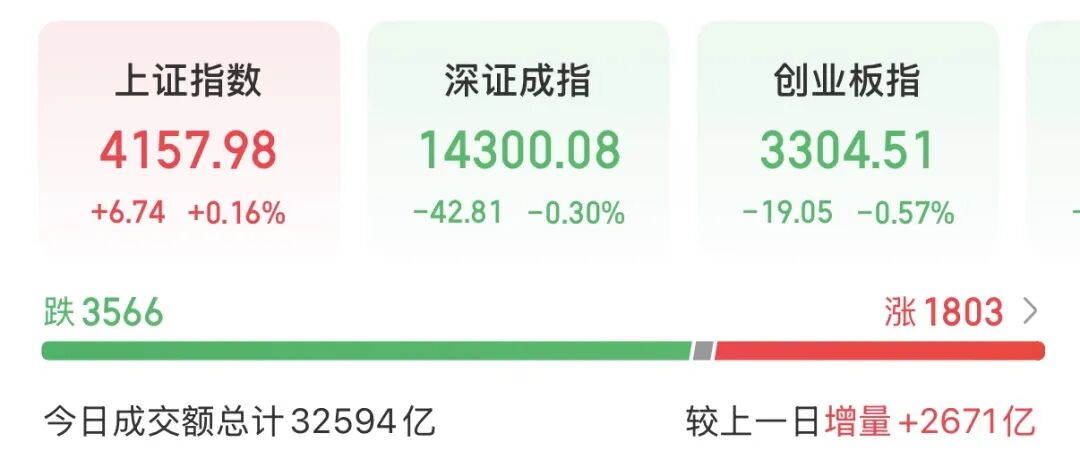
Core Viewpoint - The A-share market is experiencing a sideways trend with differentiated performance among the three major indices, while consumer stocks, particularly in the liquor sector, are showing strong activity [2][3]. Group 1: Liquor Sector Performance - The liquor sector has seen a significant surge due to three main reasons: the trading logic of recent hot sectors has been fully played out, the liquor sector is at a cyclical bottom, and there is an inherent market demand for "high-low switching" [2]. - The wholesale price of Feitian Moutai has been gradually recovering, with the price for 2025 and 2026 Moutai increasing by 20 yuan per bottle to 1620 yuan and 1610 yuan respectively [2]. - The recent trend of price increases in commodities and upstream semiconductor industries is expected to benefit the liquor sector, which is becoming a new trading expectation in the market [2]. Group 2: Market Indices and Sector Performance - As of the market close, the Shanghai Composite Index rose by 0.16%, while the Shenzhen Component Index and the ChiNext Index fell by 0.3% and 0.57% respectively [3]. - The white liquor, oil and gas extraction and services, precious metals, cultural media, and AI application sectors led the gains, while sectors like photolithography machines, semiconductors, components, and storage chips experienced adjustments [5]. Group 3: Consumer Stocks and Investment Opportunities - Consumer stocks remain active, with significant gains in the liquor sector and related concepts such as Xiaohongshu, beverage manufacturing, and retail [8]. - Institutions believe that the liquor sector is at a bottoming phase, with a clear recovery trend expected, particularly as the Spring Festival approaches in 2026, which is anticipated to boost liquor sales [11]. - Open-source Securities suggests focusing on high-quality companies in the emotional consumption theme, particularly in gold and jewelry, offline retail, and cosmetics sectors [12]. Group 4: Insurance Sector Performance - The insurance sector saw a strong rally, with China Ping An rising over 5% and New China Life Insurance reaching a historical high [14]. - Institutions view the insurance sector as being in a historically undervalued range, recommending attention to large listed insurance companies with significant competitive advantages [15]. - Donghai Securities notes that the transformation of life insurance liabilities is progressing, and there is a significant improvement in production capacity, which should be monitored [16].






午后爆发 “涨停潮”!三大原因
Zhong Guo Zheng Quan Bao· 2026-01-29 08:34
Core Viewpoint - The A-share market experienced mixed performance with consumer stocks, particularly in the liquor sector, showing strong activity, while resource stocks continued their upward trend [1][3]. Group 1: Liquor Sector Performance - The liquor sector saw a significant surge due to three main reasons: the trading logic of recent hot sectors has been fully played out, the liquor sector is at a cyclical bottom, and there is a market demand for "high-low switching" [1]. - The wholesale price of Feitian Moutai has been gradually recovering, with prices for 2025 and 2026 Moutai increasing by 20 yuan per bottle to 1620 yuan and 1610 yuan respectively [1]. - The trend of price increases in commodities and upstream semiconductor industries is expected to benefit the liquor sector, which is seen as a new trading expectation in the market [1]. Group 2: Market Indices and Stock Performance - By market close, the Shanghai Composite Index rose by 0.16%, while the Shenzhen Component Index and the ChiNext Index fell by 0.3% and 0.57% respectively [1]. - Notable individual stock performances included multiple liquor stocks hitting the daily limit, such as Jinjian Wine, Huangtai Wine, and Jinhu Wine, with significant gains observed across the sector [3][5]. Group 3: Consumer Sector Insights - The consumer sector remained active, with significant gains in liquor stocks, as well as in sectors like retail and beverage manufacturing [3]. - Analysts from CITIC Securities predict a stable sales performance for liquor during the 2026 Spring Festival, indicating a clear recovery trend for the liquor industry [5][6]. Group 4: Insurance Sector Performance - The insurance sector saw a rise, with China Ping An increasing by over 5% and other major insurers also showing gains, indicating a potential opportunity for investment in historically undervalued stocks [7][8]. - Analysts suggest focusing on large listed insurance companies with strong competitive advantages, as the sector is currently in a historically low valuation range [8][9].
读研报 | 公募基金四季报群像扫描:共识与端倪
中泰证券资管· 2026-01-27 11:32
Core Viewpoint - The recent public fund reports for Q4 2025 reveal a shift in market consensus, highlighting the contrasting trends between active and passive funds, with active fund sizes declining while passive funds see significant growth [1] Group 1: Fund Size and Redemption Trends - Active fund size decreased by 173.9 billion to 3.97 trillion, while passive fund size increased by 142.6 billion to 5.48 trillion, indicating a continued lead of passive funds over active funds [1] - Despite the decline in active fund size, the net redemption of actively managed equity funds has narrowed, suggesting that many funds have reached a "break-even" point, leading to a historical high in net outflows since 2016 [1] - The scale of funds that have not yet "broken even" is relatively limited, making it unlikely to see a repeat of the concentrated redemption wave in the second half of 2025 [1] Group 2: Overall Positioning and Stock Allocation - The overall stock position of public active equity funds decreased to 86.47%, down 0.77 percentage points from the previous quarter, indicating a trend of active reduction by fund managers [2] - The stock position in Hong Kong stocks saw a more pronounced decline, with the total scale of active fund holdings in Hong Kong stocks dropping from 19.26% to 16.23%, a decrease of 3.03% [2] Group 3: Sector Trends and Fund Characteristics - Resource sector holdings reached a historical high, increasing by 3.34% to 13.36%, marking the most significant growth among sectors [4] - The issuance of bond funds with embedded rights surged, reaching the highest quarterly issuance since 2020, with mixed bond secondary fund scales growing by 260.3 billion, indicating a shift towards lower-risk investments [4] - A notable "high-low switch" in active fund allocations was observed, reflecting a negative correlation between valuation percentiles and overweight ratios, indicating a strategic shift in fund management [4] - The number of stocks held by fund managers increased to 2,467, up from 2,379, suggesting a rise in the diversity of holdings among fund managers [4][5]

沪指探底回升再收十字星,止跌企稳了吗?
Sou Hu Cai Jing· 2026-01-21 01:01
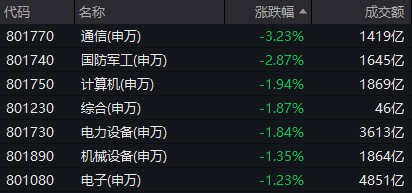
Market Overview - On January 20, the A-share market experienced adjustments, with the Shanghai Composite Index briefly falling below 4100 points before closing at 4113.65, a slight decrease of 0.01% [1] - The Shenzhen Component Index and the ChiNext Index also saw declines, closing down 0.97% and 1.79% respectively [1] Sector Performance - According to Wind data, previously strong sectors such as telecommunications, computers, and electronics led the market decline on January 20 [2] - The telecommunications sector fell by 3.23% with a trading volume of 141.9 billion, while the defense and military industry dropped by 2.87% with a volume of 164.5 billion [3] - The computer sector decreased by 1.94% with a trading volume of 186.9 billion, and the electronics sector fell by 1.23% with a volume of 485.1 billion [3] Market Dynamics - Analysts attribute the market adjustment to two main factors: the impact of counter-cyclical policy adjustments and a shift in market style [5] - Recent trading days have shown a significant decrease in trading volume, with three out of the last four days recording less than 3 trillion in trading volume [5] - The market is experiencing a "high-low switch," with funds moving towards traditional sectors as earnings forecasts for listed companies are set to peak [5] Technical Analysis - The Shanghai Composite Index formed a doji candlestick pattern, indicating potential stabilization, but the market remains cautious with a focus on defensive strategies [5] - Analysts suggest that as long as the index does not fall below 4080 points, there is a likelihood of a resumption of upward momentum [6] - The average price-to-earnings ratios for the Shanghai Composite and ChiNext are currently above their three-year median levels, indicating suitability for medium to long-term investments [6] Earnings Season Impact - As earnings forecasts enter a peak disclosure period, the correlation between stock prices and earnings is expected to increase significantly [7] - The market may undergo structural adjustments based on fundamentals, with previous hot sectors facing earnings validation while some low-priced, high-quality stocks may attract new capital [7]
第三次突破60日线,这次能行吗?
Jin Rong Jie· 2025-12-22 11:19
Group 1 - The A-share market has shown a strong performance with four consecutive days of gains, indicating potential for continued strength after this period [1] - The short positions have decreased significantly, suggesting that the recent bullish trend has a strong impact, and the strength of the market surpasses previous instances when it crossed the 60-day moving average [1] - Despite the index rising by 26 points, market sentiment remains weak, with over 2,100 stocks declining, indicating a divergence between index performance and individual stock movements [1] Group 2 - Two main sectors are highlighted: one is the commercial aerospace, consumer, and technology sectors, which are showing signs of weak divergence, suggesting caution in re-entering these markets until clearer trends emerge [2] - The technology sector experienced a broad recovery, particularly in light modules, liquid cooling, and chips, although the overall strength remains low [2] - The Hainan sector saw significant gains driven by news, with 25 stocks hitting the daily limit, indicating a potential for further divergence in the near term [2]
高低切?证券保险为何是备受重点关注的方向?
Xin Lang Cai Jing· 2025-12-09 03:19
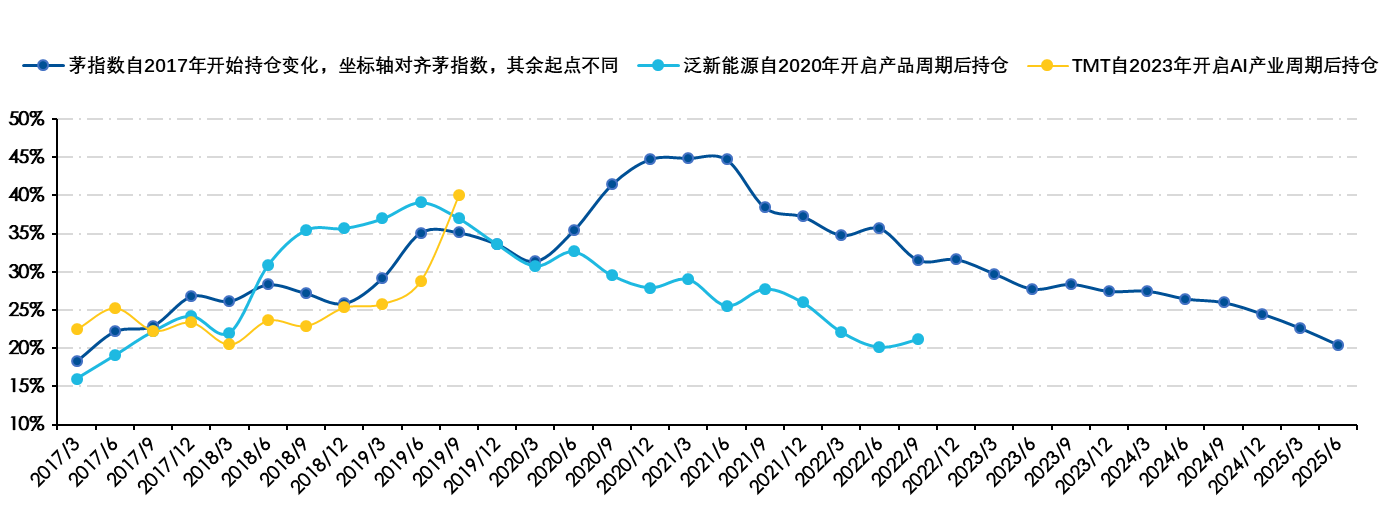
Group 1 - The core trend in the A-share market is a "high-low cut" strategy, with high-growth sectors like AI reaching crowded levels, prompting a shift towards undervalued cyclical assets, particularly in the securities and insurance industries, which are seen as stable and profitable options [1] - The current signal indicates a need for funds to shift from high to low, as the AI sector's fund allocation exceeds 40%, nearing historical extremes, while non-bank sectors are undervalued and poised for growth [1][2] - The securities sector has a PE ratio of 13.1, placing it in the 12th percentile of its valuation over the past decade, indicating a significant valuation advantage compared to other sectors like consumption and technology [6][7] Group 2 - The securities industry has shown strong performance, with a 66% year-on-year increase in net profit for 43 listed brokers in the first nine months of 2025, driven by multiple business segments [9][10] - The insurance sector is experiencing a favorable environment with a 12% year-on-year growth in life insurance premiums, supported by increased demand for savings-type products [15][17] - The securities insurance ETF (512070) offers a convenient investment solution, with a significant portion of its assets in the insurance sector and strong liquidity, making it an attractive option for investors seeking stable opportunities [20]
高仓位!私募“迎战”年末行情
Zhong Guo Ji Jin Bao· 2025-12-07 12:19
Group 1 - The core viewpoint of the article highlights that private equity firms are maintaining high positions as the A-share market enters the final trading month of the year, with a stock position of 82.97%, marking a new high for the year and the highest in nearly 185 weeks [1][2] - The strategy among private equity firms is shifting towards balanced layouts and "high-low cuts," focusing on both high-growth industries and sectors with improved supply-demand relationships [4][7] - Private equity firms express optimism for the A-share market in 2026, with expectations of marginal improvements in corporate earnings driving market performance, indicating a potential "slow bull" trend [6][7] Group 2 - The distribution of positions among private equity firms shows an aggressive stance, with 68.99% of firms fully invested, while medium, low, and empty positions have decreased significantly [2] - Companies like Rongyang Investment and Xingshi Investment maintain high positions due to optimistic expectations for investment opportunities, driven by improving corporate earnings and fundamental factors [2][5] - The investment strategy of companies like Xiangju Capital reflects a balanced approach, focusing on assets at the bottom of the cycle with growth potential, while also tracking high-heat trend assets like AI and new energy [5] Group 3 - Private equity firms are cautious about the crowded nature of technology stocks, particularly in the AI sector, and are seeking opportunities in less crowded areas [8] - Concerns regarding potential market risks include changes in global liquidity expectations, high valuation bubbles, and inflation issues, with oil price fluctuations and U.S. monetary policy being key factors to monitor [8]
高仓位!私募“迎战”年末行情
中国基金报· 2025-12-07 12:14
Group 1 - The core viewpoint of the article is that private equity funds are maintaining high positions as they approach the end of the year, with a focus on balanced strategies and "high-low cuts" in their portfolio adjustments [2][6] - As of November 21, 2025, the stock private equity position reached 82.97%, an increase of 1.84 percentage points from the previous week, marking a new high for the year and the highest level in nearly 185 weeks [4] - The distribution of positions indicates an aggressive stance among private equity funds, with the proportion of fully invested funds rising to 68.99%, while medium, low, and empty positions have significantly decreased [4] Group 2 - Private equity firms are adopting a balanced approach in their year-end strategies, focusing on high-growth industries and sectors with improved supply-demand relationships, emphasizing fundamental research and valuation matching [7] - The investment strategy of companies like Xiangshi Investment and Chongyang Investment reflects a shift towards "high-low cuts," seeking stocks with dividends and long-term growth potential while avoiding speculative stocks detached from fundamentals [8] - Companies are optimistic about the A-share market for 2026, with expectations of economic recovery and gradual improvement in corporate earnings, which are seen as core drivers for market performance [10] Group 3 - Specific sectors expected to perform well include AI, innovative pharmaceuticals, machinery, and military industries, as well as traditional industries with improved supply-demand dynamics [10] - The article highlights that the copper market is anticipated to have a strong performance in the first half of the year, while the chemical industry is expected to present investment opportunities in the second half [11] - Concerns regarding market risks include changes in global liquidity expectations, potential bubbles in high-valuation sectors, and inflation issues abroad, with oil price fluctuations and U.S. monetary policy being key factors to monitor [11]