
Anthropic

Search documents
巨头砸钱6500亿加剧担忧,黄仁勋发声“灭火”
华尔街见闻· 2026-02-07 12:35
Core Viewpoint - The surge in AI infrastructure capital expenditure in the tech industry is deemed reasonable, appropriate, and sustainable, driven by extremely high demand for computing power, as stated by Jensen Huang [1][5]. Group 1: AI Infrastructure Investment - Huang indicated that the capital expenditure from key clients like Meta, Amazon, Google, and Microsoft is projected to reach approximately $650 billion by 2026, representing a 60% increase from 2025 [3][7]. - This spending level significantly exceeds the GDP of many medium-sized economies, with most funds allocated for purchasing NVIDIA chips [3][7]. - The anticipated capital expenditures for these companies will be close to or exceed their total spending over the past three years, setting records for individual company annual capital expenditures [7]. Group 2: Market Reactions and Concerns - Recent financial reports and guidance have led to severe sell-offs in tech stocks, with a cumulative market value loss of about $1.35 trillion among major tech firms [3][10]. - Despite some companies like Meta and Alphabet seeing stock price increases, others like Amazon and Microsoft faced significant declines, resulting in a total market value drop exceeding $950 billion since the latest earnings reports [10]. - Concerns about investment efficiency and potential overcapacity have created a negative sentiment in the market, with analysts highlighting the structural issues surrounding the massive capital expenditures required for AI development [11][12]. Group 3: Profitability and Future Outlook - Huang emphasized that as long as companies continue to pay for AI, they will generate profits, leading to exponential growth in revenue [6][5]. - AI companies are already becoming profitable, with NVIDIA's clients leveraging AI to enhance their operations, such as Meta transitioning its recommendation systems to generative AI [6][5]. - The ongoing demand for AI computing power is reflected in the rental of all previously sold GPUs, indicating a robust and sustained need for AI infrastructure [6][5].


AI红包大战,打不出“从0到1”的创新
Di Yi Cai Jing· 2026-02-07 12:11
Core Insights - The rapid development of artificial intelligence (AI) is highlighted by significant advancements and investments from major tech companies both domestically and internationally [1][2][3] Group 1: International Developments - Meta has released a new model codenamed "Avocado," achieving a 10 to 100 times improvement in computational efficiency [1] - Google has opened its world model Genie 3, allowing users to create and explore 3D virtual worlds through natural language descriptions [1] - Major US tech companies have announced a capital expenditure plan totaling approximately $650 billion by 2026 [1] Group 2: Domestic Developments - Alibaba has launched the Qwen3-Max-Thinking model with over one trillion parameters and plans to release Qwen 3.5 soon [1] - The domestic AI landscape is characterized by significant investments, with companies like Alibaba, Tencent, and ByteDance revealing substantial AI investment plans [1][2] - The competition for the "AI super entrance" has led to a "red envelope war," with over 4 billion yuan being invested [2] Group 3: Competitive Landscape - The competition in AI has reached a fever pitch, with differences in focus between the US and Chinese markets; the US emphasizes foundational technology breakthroughs, while China prioritizes application and commercialization [2][3] - Domestic companies excel in transforming new technologies into commercial success but often lag in original innovation compared to their international counterparts [3][4] Group 4: Innovation and Future Directions - There is a recognized gap in original innovation and product iteration speed between domestic and international companies, raising concerns about the long-term sustainability of current business models [4] - The need for a shift in focus towards original innovation is emphasized, as merely pursuing commercial success may lead to vulnerabilities in the face of global competition [4][5] - The call for tech giants to support foundational research and foster an innovative culture is crucial for achieving technological self-reliance and competing with international leaders [5]


壹快评|AI红包大战,打不出“从0到1”的创新
Di Yi Cai Jing· 2026-02-07 11:52
Core Insights - The article emphasizes the importance of original innovation alongside commercial success in the tech industry, particularly in the context of rapid advancements in artificial intelligence (AI) [1][5]. Group 1: AI Developments - Major tech companies are making significant strides in AI, with Meta's new model improving computational efficiency by 10 to 100 times, and Google's Genie 3 enabling the creation of 3D virtual worlds through natural language [1]. - Domestic companies like Alibaba and Tencent are also heavily investing in AI, with Alibaba releasing a model with over one trillion parameters and Tencent planning substantial AI investments [1][2]. Group 2: Competitive Landscape - The competition in AI has intensified, with a notable "AI red envelope war" in China, where tech giants are investing over 4 billion yuan to capture the "AI super entrance" [2]. - The article contrasts the focus of U.S. companies on foundational technology breakthroughs with Chinese firms' emphasis on application and commercialization [2][3]. Group 3: Innovation and Market Dynamics - There is a notable difference in innovation strategies, with Chinese companies excelling in commercial success but lagging in original innovation compared to their foreign counterparts [3][4]. - The article suggests that the current focus on immediate commercial success may hinder long-term innovation capabilities, warning that neglecting original innovation could lead to vulnerabilities in the future [4][5]. Group 4: Call for Change - The article calls for Chinese tech companies to prioritize foundational research and innovation, highlighting that the lack of ambition and mission-driven focus may be a significant barrier to achieving technological independence [5]. - It stresses the need for a cultural shift towards innovation and the role of government in guiding and supporting these efforts to realize the dream of technological self-reliance [5].
砸崩软件股!Anthropic新工具为什么威力这么大?
凤凰网财经· 2026-02-07 10:57
Core Viewpoint - The introduction of a legal plugin by Anthropic for its Claude Cowork AI has significantly impacted the legal software sector, leading to a sharp decline in stock prices for several companies in this space, indicating increased competition and investor concern about the implications of AI on traditional legal services [4][5][6]. Group 1: Impact on Legal Software Stocks - The release of Anthropic's legal plugin triggered a sell-off in stocks related to legal and data services, with many stocks experiencing declines of over 15% [4][6]. - On the day of the sell-off, the total market value lost in the software, financial services, and asset management sectors was approximately $285 billion [6]. - Companies such as LegalZoom.com saw a nearly 20% drop, while Thomson Reuters and other legal information giants also faced significant declines [6][11]. Group 2: Market Position of Claude AI - Claude has emerged as a preferred tool for legal and financial professionals in conducting analysis, highlighting its competitive position in the AI market [8]. - The legal tools provided by Anthropic claim to automate tasks such as contract review and legal briefs, which are core functions of many legal software products [10]. Group 3: Traditional Legal Information Giants Under Pressure - Companies like LegalZoom, RELX, and Thomson Reuters, which operate in the legal information sector, are facing challenges due to the advancements in AI technology [11][12]. - The introduction of AI tools by startups like Legora and Harvey AI has already begun to disrupt the legal industry, with significant investments flowing into AI products for legal applications [12]. Group 4: Broader Software Industry Concerns - The software sector has been under scrutiny for several months as investors remain cautious about the potential risks posed by AI advancements [13]. - Recent data indicates that only 71% of software companies in the S&P 500 have exceeded revenue expectations this earnings season, compared to 85% for the broader tech industry, suggesting underperformance in the software sector [15].


Wedbush: buy these two ‘still overvalued' stocks amidst software rout
Invezz· 2026-02-07 10:20
Core Viewpoint - The software sector is experiencing a significant downturn, referred to as a "SaaSapocalypse," driven by a rapid sell-off in the market [1] Group 1: Market Conditions - The panic in the software sector intensified this week, particularly following the introduction of AI startup "Anthropic" [1]


千问App投入30亿开启春节攻势;SpaceX收购xAI,马斯克整合商业帝国丨AI周报
创业邦· 2026-02-07 10:09
Core Insights - The article highlights significant developments in the AI industry, including mergers, funding rounds, and technological advancements, reflecting the rapid growth and competitive landscape of AI companies globally. Group 1: Mergers and Acquisitions - SpaceX has acquired xAI, marking a strategic move by Elon Musk to integrate AI into its aerospace operations [7] - OpenAI is prioritizing the commercialization of ChatGPT, leading to the departure of several executives amid a shift in focus from long-term research to immediate product development [9] Group 2: Funding and Investments - A total of 34 AI financing events were disclosed globally, with a total funding amount of 169.13 billion RMB, averaging 8.05 billion RMB per event [42] - The highest funding in the domestic AI sector was achieved by Zhijidongli, which completed a 14.01 billion RMB A++ round of financing [49] Group 3: Technological Advancements - The first AI percutaneous navigation robot has been approved for market release in China, enhancing precision in medical procedures [9] - Tencent's HPC-Ops has improved inference throughput by 30%, showcasing advancements in AI model performance [23] Group 4: Market Trends and Predictions - The domestic transformer market is expected to grow over 20% year-on-year by 2025, driven by the increasing demand for AI computing power [40] - The CEO of Xiaopeng Motors predicts that AI will be a central theme in technology for the next 30 to 50 years, emphasizing its integration into the automotive industry [38] Group 5: Company Strategies and Developments - Ant Group's CEO announced an "AI Credit" incentive program to encourage innovative contributions in AI [29] - Meitu's CEO discussed the competitive landscape between general AI models and specialized applications, emphasizing the importance of niche markets [19]




X @The Wall Street Journal
The Wall Street Journal· 2026-02-07 08:31
Anthropic has seized the lead in the race for AI supremacy—and that is rattling the stock market https://t.co/7b7iEVS8Dg ...
科技股“崩盘式”回调的信号:风险资产普涨时代终结,输家将被无情抛弃!
Hua Er Jie Jian Wen· 2026-02-07 07:54
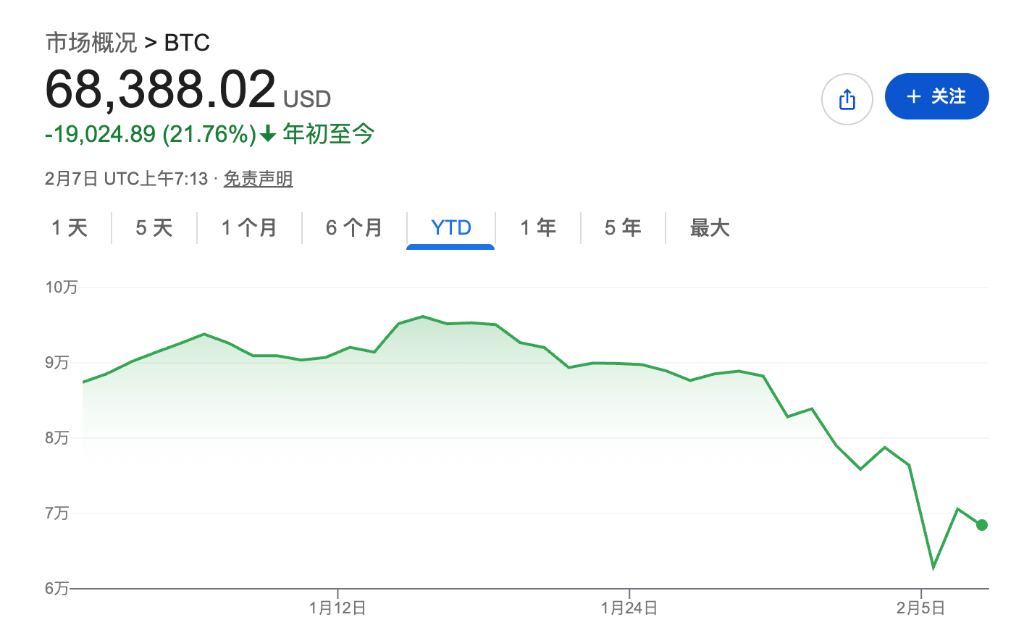
全球风险资产正经历一场剧烈的调整,高盛分析师将当前市场状况定性为"科技股灾难"。此次调整并非源于AI泡沫破裂,而是AI技术"过于成 功"地对传统软件及数据服务公司造成了颠覆性冲击。 在这场结构调整中,比特币回调最为显著,价格一度自历史高点腰斩,今年以来已暴跌逾20%。与此同时,美股科技板块显著承压:标普500指数 自前期高点回落近3%,而以科技股为主的纳斯达克综合指数跌幅达6%。 AI技术进步引发行业洗牌 市场动荡的核心根源在于人工智能技术展现出的颠覆性效能超出预期,投资者正在重新评估AI对现有产业格局的冲击。 近日,AI公司Anthropic推出的生产力工具加剧了市场忧虑,其技术路径预示着未来可能对大量依赖分析能力和软件业务的传统公司构成生存威 胁。高盛分析师Bell指出,软件、数据服务、金融信息、游戏等板块已因此遭遇大规模抛售。今年以来,美股软件板块重挫16%,而由传统行业 (如大宗商品、公用事业)主导的欧洲斯托克600指数则逆市上涨4%。 德意志银行分析师Jim Reid认为,市场已从科技股普涨的"狂欢阶段"转向残酷的"结构性分化",科技行业内部正在经历"自我吞噬"式的优胜劣汰。 此轮调整标志着市场开始 ...
中美AI应用的分岔路,出现在这个春节
雷峰网· 2026-02-07 07:34
Core Viewpoint - The article discusses the intensifying competition in the AI sector, particularly focusing on Alibaba's AI initiative "Qianwen" and its unique approach to integrating AI into everyday decision-making and service delivery [2][3][6]. Group 1: AI Competition Landscape - The AI battle has heated up ahead of the Spring Festival, with Alibaba's "Qianwen" launching a promotional event offering significant discounts to engage users [2][3]. - Major players like ByteDance, Tencent, and Baidu are competing for user attention, continuing the trend from the mobile internet era by enhancing content quality and user interaction [7][8]. - Unlike its competitors, Qianwen aims to shift the focus from user engagement time to whether users are willing to delegate real-life decisions to AI [8][9]. Group 2: Qianwen's Unique Strategy - Qianwen's approach involves using "free orders" instead of traditional cash red envelopes, embedding itself into real consumer decision-making processes [8][9]. - The promotional event is not just a marketing tactic but a test of AI's service delivery capabilities, requiring users to articulate their needs and for the system to execute orders effectively [9][10]. - The success of this initiative hinges on the AI's ability to integrate with complex business systems, demonstrating a deep understanding of user intent and operational rules [10][12]. Group 3: Technical and Operational Challenges - The integration of AI into real-world applications requires robust backend systems capable of handling high concurrency and complex transactions [12][14]. - The event's success is measured by the AI's ability to process millions of orders, indicating its readiness to operate in real-world scenarios [14][18]. - The article emphasizes that the true challenge lies in the seamless collaboration between AI models and existing business infrastructures, which is a significant barrier for many companies [21]. Group 4: Comparative Analysis of AI Approaches - The article contrasts the U.S. and Chinese approaches to AI, noting that U.S. firms focus on enhancing productivity in office settings, while Chinese firms prioritize integrating AI into daily life [22][24]. - The Chinese market benefits from a large user base and a mature mobile payment system, providing a fertile ground for AI applications [24][26]. - Qianwen's strategy reflects a pragmatic approach, focusing on high-frequency scenarios to validate AI capabilities and drive technology evolution [26][27].

100亿根本不够分!投资者争相加注Anthropic,超额认购狂潮将融资推向200亿美元
Zhi Tong Cai Jing· 2026-02-07 06:55
Group 1 - Anthropic PBC is finalizing details for a funding round expected to raise over $20 billion, with a valuation reaching $350 billion [1] - Initial funding target was $10 billion, but investor interest exceeded expectations, leading to a potential doubling of the amount raised [1] - Recent investments include over $1 billion each from Coatue Management, GIC, and Iconiq Capital, along with up to $15 billion from strategic investors like Nvidia and Microsoft [1] Group 2 - Anthropic recently launched a new AI model aimed at optimizing enterprise work tasks, which has triggered a significant sell-off in the software and financial services sectors [2] - The company's coding agent has become a preferred tool for businesses and developers, potentially ushering in a new era of autonomous AI technology in the workplace [2] - Both Anthropic and its competitor OpenAI are preparing for IPOs, with OpenAI also seeking to raise up to $10 billion in another record-breaking AI funding round [2]