明阳集团

Search documents
瑞浦兰钧再获1GWh海外储能订单!
起点锂电· 2026-01-03 09:20
Core Viewpoint - The article highlights the significant growth potential of the energy storage market in India, driven by increasing battery demand, government policies, and the expansion of renewable energy sources. It emphasizes the collaboration between Mindra New Energy and Ruipu Lanjun to establish a 1GWh battery storage system in India, which aligns with India's self-reliance initiatives and the growing need for energy storage solutions [4][5][7]. Group 1: Collaboration Details - Mindra New Energy and Ruipu Lanjun signed a Memorandum of Understanding (MoU) to collaborate on a 1GWh battery storage system in India, combining Ruipu Lanjun's battery technology with Mindra's energy management systems [4][5]. - The collaboration includes three main components: distribution of 150MWh battery solutions, supply of 850MWh 314Ah battery cells, and the establishment of a 1GWh battery assembly line in India, utilizing advanced production technologies [5]. Group 2: Market Demand and Growth - India's battery storage demand is projected to reach 8.68GW/34.72GWh by 2026-2027, driven by renewable energy growth, grid stability needs, and policy support, such as mandatory storage requirements for new solar projects [7][8]. - By 2030, India aims for 500GW of non-fossil fuel power generation, necessitating approximately 41.65GW/208.25GWh of new battery storage systems to address the intermittency of renewable energy [7][8]. - Long-term projections indicate that by 2047, India may require 230GW/1,840GWh of battery storage systems, highlighting the vast potential for energy storage across various applications [8]. Group 3: Policy Support and Industry Response - The Energy Storage Obligation (ESO) targets will increase from 1% in the 2023-24 fiscal year to 4% by 2029-30, further stimulating storage demand [8]. - Numerous Chinese energy storage companies, including Ruipu Lanjun, are accelerating their market entry into India, with a combined capacity exceeding 20GWh [8][9]. Group 4: Global Expansion of Ruipu Lanjun - Ruipu Lanjun has seen significant growth in overseas orders, accumulating over 20GWh in 2025, and is positioned as the fifth largest in global energy storage battery shipments [11][19]. - The company is actively expanding its global footprint, establishing partnerships and projects across various regions, including a strategic collaboration with South Korea's Hyosung Heavy Industries for a 2.5GWh storage system [14][17]. - Ruipu Lanjun's focus on local manufacturing and regional operations aims to enhance responsiveness to market demands and compliance standards in key markets like the US and Europe [18].

首个纯氢燃气轮机实现发电,绿氢应用场景持续扩展
Jianghai Securities· 2025-12-30 05:33
Investment Rating - The industry rating is "Overweight" (maintained) [6] Core Insights - The global first 30MW pure hydrogen gas turbine has achieved significant breakthroughs, marking the successful transition from blueprint to reality, with potential applications in various energy scenarios [6] - Hydrogen energy production and consumption are steadily growing, with global hydrogen production and consumption expected to reach approximately 105 million tons by the end of 2024, reflecting a year-on-year growth of about 2.9% [6] - The green hydrogen industry is entering a fast track, with a total of 865 green hydrogen projects in China as of mid-2025, and a disclosed potential capacity of 11.0616 million tons per year [6] Summary by Sections Industry Performance - Over the past 12 months, the industry has shown an absolute return of 41.06% and a relative return of 24.52% compared to the CSI 300 index [3] Investment Highlights - The hydrogen energy sector is witnessing a surge in renewable energy hydrogen production projects, with over 250,000 tons/year of cumulative capacity established, and a 42% year-on-year increase in new capacity in 2024 [6] - Investment opportunities are identified in three main areas: hydrogen production equipment, fuel cells, and green methanol [6]
全球首个30MW级纯氢燃气轮机氢储能示范项目实现纯氢发电
Zheng Quan Shi Bao Wang· 2025-12-29 07:53
(原标题:全球首个30MW级纯氢燃气轮机氢储能示范项目实现纯氢发电) 人民财讯12月29日电,12月28日,由明阳集团联合深圳能源共同打造的30MW纯氢燃气轮机氢储能示范 项目取得重大突破——机组实现纯氢发电并保持稳定运行。这标志着全球首个30MW级"电—氢—电"实 证示范项目成功从蓝图迈向现实。未来,纯氢燃气轮机技术有望在电网调峰、分布式能源、工业园区综 合供能、绿色数据中心备用电源等多场景展现广阔应用前景。 ...

国内首台30兆瓦级纯氢燃气轮机实现纯氢发电
Zheng Quan Shi Bao Wang· 2025-12-29 07:49
Core Viewpoint - The collaboration between Mingyang Group and Shenzhen Energy has achieved a significant breakthrough with the successful operation of a 30MW pure hydrogen gas turbine power generation project, marking the world's first demonstration project of its kind [1] Group 1: Project Details - The 30MW pure hydrogen gas turbine project has transitioned from concept to reality, demonstrating the feasibility of hydrogen power generation [1] - The project is recognized as a proof-of-concept for the "electricity-hydrogen-electricity" model, showcasing its potential in various applications [1] Group 2: Future Applications - The pure hydrogen gas turbine technology is expected to have broad application prospects in scenarios such as grid peak shaving, distributed energy, comprehensive energy supply in industrial parks, and backup power for green data centers [1]
三亚崖州湾科技城高新区靠创新起家、让创新当家
Hai Nan Ri Bao· 2025-12-24 02:16
Core Viewpoint - Sanya Yazhou Bay Science and Technology City High-tech Zone is transforming into a hub for innovation, focusing on the development of deep-sea technology and seed industry, leveraging its unique geographical and policy advantages to foster a robust ecosystem for emerging industries [4][12]. Group 1: Port Transformation - Sanya Nanshan Port has evolved from a minor cargo port to China's first public scientific research vessel mother port within three to four years, becoming a popular choice in the domestic scientific research community [3][4]. - The port has achieved over 1,000 scientific research vessel calls in just two years, with expectations to exceed 2,000 calls by 2025, positioning itself as one of the busiest scientific research mother ports globally [7][10]. Group 2: Economic Growth - The deep-sea industry has seen a revenue increase of 341.7% year-on-year in the first three quarters of 2025, highlighting the significant growth and potential of the blue economy in the region [10]. - The establishment of 11 deep-sea equipment research and operation bases and the development of 28 production lines indicate a strong clustering effect in the deep-sea technology sector [10]. Group 3: Seed Industry Development - China Seed Group has signed a strategic cooperation agreement with Beidahuang Kenfeng Seed Industry Co., focusing on core technology breakthroughs and market expansion in the seed industry [11]. - The technology city has established 20 research platforms in the seed industry, making it the largest and most comprehensive in the country, with an annual output value exceeding 18 billion yuan [12].

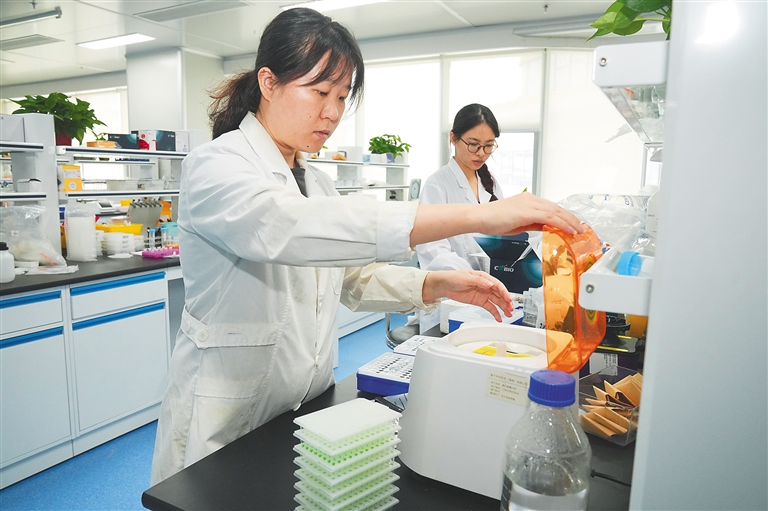
昔日“孔雀东南飞” 今朝“信商雁归来”——从信阳返乡创业现象看河南发展活力
He Nan Ri Bao· 2025-12-24 00:00
Group 1: Investment and Development - The Huibo Yuntong Big Data Industrial Park in Luoshan County is under construction, set to become an AI data labeling base accommodating 7,000 people by June next year [1] - The project is spearheaded by Yu Hao, who returned to his hometown to invest, highlighting the trend of entrepreneurs returning to their roots to foster local development [1] - In Xinyang, over 150,000 entrepreneurs have returned to establish more than 100,000 businesses, creating job opportunities for over a million people in the revolutionary old district [1] Group 2: Economic Migration and Opportunities - Xinyang has over 3 million residents working outside the region, primarily in economically developed areas like the Yangtze River Delta and the Pearl River Delta, focusing on industries such as circular economy and textile processing [3] - The local government has implemented policies to support returning entrepreneurs, including financial assistance and tax reductions, to stimulate the "return economy" [8][11] Group 3: Entrepreneurial Success Stories - Zhang Chuanwei, who founded Mingyang Group, successfully transitioned from military service to entrepreneurship, establishing a leading international renewable energy company [3][5] - Yu Hao's company has grown into a high-tech enterprise valued at over 10 billion, showcasing the potential for success among returning entrepreneurs [6] - The story of Wang Chenghai illustrates the journey from a factory worker to a successful business owner in high-end manufacturing, reflecting the entrepreneurial spirit of Xinyang residents [7] Group 4: Government Support and Infrastructure - The local government has shifted its role from a manager to a partner, providing comprehensive support for businesses from project negotiation to operational launch [10] - Initiatives like the "Return to Hometown" project aim to attract talent back to Xinyang, offering support in education and housing for returning entrepreneurs [8][11] - The establishment of "Xinyang Business Home" serves as a platform for entrepreneur training and communication, enhancing the local business environment [8]

中山进阶:一座“临深”城市的经济突围
2 1 Shi Ji Jing Ji Bao Dao· 2025-12-18 02:15
Core Insights - The article highlights the significant economic growth and transformation of Zhongshan, driven by the completion of the Shenzhen-Zhongshan Link and the establishment of key industrial facilities like the Hongxin Suhang bonded warehouse and Jiangbolong's storage industrial park [1][2][4][6]. Economic Growth - Zhongshan's GDP reached 303.87 billion yuan in the first three quarters of 2025, with a year-on-year growth of 3.6% [2]. - The secondary industry added value was 155.34 billion yuan, growing by 3.5%, maintaining a significant share of the GDP [2]. - The advanced manufacturing sector grew by 9.4%, while high-tech manufacturing surged by 19.2%, accounting for 18.4% of the industrial output value [2]. Infrastructure Development - The Shenzhen-Zhongshan Link has facilitated over 31 million vehicle trips since its opening, with an average of 86,000 trips per day [4]. - Cross-border transport lines to Hong Kong have increased to 11, with a 47.2% rise in daily passenger flow compared to before the link's opening [4]. Industrial Transformation - Jiangbolong has positioned its Zhongshan storage industrial park as a hub for high-end manufacturing rather than labor-intensive factories, with a focus on advanced technology and engineering [5]. - The park's second phase, covering 120,000 square meters, has attracted hundreds of technical engineers and is expected to significantly boost production capacity [5]. Supply Chain Efficiency - The Hongxin Suhang bonded warehouse has reduced supply chain response time from 24 hours to just 2 hours, enhancing inventory turnover for semiconductor and electronic companies [6]. - In the first ten months of this year, Zhongshan's imports and exports of integrated circuits and electronic components reached 20.74 billion yuan, a year-on-year increase of approximately 25.5% [7]. Innovation Ecosystem - Zhongshan has developed three trillion-yuan industrial clusters in new-generation information technology, smart home appliances, and high-end equipment, along with eight hundred-billion-level clusters in various sectors [9]. - The city has introduced a "3+1" policy framework to support strategic emerging industries, including 40 specific measures to enhance innovation and development [9]. Investment and Collaboration - The establishment of the San Nuo RNAi cancer treatment industrialization base in Zhongshan represents a significant investment of 300 million yuan, focusing on innovative drug development [10]. - The collaboration between Hong Kong and Zhongshan is expected to enhance the region's innovation capabilities, leveraging Hong Kong's strengths in finance and legal services [10].
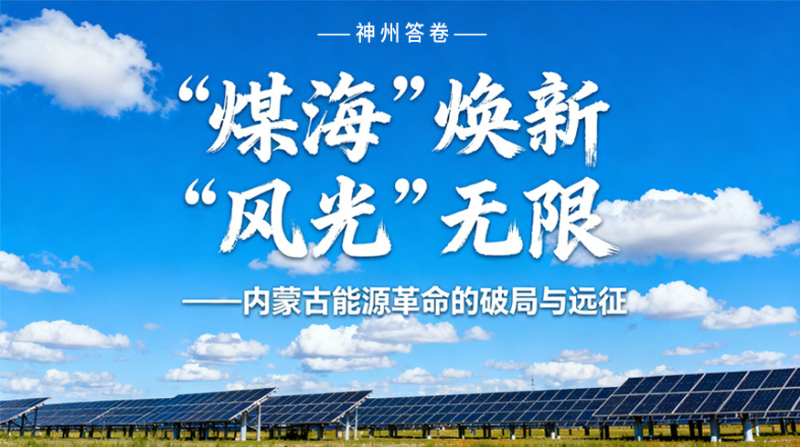
神州答卷|“煤海”焕新 “风光”无限——内蒙古能源革命的破局与远征
Xin Hua Wang· 2025-11-20 01:45
Core Insights - Inner Mongolia is undergoing a significant energy transformation, leveraging its abundant coal, wind, and solar resources to drive a comprehensive energy revolution [2][10]. Traditional Energy Industry - Inner Mongolia is developing a modern coal chemical industry, transforming coal into high-value products like polyethylene and polypropylene, with a projected conversion scale exceeding 100 million tons by 2024 [3][5]. - The coal-to-olefins demonstration facility in Baotou processes 3 million tons of coal annually to produce 600,000 tons of methanol and generates approximately 6 billion yuan in annual revenue [5]. New Energy Industry - Inner Mongolia has become the first region in China to exceed 100 million kilowatts of installed renewable energy capacity, with current installations reaching 150 million kilowatts, surpassing thermal power capacity [11]. - The region is developing a complete photovoltaic industry chain, producing high-purity polysilicon and solar panels, with innovative processes reducing energy consumption and costs [13][16]. Future Energy Industry - The launch of the largest green ammonia project in China marks a significant step in the green hydrogen and ammonia industry, with an annual production capacity of 320,000 tons [19][21]. - Inner Mongolia is planning to establish a green hydrogen corridor and hydrogen pipeline network, aiming to become a national leader in green hydrogen production and applications [21]. New Energy Storage - A series of new energy storage projects are underway, with a target of reaching 10.32 million kilowatts of installed capacity by the end of 2024, and projections of over 16 million kilowatts by 2025 [23]. - The region is actively reforming its electricity market, leading the nation in green electricity trading volumes, with 76.2 billion kilowatt-hours settled in 2024 [24].
五维进阶,海洋强国广东策
2 1 Shi Ji Jing Ji Bao Dao· 2025-11-16 22:41
Core Insights - Guangdong has maintained its position as the leader in China's marine economy for 30 consecutive years, with a marine production value of 2 trillion yuan, marking a new starting point for the province [1] - The province is actively promoting the "New Marine Guangdong" initiative through various strategic meetings and forums, emphasizing the integration of new technologies and industries [1] Technological Innovation - The successful collection of the "source fire" from deep-sea combustible ice during the 15th National Games showcases the intersection of sports and deep-sea technology [2] - Guangdong's marine economy is increasingly relying on data-driven practices, transforming traditional fishing methods into data-centric aquaculture [3] - The establishment of a 2 billion yuan fund for modern marine ranches and the focus on key species research are strengthening Guangdong's position in the aquaculture sector, with a projected 51.14% share of national marine fish fry production in 2024 [3] Industry Development - Despite advancements, Guangdong faces challenges in marine technology, particularly in basic research, with only one national key laboratory in the field [4] - The province's offshore wind power capacity is expected to lead the nation in 2024, with a related industry chain projected to exceed 300 billion yuan in annual output [4] - The marine new energy sector is expanding, with significant contributions from offshore photovoltaic power stations and wave energy devices [4] Ecological Sustainability - Guangdong is implementing innovative marine usage rights and integrated equipment for sustainable practices, such as combining underwater fish farming with offshore wind power [6] - The province is actively promoting ecological tourism and sustainable fishing practices, with initiatives to restore coastal ecosystems and improve water quality [8] - The "Blue Bay" restoration project has successfully rehabilitated over 100,000 acres of mangroves, supporting the transition of fishermen towards eco-tourism [8] Institutional Innovation - Guangdong is breaking down traditional barriers in marine economic development through integrated land-sea planning and innovative approval processes, significantly reducing project approval times [9][10] - The establishment of a "smart port" in Guangzhou is enhancing operational efficiency and fostering deeper collaboration between marine logistics and regional industries [10] - Collaborative development models among Guangdong, Hong Kong, and Macau are emerging, leveraging data sharing to improve cross-border logistics efficiency [10] Future Outlook - The future of Guangdong's marine economy lies in multi-dimensional collaboration rather than isolated industry success, with ongoing efforts to enhance the marine economy beyond the current 2 trillion yuan mark [11]
英利、天合、明阳、金风负责人这样解读“十五五”
Zhong Guo Neng Yuan Wang· 2025-10-27 02:00
Core Viewpoint - The Fourth Plenary Session of the 20th Central Committee of the Communist Party of China emphasized the importance of high-quality development and the establishment of a new energy system to support China's modernization efforts, aiming for significant advancements in economic strength, technological independence, and overall national power by 2035 [1][2]. Economic and Social Development Goals - The main goals for the 15th Five-Year Plan period include achieving significant results in high-quality development, enhancing technological self-reliance, deepening reforms, improving social civilization, and increasing the quality of life for citizens [1]. Energy Sector Achievements - Since the beginning of the 14th Five-Year Plan, China's energy sector has made remarkable progress, ensuring energy security for over 1.4 billion people, with national electricity generation expected to exceed 10 trillion kilowatt-hours in 2024, accounting for one-third of global production [4][5]. Renewable Energy Growth - China has built the world's largest and fastest-growing renewable energy system, with the share of renewable energy generation capacity increasing from 40% to approximately 60%. Wind and solar power installations have seen unprecedented growth, with annual additions surpassing 100 million and 200 million kilowatts respectively [4][5]. New Energy System Construction - The focus has shifted from planning to implementation in the construction of a new energy system, emphasizing the need for a comprehensive approach that includes enhancing system capabilities and ensuring safe, adjustable, and sustainable energy operations [5][6]. Carbon Neutrality Goals - The energy sector is pivotal in achieving carbon peak and carbon neutrality goals, with renewable energy contributing significantly to new electricity installations and non-fossil energy consumption increasing by about 1 percentage point annually [8][9]. Future Industry Development - The 15th Five-Year Plan aims to foster emerging industries such as new energy, new materials, and aerospace, potentially creating several trillion-yuan markets and driving economic growth through advanced technologies [11]. Innovation and Technology - The energy sector has seen a surge in technological innovation, with over 40% of global renewable energy patents originating from China. Key projects like the Baihetan Hydropower Station and advanced nuclear technologies showcase China's capabilities in energy technology [10][11]. Market Dynamics - As renewable energy enters the market, the focus is shifting from reducing levelized cost of electricity (LCOE) to maximizing electricity value (LCOV), indicating a strategic pivot towards enhancing product competitiveness and grid support capabilities [12][13].