绿电制氢

Search documents
金风科技领跑风电制氢:从验证到商业化
中国能源报· 2026-03-27 13:18
Core Viewpoint - The article discusses the strategic positioning of Goldwind Technology in the hydrogen energy sector, highlighting its comprehensive approach to integrating wind power and hydrogen production, which is seen as a significant shift in the company's business model [2][4]. Policy and Market Opportunities - Hydrogen energy has been officially included in China's "six major future industries," with key technologies like off-grid hydrogen production receiving institutional support, indicating a favorable policy environment [5]. - The cost of electrolysis for hydrogen production in China has decreased by nearly 40% since 2020, moving closer to commercial viability. Deloitte predicts that the global clean hydrogen market could reach $14 trillion annually by 2050, creating approximately 2 million jobs and a carbon reduction potential of 8.5 billion tons [5]. - The article emphasizes that the transition from policy support to industrial prosperity requires overcoming various technical bottlenecks and commercial barriers across the hydrogen supply chain [5]. Strategic Positioning - Goldwind Technology's transformation is rooted in its 28 years of experience in the wind power sector, with over 56,000 units in operation and expertise in extreme environmental conditions [7]. - The company aims to extend its technological capabilities from wind power to the entire hydrogen production chain, creating differentiated competitive advantages at key points in the chain [7][8]. Technological Innovations - Goldwind's solution for hydrogen production involves developing an IGBT hydrogen power supply system based on its wind power converter technology, addressing the structural tension between the natural variability of wind power and the stable power requirements of electrolyzers [8]. - This system improves production efficiency by over 2%, can withstand ±10% fluctuations in grid voltage and frequency, and reduces maintenance frequency by 50%, significantly lowering the lifecycle operating costs of hydrogen projects [8]. Digital Management Capabilities - The company has developed a digital management platform for green hydrogen production, which optimizes operational efficiency and manages safety risks through advanced control strategies [9]. - As hydrogen project scales increase, the complexity of operations will rise non-linearly, making the differentiation provided by digital platforms increasingly valuable [9]. Testing and Certification - Goldwind is the only company in China that offers testing services for wind power direct hydrogen electrolyzers, having established the largest performance database for electrolyzers under real fluctuation scenarios [11][12]. - The company received international certification from DEKRA for its testing laboratory, allowing hydrogen equipment tested there to gain global recognition, which is crucial for entering international markets [11][12]. Commercialization Steps - Goldwind has initiated two significant projects to validate its technology: a national wind power hydrogen production demonstration project in Jilin and a green methanol production base in Inner Mongolia, which has secured long-term contracts with Maersk and Hapag-Lloyd [15][16]. - The contracts with these leading shipping companies provide strong cash flow guarantees, reducing credit risk assessments for financing the green methanol project [15][16]. Long-term Strategic Vision - Goldwind's strategic move into hydrogen energy is seen as a way to leverage its existing advantages and explore a second growth curve, positioning itself early in the establishment of technical standards and commercial rules in the hydrogen market [18]. - The company is not just entering a new market but is also shaping the foundational infrastructure of the hydrogen economy, which may provide a more sustainable competitive edge than merely competing for market share [18].


煤化工行业专家电话会
2026-03-12 09:08
Summary of Coal Chemical Industry Conference Call Industry Overview - The coal chemical industry, particularly in China, has seen significant development since around 2010, with successful projects in coal-to-oil, coal-to-natural gas, coal-to-methanol-to-olefins, and coal-to-ethylene glycol [2][3] - The coal-to-olefins process, exemplified by the Shenhua Baotou project, has achieved cost advantages of over 2000 RMB per ton compared to oil-based routes [2] - Xinjiang has become a core growth area for coal chemical projects, accounting for 70-80% of national project approvals, with nearly 1 trillion RMB invested in coal-to-olefins, natural gas, and coal-to-oil [1][5] Key Economic Insights - The profitability of coal-to-olefins is achievable when oil prices exceed $55 per barrel, while coal-to-oil has a breakeven point around $70 per barrel [1][6] - The cost of coal-to-oil projects in Xinjiang is influenced by high fixed investments (170-180 billion RMB for a 1 million ton project) and transportation costs due to the need for long-distance shipping [6] - The coal-to-ethylene glycol technology has matured, with product quality meeting high-end polyester requirements, posing a challenge to traditional oil-based routes [1][3] Technological Developments - Breakthroughs in Fischer-Tropsch synthesis for α-olefins could provide significant cost advantages over oil-based ethylene routes if industrialized successfully [1][4] - The integration of green electricity for hydrogen production is becoming a key condition for project approvals, especially in the context of carbon neutrality [1][3] Environmental and Regulatory Challenges - The coal chemical industry faces challenges related to carbon dioxide emissions, with high CO2 output from coal-to-oil and coal-to-olefins processes [13] - The approval process for new coal chemical projects is stringent, focusing on CO2 emissions and water resource availability, particularly in Xinjiang [15][16] - Older, high-energy-consuming, and small-scale production facilities are expected to exit the market due to carbon tax pressures and economic inefficiencies [7] Future Trends - The future of the coal chemical industry is closely tied to energy security and technological breakthroughs, with a focus on regions rich in coal and solar resources like Xinjiang and Inner Mongolia [3][10] - The profitability of coal-to-methanol-to-olefins is expected to remain strong, especially as oil prices rise, with significant profit margins compared to oil-based products [10][11] - The coal chemical sector is likely to see a consolidation of operations, with larger, more efficient projects continuing to thrive while smaller, less competitive facilities may be phased out [17] Conclusion - The coal chemical industry in China is poised for growth, driven by technological advancements and favorable economic conditions, but must navigate environmental regulations and market dynamics to sustain its trajectory [2][3][5]
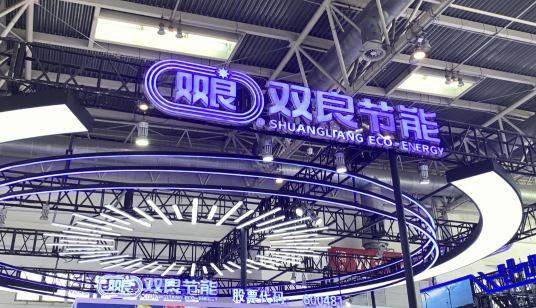
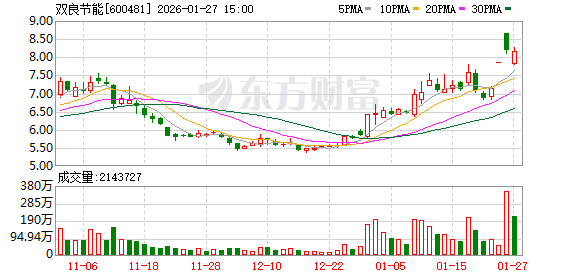
双良节能2025年业绩大幅减亏 多维创新与政策红利打开增长新空间
Xin Hua Cai Jing· 2026-01-27 08:16
Core Viewpoint - The company, Shuangliang Energy, forecasts a net loss of 780 million to 1.06 billion yuan for 2025, indicating a significant reduction in losses compared to 2024, attributed to the seasonal characteristics of the photovoltaic industry [2] Group 1: Financial Performance - Shuangliang Energy's projected losses are relatively smaller compared to leading companies in the photovoltaic sector, which are expected to incur losses ranging from 4 billion to 10 billion yuan [2] - The company has made provisions for fixed asset impairment, which may also contribute to the losses in the fourth quarter [3] Group 2: Growth Drivers - The company has made breakthroughs in zero-carbon parks, core equipment, and emerging sectors, which inject growth momentum and enhance market confidence [3] - Shuangliang Energy's zero-carbon park solutions have gained industry recognition, with significant projects underway, including a 24 MW rooftop photovoltaic green electricity project and a 600 MW wind-solar-storage project expected to be operational by 2026 [3] Group 3: Technological Advancements - Continuous breakthroughs in core equipment technology are crucial for supporting performance, with the energy service industry in China projected to exceed 1.2 trillion yuan by 2025, growing at a compound annual growth rate of over 18% [4] - The company has achieved significant advancements in its natural ventilation direct air cooling system, which has been successfully applied in extreme conditions, filling a gap in the market [4] Group 4: Market Opportunities - The synergy between the photovoltaic sector and emerging markets strengthens the growth foundation, with the company adopting a customer-centric strategy to ensure stable supply and delivery [6] - The space photovoltaic sector is expected to open a trillion-yuan market, with Shuangliang Energy positioned to benefit from its technological capabilities in photovoltaic silicon materials and smart energy management [6] - The green hydrogen production business is emerging as a new growth driver, with the company’s alkaline water electrolysis equipment setting global benchmarks and aligning with low-carbon transition demands [6] Group 5: International Recognition - Shuangliang Energy is a core equipment supplier for the largest polysilicon project in the Middle East, showcasing its international recognition and capability to provide solutions for the photovoltaic industry [7] - The company’s diverse business layout and technological accumulation enable it to maintain stable development amid industry fluctuations, supported by national energy-saving and carbon reduction policies [7]

双良节能2025年业绩减亏 多维创新与政策红利打开增长新空间
Zhong Guo Jin Rong Xin Xi Wang· 2026-01-27 02:49
Core Viewpoint - The company, Shuangliang Energy, has significantly narrowed its overall loss for the 2025 fiscal year, despite the photovoltaic industry facing challenges in the fourth quarter, which is typically a slow season [1] Group 1: Financial Performance - Shuangliang Energy's loss is relatively small compared to leading companies in the photovoltaic sector, which are expected to incur losses between 40 billion to 100 billion yuan [1] - The company has made provisions for fixed asset impairment, reflecting a cautious financial approach, which is a contributing factor to the fourth-quarter loss [1] Group 2: Industry Position and Developments - The company has gained recognition for its zero-carbon park solutions, with its photovoltaic industrial park being selected for a national-level zero-carbon park construction [2] - The industrial park has completed a 24MW rooftop photovoltaic project and is expected to achieve additional projects by 2026, contributing to significant reductions in coal consumption and water usage [2] Group 3: Technological Advancements - Continuous breakthroughs in core equipment technology are crucial for supporting the company's performance, with the energy service industry in China projected to exceed 1.2 trillion yuan by 2025, growing at a compound annual growth rate of over 18% [3] - The company has developed a natural ventilation direct air cooling system that has passed preliminary design reviews, marking a significant advancement in extreme environment applications [3] Group 4: Market Opportunities - The space photovoltaic sector is expected to create a trillion-level market space, with the company positioned to benefit from its technological advancements in photovoltaic silicon materials and smart energy management [4] - The green hydrogen production business is emerging as a new growth driver, with the company’s alkaline water electrolysis technology setting global benchmarks and aligning with low-carbon transformation demands [4] Group 5: Long-term Outlook - The combination of stable profitability in core equipment, rapid growth in green hydrogen, and favorable national policies is expected to drive the company towards sustained profitability and long-term value for investors [5]
首个纯氢燃气轮机实现发电,绿氢应用场景持续扩展
Jianghai Securities· 2025-12-30 05:33
Investment Rating - The industry rating is "Overweight" (maintained) [6] Core Insights - The global first 30MW pure hydrogen gas turbine has achieved significant breakthroughs, marking the successful transition from blueprint to reality, with potential applications in various energy scenarios [6] - Hydrogen energy production and consumption are steadily growing, with global hydrogen production and consumption expected to reach approximately 105 million tons by the end of 2024, reflecting a year-on-year growth of about 2.9% [6] - The green hydrogen industry is entering a fast track, with a total of 865 green hydrogen projects in China as of mid-2025, and a disclosed potential capacity of 11.0616 million tons per year [6] Summary by Sections Industry Performance - Over the past 12 months, the industry has shown an absolute return of 41.06% and a relative return of 24.52% compared to the CSI 300 index [3] Investment Highlights - The hydrogen energy sector is witnessing a surge in renewable energy hydrogen production projects, with over 250,000 tons/year of cumulative capacity established, and a 42% year-on-year increase in new capacity in 2024 [6] - Investment opportunities are identified in three main areas: hydrogen production equipment, fuel cells, and green methanol [6]
绿氢闯关
Xin Hua She· 2025-12-02 02:13
Core Viewpoint - The hydrogen energy market is currently dominated by gray hydrogen, while green hydrogen faces challenges in production costs, infrastructure, and application scenarios [1][2][10]. Industry Overview - The Gansu province is actively developing its hydrogen energy industry, leveraging its rich renewable energy resources to promote green hydrogen production across the entire industry chain [1][3][8]. - Gansu has established multiple hydrogen energy projects, including the integration of green hydrogen production with ammonia and methanol production [1][3][5][8]. Production and Infrastructure - Gansu's hydrogen production capacity includes 1.4 million tons of gray hydrogen and 2,000 tons of green hydrogen annually, with ongoing projects to increase green hydrogen capacity [4][9]. - The province has seen the establishment of various hydrogen projects, including a natural gas-hydrogen blending project that has successfully integrated hydrogen into natural gas pipelines [3][4]. Technological Development - The industry is focusing on technological breakthroughs, particularly in off-grid hydrogen production and high-pressure hydrogen storage technologies [9][11]. - Companies are exploring innovative hydrogen production methods, such as the successful implementation of off-grid hydrogen production at the Dunhuang wind-solar-hydrogen storage test site [9]. Market Challenges - The green hydrogen sector is still in its infancy, facing high production costs and insufficient infrastructure, which limits its large-scale development [10][12]. - The current market for industrial hydrogen is stable but primarily supplied by cheaper gray hydrogen, which poses a challenge for green hydrogen adoption [12]. Policy Support and Future Goals - Gansu province has introduced policies to accelerate the development of renewable hydrogen projects, aiming for an annual production capacity of 200,000 tons of green hydrogen by 2030 [8][9]. - Industry experts emphasize the need for increased policy support and technological advancements to overcome existing challenges and expand hydrogen applications in various sectors [12].
我国首台套!全面投运
中国能源报· 2025-11-20 12:07
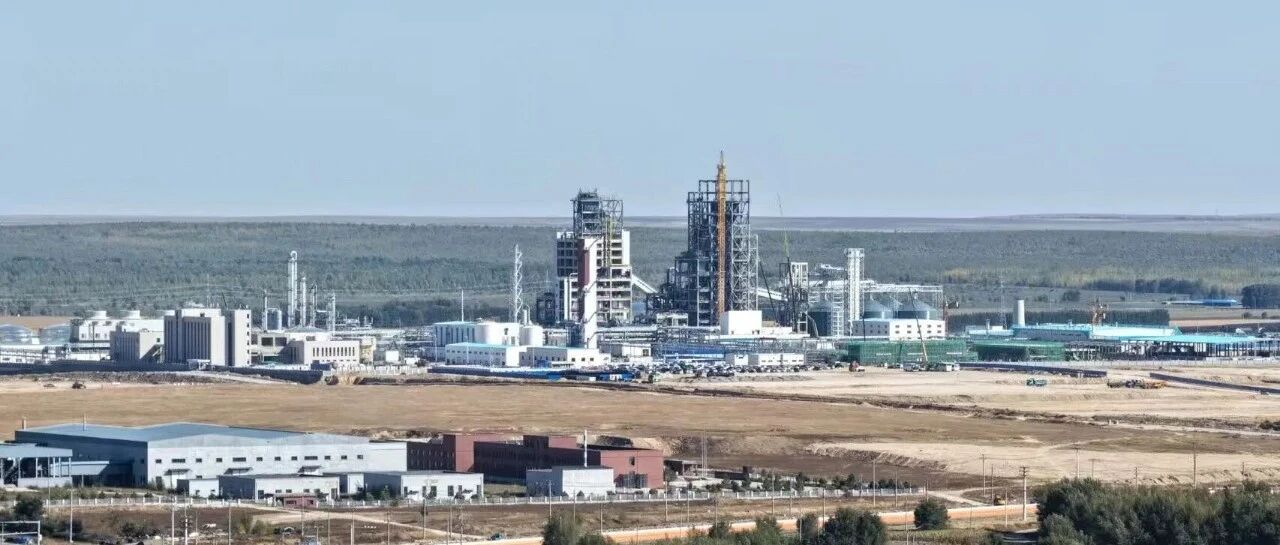
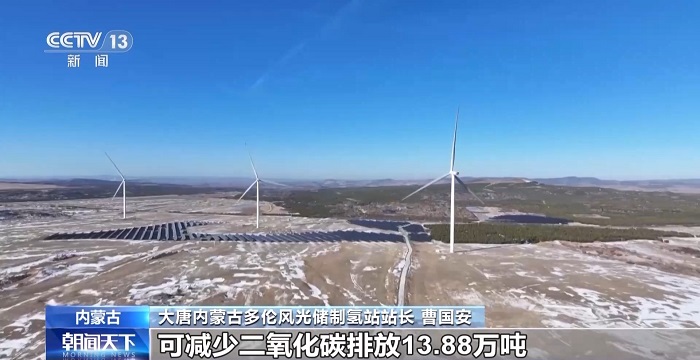
Core Viewpoint - The first integrated green hydrogen coal chemical project in China has commenced market operations, showcasing a replicable model for the green transformation of the coal chemical industry [1]. Group 1 - The project, located in Datang, utilizes a "green electricity hydrogen production + surplus electricity grid connection" collaborative model, marking a significant advancement in the industry [1]. - It has overcome key technical challenges, establishing a deep adjustment mechanism for large-capacity electrolyzers in renewable energy hydrogen production, filling a gap in the industry [1]. - The project has achieved 28 invention patents and published 3 corporate standards, and it has been selected as one of the first pilot projects in the hydrogen energy sector by the National Energy Administration [1]. Group 2 - The project is expected to produce 7.059 million cubic meters of hydrogen annually, contributing to a significant reduction in carbon dioxide emissions [2]. - It is projected to reduce CO2 emissions by 13.88 thousand tons, equivalent to the carbon absorption of 1,400 hectares of mature forest in one year [3].
我国首个绿氢煤化工项目全面投运
Yang Shi Xin Wen· 2025-11-20 09:11
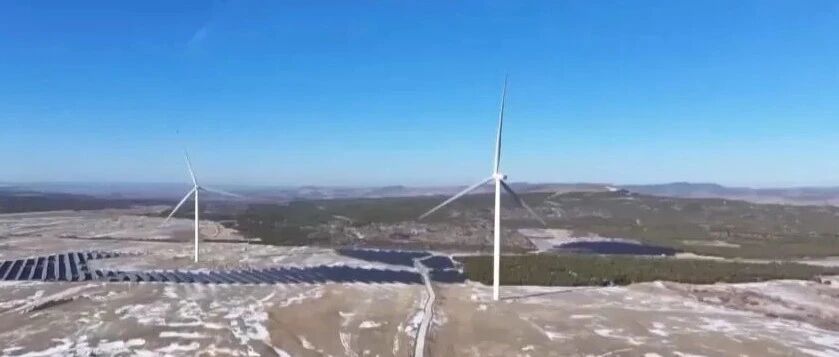
Core Insights - The China Datang Corporation's 150,000 kW wind-solar-storage hydrogen integration demonstration project has fully entered market operation, marking it as the first green hydrogen coupled coal chemical demonstration project in the country [1][3] - The successful implementation of the "green electricity hydrogen production + surplus electricity grid connection" collaborative model provides a replicable practical example for the green transformation of the coal chemical industry [1] Technology and Innovation - The project has overcome key technical challenges, establishing a deep adjustment mechanism for large-capacity electrolyzers in renewable energy hydrogen production, achieving stable operation in the chemical industry [3] - It has completed 28 invention patents and published 3 enterprise standards, and has been selected as one of the first pilot projects in the hydrogen energy sector by the National Energy Administration [3] Environmental Impact - The project is expected to produce 70.59 million cubic meters of hydrogen annually, which will reduce carbon dioxide emissions by 138,800 tons, equivalent to the carbon absorption of 1,400 hectares of mature forest in one year [3]
双良节能50亿资金受限,缪氏家族的“光伏梦”碎了?
Xin Lang Cai Jing· 2025-11-11 13:01
Core Viewpoint - The financial situation of Shuangliang Energy is concerning, with significant debt pressure and a high percentage of restricted cash, raising questions about its operational sustainability and future profitability [1][3][21]. Financial Situation - As of June 30, 2025, Shuangliang Energy reported a total cash balance of 5.612 billion yuan, with 5.052 billion yuan (over 90%) being restricted [3][12]. - The company's debt-to-asset ratio stands at 84.35%, indicating a high level of leverage [3][12]. - Short-term borrowings and long-term borrowings due within one year total 8.903 billion yuan, significantly exceeding the available cash [6][12]. Customer-Supplier Relationships - A major customer, referred to as "Company B," is also the second-largest supplier, creating a complex interdependency [7][9]. - Shuangliang Energy sold 453 million yuan worth of products to "Company B" while purchasing 279 million yuan from them, raising concerns about pricing independence and potential conflicts of interest [7][9]. Industry Comparison - Shuangliang Energy's bank acceptance bill guarantee ratio is 95.13%, significantly higher than its peers, such as TCL Zhonghuan (12.28%) and Longi Green Energy (26.35%) [4][5]. - The average guarantee ratio in the industry is 39.16%, highlighting Shuangliang's unusual financial strategy [4][5]. Business Transition - The company has shifted focus from air conditioning to the photovoltaic industry, which has become its primary revenue source, accounting for 75% of total income by 2024 [10][12]. - Despite initial success in the photovoltaic sector, the company is now facing a downturn due to industry-wide overcapacity and price competition [11][12]. Future Strategies - To address financial challenges, Shuangliang Energy is pivoting towards hydrogen energy, with plans to raise 1.292 billion yuan through a new fundraising initiative [14][16]. - The company aims to develop zero-carbon intelligent manufacturing and green hydrogen equipment, reflecting a strategic shift in response to market conditions [14][16]. Historical Performance - Since its listing, Shuangliang Energy has generated a cumulative net profit of 3.624 billion yuan and distributed 4.089 billion yuan in cash dividends [19][21]. - The majority of shares are held by the founder's family, indicating a strong familial influence on corporate governance and financial decisions [19][21].
募资方案半夜生变,双良节能悄然“改行”
Sou Hu Cai Jing· 2025-10-25 07:17
Core Viewpoint - The company has significantly revised its financing plan, reducing the scale from 25.6 billion to 12.92 billion yuan, and shifting focus away from photovoltaic projects to zero-carbon intelligent manufacturing and green hydrogen equipment [2][3]. Financing Changes - The new financing plan reflects a nearly 50% reduction in scale, with the absence of the previously planned "38GW large-size monocrystalline silicon pulling project" [3]. - The company cites external market conditions and its strategic direction as reasons for the termination of the original plan [3]. Business Performance - In 2024, the company's revenue from energy-saving and water-saving equipment, new energy equipment, and photovoltaic products is projected to be 30.02 billion, 9.46 billion, and 88.62 billion yuan, respectively, with significant declines in the photovoltaic segment [3]. - The gross margin for photovoltaic products is expected to be -16.63%, a drop of 24.86 percentage points year-on-year [3]. Financial Pressure and Strategic Shift - The company is facing increased financial pressure, with the asset-liability ratio rising from 68.49% at the end of 2022 to 81.91% by September 2025 [6]. - The new fundraising plan allocates 3.85 billion yuan, nearly 30% of the total, to replenish working capital [6]. - The company aims to enhance profitability by focusing on energy-saving and hydrogen equipment, aligning with national policies [5]. Recent Performance - In Q3 2025, the company reported a net profit of 0.53 billion yuan, marking a 164.75% increase year-on-year, despite a 49.86% decline in revenue to 16.88 billion yuan [7]. - The revenue drop is attributed to reduced sales of photovoltaic products, while profit recovery is linked to improved management and cost reductions [7].