
罗兰贝格

Search documents
罗兰贝格郑赟:中国车企出海会迎来一两年平台期,需要设定阶段性目标
Sou Hu Cai Jing· 2026-01-10 14:54
Core Insights - The report "Forecast 2026: China Industry Trends" by Roland Berger highlights the strategic transformation of China towards high-quality development and sustainable modernization, emphasizing the need for persistent efforts and a comprehensive strategy to enhance productivity and consumer confidence [1][3]. Group 1: Automotive Industry Trends - The Chinese automotive industry is undergoing significant transformation, with total sales expected to reach approximately 34 million units in 2025, including around 7 million exports, and a monthly average of 3 million passenger vehicles [4][5]. - The penetration rate of new energy vehicles (NEVs) has surpassed 60% by December 2025, indicating a rapid transition from traditional fuel vehicles to electric vehicles within five years [4][5]. - Despite the growth in volume, the automotive industry's profit margin remains low at about 4.4%, with over 50% of dealers experiencing losses and an average vehicle price declining by approximately 9% year-on-year [4][5]. Group 2: Key Transformation Lines - Six key transformation lines are identified as critical for industry competition in 2026: elimination race, deepening transformation, internationalization, technology competition, capital race, and AI competition [6][7]. - The "elimination race" suggests a market structure where a few leading companies dominate, while the "deepening transformation" indicates a shift from traditional vehicles to smart mobility devices integrated with advanced technologies [6][7]. - The automotive industry is expected to further localize operations globally, enhancing service to consumers through localized employment and product adaptation [6][7]. Group 3: Global Expansion of Chinese Automakers - Chinese automotive exports are projected to enter a "platform period" over the next one to two years, with an optimistic long-term outlook despite facing local protectionism and compliance challenges [10][12]. - By 2030, the export volume of Chinese vehicles is anticipated to reach between 8 million and 10 million units, transitioning from rapid growth to a focus on quality, profitability, and brand development [12][16]. - The main challenge for Chinese automakers abroad is adapting to local markets, necessitating coordination between headquarters and local operations, as well as building local supply chains [14][15].

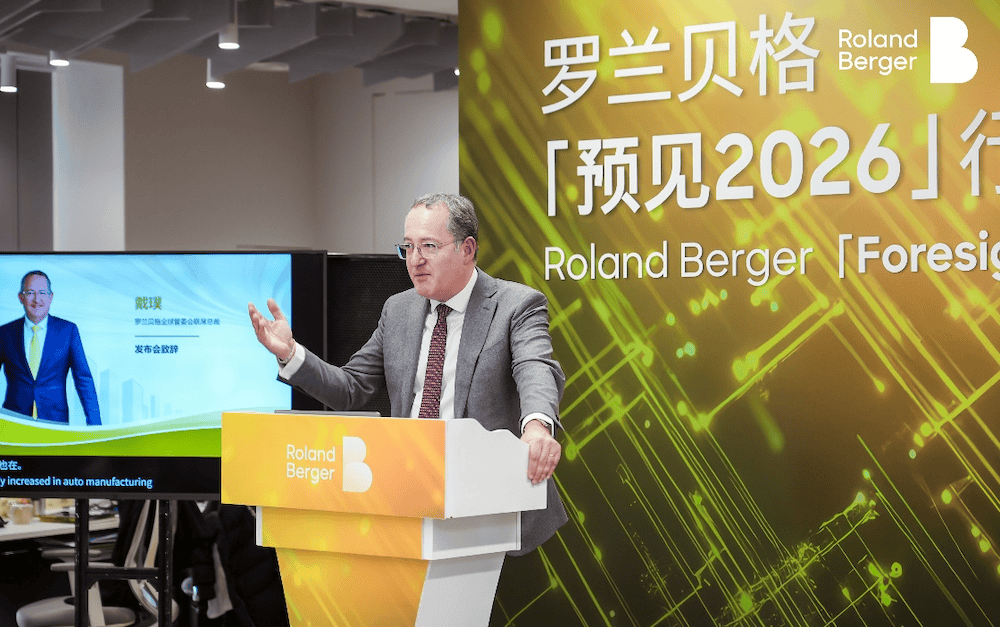
报告:中国汽车行业淘汰赛已进入深化阶段
Zhong Guo Xin Wen Wang· 2026-01-09 12:05
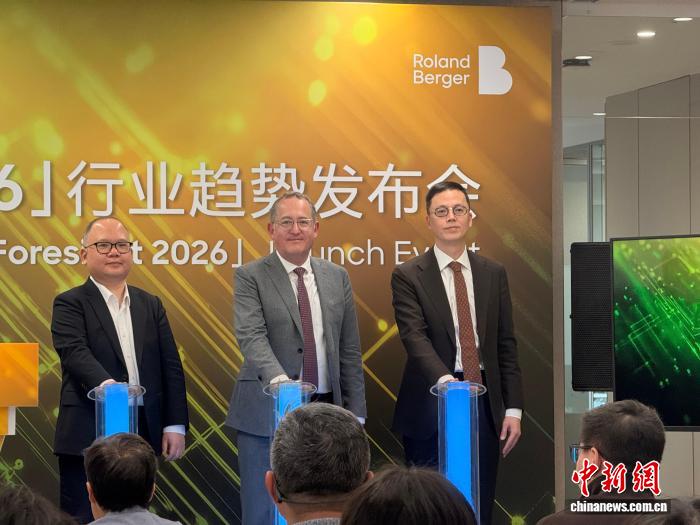
Core Insights - The report by Roland Berger highlights significant transformations in the Chinese automotive industry, projecting a total vehicle sales of approximately 34 million units in 2025, with around 7 million units expected to be exported, showcasing a strong shift towards new energy vehicles with penetration rates exceeding 50% monthly from mid-year and surpassing 60% in December [3][4] Group 1: Industry Trends - The Chinese automotive market is anticipated to undergo a balance restructuring phase in the next three to five years, driven by ecological innovation and global market dynamics [3] - Six key transformative themes for 2026 have been identified: elimination competition, deepening transformation battles, further internationalization, technology competition, capital competition, and AI competition [4] Group 2: Market Dynamics - The competitive landscape will increasingly favor leading companies, with a market structure evolving into a few top-tier firms, several mid-tier firms, and a large number of lower-tier companies [4] - The automotive sector is transitioning from traditional transportation to smart devices, necessitating cross-industry collaborations with sectors such as chips, software, energy, and cloud computing [5] Group 3: Technological and Capital Considerations - The core product capabilities of vehicles will shift from traditional transport functions to AI-driven intelligent forms, including advancements in autonomous driving and new materials [5] - In a context of pressured overall profit margins, the ability to leverage capital effectively and enhance core operational efficiency will be crucial for distinguishing the positioning of various companies [5]
均价跌至13.6万元!2025年12月新能源车降价幅度高达14.7%,机构人士:今年三季度行业利润率有望回升
Sou Hu Cai Jing· 2026-01-09 08:48
Core Insights - The Chinese automotive market is expected to achieve a scale breakthrough by 2025, but it will still face multiple challenges, including pressure on profitability. However, with a return to rational competition and an optimized market structure, the overall profit margin in the industry is anticipated to recover by the third quarter of 2026 [1] Group 1: Market Performance - In 2025, the average profit margin of the automotive industry is projected to be around 4.4%, significantly lower than the average profit margin of 6% for downstream industrial enterprises. More than half of the dealers are expected to be in a loss position, with the average price of passenger cars decreasing by approximately 9% year-on-year [1] - Data from the Passenger Car Association indicates that in December 2025, the average price of discounted domestic new energy vehicles was 136,000 yuan, with an average price drop of 20,000 yuan, representing a decline of 14.7%. Throughout 2025, the average price of discounted new passenger cars was 191,000 yuan, with an average price reduction of 20,000 yuan, resulting in a decline of 10.5% [3] Group 2: Industry Dynamics - The "price war" in the industry is showing signs of returning to rationality, with the number of discounted models decreasing by 42 compared to the previous year, totaling 177 models in 2025 [3] - The industry is expected to evolve into a structure characterized by a few leading companies, some mid-tier firms, and a large number of tail-end companies being reshuffled. Not all companies need to pursue sales volumes in the millions; some can find sustainable development paths by focusing on niche markets such as off-road and family vehicles [4] Group 3: Future Trends - The competition in the automotive industry in 2026 will shift towards the capital arena, where the competition will extend beyond technology, products, and customer relations to include capital strength, cash flow management, and merger and acquisition efficiency. The liquidity of capital and the efficiency of fund allocation will be critical in determining the survival and development space of enterprises amid the accelerating industry cycle adjustment and reshuffling [5]
罗兰贝格:中企跨境并购增加 更深度融入全球产业链
Zhong Guo Xin Wen Wang· 2026-01-08 15:38
Core Insights - The report by Roland Berger highlights that the diversification and cross-regional nature of cross-border mergers and acquisitions (M&A) will drive Chinese companies deeper into the global supply chain, accelerating their internationalization efforts [1] Group 1: Cross-Border M&A Trends - In the first half of 2025, Chinese companies announced a total M&A value of approximately $20 billion, reflecting a nearly 80% year-on-year increase, indicating a more proactive approach to overseas acquisitions and local operations [1] - The report emphasizes that while there are risks associated with going abroad, the risks of not internationalizing are greater, as exporting through international trade faces challenges such as tariffs, anti-dumping measures, and antitrust issues [1] Group 2: Capital and Industry Integration - The acceleration of capital going overseas is leading to the integration of supply chains, with the impact of overseas M&A extending beyond sectors like automotive parts and new energy to include traditional industries such as construction and consumer goods [1] Group 3: Challenges and Strategic Adjustments - Chinese companies face uncertainties when expanding internationally and need to establish a dynamic adjustment mechanism to respond agilely, which raises the requirements for their internationalization investments and capabilities [1]
罗兰贝格戴璞称赞中国车企:厉害之处在于“从用户需求出发,把需求细分到极致”
Xin Lang Cai Jing· 2025-12-17 03:39
Core Insights - The conversation highlighted that the penetration rate of pure electric vehicles is expected to rise to 80% by 2030, with a model prediction of 78% [1][3] - Two main drivers for this growth were identified: technological maturity and product diversity in the Chinese electric vehicle market [1][3] Group 1: Technological and Market Drivers - The first driver is technology, as the maturity of new energy vehicle technology and the availability of diverse products have fostered competition and innovation [1][3] - The second driver is product diversity, where the Chinese electric vehicle market offers a wide range of choices that cater to specific user needs, leading to the concept of "supply creating demand" [1][3] Group 2: Competitive Advantages of Chinese Automakers - Chinese automakers excel in understanding user needs and segmenting them to an extreme degree, which supports a highly differentiated product strategy [2][4] - This approach allows products to stand out in the market, positioning Chinese companies as leaders in various industries [2][4] Group 3: Design Appreciation - The design of the ET9 was specifically praised for being elegant yet understated, showcasing a unique aesthetic that differentiates it from competitors [2][4]
罗兰贝格戴璞:激烈竞争促进新能源车普及
Xin Lang Cai Jing· 2025-12-17 03:39
Core Insights - The conversation highlighted that the penetration rate of pure electric vehicles is expected to rise to 80% by 2030, with a model prediction of 78% [1][3] - Two main drivers for this growth are identified: technological maturity and product diversity in the Chinese electric vehicle market [1][3] Group 1: Technological and Market Drivers - The first driver is technology, as the maturity of new energy vehicle technology and the availability of diverse products have fostered competition and innovation [1][3] - The second driver is product diversity, where the Chinese electric vehicle market offers a wide range of choices that stimulate market growth, emphasizing a user-centered approach [1][3] Group 2: Competitive Advantage of Chinese Automakers - Chinese automakers excel in segmenting user needs and organizing supply chain capabilities to support highly differentiated product strategies, which is a significant competitive advantage [2][4] - The approach of defining various usage scenarios for each vehicle contrasts with the more generalized product strategies of Western and Japanese automakers, which often leads to less effective outcomes [1][3]
罗兰贝格戴璞:2030年纯电车型渗透率将上升至80%
Xin Lang Cai Jing· 2025-12-17 03:39
Core Insights - The conversation highlighted that the penetration rate of pure electric vehicles is expected to rise to 80% by 2030, with a model prediction of 78% [1][3] - Two main drivers for this growth are identified: technological maturity and product diversity in the Chinese electric vehicle market [1][3] Group 1: Technological and Market Drivers - The first driver is technology, as the maturity of new energy vehicle technology and the availability of diverse products have fostered competition and innovation [1][3] - The second driver is product diversity, where the Chinese electric vehicle market offers a wide range of choices that cater to specific user needs, leading to the concept of "supply creating demand" [1][3] Group 2: Competitive Advantage of Chinese Automakers - Chinese automakers excel in understanding user needs and segmenting them to an extreme degree, which supports a highly differentiated product strategy [2][4] - This approach allows products to stand out in the market, showcasing a significant advantage over competitors from other regions [2][4] Group 3: Design Appreciation - The design of the ET9 model is noted for being understated yet elegant, reflecting a sophisticated aesthetic [2][4]
揭秘“以小博大”的咨询业江湖,数千万元的咨询费如何量化?
Di Yi Cai Jing Zi Xun· 2025-12-14 05:46
2025.12.14 本文字数:3627,阅读时长大约6分钟 作者 |第一财经 冯小芯 张甜甜 钱童心 近期,微博大V罗永浩和华与华创始人华杉的争论引发关注,咨询公司的"天价"咨询费和实际效果进一 步陷入质疑风波。 第一财经记者采访了解到,国内头部咨询公司收费动辄数百万元甚至上千万元。那么咨询公司在商业社 会中究竟扮演了怎样的角色?他们又是如何操盘这些案例?在咨询公司活跃的江湖里,又有哪些不为人 所熟知的隐秘角落? 咨询公司做什么:从广告到战略 "国内咨询公司的发展壮大,与快速成长的消费品市场分不开。消费品主要面向广大消费者,而消费者 的决策快、群体广泛,易受广告影响,因此营销能发挥巨大作用。比如服装、家居、建材、家电、食 品、饮料、餐饮等,占据了咨询公司绝大部分的业务。B端市场决策链路长、参与人员多,很少受营销 广告影响。"战略咨询行业的资深人士于谨文对第一财经记者表示。 咨询公司通常归属于商业服务业,业务小到顾客拿到手里的宣传页,大到企业的核心业务筛选,近年来 充分参与到商业浪潮中。多位业内人士表示,咨询公司的运营模式有几大类别——广告咨询公司、营销 咨询公司、管理咨询公司、战略咨询公司。 于谨文告诉第一 ...

罗兰贝格:中国加速成为全球汽车行业技术领军者
Xin Hua Cai Jing· 2025-11-24 14:58
全球自动驾驶技术狂奔,消费者兴趣有限 新华财经上海11月24日电(记者王鹤)罗兰贝格近日发布《汽车行业颠覆性数据探测》报告显示,全球 汽车行业迎来关键转折点,中国正加速成为全球汽车行业的技术领军者,在所有被调研国家中位居榜 首。汽车行业的区域性生态圈正加速分化,各国在技术标准、法规政策和消费者偏好等维度的差异愈发 显著。 罗兰贝格全球高级合伙人、亚洲区汽车业务负责人郑赟表示,汽车行业正经历全面转型,但各国家、地 区的进程有所差异。中国在电动车市场份额、补能基础设施、人工智能驱动的驾驶辅助系统等汽车行业 关键维度均处于领先地位,正迅速拉开与其他地区的差距。不仅如此,中国主机厂的研发周期仅为24至 40个月,而欧洲主机厂则需要48至60个月。 中国凭借在技术和基础设施两大维度上的最高得分,在电气化和自动驾驶等关键领域巩固了领先地位。 与此同时,中国消费者对新款电动车表现出较高兴趣,95%的受访者表示愿意考虑购买电动车作为下一 辆车;而中国汽车制造商持续推出电动车产品组合及不断完善的补能基础设施。 罗兰贝格全球合伙人时帅指出,不同地区间的差距日益显著,尤其体现在软件、标准和新车开发速度等 方面,同时消费者预期也呈现 ...
报告显示中企在欧发展展现韧性
Xin Hua Wang· 2025-11-13 01:41
Core Insights - The report released by the EU Chamber of Commerce in China and Roland Berger indicates that Chinese enterprises in the EU are demonstrating resilience despite macroeconomic pressures and a complex business environment, with an overall positive development trend [1] Group 1: Business Performance - Over 80% of surveyed companies expect their operating conditions to remain stable or improve in 2024 [1] - 53% of respondents reported an increase in revenue in the EU, with 12% experiencing significant growth [1] - 40% of surveyed companies anticipate an increase in profits for 2024 [1] Group 2: Future Outlook - There is a general optimism among Chinese enterprises regarding their business conditions in 2025, with 62% expecting revenue growth [1] - 46% of respondents foresee an increase in profits for 2025, while 39% expect profits to remain stable [1] Group 3: Market Perspective - Chinese enterprises recognize the long-term value of the EU market, which is evolving beyond traditional export roles to become a hub for technological innovation and global brand testing [1] - The report emphasizes the need for cooperation to address challenges in the context of a complex global geopolitical landscape and accelerated supply chain restructuring [1][2]