
吉利汽车

Search documents
麦格理:升吉利汽车(00175)目标价至24港元 季绩稳固 维持行业首选
智通财经网· 2026-03-20 02:40
在大中华区,麦格理认为吉利在中国汽车股中仍提供最佳的风险回报比,并维持其为该行的行业首选 股。整体而言,麦格理对吉利今年全年调整后净利润预测上调6%至193亿元人民币。 智通财经APP获悉,麦格理研究报告指出,吉利汽车(00175)2025年第四季度业绩稳固,销售额、净利润 分别较市场隐含预期高出5%、10%,主要受豪华车型组合改善推动。2026全年销量指引维持在345万 辆,同比增长14%。管理层重申其2026全年海外销量指引为64万辆,并指出内部挑战目标是接近75万 辆。该行将吉利目标价上调4.3%,从23港元升至24港元,相当于预测2026年市盈率12倍; 维持跑赢大市 评级。 ...

交银国际:维持吉利汽车(00175)“买入”的投资评级 今明两年每股盈利预测8.8%及16.4%
智通财经网· 2026-03-20 02:26
智通财经APP发布研报称,交银国际发布研报称,维持吉利汽车(00175)"买入"的投资评级,目标价 24.21港元。2026及2027年每股盈利预测上调8.8%及16.4%,基于更强的销售、毛利和整合预期, 该行指,吉利去年再创新高,第四财季盈利质量继续改善,而2026年重点看新车、出海和整合。该行认 为,吉利已经进入更清晰的向上阶段:销售增长快,新能源盈利能力改善,高端化开始带动毛利率提 升,而整合协同对费用和效率的帮助会更多体现在2026年。领克和极氪整合、中后台统一、采购和制造 协同,短期还没有完全反映在财报里,后续仍有释放空间。 ...
营收首破3400亿!从“大浪淘沙”到“引领全球”,吉利汽车驶向AI深海区
Jin Rong Jie· 2026-03-20 02:18
Core Insights - Geely has set ambitious goals to become a global leader in smart vehicles by 2030, aiming to rank among the top five global automakers in terms of sales [1] - The company reported record sales, revenue, and profitability in 2025, demonstrating strong market competitiveness and a commitment to technological advancement [2][3] Group 1: Financial Performance - In 2025, Geely's sales exceeded 3 million units, marking a 39% year-on-year increase, surpassing its annual sales target [2] - Total revenue reached 345.2 billion RMB, a 25% increase year-on-year, achieving a historical high [2] - Core net profit attributable to shareholders was 14.41 billion RMB, up 36% year-on-year, indicating high-quality growth [2] Group 2: Strategic Partnerships and Technological Advancements - Geely announced a strategic partnership with NVIDIA to collaborate on physical AI, enterprise AI, and industrial AI, aiming to create a comprehensive ecosystem for smart vehicles [3] - The partnership will lead to the launch of the world's first super intelligent vehicle, integrating smart cockpit, assisted driving, and digital ecosystems, set to debut in the Zeekr 8X model [3][4] Group 3: Brand Integration and Market Positioning - Geely has successfully integrated its three brands—Geely, Lynk & Co, and Zeekr—eliminating resource duplication and enhancing operational efficiency across the value chain [6] - The Galaxy brand saw a 150% increase in sales, reaching 1.236 million units, solidifying its position as the second-best-selling new energy brand in China [6] - Geely is expanding its global footprint by accelerating electric vehicle exports and deepening strategic partnerships, such as its investment in Renault Brazil [6] Group 4: AI and Future Outlook - Geely has established a comprehensive AI system that integrates artificial intelligence throughout the vehicle lifecycle, moving beyond traditional applications in cockpit and autonomous driving [7] - The company has set a new sales target of 3.45 million units for 2026, focusing on AI technology, energy diversification, luxury experience upgrades, and international expansion [7]
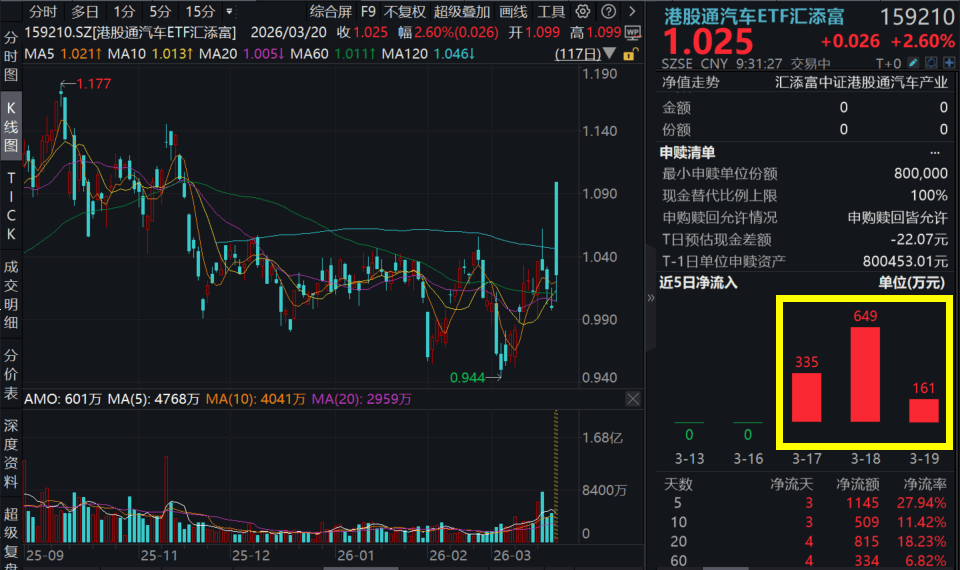
营收利润双爆,吉利汽车绩后大涨超5%!港股通汽车ETF汇添富(159210)涨2.6%,连续3日吸金!电动化与AI智能化共振,汽车产业新机遇!
Sou Hu Cai Jing· 2026-03-20 02:06
Core Viewpoint - The Hong Kong stock market is experiencing a rebound, particularly in the automotive sector, with significant inflows into the Hong Kong Stock Connect Automotive ETF, indicating a positive sentiment towards automotive stocks [1][3]. Group 1: Market Performance - As of March 20, the Hong Kong Stock Connect Automotive ETF (159210) rose by 2.6%, potentially ending a three-day decline, with over 11 million yuan in inflows over the past three days [1]. - Major component stocks of the ETF saw substantial gains, including Horizon Robotics up over 6%, Geely Automobile up over 5%, and CATL up over 3% [3]. Group 2: Key Company Highlights - Geely Automobile reported a total revenue of 345.23 billion yuan for 2025, a 25% year-on-year increase, marking a historical high, with a net profit of 16.85 billion yuan, a slight increase of 0.2% year-on-year [5]. - Geely's cumulative deliveries for January and February reached 476,300 units, a slight increase of 1% year-on-year, surpassing BYD to become the sales champion, with 241,700 units of new energy vehicles sold, a 10.1% increase year-on-year [5]. Group 3: Industry Trends - The automotive industry is undergoing dual transformations centered around electrification and AI integration, with expectations for significant advancements in smart driving and vehicle technology [11]. - The demand for automobiles is expected to remain resilient despite policy changes, with a notable recovery in mid-to-high-end demand driven by shifts in consumer habits and product competitiveness [6]. - The global expansion of Chinese smart electric vehicles is anticipated, with projections of nearly 10 million units in overseas sales within five years [7]. Group 4: Investment Opportunities - The Hong Kong Stock Connect Automotive ETF tracks the China Securities Hong Kong Stock Connect Automotive Industry Theme Index, covering the entire automotive supply chain, including electric vehicles and related technologies [11]. - The ETF's top holdings include leading companies such as BYD, Xpeng Motors, and Li Auto, focusing on opportunities in smart driving and energy storage sectors [11].

交银国际每日晨报-20260320
BOCOM International· 2026-03-20 02:05
Global Macro - The Federal Reserve maintained interest rates in the range of 3.5%-3.75% during the March FOMC meeting, marking the second consecutive meeting without a rate cut. The meeting's focus was on the geopolitical situation in the Middle East, which has led to a surge in oil prices above $100 per barrel, impacting inflation and narrowing the Fed's policy options [1][2] - The window for rate cuts has been pushed back to the second half of 2026 due to two main constraints: ongoing geopolitical tensions affecting oil prices and the combined impact of tariffs and energy shocks on the Fed's inflation narrative. A clearer geopolitical situation and a downward trend in core inflation are necessary for the rate cut window to open [2] Geely Automobile - Geely's performance in 2025 was strong, with record sales, revenue, and core profits. The gross margin continued to improve in Q4 2025, reflecting the benefits of high-end product offerings and scale effects. The outlook for 2026 is positive, driven by a new product cycle, accelerated international expansion, and integration synergies [3] - The target price for Geely is set at HKD 24.21, indicating a potential upside of 33.4% from the closing price of HKD 18.15 [3] Major Indices - The Hang Seng Index closed at 25,501, down 1.63% for the day and down 2.38% year-to-date. Other major indices, including the Dow Jones and S&P 500, also experienced declines [4] - Brent crude oil prices reached 107.29, reflecting a significant increase of 76.35% year-to-date, indicating strong upward pressure on energy prices [4] Economic Data Releases - Upcoming economic data releases include the U.S. Producer Price Index for February, expected to show a month-on-month increase of 0.50%, and initial jobless claims, with a forecast of 213,000 [6]
光大证券晨会速递-20260320
EBSCN· 2026-03-20 01:58
Group 1: Macro Insights - The recent FOMC meeting decided to pause interest rate cuts, aligning with market expectations, and highlighted a more optimistic view on inflation, suggesting that the recent energy supply shock is likely a one-time event [2] - There are concerns about potential stagflation, with the Fed raising its PCE inflation forecast and noting that the absolute level of new job creation is too low, posing risks [2] - Powell's comments on his future at the Fed depend on whether the new chairman, Waller, can be confirmed by the Senate in a timely manner, and whether the Trump administration will conclude its investigations [2] Group 2: Company Research - AIA Group (1299.HK) reported a 8.8% year-on-year decline in net profit attributable to shareholders for 2025, while new business value (NBV) increased by 17.1%. The company expects continued growth in NBV driven by agency and partner distribution channels [3] - Haitan International (1882.HK) achieved a 10.0% year-on-year revenue growth and a 7.2% increase in net profit attributable to shareholders for 2025. The company has adjusted its net profit forecasts for 2026-2027 downwards by 6.7% and 6.1% respectively, while introducing a new forecast for 2028 [4] - Geely Automobile (0175.HK) has adjusted its net profit forecasts for 2026 and 2027 down by 0.4% and 0.8% respectively, while introducing a new forecast for 2028. The company remains optimistic about product structure improvements and export growth [4] - Shengmei Shanghai (688082.SH) is progressing steadily in its cleaning equipment business, with new product development on track. The company is expected to see net profit attributable to shareholders of 1.829 billion, 2.285 billion, and 2.667 billion for 2026-2028 [5] - Saint Bella Group (2508.HK), a leader in high-end postpartum care, is well-positioned to benefit from industry upgrades and is expanding into overseas markets. The company forecasts adjusted net profits of 121 million, 178 million, and 279 million for 2025-2027 [6]

港股异动 | 吉利汽车(00175)再涨超5% 极氪8X市场反响热烈 机构指公司进入清晰向上阶段
智通财经网· 2026-03-20 01:57
Core Viewpoint - Geely Automobile has seen a significant stock increase of over 5%, with a cumulative rise of nearly 20% within the month, indicating strong market performance and investor confidence [1] Group 1: Stock Performance - As of the latest report, Geely's stock price is at 19.27 HKD, reflecting a 5.07% increase with a trading volume of 652 million HKD [1] Group 2: New Model Launch - Zeekr brand has officially launched the pre-sale of its new model, Zeekr 8X, during a technology conference in Shanghai, achieving over 10,000 orders within 38 minutes and exceeding 30,000 orders in less than 48 hours, showcasing strong market demand [1] Group 3: Financial Outlook - According to CMB International, Geely is entering a clearer upward phase characterized by rapid sales growth, improved profitability in the new energy sector, and a high-end strategy that is beginning to enhance gross margins [1] - The integration of Lynk & Co and Zeekr, along with unified backend operations and procurement and manufacturing synergies, is expected to yield more benefits in terms of cost efficiency and operational effectiveness, with significant impacts anticipated by 2026 [1]
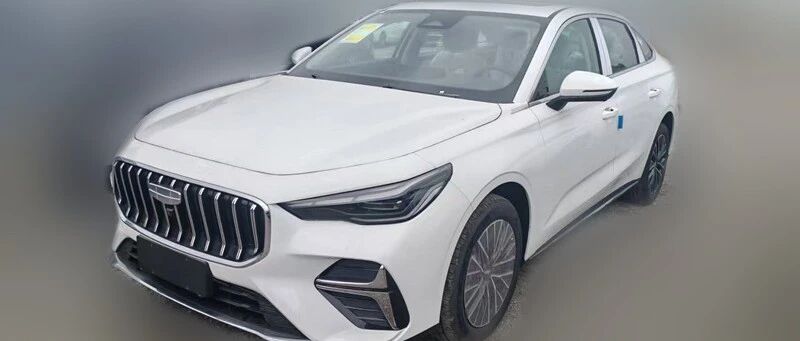
吉利帝豪:有一半客户是冲着它来的,车好卖提成只有两三百
车fans· 2026-03-20 00:30
Core Viewpoint - The automotive market dynamics have shifted, with consumers now opting for joint venture vehicles for their affordability rather than domestic brands, which were previously chosen for the same reason [1][13]. Sales Performance - In a local market, two dealerships reported an average of 20 customer visits daily, with half specifically interested in the Emgrand model. Last month, a total of 138 vehicles were sold, with 51 units being Emgrand, indicating strong demand [2]. - The current inventory includes 31 units of Emgrand, with the 1.5T premium version making up 80% of the stock. The most popular colors are black and white, each accounting for 30-40% of sales [3]. Customer Demographics - The customer demographic for the Emgrand shows a gender ratio of approximately 6:4, with the primary age group between 20 and 50 years. Notably, younger female buyers often receive financial support from their families, while male buyers tend to be older and more price-sensitive [4][5]. Competitive Landscape - The main competitors identified include Changan's fourth-generation Eado, Nissan's Sylphy, and Volkswagen's Bora. However, 30-40% of customers also compare the Emgrand with other joint venture models like the Lavida and Jetta [7]. - The Emgrand often outperforms competitors due to its superior configuration and larger space, appealing to consumers looking for value [8]. Pricing and Promotions - The Emgrand's pricing strategy has seen increasing discounts, from ¥9,000 in December to ¥13,000 recently, reflecting a competitive approach to attract buyers [15]. - The most popular configuration is the 1.5T premium version, which includes advanced features and is priced reasonably, making it the best value option [16]. Customer Feedback and Issues - Customers have reported issues with the 360-degree panoramic camera, which occasionally lags. However, the Emgrand is praised for retaining physical buttons, making it user-friendly for older individuals [19]. - Maintenance costs for the 1.5T model are approximately ¥600 annually, while the 1.5L model is cheaper at around ¥300, but requires more frequent servicing [21]. Trade-in Policies - The trade-in policy offers a cash rebate of ¥3,000 for non-GEELY vehicles and ¥4,000 for GEELY vehicles. Notably, trading in an old Emgrand for a new one provides an additional ¥3,000, totaling ¥7,000 in rebates [22]. - Certain professions, such as firefighters and teachers, may qualify for an additional ¥2,000 subsidy, which sales representatives may not always mention [23].
解密蔚来芯片分拆始末,正规划低端芯片对标地平线J6M|36氪独家
36氪· 2026-03-20 00:10
Core Viewpoint - NIO has achieved its first quarterly profit of over 1.2 billion yuan in Q4 2025 after several quarters of significant losses, attributed to cost control reforms and the restructuring of its chip business [4][18]. Group 1: Financial Performance and Strategy - NIO's financial turnaround is marked by a strategic focus on cost control and restructuring, particularly in its chip business, which has been a major financial burden [5][19]. - The chip business, previously a significant cost center, has been spun off into a separate entity, Nanjing Shenji Technology, to attract external investment and improve financial performance [10][19]. - The successful launch of the M97 chip, developed in collaboration with Aisin Yuan Zhi, is expected to generate substantial revenue through external sales to other automakers [8][19]. Group 2: Chip Development and Market Position - The M97 chip boasts a computing power of over 700 TOPS, positioning it competitively against existing products like Horizon's J6P, which has a computing power of 560 TOPS [8]. - NIO's chip business has been restructured to allow for external sales, with the potential for significant revenue generation through technology licensing fees [19]. - The collaboration with Aisin Yuan Zhi is seen as a strategic move to fill the gap in the high-performance chip market, especially as demand for domestic alternatives to NVIDIA and Qualcomm increases [22][24]. Group 3: Industry Trends and Competitive Landscape - The Chinese automotive market is experiencing a shift towards domestic high-performance chips, driven by cost-cutting pressures among automakers [22][24]. - There is a notable opportunity for NIO and other companies to capitalize on the current market window for domestic chip supply, as many automakers are still reliant on foreign chip solutions [23][24]. - The competitive landscape is evolving, with companies like Xiaopeng also seeking to expand their chip offerings, indicating a growing trend towards self-sufficiency in chip development within the industry [21].

吉利汽车(00175.HK):2025年业绩符合预期 单车表现逐季提升
Ge Long Hui· 2026-03-19 23:21
Core Viewpoint - The company reported a strong performance for 2025, with a revenue increase of 25.1% year-on-year, reaching 345.23 billion yuan, while the net profit remained stable at 16.85 billion yuan, indicating resilience in its core operations [1][2]. Revenue Summary - In Q4 2025, the company achieved a revenue of 105.76 billion yuan, reflecting a quarter-on-quarter increase of 22.1% and a year-on-year increase of 18.6% [1]. - The total vehicle sales for Q4 2025 reached 854,000 units, with a quarter-on-quarter increase of 9.3% [1]. - By brand, sales in Q4 2025 were as follows: Geely brand at 304,000 units, Galaxy brand at 361,000 units, Zeekr brand at 81,000 units, and Lynk & Co brand at 109,000 units [1]. - The average selling price (ASP) for vehicles in Q4 2025 was approximately 124,000 yuan, showing a steady increase [1]. Profit Summary - The core net profit for Q4 2025 was 3.79 billion yuan, with a quarter-on-quarter decrease of 3.2% and a year-on-year decrease of 4.3% [2]. - The gross profit margin for Q4 2025 was 16.9%, reflecting a quarter-on-quarter increase of 0.3 percentage points [2]. - The operating net profit margin was 3.6%, showing a quarter-on-quarter decrease of 0.9 percentage points [2]. - The period expense ratio for Q4 2025 was approximately 14.0%, with a quarter-on-quarter increase of 1.6 percentage points, primarily due to increased sales and R&D expenses related to the launch of the high-end Zeekr 9X model [2]. Growth Outlook - The company has set a sales target of 3.45 million units for 2026, representing a year-on-year increase of 14.0%, with export sales projected to reach 640,000 units, a significant increase of 52.7% [2]. - The Zeekr brand is expected to be a major growth driver, with a target of 300,000 units sold in 2026, reflecting a year-on-year increase of 35.1% [2]. - The company plans to launch multiple models under the Galaxy brand quarterly, while also exporting domestic models to boost overseas sales [2]. Investment Recommendation - The company is positioned as a leading platform-based automaker in China, with strong growth prospects driven by exports and high-end product offerings. The net profit forecasts for 2026 and 2027 have been raised to 20.36 billion yuan and 26.11 billion yuan, respectively [3]. - The projected net profit for 2028 is 31.78 billion yuan, with corresponding price-to-earnings ratios of 8.6X, 6.7X, and 5.5X for the respective years [3].