
Temu

Search documents
Target to spend $5B on store revamp as months-long sales slump deepens
New York Post· 2025-11-19 15:33
Core Insights - Target plans to invest $5 billion in stores next year to regain customer trust after reporting its 12th consecutive month of weak or declining sales [1][3] - Same-store sales decreased by 2.7% for the three months ending November 1, with foot traffic down 2.2% and average transaction values falling by 0.5% compared to the previous year [1][4] Financial Performance - Target's net sales fell by 1.5% year-over-year to $25.3 billion, while net income dropped 19% to $689 million [6] - The company adjusted its full-year profit forecast to between $7 and $8 per share, down from a previous range of $7 to $9 [5] Strategic Initiatives - An additional $1 billion will be allocated to enhance the store experience, marking a 25% increase in capital expenditures for the year [4] - Target is addressing customer complaints by improving store conditions, including stocking shelves and providing better customer service [8][10] Market Position and Competition - Target faces challenges from competitors like Walmart and fast-fashion brands such as Shein and Temu, which offer lower prices [4] - The company has implemented price reductions on 3,000 everyday items and introduced 20,000 new holiday products, more than double last year's offerings [10][11] Consumer Behavior - Economic uncertainty and inflation fears have led consumers to reduce spending, particularly on discretionary items [4] - Target anticipates that customers will prioritize essential gifts over decorative items during the holiday season [12][14] Leadership Changes - Michael Fiddelke, currently the Chief Operating Officer, will become CEO on February 1, succeeding Brian Cornell [10][14]


稽查升级!德国VAT合规最新指南,这些雷区注意避开
Sou Hu Cai Jing· 2025-11-19 13:36
德国,是欧洲跨境电商市场的重要板块,也是跨境卖家进入欧洲的首选市场。但同时,它也是欧洲税务制度最严、处罚最重的国家之一。 近年来,随着德国税务监管体系的不断完善,税务稽查力度持续升级。有数据显示,中国跨境卖家收到税务核查函的数量较去年同比激增,轻则补税罚款, 重则关店封号! 德国税务局的智能稽查系统早已布下天罗地网,没有哪个卖家可以心存侥幸。那么卖家又该如何自救呢?本篇为大家梳理德国VAT从注册到申报的合规避坑 建议。 一、哪些卖家需注册德国VAT? 德国本土企业必须注册VAT。此外,其他符合以下范畴的主体,也需按德国税务法规完成强制注册: 1、在德国境内储存商品 如果卖家商品在德国设有海外仓储或者使用了德国本地仓库,即卖家货物储存在德国仓库,再从德国调发到各地,则需要注册德国VAT税号。 2、使用了亚马逊FBA仓的卖家 如果卖家使用了亚马逊FBA(亚马逊仓储和代发货服务),货物从海外发送到亚马逊在德国的仓库中储存销售,也必须在德国申请VAT号码并进行税务申 报。 3、远程销售超过阈值 如果采取远程销售模式,将货物仓储在德国以外的欧洲国家,比如英国,然后将货物直接发送给德国的最终消费者,这种情况下的年销售额如 ...

亚马逊反攻Temu
3 6 Ke· 2025-11-19 10:20
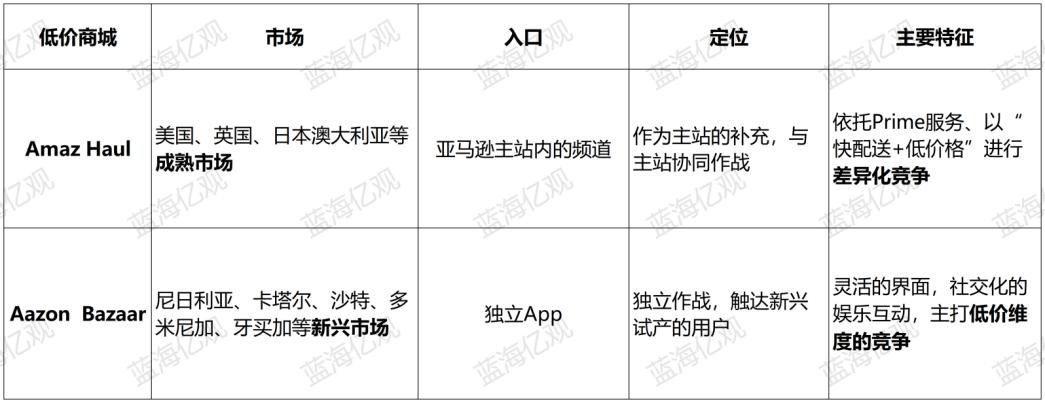
Core Insights - Amazon has launched a standalone low-price shopping app named Amazon Bazaar, marking a significant move into emerging markets and a shift from a defensive to an offensive strategy in the low-price segment [1][7]. Group 1: Amazon's Strategy - Amazon is leveraging two low-price e-commerce platforms: Amazon Haul for developed markets and Amazon Bazaar for emerging markets, emphasizing the importance of positioning and differentiation [2][3]. - Amazon Haul operates as a channel within the main site, focusing on fast delivery and low prices to retain low-price shoppers, while Amazon Bazaar operates independently, focusing solely on low prices [2][3]. - The Bazaar app features a simple interface with interactive entertainment functions, with most products priced below $10, some as low as $2 [3][5]. Group 2: Competitive Landscape - Amazon faces strong competition from Temu and SHEIN in both developed and emerging markets, which have captured significant market share and consumer attention [7][10]. - Temu has rapidly gained traction in emerging markets, including Nigeria, where it topped download charts shortly after launch [10]. - Amazon's Haul is currently struggling in the U.S. market, with low traffic and sales, despite the removal of tax exemptions for Temu [11][12]. Group 3: Future Prospects - Amazon Bazaar will compete with Temu's centralized pricing model and supply chain responsiveness, with the potential challenge of maintaining low prices due to seller autonomy in pricing [14][15]. - The effectiveness of Bazaar in emerging markets remains to be seen, but it may provide new opportunities for factory-type and private label sellers already familiar with platforms like Temu and SHEIN [17].

亚马逊卖家之困:电商税风暴与价格体系的崩塌
雷峰网· 2025-11-19 06:38
Core Viewpoint - The cross-border e-commerce industry is facing significant challenges due to strict enforcement of e-commerce taxes and changing platform rules, particularly on Amazon, which is leading to a survival crisis for small and medium-sized sellers [2][4][9]. Group 1: Challenges Faced by Sellers - The strict enforcement of e-commerce taxes is forcing many sellers to explain discrepancies in reported income, which could lead to losses if they are required to pay back taxes [2][4]. - Amazon's new pricing rules are causing historical prices to be recalibrated, leading to reduced sales volumes for many sellers [6][9]. - Increased advertising costs and platform fees are squeezing profit margins, with some sellers reporting advertising costs exceeding 10% of sales [7][9]. Group 2: Seller Strategies and Adaptations - Many sellers are exploring alternative platforms like TikTok and Temu, seeking better profit margins and less competitive environments, although these platforms also present their own challenges [10][11][12]. - A shift towards brand building is emerging among sellers, as reliance on low-price strategies is becoming unsustainable in the face of intense competition [15][16][18]. - Sellers are balancing their resources between maintaining a presence on Amazon and exploring new channels, with a common strategy being to allocate 70% of resources to Amazon and 30% to emerging platforms like TikTok [21]. Group 3: Market Dynamics - The competitive landscape is evolving, with platforms like TikTok offering lower commission rates (5%-8%) compared to Amazon's rates (15% or more), making them attractive alternatives for sellers [11]. - Amazon is adjusting its algorithms to favor brand-oriented sellers, indicating a shift in platform strategy towards higher-value sellers [16][18]. - The overall sentiment among sellers is one of cautious adaptation, recognizing that while Amazon's environment is tightening, it remains the most viable platform for sustainable profit [21].

关注流感爆发后的产业链机会,电子板块Q3业绩恢复
Tebon Securities· 2025-11-19 03:22
Market Review - The A-share market experienced fluctuations, with the Shanghai Composite Index down 0.18% and the ChiNext Index down 3.01% during the week of November 10-14, 2025. The average daily trading volume was 2.04 trillion yuan, slightly up from the previous week [7][8]. Consumer Sector - The global e-commerce market has seen an overall increase in e-commerce penetration, with a CAGR of 15.5% over the past five years. However, the U.S. e-commerce market is entering a phase of slower growth, with a projected penetration rate of 23.5% by 2025 [18][21]. - The U.S. e-commerce landscape is dominated by a few key players, with Amazon and Walmart contributing over 50% of market growth in 2024. Platforms like Temu and SHEIN are facing challenges due to the end of the small package tax exemption policy [25][28]. Health Sector - The flu is on the rise in China, with the percentage of flu-like illness (ILI) cases reported at 5.5% in southern provinces and 6.1% in northern provinces as of the 45th week of 2025. This trend is expected to increase demand for medical services and treatments [30][31]. - Companies involved in flu vaccine production, antiviral drugs, and protective equipment are likely to benefit from the rising flu cases. Notable companies include Jindike, Baike Biological, and Huashan Biological [33][38]. Hard Technology Sector - The electronic industry reported a total revenue of 1.19 trillion yuan in Q3 2025, reflecting a year-on-year growth of 19.33%. The net profit attributable to shareholders reached 895.61 billion yuan, up 47.89% year-on-year, indicating a strong recovery in profitability [35][36]. - The semiconductor manufacturing sector is experiencing growth due to increased utilization rates in downstream wafer fabs. Companies like Huahong and SMIC reported high capacity utilization rates in Q3 2025 [36][37]. Advanced Manufacturing Sector - The lithium battery industry is transitioning from a phase of overcapacity to a rebalancing stage, driven by strong demand for power and energy storage batteries. This sector has undergone a complete industrial cycle, moving from expansion to inventory clearance and now to demand recovery [5].
Temu升级高价限流手段!亚马逊惊现AI伪造投诉诈骗,卖家速谨慎!
Sou Hu Cai Jing· 2025-11-18 20:29
Group 1 - Temu has upgraded its high-price limit handling measures from "delisting" to "front-end shielding," meaning high-priced products will remain visible in the seller's backend but will be hidden from consumer browsing [5][4][3] - The new shielding method is becoming a key tool for Temu to manage high-priced products, effectively blocking sellers from using previous strategies to wait for natural traffic recovery [5][4] - Sellers are now facing increased risks if they neglect high-priced links, as the platform is closing off old paths for traffic recovery, forcing sellers to address pricing issues directly [5][6] Group 2 - Temu suggests that sellers handle high-price limits by either running promotions for slightly overpriced items or clearing out heavily overpriced stock, as similar products are now available at lower prices [6][5] - The effectiveness of the newly introduced "traffic growth" feature is under scrutiny, as its operational mechanism is not transparent, leaving sellers uncertain about its actual impact on traffic [7][6] Group 3 - The thin-margin, high-volume model is becoming unsustainable on Temu, particularly for traders who face dual pressures from price suppression and competition, leading to immediate losses when facing limits or shielding [8][9] - Temu is transitioning from a "fully managed" to a "semi-self-operated" strategy, requiring sellers to take on responsibilities for product selection, pricing, and inventory management while the platform focuses on traffic distribution and rule-making [13][16] Group 4 - Temu's new pricing rules, effective March 2024, will penalize sellers whose prices exceed those of similar products, potentially leading to restrictions on new listings and withdrawal freezes [11][10] - The platform's shift towards compliance and brand-focused sellers is evident, as those with certifications and stable supply chains will receive more resources, further squeezing the space for small and medium-sized businesses [16][13]

X @The Wall Street Journal
The Wall Street Journal· 2025-11-18 20:15
The Chinese owner of bargain-shopping app Temu continued to deliver single-digit revenue growth as the company navigates a challenging business environment, warning of more volatility ahead https://t.co/bLDMaZLho2 ...
巴西这个地方,情况太复杂了
3 6 Ke· 2025-11-18 09:20
Core Insights - Brazil is increasingly seen as a key market for Chinese companies, second only to Mexico, due to strengthened political and diplomatic ties between China and Brazil [1] - Despite the high export figures from China to Brazil, the market share of Chinese cross-border e-commerce platforms in Brazil is declining, indicating a complex market environment [1][2] - The Brazilian market presents both opportunities and challenges, with a divide between successful head brands and struggling small and medium enterprises [2] Group 1: Market Dynamics - In 2024, China's export to Brazil is expected to reach $72.08 billion (approximately 513.78 billion RMB), a year-on-year increase of 22% [4] - Brazil is a major investment destination for China, with expected investments exceeding $4.8 billion (approximately 34.2 billion RMB) in 2024, more than doubling from the previous year [4] - The Brazilian automotive market is expanding, with new car sales projected to grow by 14.1% to 2.635 million units in 2024, driven by government policies promoting electric vehicles [5][6] Group 2: Investment Opportunities - Emerging industries such as clean energy, digital economy, and logistics are becoming focal points for Chinese investment in Brazil, with significant opportunities in electric vehicles and solar energy [5][9] - The Brazilian government is supportive of solar energy projects, with multiple initiatives launched since 2012 to promote the solar industry [9] - The local market's demand for electric vehicles is growing, with Chinese brands like BYD and Great Wall Motors capturing significant market shares [6] Group 3: Challenges for SMEs - The complex tax system in Brazil, with over 50 different tax types, poses significant challenges for small and medium enterprises, making market entry difficult [11] - The overall tax burden for businesses in Brazil can exceed 40%, which can erode profit margins for companies with lower gross margins [11][12] - Recent changes in tax policies, such as the cancellation of tax exemptions for small packages, have further increased costs for Chinese e-commerce businesses [15] Group 4: Localization and Compliance - Localization is critical for Chinese companies operating in Brazil, with a focus on hiring local talent to navigate the complex regulatory environment [16][19] - The Brazilian government encourages local hiring, and companies face penalties for non-compliance with labor laws, highlighting the importance of understanding local labor regulations [18] - Chinese companies must adapt their corporate culture and employment practices to attract and retain local talent, as Brazilian workers prioritize job flexibility and career development opportunities [19]



“官僚主义”缠身的亚马逊,开始被多面夹击
虎嗅APP· 2025-11-17 13:49
Core Insights - Amazon has announced a significant layoff of 14,000 corporate positions, marking its largest workforce reduction since 2022, primarily affecting human resources, cloud computing, and seller management teams [4][5][6] - The layoffs have raised concerns about the impact on Amazon's operations in China, where some departments have reportedly seen a 50% reduction in staff and management authority has shifted to the U.S. [6][7] - The competitive landscape for Chinese sellers is shifting, with platforms like Temu and AliExpress gaining traction, leading to a decline in Amazon's attractiveness to these sellers [8][10] Group 1: Layoffs and Internal Challenges - Amazon's layoffs are part of a broader restructuring effort, with the seller management team facing a 50% reduction in workforce [4][6] - The layoffs have exacerbated existing issues regarding customer service for Chinese sellers, who already faced challenges in accessing support from Amazon [7][10] - Internal reports indicate that Amazon's organizational culture has become bureaucratic, leading to slow decision-making processes and inefficiencies [22][23] Group 2: Competitive Landscape - Temu and AliExpress have emerged as significant competitors, with Temu capturing 17% of the U.S. e-commerce market in just two years, while AliExpress has launched initiatives to attract sellers with lower costs [8][12][13] - Walmart has also ramped up its efforts to recruit Chinese sellers, with the proportion of new sellers from China increasing from less than 1% in 2021 to 34% in 2025 [12][37] - The competition is intensifying, with platforms offering lower commission rates and better service capabilities to attract sellers away from Amazon [29][34] Group 3: Seller Sentiment and Financial Performance - Many sellers report increasing pressure from Amazon's high costs, with some stating that advertising budgets need to be significantly higher to achieve profitability [10][30] - Despite challenges, the number of Chinese sellers achieving over $1 million in sales on Amazon has grown by nearly 55% in the past two years, indicating that Amazon still provides value to some sellers [45] - The ongoing competition for Chinese sellers is forcing all platforms to enhance their offerings and reduce costs to retain seller loyalty [46]

低价红利终结!多电商市场取消小额包裹免税
Sou Hu Cai Jing· 2025-11-17 13:37
AMZ123获悉,欧盟于11月13日正式通过决议,将原定2028年实施的150欧元以下进口包裹免税政策提前两年取消,新规将于2026年第一季度逐步落地。 这一政策直指近年来激增的中国跨境电商包裹,叠加美国此前已收紧的关税政策,跨境电商行业正面临前所未有的合规与成本压力,跨境电商未来路在何 方? 欧盟原本计划在2028年启用海关数据中心后同步取消小额包裹免税政策,新政提前落地意味着其需快速搭建征管体系,对约5000种产品启动关税征收。对 此,欧盟表示要尽快在2026年寻求一项过渡性反欺诈措施。 | Taxation and Customs Union | | --- | | Home About us ✓ Taxation ✓ Customs ✓ CBAM Online services ✓ News | ▲图片来源于外网 ▲图片来源于外网 目前对这一过渡性反欺诈措施,欧盟还没明确透露细节,但结合今年5月相关提案,大概率将采用此前讨论的差异化收费方案:送货上门的跨境小包裹每 件征收2欧元固定税费,寄送至仓库的包裹按每件0.5欧元标准计费,该方案预计2026年4月正式生效。 政策调整的背后,是欧盟跨境小包裹的爆发 ...
