
超聚变

Search documents
超节点成WAIC焦点,未来国产GPU替代率或超80%
3 6 Ke· 2025-07-30 12:18
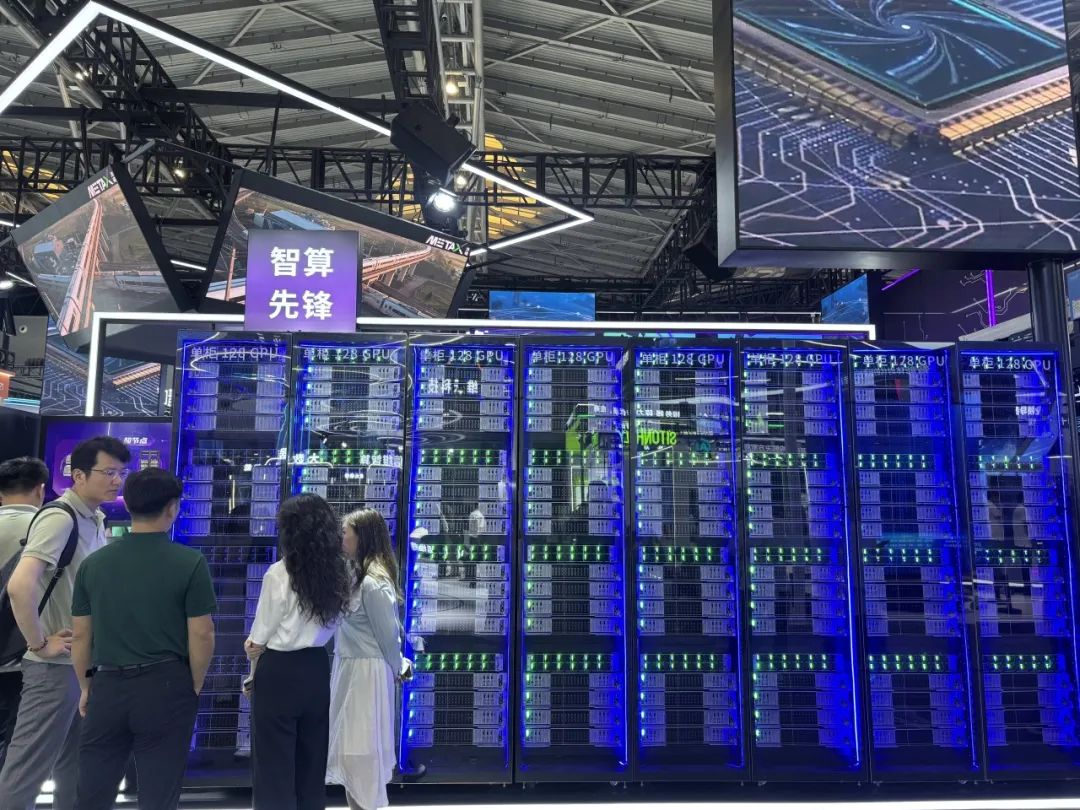
Core Insights - The article highlights the emergence of "super node" computing technology as a key innovation in the domestic computing industry, driven by the increasing demand for computational power in the era of large models [1][3][6] - The super node technology consolidates multiple servers into a single unit, enhancing efficiency and reducing costs associated with traditional computing setups [3][4] - Despite the advancements, the domestic computing sector faces significant challenges, including technological gaps in chip manufacturing and infrastructure limitations [7][8][9] Group 1: Super Node Technology - The super node computing system integrates multiple servers into a high-density cabinet, significantly improving computational power and energy efficiency [1][3] - Companies like Muxi Technology and Suiruan Technology are showcasing innovations such as liquid cooling systems and high-bandwidth interconnects to address the limitations of traditional cooling methods [4][6] - The super node technology is seen as a necessary evolution to meet the demands of large model training and inference, overcoming issues like communication bottlenecks and high power consumption [6][8] Group 2: Challenges in Domestic Computing - Domestic GPU manufacturers are facing a generational gap in chip manufacturing processes, with most relying on 7/12/14nm technology compared to the leading 3/4nm processes internationally, resulting in performance disparities [7] - The current state of the domestic computing network architecture is still in its infancy, with low interconnect rates and frequent issues related to latency and bandwidth [7][9] - The industry is experiencing a "chip shortage" despite high demand, as major internet companies are investing heavily in computing resources while facing supply chain disruptions [8][9] Group 3: Future Prospects - Predictions indicate that by 2027, the market for cloud AI chips in China could exceed $48 billion, with domestic GPU replacement rates potentially surpassing 80% [10] - Continuous investment in research and development is crucial for domestic GPU companies to close the technological gap and improve product performance [10][12] - Collaborative efforts among companies to establish a comprehensive ecosystem and standardization initiatives are underway to enhance the domestic computing landscape [12]

全省“学查改,服务保障实体经济,推动高质量发展”交流推进大会召开
He Nan Ri Bao· 2025-07-30 10:37
Group 1 - The conference emphasized the importance of improving work style and supporting the real economy to promote high-quality development in Henan province [1][2] - Liu Ning highlighted the need to combine work style transformation with economic development, focusing on stabilizing employment, enterprises, markets, and expectations [2] - The government aims to enhance communication mechanisms with enterprises, ensuring quick responses to issues and effective implementation of supportive policies [2][3] Group 2 - Xu Lingyi acknowledged the achievements of the special action, emphasizing the need for continuous efforts in high-quality development and social governance [3] - The conference included participation from over 1,000 enterprises, which evaluated the service satisfaction of 30 provincial and central units [3]

Agent爆发、应用开花、算力赶集,这届WAIC见证“生态起来了”
Di Yi Cai Jing· 2025-07-30 10:32
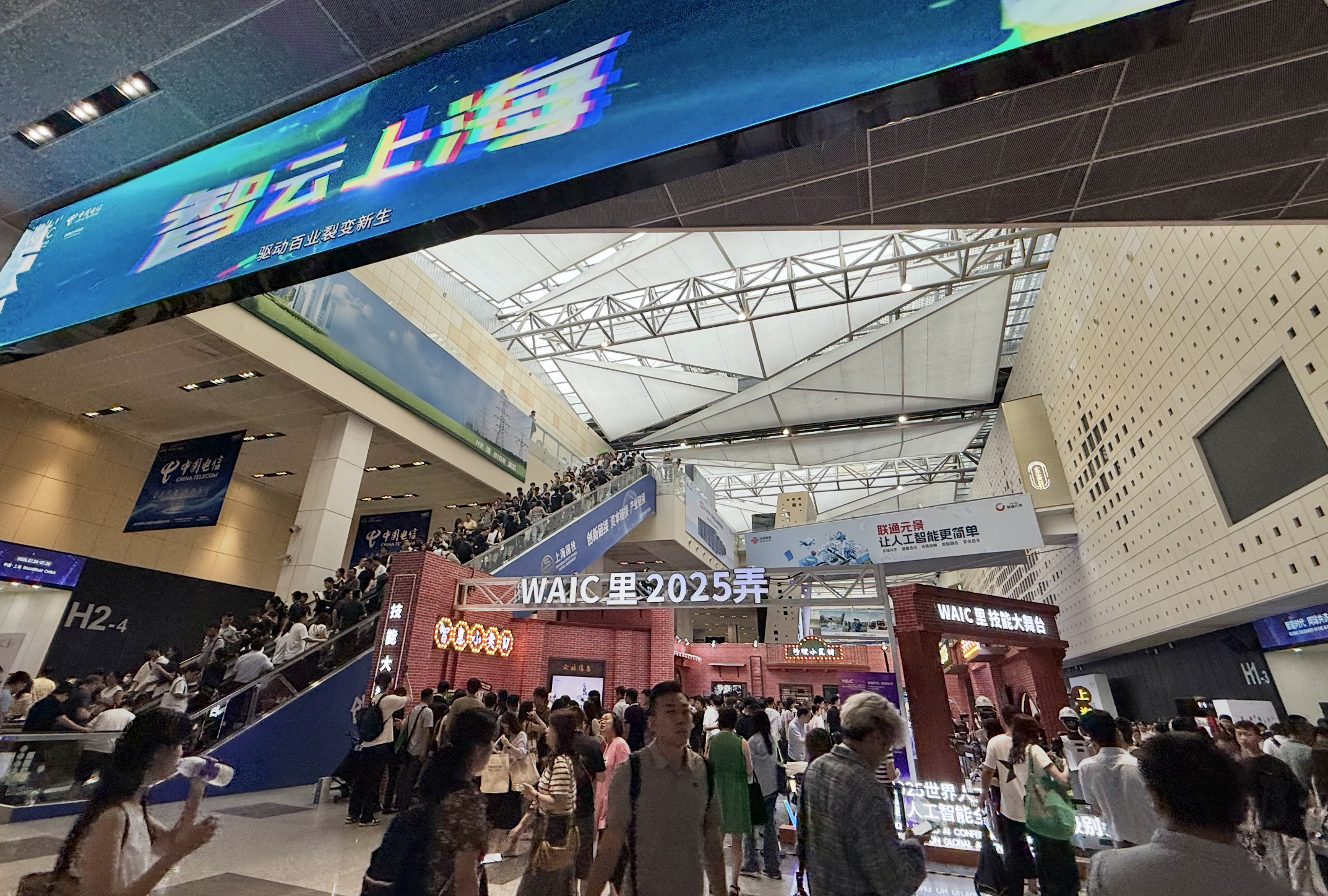
人潮涌动的展馆、遍地开花的应用、马力全开的算力,大模型行业水温变了。 刚刚过去的WAIC(世界人工智能大会),是近些年里最热闹的一届。开幕前几日全场门票就已售罄,在二手市场,WAIC三日通票被炒至2000多元一张, 单日票被炒至600元以上,是原价的四倍。展会期间,各大AI群里不断有人在求票。 为期四天的展会,35万人次线下涌入,展览面积首次突破7万平米,扩增了40%,800余家企业带来3000余项展品,是往年的一倍。提及大会的热闹,一位参 展商对第一财经表示,去年都是大模型厂商为主,主要展出各种模型、比拼技术参数,离普通人太远,但今年都是各种应用了,很多家长还带着小孩来学 习。 蜜度首席技术官刘益东观察到,开源生态正在带动整个AI生态的繁荣。现场很多厂商都是做Agent(智能体)和应用的,而这些反过来又带动了基础设施和 算力,算力厂商的展位更大了。 九章云极DataCanvas公司AI首席科学家缪旭感慨," C端的人特别多,AI的渗透率越来越高,前几年很多人不懂,但现在每个人都能聊上几句。"去年他们担 心应用落地慢,现在反而担心算力供不应求。 应用向下"扎根" 有很多企业是第一次来WAIC参展,一个显著特征 ...
AI算力集群迈进“万卡”时代 超节点为什么火了?
Di Yi Cai Jing· 2025-07-30 10:24
Core Insights - The recent WAIC showcased the rising trend of supernodes, with multiple companies, including Huawei and Shanghai Yidian, presenting their supernode solutions, indicating a growing interest in high-performance computing [1][2][4] Group 1: Supernode Technology - Supernodes are designed to address the challenges of large-scale computing clusters by integrating computing resources to enhance efficiency and support models with trillions of parameters [1][2] - The technology allows for improved performance even when individual chip manufacturing processes are limited, marking a significant trend in the industry [1][5] - Supernodes can be developed through two main approaches: scale-out (horizontal expansion) and scale-up (vertical expansion), optimizing communication bandwidth and latency within the nodes [3][4] Group 2: Market Dynamics - The share of domestic AI chips in AI servers is increasing, with projections indicating a drop in reliance on foreign chips from 63% to 49% this year [6] - Companies like Nvidia are still focusing on the Chinese market, indicating the competitive landscape remains intense [6] - Domestic manufacturers are exploring alternative strategies to compete with established players like Nvidia, including optimizing for specific applications such as AI inference [6][8] Group 3: Innovation in Chip Design - Some domestic chip manufacturers are adopting sparse computing techniques, which require less stringent manufacturing processes, allowing for broader applicability in various scenarios [7] - Companies are focusing on edge computing and AI inference, aiming to reduce costs and improve efficiency in specific applications [8] - The introduction of new chips, such as the Homa M50, highlights the industry's shift towards innovative solutions that leverage emerging technologies like in-memory computing [8]

AI算力集群迈进“万卡”时代,超节点为什么火了?
Di Yi Cai Jing· 2025-07-30 07:59
Core Insights - The recent WAIC highlighted the growing interest in supernodes, with companies like Huawei, ZTE, and H3C showcasing their advancements in this technology [3][4][5] - Supernodes are essential for managing large-scale AI models, enabling efficient resource utilization and high-performance computing [3][4][5] - The shift from traditional AI servers to supernode architectures is driven by the increasing complexity and size of AI models, which now reach trillions of parameters [4][5][9] Group 1: Supernode Technology - Supernodes integrate computing resources to create low-latency, high-bandwidth computing entities, enhancing the efficiency of AI model training and inference [3][4] - The technology allows for performance improvements even when individual chip manufacturing processes are limited, making it a crucial development in the industry [4][9] - Companies are exploring both horizontal (scale out) and vertical (scale up) expansion strategies to optimize supernode performance [5][9] Group 2: Market Dynamics - Domestic AI chip manufacturers are increasing their market share in AI servers, with the proportion of externally sourced chips expected to drop from 63% to 49% this year [10] - Companies like墨芯人工智能 are adopting strategies that focus on specific AI applications, such as inference optimization, to compete with established players like NVIDIA [10][11] - The competitive landscape is shifting, with firms like云天励飞 and后摩智能 targeting niche markets in edge computing and AI inference, avoiding direct competition with larger chip manufacturers [11][12][13] Group 3: Technological Innovations - The introduction of optical interconnects in supernode technology is a significant advancement, providing high bandwidth and low latency for AI workloads [6][9] - Companies are developing solutions that leverage optical communication to enhance the performance of AI chip clusters, addressing the limitations of traditional electrical interconnects [6][9] - The focus on sparse computing techniques allows for lower manufacturing process requirements, enabling more efficient AI model computations [11][12]
2025WAIC全景观察: 算力筑基 模型进阶 AI应用实干突围
Zhong Guo Zheng Quan Bao - Zhong Zheng Wang· 2025-07-29 12:23
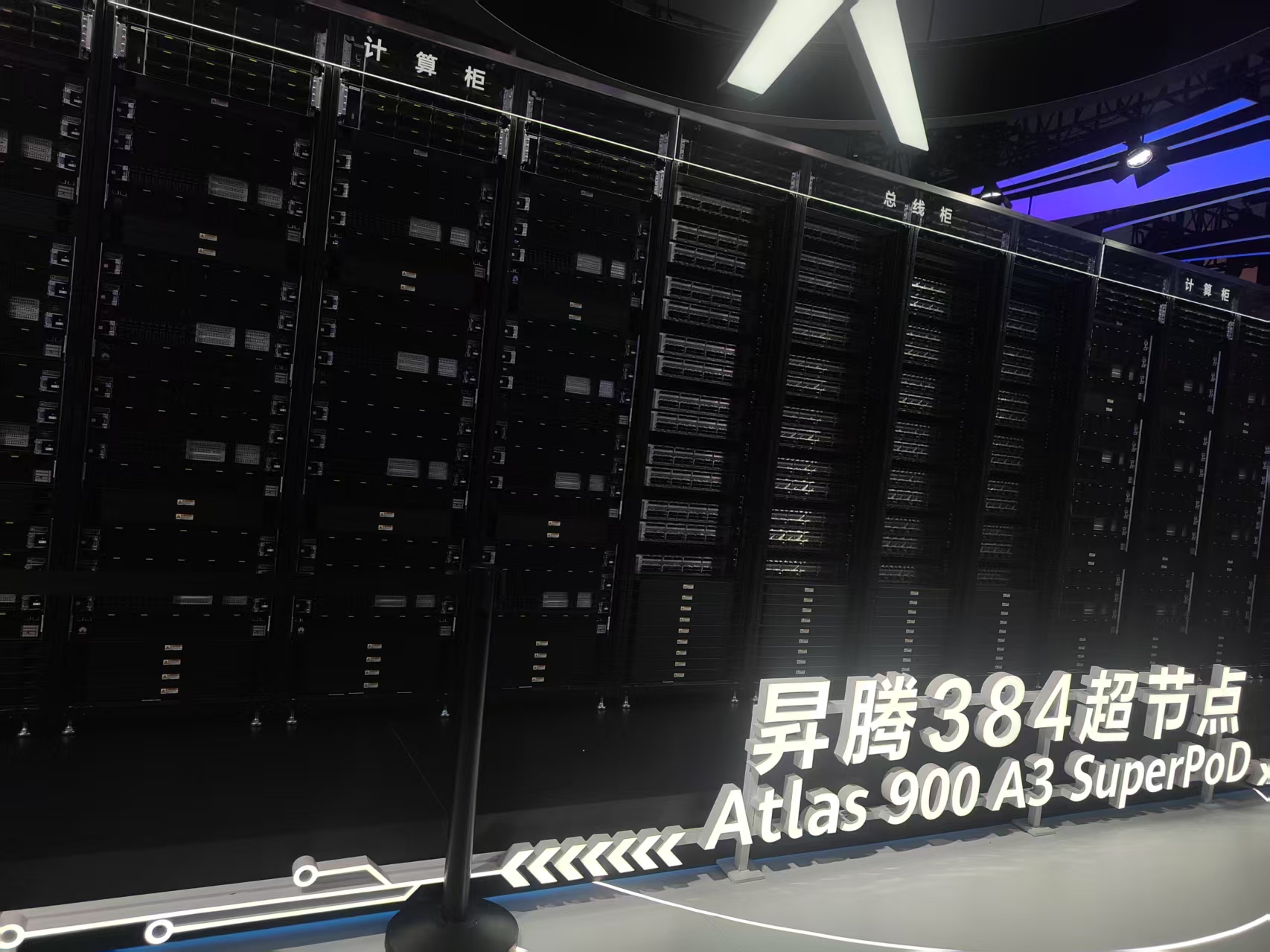
Group 1: AI Industry Development - The 2025 World Artificial Intelligence Conference (WAIC) showcased significant advancements in AI applications, marking the transition into a "practical era" of AI technology [1][5] - The demand for computing power is expected to increase dramatically, with predictions of a hundredfold to thousandfold growth in training computing power requirements due to the rapid evolution of AI applications [1][3] - AI models are shifting from a focus on "data + scale" to "self-optimization + multi-modal native integration," facilitating their transition from laboratories to real-world applications [5][6] Group 2: Computing Infrastructure - Companies like Huawei and ZTE presented innovative supernode solutions, with Huawei's "computing power bomb" showcasing a system where 384 cards work collaboratively, significantly enhancing resource utilization [2][3] - The introduction of the LightSphere X supernode by Shanghai Yidian and partners utilizes optical interconnect technology to overcome traditional physical limitations, allowing for dynamic scaling based on computing needs [2][3] - Companies are adapting their computing infrastructure to better meet AI demands, focusing on hardware, data centers, and intelligent scheduling of heterogeneous computing resources [3][4] Group 3: AI Applications and Agents - AI agents are becoming pivotal in various sectors, evolving from tools to "digital employees" capable of performing analysis, execution, and optimization tasks [6][7] - Personal AI applications are emerging, with products like Rokid Glasses enabling users to perform tasks through voice commands, showcasing the integration of AI into everyday life [7][8] - The Galbot robot, developed by Galaxy General, demonstrates advanced capabilities in retail and industrial settings, utilizing a combination of real and synthetic data for training to enhance operational efficiency [8]
2025世界人工智能大会闭幕:全球创新共聚,AI迈向价值创造与规则定义新阶段
Jing Ji Guan Cha Bao· 2025-07-29 07:47
Core Insights - The 2025 World Artificial Intelligence Conference (WAIC 2025) concluded successfully in Shanghai, featuring over 1,500 top experts from more than 70 countries and regions, showcasing over 3,000 cutting-edge technologies, with more than 100 global and Chinese product debuts [2] - The conference highlighted a shift in the AI industry from "parameter competition" to "value creation," indicating China's AI sector is moving towards defining global standards and promoting inclusive development [2] - Huawei showcased its Ascend 384 SuperNode (Atlas 900 A3 SuperPoD), which addresses communication bottlenecks in AI model training and inference through high bandwidth and low latency interconnects among 384 NPUs [2] AI Model Development - Over 80 large models have been developed based on Huawei's Ascend platform, with partnerships involving over 2,700 collaborators to create more than 6,000 industry solutions across 11 sectors, including internet, finance, and healthcare [4] - Zhaoxin presented its KX-7000N AIPC processor, which integrates high-performance NPUs to enhance local AI processing capabilities for applications like speech recognition and image generation [4][6] AI Hardware Innovations - Moore Threads showcased its full-featured GPU solutions, emphasizing their role in general-purpose accelerated computing platforms and various industry applications, including professional graphics rendering and AI model training [6][8] - Muxi introduced its flagship GPU, the Xiyun C600, which is designed to provide reliable computing power for critical sectors, marking a significant step in domestic supply chain development [8][10] Industrial AI Applications - Siemens made its debut at WAIC, presenting its Industrial Copilot system, which integrates large language models with industry knowledge to enhance production efficiency by 50% [11][15] - The company also demonstrated AI applications in energy systems and process industries, showcasing its extensive patent portfolio and AI expertise [15] Ecosystem Development - North Electric Intelligence introduced a comprehensive AI empowerment system that integrates city-level AI infrastructure with industry-specific solutions, aiming to enhance digital transformation across various sectors [11][13] - Super Fusion launched its FusionOne AI solution, which aims to bridge the gap in AI implementation across industries by providing a full-stack digital resource intelligent system [15][17] Consumer AI Products - Rokid unveiled its lightweight AR glasses, which utilize advanced technologies for seamless user interaction, showcasing the potential of AI in enhancing user experiences in everyday scenarios [19]


河南上半年战略性新兴产业 增加值同比增长10.7%
Zhong Guo Chan Ye Jing Ji Xin Xi Wang· 2025-07-28 23:15
Economic Growth - In the first half of the year, Henan's GDP grew by 5.7% year-on-year, surpassing the national average by 0.4 percentage points, ranking 2nd in the central region and 6th nationwide [1] - The industrial added value, fixed asset investment, and retail sales of consumer goods in Henan increased by 8.4%, 5.1%, and 7.2% year-on-year, respectively, all exceeding the national averages by 2 to 2.3 percentage points [1] Key Industries - The five leading industries, high-tech manufacturing, and strategic emerging industries in Henan saw added value growth of 11.5%, 14.9%, and 10.7% year-on-year, respectively, outpacing the industrial added value growth by 3.1, 6.5, and 2.3 percentage points [1] - Industrial investment and manufacturing investment in the province increased by 25.9% and 24.8% year-on-year [1] Foreign Trade - The total import and export value in Henan reached 412.53 billion yuan, with a year-on-year growth of 26.2%, exceeding the national average by 23.3 percentage points [1] - The number of foreign trade enterprises with import and export performance increased by 11.8% year-on-year [2] Consumer Market - As of July 16, the total amount of applications for trade-in programs for automobiles, home appliances, and digital products reached 12.64 billion yuan [1] - Retail sales of smart phones, wearable smart devices, home appliances, and new energy vehicles grew by 102.7%, 95.3%, 35.1%, and 28% year-on-year, respectively [1] Investment Projects - Henan is accelerating the construction of major projects, with a year-on-year investment growth of 9.3% in projects worth over 100 million yuan [2] - The province is promoting the integration of domestic and foreign trade, with a series of policy measures to support foreign trade stability [2] Technological Innovation - Henan is focusing on the deep integration of technological and industrial innovation, launching two batches of 15 key technology lists for major industries [2] - The production of lithium-ion batteries, new energy vehicles, and integrated circuits increased by 93.4%, 34.9%, and 80.9% year-on-year, respectively [2]
算力筑基 模型进阶 AI应用实干突围
Zhong Guo Zheng Quan Bao· 2025-07-28 21:05
Group 1: AI Industry Development - The 2025 World Artificial Intelligence Conference (WAIC) showcased significant advancements in AI applications, marking the transition into a "practical era" of AI technology [1][6] - The demand for computing power is expected to increase dramatically, with predictions of a hundredfold to thousandfold growth in training computing power requirements due to the rapid evolution of AI applications [1][4] - AI foundational models are shifting their core competitiveness from "data + scale" to "self-optimization + multi-modal native integration," facilitating the transition of large models from laboratories to industry [4][5] Group 2: Computing Power Infrastructure - Companies like Huawei and ZTE presented innovative supernode solutions, with Huawei unveiling the Ascend 384 supernode, which enhances resource utilization by allowing 384 cards to work collaboratively as a single computer [2][3] - The introduction of the LightSphere X supernode by Shanghai Yidian and partners utilizes optical interconnect technology to overcome traditional physical limitations, allowing for elastic scaling and reduced deployment costs [2][3] - Companies are adapting to AI demands by developing hardware products, customized data center solutions, and intelligent scheduling platforms for heterogeneous computing [3][4] Group 3: AI Applications and Use Cases - AI agents are becoming pivotal in various sectors, evolving from tools to "digital employees" capable of analysis, execution, and optimization in government, finance, industry, and healthcare [5][6] - The Rokid Glasses, an AI + AR smart eyewear, exemplifies the integration of AI technology into consumer products, enabling users to perform tasks like information retrieval and translation through voice commands [6][7] - The Galbot robot, showcased in a simulated supermarket environment, demonstrates advanced capabilities in product recognition and retrieval, with applications already implemented in retail and industrial settings [7][8]
全球科技新闻汇总
Haitong Securities International· 2025-07-28 14:08
Investment Rating - The report does not explicitly state an investment rating for the industry or specific companies. Core Insights - The demand for Backup Battery Units (BBUs) is experiencing a significant increase due to the rising power consumption of AI servers, with key Taiwanese companies expected to benefit from this trend [8][9][10]. - Huawei's Ascend CloudMatrix 384 SuperPod made its debut at the WAIC 2025, showcasing advancements in intelligent computing alongside other domestic competitors [11][12]. - The competition in the AI computing power sector is intensifying, with OpenAI planning to deploy 1 million GPUs by the end of the year, while Elon Musk's xAI aims for 50 million chips in five years [13][16]. Summary by Sections AI and BBU Demand - AI servers are rapidly increasing in power consumption, leading to a "straight-line upward" explosion in BBU demand. Companies like Simplo Technology, Delta Electronics, AES, and Lite-On Technology are positioned to benefit [8][9]. - The proportion of BBU modules used in ASIC racks is also increasing, and the trend towards High-Voltage DC (HVDC) technology is expected to further boost BBU demand [9][10]. Huawei and Domestic Competitors - At WAIC 2025, Huawei's Ascend CloudMatrix 384 was highlighted, achieving the largest scale of 384-card high-speed bus interconnection. Major clients include Baidu, Meituan, and JD.com [11][12]. AI Computing Power Arms Race - OpenAI is pursuing a strategy for computing independence through self-developed chips and partnerships, with a goal to shift 75% of its computing resources to its Stargate project by 2030. AI capital expenditures are projected to reach $360 billion in 2025 [13][16]. - Meta has been actively recruiting talent from DeepMind, indicating a competitive landscape for AI expertise [14].


