
云深处

Search documents
中国具身智能的技术一号位们
自动驾驶之心· 2025-09-16 03:34
Core Viewpoint - The article highlights the rapid development and commercialization of embodied intelligence, emphasizing the competitive landscape among global teams and the importance of technological breakthroughs in the field [4][5]. Group 1: Industry Overview - The last two years have seen significant advancements in hardware, data collection, and algorithms, leading to the expansion of embodied intelligence beyond laboratory settings [4]. - Embodied intelligence has become a recognized core direction for commercialization globally, with various teams competing intensely in this space [4]. - The next generation of technological breakthroughs will focus on general embodied intelligence and scene-adaptive learning [4]. Group 2: Key Players in Embodied Intelligence - **Yushu Technology**: Founded by Wang Xingxing, the company specializes in quadruped robots and has developed multiple models, including Laikago and AlienGo. Wang has over 10 years of experience in robot development and holds over 100 patents [8]. - **Xinghai Map**: Co-founded by Zhao Xing, the company focuses on embodied intelligence and multimodal learning, contributing to the development of the first mass-produced autonomous driving model based on large models [12][13]. - **Galaxy General**: Founded by Wang He, the company is dedicated to embodied intelligence and humanoid robots, with significant research contributions in 3D vision and robot learning [18]. - **Zhiyuan Robotics**: Led by Luo Jianlan, the company focuses on high-precision assembly tasks using reinforcement learning, achieving a 100% success rate in real-world applications [23]. - **Variable Robotics**: Co-founded by Wang Hao, the company aims to integrate large models with embodied intelligence, launching the WALL-A model, which is the largest operational model globally [26]. - **Zhuji Power**: Founded by Zhang Wei, the company is developing full-size humanoid robots and has launched the W1 commercial robot, with plans for mass production of humanoid robots by 2025 [30]. - **Stardust Intelligence**: Founded by Lai Jie, the company focuses on creating AI robots for household use, achieving breakthroughs in embodied intelligence data acquisition [32]. - **Cloud Deep**: Founded by Zhu Qiuguo, the company specializes in humanoid and quadruped robots, with a strong emphasis on self-research and development of core components [34]. - **Qianxun Intelligence**: Founded by Han Fengtao, the company has developed the Moz1 humanoid robot, which features advanced control capabilities and has raised over 1 billion yuan in funding [38]. - **Physical Intelligence**: Co-founded by Sergey Levine, the company focuses on creating advanced AI models for robots, achieving significant funding milestones and technological advancements [40][41]. - **Figure AI**: Founded by Brett Adcock, the company has developed humanoid robots for commercial applications, with significant advancements in collaborative robot control [44][45]. Group 3: Future Outlook - The article concludes that the vision and persistence of technology leaders are crucial for advancing the industry, with various paths being taken towards a flexible, adaptive, and highly interactive future in embodied intelligence [54][55].

人工智能成果云集!2025中国国际消费电子博览会下周开幕
Qi Lu Wan Bao Wang· 2025-09-13 11:35
Core Viewpoint - The 2025 China International Consumer Electronics Expo will be held in Qingdao from September 19 to 21, focusing on the theme "Connecting Everything, AI Empowering the Future" and showcasing over 300 renowned brands across six exhibition areas covering 60,000 square meters [1][2]. Group 1: Focus on Artificial Intelligence - The expo emphasizes the transformation of artificial intelligence achievements, aligning with the State Council's initiative to integrate AI with six key sectors, including technology and consumption [1]. - Qingdao produces approximately 9.6% of the national smart home appliance output, with 1 in 10 appliances manufactured there. In the first seven months of this year, Qingdao's electromechanical product exports reached 161.6 billion yuan, a 7.8% increase, accounting for 51.8% of total exports [1]. Group 2: International Brand Participation - This year's expo features an international comprehensive exhibition area exceeding 10,000 square meters, with 52 international brands from 17 countries and regions, making up over one-sixth of the exhibitors [2]. - Notable returning brands include Tesla, Hexagon, Toshiba, and Sony, alongside new participants like AIXR (UK), Hanshil (Germany), and Konica Minolta (Japan) [2]. Group 3: New Product Launches - The expo will host product launches from 57 companies, including Huawei, Gree, and ASUS, highlighting the importance of the "first launch economy" in boosting consumption [3]. - Innovative products include a consumer-grade AI glasses from Dapeng VR and a sleep aid product series from DENBA Health, showcasing advancements in technology [3]. Group 4: Exhibition and Trade Linkage - The expo aims to create a full-service system for "display—negotiation—transaction," facilitating trade connections and global procurement [4]. - Collaborations with over 40 domestic and international industry associations will enhance the interaction between exhibitors and buyers, promoting overseas market expansion [4]. Group 5: Interactive Experience - The expo will enhance visitor engagement through various formats, including competitions and immersive experiences, such as VR and humanoid robot interactions [5]. - A live streaming area will be set up to integrate online and offline sales, broadening the reach of the exhibition [5].
组内没有人做具身,导师让我先去踩坑......
具身智能之心· 2025-09-12 16:03
Core Viewpoint - The article emphasizes the importance of building a solid foundation in hardware and algorithms for embodied intelligence research, particularly for newcomers in the field [1][12]. Group 1: Research Guidance - For teams without prior experience in embodied intelligence, it is recommended to start with simpler tasks using robotic arms before tackling more complex humanoid robots [1]. - Those with a background in large models should focus on specific downstream tasks like VLA (Visual-Language Action) and VLN (Visual-Language Navigation) to bridge the gap between theory and practical applications [1]. - It is advised to solidify knowledge in reinforcement learning before attempting to develop humanoid robots, as this area is still underdeveloped in the domestic market [1]. Group 2: Community and Resources - The "Embodied Intelligence Knowledge Planet" community serves as a comprehensive platform for sharing knowledge, with nearly 2000 members and aims to grow to 10,000 in two years [3][12]. - The community provides various resources, including technical routes, Q&A, and job opportunities, making it a valuable asset for both beginners and advanced researchers [4][13]. - Members can access a wealth of information, including over 30 technical routes, open-source projects, and data sets related to embodied intelligence [12][26]. Group 3: Technical Insights - The community addresses practical issues such as data collection, model deployment, and the challenges of sim-to-real transitions in robotics [4][5]. - It offers insights into various models and frameworks, including VLA and reinforcement learning, and discusses their applications in robotic tasks [5][6]. - The community also organizes forums and live discussions to keep members updated on the latest trends and challenges in the embodied intelligence field [4][11].
许多自驾和传统机器人公司,已经开始成立具身实验室了......
具身智能之心· 2025-09-05 16:03
许多自驾和传统机器人公司,已经开始成立具身实验室了...... 今天在和朋友喝下午茶,聊到了很多公司开始筹建具身团队和业务线。其中不乏有自动驾驶公司、 主机厂、新势力、传统机器人公司、传统臂商。 貌似又到了那个谁不入场就会被时代抛弃的时候,先不妨看看这几类公司的出发点吧。对于自驾公 司和主机厂,他们想做的更多是解决工厂智能部分,造车需要大量的工人,包括制造、搬运、特殊 场景的需求。如果机器人能够在固定场景下完成相对智能,那么能省下不少成本。 对于传统机器人公司来说,比如扫地机器人公司,他们更希望升级已有产品,具备更加智能的服 务。比如扫地机上添加机械臂,用户可以下达指令完成清扫之外的工作以及通过大模型实现更好的 交互功能。传统臂商,也想进一步参与臂的智能化升级,适配更加泛化和多样的场景。 当然,也不排除很多公司通过投资新兴产业来赚取更多的利润。但这个趋势会导致,很多公司的资 源倾斜到具身领域。无论是数据生产模块还是算法、本体层面。很多公司的具身岗位存在缺口,一 些没有经验的leader不得不扛起大旗!持续的面试仍然招不到合适的,因为真的懂的人很少。 归根到底是没有系统的培养体系,导致这方面的人才出现了数量和质 ...

签约项目超2000亿!机器人、智能汽车集中亮相|直击2025智博会
Xin Lang Cai Jing· 2025-09-05 14:45
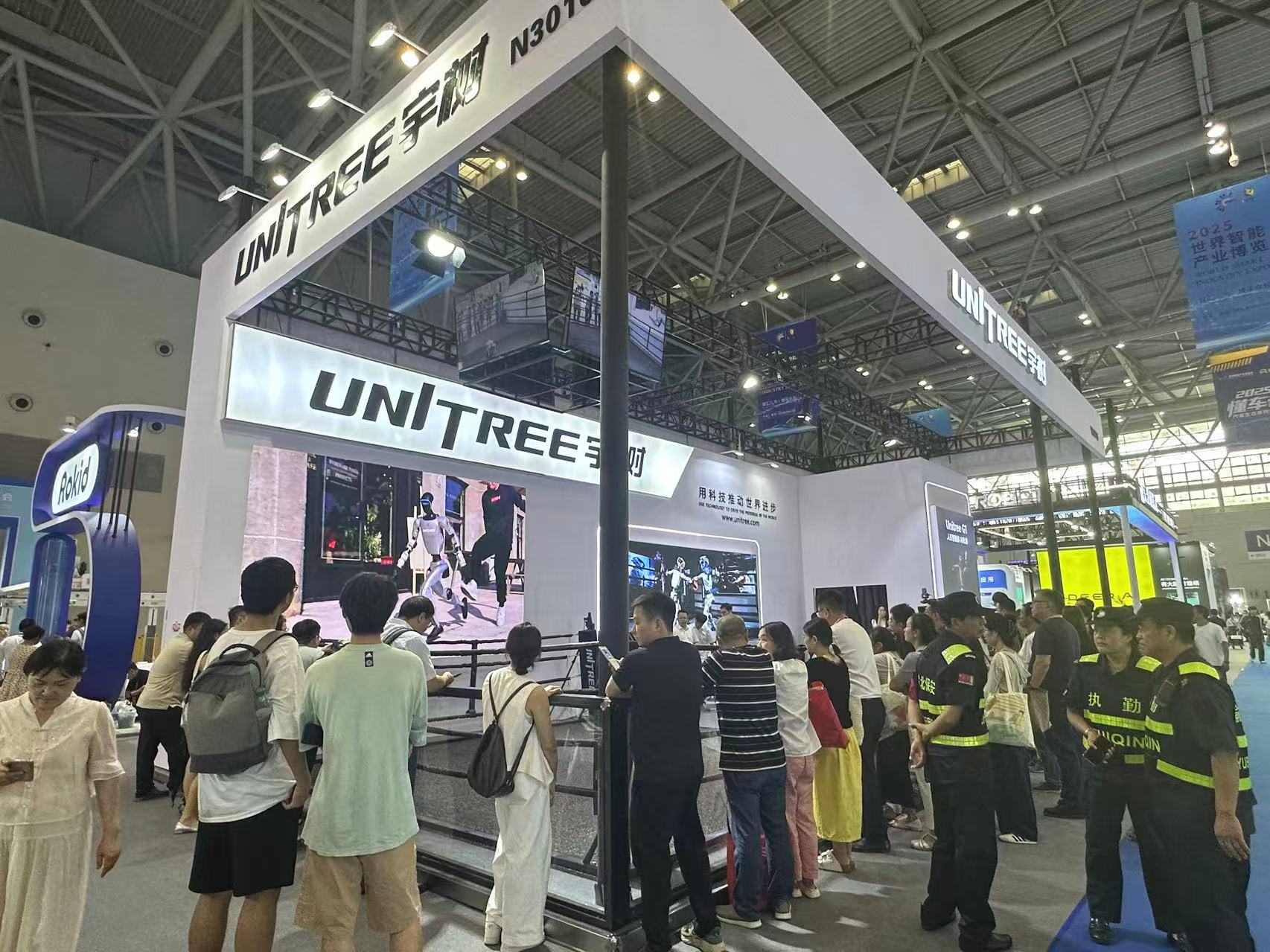
Group 1 - The 2025 World Intelligent Industry Expo (智博会) opened in Chongqing, focusing on "Artificial Intelligence+" and "Intelligent Connected New Energy Vehicles" [1] - Investment project contracts signed during the event exceeded 200 billion yuan, with over 120 billion yuan in concentrated on-site contracts [1] - Key projects include the Wanfu Aotexi Western Low-altitude Economy Base Project, Geely Technology Industry Manufacturing Project, and Huqing Semiconductor Material Production and Packaging Project [1] Group 2 - The expo featured five major sectors: Intelligent Connected New Energy Vehicles, Digital Cities, Intelligent Robots, Low-altitude Economy, and Smart Home, with over 550 domestic and international companies showcasing more than 3,000 innovative products across an exhibition area of over 100,000 square meters [1] - Local companies such as Yushu Technology, Yundongchu, Qiangnao Technology, and Qunhe Technology participated in the expo [1][3][4][5][6] Group 3 - Seven Teng Robotics, a local company, showcased third-generation explosion-proof quadruped and wheeled robots, focusing on emergency safety [11] - The company is exploring embodied intelligence in industrial chemical scenarios, utilizing Huawei's Ascend AI platform for its inspection robots [13] - Huawei's exhibition highlighted smart governance, smart economy, and smart society practices, along with core technologies like AI and ICT [13] Group 4 - The Sairus Group, a local enterprise, presented its exhibition area of over 10,000 square meters, featuring new energy vehicle products and advanced technologies [14] - Sairus demonstrated its "Automotive Industry Brain" ecosystem, showcasing a smart factory with over 3,000 robots and 100% automation in key processes [18] - The chairman of Sairus emphasized the profound impact of AI technology on the automotive industry across product forms, production methods, management models, and business logic [20] Group 5 - Tencent set up an interactive experience area featuring robots powered by its TAIROS platform, which integrates various AI models for industrial applications [20][22] - Major telecom operators, including China Telecom, China Mobile, and China Unicom, participated in the expo, showcasing advancements in AI and low-altitude economy services [22][25] - China Telecom's exhibition focused on cloud computing, AI, quantum technology, and digital industrial applications, with a notable computing power scale of 866 PFLOPS established by 2025 [23][26]





港城大等团队突破连续体机器人控制难题,让柔性臂实现毫米级精准定位!
机器人大讲堂· 2025-09-04 11:23
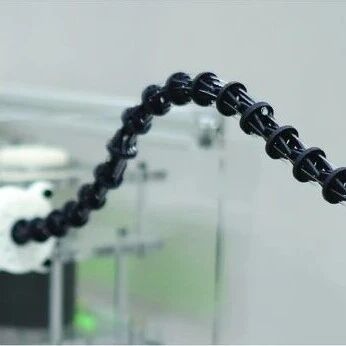
Core Viewpoint - Continuous robots exhibit great potential in fields such as robotic surgery and narrow space detection, but precise control remains a significant challenge. Recent breakthroughs by research teams from City University of Hong Kong and Hefei University of Technology have applied Kalman filtering technology to enhance the online control precision of these robots [1][2]. Group 1: Continuous Robots and Control Challenges - Continuous robots possess infinite degrees of freedom and adaptability, making them difficult to control accurately due to their deformable nature, akin to controlling a cooked noodle [4]. - Traditional rigid-link robots have simpler control mechanisms, while continuous robots face challenges from large deformations, friction effects, and inherent non-linear characteristics [4][5]. - The research team designed a lightweight robot with a complex internal structure, consisting of three flexible segments, each with five spacer disks and one drive disk, weighing only 8.4 grams [5]. Group 2: Control Methodology - The team utilized a piecewise constant curvature (PCC) model for initial control, which, while computationally efficient, resulted in position errors exceeding 1.6 mm and angle errors over 1.4 degrees, unacceptable for high-precision applications [7]. - Instead of developing a more complex model, the team innovatively employed the Kalman filter to allow the robot to self-correct during motion, estimating and compensating for errors in real-time [8][9]. - The control system operates at a frequency of 20 Hz, integrating steps such as obtaining end pose, calculating model Jacobians, estimating and compensating for Jacobian errors, and generating control commands [11]. Group 3: Experimental Validation - The research team conducted three trajectory tracking experiments and two disturbance resistance tests, demonstrating the effectiveness of the new method [12]. - In the first experiment, the root mean square error (RMSE) in the x-direction improved from 1.6 mm to 1.1 mm, and in the y-direction from 2.3 mm to 2.1 mm, showcasing significant enhancements in tracking precision [12][14]. - The second experiment focused on attitude control, achieving a reduction in RMSE from 2.1 degrees to 1.5 degrees, while maintaining position accuracy [14]. - The robustness of the method was further validated through disturbance tests, where the robot maintained performance even under significant load changes [15]. Group 4: Innovation and Future Prospects - The research combines model-driven and data-driven approaches, leveraging the strengths of both to enhance control precision while maintaining computational efficiency [17]. - The method's advantages include no need for offline data collection, high computational efficiency, and robustness against external disturbances, indicating strong potential for practical applications [17]. - Future research directions include incorporating dynamic effects and expanding to three-dimensional motion to improve estimation accuracy and applicability [17].
首程控股将开设20家机器人4S店,加速全产业链应用落地
Ge Long Hui· 2025-09-04 00:16
Group 1 - The company plans to open 10 robot 4S stores in key cities across the country within the next six months and aims to establish 20 experience stores within a year, serving as important windows for the application and consumerization of the robotics industry [1][2] - During the recently concluded World Humanoid Robot Games, the company launched the "Shoucheng Robot Technology Experience Store," which attracted an average daily foot traffic of over 6,000 visitors, showcasing over 200 products from various enterprises [1] - The experience store highlighted diverse applications of robots in family, education, healthcare, and sports, becoming one of the most notable attractions outside the main event [1] Group 2 - The company has systematically built a complete industry chain ecosystem covering upstream, midstream, and downstream through its investment funds, including the Beijing Robot Industry Development Investment Fund [2] - Upstream, the company has established a robotics advanced materials company focusing on investment, joint research and development, incubation, and mergers and acquisitions of core materials [2] - Midstream investments include partnerships with leading domestic companies such as Yushu Technology and Songyan Power, facilitating key technology integration from perception to decision-making to execution [2] - Downstream, the company leverages its robot 4S stores and sales agency to accelerate the market introduction of complete machines and applications [2] - The establishment of the robot 4S store model is expected to act as an accelerator for bringing robots from laboratories into everyday life, opening new pathways for the industry [2]
神州数码(000034.SZ)已与宇树、智元、云深处等一系列知名的机器人品牌达成了合作
Ge Long Hui· 2025-09-03 12:06
格隆汇9月3日丨神州数码(000034.SZ)在投资者关系中表示,公司最近已与宇树、智元、云深处等一系 列知名的机器人品牌达成了合作。我想从两个方面来解读这件事:首先,这是公司持续推进"分销升 级"的重要一环,一方面我们要不断拓展新的产品线,另一方面也要寻找提升附加值的机会。实际上, 最近几年我们已经有很多尝试:包括与无人机、智能眼镜等创新公司合作,布局商用打印机、清洁机器 人等在内的运营业务,以及各类场景化解决方案。其次,公司正全面拥抱 AI,而机器人也是 AI 技术落 地的重要载体之一。在计算机环境之外,包括机器人在内的物理 AI 的应用空间会非常广阔,公司对此 也非常看好。除了销售相关机器人产品外,公司也在积极探索与这些厂商深度合作,共同开发面向巡 检、安防等特定场景的解决方案。 ...

宇树科技公布上市计划人形机器人加速资本化进程
Zhong Guo Zheng Quan Bao· 2025-09-03 01:49
Company Progress - Yushu Technology is actively preparing for its initial public offering (IPO) and plans to submit listing application documents to the stock exchange between October and December, with operational data to be disclosed at that time [1] - The company has changed its name from Hangzhou Yushu Technology Co., Ltd. to Hangzhou Yushu Technology Co., Ltd. in May, and has begun IPO counseling with CITIC Securities as the advisory institution [2] - Yushu Technology has completed 10 rounds of financing, with the latest round being a C round completed in June, attracting investments from major companies such as China Mobile, Tencent, Alibaba, and others [2] Revenue Structure - For the year 2024, the sales revenue structure of Yushu Technology is projected to be 65% from quadruped robots, 30% from humanoid robots, and 5% from component products [1] - Approximately 80% of quadruped robots are used in research, education, and consumer fields, while the remaining 20% are applied in industrial areas such as inspection and firefighting [1] Industry Trends - The humanoid robot industry is experiencing significant growth, with an expected annual doubling of global shipment volumes in the coming years, potentially reaching hundreds of thousands to millions of units if technological breakthroughs occur [3] - The humanoid robot sector has seen a surge in financing activities, with several companies announcing substantial funding rounds in recent months [3][4] - The capitalized process of humanoid robot companies is accelerating, with notable investments from major industry players and strategic partnerships being formed [4] Market Performance - Yushu Technology's founder stated that the company's annual revenue has exceeded 1 billion RMB, and the company has grown to approximately 1,000 employees [2] - UBTECH, a humanoid robot company listed in Hong Kong, reported a revenue of 621 million RMB in the first half of the year, marking a 27.5% year-on-year increase, while narrowing its losses [4]
宇树科技公布上市计划 人形机器人加速资本化进程
Zhong Guo Zheng Quan Bao· 2025-09-02 22:35
Core Viewpoint - Yushu Technology is actively preparing for its IPO, expected to submit listing application documents between October and December, with operational data to be disclosed at that time [1][2] Group 1: Company Progress - Yushu Technology changed its name to Hangzhou Yushu Technology Co., Ltd. in May and has initiated IPO counseling with CITIC Securities as the advisory firm [2] - The company has completed 10 rounds of financing, with the latest C round in June, attracting investments from major firms like China Mobile, Tencent, Alibaba, and others [2] - Yushu Technology's annual revenue has exceeded 1 billion RMB, and the company has approximately 1,000 employees [2] Group 2: Revenue Structure - In 2024, the sales revenue distribution for Yushu Technology is projected to be 65% from quadruped robots, 30% from humanoid robots, and 5% from component products [1] - About 80% of quadruped robots are used in research, education, and consumer sectors, while the remaining 20% are applied in industrial fields such as inspection and firefighting [1] Group 3: Industry Trends - The humanoid robot industry is experiencing significant growth, with manufacturers reporting average growth rates of 50% to 100% due to increased demand and policy support [3] - The global humanoid robot industry is expected to double its shipment volume annually in the coming years, with potential for even larger increases if technological breakthroughs occur [3] - Several humanoid robot companies have recently completed substantial financing rounds, indicating a trend of accelerated capital investment in the sector [4]