浪潮信息

Search documents
速度与成本的双重考验,AI算力“大考”已至丨ToB产业观察
Tai Mei Ti A P P· 2026-01-14 06:10
Core Insights - The transition of generative AI from experimental to essential for enterprise survival highlights the challenges faced in deploying AI applications, including high computational costs and response delays [2][3][4] Group 1: AI Deployment Challenges - 37% of enterprises deploying generative AI report that over 60% experience unexpected response delays in real-time applications, with significant computational costs leading to losses upon deployment [2][4] - The demand for computational power is growing exponentially, with enterprise AI systems requiring an annual growth rate of 200%, far exceeding hardware technology iteration speeds [3] - The complexity of AI applications has evolved from simple Q&A to intricate tasks, resulting in a paradox where non-scalability leads to no value, while scalability incurs losses [2][3] Group 2: Market Growth and Projections - The global AI server market is projected to reach $125.1 billion in 2024, increasing to $158.7 billion in 2025, and potentially exceeding $222.7 billion by 2028, with generative AI servers' market share rising from 29.6% in 2025 to 37.7% in 2028 [3] - The financial sector's AI applications require millisecond-level data analysis, while manufacturing and retail sectors demand real-time processing capabilities, further driving the need for advanced computational resources [3] Group 3: Cost and Efficiency Issues - The cost of token consumption is rising sharply, with ByteDance's model usage increasing over tenfold in a year, and Google's platforms processing 43.3 trillion tokens daily by 2025 [6] - High operational costs are evident, with AI programming token consumption increasing by approximately 50 times compared to the previous year, while the cost of computational power is decreasing at a rate of tenfold annually [6][7] - The average utilization of computational resources is low, with some enterprises reporting GPU utilization rates as low as 7%, leading to high operational costs [9] Group 4: Structural and Architectural Challenges - The mismatch between computational architecture and the demands of AI applications leads to inefficiencies, with over 80% of token costs stemming from computational expenses [8][9] - Traditional architectures are not optimized for real-time inference tasks, resulting in significant resource wastage and high costs [9][10] - Network communication delays and costs are significant barriers to scaling AI capabilities, with communication overhead potentially accounting for over 30% of total inference time [11] Group 5: Future Directions and Innovations - The future of AI computational cost optimization is expected to focus on specialization, extreme efficiency, and collaboration, with tailored solutions for different industries and applications [16] - Innovations in system architecture and software optimization are crucial for enhancing computational efficiency and reducing costs, with a shift towards distributed collaborative models [13][14] - The industry is moving towards a model where AI becomes a fundamental resource, akin to utilities, necessitating a significant reduction in token costs to ensure sustainability and competitiveness [14][16]


涨超4.7%,信创ETF(562570)近1年新增规模显著,权重股佰维存储涨超8%
Xin Lang Cai Jing· 2026-01-14 06:01
Group 1 - The core index, the China Securities Information Technology Application Innovation Industry Index (931247), has seen a strong increase of 4.25% as of January 14, 2026, with notable gains from constituent stocks such as Pingming Technology (up 14.69%), Yonyou Network (up 10.01%), and Zhuoyi Information (up 9.25%) [1] - The Innovation ETF (562570) has risen by 4.70%, with the latest price reported at 1.65 yuan, and has accumulated an increase of 8.78% over the past week as of January 13, 2026 [1] - The trading activity for the Innovation ETF has been robust, with a turnover rate of 26.72% and a transaction volume of 111 million yuan, indicating active market participation [1] Group 2 - The Innovation ETF closely tracks the China Securities Information Technology Application Innovation Industry Index, which selects up to 50 listed companies involved in various segments such as basic hardware, software, application software, information security, and external devices [2] - As of December 31, 2025, the top ten weighted stocks in the index include Inspur Information, Haiguang Information, and others, collectively accounting for 47.63% of the index [2] - The Innovation ETF has seen significant growth in scale, increasing by 285 million yuan over the past year, and its share count has risen by 15.4 million shares [1][2]

浪潮信息股价涨5.26%,万家基金旗下1只基金重仓,持有10.05万股浮盈赚取35.78万元
Xin Lang Cai Jing· 2026-01-14 05:53
Group 1 - The core point of the article highlights the recent performance of Inspur Information, which saw a 5.26% increase in stock price, reaching 71.22 CNY per share, with a trading volume of 4.79 billion CNY and a turnover rate of 4.69%, resulting in a total market capitalization of 104.58 billion CNY [1] - Inspur Information, established on October 28, 1998, and listed on June 8, 2000, is primarily engaged in the development, production, and sales of computer software, hardware, and other information products, as well as system integration [1] - The company's revenue composition indicates that server products account for 93.88% of total revenue, while storage and switching products contribute 6.03%, and other products make up 0.09% [1] Group 2 - From the perspective of major fund holdings, data shows that one fund under Wan Jia Fund has a significant position in Inspur Information, specifically the Wan Jia CSI Artificial Intelligence Theme ETF (159248), which held 100,500 shares in the third quarter, representing 2.49% of the fund's net value, ranking as the ninth largest holding [2] - The Wan Jia CSI Artificial Intelligence Theme ETF (159248) was established on July 10, 2025, with a current size of 300 million CNY and has achieved a year-to-date return of 7.41%, ranking 1584 out of 5520 in its category, while its cumulative return since inception is 60.57% [2] Group 3 - The fund manager of the Wan Jia CSI Artificial Intelligence Theme ETF (159248) is He Fangzhou, who has been in the position for 1 year and 275 days, managing total assets of 9.17 billion CNY, with the best fund return during his tenure being 101.77% and the worst being -6.76% [3]

大数据ETF(159739)涨超4.1%,GEO概念点燃市场行情
Xin Lang Cai Jing· 2026-01-14 02:58
Group 1 - The core viewpoint of the article highlights the ongoing excitement around the GEO concept, particularly following Google's announcement of partnerships with major global retailers like Walmart and Target to develop an open-source AI protocol for e-commerce [1] - The AI industry is experiencing continuous catalysis, with significant commercial development potential in AI applications, especially in generative search (GEO) [1] - AI is not only enhancing cost efficiency but also providing unique interactive experiences for users, particularly in gaming and content sectors, thereby significantly increasing user engagement [1] Group 2 - As of January 14, 2026, the CSI Cloud Computing and Big Data Theme Index (930851) surged by 4.07%, with notable stock performances including Yidian Tianxia up 14.44% and Weining Health up 12.16% [1] - The Big Data ETF (159739) rose by 4.16%, reflecting the overall performance of companies involved in cloud computing and big data services [1] - The CSI Cloud Computing and Big Data Theme Index comprises 50 listed companies providing cloud computing services, big data services, and related hardware, representing the overall performance of this sector [1][2]
趋势研判!2025年中国互联网医院行业发展历程、政策、医院数量、重点品牌及未来趋势:互联网医疗为互联网医院提供核心服务支撑,推动其数量达3756家[图]
Chan Ye Xin Xi Wang· 2026-01-14 01:13
Core Insights - The article discusses the emergence and growth of Internet hospitals in China, highlighting their role in providing convenient and efficient medical services, especially during the COVID-19 pandemic [1][14] - Internet hospitals are seen as a new model in the healthcare system, addressing issues like access to care and hospital transformation [1][14] Industry Overview - Internet hospitals are platforms that integrate online consultations, prescriptions, payments, and drug delivery, connecting patients with healthcare providers [4] - The services offered by Internet hospitals include remote diagnosis, post-hospital management, and health management [4] Industry Development History - The first Internet hospital in China was established in 2015, marking a significant milestone in the integration of healthcare and technology [9] - The COVID-19 pandemic accelerated the growth of Internet hospitals, with over 500 new hospitals established in 2020 alone [1][14] - By October 2022, there were over 2,700 Internet hospitals in China, serving more than 25.9 million patients [1][14] - Projections indicate that by the end of 2024, the number of Internet hospitals will reach 3,340, providing over 100 million consultations annually [1][14] Industry Policies - The Chinese government has increasingly recognized and supported Internet hospitals, leading to a period of policy benefits [11] - Recent policies aim to enhance the integration of artificial intelligence in healthcare, with a goal of widespread implementation by 2030 [11] Industry Value Chain - The upstream of the Internet hospital industry involves medical equipment and information technology, while the midstream consists of solution integrators [12] - The downstream primarily includes patients who utilize these services [12] User Scale and Usage Rate - As of December 2024, the user base for Internet healthcare in China reached 418 million, with a usage rate of 37.7% [13] - By June 2025, the user scale is expected to be 393 million, with a usage rate of 35% [13] Key Companies in the Industry - Notable companies in the Internet hospital sector include Ping An Good Doctor, JD Health, Alibaba Health, and WeDoctor, among others [2][15] - Ping An Good Doctor reported a revenue of 1.278 billion yuan in the first half of 2025, marking a year-on-year growth of 20.23% [15] - JD Health's revenue from health product sales reached 29.331 billion yuan in the first half of 2025, with a growth of 22.67% [17] Challenges Facing the Industry - Issues such as patient information sharing, cross-regional medical insurance reimbursement, and regulatory frameworks remain significant challenges for Internet hospitals [18][19][20] - The complexity of online diagnosis and potential medical risks also pose challenges that need to be addressed [21] Future Trends - The future of Internet hospitals is expected to focus on personalized health management driven by data and AI technologies [22] - Remote medical services will become standardized and integrated into the healthcare system, enhancing accessibility and efficiency [23] - A seamless integration of online and offline services will create a comprehensive healthcare ecosystem centered around patient needs [24]


速览 FINE2026 热管理液冷板产业展展品!报名通道已开启
DT新材料· 2026-01-13 16:05
Core Insights - The article highlights the significance of liquid cooling technology as a core thermal management solution for future industries, including data centers, energy storage, electric vehicles, power semiconductors, AI chips, and robotics [2][4] - The 2026 Future Industries New Materials Expo (FINE2026) will feature a dedicated "Thermal Management Liquid Cooling Plate Industry Exhibition" to connect industry needs with technological advancements and business opportunities [2][4] Exhibition Overview - FINE2026 will take place from June 10 to June 12, 2026, at the Shanghai New International Expo Center, covering an exhibition area of 50,000 square meters with over 800 participating companies and an expected attendance of over 100,000 professional visitors [1][8][21] - The exhibition aims to present a comprehensive view of the liquid cooling plate industry, from raw materials to system integration, facilitating connections between upstream and downstream partners [2][4] Featured Themes and Exhibits - The exhibition will include five major thematic areas: data center liquid cooling, energy storage and battery cooling, power semiconductor cooling, liquid cooling materials and components, and manufacturing and processing equipment [4][5] - Various liquid cooling solutions will be showcased, including single-phase and two-phase cooling plates, microchannel cooling plates, and advanced materials such as copper, aluminum alloys, and diamond [5][6] Forums and Networking Opportunities - FINE2026 will host over 30 specialized forums focusing on advanced technologies, industry trends, and investment strategies, inviting industry leaders to share insights [9][13] - Notable forums will cover topics such as data center thermal management, power device thermal management, and solid-state battery forums, providing a platform for networking and collaboration [13][15] Target Audience and Participation - The event aims to attract a diverse audience, including decision-makers from enterprises, technical personnel, and representatives from investment institutions and government associations [17][12] - Key participants will include companies from various sectors such as AI, data centers, semiconductors, and electric vehicles, as well as investment firms looking to engage with emerging technologies [15][12]

飞荣达:公司已构建起较强的液冷系统及产品的设计、制造和测试能力
Zheng Quan Ri Bao· 2026-01-13 14:17
Core Viewpoint - The company has established a strong position in the cooling technology sector, particularly in liquid cooling systems, and has gained recognition from leading industry clients through years of technological development and product iteration [2] Group 1: Company Capabilities - The company has developed significant design, manufacturing, and testing capabilities for liquid cooling systems and products over many years [2] - Multiple related products have achieved a leading advantage in the market, receiving acknowledgment from top industry clients [2] Group 2: Product Offerings - The company's cooling products for servers and data centers include TIM materials, various types of heat sinks, fans, single-phase and two-phase liquid cooling plate modules, flow control instruments, and CDU [2] - The company has established supply cooperation with major domestic server manufacturers, with some products already in mass delivery [2] Group 3: Client Relationships - Key clients in the data center and server sectors include H Company, ZTE, Cisco, Inspur, Datang Mobile, Fenghuo Supermicro, New H3C, Super Fusion, Lenovo, Wistron, Wistron NeWeb, Compal, ASUS, and other significant customers [2] - The company maintains close communication and collaboration with important clients, ensuring the orderly advancement of its server cooling-related business [2] Group 4: Research and Development - The company is committed to continuous research and development of liquid cooling products and technological innovation, increasing investment in cutting-edge areas and market penetration [2] - The company aims to explore and deepen the application of liquid cooling technology across various fields to drive industrial progress and meet market demands [2]

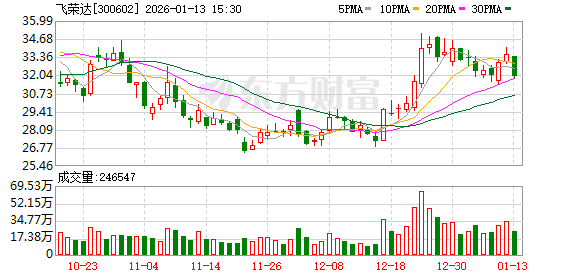
1月13日深证国企ESG(970055)指数跌1.7%,成份股中核科技(000777)领跌
Sou Hu Cai Jing· 2026-01-13 10:53
Group 1 - The Shenzhen State-owned Enterprise ESG Index (970055) closed at 1462.82 points, down 1.7%, with a trading volume of 56.526 billion yuan and a turnover rate of 2.08% [1] - Among the index constituents, 9 stocks rose while 40 stocks fell, with Dengkang Dental leading the gainers at a 6.17% increase and China Nuclear Technology leading the decliners at a 9.27% decrease [1] - The top ten constituents of the Shenzhen State-owned Enterprise ESG Index include Hikvision, Wuliangye, and Xugong Machinery, with respective weights of 9.57%, 9.23%, and 8.83% [1] Group 2 - The net outflow of main funds from the index constituents totaled 2.961 billion yuan, while retail investors saw a net inflow of 2.199 billion yuan [1] - Detailed fund flow data indicates that Yunnan Energy Investment and Yanghe Brewery experienced net inflows from retail investors, while major funds showed outflows for several stocks including Yun Aluminum and Wuliangye [2] - The fund flow analysis highlights the varying investor sentiment, with significant retail interest in certain stocks despite overall net outflows from institutional investors [2]






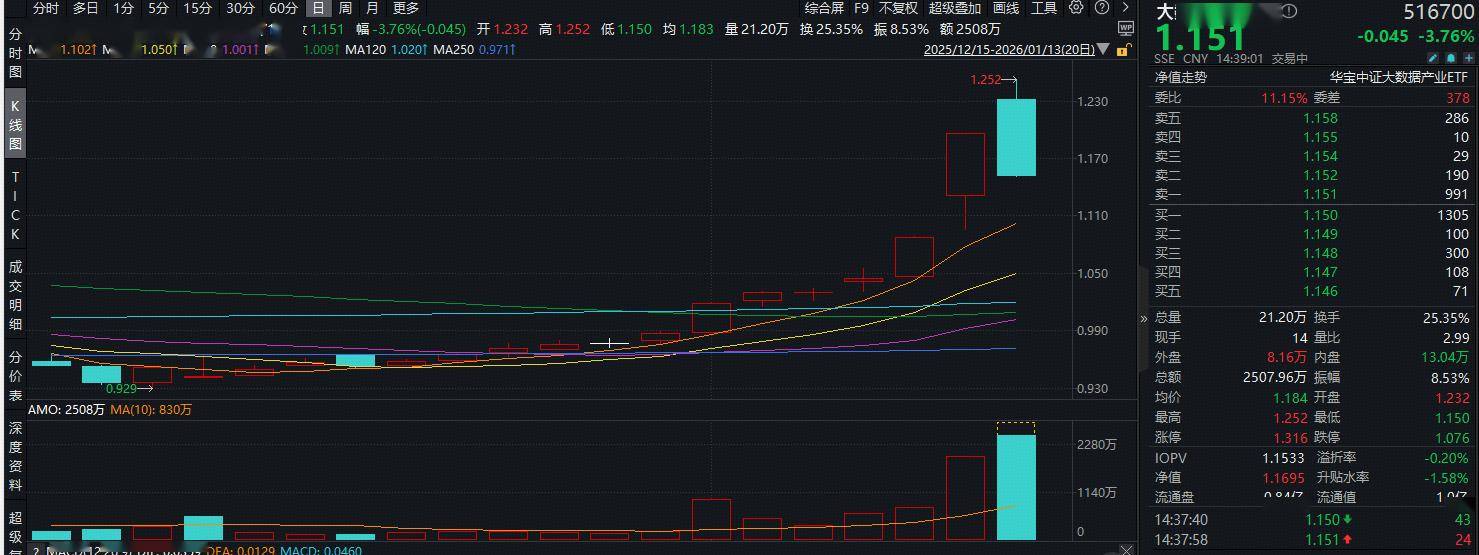
ETF盘中资讯|ETF涨停+12连阳后,首度回调!大数据ETF华宝(516700)单日吸金756万元!AIDC,AI时代的“新基建”!
Sou Hu Cai Jing· 2026-01-13 07:04
Core Viewpoint - The big data ETF Huabao (516700) is gaining attention due to its focus on computing power and AI applications, reflecting strong market interest in AIDC (AI Data Centers) as a promising investment area [1][2]. Market Performance - Huabao (516700) experienced a daily inflow of 7.56 million yuan, indicating investor confidence in the future performance of AIDC [2]. - The ETF reached a new high with a price increase of over 3.7% before experiencing a correction, showing a volatility of 8.53% [1]. AIDC Sector Insights - AIDC is viewed as a high-certainty infrastructure sector in the AI era, driven by five key factors: explosive demand, supply shortages, policy support, technological iteration, and business model upgrades [4]. - Demand is surging due to exponential growth in computing power needs for AI model training and inference [4]. - Supply is constrained, with a projected shortage of GPUs and AI servers expected to last 2-3 years [4]. - Government policies are increasingly supportive, with initiatives to accelerate computing infrastructure development and financial subsidies for AIDC construction [4]. - Technological advancements are enhancing the local computing node advantages of AIDC, expanding market opportunities [4]. - The business model is characterized by high barriers to entry and long-term contracts, ensuring stable cash flow and profitability [5]. ETF Composition - By the end of 2025, the index tracked by Huabao (516700) will have a weight of 40.91% in computing power concepts and 37.43% in AI application concepts [6]. Industry Trends - The focus on domestic computing power and AI applications aligns with national strategies for technological independence and digital productivity enhancement [7][8]. - The ongoing trend towards domestic substitution is expected to accelerate, particularly in the context of the "信创" (Xinchuang) initiative, which aims to promote self-sufficiency in technology [8].
ETF涨停+12连阳后,首度回调!大数据ETF华宝(516700)单日吸金756万元!AIDC,AI时代的“新基建”!
Xin Lang Cai Jing· 2026-01-13 06:51
Core Viewpoint - The focus on computing power and AI applications is driving significant interest in the Huabao Big Data ETF (516700), which recently hit a new high after a 12-day consecutive rise, reflecting strong market sentiment towards AIDC (AI Data Center) performance [1][7]. Group 1: Market Performance - The Huabao Big Data ETF (516700) experienced a daily inflow of 7.56 million yuan, indicating investor confidence in the AIDC sector [1][7]. - The ETF's price fluctuated by 8.53%, with a peak increase of over 3.7% before a slight correction [1][7]. - Key constituent stocks such as Yidian Tianxia and Yonyou Network saw gains exceeding 11% and 9% respectively, while companies like Shenzhou Information and Yuke fell by over 9% and 7% [1][7]. Group 2: AIDC Sector Insights - AIDC is recognized as a high-certainty infrastructure sector in the AI era, driven by five key factors: explosive demand, supply shortages, policy support, technological iteration, and business model upgrades [3][9]. - The demand for computing power is expected to grow exponentially due to AI model training and inference, positioning AIDC as a fundamental component of the AI industry [3][9]. - There is a projected supply shortage of GPUs and AI servers in China, with a computing power gap expected to persist for 2-3 years [3][9]. Group 3: Policy and Technological Support - National policies emphasize accelerating the construction of computing power infrastructure, with AIDC included as a key focus area [10]. - Local governments are implementing subsidy policies to reduce AIDC construction costs, enhancing the sector's growth potential [10]. - The demand for localized computing power nodes is increasing due to higher requirements for latency and stability in inference computing, providing AIDC with a competitive advantage [10]. Group 4: Business Model Characteristics - The AIDC industry features characteristics such as heavy assets, high barriers to entry, and long-term contracts, allowing for stable operations exceeding 10 years once established [4][10]. - Increased cabinet utilization rates are expected to drive profit growth, with leading companies achieving gross margins of 40%-60% [4][10]. - Long-term contracts with major cloud providers and enterprise clients ensure stable cash flow and strong resistance to economic cycles [4][10]. Group 5: Investment Opportunities - The Huabao Big Data ETF (516700) tracks the CSI Big Data Industry Index, with computing power concepts accounting for 40.91% and AI application concepts for 37.43% of the index by the end of 2025 [11]. - Investors interested in technology self-reliance should focus on three catalysts: high-level calls for technological leadership, the activation of digital productivity through top-level design, and the acceleration of domestic substitution processes [12].