
迪卡侬

Search documents
迪卡侬也要卖了
36氪· 2025-08-20 09:31
Core Viewpoint - Decathlon is planning to sell approximately 30% of its stake in its Chinese subsidiary, with an estimated valuation of €10-15 billion (around ¥100 billion) [4][6]. Group 1: Decathlon's History and Market Presence - Decathlon was founded in 1903 by Louis Mulliez in France, evolving from a textile factory to a major sports retail brand [5]. - The company entered the Chinese market in 1994, establishing a production office in Guangzhou, and opened its first retail store in Shanghai in 2003 [6]. - By 2015, Decathlon had expanded to 166 stores in China, reaching approximately 260 stores by the end of 2017, despite recent store closures [6]. Group 2: Current Business Structure and Operations - Decathlon China operates 4 owned factories, 11 industrial procurement offices, and around 400 partner factories, contributing significantly to the global supply chain [6]. - Products sourced from Decathlon's Chinese factories account for 42.5% of the group's global market [6]. Group 3: Share Sale and Investment Dynamics - The family behind Decathlon is only willing to sell 30% of the stake, indicating the importance of the Chinese market to the company [7]. - The potential transaction is expected to be structured as a mix of "capital increase and share transfer," similar to the Starbucks China deal [10]. - Multiple international private equity and sovereign funds have signed confidentiality agreements, with some investors seeking more than 30% [11]. Group 4: Broader Market Trends - The trend of acquiring the Chinese operations of multinational companies is becoming a significant direction in consumer mergers and acquisitions [13]. - Recent examples include the acquisition of McDonald's China operations by CITIC Group for $20.8 billion, which has led to substantial growth in store numbers [13].

比始祖鸟时髦、比巴黎世家实用,我爷都不要的尿素袋被打工人捧成背包届六边形战士?
3 6 Ke· 2025-08-20 08:37
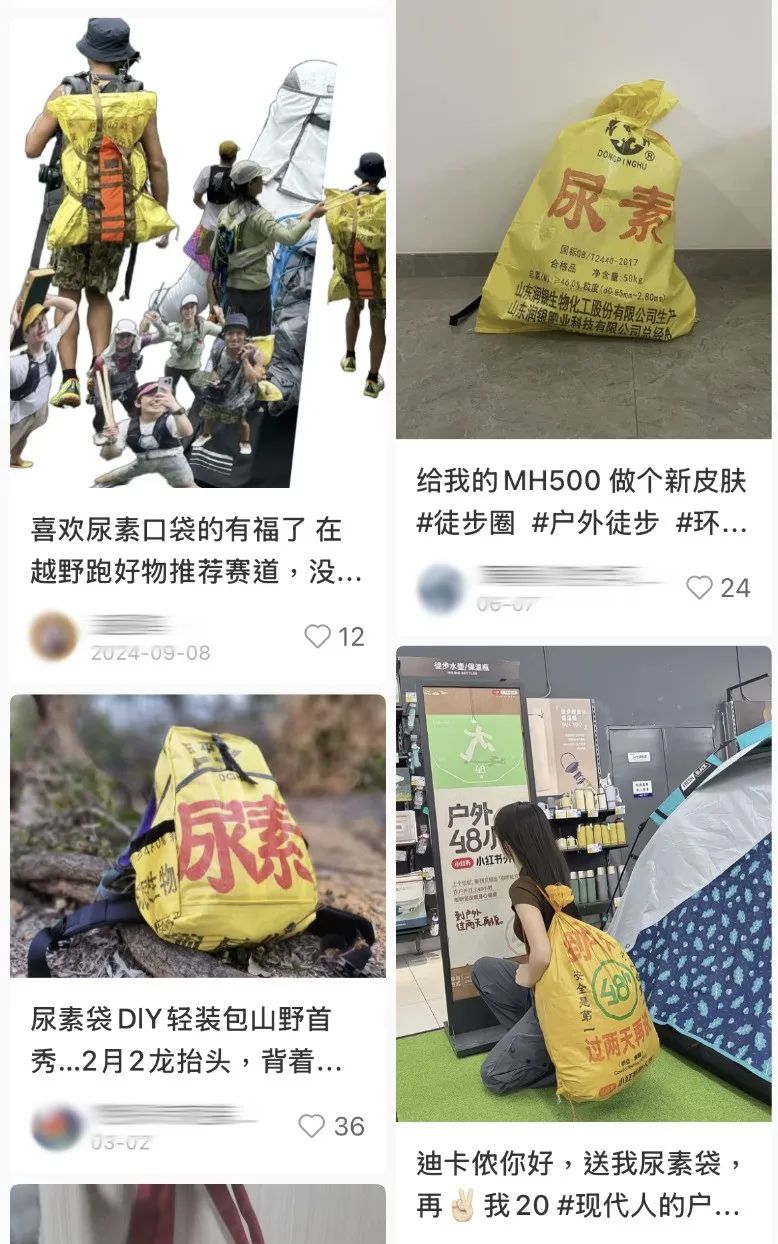
Core Insights - The rise in popularity of urea bags as a trendy outdoor accessory reflects a shift in consumer behavior towards practicality and sustainability in fashion [1][3][9] - Decathlon's limited edition urea bags, offered as part of a marketing campaign in collaboration with Xiaohongshu, highlight the intersection of outdoor culture and urban fashion [9][10] - Urea bags have evolved from agricultural use to becoming a cultural symbol in outdoor activities, showcasing their versatility and appeal among younger consumers [10][23][24] Group 1: Product and Market Trends - Urea bags are being marketed as stylish and functional, appealing to the minimalist wardrobe trend with their multi-functional use [9][10] - The bags are available in bright colors, with yellow being particularly favored on social media, indicating a strong visual appeal [9][10] - The collaboration with Xiaohongshu emphasizes the importance of social media in driving consumer interest and engagement with outdoor products [10][24] Group 2: Cultural Significance - Urea bags symbolize a connection to nature and environmental consciousness, as they are often used by hikers to carry gear and collect trash during outdoor activities [23][24] - The transformation of urea bags into fashion items reflects a broader trend of repurposing everyday objects into high-fashion statements, challenging traditional notions of luxury [26][34] - The cultural appropriation of urea bags by luxury brands illustrates the ongoing dialogue between high fashion and grassroots trends, where elements from lower socioeconomic backgrounds are reinterpreted for the elite [34][37] Group 3: Consumer Behavior - The demand for urea bags has surged, with consumers actively seeking them out, reminiscent of past trends where limited edition items created a sense of urgency [10][19] - The appeal of urea bags lies in their ruggedness and affordability, making them attractive to outdoor enthusiasts who value practicality over brand prestige [10][13] - The trend of modifying urea bags for various uses, such as backpacks or fashion items, showcases consumer creativity and the desire for personalized, unique products [18][21][30]
京东开超市,淘宝成品牌“接口”,平台企业即时零售布局显“差异”
Sou Hu Cai Jing· 2025-08-20 07:00
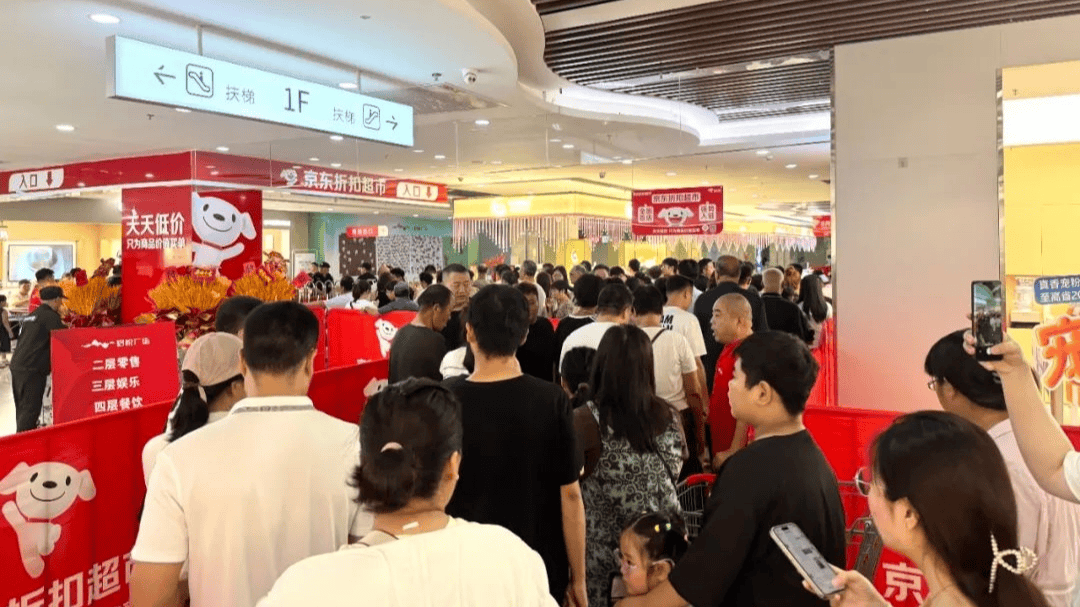
Core Viewpoint - The article discusses the strategic shifts of major platforms like Meituan, Ele.me, and JD.com in the instant retail sector, moving from price competition to value creation, emphasizing supply chain capabilities and channel expansion. Group 1: JD.com Initiatives - JD.com opened its first discount supermarket in Hebei, attracting over 100,000 customers in two days, which is about one-sixth of the city's population [2][4] - The company reported a threefold increase in foot traffic and a 100% increase in online orders for its Seven Fresh Food MALL since its opening [2][4] - JD.com is expanding its offline presence by collaborating with over ten cities and integrating its community dining service, Seven Fresh Kitchen [2][4] Group 2: Supply Chain Strategy - JD.com emphasizes its supply chain advantages, utilizing direct sourcing and self-owned brands to reduce costs and enhance product quality [5] - The acquisition of Hong Kong's Jia Bao Food Supermarket is a strategic move to strengthen its fresh supply chain in the Greater Bay Area and enhance local retail market presence [5] Group 3: Taobao's Approach - Taobao's Flash Purchase reported significant growth, with 66 brands achieving over 10 million in monthly sales in July, and a 110% increase in new brand entries [6][8] - The platform's collaboration with brands like Xiaomi and Miniso has led to a fourfold increase in daily orders since May, showcasing the effectiveness of near-field delivery [8] Group 4: Meituan and Douyin Strategies - Meituan's self-operated instant retail brand, Xiao Xiang Supermarket, has expanded its product range to over 10,000 SKUs, with a projected GMV of nearly 30 billion in 2024 [9] - Douyin is integrating "live streaming + instant delivery" to enhance its e-commerce capabilities, leveraging its content output for immediate consumer engagement [9] Group 5: Industry Trends - The shift from "price war" to "value creation" in instant retail is highlighted, with a focus on convenience, quality, and efficiency rather than capital-driven price competition [10]



高端化转型期 迪卡侬中国“卖股”传闻再起
Xin Jing Bao· 2025-08-19 16:37
Group 1 - Decathlon plans to sell approximately 30% of its Chinese subsidiary, with an estimated valuation between €1 billion and €1.5 billion (RMB 8.4 billion to 12.6 billion) [1] - Decathlon China has been facing performance pressure, with revenue in 2023 reported at €15.6 billion, reflecting a growth rate of only 1.15% [1] - The company has a history in China dating back to 1994, with over 200 stores currently operating despite recent store closures [1] Group 2 - Starting in 2024, Decathlon aims to enter the high-end market, restructuring its business lines and launching four specialized brands [2] - In June 2023, Decathlon China opened three new stores in prime urban locations, with plans to open 20 to 30 additional stores this year [2] - Despite these efforts, the company's revenue for 2024 is projected at €16.2 billion, a growth of only 3.8%, with net profit expected to decline by 15.5% to €787 million [2]
高端化转型期,迪卡侬中国“卖股”传闻再起
Xin Jing Bao· 2025-08-19 13:56
Core Viewpoint - Decathlon is planning to sell approximately 30% of its Chinese subsidiary, with an estimated valuation between €1 billion and €1.5 billion (RMB 8.4 billion to RMB 12.6 billion) [1] Group 1: Company Background and Market Presence - Decathlon has been operating for 49 years and entered the Chinese market in 1994, initially focusing on production and procurement before opening its first retail store in Shanghai in 2003 [1] - The company expanded rapidly in China, reaching 166 stores by 2015 and approximately 260 stores by the end of 2017, although it currently maintains over 200 stores despite recent closures [1] Group 2: Financial Performance and Challenges - In 2023, Decathlon reported revenue of €15.6 billion, with a growth rate of only 1.15%, indicating performance pressure [1] - The company is facing challenges in profitability, with a projected revenue of €16.2 billion in 2024, reflecting a growth of only 3.8%, and a net profit decline of 15.5% to €787 million [2] Group 3: Strategic Shifts and Market Positioning - Starting in 2024, Decathlon plans to enter the high-end market, restructuring its business lines and launching four specialized brands in cycling, running, climbing, and hunting [2] - The company aims to enhance its local presence by opening 20 to 30 new stores this year, including three new stores in prime urban locations on June 28 [2]
超5000个高薪岗位!深圳海归人才招聘会将举行
Shen Zhen Shang Bao· 2025-08-18 16:44
Group 1 - The 20th Shenzhen Overseas Talent Recruitment Fair will be held on September 21 at the Shenzhen Convention and Exhibition Center, offering over 5,000 high-paying job positions across industries such as internet, technology, finance, and biomedicine [1] - The recruitment fair focuses on international expansion, aiming to assist companies in going global through roles in international sales and foreign trade, and includes a dedicated section for recruiting foreign students studying in China [1] - Major companies confirmed to participate include Tencent, Walmart China, Decathlon, New Oriental, and China Southern Power Grid, with some offering annual salaries ranging from 500,000 to 1,000,000 RMB for technical management positions [1] Group 2 - The event will feature the "Return Home Service Plan" area, providing five categories of services including policy interpretation, employment matching, and community support to help overseas returnees adapt to the domestic environment [2] - Since its inception in 2015, the Shenzhen Overseas Talent Recruitment Fair has held 19 events, serving over 350,000 overseas returnees [2]
Crocs股价暴跌30%:“丑鞋之王”为何失宠?
首席商业评论· 2025-08-18 04:41
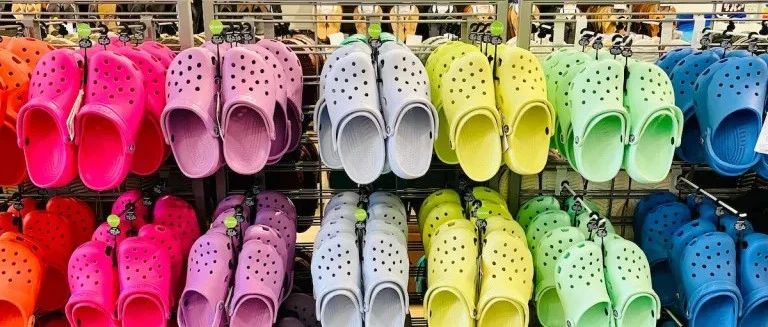
Core Viewpoint - The article discusses the decline of Crocs, once a fashion sensation, highlighting a significant drop in its financial performance and changing consumer preferences that have led to its current struggles [5][9][19]. Financial Performance - Crocs reported a drastic shift in its financials, with operating profit plummeting from $325.7 million in the same quarter last year to an operating loss of $427.5 million in Q2 2025 [5]. - The company anticipates a revenue decline of 9% to 11% in Q3, contrasting sharply with previous market expectations [5]. - Following the announcement, Crocs' stock price fell nearly 30%, reaching a three-year low with a market capitalization of $4.171 billion [5]. Historical Context - In 2023, Crocs sold 120 million pairs of shoes, generating nearly $4 billion in revenue, marking a historic high for the brand [9][18]. - The brand's unique positioning as a functional shoe with features like slip resistance and water resistance initially drove its popularity [11]. Marketing and Brand Strategy - Crocs successfully transformed its "ugly shoe" image into a cultural symbol through clever marketing strategies, appealing to younger consumers [11][13]. - The brand's DIY culture, allowing consumers to personalize their shoes, contributed to its appeal, with significant social media engagement [15]. Consumer Behavior Changes - A shift in consumer sentiment has been noted, with a decline in spending on non-essential items, particularly among price-sensitive low-income groups [19][21]. - The "long skirt theory" suggests that during economic downturns, consumers tend to opt for more conservative and practical choices, impacting Crocs' sales [21]. Competitive Landscape - The market for casual footwear has become increasingly competitive, with numerous brands offering similar products at lower price points, challenging Crocs' market share [30][32]. - Crocs' pricing strategy, with shoes priced between $30 to $90, is less competitive compared to alternatives available for as low as $10 [32]. Product and Innovation Challenges - Crocs faces criticism regarding its product quality and innovation, with many consumers expressing dissatisfaction with comfort and fit [32]. - The acquisition of HEYDUDE did not yield the expected results, with a revenue decline and significant impairment losses reported [27]. Economic and Regulatory Factors - The company anticipates a $90 million impact from tariffs in 2025, which could further strain its pricing strategy and consumer demand [29]. - The presence of counterfeit products and alternatives in the market is eroding Crocs' brand value and market position [30].
皈依洞门的信徒,夏天快被忽悠瘸了
3 6 Ke· 2025-08-18 03:33
Core Viewpoint - Crocs, the leading brand in the clogs market, has issued a revenue guidance indicating a projected year-over-year decline of 9% to 11% for Q3 2025, signaling a potential downturn in the popularity of clogs [1][2]. Group 1: Company Performance - Following the revenue guidance, Crocs' stock price plummeted nearly 30%, resulting in a market capitalization of approximately $4 billion, which is nearly half of its peak value in 2024 [2]. - The decline in Crocs' performance reflects a broader trend in the clog market, suggesting that the once-popular footwear is experiencing a decline in consumer interest [3][4]. Group 2: Consumer Experience and Safety Concerns - Consumers of clogs face multiple safety risks, including ankle sprains, falls, being caught in escalators, and potential shrinkage of the shoes due to heat [5][16]. - Specific incidents highlight these risks, such as a consumer spraining an ankle after stepping on a loose manhole cover while wearing Crocs [7], and another experiencing multiple falls due to the lack of grip on slippery surfaces [9][18]. - The design of clogs, which often includes high heels and thick soles, compromises stability and increases the likelihood of accidents [18][21]. Group 3: Market Trends and Alternatives - The popularity of clogs is waning, with consumers increasingly seeking alternatives that offer better safety features and comfort, such as creek shoes [27]. - Sales data indicates a significant rise in creek shoe sales, with a 50% increase since June 2025 and a 75% increase in transaction value on platforms like Tmall [29]. - The global sandal market is also expanding, projected to grow from $32.6 billion in 2024 to $44.81 billion by 2033, indicating a shift in consumer preferences towards safer and more functional footwear options [29].

迪卡侬回应拟出售中国子公司30%股权
21世纪经济报道· 2025-08-15 11:08
Core Viewpoint - Decathlon is reportedly planning to sell approximately 30% of its stake in its Chinese subsidiary, with an estimated valuation between €1 billion and €1.5 billion (approximately ¥10 billion) [1][2]. Group 1: Company Strategy and Operations - Decathlon has been operating in China since 1994, initially focusing on production and procurement, and opened its first retail store in Shanghai in 2003 [1]. - The company has recently opened three new stores in prime urban locations, indicating a deepening of its brand presence in key city centers, with plans to open 20 to 30 new stores this year [1]. - China is the only overseas market where Decathlon has a complete "R&D-production-retail" chain, with 94.2% of products sold in China being produced locally, and the goal to increase this to 100% [2]. Group 2: Leadership and Financial Performance - In March, Decathlon appointed Javier López as the new global CEO, replacing Barbara Martin Coppola, coinciding with the release of the 2024 fiscal year performance report [2]. - For the 2024 fiscal year, Decathlon reported a revenue increase of 5.2% year-on-year to €16.2 billion, while net profit decreased by 15.5% to €787 million, indicating challenges in profitability [2].
业绩承压,迪卡侬也要卖了?
2 1 Shi Ji Jing Ji Bao Dao· 2025-08-15 10:52
Group 1 - Decathlon plans to sell approximately 30% of its stake in its Chinese subsidiary, with a preliminary business valuation range of €1 billion to €1.5 billion (approximately ¥10 billion) [1] - Decathlon China has responded to market rumors by emphasizing its commitment to long-term development in China and its mission to make sports accessible to consumers [1][2] - The company has been expanding its presence in China, opening three new stores on June 28, 2023, in prime urban locations, and plans to open 20 to 30 new stores this year [1] Group 2 - China is the only overseas market for Decathlon that has a complete "R&D-production-retail" chain, with 94.2% of products sold in China being produced locally [2] - The company has four owned factories, 11 industrial procurement offices, three logistics parks, one brand center, and approximately 200 physical stores in China [2] - In March 2023, Decathlon appointed Javier López as the new global CEO, coinciding with the release of its fiscal year 2024 performance report, which showed a 5.2% year-on-year revenue growth to €16.2 billion, while net profit declined by 15.5% to €787 million [2]