新产业

Search documents
加快人工智能创新应用融合 建用并举更好守护群众健康
Xin Hua Ri Bao· 2026-01-08 21:33
Group 1 - The provincial government emphasizes the integration of artificial intelligence with healthcare to meet the growing health service demands of the public [1] - The healthcare insurance information system is highlighted for its vast data capacity, which enhances service efficiency and ensures the safety of insurance funds [1] - The government aims to strengthen insurance fund supervision using AI technology to create a closed-loop system for risk prevention and control [1] Group 2 - The focus is on exploring AI-assisted medical classification standards and accelerating the development of intelligent systems for innovative applications [2] - Collaboration among industry, academia, and healthcare is encouraged to enhance the integration of AI with medical practices and improve the AI literacy of healthcare professionals [2] - The provincial government supports the growth of companies specializing in medical AI technologies, aiming to establish a stronghold for AI industry development in the region [2]


战新产业与未来产业领航,央企开辟增长“第二曲线”
Hua Xia Shi Bao· 2026-01-08 12:16
Core Insights - The article emphasizes the importance of the "14th Five-Year Plan" implementation period starting in 2026, focusing on enhancing core functions and competitiveness of state-owned enterprises (SOEs) to achieve world-class status [2] - The central government aims to accelerate industrial upgrades and foster new growth drivers through strategic investments in emerging industries such as artificial intelligence, biomedicine, and digital economy [2][3] Group 1: Industrial Upgrades and Strategic Focus - The State-owned Assets Supervision and Administration Commission (SASAC) is promoting a dual-track development model for SOEs, focusing on both traditional industry enhancement and the cultivation of new growth drivers [3] - Central enterprises are expected to invest in strategic emerging industries, with an annual investment growth rate exceeding 20% over the past five years, reaching 3.3 trillion yuan in fixed asset investments (excluding real estate) from January to November 2025 [3] Group 2: Technological Advancements and R&D Investment - Central enterprises have significantly increased R&D investment, amounting to 890.16 billion yuan from January to November 2025, with an R&D intensity of 2.62% [5] - Breakthroughs in key technologies have been achieved, such as the development of a world-first megawatt-level CO₂ thermal energy storage system and a 700-megawatt ultra-supercritical circulating fluidized bed boiler [5][6] Group 3: Collaborative Ecosystem and Mechanism Reforms - SOEs are moving away from isolated operations by forming innovation alliances and promoting collaborative development across the industrial chain, with 24 innovation alliances involving over 800 enterprises and institutions [7] - The SASAC plans to advance strategic and specialized mergers and acquisitions in 2026, focusing on sectors like new energy, integrated circuits, and biotechnology to enhance competitive advantages [8]


智谱豪华阵容港交所上市,“十五五”新产业趁早布局
Sou Hu Cai Jing· 2026-01-08 11:35
Core Insights - The listing of Zhipu on the Hong Kong Stock Exchange marks the dawn of a new industry centered around large models, coinciding with the upcoming 2026 China Real Estate Asset Management Summit and the Fourth Smart Low-Carbon Industry-Finance Summit [2] - Zhipu's IPO was oversubscribed by 1159.46 times, attracting 11 cornerstone investors, including national capital and leading financial institutions, indicating strong market confidence [3] - Zhipu's flagship model, GLM-4.7, has achieved significant recognition, outperforming competitors in various global assessments, showcasing the competitiveness of Chinese large models [3] Financial Performance - Zhipu's revenue surged from 57.4 million yuan in 2022 to 312.4 million yuan in 2024, reflecting a compound annual growth rate of 130%, with a staggering 325% year-on-year increase in the first half of 2025 [3] - The company's MaaS platform has attracted over 2.7 million enterprises and developers, including nine of the top ten internet companies in China, highlighting its market penetration [3] Industry Transformation - Zhipu's successful listing signifies a pivotal moment for Chinese AGI companies, transitioning from a "technology follower" to a "global competitor" in the large model industry [4] - The upcoming summit aims to explore the entire lifecycle value of new industries, focusing on the integration of technology, scenarios, and capital to foster growth [4]
新产业:公司在国内和海外免疫诊断市场领域的市占率仍处于相对较低水平
Zheng Quan Ri Bao Zhi Sheng· 2026-01-07 13:49
Core Insights - The company is focusing on expanding its presence in tertiary hospitals, which account for over half of hospital visits and are key end-users of in vitro diagnostic products [1] - The company plans to enhance its product offerings with cost-effective solutions like MAGLUMI X3 and MAGLUMI X6 to cater to secondary and lower-tier medical markets [1] - The company aims to increase its market share in both domestic and international immunodiagnostic markets, which currently remain relatively low, indicating significant growth potential [1] Domestic Market Strategy - The company is increasing efforts to penetrate tertiary hospitals with its high-speed luminescent instruments MAGLUMI X8, MAGLUMI X10, and SATLARS T8 [1] - The focus is on improving single-machine output while also addressing the needs of smaller medical facilities through affordable product development [1] International Market Strategy - The company is witnessing a rise in sales of mid-to-large machines in overseas markets, with the proportion increasing from 57% in 2023 to 76% in the first three quarters of 2025 [1] - The strategy includes a stronger emphasis on expanding large machines and production lines in high-end global markets to drive growth from large sample volume clients [1]
新产业大宗交易成交1192.00万元
Zheng Quan Shi Bao Wang· 2026-01-07 09:51
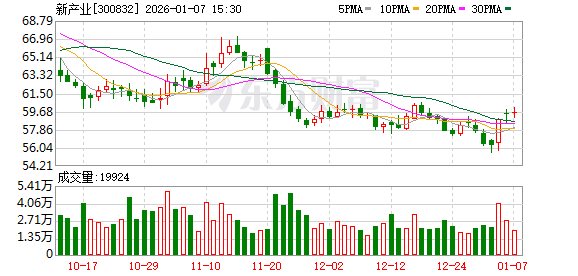
Core Viewpoint - The recent large transaction of New Industry on January 7 involved 200,000 shares with a transaction value of 11.92 million yuan, executed at a price of 59.60 yuan per share, indicating institutional trading activity [2] Trading Activity Summary - A total of 2 large transactions occurred in the last three months for New Industry, with a cumulative transaction value of 85.67 million yuan [2] - On January 7, the closing price for New Industry was 59.60 yuan, reflecting a slight increase of 0.17% for the day, with a turnover rate of 0.29% and a total trading volume of 119 million yuan [2] - The net inflow of main funds for the day was 6.14 million yuan, while the stock experienced a cumulative increase of 3.27% over the past five days, with a total net outflow of 39.60 million yuan during the same period [2] Margin Financing Data - The latest margin financing balance for New Industry stands at 803 million yuan, having increased by 5.95 million yuan, which represents a growth rate of 0.75% over the past five days [2]
新产业:国内外免疫诊断市场占率仍存广阔增长空间
Sou Hu Cai Jing· 2026-01-07 08:21
Core Insights - The company is focusing on expanding its market presence in both domestic and international healthcare sectors, particularly targeting large hospitals while also developing cost-effective products for smaller healthcare facilities [1] Group 1: Domestic Market Strategy - The company recognizes that tertiary hospitals account for over half of the hospital diagnosis visits in China, making them key users of in vitro diagnostic products [1] - The company plans to enhance its penetration in large hospitals with its high-speed luminescence instruments, MAGLUMI X8, MAGLUMI X10, and SATLARS T8, which have gained recognition in the market [1] - To address the needs of secondary and lower-tier medical facilities, the company is developing more cost-effective products, such as MAGLUMI X3 and MAGLUMI X6, to meet the demand for high-quality and affordable diagnostic solutions [1] Group 2: International Market Strategy - The company is experiencing an increase in sales of large machines in overseas markets, with the proportion rising from 57% in 2023 to 67% in 2024, and further to 76% in the first three quarters of 2025 [1] - The company aims to focus on expanding its high-end terminal offerings globally, particularly for large sample volume clients, which are expected to drive sustained growth [1] - The company's market share in both domestic and international immunodiagnostic sectors remains relatively low, indicating significant growth potential in these markets [1]
“一米宽”里做文章 “百米深”处见真章
Xin Hua Ri Bao· 2026-01-06 19:52
Core Viewpoint - Yangzhou is focusing on developing characteristic industries to enhance its economic resilience and competitiveness, with a strategic emphasis on high-quality development and innovation. Group 1: Industry Development - The CNC forming machine tool industry cluster in Yangzhou has over 100 enterprises, achieving an annual industrial scale exceeding 20 billion yuan, recognized as a national-level characteristic industry cluster [1] - Yangzhou's shipbuilding sector is thriving, with over 50 orders for the Crown 63 series bulk carriers, indicating strong market demand and a focus on high-value vessels [2] - The city is cultivating "invisible champions" in various sectors, such as Fengshang Intelligent in feed equipment and Guangling Medical Consumables, emphasizing specialization over broad market coverage [3] Group 2: Strategic Focus - Yangzhou's approach to industry development is characterized by a focus on unique advantages and deep market penetration, moving from a crowded low-cost competition to specialized high-tech sectors [5] - The city is leveraging its agricultural resources to develop modern clusters in products like hairy crabs and lotus roots, enhancing brand recognition and market presence [5] - The establishment of a microelectronics industrial park in Hanjiang, gathering over 30 related enterprises, signifies a strategic move towards high-tech industry development [6] Group 3: Policy and Support - Yangzhou is implementing targeted support policies for key industries, including a 15-point measure for the food industry to scale up to 2.5 billion yuan [8] - The city is fostering innovation through expert consultation groups and collaborative research initiatives, addressing critical technological challenges [8] - A dual online and offline platform for industry matchmaking has been established, facilitating over a thousand supply-demand connections [9] Group 4: Future Outlook - Yangzhou aims to continue deepening its characteristic industry strategy as part of its "14th Five-Year Plan," positioning these industries as pillars for high-quality development and regional competitiveness [9]
耐心资本助力产业体系再升级 险资踏足并购基金又添新例
Zheng Quan Shi Bao· 2026-01-06 18:15
Group 1 - The core viewpoint of the articles highlights the increasing involvement of insurance capital in the mergers and acquisitions (M&A) fund sector, with notable examples such as China Life Asset Management's investment in the Shanghai Chip Integration Fund [1][2] - The investment by China Life Asset Management, amounting to approximately 500 million yuan, aims to support the integration of the integrated circuit industry, particularly focusing on the critical EDA software sector [2] - Other insurance institutions, such as China Pacific Insurance and Ping An Life, are also establishing their own M&A funds, indicating a growing trend among insurance companies to explore this investment avenue [3][4] Group 2 - The M&A market is becoming increasingly active, driven by policy support and market demand, particularly following the release of the "Six Guidelines for Mergers and Acquisitions" by the China Securities Regulatory Commission in 2024 [4] - A report indicates that the structure of China's equity investment market is undergoing significant changes, with a shift towards M&A investments as a core focus for future development [4][6] - The report also notes that while insurance capital currently plays a limited role in M&A funds, it is expected to become a more significant player in the future, optimizing asset allocation for long-term investors [5][6][7]


以法治之力构筑“数智贵州”新格局
Jiang Nan Shi Bao· 2026-01-06 07:16
Core Viewpoint - The newly revised Guizhou Provincial Big Data Development and Application Promotion Regulations marks the first local legislation on big data in China, representing a significant institutional upgrade and strategic restructuring after nine years of exploration. The core legislative purpose is to establish a collaborative development path for "computing power, data, applications, and industry," providing a solid legal guarantee for Guizhou to consolidate its leading advantage in big data and build a modern industrial system led by the digital economy [1] Group 1: Strengthening Computing Power - The new regulations elevate "computing power infrastructure" to a dedicated chapter, emphasizing its strategic position as a key foundation for "Smart Guizhou" [2] - The principle of "integrated storage and computing, prioritizing intelligent computing" is established to promote the collaborative development of various computing resources [2] - A "computing-electricity collaboration" mechanism is proposed to address energy consumption issues of data centers, emphasizing low-carbon development and requiring new data centers to meet green standards [2] Group 2: Activating Data Elements - The regulations aim to resolve key issues in the data element market, establishing a comprehensive governance system for data resource management, circulation, and security [4] - A data resource management system is created, including measures like establishing a data resource directory and promoting public data collection [4] - An innovative mechanism for data value release is introduced, supporting the construction of trusted data spaces and promoting data sharing among enterprises [4][5] Group 3: Enhancing Application Empowerment - The regulations focus on digital government construction to enhance governance capabilities and promote more inclusive public services [6] - A unified government cloud platform is mandated to avoid redundant construction and data interoperability barriers [7] - A collaborative governance system is established to enhance internal government efficiency and optimize public service processes [7] Group 4: Focusing on Core Industries - The regulations concentrate on four key industries: computing power, data, artificial intelligence, and electronic information, aiming to build a supportive digital industry ecosystem [8] - The focus is on strengthening the computing power industry, transitioning from basic services to high-end fields like intelligent and supercomputing [8] - The development of a data industry centered on high-quality data sets is emphasized, along with the promotion of artificial intelligence applications in various sectors [8] Group 5: Legislative Framework and Future Implications - The revision of the regulations is based on the evolution of the digital economy and Guizhou's development realities, establishing a forward-looking and systematic framework for "Smart Guizhou" [9] - The collaborative effects of "computing power, data, applications, and industry" are expected to continuously release benefits, providing a fundamental legal guarantee for the enhancement of the digital economy in Guizhou [9]
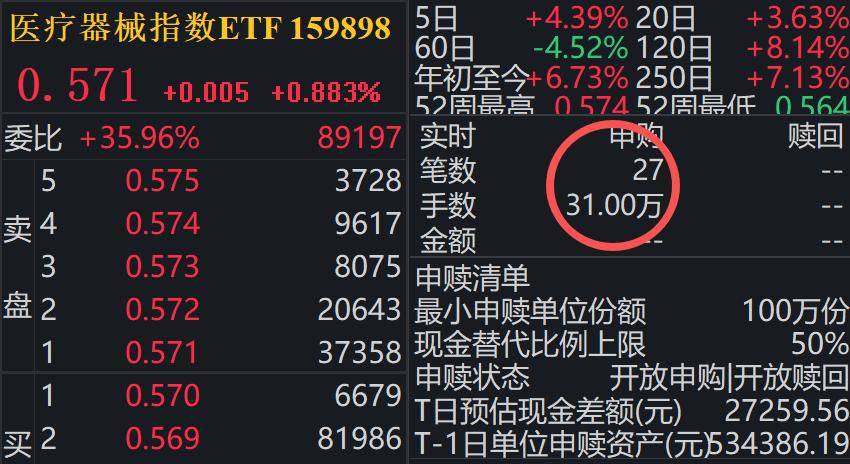
新晋顶流!Neuralink官宣引爆脑机接口,国内医疗器械持续突破,如何把握板块β?
Sou Hu Cai Jing· 2026-01-06 07:00
Core Viewpoint - The medical device sector is experiencing significant growth, driven by advancements in brain-computer interface (BCI) technology and strong market interest, particularly following Neuralink's announcement of large-scale production plans for 2026 [1][2][3]. Group 1: Market Performance - The medical device index ETF (159898) saw a net inflow of over 17.7 million yuan during intraday trading, following a previous day's inflow of over 23 million yuan [1]. - Key stocks in the sector, including Weisi Medical, Xiangyu Medical, and Meihao Medical, reached their daily limit up, indicating strong investor confidence [1]. Group 2: Technological Advancements - Domestic advancements in BCI technology are accelerating, with Fudan University successfully completing clinical trials for a fully implanted, wireless BCI product [3]. - Tsinghua University's team has also achieved significant results, helping quadriplegic patients regain motor functions through their BCI trials [3]. Group 3: Investment Strategies - The investment strategy for the medical device sector in 2026 should focus on overseas expansion and innovative products, which are expected to support profit margins amid declining prices in traditional business areas [3][4]. - The domestic market is shifting towards high-barrier innovation sectors, with policies increasingly supporting the commercialization of AI and BCI products [4]. Group 4: Industry Outlook - The medical device industry in China is in a rapid development phase, with a long-term positive outlook driven by innovation and import substitution [4]. - The medical device index ETF (159898) tracks a broad range of sectors, including medical equipment and consumables, with a significant portion of its holdings in leading companies like Mindray Medical and United Imaging [6].