
XREAL

Search documents
重构人机交互新生态,“AI+硬件”破壁日常生活圈
Xin Hua Ri Bao· 2025-07-29 23:27
Group 1: AI Hardware Trends - The integration of AI technology into daily life is accelerating, with consumer-grade AI hardware emerging as the first carriers of this integration [1] - Various companies are launching diverse smart hardware products, including smart glasses, AI toys, and smart office devices, targeting specific verticals like elderly care and emotional companionship [1] Group 2: Smart Glasses Market - Smart glasses have become a focal point at the World Artificial Intelligence Conference (WAIC), with brands like XREAL showcasing their flagship product, XREAL One Pro, which features a wide field of view and low latency [2][3] - Other notable players include Rokid, which introduced Rokid Glasses with a teleprompter function, and Halliday, which launched Halliday Glasses that support prescription lenses and offer long battery life [3] Group 3: AI Companion Products - AI companion products are evolving beyond traditional toys, with offerings like the Fuzozo robot from SenseTime, which features realistic digital avatars and enhanced interaction capabilities [4] - Looi, a desktop robot, allows users to engage with it through emotional recognition and interactive games, while also providing development tools for customization [5] Group 4: Focus on Office and Education - AI hardware is increasingly being applied in office and educational settings, with companies like Outermost introducing products like TicNote, which combines hardware and software for various practical applications [6] - NetEase Youdao showcased the AI-powered learning tool SpaceOne, designed to enhance students' problem-solving skills and reduce dependency on standard answers [6] Group 5: Industry Challenges - Despite the excitement surrounding AI hardware, challenges remain, such as limitations in computational power and energy consumption, which hinder the full potential of AI functionalities [7] - The industry faces the core challenge of promoting deep integration between AI technology and hardware to create next-generation smart devices with continuous evolution capabilities [7]
人工智能酝酿下一个爆款,智能体“登台”具身智能“献技”
Bei Jing Shang Bao· 2025-07-29 11:50
Core Insights - The 2025 World Artificial Intelligence Conference (WAIC) attracted over 800 companies, showcasing advancements in AI applications and technologies, particularly in intelligent agents and large models [1] - The focus of discussions revolved around the practical applications of AI, emphasizing the need for intelligent agents to solve real-world problems [6][10] Group 1: Intelligent Agents vs. Large Models - Intelligent agents are rapidly becoming standard due to the maturity of large model capabilities, but they are not directly comparable as they serve different purposes [4] - Intelligent agents represent the application of large model technology in specific industries, highlighting the importance of context in their development [5] Group 2: Integration and User Experience - AI must deeply integrate with software to enhance user experience, moving beyond simple API connections to a more interactive and adaptive approach [7] - The evolution towards agentic software is crucial, allowing for continuous dialogue between users and AI to produce usable content [7] Group 3: Cloud Computing and Development Environment - Local devices struggle to support high-demand intelligent agent tasks, necessitating a shift to cloud computing for better performance and scalability [8] - A layered approach to operating systems is proposed to facilitate intelligent agent development, allowing companies to focus on their strengths [8] Group 4: Embodied Intelligence and Robotics - The integration of large models with robotics is transforming traditional robots into intelligent agents capable of perception and interaction [9] - The next phase of AI development involves robots that can understand and interact with the world, enhancing their functionality and productivity [10] Group 5: Practical Applications and Industry Focus - The industry is increasingly focused on practical applications of embodied intelligence, emphasizing the need for safety, efficiency, and reliability in real-world scenarios [11] - AI vision systems are being developed to handle complex tasks in manufacturing, demonstrating the importance of real-world applications for technological advancements [11] Group 6: Smart Glasses and Interaction - The combination of smart glasses with embodied intelligence is seen as a natural progression, enabling better human-machine interaction [12] - Smart glasses can provide visual feedback and facilitate communication between humans and intelligent agents, enhancing operational capabilities [12][13]

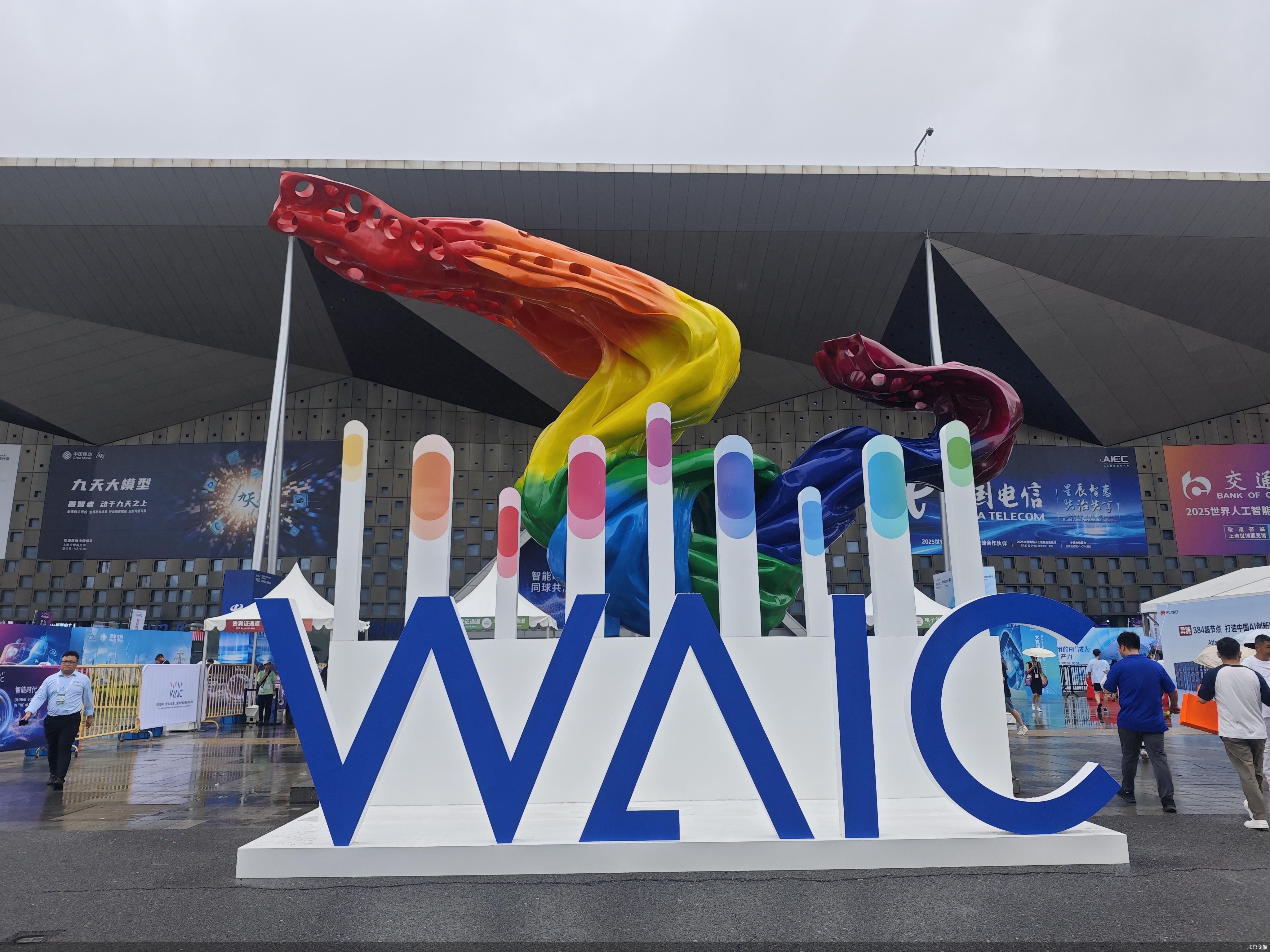
对话XREAL创始人徐驰:AI眼镜,时机未到
Hua Er Jie Jian Wen· 2025-07-29 11:39
Core Insights - The smart glasses sector is on the verge of a breakthrough, driven by the AI model wave, with a record number of manufacturers participating in the 2025 World Artificial Intelligence Conference (WAIC) [2] - XREAL, a leading player, showcased its latest AR glasses, XREAL One Pro, which has already been launched overseas and entered the Chinese market during WAIC [2][3] - XREAL's CEO, Xu Chi, emphasized that the company will not release AI glasses this year due to the current inadequacies in user experience [2][3] Company Strategy - XREAL's strategic focus includes three main product lines: AI glasses, AR glasses, and XR headsets, with a long-term coexistence expected among these products [2][3] - The company aims to create a "million-level blockbuster" in the AR glasses sector, as no product in the Chinese AR glasses market has achieved this milestone yet [3][4] - XREAL believes the industry is still in the "first half" of development, requiring supply chain maturity before entering the "second half" where more companies can differentiate their products [4] Market Position - XREAL has been the global leader in AR glasses sales for three consecutive years, with a market share in 2024 that surpasses the combined total of its second, third, and fourth competitors [3][5] - In Q1 2025, XREAL held the second-largest share in the global AR/VR industry, following Meta [3] Technological Development - Xu Chi described the current state of AI glasses as still in the "0 to 1" phase, indicating that significant technological advancements are needed before reaching mass-market appeal [5][6] - XREAL has categorized AI glasses into five levels, with 2025 expected to be the year for L2 level AI glasses, which are not anticipated to achieve blockbuster status [5][6] Strategic Partnerships - XREAL is collaborating with Google on the Project Aura, a new generation of AR glasses, which is expected to significantly impact the AR industry [6][7] - This partnership is seen as a milestone for XREAL, reinforcing its position as a technology leader in the global AR market [6][7] Future Outlook - Xu Chi predicts that the industry may experience its "iPhone moment" around 2027, contingent on breakthroughs in underlying technologies [5][7] - XREAL's commitment to developing core technologies has established a strong competitive advantage, positioning the company for future growth and market leadership [7]

百镜大战,终于不再乱打了
Hu Xiu· 2025-07-29 04:42
Core Insights - The World Artificial Intelligence Conference (WAIC) showcased a variety of AI and AR glasses, attracting significant attention due to their hands-on experience opportunities [1] - The audience's reactions to the smart glasses varied widely, reflecting differing expectations and prior experiences with similar products [2][4] - The industry faces a challenge where hardware development may lag behind software capabilities for at least the next decade, raising questions about how to engage a broader consumer base as the market matures [5] Industry Trends - The success of Ray-Ban Meta glasses has catalyzed a competitive landscape, leading to a surge in smart glasses development, with a focus on AI functionalities [5][6] - Many companies are beginning to clarify their product positioning, with some focusing on specialized features rather than attempting to cover all functionalities [7] - Halliday's AI glasses, which prioritize display capabilities over traditional features like photography, exemplify a trend towards specialization in product development [8][10] Competitive Landscape - Major tech companies like Xiaomi and Alibaba are entering the AI glasses market, indicating a shift towards more established players dominating the space [12][13] - Alibaba's Quark AI glasses are designed to integrate deeply with its ecosystem, showcasing the importance of software capabilities alongside hardware [13] - The industry is expected to see a convergence in hardware specifications and core functionalities, leading to a more stratified competitive environment where smaller firms focus on niche markets while larger companies leverage their ecosystem advantages [15]


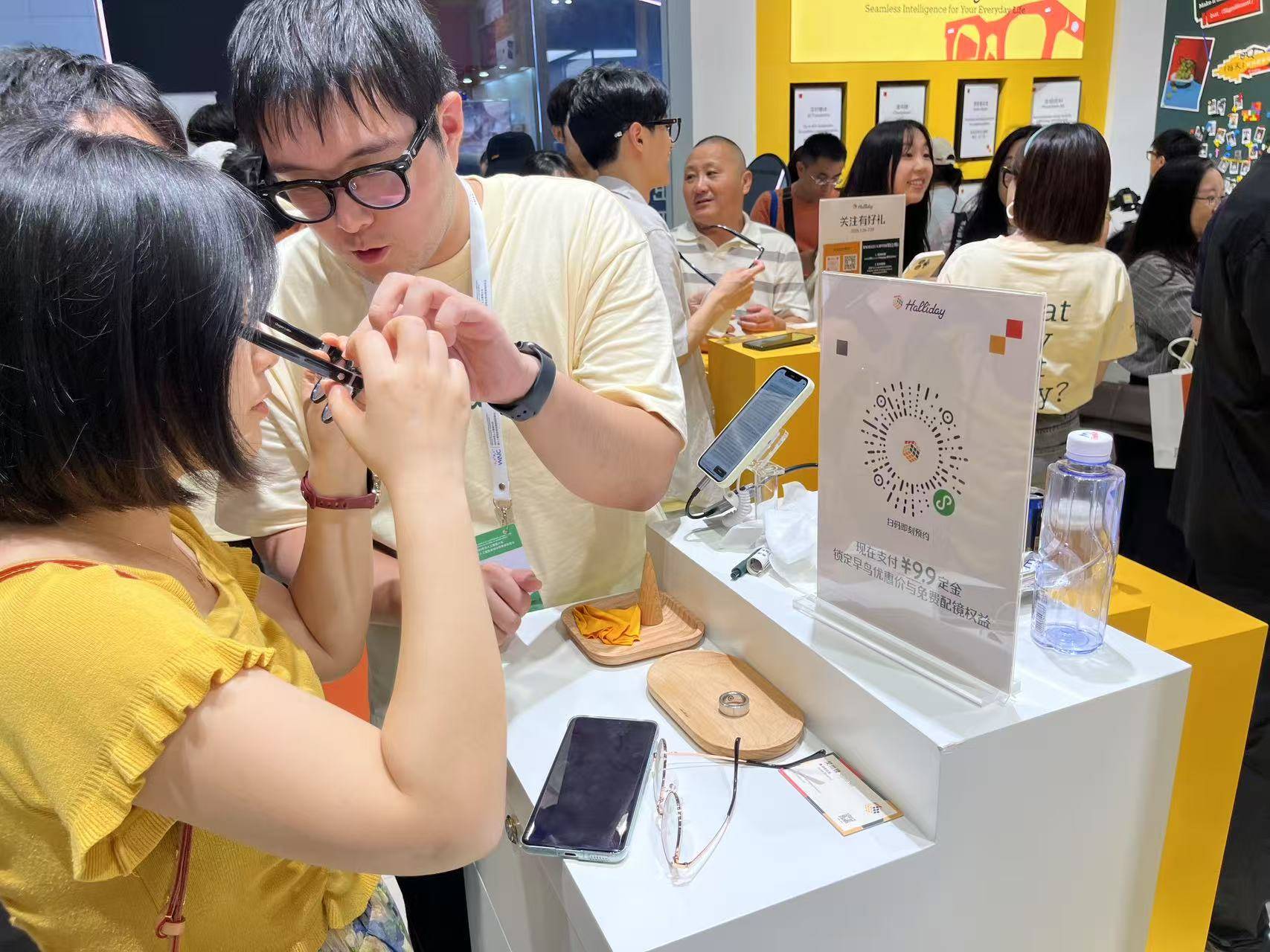
XREAL创始人兼CEO徐驰:智能眼镜行业需去泡沫化 以长期主义打造下一代终端
Zheng Quan Shi Bao Wang· 2025-07-29 02:27
Core Viewpoint - The smart glasses industry is at a critical juncture, with the potential to replace smartphones as the next terminal for spatial computing, but it requires careful development and cannot take shortcuts [1][2]. Group 1: Company Insights - XREAL's latest product, XREAL One Pro, features a field of view of 57 degrees, an increase of 38% compared to its predecessor, XREAL One, which had a 50-degree field of view [1]. - XREAL has invested over $300 million in research and development, with 65% of the components in XREAL One Pro being self-developed, indicating a strong commitment to innovation across the entire supply chain [1][3]. - The company aims to create a million-level sales product before progressing to larger-scale targets, emphasizing the importance of a solid foundation in the AR market [2][3]. Group 2: Industry Trends - The AR and AI glasses market is currently characterized by a lack of clear consumer understanding, with many companies hoping for rapid success without adequate investment [2]. - The industry is still in its early stages, and the development of smart glasses requires a focus on spatial display and the establishment of a comprehensive spatial computing ecosystem [3]. - The current competition in the AI glasses market is seen as more of a speculative chase for concepts rather than a reflection of mature technology and user experience [2].
WAIC洞察|“百镜大战”未到泡沫时
Bei Jing Shang Bao· 2025-07-28 13:49
Core Viewpoint - The AI glasses market is experiencing significant activity with multiple companies launching new products, but the industry is still in the exploration phase of product definition rather than entering a bubble period [5][11][25]. Company Developments - Rokid's latest product, Rokid Glasses, is the only AI glasses currently in mass production that combines display, camera, microphone, speaker, and AI capabilities [3][4]. - XREAL launched the XREAL One Pro, featuring the largest field of view in AR glasses at 57 degrees, with over 26,000 online reservations on the launch day [3]. - Alibaba introduced its first self-developed AI glasses, Quark AI glasses, which are expected to be released within the year and will integrate with Alibaba's ecosystem [4][8]. Market Sentiment - There is a split in market sentiment regarding AI glasses; optimists view them as the next personal terminal, while pessimists worry about high prices and overlapping functionalities leading to a potential market bubble [4][5]. - Industry leaders believe that the current excitement is driven by technological iteration rather than speculative bubbles, indicating that the market is still maturing [11][25]. Technical Innovations - XREAL's new product features a self-designed chip specifically for AR display, emphasizing the importance of a complete software ecosystem for optimal performance [7]. - Companies are focusing on improving product features such as optical design, user feedback integration, and enhancing AR capabilities to meet consumer needs [8][10]. Consumer Adoption Challenges - Despite advancements, AI glasses have not yet achieved widespread adoption due to issues like high prices, functionality overlap with smartphones, and concerns over comfort and battery life [15][17][18]. - The current price range for AI glasses is between 2,000 to 5,000 yuan, with some high-end models nearing 10,000 yuan, which does not align with typical consumer budgets for electronic accessories [15][21]. Future Outlook - Industry experts predict that prices for AI glasses could drop below 2,000 yuan within the next couple of years, making them more accessible to consumers [21][22]. - The path to mainstream adoption involves improving user experience, reducing costs, and educating the market about the practical benefits of AI glasses [24][25].
冠通期货资讯早间报-20250728
Guan Tong Qi Huo· 2025-07-28 01:44
Report Industry Investment Rating No relevant content provided. Core Viewpoints of the Report - The night - session of domestic futures on Friday saw most contracts decline, with significant drops in coking coal, coke, etc. International markets also showed weakness in various commodities such as precious metals, oil, and base metals [2][3][4]. - In the financial market, the A - share market has shown positive trends, and the capital market is making efforts in research and development. The fixed - increase market in A - shares has entered a new stage of "quantity and quality improvement" [38][41]. - In the industrial field, the government attaches great importance to the development of the artificial intelligence industry, and the domestic chip industry is expected to have a good development this year [42]. - Overseas, there are new developments in trade agreements between the US and the EU, and there are also various diplomatic and economic issues among countries [47][50]. Summaries by Directory Overnight Night - session Market Trends - Domestic futures: Most domestic futures contracts on Friday night closed lower, with coking coal and coke down over 7%, soda ash and glass down over 6%, and caustic soda down over 4% [2]. - International precious metals: COMEX gold futures fell 0.97% to $3338.5 per ounce, and COMEX silver futures fell 2.44% to $38.325 per ounce [3]. - International oil prices: US crude oil futures fell 1.65% to $65.07 per barrel, and Brent crude oil futures fell 1.36% to $67.60 per barrel [4]. - London base metals: All LME base metals closed lower, with LME copper down 0.59% to $9796 per ton, LME zinc down 0.40% to $2829 per ton, and LME nickel down 1.33% to $15265 per ton [5]. - International agricultural products: Most international agricultural product futures declined slightly, except for US wheat which rose 0.46% [6]. Important Information Macroeconomic Information - Shipping indices: As of July 25, the Shanghai Export Containerized Freight Index dropped 54.31 points, and the China Export Containerized Freight Index fell 3.2% [9]. - Fiscal revenue: In the first half of the year, the national general public budget revenue was 11.5566 trillion yuan, a year - on - year decrease of 0.3%. Tax revenue decreased by 1.2%, while non - tax revenue increased by 3.7% [9]. - Capital market risk prevention: The CSRC aims to prevent risks in key areas of the capital market, including resolving real - estate bond default risks and cracking down on illegal activities [9]. - Industrial profits: From January to June, the total profit of industrial enterprises above the designated size was 3.4365 trillion yuan, a year - on - year decrease of 1.8%. The mining industry's profit decreased by 30.3%, while the power and other industries' profit increased by 3.3% [9]. - International news: Trump hopes to maintain the nuclear - arms limitation agreement, a US business delegation will visit China, and the US and the EU have reached a trade agreement with a 15% tariff on EU goods [10][11]. Energy and Chemical Futures - Regulatory approval: The CSRC has approved the registration of monthly average price futures for linear low - density polyethylene, polyvinyl chloride, and polypropylene on the Dalian Commodity Exchange [15]. - OPEC + meeting: The OPEC + JMMC meeting on Monday is not expected to adjust the current production - increase plan, with 8 members set to increase production by 548,000 barrels per day starting in August [15]. Metal Futures - Trading restrictions: From July 28, 2025, non - futures company members or clients are restricted in their daily opening positions in the lithium carbonate futures LC2509 contract [17]. - Product development: The Guangzhou Futures Exchange is promoting the research and listing of platinum, palladium, and lithium hydroxide futures, as well as photovoltaic module futures [17]. - Inventory changes: Last week, copper inventory in the SHFE decreased by 11,133 tons, while aluminum, zinc, and other metals' inventories increased [21]. - Market sentiment: Before the US - EU trade negotiation progress, fund managers increased their bullish bets on gold, with net long positions increasing by 19% to 170,868 contracts [22]. Black - Series Futures - Trading restrictions: From July 29, 2025, non - futures company members or clients are restricted in their daily opening positions in coking coal futures contracts [24]. - Industry consensus: Manganese - series alloy production enterprises aim to achieve energy - saving and emission - reduction targets, and have increased manganese ore reserves [24]. - Supply disruption: Ghana's manganese ore shipments have been affected by the rainy season, with significant decreases from May to July [25]. - Industry data: Steel mill data shows changes in blast furnace operating rates, iron ore inventories, and steel prices [26][28]. Agricultural Product Futures - Palm oil exports: Malaysian palm oil exports from July 1 - 25 decreased compared to the previous month, with a decline of 15.22% according to Amspec and 9.2% according to ITS [31][32]. - Pig farming: As of July 25, self - breeding and self - raising pig farming had a profit of 62.16 yuan per head, while purchasing piglets for farming had a loss of 71.39 yuan per head [32]. - Agricultural product sales: US private exporters reported sales of corn and soybeans to Mexico and South Korea [33]. - Policy support: The Ministry of Agriculture and Rural Affairs and other departments issued a plan to promote agricultural product consumption [35]. Financial Market Finance - Capital market research: The China Capital Market Society was established, aiming to become an important research base for the capital market [37]. - A - share market: The A - share market has reached new highs this year. The market may see a full - scale bull market depending on fundamental improvements, and the ChiNext board may have a catch - up rally [37][38]. - Banking and investment: A - share listed banks have implemented cash dividends, and the private placement market in A - shares has entered a new stage [40][41]. Industry - AI development: The State - owned Assets Supervision and Administration Commission attaches great importance to the development of the artificial intelligence industry [42]. - Chip industry: With the rapid growth of domestic computing power consumption, the domestic chip industry is expected to have a good development this year [42]. - AI application: China can accelerate the application of artificial intelligence in industries and enhance self - controllability [44]. - Film industry: On July 27, the mainland film box office exceeded 300 million yuan, breaking the 300 - million - yuan mark for the first time in 153 days [46]. Overseas - Trade agreement: The US and the EU reached a trade agreement, but the European Parliament is dissatisfied with it [47][50]. - Diplomatic issues: There are diplomatic issues such as the US - Russia relationship, US - South Korea trade negotiations, and the discovery of drones at a Japanese nuclear power plant [50][51]. International Stock Markets - US stock market: The margin account borrowing balance of US stock investors has exceeded $1 trillion, and there is a risk of a stock market bubble [52]. - European market: After the US - EU trade agreement, the European market rose slightly, and the market's attention will turn to Canada and Mexico [52][54]. Commodities - Futures development: The Guangzhou Futures Exchange is promoting the research and listing of multiple futures products and accelerating the research of power futures [55]. - Silver investment: As silver prices rise, more individuals are investing in silver, but there are risks [55]. - Coking coal futures: Coking coal futures, which had a sharp increase, have cooled down after risk warnings and position limits [55]. Bonds - Bond funds: More than half of bond funds had negative performance in July, but there are still trading opportunities in the bond market [56]. Scheduled Events - Economic data releases: Various economic data such as China's Hong Kong trade balance, UK CBI retail sales, etc., will be released at specific times [62]. - News conferences: There will be multiple news conferences on topics such as tax reform, environmental protection, and medical reform [64]. - Trade negotiation: Chinese Vice - Premier He Lifeng will hold economic and trade talks with the US in Sweden from July 27 - 30 [64]. - New stock subscription: Tianfulong will be available for subscription [64].
直击WAIC 2025丨上海变身未来实验室,机器人、尖端芯片、AI应用⋯⋯众多科技惊艳亮相
Mei Ri Jing Ji Xin Wen· 2025-07-27 23:32
Group 1 - The 2025 World Artificial Intelligence Conference (WAIC 2025) commenced in Shanghai, attracting over 1,572 global leaders from 73 countries and regions, including 12 top award winners and over 80 leading academicians [1] - The event features a themed street area called "WAIC 2025 Alley," showcasing various robots that captivated a large audience [6] - The exhibition area of this year's conference exceeded 70,000 square meters, with over 800 companies showcasing more than 3,000 cutting-edge exhibits, including over 40 large models and 60 smart robots, marking the largest scale in the event's history [56] Group 2 - The conference's core sub-venue, Xuhui West Bank, focused on the construction of an artificial intelligence innovation ecosystem and hosted a high-level meeting on global AI governance [8] - The event highlighted the rise of domestic chip manufacturers, attracting increasing attention from both domestic and international exhibitors [30] - Huawei showcased its Ascend 384 SuperNode, which utilizes a supernode architecture to achieve high-bandwidth, low-latency interconnection among 384 NPUs, addressing communication bottlenecks within clusters [36]


超150台人形机器人同台“出道”,在WAIC现场看中国AI应用“引潮”世界
Huan Qiu Wang Zi Xun· 2025-07-27 22:53
Group 1: Industry Overview - The Shanghai 2025 World Artificial Intelligence Conference (WAIC) showcased over 150 humanoid robots, marking the largest display of its kind, highlighting China's leadership in AI applications [1] - A Morgan Stanley report indicates that China holds a dominant position in the AI robotics sector, with the gap between the US and China widening [1] Group 2: Company Developments - Yushu Technology launched its new bipedal humanoid robot R1 at a starting price of 39,900 yuan, and showcased combat robots at WAIC, indicating a focus on practical applications [2] - Fourier, a smart robotics company, presented a medical companion robot designed for emotional interaction, showcasing advancements in healthcare robotics [3] - Star Motion Era demonstrated a robot capable of complex movements and has received orders from top global tech companies, indicating strong international demand [3] Group 3: Market Trends - Chinese humanoid robot companies are increasingly focusing on overseas market needs, which will enhance product modularity and patent strategies [4] - Major Chinese tech firms presented their latest AI research at WAIC, emphasizing the resilience and growth of China's AI industry despite US sanctions [4] Group 4: Technological Innovations - XREAL showcased its AI-powered smart glasses, which integrate AR and AI technologies, enhancing user experience with features like 3D visuals and real-time translation [5][6] - Alibaba introduced its Quark AI glasses, which address common issues in existing products, aiming to penetrate the consumer market effectively [6] Group 5: Competitive Landscape - Experts assert that China has surpassed the US in humanoid robot "physical" control capabilities, reflecting a shift in competitive dynamics in the robotics sector [8] - The manufacturing and data advantages of Chinese companies in humanoid robotics are highlighted as key factors in their competitive edge over US firms [9] Group 6: Future Prospects - Chinese humanoid robot manufacturers plan to extend their supply chains to ASEAN countries, aiming for international collaboration in the robotics industry [10]
“百镜大战”如火如荼 智能眼镜尚处早期阶段
Zheng Quan Shi Bao· 2025-07-27 17:00
Core Insights - The "Battle of the Glasses" is intensifying in the domestic market, with AR/AI glasses manufacturers making their debut at the WAIC, becoming the highlight of the event [1][3] - XREAL showcased its flagship product, XREAL One Pro, and opened an AR+AI themed experience space to the public, indicating a shift towards glasses as the next computing terminal [1][3] - The integration of AI and AR in products like Rokid Glasses marks a significant step towards user-friendly applications of AR+AI technology [2][4] Industry Trends - Major tech companies and emerging players are entering the AI glasses market, indicating a competitive landscape where glasses may replace smartphones as personal information terminals [3][4] - The current phase of the smart glasses industry is characterized as early-stage, with many companies yet to achieve profitability despite high consumer expectations [3][4] - The future of smart glasses is expected to evolve from simple Q&A capabilities to executing tasks such as ordering food or hailing rides, positioning them as the best carriers of artificial intelligence [4] Product Developments - Rokid Glasses feature deep integration with large models for tasks like object recognition and real-time translation, showcasing the potential of AR+AI technology [2] - Companies like Alibaba and Xiaomi are also entering the market with their own AI glasses, highlighting the growing interest and potential for significant market growth [2]