巨子生物

Search documents
巨子生物(02367) - 翌日披露报表
2025-12-22 10:11
公司名稱: 巨子生物控股有限公司 呈交日期: 2025年12月22日 如上市發行人的已發行股份或庫存股份出現變動而須根據《香港聯合交易所有限公司(「香港聯交所」)證券上市規則》(「《主板上市規則》」)第13.25A條 / 《香港聯合交易所有限公司GEM證券 上市規則》(「《GEM上市規則》」)第17.27A條作出披露,必須填妥第一章節 。 | 第一章節 | | | | | | | | --- | --- | --- | --- | --- | --- | --- | | 1. 股份分類 | 普通股 | 股份類別 | 不適用 | 於香港聯交所上市 | 是 | | | 證券代號 (如上市) | 02367 | 說明 | | | | | | A. 已發行股份或庫存股份變動 | | | | | | | | | | | 已發行股份(不包括庫存股份)變動 | 庫存股份變動 | | | | | 事件 | 已發行股份(不包括庫存股份)數 目 | 佔有關事件前的現有已發 行股份(不包括庫存股 份)數目百分比 (註3) | 庫存股份數目 | 每股發行/出售價 (註4) | 已發行股份總數 | | 於下列日期開始時的結存(註1) ...
巨子生物携手瑞典Nordberg Medical,迈向“生态出海”新阶段
Huan Qiu Wang Zi Xun· 2025-12-22 08:37
Core Insights - Nordberg Medical and Giant Bio have signed a strategic cooperation agreement to advance the global development and commercialization of recombinant collagen in the medical aesthetics and biomedical fields [1][2] Group 1: Strategic Partnership - The agreement grants Nordberg Medical the rights to develop, produce, and commercialize Giant Bio's patented recombinant collagen outside of mainland China [1] - This collaboration aims to develop multiple tissue regeneration products for the medical aesthetics sector, leveraging the low immunogenicity and virus-free characteristics of Giant Bio's recombinant collagen [1] Group 2: Market Potential - The injection-based medical aesthetics market is projected to reach a market size of $10 billion by 2026, highlighting significant growth opportunities for the partnership [2] - The collaboration is expected to enhance Nordberg Medical's innovation capabilities in regenerative medicine by providing a richer product line [2] Group 3: Industry Impact - The partnership is seen as a milestone for both companies, with Giant Bio's technology being recognized as a "Chinese technology business card" in the international market [2] - The collaboration is anticipated to have a profound impact on the global medical aesthetics industry, promoting high-quality health solutions for consumers and practitioners [2]
——化妆品医美行业周报20251222:林清轩上市在即,高端护肤赛道再添看点-20251222
Shenwan Hongyuan Securities· 2025-12-22 06:33
Investment Rating - The report indicates a positive investment outlook for the cosmetics and medical beauty sector, highlighting strong performance relative to the market [2][3]. Core Insights - The cosmetics and medical beauty sector has shown resilience, with the Shenwan Beauty Care Index rising by 2.9% from December 12 to December 19, 2025, outperforming the market [2][3]. - Lin Qingxuan, a leading high-end plant skincare brand, is preparing for its IPO in Hong Kong, with a focus on its core product, camellia oil, which has sold over 30 million bottles [2][6]. - Minooxidil products from Mandi International dominate the hair growth market, with a market share of approximately 57% in the hair loss treatment sector [7][10]. Summary by Sections Industry Performance - The Shenwan Cosmetics Index increased by 2.2%, outperforming the Shenwan A Index by 2.4 percentage points, while the Shenwan Personal Care Index rose by 4.4%, exceeding the Shenwan A Index by 4.6 percentage points [2][3]. - Top-performing stocks included Hongmian Co. (+16.2%), Jiaheng Jiahua (+11.4%), and Baiya Co. (+9.1%) [3]. Company Highlights - Lin Qingxuan's product matrix includes 188 SKUs, with camellia oil accounting for 37% of revenue in 2024, while face creams and masks contribute 15.7% and 12.2%, respectively [6]. - Mandi International's revenue is projected to grow from 982 million yuan in 2022 to approximately 1.455 billion yuan in 2024, with a CAGR of 21.7% [8]. - The company has maintained a leading position in the minoxidil market for ten consecutive years, with a market share of 71% in 2024 [10]. Market Trends - The Chinese consumer healthcare market is expected to grow from 9.313 billion yuan in 2018 to 16.420 billion yuan in 2024, with a CAGR of 9.9% [9]. - The hair health management market is projected to grow at a CAGR of 17.7% from 2018 to 2024, while the weight management drug market is expected to grow at 20.7% during the same period [9]. E-commerce Insights - The report highlights significant growth in online sales channels, with Lin Qingxuan's online revenue increasing by 81.1%, contributing to 59.1% of total revenue [6]. - The overall cosmetics retail sales in China for the first 11 months of 2025 reached 428.5 billion yuan, with a year-on-year growth of 4.8% [14][15]. Strategic Developments - Proya has invested in the cosmetic raw material company Huaguan Biotechnology to enhance its capabilities in the whitening market, which is projected to exceed 150 billion yuan by 2027 [16][19]. - The report emphasizes the importance of product innovation and market positioning for domestic brands, which are gaining market share against international competitors [22].

合成生物2025:资本退烧、技术落地,万亿赛道迈向“成年期”
Xin Lang Cai Jing· 2025-12-22 06:00
Core Insights - The synthetic biology industry is experiencing significant growth, with the global market expected to reach $24.58 billion in 2023 and potentially exceed $100 billion by 2032, while China's market is projected to surpass $70 billion this year [3][9][10] - The industry is transitioning from a story-driven phase to a focus on profitability and commercial viability, marking a maturation process [3][32] - The integration of AI into synthetic biology is reshaping the entire research and production process, enhancing efficiency and reducing development cycles [24][25] Market Overview - The global synthetic biology market was valued at approximately $14 billion in 2022 and is projected to grow to $38.7 billion by 2027 [9][10] - China's synthetic biology market has shown a steep growth trajectory, increasing from $9 million in 2016 to an estimated $70 billion in 2023 [10][11] - The A-share market features over 160 synthetic biology concept companies, collectively valued at around $1.69 trillion, indicating a robust ecosystem [17] Investment Trends - Investment in synthetic biology is shifting from a broad approach to a more targeted strategy, focusing on companies with clear commercialization pathways [11][12] - In 2025, the capital flow in the synthetic biology sector is characterized by a significant concentration in the healthcare field, with major investments in companies like Yikole Biotechnology [11][12] - The beauty sector is emerging as a hot investment area, with over 46.5% of financing events in the cosmetics field related to synthetic biology [11] Policy and Regulatory Environment - The Chinese government is actively supporting the synthetic biology industry through comprehensive policies, including the "14th Five-Year Plan" which emphasizes biomanufacturing [14][33] - Policies are being implemented to enhance the development of biomanufacturing capabilities, with a goal to establish over 20 pilot platforms by 2027 [31][33] Industry Dynamics - The synthetic biology sector is witnessing a diversification of applications beyond healthcare, extending into chemicals, materials, and agriculture [7][9] - The healthcare segment remains the largest market, with a projected size of $10.3 billion by 2027, driven by innovations like CAR-T therapies [17][18] - The food and agriculture sectors are expected to see the fastest growth rates, with annual compound growth rates of 45.4% and 56.4% respectively from 2022 to 2027 [18] Technological Innovations - AI is becoming a core driver in synthetic biology, moving from a supportive role to a central engine in research and production processes [24][25] - Significant advancements in AI and synthetic biology are enabling the design of complex biological systems and enhancing production efficiency [24][25] - Companies are leveraging AI to optimize fermentation processes and improve product quality, demonstrating the practical applications of these technologies [26][27] Challenges and Future Outlook - The industry faces challenges in scaling from laboratory results to commercial production, with a significant drop in success rates without pilot testing [29][31] - The need for a robust ecosystem that supports innovation and commercialization is critical for overcoming existing barriers [32][33] - The future of the synthetic biology industry is promising, with expectations for continued growth driven by technological advancements and supportive policies [32][33]



巨子生物携手瑞典Nordberg Medical,迈向「生态出海」新阶段
Jin Rong Jie· 2025-12-22 05:44
Core Insights - Nordberg Medical and Giant Bio have signed a strategic cooperation agreement to jointly advance the global development and commercialization of recombinant collagen in the medical aesthetics and biomedical fields [1][2] Group 1: Strategic Cooperation - The agreement grants Nordberg Medical the rights to develop, produce, and commercialize Giant Bio's patented recombinant collagen in global markets outside mainland China [1] - This collaboration aims to enhance Nordberg Medical's position in the rapidly growing anti-aging regenerative solutions sector [1][2] Group 2: Market Potential - The injectable medical aesthetics market is projected to reach $10 billion by 2026, highlighting significant growth opportunities for Nordberg Medical [2] - The partnership is expected to diversify the product portfolio and strengthen innovation capabilities in regenerative medicine [2] Group 3: Company Background - Nordberg Medical is a Swedish biotechnology and medical device company focused on creating innovative biomedical solutions that connect nature and science [3] - The flagship brand, JULÄINE of Sweden™, features a new generation of collagen biostimulants that activate the body's natural collagen regeneration [3] - The company has received regulatory approvals for its products in 33 markets and is expanding its direct sales network across over 20 countries, with plans to enter North America, South America, and the Middle East [4]
智通港股回购统计|12月22日





Zhi Tong Cai Jing· 2025-12-22 01:42
Summary of Key Points Core Viewpoint - A total of 40 companies conducted share buybacks on December 19, 2025, with Tencent Holdings (00700) leading in both the number of shares repurchased and the total amount spent on buybacks. Group 1: Buyback Details - Tencent Holdings (00700) repurchased 1.038 million shares for a total of 636 million yuan, with a year-to-date cumulative buyback of 95.679 million shares, representing 1.041% of its total share capital [2]. - Xiaomi Group-W (01810) repurchased 3.75 million shares for 152 million yuan, with a cumulative buyback of 127 million shares, accounting for 0.490% of its total share capital [2]. - China Merchants Industry Holdings (01919) repurchased 3.9655 million shares for 53.6689 million yuan, with a cumulative buyback of 105 million shares, representing 3.635% of its total share capital [2]. Group 2: Other Notable Buybacks - Kuaishou-W (01024) repurchased 755,000 shares for 49.9509 million yuan, with a cumulative buyback of 13.2687 million shares, accounting for 0.310% of its total share capital [2]. - China Feihe (06186) repurchased 8.529 million shares for 35.7702 million yuan, with a cumulative buyback of 251 million shares, representing 2.765% of its total share capital [2]. - Geely Automobile (00175) repurchased 907,000 shares for 15.2602 million yuan, with a cumulative buyback of 18.012 million shares, accounting for 0.179% of its total share capital [2]. Group 3: Additional Companies - Other companies that conducted buybacks include Mengniu Dairy (02319), which repurchased 200,000 shares for 3.0643 million yuan, and Beike-W (02423), which repurchased 560,400 shares for 3 million yuan [2]. - The buyback activities reflect a strategic move by these companies to enhance shareholder value and signal confidence in their business prospects [1][2].
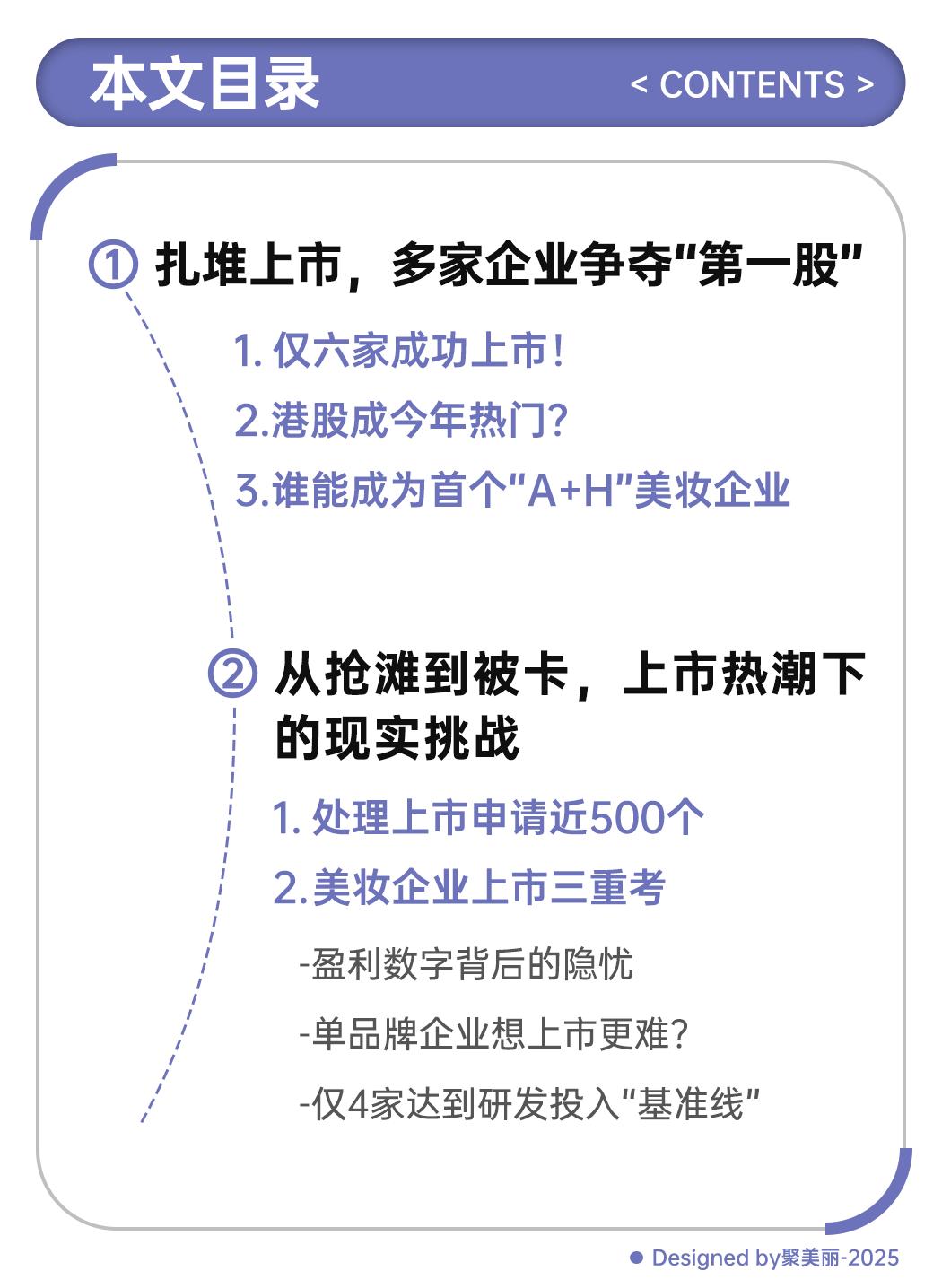
2025年,30+美妆企业冲击上市,仅6家成功
3 6 Ke· 2025-12-22 00:06
Core Insights - The beauty industry is experiencing a significant IPO wave, with over 30 companies attempting to enter capital markets, but only about 20% have successfully listed [3][4][7] - The focus of beauty companies has shifted from A-shares to Hong Kong stocks, driven by stricter regulations in the A-share market and more favorable conditions in Hong Kong [11][14][16] Group 1: IPO Landscape - Only six beauty companies have successfully gone public this year, including brands like Ying Tong Holdings and Pitanium Limited, with three listed on the Hong Kong Stock Exchange, two on NASDAQ, and one on the A-share market [4][6] - The majority of companies are still in the IPO process, with many facing delays due to regulatory scrutiny and the need for robust financial performance [7][21] - The current IPO environment is characterized by a high level of competition, with the capital market becoming increasingly selective about which companies to approve for listing [3][22] Group 2: Market Trends - The shift towards Hong Kong listings is evident, as the A-share market has seen a significant decline in successful IPOs since 2022, with a 69.69% drop in the number of listings [14] - Hong Kong has become a preferred destination for beauty companies due to its favorable market conditions and supportive regulatory environment, which includes recent reforms to the IPO process [16][20] - The trend of dual listings (A+H) is emerging, with several companies that are already listed in A-shares now seeking to enter the Hong Kong market [17][20] Group 3: Challenges and Opportunities - Companies face three main challenges in the IPO process: sustainable profitability, brand diversification, and research and development capabilities [24][25] - The ability to demonstrate consistent profitability is crucial, as evidenced by leading companies like Proya, which reported over 5 billion RMB in revenue, while others struggle to reach the 1 billion RMB mark [25][28] - R&D investment is critical for long-term success, with only a few companies meeting the industry benchmark for R&D spending, highlighting a gap in innovation among many players [39][42]
美护行业跟踪报告:美护触底,林清轩上市在即
国泰海通· 2025-12-21 08:37
Investment Rating - The report assigns an "Accumulate" rating for the beauty and personal care sector, indicating a positive outlook for the industry [6]. Core Insights - The beauty and personal care sector has experienced a significant pullback since August, with leading high-growth companies' valuations returning to 20-30x, and PEG ratios mostly below 1x, suggesting the sector is expected to bottom out [3][6]. - Lin Qingxuan is set to go public, focusing on the oil-based skincare segment, with a projected doubling of performance in the first half of 2025 [3][6]. Summary by Sections Market Performance - The beauty and personal care sector saw a decline of over 15% since August, with leading companies experiencing a valuation correction to 20-30x. The sector's maximum drawdown reached 17%, with top companies seeing declines of over 30% [6][8]. - The Shenyuan Beauty Care Index recorded a maximum increase of 19% in 2025, with key growth stocks like Ruoyuchen, Shangmei, and Maogeping achieving maximum gains of 239%, 198%, and 121% respectively [6][8]. Company Highlights - Lin Qingxuan, which is set to launch its IPO, plans to issue 13.97 million shares at an offering price of 77.77 HKD per share, corresponding to a market capitalization of 10.9 billion HKD. The company has secured cornerstone investors including Fidelity and others, with total subscriptions reaching 62 million USD [6][8]. - Lin Qingxuan's revenue for the first half of 2025 is projected at 1.05 billion CNY, reflecting a year-on-year increase of 98%, with a net profit of 182 million CNY, up 110%. The company's main product, a camellia oil essence, generated 480 million CNY in revenue, marking a 176% increase [6][8]. Investment Recommendations - The report suggests a bottom-up selection of stocks with product and channel innovations, highlighting strong growth potential in the beauty and personal care sector. Recommended stocks include: 1. High-growth brands: Ruoyuchen, Shangmei, Maogeping 2. Stable fundamentals with potential for improvement: Dengkang Oral, Shanghai Jahwa, Shuiyang, Jinbo Biological, Beitaini, Marubi, Qingsong 3. Stocks expected to bottom out: Pola, Juzibio, Lafang, Runben, Meilitiantian Medical Health, Furida, Huaxi Biological [6][7].


行业周报:海南自贸港封关正式启动,首日数据表现亮眼-20251221
KAIYUAN SECURITIES· 2025-12-21 03:41
Investment Rating - The investment rating for the retail industry is "Positive" (maintained) [1] Core Insights - The retail industry index rose by 6.66% in the week of December 15-19, 2025, outperforming the Shanghai Composite Index by 6.63 percentage points, ranking first among 31 primary industries [6][15] - The launch of the Hainan Free Trade Port has shown promising initial results, with duty-free sales reaching 118 million yuan on the first day and a significant increase in the number of zero-tariff goods [4][25][26] - The report emphasizes the importance of consumer sentiment and the potential for high-growth sectors within the retail space, particularly in jewelry, offline retail, cosmetics, and medical aesthetics [7][30][31] Summary by Sections Retail Market Review - The retail industry index closed at 2458.79 points, with a weekly increase of 6.66% [6][15] - The supermarket sector saw the highest weekly increase of 14.18%, while the commercial property sector led with a year-to-date increase of 22.51% [17][19] Industry Dynamics - The Hainan Free Trade Port officially commenced operations on December 18, 2025, with a focus on "one line open, two lines controlled, and free trade within the island" [4][25] - The proportion of zero-tariff goods increased from 21% to 74%, covering approximately 6,600 items, which is expected to reduce import tax burdens by about 20% for related enterprises [26][25] Investment Themes - Investment Theme 1: Focus on high-end jewelry brands with differentiated product offerings, recommending companies like Chow Tai Fook and Lao Pu Gold [7][30] - Investment Theme 2: Emphasize offline retail companies adapting to trends and AI-enabled cross-border e-commerce leaders, recommending Yonghui Supermarket and Aiying Room [7][30] - Investment Theme 3: Highlight domestic cosmetics brands that meet emotional value and safety ingredient innovations, recommending brands like Maogeping and Proya [7][31] - Investment Theme 4: Focus on differentiated medical aesthetics product manufacturers and leading chain medical institutions, recommending Aimeike and Kedi-B [7][31] Company-Specific Insights - Chow Tai Fook reported a revenue of 38.986 billion HKD for FY2026H1, with a slight decline of 1.1% year-on-year, while net profit increased by 0.1% [37] - Lao Pu Gold achieved a revenue of 12.354 billion HKD for FY2025H1, marking a significant increase of 250.9% year-on-year, with net profit rising by 285.8% [36] - Yonghui Supermarket's revenue for the first three quarters of 2025 was 42.434 billion yuan, down 22.2% year-on-year, with net profit showing a significant loss [44]
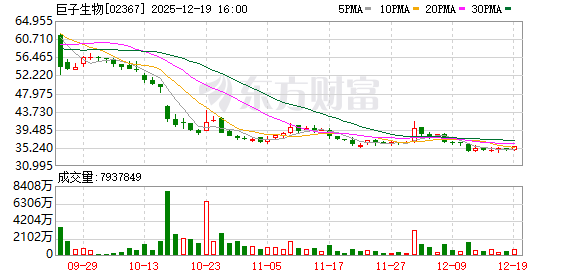
巨子生物(02367.HK)连续9日回购,累计回购360.00万股
Zheng Quan Shi Bao Wang· 2025-12-19 14:47
Group 1 - The core point of the article is that Juzhi Biotechnology has been actively repurchasing its shares on the Hong Kong Stock Exchange, indicating a strategy to support its stock price and enhance shareholder value [2] - On December 19, the company repurchased 400,000 shares at a price range of HKD 34.540 to HKD 35.520, with a total repurchase amount of HKD 14.0536 million [2] - Since December 9, the company has conducted share repurchases for nine consecutive days, totaling 3.6 million shares and a cumulative repurchase amount of HKD 127 million [2] Group 2 - The stock price on the day of the repurchase closed at HKD 35.480, reflecting a 2.60% increase, with a total trading volume of HKD 277 million [2] - The detailed repurchase data shows consistent repurchase activity, with each day involving the repurchase of 40,000 shares at varying prices, indicating a structured approach to share buybacks [2] - The cumulative stock price decline during the repurchase period was 2.53%, suggesting that the company's buyback strategy may be aimed at countering this downward trend [2]