XREAL

Search documents
全球唯一Google AR伙伴亮剑!XREAL徐驰:还有一批中国企业也在飞速发展
Guang Zhou Ri Bao· 2025-07-27 16:54
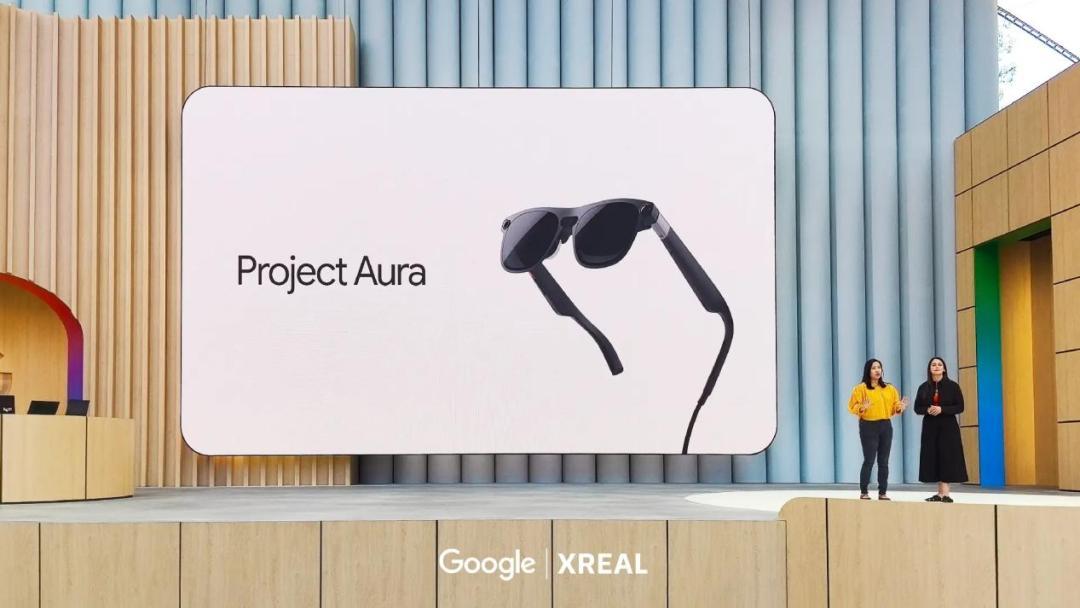
Group 1 - The core viewpoint highlights the rapid development of Chinese companies in the smart glasses industry, with XREAL positioned to lead and define the next generation of smart terminals [1] - XREAL has launched its new flagship product, XREAL One Pro, which has already garnered significant interest with 26,000 online reservations on JD.com on the day of its release [1] - The XREAL One Pro features a groundbreaking 57-degree field of view (FoV), setting a new global benchmark for consumer AR glasses, achieved through the innovative X Prism optical engine technology [3] Group 2 - In May 2025, Google announced a strategic partnership with XREAL to jointly release the next-generation smart glasses, Project Aura, marking a significant collaboration between a Chinese company and an international tech giant [5] - The Project Aura will be the first flagship smart glasses equipped with XREAL's self-developed X1S chip, specifically designed for the Android XR platform, representing a deep integration of Chinese AR technology with a global ecosystem [5] - The X1S chip offers a 25% performance improvement over its predecessor, integrating perception algorithms and system-level optimizations at the chip level, which has garnered high recognition from Google [6]


阿里字节等巨头涌入 AI智能眼镜风口将至?
Guang Zhou Ri Bao· 2025-07-27 16:29
Core Insights - Alibaba's AI glasses were unveiled at the 2025 World Artificial Intelligence Conference, integrating deeply with Alibaba and Alipay ecosystems, with an expected official release within the year [1] - ByteDance is also developing a lightweight mixed reality device, indicating a competitive landscape in the AI smart glasses sector [1][2] - The industry faces significant challenges such as chip computing power limitations, optical display issues, and underdeveloped ecosystems, which may hinder new entrants [1][4] Industry Trends - The shift from head-mounted devices to AI glasses is evident, with ByteDance planning to integrate its self-developed model into its AI glasses, marking a new product line in smart wearables [2] - Meta has shifted focus from VR headsets to glasses, indicating a broader industry trend towards lightweight and AI-integrated devices [2] - The global smart glasses market is experiencing strong growth, with an 82.3% increase year-over-year, and a remarkable 116.1% growth in the Chinese market, while AR/VR products have seen a decline of 23.9% [3] Market Dynamics - The smart glasses market is polarized, with companies like Huawei and Xiaomi focusing on consumer products, while Microsoft and Meta target enterprise solutions [4] - The entry of ByteDance and Alibaba may create a new category of AI-native wearable devices, integrating various functionalities such as voice recognition and health monitoring [4] - Despite improvements in the supply chain, the industry still faces high entry barriers, inconsistent user experiences, and high return rates, complicating product delivery [4] Future Outlook - The competition in the AI smart glasses market is intensifying, with a warning that the current phase is still in the "first half" of development, and excessive competition may lead to resource wastage [5] - The combination of advanced AI and AR technology is anticipated to create a significant breakthrough in the industry, potentially leading to an "iPhone moment" around 2027 or 2028 [6]

一“镜”搞定这些事!智能眼镜“论剑”功能
Guo Ji Jin Rong Bao· 2025-07-27 16:03
Core Insights - The article highlights the rapid advancement of AI technology, particularly in the realm of smart glasses, showcased at the 2025 World Artificial Intelligence Conference in Shanghai [2][6] - Major companies like XREAL and Rokid are competing in the smart glasses market, presenting innovative products that integrate augmented reality (AR) and artificial intelligence (AI) [2][5] - Alibaba's introduction of its first self-developed AI glasses, Quark AI glasses, marks a significant move in the competitive landscape of smart eyewear [6][8] Company Highlights - XREAL, established in 2017, is a leading company in consumer-grade AR glasses, showcasing its flagship product, One Pro, which features a 57° ultra-wide field of view and advanced optical technology [2][3] - Rokid's smart glasses weigh only 49 grams and incorporate various AI capabilities, including object recognition and real-time translation, appealing to consumers seeking both style and functionality [5] - Alibaba's Quark AI glasses are designed to integrate deeply with its ecosystem, supporting features like navigation and payment through its platforms, although specific pricing and user experience details remain undisclosed [6][8] Industry Trends - The year 2025 is recognized as a pivotal year for innovation in smart glasses, with a competitive "battle of the glasses" emerging among various brands [6] - The integration of AI and AR technologies is becoming increasingly prevalent, as demonstrated by interactive experiences at the conference that blend virtual and real-world elements [3][5] - The collaboration between AI applications and smart hardware is expected to drive further advancements and consumer adoption in the smart glasses market [8]

【西街观察】科技的人气,消费的底气
Bei Jing Shang Bao· 2025-07-27 13:38
Group 1 - The 2025 World Artificial Intelligence Conference (WAIC) in Shanghai has sold out tickets, reflecting a strong market interest in technology [1] - This year's WAIC is the largest ever, with over 800 participating companies and an exhibition area exceeding 70,000 square meters, showcasing more than 3,000 exhibits [1] - Consumer-grade AI products, such as AI glasses and autonomous driving technologies, have gained significant attention, overshadowing last year's focus on large models [1] Group 2 - The concept of a "10 billion" target is prevalent in both embodied intelligence and large model sectors, indicating a shift towards market application and consumer engagement [2] - The emergence of numerous consumer-grade products signifies a closer connection between technology and consumers, facilitating the transition of startups from behind the scenes to the forefront [2] - China's AI development is characterized by innovation that empowers people, integrating technology into everyday life and enhancing productivity [2][3] Group 3 - The AI industry in China is evolving with a clear policy direction, maturing unicorn companies, and a well-connected ecosystem of talent, capital, technology, and market [3] - The success of AI products is increasingly determined by consumer acceptance, emphasizing the need for products to be closely aligned with market demands [3]
“顶流机器人给我递可乐”
财联社· 2025-07-27 06:25
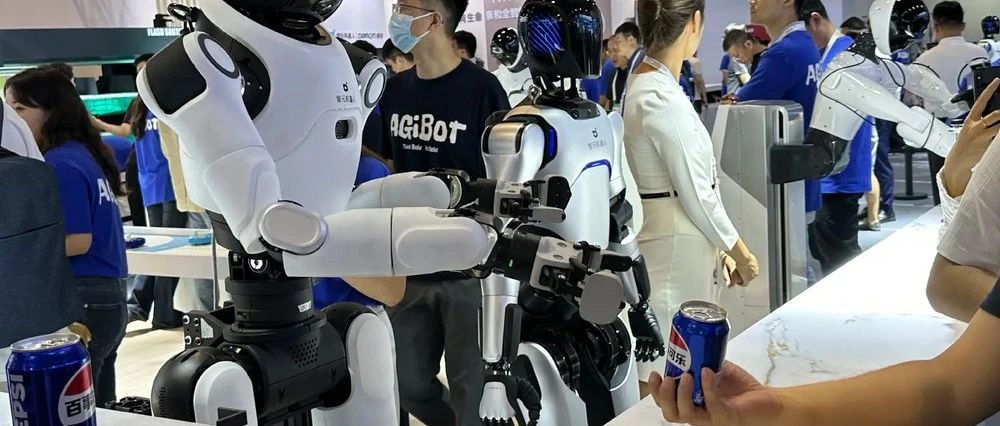
Core Viewpoint - The 2025 World Artificial Intelligence Conference (WAIC) showcased various robotic applications, highlighting the growing integration of AI in different sectors and the potential for large-scale commercialization in the future [3][9]. Group 1: Robotics and AI Applications - Multiple exhibitors demonstrated robots performing various tasks, such as serving drinks and engaging in combat, indicating advancements in robotics technology [3][6]. - Zhiyuan Robotics showcased its AlphaBot series, which performed multiple tasks, emphasizing the importance of its self-developed Alpha Brain model for diverse applications [6][9]. - Qiaoyin Co. is collaborating with local governments to develop humanoid robots for sanitation, property management, and home services, with products expected to launch by the end of the year [11]. Group 2: AI in Consumer Electronics - Alibaba introduced its self-developed AI glasses, "Quark AI Glasses," which integrate various functionalities from its ecosystem, set to be officially released within the year [12][14]. - The glasses are positioned as a next-generation human-computer interaction device, although challenges remain in terms of user experience and comfort [14]. Group 3: Education and B2B AI Solutions - NetEase Youdao presented several AI applications for educational purposes, including the AI-powered learning device SpaceOne, which combines AI capabilities with educational resources [16][17]. - B2B AI applications are accelerating, with companies like Dipu Technology reporting successful implementations across various industries, including retail and healthcare [17][18]. - China Electronic Cloud launched a comprehensive AI solution, indicating a strategic focus on enhancing AI capabilities in critical industries [18].



直击世界人工智能大会:企业竞秀AI硬科技,顶尖阵容共话未来信号
Hua Xia Shi Bao· 2025-07-27 05:33
Core Insights - The 2025 World Artificial Intelligence Conference (WAIC) opened on July 26, showcasing the evolution of AI in China from research to practical applications in daily life [1] - The AI industry in China is experiencing rapid growth, with market size projected to increase from 213.7 billion yuan in 2022 to 352.2 billion yuan by the end of 2025, reflecting an average growth rate of 25.7% [6] Company Highlights - Shanghai Heptagon Robot Technology Co., Ltd. presented its "COFE+ 6th generation" coffee robot, which has a lifespan of over 500,000 cups and can produce more than 1,000 cups daily with minimal operational errors [2] - Star Ring Technology introduced its new AI infrastructure technology at WAIC, aimed at supporting enterprises in their AI transformation by providing comprehensive capabilities from data preparation to agent construction [2][3] - Fourier showcased its third-generation GR-3 humanoid robot, designed for interactive companionship, and its upgraded "Embodied Intelligent Rehabilitation Port," which has been implemented in over 300 medical facilities nationwide [3] - Youzu Network became the vice president unit of the Shanghai Artificial Intelligence Industry Association, focusing on AI innovations in the gaming sector [4][5] Industry Trends - The shift from general AI models to industry-specific models is seen as a necessary trend, with companies needing specialized agents that understand business language and domain knowledge [3] - The AI technology is redefining data value across various sectors, accelerating the intelligent transformation of business processes [2] - The AI industry in China is becoming a core component of many enterprises, with the number of AI-related companies increasing by 376% since 2020 [6] Policy and Governance - The "Global Governance Action Plan for Artificial Intelligence" was launched at WAIC, promoting innovation and collaboration while addressing governance challenges in AI [7] - China is positioning itself as a strong competitor in the global AI landscape, transitioning from a follower to a leader through robust policy guidance and ecosystem development [7][8]

直击WAIC!格斗、倒立、能聊,机器人长本事了!这一展台“人山人海”!
Zheng Quan Shi Bao Wang· 2025-07-27 04:16
Group 1: Event Overview - The 2025 World Artificial Intelligence Conference (WAIC 2025) took place in Shanghai from July 26 to 28, featuring over 800 companies and an exhibition area exceeding 70,000 square meters, showcasing more than 3,000 cutting-edge exhibits, including over 40 large models and 60 intelligent robots [1][2] - The event highlighted China's advancements in artificial intelligence, with a focus on humanoid robots, AI terminals, and innovative technologies [1] Group 2: Humanoid Robots - Humanoid robots have become a competitive focus in the international tech arena, with numerous domestic companies presenting their latest products at WAIC, including Yushu Technology and Zhiyuan Robotics [2][3] - Yushu Technology showcased the G1 humanoid robot, which performed a combat demonstration, and the B2 quadruped robot, designed for industrial applications [2] - Zhiyuan Robotics presented a variety of robots capable of performing tasks such as package sorting and industrial operations, demonstrating significant advancements compared to previous years [3] Group 3: AR/AI Glasses - Smart glasses emerged as a major highlight at WAIC, with brands like XREAL, Rokid, and Li Weike Technology unveiling new products [5][7] - XREAL introduced the XREAL One Pro, featuring a self-developed optical engine and a wide field of view, aiming to replace smartphones as the next computing terminal [6] - Rokid Glasses showcased their capabilities in object recognition and real-time translation, marking a significant step in making AR+AI technology user-friendly [7][8] - Li Weike Technology presented three new models of smart glasses, emphasizing AI translation and recording features, indicating a growing trend in the smart glasses market [8]

明星企业揭智能眼镜真相:这个行业不适合赚快钱
21世纪经济报道· 2025-07-27 03:37
Core Viewpoint - The smart glasses industry is experiencing significant hype and investment, but the reality is that no product has achieved substantial sales, highlighting the challenges in technology and user experience [3][11][12]. Industry Overview - Major companies are entering the smart glasses market, leading to a surge of capital and interest, but the actual product performance and user acceptance remain low [2][3]. - The industry is currently in its early stages, with many products struggling with delivery, user experience, and high return rates [3][10]. Market Challenges - Despite the excitement, no single product has surpassed one million units sold, with Ray-Ban Meta being the only exception, relying heavily on subsidies [11][12]. - The industry faces significant technological hurdles, including the need for advancements in chips, optics, and algorithms to improve user experience [3][6][12]. Future Outlook - The CEO of XREAL believes that true innovation will come when AI technology matures, potentially around 2027 or 2028, leading to a significant breakthrough in smart glasses [5][9]. - The integration of AI with AR glasses is seen as crucial for creating a next-generation platform that could surpass smartphones [15][16]. Product Development Strategy - XREAL emphasizes the importance of focusing on creating a successful AR glasses product before venturing into AI glasses, aiming for a strong user experience [5][10]. - The company is committed to deepening its technological innovations rather than merely optimizing existing supply chains [6][18]. User Experience Focus - The industry must prioritize improving the user experience to encourage daily wear and longer usage times, which are critical for market acceptance [3][13]. - XREAL is exploring two routes: developing lightweight glasses for all-day wear or creating portable devices that can be easily carried [13][14]. Collaboration and Ecosystem - XREAL recognizes the need for collaboration with major tech companies to build a robust ecosystem, as it is challenging for any single company to dominate the market [17][18]. - The company is working on partnerships to enhance its technological capabilities and product offerings, aiming to establish a strong market presence [17][18].

阿里入局、“百镜”开打! 哪家能成为你的“第二双眼”? | WAIC 观察
Xin Lang Ke Ji· 2025-07-27 03:22
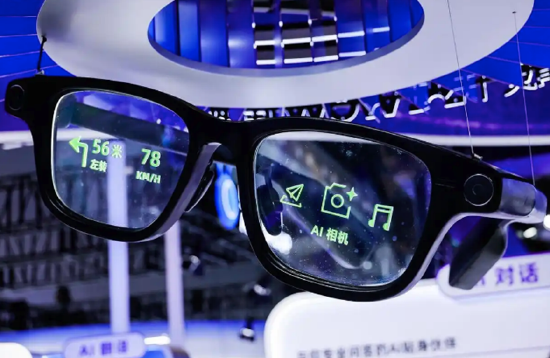
Core Insights - The article discusses the increasing competition in the smart glasses market, particularly highlighted at the World Artificial Intelligence Conference (WAIC) 2025, with major Chinese companies showcasing their advancements in this technology [3][5]. Group 1: Industry Trends - The smart glasses sector is experiencing a surge in interest from large manufacturers, moving away from smaller niche players, with companies like Alibaba, ByteDance, and 360 entering the market [3]. - Emphasis is shifting towards the functionality and practicality of smart glasses, focusing on user interaction and real-world applications [3]. - A trend towards lighter designs is emerging, with companies promoting reduced weight as a key selling point for their products [3][19]. Group 2: Alibaba's Entry - Alibaba's new AI smart glasses, the "Wow Quark Glasses," are set to launch in October, featuring a design similar to traditional smart glasses but enhanced with AI capabilities [5][7]. - The glasses aim to address common issues in existing products, such as weak AI performance, short battery life, and poor user experience, through a complete hardware redesign [5]. - The glasses will support various applications, including navigation, payment, and travel reminders, leveraging Alibaba's AI and ecosystem [5][7]. Group 3: Competitors and Innovations - Rokid's smart glasses have gained significant attention, with a pre-order volume of 250,000 units, showcasing features like real-time translation and object recognition [11]. - XREAL's glasses offer a unique viewing experience with an internal screen, targeting entertainment and gaming markets [13][15]. - Competitors are focusing on lightweight designs, with Rokid's glasses weighing 49g and other brands like Li Weike and Halliday offering even lighter options, enhancing user comfort [19][21].
“百镜大战”?早着呢!明星创企揭开智能眼镜真相
2 1 Shi Ji Jing Ji Bao Dao· 2025-07-27 02:52
Core Insights - The smart glasses market is experiencing significant interest and investment, but actual product sales remain low, with no single product achieving over one million units sold, except for Ray-Ban Meta, which relies on subsidies [2][9] - Industry leaders emphasize the need for long-term investment in core technologies such as chips, optics, and algorithms to overcome current challenges in user experience and product delivery [2][3][10] - The industry is still in its early stages, with expectations for a breakthrough moment akin to the "iPhone moment" projected for 2027 or 2028, when AI and AR technologies can effectively integrate [5][7][13] Industry Challenges - Current smart glasses products face high return rates, inconsistent user experiences, and difficulties in achieving mass adoption due to technical limitations [2][3][10] - The market is not yet ready for a price war, as the focus should be on developing a single product that can achieve significant sales before expanding to multiple offerings [10][11] - The AI capabilities of current smart glasses are limited, likened to a "5-year-old's intelligence," indicating a need for substantial improvements before they can become a daily wearable device [7][9] Future Directions - The combination of advanced AI and AR glasses is seen as essential for creating a new generation of devices that can surpass smartphones in functionality [5][13] - Companies are exploring different paths, such as creating lightweight AR glasses that can be used effectively without requiring all-day wear [11][12] - Collaboration with major tech firms like Google and Qualcomm is crucial for developing a robust ecosystem and advancing technology in the smart glasses space [14][15]