
陶氏公司

Search documents
FFIV INVESTIGATION ALERT: Investigation Launched into F5, Inc., Attorneys Encourage Investors and Potential Witnesses to Contact Law Firm
Prnewswire· 2025-10-16 23:05
Core Insights - Robbins Geller Rudman & Dowd LLP is investigating potential violations of U.S. federal securities laws involving F5, Inc., focusing on whether F5 and its executives made false or misleading statements or failed to disclose material information to investors [1][2] Company Overview - F5, Inc. provides multi-cloud application security and delivery solutions [2] Recent Developments - On October 15, 2025, F5 disclosed that a highly sophisticated nation-state threat actor gained unauthorized access to certain F5 systems, maintaining long-term access to systems including the BIG-IP product development environment [3] - The investigation revealed that certain files were exfiltrated, including portions of the BIG-IP source code and information about undisclosed vulnerabilities [3] - Following this revelation, the price of F5 shares experienced a decline [3]



MLTX INVESTOR ALERT: MoonLake Immunotherapeutics Investors with Substantial Losses Have Opportunity to Lead Class Action Lawsuit
Prnewswire· 2025-10-16 10:00
Core Viewpoint - The MoonLake class action lawsuit alleges that MoonLake Immunotherapeutics and its executives violated the Securities Exchange Act of 1934, impacting investors who purchased its common stock [1][3]. Company Overview - MoonLake Immunotherapeutics is a clinical-stage biotechnology company focused on developing therapies for inflammatory skin and joint diseases, with its primary drug candidate being sonelokimab (SLK) [3]. Allegations - The lawsuit claims that MoonLake made false or misleading statements regarding SLK's efficacy compared to Union Chimique Belge's BIMZELX, which is an FDA-approved monoclonal antibody for the same condition [4]. - Specific allegations include that SLK and BIMZELX target the same inflammatory cytokines (IL-17A and IL-17F), and that SLK's unique Nanobody structure does not provide superior clinical benefits or efficacy [4]. Stock Performance Impact - Following the announcement of disappointing results from the Phase 3 VELA program on September 28, 2025, which indicated SLK did not demonstrate competitive efficacy against BIMZELX, MoonLake's stock price plummeted nearly 90% [5]. Legal Process - Investors who suffered losses during the class period can seek to become lead plaintiffs in the lawsuit, with a deadline for motions set for December 15, 2025 [2][6]. Law Firm Background - Robbins Geller Rudman & Dowd LLP, the law firm representing the plaintiffs, is recognized as a leading firm in securities fraud and shareholder litigation, having recovered over $2.5 billion for investors in 2024 alone [7].


钛白粉价格上调,陶氏关闭比利时多元醇工厂
Huaan Securities· 2025-10-16 07:20
Investment Rating - Industry Rating: Overweight [1] Core Views - The chemical sector showed a weekly performance ranking of 8th with a gain of 1.99%, outperforming the Shanghai Composite Index by 1.63 percentage points and the ChiNext Index by 5.85 percentage points [4][22]. - The chemical industry is expected to continue its differentiated trend in 2025, with recommendations to focus on synthetic biology, pesticides, chromatography media, sweeteners, vitamins, light hydrocarbon chemicals, COC polymers, and MDI [4]. Summary by Sections Industry Performance - The chemical sector's overall performance for the week of October 9-10, 2025, was a gain of 1.99%, ranking 8th among sectors [22]. - The top three performing sub-sectors were phosphate and phosphorus chemicals (6.26%), titanium dioxide (4.23%), and oil and petrochemical trade (4.23%) [23]. Key Industry Dynamics - Synthetic biology is at a pivotal moment, with low-energy products expected to gain a longer growth window due to the adjustment of energy structures [4]. - The upcoming quota policy for third-generation refrigerants is anticipated to enter a high prosperity cycle, with demand expected to grow steadily due to market expansion in Southeast Asia [5]. - The electronic specialty gases market is characterized by high technical barriers and high added value, with significant opportunities for domestic substitution [6][8]. - The trend of light hydrocarbon chemicals is becoming global, with a shift towards lighter raw materials for olefin production [8]. - The COC polymer industry is accelerating its domestic industrialization process, driven by supply chain security concerns and the shift of downstream industries to domestic production [9]. - Potash fertilizer prices are expected to rebound as major producers reduce output and the demand for fertilizers increases due to rising grain prices [10]. - The MDI market is characterized by oligopoly, with a favorable supply structure expected as demand gradually recovers [12].


行业聚焦:全球半导体底部填充胶市场头部企业份额调研(附Top 10 厂商名单)
QYResearch· 2025-10-16 02:18
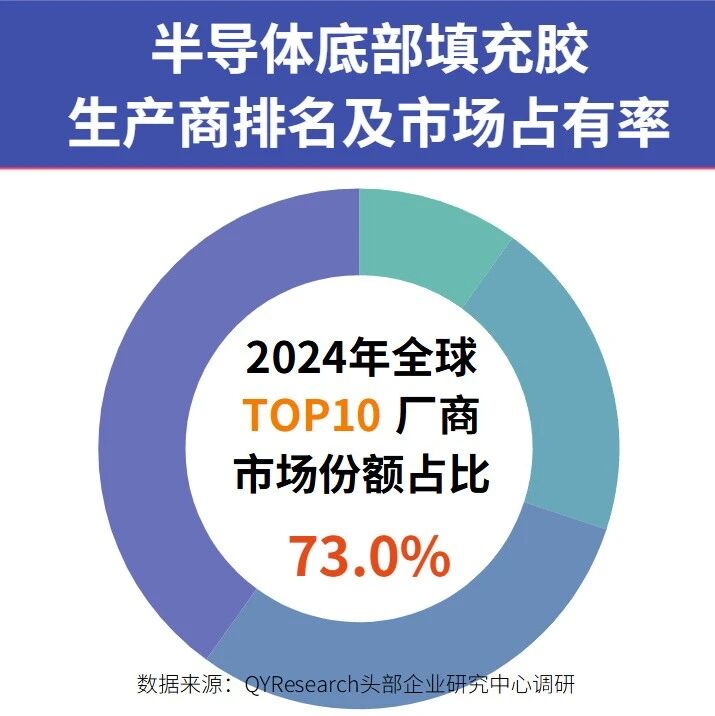
Core Viewpoint - The semiconductor underfill market is expected to grow significantly, driven by the increasing demand for high-performance and reliable chips in modern electronic products, with a projected market size of $1.44 billion by 2031 and a CAGR of 11.2% from 2025 to 2031 [2][13]. Market Overview - Semiconductor underfill is a material used in semiconductor packaging to fill the gaps between chips and substrates, enhancing mechanical strength, thermal conductivity, and thermal cycling stability [1]. - The demand for underfill materials is increasing due to the miniaturization of electronic devices and the need for advanced packaging technologies such as 3D packaging and system-in-package (SiP) [1]. Market Size and Growth - The global semiconductor underfill market is projected to reach $1.44 billion by 2031, with a compound annual growth rate (CAGR) of 11.2% [2]. - The wafer/panel-level underfill is the dominant product type, accounting for approximately 65.2% of the market share [10]. Key Players - Major manufacturers in the global semiconductor underfill market include NAMICS Corporation, Henkel, Panasonic, Resonac, Shin-Etsu Chemical, and others, with the top ten companies holding about 73.0% of the market share in 2024 [7]. Application Segmentation - Consumer electronics represent the largest demand source for underfill materials, holding approximately 46.6% of the market share [12]. Market Drivers - The growth of the semiconductor underfill market is primarily driven by the increasing demand for high-performance and reliable chips due to advancements in technologies such as 5G, artificial intelligence, and the Internet of Things (IoT) [13]. - The development of advanced packaging technologies, including 3D packaging and flip-chip packaging, further increases the demand for underfill materials [13]. Challenges and Risks - The production process of underfill materials is complex, requiring continuous innovation in material selection, formulation, and manufacturing processes to ensure high quality and stability [14]. - Fluctuations in raw material prices and global supply chain disruptions may impact market dynamics, especially in uncertain economic conditions [14]. Downstream Demand Trends - The demand for semiconductor underfill materials is growing in various sectors, including consumer electronics, communication devices, and automotive electronics, driven by the increasing need for miniaturized and high-performance chips [15]. - The automotive electronics sector is particularly influenced by the rapid development of autonomous driving technologies, which significantly boosts the demand for high-performance semiconductors [15].
ClearBridge Global Value Improvers Strategy Q3 2025 Commentary
Seeking Alpha· 2025-10-16 00:45
Market Overview - Global equity markets experienced positive returns in Q3, driven by progress in U.S. tariff negotiations and expectations of Federal Reserve rate cuts, with the MSCI World Growth Index up 8.6% compared to 7.3% for the MSCI World Index and 5.8% for the MSCI World Value Index [2] - Emerging markets showed notable strength, particularly in China, Mexico, and Brazil, with China's tech giants like Tencent and Alibaba contributing to optimism in AI development [5][6] - Developed markets saw Japan leading returns due to clarity on trade policy and confidence in economic resilience, while the eurozone lagged due to political volatility and infrastructure spending debates [6] Quarterly Performance - The ClearBridge Global Value Improvers Strategy generated positive absolute returns but underperformed its benchmark, with industrials and energy holdings detracting from performance [7][19] - Negative stock selection in industrials was primarily due to CNH Industrial's decline amid weaker agricultural demand, while Hitachi remained a strong performer in Japan [8] - Energy stock selection faced challenges from declining commodity prices, with EQT's shares affected by high storage inventories and concerns over demand growth [9] - IT sector stock selection was a strong contributor, particularly Oracle, which gained market share among hyperscalers [10] - In healthcare, CVS and AstraZeneca saw strong performance due to better-than-expected earnings and reduced tariff concerns [11] Portfolio Positioning - New positions were initiated in Lloyds Banking Group, expected to deliver higher normalized returns and a double-digit shareholder yield, and Alphabet, which is positioned to benefit from generative AI developments [13][14] - The strategy exited its position in Novo Nordisk due to lowered full-year guidance and management changes [15] Outlook - Market confidence is bolstered by clarity around tariffs and fiscal policy, although valuations have returned to elevated levels [16] - The focus remains on undervalued companies with distinct growth drivers or restructuring catalysts [16] Energy Sector Insights - Structural shifts in energy demand and efficiency present compelling opportunities, particularly in renewables and energy storage [17] - Companies like Vertiv and Johnson Controls are positioned to benefit from rising energy costs and net-zero goals, with efficiency becoming a competitive advantage [26] ESG Highlights - Carbon capture and sequestration (CCS) technologies are critical for heavy industries, with ClearBridge holdings actively developing CCS capabilities [22][23] - Linde is well-positioned in clean hydrogen production, leveraging its technology to drive emissions savings and business growth [24][30] - Green Plains is focusing on carbon capture initiatives to decarbonize its biorefineries, partnering on projects to sequester significant CO2 emissions [38][40]


私募股权瞄准“纯工业” 塑料工业平台Hillenbrand(HI.US)迎来私有化时刻
Zhi Tong Cai Jing· 2025-10-15 07:01
Group 1 - Lone Star Funds is in advanced negotiations to acquire Hillenbrand Inc., a manufacturer of plastic components and equipment [1] - Hillenbrand's stock closed at $26.49, giving it a market capitalization of approximately $1.87 billion, with a year-to-date decline of over 10% [1] - Following the acquisition news, Hillenbrand's stock rose nearly 7% in after-hours trading [1] Group 2 - Hillenbrand produces critical plastic components and related equipment for industries such as automotive, packaging, construction, and electronics, with clients including Dow Inc. and General Mills Inc. [2] - The company has been restructuring its asset portfolio to become a "pure-play industrial" plastic products manufacturer, selling its Batesville casket business and acquiring Schenck Process Food and Performance Materials for approximately $730 million [2] - Hillenbrand has shifted focus to high-end, critical process materials and plastic products, along with associated processing equipment and aftermarket services [2] Group 3 - Hillenbrand operates two main business segments: APS, which focuses on plastic industrial mixing and extrusion, and MTS, which covers injection and extrusion equipment [3] - Lone Star Funds has a long history in private equity, managing approximately $95 billion in assets [3] - Analysts suggest that a private equity takeover could accelerate value release for Hillenbrand, leveraging its equipment and aftermarket services [3] Group 4 - Hillenbrand has completed its first phase of "sell non-core + strengthen core" by selling Batesville, acquiring FPM, and divesting control of Milacron [4] - In a privatized environment, Hillenbrand can optimize asset reconfiguration and product line selection without quarterly financial pressures, leading to more predictable EBITDA and cash recovery [4] - The combination of installed base and strong order retention supports a more robust cash flow and lower discount rates, aligning well with private equity's operational improvement and financial leverage strategies [4]

行业聚焦:全球汽车印刷油墨市场头部企业份额调研(附Top 5 厂商名单)
QYResearch· 2025-10-15 02:20
Core Insights - The automotive printing ink market is experiencing stable growth driven by the upgrading of the automotive industry and changing consumer demands, with a projected market size of $692 million by 2030 and a CAGR of 6.2% [4][5]. Market Overview - Automotive printing inks are specialized inks used for marking, decorating, and protecting automotive components, featuring strong weather resistance, high adhesion, excellent abrasion resistance, and chemical resistance [1]. - The market is primarily driven by the trends of electrification, intelligence, and lightweighting in the automotive sector, leading to increased demand for high-performance inks, particularly in terms of weather resistance, adhesion, and environmental performance [2][3]. Key Drivers - The aesthetic upgrade and personalization trends in automotive interior and exterior design are the primary drivers, with modern vehicles treating interiors as a "third living space," necessitating inks that can adhere to complex surfaces and provide diverse visual effects [2]. - The shift towards lightweight materials such as engineering plastics and carbon fiber composites is pushing ink technology innovation, as these new materials present challenges for ink adhesion [3]. - The integration of functional requirements beyond decoration, such as conductivity and durability, is becoming a significant growth engine for automotive inks [3]. Environmental Regulations - Global environmental regulations are increasingly stringent, pushing the ink industry to transition from traditional solvent-based inks to more eco-friendly options like water-based and UV-cured inks [4]. Competitive Landscape - The automotive printing ink market is characterized by a few leading international companies dominating the high-end market, while regional players focus on cost-effective specialized inks [10][12]. - Emerging innovative companies are focusing on 3D printing inks and environmentally friendly solvent inks, aligning with trends in electric vehicles and in-car displays [11]. Industry Chain - The industry chain is divided into upstream (raw materials), midstream (ink formulation and production), and downstream (application and integration in automotive manufacturing) [6][7][8][9]. - Upstream suppliers provide essential chemical raw materials, while midstream focuses on developing formulations that meet stringent automotive standards, and downstream involves the application of inks in various automotive components [6][7][8][9].
"No Margin for Error:" Market's Focus on A.I. Overshadows Cracks Under Surface
Youtube· 2025-10-13 22:10
Market Overview - The current market environment is characterized by a lack of margin for error, with risks in the real economy being underestimated [2] - The US economy is expected to experience a slowdown in growth, particularly in the third quarter, continuing into the second quarter of the next year [6][7] - The AI buildout boom is currently offsetting the economic slowdown, but if the economy worsens, it could negatively impact the market [8] AI Sector Insights - The AI buildout is still accelerating, with significant investments and developments expected to continue [3] - Companies like Oracle are projecting substantial revenue growth, indicating a competitive landscape in the cloud business [13] - Some AI-related stocks are becoming overvalued, while others, like Microsoft, are still considered undervalued [14] Real Economy and Value Stocks - Many real economy stocks, particularly in the commodity chemical and industrial sectors, have seen significant declines, with some companies reporting a 50% year-over-year drop in EBITDA [4][10] - There is a focus on undervalued sectors such as real estate, energy, and healthcare, with real estate trading at a 7-8% discount to fair value [16][17] - Specific undervalued stocks include Ventas and Health Peak in the healthcare REIT space, and Bristol Myers in the healthcare sector, which is trading at a 33% discount to fair value [19][20] Financial Sector Analysis - The financial sector is viewed as overvalued, with expectations that large banks will report strong numbers, but smaller overlooked names like LPL Financial are considered undervalued [22][23] Recommendations on Portfolio Adjustments - Stocks like Reddit and Sherwin Williams are recommended for profit-taking due to their overvaluation, with Reddit trading at a 50% premium and Sherwin Williams at a 30% premium to fair value [25][28]

化工行业有望受益于”反内卷“政策,关注化工龙头ETF(516220)
Mei Ri Jing Ji Xin Wen· 2025-10-13 04:06
Group 1 - The chemical industry is facing significant challenges due to overcapacity and weak downstream demand, prompting a need for "anti-involution" measures [1] - The "Petrochemical Industry Stabilization Growth Work Plan (2025-2026)" includes key support for new technology transformation in the petrochemical sector and strict control over new refining capacity [1] - Major global chemical companies, including Shell and Dow, are proactively adjusting production capacities in response to supply-demand imbalances [1] Group 2 - The recent price increases in titanium dioxide by leading companies, with domestic adjustments around 300 yuan/ton and international increases of $40-$50/ton, indicate a collaborative effort to alleviate profit pressures [1] - There is an expectation of improved fundamentals in the chemical industry, with high-end transformation potentially opening up valuation space [1] - Leading chemical companies are likely to benefit more during market clearing processes, suggesting a focus on chemical sector ETFs (516220) for investment opportunities [1]
1-8月化学原料和化学制品制造业实现利润总额2460.8亿元,双氧水、氢氟酸价格上涨
Tianfeng Securities· 2025-10-13 01:16
Investment Rating - Industry rating is Neutral (maintained rating) [6] Core Viewpoints - The chemical raw materials and chemical products manufacturing industry achieved a total profit of 246.08 billion yuan from January to August, with a year-on-year decline of 5.5% [1] - The overall industrial profit for large-scale enterprises in the country was 469.297 billion yuan, showing a slight year-on-year increase of 0.9% [1] - The prices of key products such as hydrogen peroxide and hydrofluoric acid have risen significantly, indicating a potential upward trend in certain segments of the industry [2][3] Summary by Relevant Sections Key News Tracking - The profit total for the chemical raw materials and chemical products manufacturing industry was 246.08 billion yuan, down 5.5% year-on-year [1] - The petroleum and natural gas extraction industry saw a profit total of 236.47 billion yuan, down 12.4% year-on-year [1] Product Price Tracking - WTI oil price decreased by 3.3% to 58.9 USD/barrel [2] - Key chemical products such as pure MDI, acetic acid, organic silicon, titanium dioxide, and DMF saw price increases of 1.1%, 1.1%, 0.9%, 0.8%, and 0.6% respectively [2] - The top five chemical products with the highest price increases included electronic-grade hydrofluoric acid (+10.7%) and sulfur (solid) (+7.3%) [2] Chemical Sector Performance - The basic chemical sector rose by 1.06%, slightly underperforming the CSI 300 index which increased by 1.07% [4][15] - The sub-industries with significant weekly gains included phosphate fertilizers and phosphorus chemicals (+6.36%) and spandex (+5.81%) [16] Focused Sub-industry Insights - Demand stability and global supply dominance are key factors in the industry, with recommendations for companies like Jinhe Industrial and Yangnong Chemical [5] - Domestic demand is expected to counteract tariff impacts, with a focus on refrigerants and fertilizers [5] - Investment opportunities are highlighted in sectors with supply replacement gaps, such as OLED materials and synthetic biology [6]