
LG

Search documents
担心被美国3500亿美元投资承诺“掏空”,韩企加码国内投资
Huan Qiu Shi Bao· 2025-11-18 22:58
Core Viewpoint - Following the conclusion of the Korea-U.S. tariff negotiations, South Korean conglomerates have proposed plans to expand domestic investments, amid concerns over local investment shrinkage and industrial hollowing out [1][4]. Group 1: Investment Commitments - The total investment commitment from the four major conglomerates exceeds 800 trillion KRW (approximately 550 billion USD), covering various emerging sectors [4]. - Samsung plans to invest 450 trillion KRW in South Korea over the next five years, including the resumption of its semiconductor flagship project in Pyeongtaek [4]. - Hyundai Motor Group has committed to invest 125.2 trillion KRW over the next five years, with a focus on artificial intelligence, robotics, and green energy [4]. Group 2: Concerns and Responses - There are growing concerns that the significant investments in the U.S. (totaling 350 billion USD) could lead to a depletion of resources for domestic investment, potentially exacerbating local industrial decline [5]. - The recent investment announcements are seen as a direct response to worries about domestic investment shrinkage and the need to reinforce local manufacturing capabilities amid global supply chain pressures [4][5]. - Industry analysts suggest that enhancing domestic production bases is crucial for long-term competitiveness, even as companies expand overseas [5]. Group 3: Government and Public Sentiment - Public sentiment is cautious regarding the commitments made by large enterprises, with concerns that the promises may not materialize if domestic investments fall short of expectations [6]. - There is a call for the government to provide supportive policies, such as infrastructure development and tax incentives, to ensure that these investment plans are effectively executed [6]. - The South Korean government is reportedly working on establishing a monthly meeting mechanism between the president and business leaders to better understand corporate needs [7].


Magnite (NasdaqGS:MGNI) FY Conference Transcript
2025-11-18 22:32
Summary of Magnite's Earnings Call Company Overview - **Company**: Magnite - **Industry**: Digital Advertising Technology Key Points DV Plus and Revenue Growth - Magnite has formed monetization partnerships with significant publishers like PINS and X, indicating early revenue contributions from these partnerships [3][4] - The company anticipates an 11% growth in XTAC contribution for 2026, factoring in contributions from the new partner cohort [6] - DV Plus grew by 7% in Q3 2025, with a projected deceleration to 3% growth in Q4 due to macroeconomic factors, Open Path impacts, and a shift to CTV [11][12] Open Web Exposure - Less than one-third of Magnite's business is exposed to the open web, with over 2 trillion ad requests daily, discarding 1.5 trillion due to excess inventory [9][10] - The company has not seen significant impacts from AI on its premium publisher customer base [10] CTV Growth - CTV contribution grew by 15% in one quarter and 25% in Q3, with Netflix and other partners like LG and Roku driving this growth [32][38] - The partnership with Amazon for Prime Video inventory is expected to be a meaningful driver of CTV growth in 2026 [40] SMB Strategy - Magnite acquired Streamer AI to enable SMBs to create high-quality advertisements at low costs, facilitating their entry into the CTV market [46][48] - The company aims to work with regional agencies to help SMBs leverage their advertising capabilities [50][58] Cost Management and Infrastructure - The transition from cloud to on-prem infrastructure is expected to reduce costs significantly, with cloud costs being up to four times higher than on-prem [67][68] - Investments are being made to enhance technology and accelerate product development, particularly in AI [69] Legal and Regulatory Environment - Magnite is closely monitoring the Google antitrust case, with potential behavioral remedies that could benefit the company by reducing tying practices and improving market access [70][79] - The company has entered civil litigation against Google seeking damages for antitrust behavior [82] Capital Allocation - Magnite is focused on tuck-in M&A opportunities with a high bar for acquisitions, while also considering share repurchase programs due to perceived undervaluation [89][90] - The company expects to generate over $150 million to $175 million in free cash flow next year [90] Additional Insights - The company is optimistic about the growth of mobile app advertising, noting increased brand activity in this space [26][29] - The lowering of CTV CPMs, partly due to Amazon's entry, has made it easier for SMBs to engage in CTV advertising [58][61]

Whirlpool sues to block Samsung, LG microwave imports in patent dispute
Reuters· 2025-11-18 21:19
Core Viewpoint - Whirlpool has requested a U.S. trade agency to prohibit the import and sale of microwaves from South Korean and Chinese manufacturers, claiming that these companies have infringed on its patented technology [1] Group 1: Company Actions - Whirlpool is taking legal action to protect its intellectual property by seeking a ban on imports from competitors [1] - The company alleges that rival manufacturers have copied its patented technology for an extended period [1] Group 2: Industry Implications - This move by Whirlpool highlights the ongoing competition and patent disputes within the microwave manufacturing industry [1] - The request for a trade agency intervention indicates a potential escalation in trade tensions between U.S. companies and foreign manufacturers [1]


2025年前三季度 全球基站&数据中心备电 出货量 Top10
鑫椤锂电· 2025-11-18 08:08
Core Insights - The article highlights a 3% year-on-year growth in global backup power supply shipments for base stations and data centers, reaching 10 GWh from January to September 2025 [2]. Company Rankings - The top 10 companies in the global backup power supply market are listed as follows: 1. Guoxuan High-Tech 2. Nandu Power 3. EVE Energy 4. Samsung 5. Ganfeng Lithium 6. Penghui Energy 7. Geely 8. Zhongtian Energy Storage 9. Pylon Technologies 10. LG Energy [2][5].





家电“下南洋”,凭什么是泰国
3 6 Ke· 2025-11-17 05:24
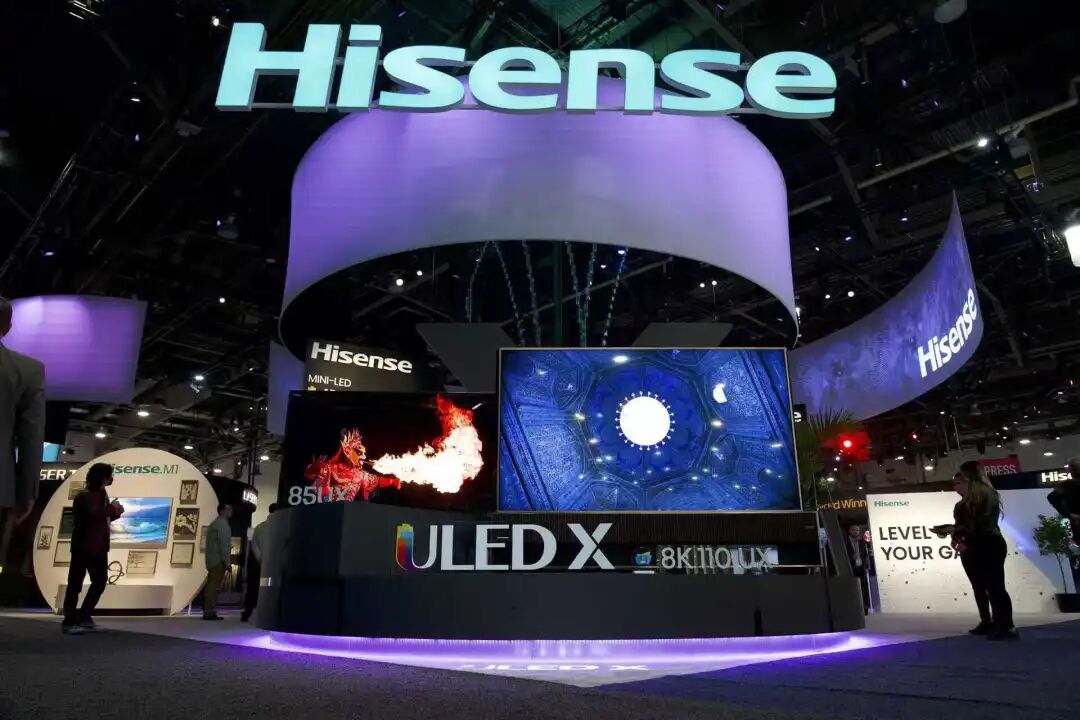
Core Insights - Thailand is emerging as a new hub for Chinese home appliance manufacturers, driven by structural adjustments in global supply chains and the need for cost optimization and market restructuring [1][2][4]. Group 1: Major Developments - Chinese home appliance giants such as Haier, Hisense, and Oma are establishing significant production bases in Thailand, competing with Japanese and Korean brands [1][2]. - Haier's air conditioning industrial park in Chonburi, Thailand, has a planned annual capacity of 6 million units and is the largest air conditioning manufacturing base for Chinese brands in Southeast Asia [1]. - Hisense's HHA smart manufacturing industrial park in Thailand aims for an annual production capacity of 12 million units by 2030, with an expected annual output value exceeding 100 billion Thai Baht [2]. Group 2: Advantages of Thailand - Thailand's geographical location offers strategic advantages, being centrally located in Southeast Asia and connected to major trade routes, including the deep-water port of Laem Chabang [5]. - The cost advantage in Thailand includes lower labor costs, with the minimum monthly wage being approximately 77% of that in China, alongside a skilled workforce [6]. - Tax incentives, such as a 5% low tax rate for high-end manufacturing, further enhance Thailand's attractiveness for foreign investment [6]. Group 3: Industry Trends - The success of the "Thailand model" is evident not only in the home appliance sector but also in the automotive industry, with Chinese electric vehicle exports to Thailand increasing significantly [7][8]. - The evolution of Chinese home appliance companies is marked by a shift from merely exporting products to building comprehensive capabilities, including R&D and supply chain management [10][13]. - Localized product development has led to increased market share for Chinese brands in Thailand, with Haier's market share in air conditioning rising from 13.1% in 2018 to 21% in 2023 [10][11]. Group 4: Future Outlook - The ongoing structural changes in global supply chains are prompting Chinese companies to seek production bases in third countries like Thailand to mitigate trade barriers and tariffs [11][15]. - The transition from product output to capability output signifies a new phase in China's manufacturing narrative, with a focus on integrating local market needs into product development [16].



X @Bloomberg
Bloomberg· 2025-11-16 09:52
Samsung, Hyundai and LG pledged to invest a combined $464 billion in South Korea over the next five years after meeting with President Lee Jae Myung, who is seeking to shore up the economy following the country’s trade deal with the US https://t.co/eSZ8KVY5W2 ...
江苏盐城:“韩资高地”锻造现代汽车城
Zhong Guo Xin Wen Wang· 2025-11-16 05:20
Core Viewpoint - Yancheng Economic Development Zone is transforming into a modern automotive city and a lithium battery hub, driven by strong cooperation with South Korea, particularly in the automotive and battery manufacturing sectors [2][3]. Group 1: Automotive Industry - Yancheng has established a diverse export product matrix with six vehicle models, exporting to 88 countries, and is the only joint venture brand among China's top ten automotive exporters [2]. - The region has produced and sold over 6.6 million vehicles, generating sales revenue exceeding 660 billion yuan, with a 24% year-on-year increase in invoicing and a 49% increase in vehicle sales from January to September this year [2]. - New energy vehicles accounted for 40.6% of total vehicle sales, indicating a significant shift towards electric vehicles [2]. Group 2: Battery Manufacturing - The SK Group's battery manufacturing base in Yancheng is the largest of its kind globally, focusing on high-performance lithium batteries for overseas markets [2]. - The region has attracted over 380 foreign enterprises, with more than 280 being South Korean, and has accumulated foreign investment exceeding 10 billion USD [2]. Group 3: Economic Cooperation and Events - The 26th China-Japan-Korea Friendly Cities Exchange Conference was held in Yancheng, highlighting the region's commitment to international cooperation and development [4]. - Yancheng has established trade relations with over 170 countries and regions, hosting numerous high-level delegations from South Korea for economic collaboration [5][6]. Group 4: Cultural Exchange - The Yancheng Economic Development Zone promotes cultural exchange through various activities, including Korean language classes and cultural events, fostering closer ties between the two nations [7]. - The KK-PARK International District features Korean-themed establishments, enhancing the living experience for the Korean community and providing a cultural window for local residents [7]. Group 5: Tourism - Yancheng has become a popular destination for South Korean tourists, with a 61.5% increase in the number of Korean nationals traveling to the city from January to October this year [8].
刚刚,美韩重大宣布!关税从25%降到了15%
Sou Hu Cai Jing· 2025-11-14 11:05
Investment Overview - South Korea has agreed to invest $350 billion in the U.S. in exchange for a reduction in tariffs from 25% to 15% [1] - The investment is divided into two parts: $200 billion in cash and $150 billion for shipbuilding cooperation [1] - The cash investment will be phased in, with a maximum of $20 billion per year, to minimize impact on South Korea's foreign exchange market [1] Sector Focus - The primary focus of the investment is on semiconductors, with Samsung and SK Hynix planning to build chip factories in the U.S. [3] - Samsung is set to invest an additional $25 billion in its Texas facility [3] - The electric vehicle and battery sectors are also significant, with Hyundai Motor Group planning to invest $26 billion in the U.S. and collaborating with LG Energy Solution to build a battery factory with over $4.3 billion investment [3] - South Korea's three major battery companies—Samsung SDI, LG, and SK On—are planning to establish 15 battery factories in the U.S. [3] Economic Rationale - The investment strategy is aimed at countering U.S. tariff pressures, allowing South Korean products to compete on equal footing with Japanese products in the U.S. market [3] - In 2022, nearly half of South Korea's total automotive exports went to the U.S., with Hyundai and Kia incurring over 3 trillion won in tariffs in the third quarter alone [3] Corporate Plans - Specific corporate investment plans include Samsung's $17 billion factory in Texas, Hyundai's $11.4 billion electric vehicle plant in Georgia, and SK Group's planned $22 billion investment [3] Challenges and Risks - South Korea's economy is smaller than Japan's, with foreign exchange reserves of approximately $416 billion, posing liquidity and exchange rate pressures [4] - Recent tightening of U.S. worker visa policies and incidents involving the arrest of hundreds of South Korean workers at Hyundai's battery plant add uncertainty to the investment [4] - The $350 billion investment represents a strategic move to address U.S. tariff pressures and actively participate in global supply chain restructuring, but maintaining market access while preserving industrial autonomy poses significant challenges for South Korea [4]

Corning Rides on Strength in Consumer Electronics: Will it Persist?
ZACKS· 2025-11-13 17:36
Core Insights - Corning Incorporated (GLW) is experiencing strong growth in its Specialty Materials segment, driven by robust demand in the consumer electronics market, with Q3 revenues reaching $621 million, a 13% increase year over year, and net income rising 57% to $113 million [1][8] Consumer Electronics Demand - Major smartphone manufacturers, including Samsung, Xiaomi, and OnePlus, are adopting Corning's Gorilla Glass Ceramic 2 in their latest premium devices, enhancing the company's market position [2] - Apple plans to invest $2.5 billion in Corning's Kentucky facilities for the development of cover glass for iPhones and Apple Watches, as part of a broader $600 billion multi-year investment in the U.S., which significantly boosts Corning's consumer electronics segment [3] Specialty Materials Segment - Corning's Specialty Materials segment serves diverse markets such as semiconductor, aerospace, defense, and telecommunications, which enhances the company's resilience against macroeconomic challenges. Revenue is projected to reach $2.16 billion by 2025, reflecting a 7.3% year-over-year growth [4] Competitive Landscape - Universal Display Corporation (OLED) is also benefiting from increased OLED usage across various consumer electronics, although its revenue declined from $161.6 million to $139.6 million year over year [5] - InterDigital, Inc. (IDCC) reported a rise in net sales from $128.7 million to $164.7 million, driven by a licensing agreement with Samsung [6] Financial Performance and Valuation - Corning's stock has increased by 89.2%, compared to a 139.4% growth in the communications components industry [7] - The company's shares are currently trading at a forward P/E ratio of 30.41, which is lower than the industry average [9] - Earnings estimates for Corning for 2025 and 2026 have seen upward revisions over the past 60 days, indicating positive market sentiment [11]


曾在中国“躺着赚钱”,今被华为小米打到剩1%!韩国制造跌下神坛
Sou Hu Cai Jing· 2025-11-12 12:45
Group 1 - South Korean manufacturing thrived in the Chinese market over a decade ago, with brands like Samsung and LG enjoying significant popularity and market share [1][3][7] - In 2015, South Korea's exports to China reached approximately $150 billion, with a trade surplus exceeding $60 billion, making China South Korea's largest trading partner [3][5] - The reliance on the Chinese market created vulnerabilities for South Korean companies, as any disruption could lead to significant losses [5][9] Group 2 - The deployment of the THAAD missile defense system by South Korea in July 2016 sparked a backlash from China, leading to widespread consumer boycotts against South Korean products [9][11] - Major South Korean companies, such as Lotte, faced severe repercussions, with Lotte closing over 20 stores in China and ultimately exiting the market by 2019, incurring losses exceeding $100 million [11][13] - The number of Chinese tourists visiting South Korea plummeted from 8.07 million in 2016 to 4.18 million in 2017, resulting in a loss of $7.5 billion in tourism revenue [13] Group 3 - South Korean electronics and cosmetics sales experienced a dramatic decline, with Samsung's market share in China dropping from 21.9% in 2013 to less than 1% by 2018 [13][15] - The loss of the Chinese market severely impacted cash flow and R&D for South Korean manufacturers, exposing the fragility of their manufacturing sector [15][16] - By 2022, South Korea began experiencing monthly trade deficits with China, with the annual surplus shrinking to just $1.2 billion [16][18] Group 4 - In 2023, South Korea's trade deficit with China reached $18 billion, with exports falling from $155.8 billion in 2022 to $124.8 billion [18][20] - The manufacturing PMI index in South Korea remained below 50 for 12 consecutive months, indicating a prolonged period of operational stagnation [18][20] - The decline in South Korean manufacturing is attributed to structural issues, with Samsung Electronics reporting a 95.7% drop in operating profit in Q1 2023 [20][22] Group 5 - The South Korean job market is also affected, with the number of insured individuals in manufacturing projected to decrease to 3.846 million by 2025 [24] - The export share of South Korean goods to China fell from 25.3% in 2021 to 19.5% in the first half of 2023, indicating a significant loss of market presence [24][26] - The proportion of South Korean semiconductor exports to China is expected to decline from 45% in 2020 to 35.7% by the end of 2024 [26][28] Group 6 - The South Korean government is attempting to mend relations with China, emphasizing pragmatic diplomacy and regional integration [28][30] - Despite efforts to repair ties, the South Korean manufacturing sector faces challenges in regaining its competitive edge in the Chinese market [30] - The rise of Chinese brands in the domestic market highlights the need for South Korean companies to adapt to the changing landscape [30]
