
Rokid

Search documents
2025世界人工智能大会闭幕:全球创新共聚,AI迈向价值创造与规则定义新阶段
Jing Ji Guan Cha Bao· 2025-07-29 07:47
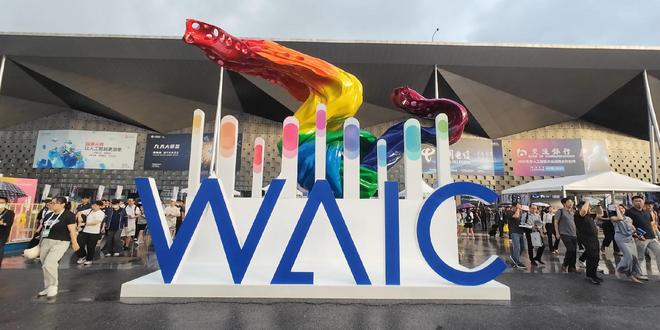
Core Insights - The 2025 World Artificial Intelligence Conference (WAIC 2025) concluded successfully in Shanghai, featuring over 1,500 top experts from more than 70 countries and regions, showcasing over 3,000 cutting-edge technologies, with more than 100 global and Chinese product debuts [2] - The conference highlighted a shift in the AI industry from "parameter competition" to "value creation," indicating China's AI sector is moving towards defining global standards and promoting inclusive development [2] - Huawei showcased its Ascend 384 SuperNode (Atlas 900 A3 SuperPoD), which addresses communication bottlenecks in AI model training and inference through high bandwidth and low latency interconnects among 384 NPUs [2] AI Model Development - Over 80 large models have been developed based on Huawei's Ascend platform, with partnerships involving over 2,700 collaborators to create more than 6,000 industry solutions across 11 sectors, including internet, finance, and healthcare [4] - Zhaoxin presented its KX-7000N AIPC processor, which integrates high-performance NPUs to enhance local AI processing capabilities for applications like speech recognition and image generation [4][6] AI Hardware Innovations - Moore Threads showcased its full-featured GPU solutions, emphasizing their role in general-purpose accelerated computing platforms and various industry applications, including professional graphics rendering and AI model training [6][8] - Muxi introduced its flagship GPU, the Xiyun C600, which is designed to provide reliable computing power for critical sectors, marking a significant step in domestic supply chain development [8][10] Industrial AI Applications - Siemens made its debut at WAIC, presenting its Industrial Copilot system, which integrates large language models with industry knowledge to enhance production efficiency by 50% [11][15] - The company also demonstrated AI applications in energy systems and process industries, showcasing its extensive patent portfolio and AI expertise [15] Ecosystem Development - North Electric Intelligence introduced a comprehensive AI empowerment system that integrates city-level AI infrastructure with industry-specific solutions, aiming to enhance digital transformation across various sectors [11][13] - Super Fusion launched its FusionOne AI solution, which aims to bridge the gap in AI implementation across industries by providing a full-stack digital resource intelligent system [15][17] Consumer AI Products - Rokid unveiled its lightweight AR glasses, which utilize advanced technologies for seamless user interaction, showcasing the potential of AI in enhancing user experiences in everyday scenarios [19]


百镜大战,终于不再乱打了
Hu Xiu· 2025-07-29 04:42
Core Insights - The World Artificial Intelligence Conference (WAIC) showcased a variety of AI and AR glasses, attracting significant attention due to their hands-on experience opportunities [1] - The audience's reactions to the smart glasses varied widely, reflecting differing expectations and prior experiences with similar products [2][4] - The industry faces a challenge where hardware development may lag behind software capabilities for at least the next decade, raising questions about how to engage a broader consumer base as the market matures [5] Industry Trends - The success of Ray-Ban Meta glasses has catalyzed a competitive landscape, leading to a surge in smart glasses development, with a focus on AI functionalities [5][6] - Many companies are beginning to clarify their product positioning, with some focusing on specialized features rather than attempting to cover all functionalities [7] - Halliday's AI glasses, which prioritize display capabilities over traditional features like photography, exemplify a trend towards specialization in product development [8][10] Competitive Landscape - Major tech companies like Xiaomi and Alibaba are entering the AI glasses market, indicating a shift towards more established players dominating the space [12][13] - Alibaba's Quark AI glasses are designed to integrate deeply with its ecosystem, showcasing the importance of software capabilities alongside hardware [13] - The industry is expected to see a convergence in hardware specifications and core functionalities, leading to a more stratified competitive environment where smaller firms focus on niche markets while larger companies leverage their ecosystem advantages [15]


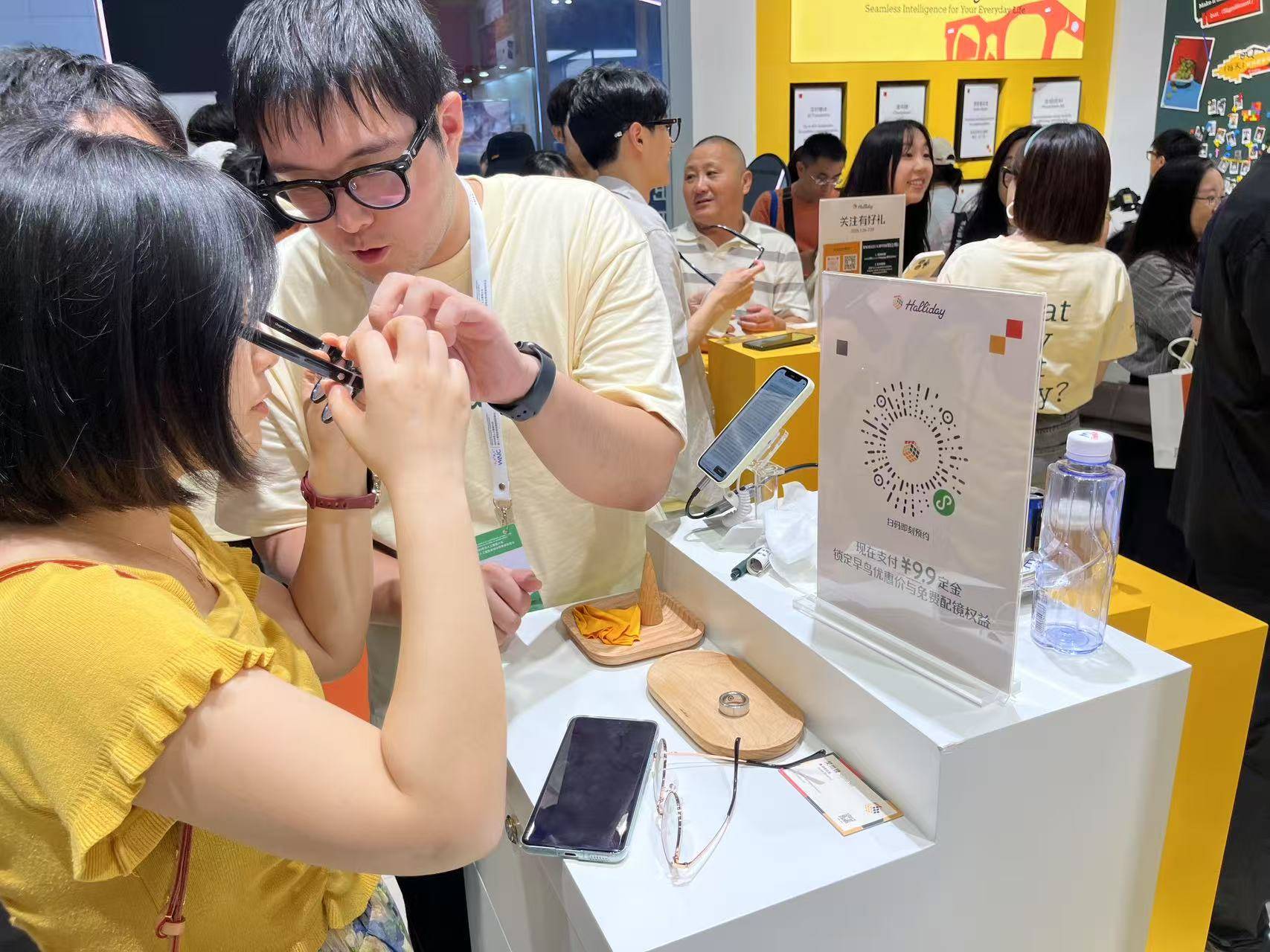
智能眼镜,下一代超级终端?
Zhong Guo Qing Nian Bao· 2025-07-28 23:14
Core Viewpoint - The smart glasses market is experiencing significant growth, with major companies entering the field, leading to a competitive landscape referred to as the "Battle of Hundreds of Glasses" [1][6][10]. Market Overview - By 2025, global smart glasses shipments are expected to reach 14.518 million units, with China accounting for 2.907 million units, representing year-on-year growth of 42.5% and 121.1% respectively [1][6]. - The surge in demand is evidenced by a 7-fold increase in AI glasses sales during the "618" shopping festival and a 70% increase in AR glasses users [1]. Product Types - Smart glasses can be categorized into five types: basic audio glasses, glasses with cameras, AI+AR glasses, split AR glasses, and VR glasses [2]. - The majority of products on the market fall into the second category, with Xiaomi's AI glasses being a notable example [2]. Consumer Trends - The user base is shifting from tech enthusiasts to mainstream consumers, with a growing interest in practical features such as voice assistance, photography, translation, and navigation [5][6]. - The demand for smart glasses is being driven by the need for portable devices that facilitate information interaction and real-time assistance [7]. Technological Advancements - Recent advancements in AI and AR technologies have made smart glasses more viable, with improvements in display quality, weight, and battery life [8][10]. - Key technologies include micro-display and optical waveguide technologies, which have reached a level of maturity that allows multiple companies to enter the market [8]. Industry Competition - The competitive landscape is characterized by the entry of various players, including tech giants, internet companies, and traditional eyewear manufacturers, all vying for market share [6][10]. - The market is witnessing a rapid evolution, with new products and features being introduced regularly [6]. Future Outlook - Experts suggest that while smart glasses have the potential to become the next major interface for AI interaction, they still face challenges in performance, weight, and battery life [10][11]. - The industry is expected to undergo further technological and market development over the next 5 to 10 years before smart glasses can achieve mainstream adoption [10][12].
算力筑基 模型进阶 AI应用实干突围
Zhong Guo Zheng Quan Bao· 2025-07-28 21:05
Group 1: AI Industry Development - The 2025 World Artificial Intelligence Conference (WAIC) showcased significant advancements in AI applications, marking the transition into a "practical era" of AI technology [1][6] - The demand for computing power is expected to increase dramatically, with predictions of a hundredfold to thousandfold growth in training computing power requirements due to the rapid evolution of AI applications [1][4] - AI foundational models are shifting their core competitiveness from "data + scale" to "self-optimization + multi-modal native integration," facilitating the transition of large models from laboratories to industry [4][5] Group 2: Computing Power Infrastructure - Companies like Huawei and ZTE presented innovative supernode solutions, with Huawei unveiling the Ascend 384 supernode, which enhances resource utilization by allowing 384 cards to work collaboratively as a single computer [2][3] - The introduction of the LightSphere X supernode by Shanghai Yidian and partners utilizes optical interconnect technology to overcome traditional physical limitations, allowing for elastic scaling and reduced deployment costs [2][3] - Companies are adapting to AI demands by developing hardware products, customized data center solutions, and intelligent scheduling platforms for heterogeneous computing [3][4] Group 3: AI Applications and Use Cases - AI agents are becoming pivotal in various sectors, evolving from tools to "digital employees" capable of analysis, execution, and optimization in government, finance, industry, and healthcare [5][6] - The Rokid Glasses, an AI + AR smart eyewear, exemplifies the integration of AI technology into consumer products, enabling users to perform tasks like information retrieval and translation through voice commands [6][7] - The Galbot robot, showcased in a simulated supermarket environment, demonstrates advanced capabilities in product recognition and retrieval, with applications already implemented in retail and industrial settings [7][8]
“沸腾了”!突破30万,AI、机器人彻底火了!
中国基金报· 2025-07-28 15:41
Core Insights - The 2025 World Artificial Intelligence Conference (WAIC2025) attracted over 305,000 attendees, showcasing significant growth in interest and participation in AI technologies [2] - The exhibition area exceeded 70,000 square meters, featuring over 800 companies and more than 3,000 cutting-edge exhibits, including various AI models and intelligent robots [2][5] - The conference generated approximately 16.2 billion yuan in intended procurement amounts, indicating strong market demand for AI solutions [2] Group 1: Robotics and AI Applications - Robots demonstrated a wide range of capabilities, including performing tasks like selling goods, dancing, and martial arts, showcasing advancements in humanoid robotics [5][6] - Various companies, such as Galaxy General and UAI Intelligent, presented robots capable of performing high-precision tasks, enhancing the perception of robotic applications in everyday scenarios [5][9] - The event highlighted the shift from static AI models to dynamic applications, emphasizing the importance of practical implementations in various sectors [14] Group 2: AI Innovations and Developments - Huawei showcased its Ascend 384 super node, which can support the construction of large-scale AI clusters, demonstrating its commitment to AI infrastructure [14] - JD.com announced the upgrade of its AI model brand to JoyAI, which has been integrated into multiple sectors, including logistics and retail, enhancing operational efficiency [16] - SenseTime introduced its new V6.5 model, focusing on real-world applications and improved performance, indicating a trend towards practical AI solutions [18] Group 3: Hong Kong's AI Initiatives - Hong Kong Cyberport collaborated with various startups to showcase AI innovations, including educational platforms and smart city applications, reflecting the region's growing AI ecosystem [24][26] - The Hong Kong government allocated 3 billion HKD for an AI funding program, with over 10 projects already applying for support, indicating strong governmental backing for AI development [26]
WAIC最火终端!AI眼镜迎来“百镜争鸣”
2 1 Shi Ji Jing Ji Bao Dao· 2025-07-28 13:55
Group 1 - The core focus of the 2025 World Artificial Intelligence Conference (WAIC) was on AI glasses, showcasing their transition from concept to reality as the next generation of smart wearable devices [1] - Rokid demonstrated a real-life usage scenario of their AI glasses in a coffee shop, enabling seamless cross-language communication between a foreign barista and Chinese-speaking customers [1] - Major companies like Alibaba are entering the AI glasses market, with Alibaba unveiling its self-developed Quark AI glasses that integrate various AI capabilities and practical functions such as navigation and payment [1] - The market demand for AI glasses is rapidly increasing, with IDC predicting that China's smart glasses shipment will reach approximately 2.9 million units by 2025, representing a year-on-year growth of over 120% [1] - The entry of industry giants like Xiaomi and Alibaba is expected to enhance industry attention and significantly expand the potential user base for AI glasses [1] Group 2 - The development of AR glasses is anticipated to become more personalized and diversified, contrasting with the highly concentrated smartphone market [2] - Manufacturers in the glasses sector can find their niche by excelling in their respective verticals, as the expanding market will allow for multiple players to succeed [2] - The competition in the industry will intensify as more participants enter the market, with success dependent on each company's ability to capture a significant share of the growing market [2]
WAIC洞察|“百镜大战”未到泡沫时
Bei Jing Shang Bao· 2025-07-28 13:49
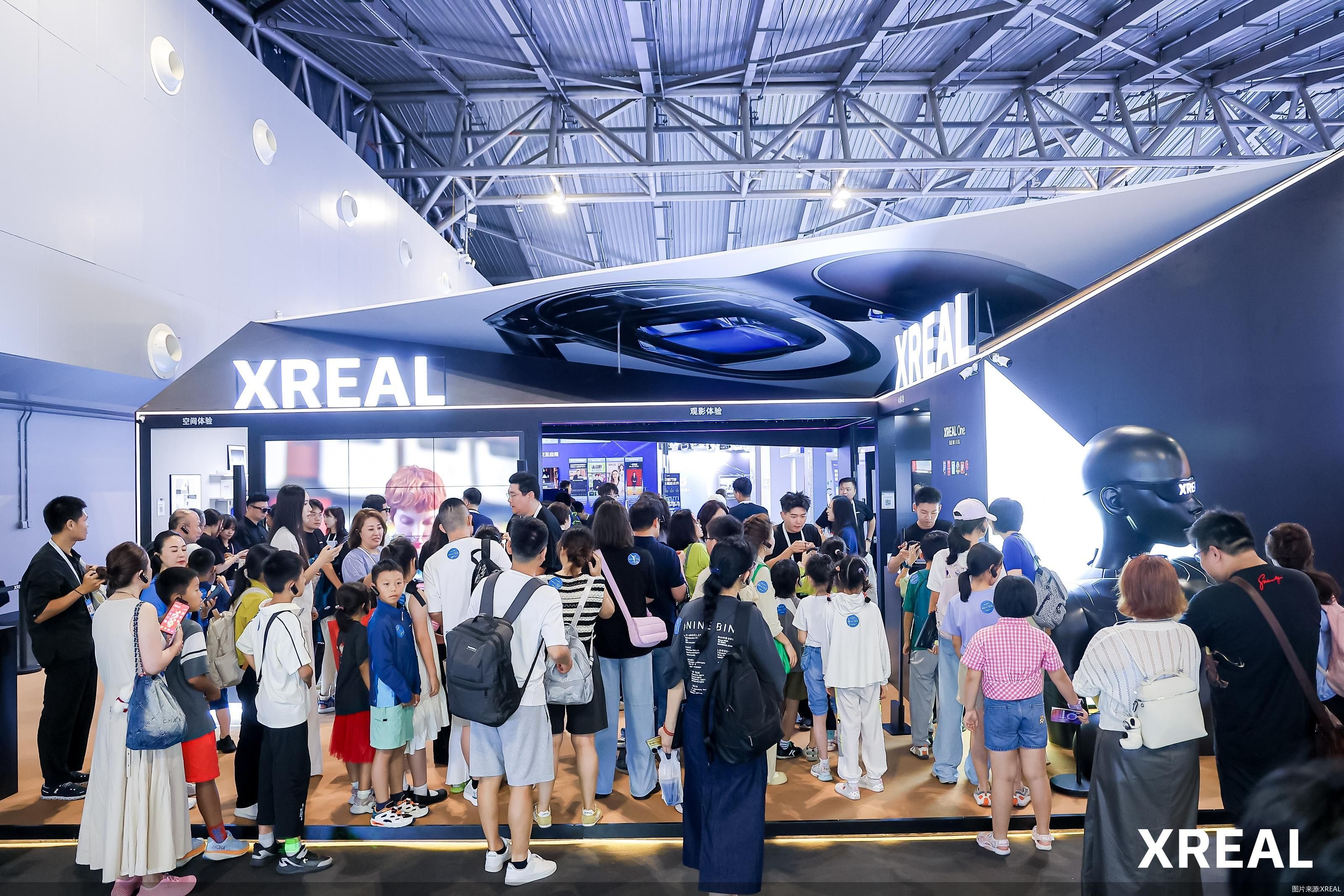
Core Viewpoint - The AI glasses market is experiencing significant activity with multiple companies launching new products, but the industry is still in the exploration phase of product definition rather than entering a bubble period [5][11][25]. Company Developments - Rokid's latest product, Rokid Glasses, is the only AI glasses currently in mass production that combines display, camera, microphone, speaker, and AI capabilities [3][4]. - XREAL launched the XREAL One Pro, featuring the largest field of view in AR glasses at 57 degrees, with over 26,000 online reservations on the launch day [3]. - Alibaba introduced its first self-developed AI glasses, Quark AI glasses, which are expected to be released within the year and will integrate with Alibaba's ecosystem [4][8]. Market Sentiment - There is a split in market sentiment regarding AI glasses; optimists view them as the next personal terminal, while pessimists worry about high prices and overlapping functionalities leading to a potential market bubble [4][5]. - Industry leaders believe that the current excitement is driven by technological iteration rather than speculative bubbles, indicating that the market is still maturing [11][25]. Technical Innovations - XREAL's new product features a self-designed chip specifically for AR display, emphasizing the importance of a complete software ecosystem for optimal performance [7]. - Companies are focusing on improving product features such as optical design, user feedback integration, and enhancing AR capabilities to meet consumer needs [8][10]. Consumer Adoption Challenges - Despite advancements, AI glasses have not yet achieved widespread adoption due to issues like high prices, functionality overlap with smartphones, and concerns over comfort and battery life [15][17][18]. - The current price range for AI glasses is between 2,000 to 5,000 yuan, with some high-end models nearing 10,000 yuan, which does not align with typical consumer budgets for electronic accessories [15][21]. Future Outlook - Industry experts predict that prices for AI glasses could drop below 2,000 yuan within the next couple of years, making them more accessible to consumers [21][22]. - The path to mainstream adoption involves improving user experience, reducing costs, and educating the market about the practical benefits of AI glasses [24][25].
【太平洋科技-每日观点&资讯】(2025-07-29)
远峰电子· 2025-07-28 11:54
Market Performance - The main board led the gains with notable stocks such as Aorui Technology (+10.09%), China Film (+10.04%), and Xingsen Technology (+10.02) [1] - The ChiNext board saw significant increases with Happiness Blue Sea (+20.00%) and Shuo Beid (+20.00%) [1] - The Sci-Tech Innovation board was led by Fangbang Co. (+20.01%) and Nanya New Materials (+14.47%) [1] - Active sub-industries included SW Printed Circuit Boards (+8.72%) and SW Communication Network Equipment and Devices (+2.66%) [1] Domestic News - Rokid's CEO announced that the new smart glasses, Rokid Glasses, have sold 300,000 units and will introduce a ride-hailing feature in the second half of the year [1] - A semiconductor high-end photomask project with a total investment of 12 billion yuan has been established in the high-tech zone, focusing on the R&D and production of 28nm and above photomasks [1] - TSMC's advanced packaging plant in Arizona is expected to begin construction in the second half of next year, aligning with the 2nm wafer plant [1] - Canalys reported a 4% year-on-year decline in China's smartphone market in Q2 2025, with Huawei regaining the top position with 12.2 million units shipped, capturing 18% market share [1] Company Announcements - Pairui Co. announced a cash dividend of 0.3722 yuan per 10 shares based on a total share capital of 320 million shares [3] - Huanxu Electronics reported a 0.63% decrease in revenue for the first half of 2025, totaling 27.214 billion yuan, with a net profit decline of 18.66% to 638 million yuan [3] - Nanji Guang obtained two invention patents related to injection molding technology, enhancing production efficiency [3] - Tongzhou Electronics reported a significant revenue increase of 606.52% in H1 2025, reaching 540 million yuan, with a net profit growth of 662.77% to 203 million yuan [3] Overseas News - Lumien plans to invest 500 billion won in a new factory in South Korea for producing key semiconductor components [2] - Hanmi Semiconductor announced a 100 billion won investment for developing hybrid bonding technology, with a factory expected to be completed by the second half of 2026 [2] - Counterpoint's report indicates that global pure semiconductor wafer foundry revenue is projected to grow by 17% year-on-year in 2025, exceeding 165 billion USD [2] - Samsung Electronics signed a semiconductor foundry contract worth 22.7648 trillion won (approximately 118.3 billion yuan) with an undisclosed international client [2]

大厂眼镜一戴,谁也不AI
Hu Xiu· 2025-07-28 10:48
Core Viewpoint - Alibaba's AI smart glasses made their debut at the WAIC, showcasing AR technology, but are still in the early development stage and not yet available for sale [1][2][5]. Product Overview - The AI glasses come in two versions: one without AR display and one with AI+AR capabilities, with the latter being prioritized for release [2][3]. - The glasses utilize a dual-chip architecture with Qualcomm Snapdragon AR1 and Hengxuan BES2800, with production expected to be handled by Luxshare Precision [2][3]. - The official launch is anticipated around this year's "Double Eleven" shopping festival [2][3]. Market Context - Following Xiaomi's successful launch of its AI glasses, which reportedly sold 50,000 units in three days, Alibaba aims to capture a share of the growing smart glasses market [3][12]. - The smart glasses market is projected to see significant growth, with an expected shipment of 2.907 million units in China by 2025, marking a 121.1% year-on-year increase [12]. Competitive Landscape - The entry of Alibaba, Xiaomi, and ByteDance into the smart glasses market suggests a potential "Three Kingdoms" era of competition among major players [3][11]. - The current market is characterized by a lack of fierce competition, with companies still in the early stages of product development and market penetration [11][14]. Technical Features - Alibaba's glasses feature a light guide AR technology, which is considered essential for consumer-grade AR glasses due to its lightweight and high light transmission properties [3][7]. - The design of the glasses has received mixed reviews, with some industry experts noting a lack of balance between functionality and aesthetics [6][8]. Software Ecosystem - Alibaba's software ecosystem, including applications like Alipay and Taobao, is seen as a competitive advantage over rivals, providing a more integrated user experience [9][10]. - The glasses are designed to support various applications, such as product recognition and price comparison, enhancing their utility [9][10]. Production and Supply Chain - Initial production targets for Alibaba's AI glasses are set at 100,000 units, while Xiaomi's first batch reportedly sold out quickly [12][13]. - The industry faces challenges related to production capacity and supply chain management, which are critical for meeting market demand [14][15]. Future Outlook - The smart glasses market is still in its infancy, with many products focusing primarily on photography and audio features rather than fully utilizing AI capabilities [16][21]. - As the market evolves, companies will need to explore hardware integration and offline retail strategies to enhance user engagement and sales [17][19].
国内大模型落地竞速;Meta首席科学家为清华校友丨新鲜早科技
2 1 Shi Ji Jing Ji Bao Dao· 2025-07-28 03:11
Group 1: Company Developments - Shengjia Zhao, a Tsinghua University alumnus, has been appointed as the Chief Scientist of Meta's Super Intelligence Lab, having previously contributed to OpenAI's GPT-4 and ChatGPT projects [2] - Alibaba has announced the completion of its self-developed AI glasses, Quark AI glasses, which are expected to be officially released within the year, integrating various services from Alibaba's ecosystem [4] - Alibaba has also launched the Qwen3-235B-A22B-Thinking-2507 open-source reasoning model, which enhances capabilities in logic reasoning, mathematics, and programming, and supports 256K context processing [5] - Tencent introduced the mixed Yuan 3D world model and the Tairos embodied intelligence platform, showcasing a comprehensive product application landscape for the AI era [6] - JD Cloud has open-sourced the JoyAgent intelligent agent, marking it as the first fully open-source enterprise-level intelligent agent in the industry [7] - Kingsoft Office released the WPS AI 3.0 version, featuring the WPS Lingxi, which allows users to create documents and presentations through natural language without complex operations [8] - Rokid has sold 300,000 units of its smart glasses, with plans to introduce a ride-hailing feature in collaboration with Gaode Map and Alipay [10] Group 2: Industry Trends - The robotics industry is experiencing exponential growth, with a strong demand for general-purpose robots, as noted by the founder of Yushu Technology [3] - Shanghai has issued new demonstration operation licenses for intelligent connected vehicles, allowing companies like Pony.ai and Baidu to offer autonomous taxi services [9] - Intel has announced the spin-off of its Networking and Communications business into an independent company as part of a broader asset slimming strategy [12] - AMD has appointed former Intel executive Ian Yang as vice president, indicating a strategic move to strengthen its leadership [13] - A joint release of AI all-in-one machines by China Electronics Cloud, China Great Wall, and Muxi Co., aims to optimize AI capabilities and model development [14] - China Mobile and Sugon Storage have launched the first unified file storage product in the country, integrating AI applications for efficient operation [15] Group 3: Financial Activities - Jinqiao Information plans to raise up to 633 million yuan through a private placement to fund AI research and development projects [16] - Shenke Co., Ltd. announced a strategic investment of 15 million yuan in Shandong Future Robotics, acquiring a 1.0990% stake in the company [17]

