洪都航空

Search documents
战鹰呼啸!2025年空军航空开放活动重磅开幕,通用航空ETF(159231)涨超1%
Xin Lang Ji Jin· 2025-09-19 02:03
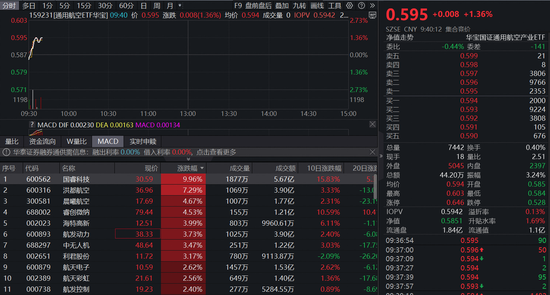
Group 1 - General aviation stocks experienced significant upward movement, with Guorui Technology hitting the daily limit and Hongdu Aviation rising over 7% [1] - The Huabao General Aviation ETF (159231) saw an increase of 1.36% in its market price, reflecting growing interest in the low-altitude economy and related sectors [1] - The 2025 Air Force Aviation Open Activities and Changchun Aviation Exhibition commenced, showcasing over a hundred types of military equipment and various aerial performances, highlighting advancements in the aviation sector [2] Group 2 - Southwest Securities noted that national strategies are focusing on the low-altitude economy, with various regions implementing development policies and state-owned enterprises establishing low-altitude economic companies [3] - The Huabao General Aviation ETF and its linked funds cover a comprehensive index of 50 constituent stocks, with over 46% being state-owned enterprises and more than 20% from the top ten military industrial groups, indicating a strong focus on key sectors like low-altitude economy and military aviation [3] - The eVTOL (electric Vertical Take-Off and Landing) sector is experiencing a surge in orders, indicating a clear trend towards large-scale development within the industry [3]





国资委:中央企业资产总额超过90万亿元,“十四五”以来累计上交税费超10万亿元|快讯
Sou Hu Cai Jing· 2025-09-17 04:20
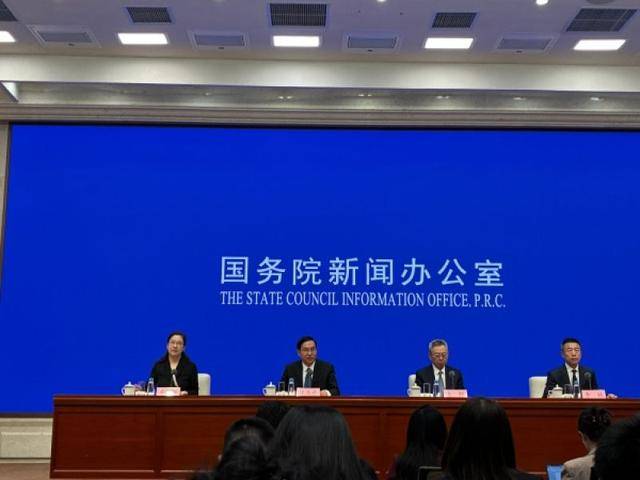
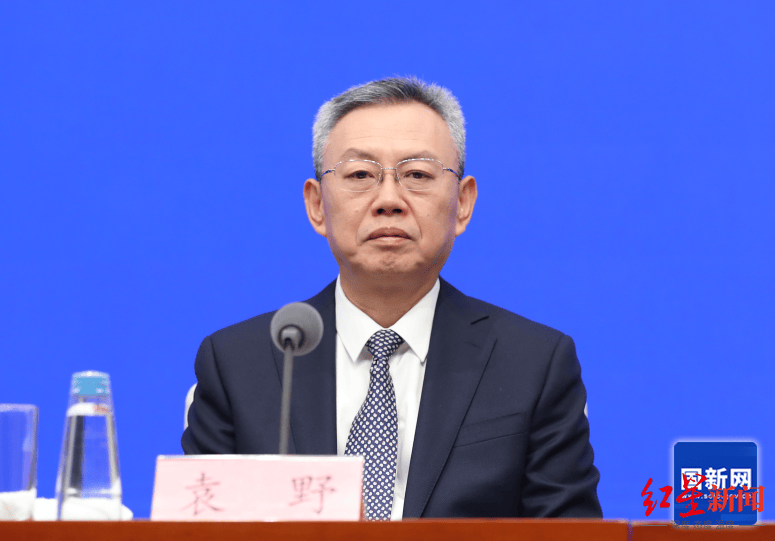
9月17日,国新办举行高质量完成"十四五"规划系列主题新闻发布会。会上,国务院国有资产监督管理 委员会主任张玉卓表示,"十四五"以来,国资央企综合实力不断增强。中央企业资产总额从不到70万亿 元增长到超过90万亿元,利润总额从1.9万亿元增长到2.6万亿元,年均增速分别达到7.3%和8.3%。质量 效率也有显著提升,营业收入利润率从6.2%提升到6.7%,全员劳动生产率每人每年从59.4万元增长到 81.7万元。在履行社会责任方面,"十四五"以来,中央企业累计上交税费超过10万亿元,向社保基金划 转国有股权1.2万亿元,有效保障煤电油气等基础产品供给和通信、航空等基础网络运营。 国务院国资委副主任袁野介绍,中央企业的资产总额从"十三五"末的68.8万亿元,增长到2024年底的91 万亿元。国有资本权益从14.2万亿元,增长到18.3万亿元,年均增速分别达到了7.3%和6.5%。"十四 五"期间,中央企业创造的增加值、利润总额,预计比"十三五"期间分别增长40%、50%。 其中,在投资方面,2021—2024年,中央企业累计完成固定资产投资总额19万亿,年均增速达到 6.3%;去年四季度以来,以市场化方式发行稳 ...
国资委:截至目前,央企控股上市公司市值超22万亿,较“十三五”末增长近50%
Sou Hu Cai Jing· 2025-09-17 03:21
Core Insights - The central enterprises in China are achieving high-quality development during the "14th Five-Year Plan" period, with significant growth in assets and capital equity, alongside improved operational efficiency [3][4][5] Group 1: Stability in Development - The total assets of central enterprises increased from 68.8 trillion yuan at the end of the "13th Five-Year Plan" to an expected 91 trillion yuan by the end of 2024, with an average annual growth rate of 7.3% [3] - The state-owned capital equity rose from 14.2 trillion yuan to 18.3 trillion yuan, with an average annual growth rate of 6.5% [3] - The value added and total profits generated by central enterprises are expected to grow by 40% and 50% respectively compared to the "13th Five-Year Plan" period [3] Group 2: Investment and Market Performance - From 2021 to 2024, central enterprises are projected to complete a total fixed asset investment of 19 trillion yuan, with an average annual growth rate of 6.3% [4] - The market capitalization of centrally controlled listed companies exceeded 22 trillion yuan, nearly a 50% increase since the end of the "13th Five-Year Plan" [4] - Central enterprises have implemented cash dividends totaling 2.5 trillion yuan since the beginning of the "14th Five-Year Plan," contributing to the stability of the capital market [4] Group 3: Contribution to Economic Stability - Central enterprises are responsible for approximately 80% of crude oil, 70% of natural gas, and 60% of electricity supply in China, playing an irreplaceable role in energy security and logistics [5] - They have an average annual procurement volume exceeding 15 trillion yuan, directly impacting around 2 million businesses and indirectly affecting nearly 7 million [5] - Central enterprises are creating a favorable environment for the development of upstream and downstream enterprises, including small and medium-sized enterprises, through project cooperation and timely payments [5] Future Directions - The focus will remain on high-quality development, with efforts to strengthen and optimize state-owned capital and enterprises, enhancing their role in national economic and social development [6]
行业军贸市场深度研究:全球百年变局激荡,我国军贸大有可为
INDUSTRIAL SECURITIES· 2025-09-16 11:07
Investment Rating - The industry investment rating is "Recommended (Maintain)" [1] Core Insights - The military trade market is significantly influenced by geopolitical factors, with advanced weaponry impacting national military capabilities and political dynamics. The U.S. and its allies dominate global military trade exports, accounting for 64.10% and 78.06% of total exports in the periods 2015-2019 and 2020-2024, respectively [2][34] - The global military trade market is characterized by high concentration, with the top ten exporting countries accounting for 89.70% of total exports from 2015-2019 and 88.60% from 2020-2024. The U.S. and France are the top two exporters in the latter period, with a combined share of 52.60% [2][34] - China's military trade share is expected to increase in the long term, aligning with its manufacturing capabilities and international influence, despite currently holding only 3.9% of the global military trade market in 2024 [2][34] Summary by Sections Military Trade Overview - Military trade, or arms trade, is a unique sector closely tied to geopolitical and military strategies, reflecting national interests and political continuity [12] - The United Nations defines military trade as the transfer of military equipment between countries, which plays a crucial role in regulating international political relations [12] Global Military Trade Landscape - According to SIPRI, global military trade has experienced stable growth, with total trade increasing from 80.82 billion TIV in 1950 to 289.38 billion TIV in 2024, reflecting a compound annual growth rate of 1.72% [30] - The military trade market has undergone three significant fluctuations since 1950, with the most recent period (2002-present) showing a recovery in trade volumes due to increased global tensions and military spending [30] Major Military Exporting Countries - The top five military exporting countries from 2015-2019 were the U.S., Russia, France, China, and Germany, with the U.S. maintaining a dominant position [34] - The military trade export figures for the U.S. rose from 503.68 billion TIV in 2015-2019 to 609.49 billion TIV in 2020-2024, marking a 21.01% increase [35] China's Military Trade Situation - China's military trade has seen fluctuations, with exports decreasing from 88.62 billion TIV in 2015-2019 to 83.85 billion TIV in 2020-2024, a decline of 5.38% [35] - The report highlights that China's military trade is expected to grow due to increasing geopolitical conflicts and the country's enhanced military capabilities [2][34]


军贸市场深度研究:全球百年变局激荡,我国军贸大有可为
Sou Hu Cai Jing· 2025-09-14 16:43
Core Viewpoint - The report emphasizes the significant role of military trade in shaping geopolitical dynamics and national security, highlighting that military equipment exports are deeply intertwined with political interests and international relations [2][4]. Group 1: Overview of Military Trade - Military trade, or arms trade, is defined as the transfer of military equipment between countries, reflecting political, military, and diplomatic strategies [19]. - The military trade market is characterized by high concentration, with the top ten exporting countries accounting for 89.70% of global military trade from 2015-2019 and 88.60% from 2020-2024 [4][38]. - The primary military trade products include aircraft, missiles, naval vessels, and specialized vehicles, with aircraft consistently representing over 40% of the market share [4][38]. Group 2: Global Military Trade Landscape - The United States and its allies dominate global military trade, accounting for 64.10% and 78.06% of exports in the periods 2015-2019 and 2020-2024, respectively [2][42]. - The top five military exporting countries from 2015-2019 were the United States, Russia, France, China, and Germany, with France surpassing Russia in the subsequent period due to a decline in Russian exports [4][38]. - The global military trade market has experienced three major fluctuations since 1950, with a compound annual growth rate of 1.72% from 80.82 billion TIV to 289.38 billion TIV [37][38]. Group 3: Military Trade Dynamics - The military trade sector is influenced by geopolitical tensions, particularly in the Asia-Pacific and Middle East regions, which are the primary importers of military equipment [4][38]. - Recent trends show a decline in Russian military exports by 63.90% due to sanctions and the ongoing conflict in Ukraine, while countries like Italy have seen significant increases in their military trade [42]. - The report indicates that military trade is not merely an economic activity but a strategic tool for nations to exert influence and maintain security balances [2][41].
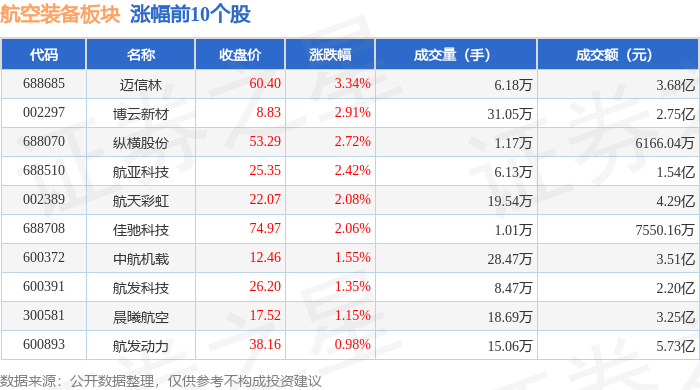
航空装备板块9月12日跌0.73%,菲利华领跌,主力资金净流出8.44亿元
Zheng Xing Xing Ye Ri Bao· 2025-09-12 08:37
Core Insights - The aviation equipment sector experienced a decline of 0.73% on September 12, with Filihua leading the drop [1][2] - The Shanghai Composite Index closed at 3883.69, up 0.22%, while the Shenzhen Component Index closed at 12996.38, up 0.13% [1] Stock Performance - Notable gainers in the aviation equipment sector included: - Maxinlin (688685) with a closing price of 60.40, up 3.34% [1] - Boyun New Material (002297) at 8.83, up 2.91% [1] - Zongheng Co. (688070) at 53.29, up 2.72% [1] - Filihua (300395) was the largest loser, closing at 86.26, down 4.78% with a trading volume of 263,100 shares and a transaction value of 2.268 billion [2] Capital Flow - The aviation equipment sector saw a net outflow of 844 million from institutional investors, while retail investors contributed a net inflow of 534 million [2][3] - The capital flow for key stocks showed: - Filihua had a net outflow of 64.21 million from institutional investors [3] - Boyun New Material experienced a net inflow of 37.04 million from institutional investors [3]

军事智能化:新质战斗力核心,掌握制智权关键
AVIC Securities· 2025-09-12 03:01
Investment Rating - The report maintains an "Overweight" investment rating for the defense industry [3]. Core Insights - Military intelligence is not a future concept but a current reality, driven by advancements in artificial intelligence and technology [3][19][28]. - The military sector is undergoing significant transformation due to the integration of AI, which is reshaping defense strategies, operational capabilities, and equipment systems [17][30]. - The global military AI market is projected to reach approximately $21.003 billion by 2027, with the U.S. military AI market expected to grow to $3.133 billion by 2025 [9][10]. Summary by Sections Military Intelligence: New Quality Combat Power - Military intelligence is characterized by self-perception, decision-making, execution, learning, adaptation, and enhancement capabilities [3][18]. - The current era is witnessing a rapid evolution in military operations, with AI technologies being pivotal in this transformation [19][28]. Transformation of Defense Systems - AI is not just upgrading equipment but is fundamentally changing the defense system, structure, and operational models [3][30]. - Companies like Palantir have seen significant market success, with stock prices increasing by over 1263.68% since the onset of the Russia-Ukraine conflict [3][8]. Main Application Paths of Military Intelligence - AI encompasses various technologies, including machine learning, robotics, computer vision, biometrics, and natural language processing, which are applied across different military domains [8][9]. - The military AI market is expected to grow significantly, with the U.S. market projected to reach $3.133 billion by 2025 and the global market reaching $12.428 billion [9][10]. Key Industry Segments - The report identifies several companies involved in the military AI sector, including aerospace electronics, Chengdu Huami, and others focusing on computing power, sensors, algorithms, and intelligence analysis [10][11].
无人机行业深度:AI赋能无人装备稳立战场中央
2025-09-11 14:33
无人机行业深度:AI 赋能无人装备稳立战场中央 20250911 摘要 美国无人机技术领先,早期以侦察为主,后发展出多种型号如 MQ-9, 广泛应用于军事行动,且已实现标准航空战斗旅的无人机连配备,表明 无人机在现代战争中的重要性日益提升。 无人机相较于传统军事装备具有性价比优势,如 RQ-4 全寿命周期成本 低于 P8 侦察机,自杀式无人机打击成本远低于导弹,且能有效摧毁高 价值目标,具备广泛适应性和作战职能。 人工智能赋能无人系统,使其在电子战环境下具备自主判断和攻击能力, 减少人员需求,提高任务成功率。美国"天宫博格计划"通过模块化设 计降低成本,并采用分层次作战思路,提高作战效费比。 美国协同作战无人机研发经费在 2028 年将占下一代战机总研发经费的 42%,表明美国对无人机和下一代战机同等重视,预示着未来无人机购 置费用将大幅增加。 全球军贸无人机市场增长迅速,2015-2024 年复合增长率为 9.41%。 若此增长率保持,预计到 2028 年中国无人机军贸销售额将达 55.3 亿元, 同时国内察打一体和消耗型无人机需求巨大。 Q&A 无人机在现代战争中的应用有哪些主要发展趋势? 无人机在现代战 ...
大行评级|瑞银:下调中航科工目标价至5港元 下调2025至27年每股盈测
Ge Long Hui A P P· 2025-09-08 02:51
Core Viewpoint - UBS reported that AVIC's revenue for the first half of the year increased by 11.4% year-on-year to 37.5 billion yuan, while net profit fell by 18% to 1.03 billion yuan, which was below both UBS and market expectations [1] Financial Performance - AVIC's revenue for the first half of the year was 37.5 billion yuan, reflecting an increase of 11.4% year-on-year [1] - The company's net profit decreased by 18% to 1.03 billion yuan, falling short of expectations [1] Earnings Forecast - UBS has lowered its earnings per share (EPS) estimates for AVIC for the years 2025 to 2027 by 35%, 37%, and 35% respectively, resulting in revised EPS of 0.28 yuan, 0.32 yuan, and 0.38 yuan [1] Target Price Adjustment - UBS has reduced its target price for AVIC from 5.7 HKD to 5 HKD while maintaining a "Buy" rating [1] Growth Drivers - The report suggests that the push from the Chinese government for low-altitude economy initiatives could significantly advance the civil helicopter and general-purpose airport construction sectors, which may provide strong support for AVIC's profit growth through its key subsidiaries [1]
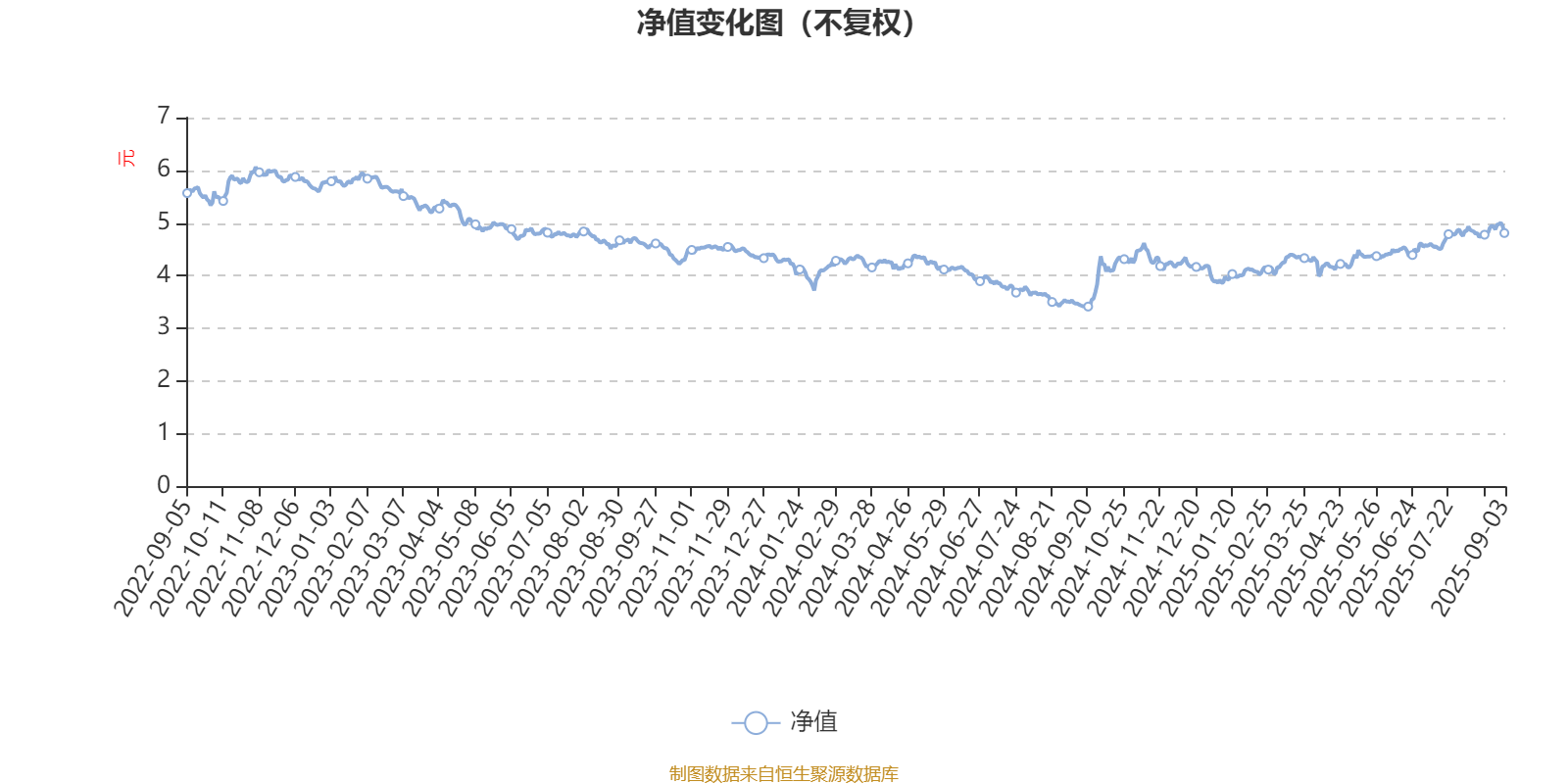
交银成长混合A:2025年上半年利润1.61亿元 净值增长率10.32%
Sou Hu Cai Jing· 2025-09-05 10:58
Core Viewpoint - The AI Fund, Jiaoyin Growth Mixed A, reported a profit of 161 million yuan for the first half of 2025, with a net value growth rate of 10.32% and a fund size of 1.719 billion yuan as of the end of June 2025 [2][31]. Fund Performance - As of September 3, 2025, the fund's unit net value was 4.81 yuan, with a one-year return of 37.05%, ranking 119 out of 181 comparable funds [2][5]. - The fund's performance over the last three months showed a growth rate of 9.29%, ranking 159 out of 182, and over the last six months, it was 18.99%, ranking 84 out of 182 [5]. Valuation Metrics - As of June 30, 2025, the fund's weighted price-to-earnings (P/E) ratio was approximately 26.54, lower than the industry average of 29.05 [10]. - The weighted price-to-book (P/B) ratio was about 2.08, compared to the industry average of 2.22, and the weighted price-to-sales (P/S) ratio was 1.63, against an average of 1.85 [10]. Growth Metrics - For the first half of 2025, the fund's weighted revenue growth rate was -0.02%, and the weighted net profit growth rate was 0.49% [17]. - The weighted annualized return on equity was 0.08% [17]. Fund Composition and Holdings - As of June 30, 2025, the fund had a total of 41,700 holders, with individual investors holding 99.94% of the shares [34]. - The fund's top ten holdings included companies such as Hongdu Aviation, Aero Engine Corporation of China, and Huaneng International, with a concentration exceeding 60% [39]. Trading Activity - The fund's turnover rate for the last six months was approximately 51.56%, consistently below the industry average for three years [37].