软银集团

Search documents
US Stocks Today | SoftBank posts fourth straight quarterly profit of $1.6 billion on OpenAI gains
The Economic Times· 2026-02-12 07:55
Core Viewpoint - SoftBank reported a net profit of 248.6 billion yen ($1.62 billion) for the October-December quarter, marking its fourth consecutive profitable quarter, compared to a net loss of 369 billion yen in the same period last year, driven by the rising valuation of its investment in OpenAI [1][9] Financial Performance - The quarterly net income was projected by five analysts to range between a gain of 1.1 trillion yen ($7.07 billion) and a loss of 480 billion yen [1][9] - In the nine months leading to December, OpenAI has contributed 2.8 trillion yen to SoftBank's investment gains [2][9] Investment in OpenAI - SoftBank has invested over $30 billion in OpenAI, acquiring approximately 11% of the company, positioning itself as a significant player in the competitive landscape of large language models [4][9] - OpenAI is reportedly seeking an additional capital injection of $100 billion, with SoftBank, Amazon, and Nvidia as potential investors at a valuation of $830 billion [5][9] Funding Strategies - To finance its investments, SoftBank has resorted to asset sales, bond issuance, and loans secured by its other holdings, including chip designer Arm [5][9] - The company has sold its $5.8 billion stake in Nvidia and part of its T-Mobile stake for $12.73 billion between June and December last year [6][9] - SoftBank has increased its margin loan using shares in Arm to $20 billion from $13.5 billion and raised the borrowing limit against its shares of SoftBank Corp to 1.2 trillion yen from 800 billion yen [6][9] Market Position and Competition - OpenAI, once the leading entity in large language models, is facing rising operational costs amid increasing competition from companies like Alphabet [7][10] - SoftBank's shares rose by 2.4% in a flat market prior to the earnings announcement [10]



日经平均股指冲高回落,一度站上5.8万点
日经中文网· 2026-02-12 07:51
版权声明:日本经济新闻社版权所有,未经授权不得转载或部分复制,违者必究。 2月12日的日本股市中,日经平均指数涨幅一度超过300点,首次升至5.8万点区间。不过,众议院选举 后的急速上涨也开始显现疲态。受高位警惕情绪影响,部分权重股遭到抛售,日经平均在早盘冲高后转 为下跌…… 日经中文网 https://cn.nikkei.com 2月12日的日本股市中,日经平均指数涨幅一度超过300点,首次升至5.8万点区间。美国经济表现稳健 以及日本企业财报强劲,提振了买盘。不过,众议院选举后的急速上涨也开始显现疲态。受高位警惕情 绪影响,部分权重股遭到抛售,日经平均在早盘冲高后转为下跌。 日经平均收于57639点84,较前一交易日下跌10点70(0.02%)。今年以来大幅上涨的Advantest和Tokyo Electron遭遇集中抛售,两只股票合计将日经平均压低约250点。 此前周末日经平均还处于5.4万点区间,在8日投开票的众议院选举中自民党大胜后,本周一举突破5.5万 点等整数关口,并在12日上午一度突破5.8万点。从技术面看,股价相对25日移动均线的乖离率超过 7%,高于被视为"超买"的5%水平。短期涨幅较大的 ...

软银集团4~12月净利润增至5倍,同期新高
日经中文网· 2026-02-12 07:51
软银集团(SBG)2月12日发布的2025年4~12月合并财报(国际会计准则)显示,净利润增至上年同期 的5倍,达到3.1726万亿日元。作为同期的数据,创下历史最高纪录。软银集团投资对象的美国OpenAI 的估值上升推高了利润。 同期财报计入了向OpenAI出资带来的2.7965万亿日元投资收益。愿景基金业务出资的滴滴出行的股价也 有所上涨…… 同期财报计入了向OpenAI出资带来的2.7965万亿日元投资收益。截至12月完成出资,软银集团累计向 OpenAI投资347亿美元,成为出资比例达到约为11%的大股东。 投资人工智能(AI)相关企业的软银的愿景基金业务的投资收益为3.9111万亿日元。OpenAI的估值上升 做出了贡献。此外,韩国最大的电商企业Coupang和中国最大网约车平台滴滴出行的股价也有所上涨。 版权声明:日本经济新闻社版权所有,未经授权不得转载或部分复制,违者必究。 日经中文网 https://cn.nikkei.com 营业收入比上年同期增 长8%,达到5.7192万亿日元。日本国内通信子公司软银的销售稳步增长。 按季度来看,10~12月的最终损益为盈利4131亿日元,与上年同期相比扭 ...


NVIDIA (NVDA) Must Comply with Strict U.S. Licensing Terms for Its H200 AI Chips China Exports
Yahoo Finance· 2026-02-11 19:26
Core Insights - NVIDIA Corporation (NASDAQ:NVDA) is recognized as one of the best performing stocks in the S&P 500 over the past five years [1] Group 1: U.S.-China Trade and Licensing - NVIDIA is required to comply with strict U.S. licensing terms for exports of its H200 AI chips to China, as stated by the Commerce Secretary [2] - The licensing conditions are aligned with a U.S.-China trade truce established in October of the previous year [2] - NVIDIA has been resisting certain provisions, including 'Know Your Customer' requirements, indicating ongoing geopolitical constraints on its China-facing AI revenue [3] Group 2: Investment and Acquisitions - NVIDIA is nearing a $20 billion stake acquisition in OpenAI as part of the AI startup's funding round, which seeks up to $100 billion at an $830 billion valuation [4] - The deal is not yet finalized, but NVIDIA's CEO Jensen Huang has indicated plans for a significant investment, potentially the company's largest ever [4] - Concerns related to chip performance have previously paused NVIDIA's earlier $100 billion investment plans [5] Group 3: Competitive Positioning - NVIDIA's leading role in powering generative AI infrastructure is highlighted by its strategy to maintain leadership in high-performance AI chips amid rising competition from companies like Amazon and SoftBank [6] - The company focuses on designing GPUs and AI computing platforms for various markets, including data centers, gaming, and enterprise [6] - NVIDIA supports high-performance graphics, AI workloads, and accelerated computing solutions on a global scale [6]

美股异动丨下一代AI内存技术ZAM正式亮相,英特尔涨超5%
Ge Long Hui· 2026-02-11 15:06
Core Insights - Intel (INTC.US) shares rose over 5%, reaching a peak of $49.55, following the announcement of the global debut of Z-Angle Memory (ZAM), a next-generation AI memory technology developed in collaboration with SoftBank [1] Group 1: Product Features - ZAM utilizes a vertical stacking architecture, which is expected to significantly enhance capacity while reducing power consumption [1] - Early data indicates that ZAM can lower power consumption by 40% to 50%, with a maximum single-chip capacity of 512GB [1] - The Z-Angle interconnect technology simplifies the production process, making it a potential solution to current energy consumption bottlenecks in AI applications and supply chain constraints [1] Group 2: Future Plans - Intel plans to launch prototype products by 2027, with full commercialization expected by 2030 [1]

一个老人眼中的AI幻象
3 6 Ke· 2026-02-11 11:43
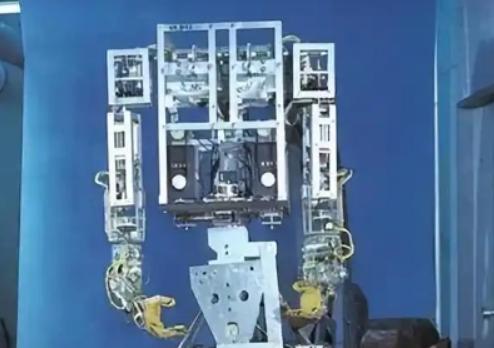
Core Insights - The article discusses the unrealistic expectations surrounding AI in elderly care, highlighting a disconnect between public perception and the actual capabilities of AI technology in this sector [1][4][18]. Group 1: AI in Elderly Care - There is a widespread belief among various age groups that AI will soon provide care for the elderly, but industry professionals assert that this is not feasible in the near future [1][2][3]. - The aging population in China is facing a significant shortage of caregivers, potentially exceeding 10 million, which raises concerns about finding suitable care options [2][5]. - The concept of AI caregiving is often associated with robots that can provide constant care, but this notion is largely driven by societal fears of loneliness and neglect in old age [1][2][4]. Group 2: Historical Context and Failures - Japan's experience with elderly care robots serves as a cautionary tale, where despite significant investment and development, the actual usage of caregiving robots remains negligible, with professional robot usage below 2% [7][9][10]. - The introduction of robots like Pepper, which initially generated excitement, ultimately failed to meet expectations, leading to its discontinuation due to limited functionality [9][10][15]. Group 3: Real-World Applications and Limitations - Current AI applications in elderly care are primarily focused on software solutions, such as large language models that assist with information and training, rather than physical caregiving robots [14][15]. - Many AI devices deployed in care settings have been removed due to practical issues, such as poor user experience and technical failures, highlighting the gap between theoretical benefits and real-world functionality [11][13][14]. Group 4: Economic and Ethical Considerations - The article emphasizes the need for ethical considerations in the development and marketing of AI technologies for elderly care, warning against exploiting the fears and hopes of the elderly for profit [27][29]. - There is a call for a more realistic approach to AI in elderly care, focusing on small, practical solutions rather than grand promises of robotic caregivers [25][26][29].
Funding for startup AI companies dominates VC investment arena
Yahoo Finance· 2026-02-11 09:05
Core Insights - Venture capital funding for artificial intelligence (AI) and machine learning startups surged by 72% in 2025, marking a significant milestone where VC dollars for these ventures exceeded all other sectors combined for the first time [1][3]. VC Funding Overview - Global funding for AI startups reached $270.2 billion, representing 52.7% of the total $512.6 billion in venture capital investments [2]. - Despite the increase in funding, the overall number of VC deals declined for the third consecutive year, with 9,844 registered deals in the fourth quarter of 2025, the lowest since early 2020 [3]. Deal Dynamics - The trend indicates fewer deals but larger investments, similar to M&A activity, highlighted by SoftBank's $40 billion investment in OpenAI, the largest single investment in a private company [4]. - Other significant investments included Meta's $14.3 billion in Scale AI and Anthropic's $13 billion funding round at a valuation of $183 billion [5]. Regional Distribution - Of the $270 billion invested in AI by VC firms, 79.3% was allocated to North America, 13.6% to Europe, 5.7% to Asia, and only 0.5% to Latin America [6]. Industry Trends - Many heavily funded startups, such as Thinking Machine Labs and Safe Superintelligence, were founded by former OpenAI staff, indicating a concentration of AI expertise in elite startups [7]. - The share of AI in global VC deal value increased from 27.5% in 2023 to 40% in 2024, and further to 52.7% in 2025 [7]. Exit Value - The aggregate value of AI and machine learning exits was $242.4 billion, accounting for about 40% of all exit value, a significant increase from $73.6 billion and 22% in 2024 [8].
全球首秀!英特尔亮出ZAM内存原型:单芯 512GB、功耗砍半,正面硬刚HBM
硬AI· 2026-02-11 08:40
Core Viewpoint - The article discusses the global debut of Z-Angle Memory (ZAM), a next-generation AI memory technology developed by Intel and SoftBank, which promises lower power consumption, higher capacity, and wider bandwidth compared to traditional DRAM [3][6]. Group 1: ZAM Technology Overview - ZAM utilizes a vertical stacking architecture that addresses long-standing thermal management issues associated with planar stacking designs [3][7]. - Early data indicates that ZAM can reduce power consumption by 40% to 50% and achieve a single-chip capacity of up to 512GB [3][7]. - The prototype of ZAM is expected to be launched in 2027, with full commercialization anticipated by 2030 [3][6]. Group 2: Market Positioning and Strategic Goals - ZAM aims to fill the gap between high bandwidth memory (HBM) and traditional DDR DRAM, providing significantly higher energy efficiency without sacrificing capacity [10][11]. - The technology is designed to overcome the limitations of current high bandwidth memory, which often compromises capacity for higher bandwidth [10][11]. - The collaboration between SoftBank and Intel seeks to address the energy consumption bottlenecks and supply chain challenges faced by current AI applications [11].
资讯日报:美国 12 月零售销售增长停滞-20260211
Guoxin Securities Hongkong· 2026-02-11 08:38
Market Overview - The Hang Seng Index closed at 27,183, up 0.58%, maintaining above the 27,000 mark[9] - The S&P 500 index fell by 0.33%, while the Nasdaq dropped by 0.59%[9] - The Dow Jones index increased slightly, reaching a new historical high[9] Retail Sector Performance - U.S. retail sales in December remained flat month-on-month, missing the expected growth of 0.4% and down from a previous increase of 0.6% in November[9] - Costco and Walmart saw declines of over 2% and 1%, respectively, due to the disappointing retail data[9] Technology Sector Insights - Hong Kong tech stocks continued to recover, with Alibaba and JD.com both rising approximately 2%[9] - AI application stocks performed strongly, with the stock of Yueda Group surging over 15%[9] Biopharmaceutical Sector Trends - The biopharmaceutical sector saw widespread gains, with companies like WuXi Biologics and Innovent Biologics also experiencing significant increases[9] - Upcoming earnings disclosures in February and March are expected to show improved performance for several innovative drug companies[9] Economic Indicators - The employment cost index in Q4 reached its lowest growth in four years, indicating potential economic weakness[12] - The Cleveland Fed President suggested that the Federal Reserve may keep interest rates unchanged for an extended period[12]
当国外的AI在砸钱搞研发时,国内的AI还在砸钱搞用户
Sou Hu Cai Jing· 2026-02-11 07:54
对用户来说,这是继"外卖大战"后又一次巨大的白嫖机会;但从行业的角度来看,过去互联网砸钱圈地的"野蛮时代",早已经过去。 上一次喝到免费的奶茶,还是好几个月前的外卖大战。我原以为可能再也没有这样的机会,没想到仅仅几个月后,巨头们就再一次砸钱下场。 而这一次,针对不再是即时零售,而是AI。 AI是新机会,是新的未来和风口,这在今天已经成了几乎所有人的共识。但在共识之外,AI到底应该如何落地,如何收费,甚至是如何"盈利"仍然没有一个 较好的模式,但这丝毫不妨碍巨头们砸钱吸引用户。 这一点和国外形成了鲜明的对比;自从ChatGPT横空出世以来,巨大的流量和媒体的曝光,让吸引用户不再需要付费,随后国外几大科技公司的入场,先天 自带的用户群体,似乎也不需要靠砸钱来吸引用户。 当国内的AI在砸钱搞用户的时候,国外的AI则更多把钱用在了技术上,这两者之间的差别,背后暴露出的其实还是用户对AI的不同态度。 先说一点,本文探讨的并非是非对错,而是从一个更为宏观的角度来看,为什么国内的AI公司需要靠砸钱来吸引用户。 毕竟从研发的角度来看,国内的AI公司研发强度其实并不低。 先看美国,其中微软2025财年计划投资800亿美元用于A ...