
AI音箱

Search documents
一个老人眼中的AI幻象
投资界· 2026-02-13 07:28
Core Viewpoint - The article discusses the illusion of AI in elderly care, highlighting the gap between public expectations and the current capabilities of AI technology in this sector [4][11][23]. Group 1: AI and Elderly Care Expectations - Many individuals across different age groups believe that AI will soon be able to provide care for the elderly, reflecting a widespread hope for technological solutions to aging issues [4][5]. - The perception of AI as a solution to elderly care stems from fears of loneliness and inadequate human support in an aging society, leading to unrealistic expectations about the capabilities of robots [5][6]. Group 2: Historical Context of AI in Elderly Care - Japan's experience with elderly care robots began in the 1970s, with significant investments and developments, yet the actual impact of these robots has been minimal, with usage rates below 2% [6][7]. - Despite the introduction of various robots, such as Pepper, which was marketed as an emotional companion, the reality of their functionality has often fallen short of expectations, leading to their discontinuation [8][12]. Group 3: Real-World Applications and Limitations - Current AI applications in elderly care are primarily focused on software solutions, such as large language models, which assist in managing inquiries and training rather than physical caregiving [12][13]. - The article emphasizes that while AI can enhance certain aspects of elderly care, such as health management and daily reminders, the expectation of fully autonomous caregiving robots remains unrealistic [14][23]. Group 4: Misleading Marketing and Industry Dynamics - The marketing of AI robots often blurs the lines between actual capabilities and consumer expectations, leading to a perception of advanced technology that does not align with reality [16][18]. - Companies in the sector may exploit the term "robot" to market products that do not meet the functional needs of elderly care, contributing to a cycle of false hope [18][19]. Group 5: Future Directions and Ethical Considerations - The article suggests that while the traditional AI functions in elderly care may seem simplistic, they still hold potential for development and improvement [21][22]. - It calls for a more honest dialogue about the capabilities of AI in elderly care, urging the industry to respect the needs and expectations of the elderly rather than perpetuating illusions [23][24].


一个老人眼中的AI幻象
3 6 Ke· 2026-02-11 11:43
Core Insights - The article discusses the unrealistic expectations surrounding AI in elderly care, highlighting a disconnect between public perception and the actual capabilities of AI technology in this sector [1][4][18]. Group 1: AI in Elderly Care - There is a widespread belief among various age groups that AI will soon provide care for the elderly, but industry professionals assert that this is not feasible in the near future [1][2][3]. - The aging population in China is facing a significant shortage of caregivers, potentially exceeding 10 million, which raises concerns about finding suitable care options [2][5]. - The concept of AI caregiving is often associated with robots that can provide constant care, but this notion is largely driven by societal fears of loneliness and neglect in old age [1][2][4]. Group 2: Historical Context and Failures - Japan's experience with elderly care robots serves as a cautionary tale, where despite significant investment and development, the actual usage of caregiving robots remains negligible, with professional robot usage below 2% [7][9][10]. - The introduction of robots like Pepper, which initially generated excitement, ultimately failed to meet expectations, leading to its discontinuation due to limited functionality [9][10][15]. Group 3: Real-World Applications and Limitations - Current AI applications in elderly care are primarily focused on software solutions, such as large language models that assist with information and training, rather than physical caregiving robots [14][15]. - Many AI devices deployed in care settings have been removed due to practical issues, such as poor user experience and technical failures, highlighting the gap between theoretical benefits and real-world functionality [11][13][14]. Group 4: Economic and Ethical Considerations - The article emphasizes the need for ethical considerations in the development and marketing of AI technologies for elderly care, warning against exploiting the fears and hopes of the elderly for profit [27][29]. - There is a call for a more realistic approach to AI in elderly care, focusing on small, practical solutions rather than grand promises of robotic caregivers [25][26][29].
OpenAI首款设备或为AI耳机,首年出货量有望达5000万台
Xuan Gu Bao· 2026-01-21 14:53
Group 1: Industry Insights - OpenAI's first hardware device, an AI audio headset, is expected to achieve a shipment volume of 40 to 50 million units in its first year [1] - The global AI hardware market is projected to reach $301.43 billion by 2026, indicating a significant growth opportunity as OpenAI's entry may shift competition from cloud-based models to edge computing applications [1] - Major tech giants like Apple, Google, and Microsoft are already investing in AI endpoints, while companies like Feishu and DingTalk are entering niche markets through partnerships [1] Group 2: Company Developments - Guoguang Electric is focusing on the AI hardware sector, having achieved mass production in AI speakers, smart screens, and AR/VR devices, with current emphasis on developing AI glasses and headsets [1] - Tianjian Co., Ltd. is allocating its R&D expenses towards upgrading its team and facilities, as well as advancing various new projects including AI glasses, headsets, and smart speakers [1]


深圳消费“四大奇观”,这座城市如此热辣滚烫
Sou Hu Cai Jing· 2026-01-11 15:01
Core Insights - The article highlights the emergence of seven major cities in China, referred to as the "Seven Heroes of Consumption," each with a retail sales total exceeding 1 trillion yuan, including Shanghai, Chongqing, Beijing, Guangzhou, Shenzhen, Chengdu, and Suzhou [1] - Shenzhen is identified as a rising star in the consumption landscape, achieving a retail sales total of 938.18 billion yuan in the first 11 months of the year, with a year-on-year growth of 2.8%, positioning it as a significant player in the "trillion yuan consumption club" [1] Group 1: Shopping Centers - Shenzhen is experiencing a boom in large shopping centers, with numerous openings each month, showcasing its status as a shopping paradise [3] - Major shopping centers like Shenzhen Bay MixC Phase II and K11 ECOAST are part of a growing list, indicating strong consumer demand and confidence in the city's consumption potential [3] - The occupancy rate of commercial projects by China Resources exceeds 97%, with rental income increasing by 17%, reflecting a robust demand-supply cycle in the retail sector [3] Group 2: First Store Economy - Shenzhen is becoming a hub for the "first store economy," with 461 new first stores opening in 2024 and an expected 1,200 in 2025, making it a leader in the Greater Bay Area [5] - New commercial developments are expected to have over 50% of their offerings as first stores, indicating a strong appetite for new brands among consumers [5] - The presence of international brands like Rihanna's FENTY BEAUTY and other flagship stores highlights Shenzhen's appeal as a launchpad for new retail concepts [5] Group 3: Technology Consumption - Shenzhen is evolving into a center for "technology consumption," with a rapid adoption of innovative tech products, outpacing the national average by 3-6 months [9] - The city has seen significant sales in tech categories, with over 360 billion yuan in sales driven by a trade-in program covering various product categories, including over 176 billion yuan in automotive sales [9] - The penetration rate of new energy vehicles in Shenzhen is over 80%, leading the nation in this segment [9] Group 4: Cultural and Recreational Integration - The integration of culture, commerce, and tourism is thriving in Shenzhen, with attractions like the world's largest physical bookstore and indoor ski resorts drawing both locals and tourists [7] - The city's diverse consumption landscape reflects a blend of high-energy and tranquil experiences, appealing to a wide range of consumer preferences [12] - Shenzhen's unique natural scenery and urban design contribute to a vibrant consumer environment, connecting shopping districts with parks and cultural venues [12] Group 5: Consumer Trends - Shenzhen's consumers are characterized by a blend of technology-driven "self-indulgent consumption" and a focus on quality and value [14] - The city is noted for its youthful and dynamic consumer base, which is expected to play a crucial role in driving future consumption growth in China [14] - As China emphasizes expanding domestic demand and promoting consumption, Shenzhen's young population is poised to become a significant force in the consumer market [14]
【时代风口】 智能消费改变了什么
Zheng Quan Shi Bao· 2025-12-22 18:03
Group 1 - The core idea of the articles is that smart consumption is transforming various aspects of life, industry, and social relationships, moving beyond mere convenience to drive significant changes in production methods and industry structures [1][2][3] - Smart consumption has led to the rise of customized products, with companies like Nike allowing consumers to design their own shoes, thus shifting from mass production to precision manufacturing [1] - The emergence of new professions such as smart home operation technicians and AI lifestyle consultants highlights the economic opportunities created by smart consumption [2] Group 2 - There is a need for "age-friendly" technology design to ensure that older adults can also benefit from smart consumption, which currently poses challenges for them due to operational barriers [3] - Market regulation is evolving in response to smart consumption, with cities like Shenzhen implementing guidelines to protect consumer data and privacy [3] - Smart consumption is not only a technological advancement but also a necessary outcome of economic development, promising to enhance efficiency and vitality in society [3]
李想交了份“不好抄的作业”
Jing Ji Guan Cha Bao· 2025-11-27 04:39
Core Viewpoint - Li Auto aims to reshape long-term expectations by focusing on embodied intelligence, moving beyond traditional electric vehicle competition and parameter-based differentiation [1][3][6] Group 1: Company Strategy - Li Auto's strategy emphasizes the development of AI capabilities and the introduction of products like AI glasses and AI speakers, indicating a shift towards a broader intelligent ecosystem [3][4] - The company plans to redefine the concept of a "car" as an "embodied intelligent robot," integrating advanced sensory and operational systems to enhance user experience [4][5] - Li Auto is committed to self-developing key technologies, including the M100 chip and the Xinghuan OS, to build a complete system for embodied intelligence [5][6] Group 2: Market Positioning - The company recognizes the challenge of maintaining differentiation in a highly transparent supply chain where innovations quickly become standardized [2][3] - Li Auto's upcoming L series will focus on a significant redesign to regain its leading position in range-extended vehicles, with an emphasis on efficiency and user experience [5][6] - The company aims to balance immediate competitive needs with long-term investments in intelligent systems, creating a dual strategy to capture market share while innovating [6] Group 3: Future Outlook - Li Auto's future direction is not limited to being an electric vehicle manufacturer but aims to become a long-term company centered around embodied intelligence and AI agents [6] - The market will closely monitor the execution and sustainability of Li Auto's strategy, particularly as it approaches the critical milestone of 2026 [6]

第17次双11大促,一次远场与近场的混战
第一财经· 2025-11-15 12:05
Core Insights - The 2025 Double 11 shopping festival has marked a new phase in the e-commerce competition, with significant growth in sales and changes in consumer behavior [3][4]. E-commerce Performance - During the Double 11 period, the total sales reached 1.695 trillion yuan, a year-on-year increase of 14.2% [3]. - The national postal service reported that from October 21 to November 11, 2025, 13.938 billion packages were collected, with a peak daily collection of 777 million packages, which is 117.8% of the regular business volume [3]. Emerging Trends - New product categories, particularly in AI-related products, saw remarkable sales growth, with AI tablets increasing by 200% and AI smartphones by 150% [4]. - The acceptance of second-hand goods is rising, with 68.7% of first-time users on the second-hand platform during Double 11 [6]. Instant Retail Growth - Instant retail sales reached 67 billion yuan during Double 11, marking a 138.4% increase year-on-year [8]. - Major platforms like Meituan and Taobao reported significant growth in instant retail orders, with Meituan's high-priced goods seeing a nearly 30% increase in average consumer spending [9]. Live Streaming Evolution - Live streaming has become integral to e-commerce, with over 67,000 brands on Douyin doubling their sales during Double 11 [11]. - The number of merchants using live streaming on JD.com tripled compared to the previous year, indicating a shift towards more brand-controlled live streaming efforts [12]. Market Dynamics - The market share of top-tier live streamers decreased from 32% to 30%, while mid-tier streamers contributed 45% of GMV, reflecting a trend towards decentralization in the influencer economy [14]. - Brands are increasingly focusing on building their own live streaming teams and utilizing AI technology to enhance efficiency and reduce costs [13].



第17次双11大促,一次远场与近场的混战
Di Yi Cai Jing· 2025-11-15 07:41
Core Insights - The 2023 Double 11 shopping festival has marked a new phase in e-commerce competition, with significant growth in both traditional and emerging product categories [1][3][10] E-commerce Performance - During the Double 11 period, postal and express companies collected a total of 13.938 billion packages, with a peak daily collection of 777 million packages, representing a 117.8% increase over regular business volume [1] - The total online sales for Double 11 are projected to reach 1.695 trillion yuan, reflecting a year-on-year growth of 14.2% [1] Emerging Trends - AI-related products have seen remarkable sales growth, with AI tablets increasing by 200%, AI smartphones by 150%, and other AI gadgets by 100% [3] - Consumers are increasingly valuing the quality and utility of products over price, leading to a rise in niche beauty products and a focus on personal benefits [4] Instant Retail Growth - Instant retail sales reached 67 billion yuan during Double 11, marking a 138.4% increase year-on-year [7] - Major platforms like Meituan and Taobao have reported significant growth in instant retail orders, with some categories experiencing over tenfold increases in sales [7][9] Consumer Behavior Changes - Acceptance of second-hand goods is rising, with 68.7% of first-time users on second-hand platforms during Double 11 [5] - The return rate for products was around 12%, with clothing having the highest return rate at approximately 25% [4] Live Streaming and Influencer Marketing - Live streaming has become integral to e-commerce, with platforms like Douyin and Kuaishou reporting significant sales increases through live broadcasts [12][13] - Brands are increasingly investing in their own live streaming teams, moving away from reliance on top influencers [14][15] Market Dynamics - The competition between traditional e-commerce and instant retail is intensifying, with a shift towards a hybrid model that combines long-distance logistics with local services [10] - The market share of top influencers is declining, while mid-tier influencers are becoming the main growth drivers, contributing 45% of GMV [15]

家电市场双11价格竞争激烈,AI产品销售提升
Di Yi Cai Jing· 2025-11-12 13:54
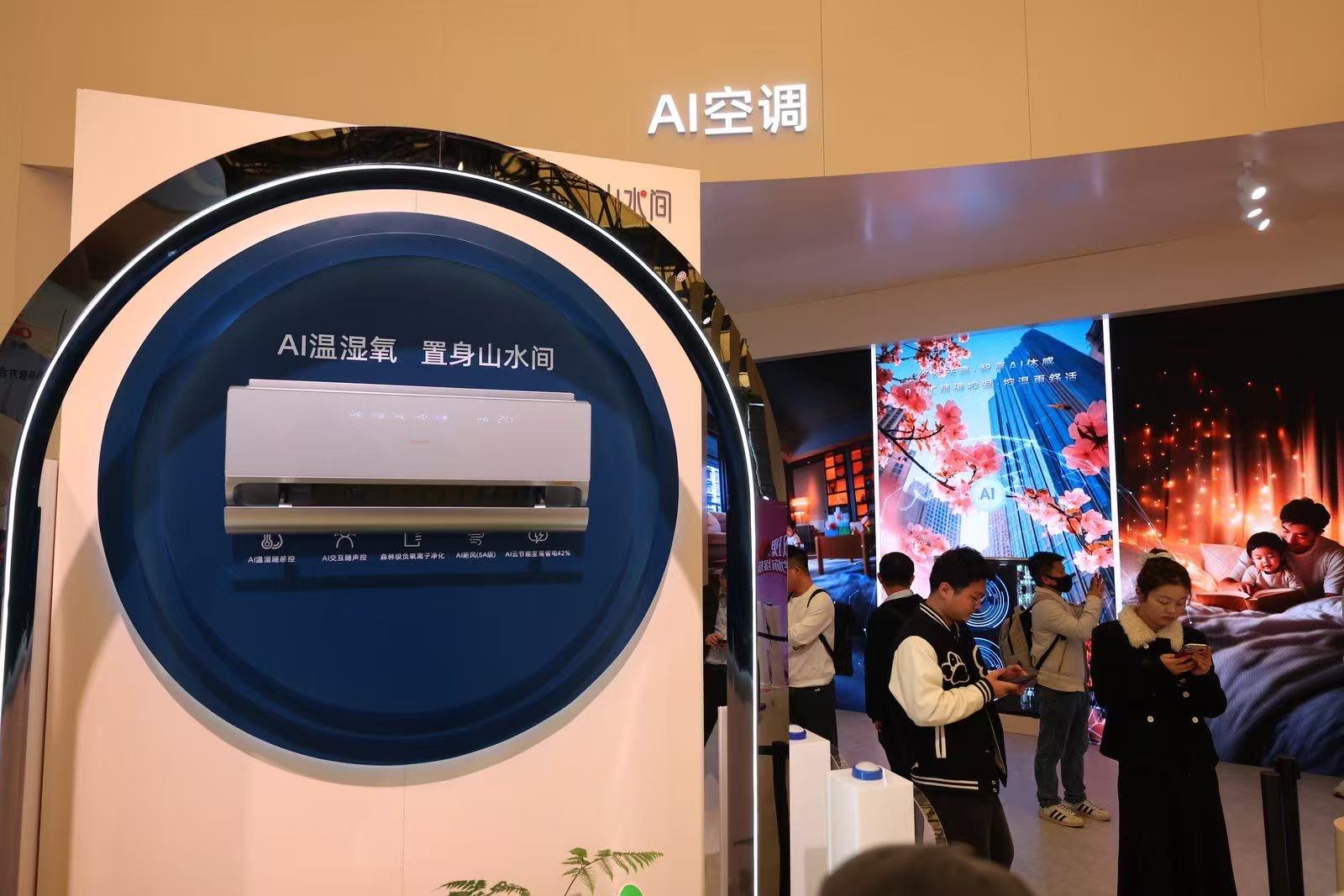
Core Insights - The overall performance of the home appliance market during this year's Double 11 shopping festival has been lackluster, with significant price competition and a shift towards mid-to-high-end products due to reduced government subsidies and a high base from last year [2][3][5] Group 1: Market Trends - The price of 55-inch Mini LED TVs has dropped to around 3000-4000 yuan, reflecting a 20% decrease compared to the previous shopping event [2] - Online and offline retail markets for televisions, refrigerators, and air conditioners have shown a year-on-year decline from November 3 to November 9 [2] - The demand for home appliances has been dispersed rather than concentrated, leading to a subdued sales environment [3] Group 2: Sales Performance - Some small appliance companies reported a 20% year-on-year increase in overall sales during Double 11, with e-commerce sales rising from 65% to 70% of total revenue [4] - A small appliance company noted that their sales on Double 11 were lower than the sales on October 20, indicating a lack of excitement during the event [3] Group 3: Pricing and Competition - The air conditioning industry saw an overall price decline of 5%-15% during Double 11, with companies like Meibang focusing on smart features to differentiate their products [3] - Some retailers reported significant declines in revenue, with one retailer experiencing a double-digit percentage drop in sales [5] Group 4: Growth Opportunities - Growth opportunities in the home appliance market are becoming more structured, with specific categories like AI products and health-oriented appliances showing significant growth [6] - JD's Double 11 report indicated a 150% increase in sales for home appliance and home goods flash new products, while Su Ning reported that smart appliances accounted for over 55% of sales [6] Group 5: Consumer Behavior - Consumers are increasingly seeking value and quality over low prices, prompting brands to focus on product quality and customer service rather than traditional low-price strategies [7] - The market is characterized by a shift away from price-based promotions towards guiding consumption through new and trendy products [7]



今年“双11”大宗消费稳健增长
Xin Hua Cai Jing· 2025-11-12 10:23
Core Insights - The "Double 11" shopping festival has shown robust growth in major consumer categories such as mobile communications, home appliances, and complete computers, becoming a significant driver of overall market consumption [1][2] - High-priced products have seen a notable increase in sales growth, indicating a shift in consumer purchasing behavior towards higher-value items [1][2] Group 1: Sales Performance - Meituan's flash purchase platform reported that from October 31 to November 11, transaction volume, number of orders, and per capita spending all reached new highs, with per capita spending increasing by nearly 30% [1] - Traditional high-priced categories like mobile phones and liquor saw sales growth exceeding 100% year-on-year, reflecting a strong consumer willingness to purchase high-value goods through instant retail channels [1] Group 2: Consumer Trends - Data from "What Worth Buying" indicated that from October 16 to November 11, the top five categories by GMV were mobile communications, home appliances, household electrical appliances, residential furniture, and complete computers, all of which are typical major consumer goods [1] - There was a rapid growth of over 30% in quality lifestyle products such as outdoor footwear and clothing, indicating a sustained consumer pursuit of quality living [1] Group 3: Technological Impact - JD.com reported explosive growth in 3C digital AI products during the "Double 11" period, with new mobile phone sales increasing by over four times year-on-year, and AI products like tablets and speakers also seeing over 100% growth [2] - The home appliance and furniture sector experienced a 150% increase in sales of new products, with "delivery and installation" service orders rising by over 90%, highlighting a growing consumer demand for comprehensive service offerings [2] Group 4: Market Dynamics - Experts attribute the steady growth in major consumer categories to the ongoing recovery of consumer confidence and continuous innovation in retail models [2] - The deep integration of online and offline retail models has provided consumers with a more convenient and efficient shopping experience, creating new growth opportunities for brands and physical stores [2]