Perplexity

Search documents
广告,救不了 AI 搜索
3 6 Ke· 2025-09-01 10:31
Core Insights - Perplexity, an AI search startup, has seen its valuation soar to $18 billion but struggles with monetization, particularly in its advertising business, which generated only $20,000 in revenue for Q4 2024 [1][4][5] - The departure of Taz Patel, the head of advertising, highlights the challenges Perplexity faces in establishing a viable advertising model [2][4] - The company is also dealing with legal challenges related to content copyright, which has resulted in significant legal expenses [4][5] Group 1: Company Challenges - Perplexity's advertising revenue is negligible compared to its annualized revenue of over $100 million, primarily from subscriptions and API usage [4][5] - The company has attempted partnerships with brands like TurboTax and Whole Foods to integrate sponsored links but has seen limited success [4][5] - Legal issues have led to millions in expenses, with lawsuits from major publishers like The New York Times and Nikkei [4][5] Group 2: Industry Context - Other major players, including Microsoft and Google, are also exploring advertising in AI search but face their own challenges [6][12] - Microsoft has integrated OpenAI's technology into Bing and is experimenting with embedding ads in conversational responses, but its daily active users still lag behind Google [6][12] - Google is also trying to adapt its traditional search advertising model to AI but has encountered issues with AI-generated content quality [12][13] Group 3: Future Outlook - The AI search advertising market is still in its infancy, with projected spending of only $1 billion in 2024, growing to $26 billion by 2029, which is a small fraction of the overall search advertising market [15] - Despite the challenges, AI search advertising may have higher conversion rates compared to traditional search, as evidenced by Microsoft's Copilot showing a 73% increase in user interaction and a 16% increase in conversion rates [15] - The future of AI search may shift from "selling attention" to "selling results," raising questions about the reliability of AI-generated recommendations and the evolving nature of advertising [17][18]



“AI购物代理”——电商下一个必争之地
硬AI· 2025-09-01 08:49
Group 1 - The core viewpoint of the article is that AI-driven shopping agents are emerging, which could fundamentally change the e-commerce landscape and prompt brands to adjust their online sales strategies [2][3] - Leading AI companies, including OpenAI and Google, are rapidly commercializing shopping scenarios with new features that allow AI systems to understand user needs and complete orders on behalf of users [6][7] - Market data indicates a significant shift, with Gartner predicting a 25% decline in traditional search engine traffic due to the rise of generative AI [3] Group 2 - The rise of AI agents is forcing brands to rethink how they are "seen" by consumers, as nearly 60% of Google searches in Europe no longer generate clicks, with users relying on AI-generated summaries [8][9] - Brands are advised to focus on the specificity of product descriptions and optimize technical details like website loading speed to adapt to new consumer behaviors [9] - The emergence of semantic search is leading users to describe their needs in broader terms, prompting brands to reorganize their product catalogs accordingly [9] Group 3 - Future transactions may shift from brand websites and e-commerce platforms to AI chatbots, indicating a potential change in the location of consumer purchases [10][11] - Brands need to prepare for a world where transactions occur on third-party platforms, as highlighted by media agency executives [12] - There are concerns that AI agents may limit consumer choice by filtering products, which could diminish the importance of stores and brands [13][14]

“AI购物代理”电商下一个必争之地
Hua Er Jie Jian Wen· 2025-09-01 00:36
Group 1 - A shopping revolution driven by artificial intelligence is emerging, transforming consumer-brand interactions through AI systems that understand user needs and facilitate direct conversations for product searches and orders [1] - Major AI companies like OpenAI, Google, and Microsoft are rapidly commercializing shopping scenarios, with OpenAI introducing an updated shopping system "Agent" that integrates payment features [2][3] - The rise of AI agents is forcing brands to rethink their visibility strategies, as nearly 60% of Google searches in Europe no longer generate clicks, leading to a shift towards AI-generated summaries [4] Group 2 - The transaction landscape may shift from brand websites and e-commerce platforms to AI chatbots, prompting brands to prepare for this new reality [5] - There are concerns that AI agents could limit consumer choice by filtering products, potentially diminishing the importance of stores and brands [5]
“AI购物代理”——电商下一个必争之地
Hua Er Jie Jian Wen· 2025-09-01 00:29
Core Insights - A shopping revolution driven by artificial intelligence is emerging, transforming how consumers interact with brands and potentially reshaping the e-commerce landscape [1] Group 1: AI Shopping Revolution - Leading AI companies like OpenAI, Google, Microsoft, and Perplexity are launching new features that enable chatbots to understand user needs, search for products, and even complete orders on behalf of users, shifting the shopping experience from traditional web browsing to direct AI interaction [1] - Gartner predicts that traditional search engine traffic will decline by 25% next year due to the rise of generative AI, indicating a significant shift in the e-commerce value chain [1] Group 2: Commercialization of AI Shopping Agents - OpenAI has released an updated shopping system called "Agent" and plans to integrate payment features in ChatGPT, allowing it to earn commissions from sales made through its platform [2] - Google has introduced a new "AI mode" and product price tracker aimed at saving consumers time and effort [2] - Perplexity and Microsoft have also launched AI tools capable of handling similar shopping tasks [2] Group 3: Brand Marketing Logic Reconstruction - The rise of AI agents is forcing brands to rethink how they are "seen," with nearly 60% of Google searches in Europe no longer generating clicks as users rely on AI-generated summaries [3] - Brands are adopting new strategies, focusing on product description specificity and optimizing website loading speeds [3] - The emergence of "semantic search" is leading users to describe their needs in broader terms, prompting brands to reorganize product catalogs to align with new search styles [3] Group 4: Shift in Consumer Choice - The location of transactions may shift from brand websites and e-commerce platforms to AI chatbots, potentially limiting consumer choice [4] Group 5: Preparing for Third-Party Transactions - Brands need to prepare for transactions occurring on third-party platforms, as highlighted by media agency Dept's CEO Dimi Albers [5] - Concerns have been raised about AI agents potentially diminishing the importance of stores and brands, as they filter products for users, which may restrict consumer choice [5]
AI投资者的警告:对AI的“错失恐惧症”正在催生巨大泡沫
3 6 Ke· 2025-08-28 12:22
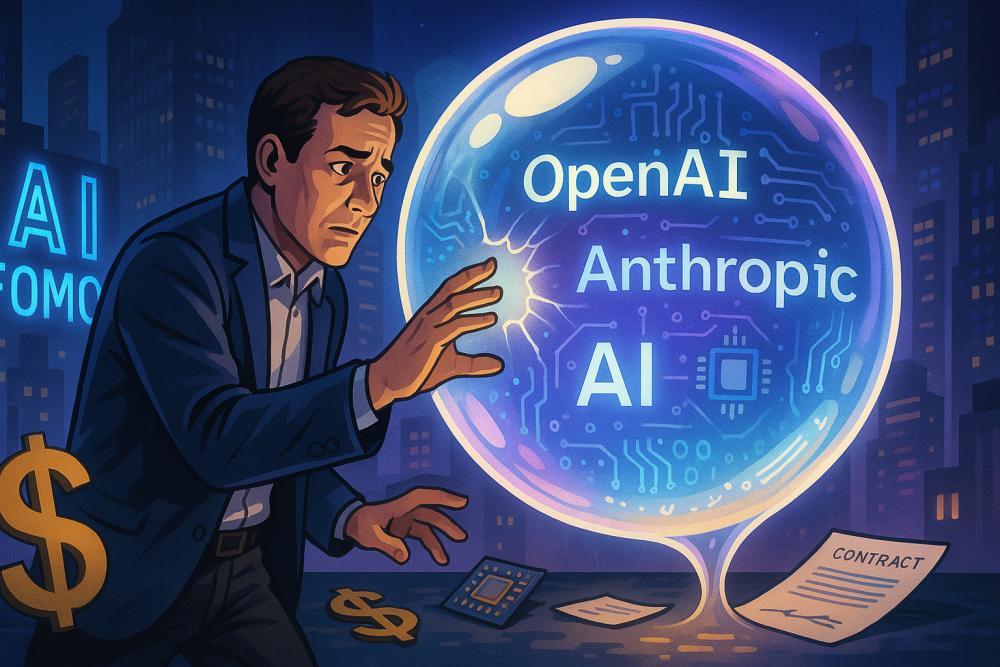
Core Viewpoint - The article discusses the rise of Special Purpose Vehicles (SPVs) in Silicon Valley as a mechanism that is accelerating the AI investment bubble, driven by investor fear of missing out (FOMO) on lucrative opportunities in the AI sector [3][6][11]. Group 1: SPV Mechanism and Market Dynamics - SPVs are legal entities created for specific investment purposes, allowing investors to pool funds to invest in high-demand tech companies, particularly in AI [3][6]. - The valuation of leading AI companies like OpenAI and Anthropic has surged to hundreds of billions, leading to a rapid expansion of a parallel market composed of numerous temporary SPVs [3][6]. - SPVs lower the investment threshold for retail investors, enabling them to purchase fractional shares of popular AI companies, but this can also inflate valuations in an opaque manner [3][6][11]. Group 2: Risks and Warnings from AI Companies - Major AI firms, including OpenAI and Anthropic, have issued warnings about unauthorized SPVs that may lack economic value, urging investors to exercise caution [5][6]. - Investors have raised concerns about the complexity and high fees associated with SPVs, which can lead to significant financial risks for inexperienced investors [8][9][10]. Group 3: Fee Structures and Investor Awareness - The fee structures of SPVs can be convoluted, with multiple layers of management fees that can reach as high as 20%, significantly reducing potential returns for investors [8][9]. - Many investors, particularly those with financial backgrounds, are drawn to SPVs without fully understanding the associated costs and risks, often prioritizing access to popular companies over due diligence [9][10]. Group 4: Broader Implications and Future Concerns - The proliferation of SPVs has raised concerns about the potential for a bubble in the AI sector, with investors rushing to capitalize on high valuations without adequate understanding of the underlying risks [11][12]. - The article suggests that if general artificial intelligence (AGI) does not materialize soon, the industry may face a significant downturn, impacting those who invested heavily in SPVs [12].
Claude for Chrome来了,可作为浏览器扩展程序直接使用
3 6 Ke· 2025-08-28 03:25
Core Viewpoint - The article discusses the emergence of AI agents integrated into web browsers, highlighting the competitive landscape among major AI companies to enhance user experience and functionality through browser extensions and new browser developments [10][13][14]. Group 1: AI Browser Integration - Claude for Chrome is a new AI agent that allows users to interact with it directly within the Chrome browser, enabling functionalities such as scheduling, email management, and property searches [8][10]. - Perplexity has launched its own AI browser, Comet, which offers similar capabilities, including meeting bookings and email follow-ups [13]. - Major players like Google and Microsoft are also embedding AI features into their browsers, with Google integrating Gemini and Microsoft incorporating Copilot [14]. Group 2: Security Measures - Claude for Chrome has implemented strict security protocols to mitigate risks associated with browser-based AI, such as prompt injection attacks, which can lead to unauthorized actions [10][11]. - Users can restrict Claude's access to specific websites and must provide permission for high-risk operations, ensuring a safer browsing experience [12]. - The limited initial rollout to 1,000 selected Max plan users is a strategy to gather data and feedback for improving security measures [10][11]. Group 3: Market Dynamics - The global browser market is dominated by Google Chrome, which held a 68.35% share in 2025, significantly ahead of its closest competitor, Safari, at 16.25% [19]. - The competition among AI companies to develop browser-integrated AI solutions is intensifying, with different approaches being taken, such as creating extensions for existing browsers or developing entirely new browsers [16][17].

苹果内部讨论收购AI创企Mistral与Perplexity
Sou Hu Cai Jing· 2025-08-27 16:53
由 文心大模型 生成的文章摘要 前文讲述了苹果公司收购法国人工智 据知情人士透露,苹果公司内部已就收购法国人工智能初创企业Mistral以及Perplexity展开深入洽谈。在 人工智能领域,苹果一直落后于谷歌和三星等竞争对手,此次洽谈收购事宜,正是苹果试图改变这一局 面的重要举措。 苹果首席执行官蒂姆・库克上月明确表示,公司对规模更大的人工智能相关收购持开放态度,旨在加速 其技术路线图的推进。这一表态与苹果历史上保守的并购策略相比,发生了显著转变。库克深知,在如 今人工智能飞速发展的时代,若想保持苹果在科技领域的领先地位,加快人工智能技术的布局刻不容 缓。 Mistral是一家获得英伟达投资支持的企业。去年完成B轮融资后,其估值已超过60亿美元。本月,《金 融时报》报道称,这家法国公司正就新一轮融资展开谈判,计划以100亿美元的估值筹集10亿美元资 金。Mistral在人工智能技术方面有着独特的优势,其研发的一些模型和算法在自然语言处理、图像识别 等领域表现出色,这或许也是吸引苹果关注的重要原因。 而Perplexity同样不容小觑,彭博新闻社今年早些时候曾报道,苹果公司的高管已就潜在收购Perplexit ...


全球最赚钱的50款AI应用是怎么做流量增长的? | Jinqiu Select
锦秋集· 2025-08-27 14:55
Core Insights - The article discusses the evolution of AI startups from "model frenzy" in 2023 to "growth competition" in 2025, emphasizing the importance of user acquisition and retention strategies for sustainable growth [1][2]. Group 1: Growth Strategies - Companies are increasingly focused on understanding their user acquisition sources, retention strategies, and future growth potential [2][3]. - The analysis highlights that transforming cold traffic into active users and revenue is crucial for securing future market positions [4]. Group 2: Traffic Sources and Analysis - A detailed analysis of the top 50 AI startups reveals that brand recognition is a key competitive barrier, with direct traffic being a significant indicator of consumer trust and habitual consumption [14]. - Search traffic serves as a foundational source for nearly all companies, with a focus on search engine optimization (SEO) being essential for low-cost and stable user growth [14]. - Companies with diverse traffic channels tend to have greater growth potential and resilience against market fluctuations [14]. Group 3: Company-Specific Traffic Insights - **OpenAI**: Dominated by organic search (58.89%), with direct access at 29.79% and referrals at 9.77%. Paid search is minimal at 0.06% [18][19]. - **Anthropic**: Balanced traffic sources with organic search at 42.25% and referrals at 11.04%. The company relies heavily on non-paid channels [32]. - **Grammarly**: Exhibits a diverse traffic structure with direct access at 43.94% and organic search at 42.25%, indicating a strong brand presence [34]. - **Midjourney**: Direct access is the primary source at 65.71%, with organic search contributing 26.84% [42]. - **Dialpad**: Direct access leads at 64.91%, followed by organic search at 24.32%, showcasing effective brand engagement [62]. Group 4: Paid and Referral Traffic - Paid search is a minor contributor across many companies, with **6sense** showing 6.54% from paid sources, indicating a reliance on organic and direct traffic for growth [106]. - Referral traffic varies significantly, with **Cleo** receiving 2.80% from referrals, highlighting the importance of partnerships and external visibility [79]. Group 5: Industry Trends - The analysis indicates a shift towards brands leveraging organic growth strategies over paid advertising, as companies seek sustainable user acquisition methods [14][4]. - The competitive landscape is characterized by a focus on brand loyalty and the ability to convert traffic into long-term users, which is becoming increasingly critical for success in the AI sector [4][14].

The Top 100 Most Used AI Apps in 2025
a16z· 2025-08-27 13:00
Consumer AI Trends - The consumer AI list tracks real-world AI usage by analyzing website traffic (monthly visits globally) and mobile app usage (monthly active users) [1] - Companionship continues to dominate the consumer AI space, with new names like Juicy Chat, Joy, and Rream joining established players [1] - Vibe coding is a rising trend, with companies like Lovable and Replit gaining traction and showing strong revenue retention (100% or above in the first 3 months for many leading platforms) [1][2] - Chinese AI companies are making a significant impact, both with products for the domestic market (e.g., Cork, Dow Bow, Kimmy) and those built for international users (e.g., Deepseek, Hyo, Cling, Cart) [2] - Some Chinese companies are distributing their models through US properties like Crea or Hedra [2] Google's Performance - Google had a strong six months, with four unique properties making the web list: Gemini (number two with about 10% of ChatGPT's web traffic, but closer on mobile at half of ChatGPT's traffic), AI Studio (top 10), Notebook LM (number 13), and Google Labs (number 39) [1] - Google's AI Studio, a developer-facing sandbox, surprisingly hit the top 10 [1] - Google Labs includes V3, a new video model, and other products like Doppel and Project Mariner [1] All-Star Companies - 14 companies have made the list every time over the past 2 years, including ChatGPT, Perplexity, PO (general LLM assistants); Character AI (companionship); Midjourney, Photo Room, Leonardo Cutout Pro, V, 11 Labs (creative tools); Quillbot, Gamma (productivity); and Hugging Face, Civid AI (model hosting) [3] - Over half of the "all-star" companies host or use other people's models or are model aggregators, highlighting the importance of UI and product experience [3] Future Predictions - The industry expects verticalization of AI products, with users choosing different tools for specific tasks [10] - Productivity-focused "prosumer" tools are expected to explode in usage as model reliability and UI improve [14][15] - Emerging categories to watch include edtech, personal finance, and AI-native social platforms [18][19][20]

速递|Anthropic入局浏览器Agent大战,Claude for Chrome预览版月费200美元体验
Z Potentials· 2025-08-27 12:08
Core Viewpoint - Anthropic has launched a research preview of its AI Agent, Claude for Chrome, which is designed to enhance user interaction with AI through browser integration [1][2]. Group 1: Product Launch and Features - Claude for Chrome is powered by the Claude AI model and is initially available to 1,000 subscribers of the Anthropic Max plan, which costs between $100 to $200 per month [1]. - Users can interact with Claude in a sidebar window that maintains context awareness of all browser activities, and they can grant Claude permissions to perform tasks within the browser [1]. - The rise of browser-based AI Agents is seen as a new frontier for AI labs, aiming to create seamless connections between AI systems and users [1]. Group 2: Competitive Landscape - OpenAI is reportedly set to launch its own AI-driven browser with similar functionalities to Anthropic's Claude for Chrome, while Google has integrated Gemini features into Chrome [2]. - The competition is intensified by an impending antitrust ruling against Google, which may force the company to sell its Chrome browser [2]. - Perplexity has made an unsolicited bid of $34.5 billion to acquire Chrome, and OpenAI's CEO has expressed interest in a potential acquisition as well [2]. Group 3: Security Concerns - Anthropic has raised concerns about new security risks associated with AI Agents that have browser access, citing a recent discovery by Brave's security team regarding potential vulnerabilities in Comet's browser Agent [2]. - The company aims to identify and mitigate these security risks through the research preview, having implemented measures that reportedly reduce the success rate of prompt injection attacks from 23.6% to 11.2% [2]. - Users can restrict Claude's access to specific websites and the Agent will seek user permission before performing high-risk actions such as publishing content or sharing personal data [3].