
中国科学院

Search documents
逾百项中国科学院重大成果亮相大湾区科学论坛
Zhong Guo Xin Wen Wang· 2025-12-08 03:52
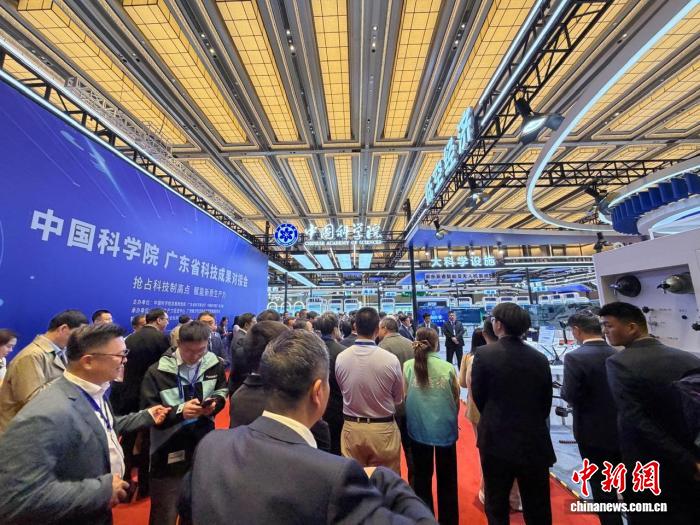
逾百项中国科学院重大成果亮相大湾区科学论坛 中新网广州12月8日电 (记者 王坚)神经外科手术机器人系统"MicroNeuro","上升流海洋牧场"模型,新 一代人工血液关键技术……中国科学院携33家机构的123项重大成果亮相2025大湾区科学论坛,旨在推 动中国科学院的最新优质科技成果在广东转移转化。 2025大湾区科学论坛6日至8日在粤港澳三地举行,中国科学院广东省科技成果对接会同步举行。对接会 由中国科学院发展规划局、广东省科技厅、中国科学院广州分院主办,聚焦大科学装置、低空经济、海 洋牧场、人工智能、新型储能、生物医药以及"百千万工程"等七大重点领域。 记者看到,在低空经济展区,中国科学院工程热物理研究所、自动化研究所等机构的展台吸引了众多寻 求合作的企业。各类无人机、实时飞控屏幕及反制设备,系统展现了中国科学院在低空领域从装备研发 到系统应用的全链条创新能力。 对接会现场。王坚 摄 据了解,11月19日,位于广东的江门中微子实验发布首个物理成果,测出中微子振荡的2个关键参数, 测量精度较此前国际最好水平提升1.5至1.8倍。相关成果目前以预印本形式公布。 中国科学院广州分院院长任海指出,今年以来,中 ...

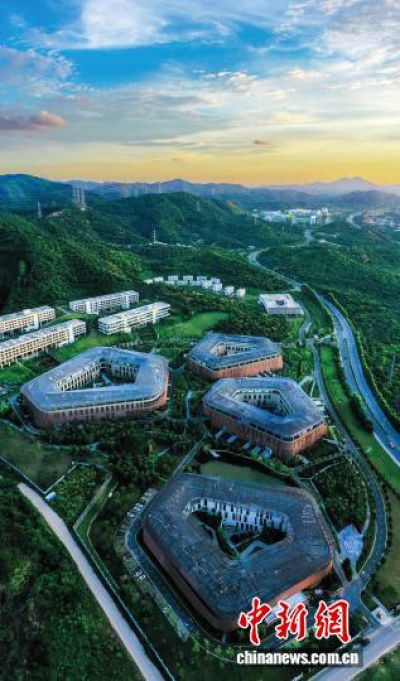
【中国新闻网】中国科学院东莞材料科学与技术研究所成立
Zhong Guo Xin Wen Wang· 2025-12-07 00:07
Core Insights - The establishment of the Dongguan Institute of Materials Science and Technology by the Chinese Academy of Sciences marks a significant development in the field of materials research in China [2] - This institute is the second specialized research institute established by the Chinese Academy of Sciences within a short period, following the Industrial Artificial Intelligence Research Institute in Nanjing [2] Group 1 - The Dongguan Institute is a collaborative effort between the Chinese Academy of Sciences, Guangdong Province, and Dongguan City [2] - The institute will focus on strategic and frontier material exploration as well as fundamental scientific research [2] - Research areas will include information materials, energy materials, functional ceramics, and metal materials [2] Group 2 - The goal is to create a new materials research center with global influence and leadership [2]
特稿|中国创新为什么行——国际学界关注中国科研发展之道
Xin Hua She· 2025-12-02 11:29
Group 1 - China's research and innovation capabilities have significantly improved, with the country ranking first in various global research metrics, including research output and innovation clusters [1][3] - The city of Nanjing, along with five other Chinese cities, has entered the top ten global research cities, marking a notable achievement for China in the international research landscape [1][2] - The World Intellectual Property Organization reports that China has 26 of the world's top 100 technology innovation clusters, leading globally, with the "Shenzhen-Hong Kong-Guangzhou" cluster ranking first [2][3] Group 2 - China's sustained investment in research and development has led to a rapid increase in research output, with funding growing nearly sixfold from 2007 to 2023, surpassing the European Union and nearing the United States [3][4] - The number of STEM graduates in China reached 3.6 million in 2020, contributing to a large pool of research talent, which is crucial for the country's scientific advancement [5][6] - Chinese researchers are increasingly taking leadership roles in international scientific collaborations, with a significant number of awards for high-impact research being granted to Chinese scientists [6]
【中国新闻网】2025年中国科学院科普讲解大赛在穗举办
Zhong Guo Xin Wen Wang· 2025-12-01 03:29
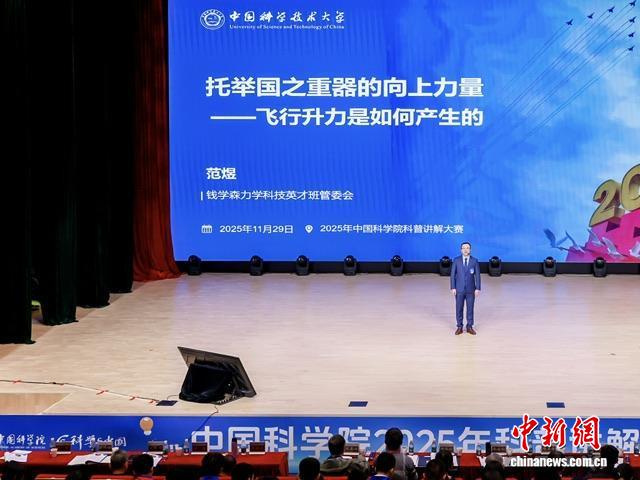
Group 1 - The "2025 China Academy of Sciences Science Popularization Competition" concluded in Guangzhou, attracting 84 participants from 46 affiliated units of the Chinese Academy of Sciences [1] - The competition focused on cutting-edge technology topics, including flight lift generation, black soil protection, space unmanned driving, new models of marine farming, deep-sea "ice blood clot" targeting, and gene sequencing with precision medicine [1] - 30 contestants from 20 units advanced to the finals, evaluated by a panel of 7 experts based on content presentation, language expression, and overall image [1] Group 2 - The competition resulted in 10 first prizes awarded to participants from various research institutes, including Ma Xiaotian from the Institute of Mechanics, Ding Rao from the Shanghai Institute of Ceramics, and Li Xiyu from the Wuhan Botanical Garden [1] - The Chinese Academy of Sciences is committed to developing high-quality science popularization brands, such as "Science and China," "Public Science Day," "Science Festival," "Science Open Class," and "Genuine Discussion Forum," to promote the integration of high-end scientific resources with education and talent development [1]
重要布局!这一新机构,在江苏成立
Xin Lang Cai Jing· 2025-11-27 16:24
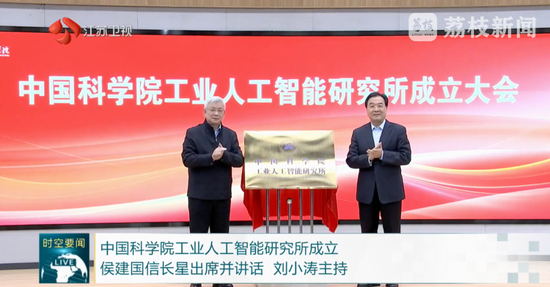
Core Viewpoint - The establishment of the Industrial Artificial Intelligence Research Institute aims to promote the integration of artificial intelligence into the manufacturing sector for high-quality development, positioning it as a national strategic technological force [3][6]. Group 1: Objectives and Importance - The research institute is a collaboration between the Chinese Academy of Sciences, Jiangsu Province, and Nanjing City, focusing on enhancing the manufacturing industry's quality through artificial intelligence [3]. - Artificial intelligence is recognized as a strategic technology that drives a new wave of technological revolution and industrial transformation, with significant implications for various sectors [3]. - The manufacturing sector is crucial for the national economy, with a projected industrial added value of 40.5 trillion yuan in 2024, maintaining its status as the world's largest manufacturing industry for 15 consecutive years [3]. Group 2: Policy Support - The Chinese government has been actively promoting the "Artificial Intelligence +" initiative, emphasizing the need for intelligent development across all aspects of industry [4]. - The Ministry of Industry and Information Technology has announced plans for a special action implementation scheme focusing on the intelligent transformation of key industries and sectors [4]. Group 3: Challenges and Technological Gaps - Despite the push for "Artificial Intelligence + Manufacturing," there are significant challenges, particularly in core technology breakthroughs, such as high-end chips and foundational software [5]. - There is a call for concentrated efforts to innovate in areas like large language models and industrial intelligence to expand the application capabilities of artificial intelligence in manufacturing [5]. Group 4: Strategic Collaboration and Focus Areas - The collaboration between the Chinese Academy of Sciences and Jiangsu Province is seen as a strong alliance to enhance technological advancements in industrial artificial intelligence [6]. - The research institute aims to focus on areas such as intelligent detection and measurement devices, embodied intelligence, intelligent optimization technologies, and virtual simulation systems to support the transformation of both process and discrete manufacturing industries [13].
【科技日报】中国科学院工业人工智能研究所成立
Ke Ji Ri Bao· 2025-11-27 00:41
中国科学院工业人工智能研究所位于江苏南京,是中国科学院与江苏省、南京市共建的面向智能制 造的研究机构,聚焦国家战略和产业创新发展重大需求,承担工业人工智能从顶层设计到体系落地的全 链条创新任务,构建"技术引领—平台整合—赋能闭环"的协同创新体系,推动人工智能赋能制造业高质 量发展,着力打造智能制造领域国家战略科技力量。 记者从中国科学院获悉,中国科学院工业人工智能研究所26日正式成立。 ...
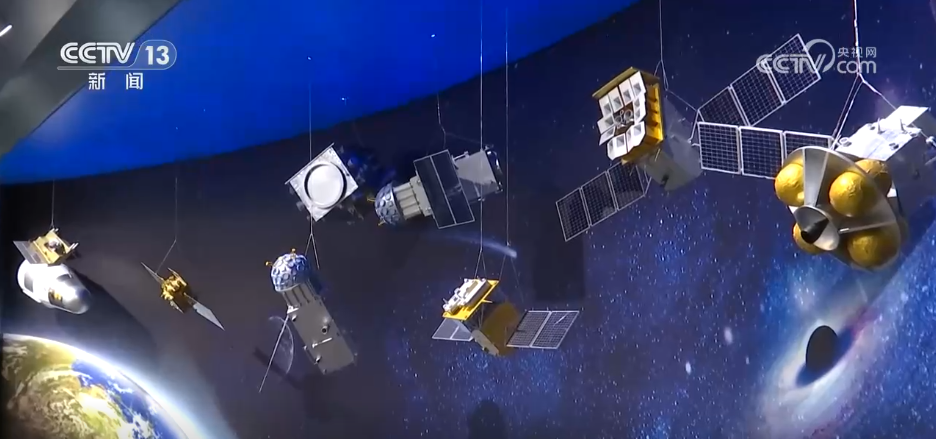
我国空间科学先导专项成果集中发布 “十五五”期间我国将实施太空探源科学卫星计划
Yang Guang Wang· 2025-11-25 07:24
Core Insights - The core focus of the news is the significant breakthroughs achieved by China's space science satellite missions, highlighting the advancements in space science and technology during the "14th Five-Year Plan" period [1][2]. Group 1: Achievements and Breakthroughs - The Chinese Academy of Sciences has successfully developed and launched eight scientific satellites, including "Wukong," "Shijian-10," and "Mozi," resulting in major original achievements and several firsts for China and the world [1]. - The "Wukong" satellite has made a notable discovery by identifying a hardening structure in the energy spectrum of cosmic ray helium nuclei, achieving precise measurements in the energy range above 1 trillion electron volts per hertz [1]. Group 2: Future Plans - During the "14th Five-Year Plan" period, the National Space Science Center of the Chinese Academy of Sciences will implement the space exploration scientific satellite plan, which includes projects like the "Hongmeng Plan" and "Kuafu-2," aiming for breakthroughs in areas such as the cosmic dark age and exoplanet detection [2].
用科技“加速度”搭建“登天路” 中国探索太空奥秘的“长征”不停步
Yang Shi Wang· 2025-11-25 02:45
Core Insights - The Chinese Academy of Sciences announced significant scientific breakthroughs from space science satellite missions during the 14th Five-Year Plan period, with plans to implement the "Space Exploration Science Satellite Program" in the upcoming 14th Five-Year Plan [1][3]. Group 1: Space Science Satellite Missions - The program will involve the development and launch of four space science satellite missions aimed at exploring cosmic mysteries, including the "Hongmeng Plan" for detecting the cosmic dark age, "Kuafu-2" for direct imaging of the solar polar regions, an exoplanet survey mission to find "Earth 2.0," and an enhanced X-ray time-variable and polarization space observatory to study new physical laws under extreme cosmic conditions [3][5]. - The director of the National Space Science Center, Wang Chi, emphasized the goal of achieving original scientific breakthroughs in understanding the origins and evolution of the universe, space weather, and extraterrestrial life by 2035 [5]. Group 2: Achievements in Space Science - Since its inception in 2011, the space science pilot project has successfully developed and launched eight scientific satellite missions, including "Wukong," "Shijian-10," "Micius," "Huiyan," "Taiji-1," "Huairou-1," "Kuafu-1," and "Tianguan," leading to significant discoveries such as the first X-ray all-sky map and the most precise cosmic ray energy spectrum measurements [7]. - These missions have contributed to a rapid advancement in China's space science innovation, marking a significant milestone in the country's scientific capabilities [7]. Group 3: Lunar Research - Recent studies revealed that the lunar soil brought back by the Chang'e 6 mission from the far side of the moon has unique properties, being significantly drier than the Sahara Desert and exhibiting a sticky texture due to static electricity rather than water [8][10]. - The far side of the moon has undergone more intense meteorite impacts, resulting in finer and more angular soil particles, which contribute to its unique physical characteristics and implications for future lunar exploration and base construction [12].
贯彻落实党的二十届四中全会精神权威访谈丨勇担科技自立自强新使命 走好科技强国建设新征程——访中国科学院院长、党组书记侯建国
Xin Hua Wang· 2025-11-20 14:27
Core Viewpoint - The article emphasizes the importance of accelerating high-level technological self-reliance and innovation in China, as outlined in the 15th Five-Year Plan, to support the country's modernization efforts [1]. Group 1: Contributions of the Chinese Academy of Sciences - The Chinese Academy of Sciences (CAS) has played a crucial role in achieving significant technological advancements during the 14th Five-Year Plan, focusing on high-level technological self-reliance and innovation [2]. - CAS has actively undertaken major national scientific tasks and has made breakthroughs in key core technologies, particularly in areas such as manned spaceflight, lunar exploration, deep-sea exploration, and energy security [2][3]. - The academy has successfully addressed critical issues in innovation chains and has produced numerous groundbreaking technologies and strategic products to support national projects [3]. Group 2: Original Innovation and Key Technology Breakthroughs - CAS is committed to seizing technological development high ground by focusing on original innovation and key technology breakthroughs, as emphasized by President Xi Jinping [4]. - The academy has organized collaborative efforts involving over 100 leading institutions and nearly 10,000 experts to tackle major scientific challenges [5]. - Future initiatives will include enhancing research organization models and management systems to better align with the demands of technological advancement [6]. Group 3: Integration of Technology Innovation and Industry - CAS has been actively promoting the integration of technological innovation with industry to transform scientific advancements into productive forces [7]. - The academy has established mechanisms for ongoing collaboration between research institutions and enterprises, facilitating the efficient conversion of scientific results into practical applications [8]. - Future plans include strengthening cooperation with key regions and industries to enhance the synergy between technological and industrial innovation [8]. Group 4: Education, Technology, and Talent Development - The article highlights the interconnection between education, technology, and talent development, with CAS aiming to cultivate over 100,000 outstanding young scientific talents by 2035 [9][10]. - CAS is implementing programs to enhance interdisciplinary education and training in urgent fields, focusing on areas such as artificial intelligence and biotechnology [10]. - The academy plans to improve the overall environment for education, technology, and talent development to foster high-quality growth [11].
中国科学院与上海市政府签署新一轮合作协议
Zheng Quan Shi Bao Wang· 2025-11-20 12:08
人民财讯11月20日电,据"上海发布",中国科学院与上海市人民政府新一轮合作协议签约仪式今天(11 月20日)举行。根据此次签署的加快推进上海国际科技创新中心建设合作协议,院市双方将共同建设具 有全球影响力的科技创新高地。中国科学院将积极参与上海国际科创中心建设,支撑上海创新发展的科 技需求,优化在沪科技布局并加大创新资源投入、打造国际一流科研机构,助力上海增强科技创新策源 功能和高端产业引领功能。上海将营造良好创新生态,支持中国科学院充分发挥国家战略科技力量主力 军作用,促进在沪科研机构高质量发展、抢占科技制高点。 ...