宝信软件

Search documents
宝信软件股价涨5.05%,易方达基金旗下1只基金位居十大流通股东,持有1063.16万股浮盈赚取1190.74万元
Xin Lang Ji Jin· 2026-02-09 06:43
Group 1 - The core point of the news is that Baosight Software's stock price increased by 5.05%, reaching 23.30 CNY per share, with a trading volume of 495 million CNY and a turnover rate of 1.02%, resulting in a total market capitalization of 66.889 billion CNY [1] - Baosight Software, established on August 15, 1994, is located in the China (Shanghai) Pilot Free Trade Zone and was listed on March 11, 1994. The company specializes in research, design, development, manufacturing, integration, and related outsourcing, maintenance, and consulting services for computer, automation, and network communication systems [1] - The main revenue composition of Baosight Software includes software development and engineering services at 64.02%, service outsourcing at 35.31%, system integration at 0.48%, and other supplementary services at 0.20% [1] Group 2 - Among the top ten circulating shareholders of Baosight Software, E Fund's HuShen 300 ETF (510310) reduced its holdings by 366,700 shares in the third quarter, now holding 10.6316 million shares, which accounts for 0.37% of the circulating shares. The estimated floating profit today is approximately 11.9074 million CNY [2] - E Fund's HuShen 300 ETF (510310) was established on March 6, 2013, with a current scale of 300.22 billion CNY. Year-to-date return is 0.45%, ranking 4397 out of 5580 in its category; the one-year return is 24.09%, ranking 2737 out of 4290; and the return since inception is 139.41% [2] Group 3 - The fund managers of E Fund's HuShen 300 ETF (510310) are Yu Haiyan and Pang Yaping. As of the report, Yu Haiyan has a cumulative tenure of 15 years and 66 days, with a total fund asset scale of 433.297 billion CNY, achieving a best fund return of 174.06% and a worst return of -78.9% during the tenure [3] - Pang Yaping has a cumulative tenure of 7 years and 116 days, managing a total fund asset scale of 368.472 billion CNY, with a best fund return of 114.63% and a worst return of -37.67% during the tenure [3]
2026年中国IT服务进入壁垒、产业链及供需现状洞悉:行业从价格竞争转向价值竞争[图]
Chan Ye Xin Xi Wang· 2026-02-08 01:21
Core Insights - The IT services market in China is projected to reach a total scale of 14,172 billion yuan by 2025, with significant growth across various sectors including energy, finance, telecommunications, government, internet, manufacturing, and others [8][9]. IT Services Industry Overview - IT services encompass a wide range of offerings including information consulting, software upgrades, and hardware maintenance, covering the entire lifecycle of IT systems [1][2]. - Key product categories include hardware integration, software integration, general solutions, industry-specific solutions, and comprehensive IT services [1][2]. Development History of IT Services Industry - The industry began in the 1990s, heavily reliant on hardware sales, with a focus on system integration and basic software development [3][4]. - From the mid-2000s to the end of the 2010s, the industry experienced rapid growth driven by internet proliferation, leading to increased demand for IT outsourcing and operational services [3][4]. - Since the end of the 2010s, the industry has entered a phase of intelligent upgrading, with emerging technologies like cloud computing and AI transforming service models [3][4]. Recent Policy Developments - Recent policies in the IT services sector focus on optimizing computing power, upgrading service outsourcing, and empowering small and medium enterprises [5]. - The Ministry of Industry and Information Technology has issued several action plans aimed at promoting high-quality development in IT services and enhancing international competitiveness [5]. IT Services Industry Chain - The industry chain consists of three main layers: upstream (hardware suppliers and core technology service providers), midstream (system integrators and third-party service providers), and downstream (various application sectors such as finance and government) [6]. Current State of IT Services Industry - The overall market size of IT services in China has shown steady growth from 5,880 billion yuan in 2017 to a projected 14,172 billion yuan in 2025, with all sectors experiencing continuous growth [7][8]. - The internet sector remains a key driver of market growth, while finance and manufacturing also show strong digitalization demands [7][8]. Market Structure of IT Services - By 2025, IT support and maintenance will dominate the market, accounting for 46.47%, followed by IT system integration at 15.88% [9]. Competitive Landscape of IT Services - The IT services industry is characterized by a large number of market participants and a low level of market concentration, with many small to medium-sized enterprises competing in the lower-end market [10][11]. - High-end markets remain less saturated, allowing companies with core advantages to achieve significant profit levels [10][11]. Future Trends in IT Services Industry - AI is becoming a core driver of industry upgrades, with generative AI transforming service delivery from reactive to proactive models [13]. - The shift towards domestic service solutions is emerging as the industry adapts to new demands for secure and controllable IT services [13].


宝钢股份:公司将充分尊重宝信软件独立性并支持其可持续发展

Zheng Quan Ri Bao Wang· 2026-02-06 11:48
Group 1 - Baosteel Co., Ltd. (600019) expressed its commitment to respecting the independence of Baosight Software (600845) as a listed company [1] - The company will promote business cooperation between both entities based on market principles [1] - Baosteel Co., Ltd. will support Baosight Software's sustainable development within the framework of relevant capital market laws and regulations [1]
2025年度宝信软件十大优秀科技创新成果系列 | 基于AIC智控技术的冷轧AI主操研发及规模化应用
Xin Lang Cai Jing· 2026-02-06 11:26
Core Viewpoint - The article highlights the development and application of the "AI Master Operator" based on AIC (Artificial Intelligent Control) technology in the steel manufacturing industry, aiming to enhance production efficiency and control precision by automating processes traditionally managed by human operators [1][14]. Group 1: AI Master Operator Overview - The "AI Master Operator" technology addresses key bottlenecks in steel manufacturing by providing an "autonomous driving" capability for cold-rolled equipment, allowing for real-time monitoring and adjustment of parameters previously controlled by human operators [1][14]. - This technology integrates multi-dimensional data from production plans, equipment status, video monitoring, and testing, enabling a comprehensive understanding of production processes [3][17]. Group 2: Key Functionalities - **Temperature Control**: The AI Master Operator improves temperature control precision by over 22% compared to traditional operators, ensuring high-quality production even under challenging conditions [7][19]. - **Tension Control**: The AI system reduces the frequency of steel strip misalignment by approximately 42% and decreases the rate of related issues by 49%, significantly enhancing production stability [8][20]. - **Intelligent Correction**: The AI Master Operator utilizes visual AI technology to identify and correct deviations in real-time, ensuring production stability and safety [9][21]. - **Flatness Control**: The AI system effectively reduces the mismatch in steel strip length by 33% and minimizes manual intervention in production processes [10][22]. Group 3: Implementation and Recognition - The first industrial application of the AI Master Operator was successfully implemented in September 2023, achieving 100% operational use under normal conditions and surpassing human operator performance in various metrics [11][22]. - The technology has received multiple awards, including third place in the Intelligent Manufacturing Innovation Competition and recognition from various media outlets, indicating its impact and effectiveness in the industry [12][23]. Group 4: Future Expansion - The AIC technology is being expanded into other industries such as chemicals and mining, aiming to provide sustainable and efficient production solutions across manufacturing sectors [12][23].

趋势研判!2026年中国数据中心机架行业政策、产业链、市场规模、竞争格局及发展趋势:随着数据中心产业蓬勃发展,数据中心机架规模日益剧增[图]
Chan Ye Xin Xi Wang· 2026-02-06 01:20
Core Insights - The data center rack industry is a crucial infrastructure component that enhances the management, security, and maintenance of IT equipment, facilitating the planning, design, and construction of data centers [2][5] - The market for data centers in China is projected to grow significantly, reaching a scale of 2,773 billion yuan by the end of 2024, with the number of operational data center racks exceeding 8.8 million [6][8] - By the end of 2025, the market size is expected to reach 3,180 billion yuan, with standard rack numbers surpassing 12 million [6][8] Industry Definition and Role - Data center racks are essential components that support and install various computer parts, providing a secure, reliable, and efficient management structure for IT equipment [2][5] Industry Development Status - The data center rack industry is experiencing rapid growth, driven by the development of the digital economy and the increasing demand for information network data [6][8] - The compound annual growth rate (CAGR) for the number of operational data center racks from 2019 to 2024 is over 20% [6] Industry Chain - The upstream of the data center rack industry includes raw materials such as metals (steel, aluminum, copper), plastics, and rubber, while the midstream involves the production and system integration of data center racks [6] - The downstream applications include enterprise data centers, edge data centers, AI computing centers, and high-performance computing/AI clusters [6] Industry Policy Environment - The data center is recognized as a vital part of the new infrastructure in China, with government policies supporting its investment and construction [10] Industry Competitive Landscape - The high-end market for data center racks is dominated by international giants, while domestic players like Huawei, Inspur, and ZTE are capturing significant market share in the IDC market and large internet companies [11][13] - The rise of domestic enterprises is accelerating the trend of local substitution, leading to increased market concentration [11] Industry Development Trends - The future of data center racks is expected to focus on "intelligent, liquid-cooled, and high-density" physical infrastructure units, integrating power supply, efficient heat dissipation, comprehensive sensing, and intelligent management capabilities [15]





利润暴增393%!卡奥斯赴港上市,冲刺“AI+”
Sou Hu Cai Jing· 2026-02-05 03:08
Core Viewpoint - Kaos IoT Technology Co., Ltd. has submitted its IPO application to the Hong Kong Stock Exchange, aiming to capitalize on the AI and industrial internet wave, positioning itself as a potential leader in the "AI + Industrial Internet" sector [1][13]. Financial Performance - Kaos has shown significant growth, with a net profit increase of 393.28% year-on-year, reaching 1.76 billion yuan in the first nine months of 2025 [1][7]. - Revenue for 2023 and 2024 is projected at 4.994 billion yuan and 5.070 billion yuan, respectively, with a 22% year-on-year growth in the first nine months of 2025, totaling 4.42 billion yuan [1][4]. Customer Base and Market Position - The number of enterprise clients has grown from over 7,600 at the beginning of 2023 to over 9,500 by the third quarter of 2025, marking a 26% increase [4]. - Core clients with orders exceeding 4 million yuan increased from 55 in 2023 to 80 in the first nine months of 2025, with national-level specialized customers surging from 92 to over 600 [5]. Revenue Structure and Growth Drivers - The revenue from data intelligence solutions reached 1.28 billion yuan in the first nine months of 2025, a 59.6% increase from 802 million yuan in the same period of 2024 [5]. - The proportion of revenue from data intelligence solutions rose from 18.7% in 2023 to 29% in the first nine months of 2025, indicating a shift towards higher-value business [6]. Strategic Partnerships and Innovations - Kaos's close relationship with Haier Group, its largest customer and supplier, has been a focal point, contributing significant revenue while the dependency on Haier has decreased from 72.2% to 57.7% over the years [4][5]. - The company has developed over 110 intelligent development tools and increased the number of high-quality intelligent agents to 57, showcasing its commitment to innovation [16]. Market Expansion and Future Plans - The IPO aims to enhance core platform capabilities, expand market reach, and explore potential investment opportunities, with a focus on upgrading carbon management platforms and advancing AI applications [17]. - Kaos is positioned to leverage its manufacturing heritage to create a competitive edge in the AI + industrial internet landscape, aiming to replicate successful models across various industries [10][12].
筑牢智造人才高地 | 宝信软件两人入选工信部制造业人才支持计划
Xin Lang Cai Jing· 2026-02-04 12:21
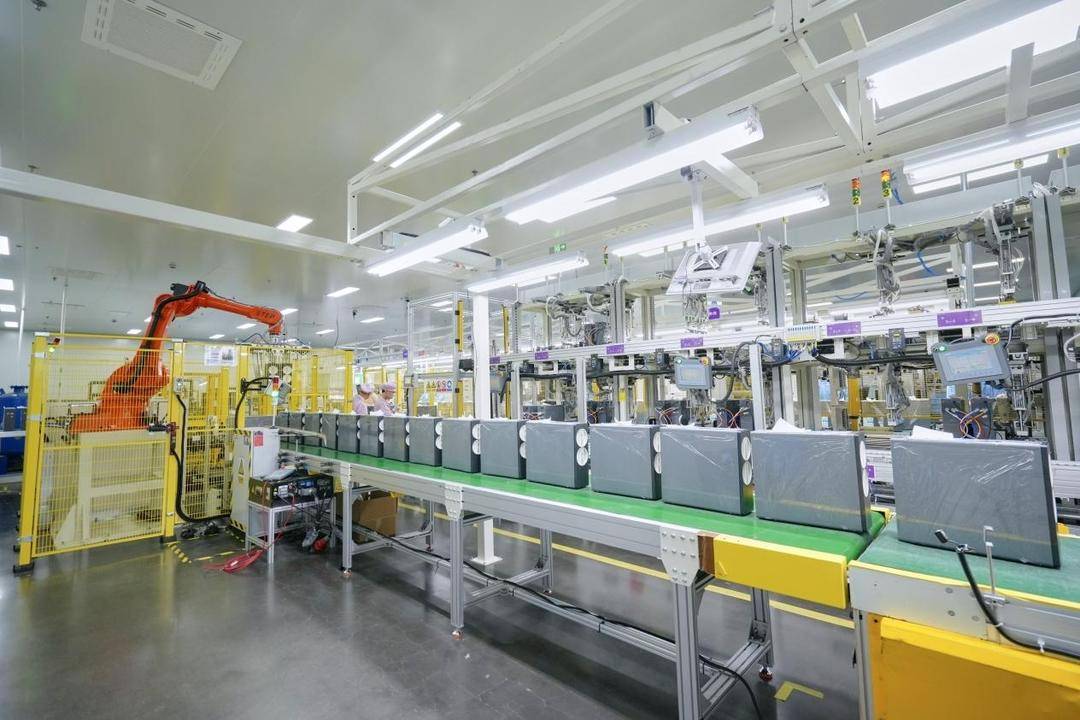
Core Insights - The "Manufacturing Talent Support Program" has recognized Baosight Software's Li Haigang as an "Innovative Entrepreneur" and Hu Bing as an "Advanced Manufacturing Technology Talent," highlighting their professional capabilities and contributions to the industry [1][5]. Group 1: Recognition and Achievements - Li Haigang leads a specialized "little giant" enterprise and has overseen multiple national research projects, overcoming over 10 critical technologies and formulating various national and industry standards [3][7]. - Hu Bing has extensive experience in the industrial software sector, receiving multiple awards including the National Science and Technology Progress Second Prize and the Shanghai Science and Technology Progress First Prize, and serves as an expert in the national plan for industrial software [3][7]. Group 2: Strategic Focus and Future Plans - Baosight Software prioritizes talent development as a core strategy, establishing an innovation platform that integrates industry, academia, and research to cultivate talent capable of addressing technological challenges and driving industrial upgrades [5][9]. - Moving forward, Baosight Software aims to increase R&D investment and enhance talent development, focusing on new-generation information technology, critical software, and high-end equipment to support the development of advanced manufacturing clusters and the reconstruction of industrial foundations [5][9].

宝信软件(600845.SH):暂未与宇树科技开展直接业务合作
Ge Long Hui· 2026-02-04 07:40
格隆汇2月4日丨宝信软件(600845.SH)公布,公司暂未与宇树科技开展直接业务合作。 ...
中国工业软件行业发展研究报告
艾瑞咨询· 2026-02-04 03:25
Core Viewpoint - The industrial software industry is at a critical juncture, necessitating urgent development driven by innovation and supported by favorable policies. It serves as a core production material and key productivity for new industrialization, emphasizing the importance of self-control and supply chain security [1][4]. Industry Dynamics - The evolution path of industrial software is transitioning from tools to systems, then to platforms, and finally to genetic models, focusing on data value in the latter stages [2]. - The market is large, with a projected size nearing 300 billion yuan in 2024, but challenges such as core technology gaps and imbalanced industrial structure are prominent [1][17]. Product Development - Currently, industrial software is primarily sold as products, but it is expected to shift towards selling "intelligence" as data assets are effectively accumulated and utilized, leading to the emergence of industrial intelligent agents [3]. Development Background - Industrial software is crucial for innovation and transformation in the economy, with the shift of control from hardware to software becoming increasingly evident. The encapsulation of industrial knowledge in software is essential for optimizing production processes [4][7]. Driving Factors - Policy support and technological advancements, particularly in AI and large models, are accelerating the development and application of industrial software. Cities are introducing subsidy policies to stimulate innovation in this sector [12][14]. - Demand from enterprises emphasizes practical market needs while also considering domestic alternatives, with government and research institutions focusing on top-level planning and integration [14]. Market Characteristics - The industrial software market is characterized by a significant gap in core technologies, particularly in R&D design software, which is the most affected area by the "bottleneck" phenomenon. The imbalance in the industrial structure shows a stronger presence of management software compared to engineering software [17][19]. Industry Value Flow - The industrial software value distribution follows a "smile curve" model, where the closer to core technology, the higher the barriers and profits. The rise of data value services is expected to create new growth opportunities [30]. Profit Models - Current profit models for industrial software include software licensing, maintenance, and customized development, with ongoing exploration of platform and ecosystem revenue sharing [33]. Future Directions - The industrial software industry is expected to evolve towards platformization and genetic modeling, focusing on enhancing data flow efficiency and value. The future will see products transforming from mere tools to intelligent agents capable of autonomous task execution [48][52].

中国工业软件行业发展研究报告
艾瑞咨询· 2026-02-04 00:08
Core Insights - The industrial software industry is at a critical juncture, driven by the need for innovation and the urgency of development, especially in the context of China's economic transformation and the push for self-sufficiency in core technologies [1][3][17] - The market for industrial software in China is projected to approach 300 billion yuan by 2024, indicating robust growth despite challenges such as a lack of core technologies and imbalanced industrial structure [1][17] - The evolution of industrial software is characterized by a shift from tools to systems, platforms, and eventually to a genetic level, focusing on data value and efficiency [2][48] Industry Dynamics - Industrial software serves as a critical enabler for innovation and transformation in the industrial sector, acting as the "brain" and digital foundation of new industrialization [3][9] - The market is large, with significant opportunities for domestic companies to replace foreign products, particularly in the context of national policies promoting self-reliance [2][50] - The development of industrial software is slow and requires patience, but it also presents opportunities amid ongoing changes and restructuring [1][17] Market Characteristics - The industrial software market is characterized by a significant gap in core technologies, particularly in research and design software, which is crucial for engineering optimization [17][23] - The market structure shows a strong presence of management software while engineering software remains weak, indicating a need for improvement in the latter [17][19] - The demand for industrial software is driven by practical needs from enterprises, government initiatives, and the integration of research and education [14][50] Technological Drivers - The advancement of large models and AI technologies is accelerating the development and application of industrial software, supported by government subsidies aimed at fostering innovation [12][14] - The integration of AI and big models is transforming the capabilities of industrial software, enhancing areas such as code generation and human-computer interaction [43][45] Future Directions - The industrial software industry is expected to transition towards a model that emphasizes selling "intelligence" rather than just software, with products evolving into "digital engineers" capable of autonomous task execution [52][48] - The focus will shift towards platformization and the internalization of industrial knowledge into parameters and codes, enhancing the efficiency of data flow and value extraction [48][52] - Companies are encouraged to leverage head clients and policy support to drive technological breakthroughs while also exploring opportunities in mid-tier and long-tail markets [50][52]