
Disco

Search documents
汽车芯片采购担忧及其对半导体、半导体设备、汽车行业的影响Concerns over Sourcing Automotive Chips, Implications for Semis, SPE, Autos
2025-10-27 00:31
Summary of Key Points from the Conference Call Industry Overview - **Industry**: Semiconductor Production Equipment and Automotive Industry - **Region**: Japan Core Concerns and Implications - **Control of Nexperia**: The Dutch government has taken administrative control of Nexperia, a major automotive chip supplier, due to economic and national security risks, raising concerns about chip procurement in the automotive sector [3][9] - **Impact on Automotive Production**: Automakers, including Honda, are investigating alternatives to Nexperia chips as shipments have been suspended. This could lead to a near-term bottleneck in auto production, particularly affecting output in China, Europe, and Japan [4][9] Market Dynamics - **Chip Sourcing Alternatives**: Automakers are seeking alternative chip suppliers, which could positively impact demand for semiconductor production equipment (SPE) if they begin placing additional orders [10] - **Shortage of Nexperia Chips**: Current inventories of Nexperia chips are limited to a few weeks, and establishing new production frameworks will take several months [4][10] Potential Opportunities - **Increased Demand for SPE**: Should automakers successfully diversify their chip sourcing, there could be a significant increase in demand for SPE, particularly for companies like Disco and Advantest, which are positioned to benefit from increased orders for automotive semiconductor testers and assembly equipment [10][11] - **Market Share Shifts**: Companies like Yangjie Technology and Rohm may gain market share as orders shift from Nexperia to other suppliers, particularly in small signal devices [11][12] Analyst Ratings and Recommendations - **Top Picks**: Disco is reiterated as a top pick, with an Overweight (OW) rating on Advantest, indicating strong expected performance in the semiconductor testing market [5][10] - **Valuation Methodology**: Disco's target P/E is set at 25.1x based on historical performance, while Advantest's target P/E is 20.0x, reflecting expected growth in the tester market driven by demand for devices with long test times [13][16] Risks - **Downside Risks**: Potential risks include sluggish global demand for electronics, prolonged replacement cycles for smartphones, and the commoditization of SPEs due to technological advancements slowing down [15][18] - **Upside Risks**: Conversely, recovery in demand for smartphone semiconductors and increased capex by major semiconductor manufacturers could drive growth [17][18] Conclusion - The semiconductor production equipment industry is currently facing significant challenges due to geopolitical tensions affecting chip supply chains. However, there are potential opportunities for growth as automakers seek alternatives and increase orders for semiconductor production equipment. Analysts remain optimistic about specific companies like Disco and Advantest, while also highlighting the risks associated with market volatility and demand fluctuations.
半导体生产设备 - 海外投资者调研反馈(香港、新加坡)Semiconductor Production Equipment-Feedback on Visits to Overseas Investors (Hong KongSingapore)
2025-10-13 01:00
Summary of Semiconductor Production Equipment Industry Conference Call Industry Overview - **Industry**: Semiconductor Production Equipment (SPE) in Japan - **Key Companies Mentioned**: Disco, Advantest, Tokyo Electron, Lasertec, Ulvac Core Insights - **Investor Sentiment**: There is strong interest in the SPE industry due to rising share prices, but investors are cautious about stock selection. Disco is recommended as a laggard compared to Advantest, which has seen a significant price increase of 76% since August 1, 2025, while Disco's share price rose only 22% in the same period [4][9] - **Market Drivers**: The growth in the SPE market is attributed to: 1. Increased demand for flash memory due to HDD shortages 2. Improved growth outlook for the High Bandwidth Memory (HBM) market 3. Increased foundry investment expected in 2026 [4][9] Company-Specific Insights - **Disco's Earnings Forecast**: Projected sales growth of 45% YoY and operating profit growth of 62% for F3/27. Key drivers include: 1. HBM demand driven by AI 2. Recovery in the smartphone market (OSAT) 3. VCS for edge AI 4. Transition to 12-inch SiC wafers 5. Adoption of hybrid bonding processes for flash memory 6. WMCM and PLP equipment [5][9] - **Advantest's Market Position**: Maintains a 90% market share in AI ASICs, with sales prices for its SoC testers being at least 30% higher than competitors [14] - **Tokyo Electron**: Positive outlook on cryo-etching equipment adoption, but risks exist due to potential market share loss from dry resist technology [15] - **Ulvac**: Notable interest in their front-end equipment, with growing sales of PLP and MHM systems to China [21] Market Trends and Risks - **HBM Market Growth**: Significant demand for DRAM in AI data centers, with OpenAI requiring production capacity equivalent to 900,000 wafers monthly. Global HBM production capacity is expected to reach 350KWPM by the end of 2025 [10] - **China's Impact**: Risks associated with US export restrictions on SPE to China could negatively affect the market. However, back-end equipment regulations may be less stringent due to China's advancements in domestic production [22][23] Valuation and Risks - **Disco Valuation**: Target P/E ratio set at 25.1x based on historical performance. Expected EPS for F3/28 is ¥2,799.6 [25] - **Upside Risks**: Growth in edge AI equipment demand and recovery in smartphone markets could drive further growth [26] - **Downside Risks**: Sluggish global electronics demand and prolonged replacement cycles for smartphones could hinder market recovery [27] Conclusion The Semiconductor Production Equipment industry in Japan is poised for growth driven by technological advancements and increased demand in various sectors, particularly AI. However, investors should remain cautious due to market volatility and geopolitical risks, particularly concerning China. Disco is highlighted as a strong investment opportunity amidst this landscape.
半导体材料:亚洲投资者调研反馈-Semiconductor_Tech Materials_ Feedback from investor visits in Asia
2025-09-25 05:58
Summary of Key Points from J.P. Morgan's Semiconductor/Tech Materials Conference Call Industry Overview - **Industry Focus**: Semiconductor and Tech Materials - **Investor Interest**: Strong interest in Advantest (6857, OW) and Nittobo (3110, N) observed during investor visits in Asia [1][4] Core Themes Discussed 1. **Advanced Packaging**: - Companies benefiting from advanced packaging were a key topic, especially in light of SEMICON Taiwan [1] - Disco (6146, N) is highlighted as a key stock related to advanced packaging opportunities [5] 2. **WFE Investment Outlook**: - Potential increase in Wafer Fabrication Equipment (WFE) investment due to rising NAND and DRAM prices [1][6] - Memory makers are investing heavily in High Bandwidth Memory (HBM) driven by generative AI demand [6] - DRAM prices are rising due to strong demand and supply shortages, while NAND contract prices are also increasing [6] 3. **NVIDIA's Investment in Intel**: - NVIDIA announced a $5 billion investment in Intel, which is expected to impact the semiconductor market positively [1][6] - Key stocks affected include Lasertec (6920, N) and Nikon (7731, UW) [6] 4. **EssilorLuxottica's Stake in Nikon**: - EssilorLuxottica raised its stake in Nikon from 8.45% to 9.47%, which may influence Nikon's market position [1] Company-Specific Insights - **Advantest (6857, OW)**: - Investors are keen on the medium-term business plan update and operating profit projections for FY2026, estimated at ¥411.8 billion [4] - Potential for operating profit to reach ¥460–470 billion based on a more optimistic consensus [4] - **Nittobo (3110, N)**: - Plans to double T-glass production capacity by FY2026 and potentially triple T-glass cloth capacity by early 2027 [4] - Investors expect a price revision of around 30%, while current estimates factor in a 15% YoY increase [4] - **Disco (6146, N)**: - Anticipated increase in opportunities for grinders and dicers in PLP due to advancements in packaging technology [5] Additional Important Insights - **Market Dynamics**: - The competitive environment is expected to remain stable for Nittobo despite new entrants due to overall market growth [4] - NAND companies are focusing on developing nearline SSD products to reduce the price gap with HDDs [6] - **Investment Sentiment**: - Investors are optimistic about memory investment trends, although rapid increases in NAND investment are not expected in the near term [6] - **Price Performance**: - Various companies in the semiconductor sector are experiencing different levels of market performance, with Advantest showing strong growth potential [8][12] This summary encapsulates the key points discussed in the conference call, highlighting the semiconductor industry's current trends, company-specific insights, and overall market sentiment.
玻璃基板,一步之遥
半导体行业观察· 2025-09-20 01:55
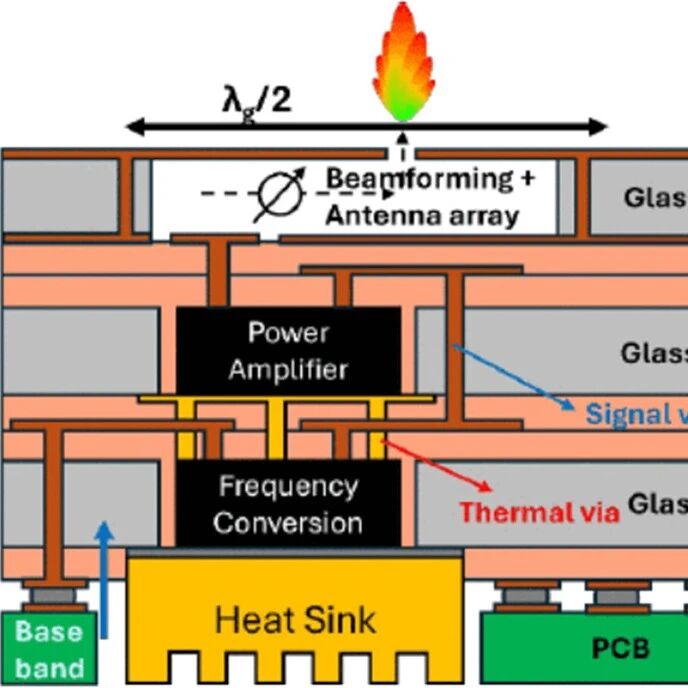
Core Viewpoint - Glass substrates are emerging as a superior alternative to organic substrates in advanced packaging due to their flatness, lower thermal expansion coefficient, and reduced warpage issues, making them ideal for high-frequency applications and 6G communications [2][3][5]. Group 1: Advantages of Glass Substrates - Glass substrates provide significant improvements in warpage reduction (50%) and positioning accuracy (35%) compared to organic substrates, facilitating the implementation of redistribution layers (RDL) with line widths and spacings below 2 micrometers [2]. - The dielectric constant of glass (2.8) is much lower than that of silicon (12), resulting in significantly lower transmission losses and enhanced signal integrity for high-frequency applications [3]. - Glass substrates are versatile and can be used as carriers, core substrates for embedded components, 3D stacking materials, or sealed cavities for sensors and MEMS [2]. Group 2: Manufacturing Challenges - Glass cutting is prone to micro-cracking, and the challenge of repeatedly manufacturing thousands of fine-pitch through-glass vias (TGV) hinders the full potential of glass substrates [3][22]. - The laser-induced deep etching (LIDE) technology is being improved to facilitate mass production of TGVs, allowing for the etching of vias as small as 3 micrometers with a spacing of 5 micrometers [10][11]. Group 3: Applications in 6G Technology - Glass substrates are ideal for 6G wireless communication networks, which require data rates exceeding 100 GHz, due to their high-frequency transmission capabilities and low loss characteristics [5]. - Heterogeneous integration in stacked glass can combine high-frequency front-end chips with low-loss interconnects, enhancing the performance of large-scale antenna arrays [5]. Group 4: Innovations in Glass Processing - The use of ABF (Ajinomoto Build-up Film) as a low-k dielectric and adhesive for glass bonding has shown promising results, achieving electrical performance up to 220 GHz with minimal loss [5][8]. - New methods for cutting glass substrates, such as embedding cut substrates in organic resin for edge protection, are being explored to minimize damage during handling [24]. Group 5: Yield Improvement Techniques - Predictive modeling and machine learning are being utilized to enhance yield rates in glass substrate manufacturing, particularly in identifying and mitigating defects early in the production process [18][19]. - The development of automated systems for wet etching and drying processes is aimed at improving the efficiency and yield of TGV manufacturing [10][11]. Group 6: Future Directions - The glass ecosystem is preparing for the continued growth in chip and substrate sizes in multi-chip advanced packaging, with significant progress being made in laser modification and high-frequency etching techniques [28]. - Ongoing research aims to further reduce micro-cracking during cutting processes and improve the compatibility of new processing techniques with stringent design rules [29].

玻璃基板,势头强劲
Sou Hu Cai Jing· 2025-09-19 05:14
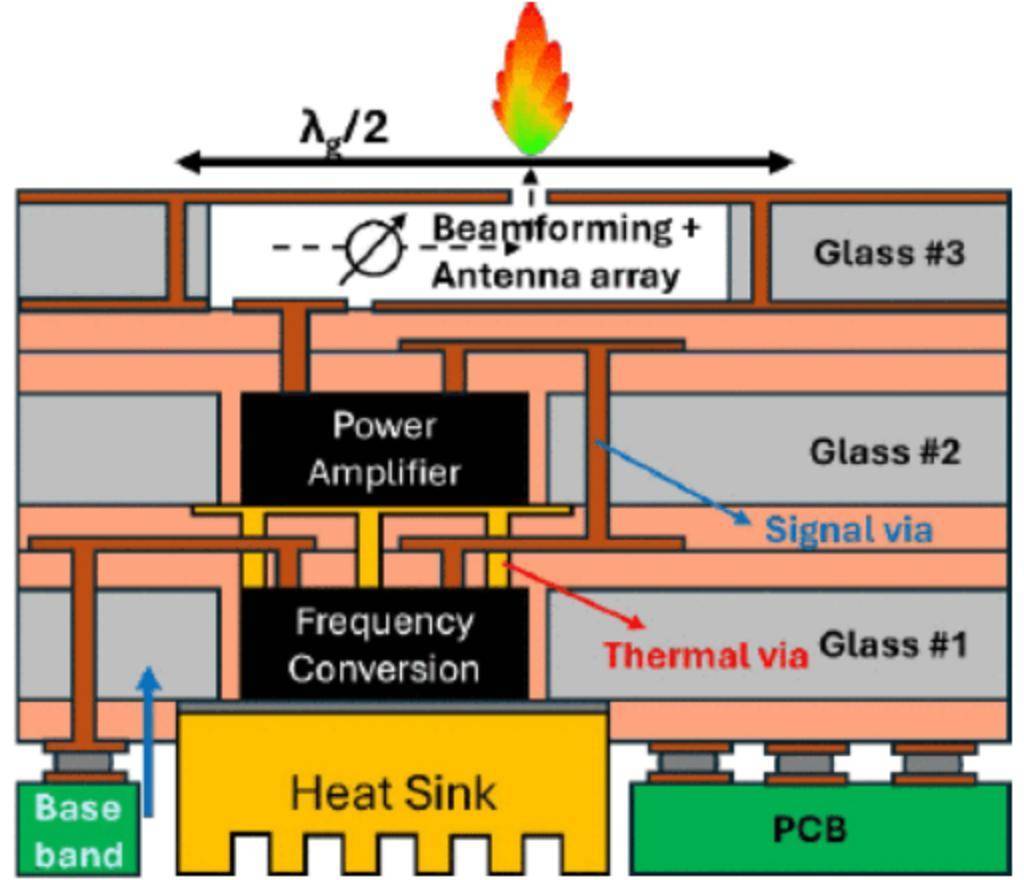
Core Viewpoint - Glass is gaining attention as the next-generation packaging substrate material due to its numerous advantages over organic substrates, including lower thermal expansion, improved flatness, and reduced transmission loss for high-frequency applications [1][2][3]. Group 1: Advantages of Glass Substrates - Glass substrates are significantly flatter and have a lower thermal expansion coefficient compared to organic substrates, simplifying lithography processes [2]. - The warpage issues associated with multi-chip packaging have been notably improved with glass substrates, allowing for better chip bonding and alignment [2]. - Glass substrates provide extremely low transmission loss for high-frequency devices, making them suitable for applications like 6G communications [3][4]. Group 2: Manufacturing Challenges - The cutting of glass substrates can lead to micro-cracks, which pose a significant manufacturing challenge [3][17]. - The process of creating through-glass vias (TGV) is complex, with challenges in achieving high yield rates due to the need for precise laser etching and filling techniques [6][12]. - Despite the challenges, companies like Intel continue to invest heavily in glass substrate technology, indicating a strong belief in its potential for high-performance computing and AI applications [3][12]. Group 3: Innovations in Glass Processing - Recent advancements in laser-induced deep etching (LIDE) technology have improved the manufacturing process for TGVs, allowing for smaller and more precise vias [6][10]. - The use of automated systems for wet etching processes has been developed to enhance the efficiency and yield of glass substrate production [7][10]. - New methods, such as embedding cut glass substrates in organic resin for edge protection, are being explored to mitigate issues related to cracking during processing [19][20]. Group 4: Future Outlook - The glass ecosystem is preparing for the ongoing growth in chip and substrate sizes for advanced multi-chip packaging, with significant progress being made in the industry [22]. - The potential for direct laser etching using excimer lasers is being considered as a more environmentally friendly alternative to traditional methods, provided it can meet the requirements for subsequent copper filling [22]. - Continued research into polymer retraction techniques before cutting may help prevent micro-cracking, indicating a focus on improving manufacturing processes for glass substrates [22].
投资者报告:半导体生产设备行业展望-Investor Presentation-Semiconductor Production Equipment Industry Outlook
2025-09-19 03:15
Summary of Semiconductor Production Equipment Industry Outlook Industry Overview - **Industry**: Semiconductor Production Equipment (SPE) - **Region**: Japan - **Outlook**: Attractive [1] Key Points Market Performance and Valuations - The stock price performance of major companies in the SPE industry shows varied results, with Disco outperforming the market significantly [3][60]. - Valuations for companies such as Disco, Advantest, and SCREEN Holdings indicate potential returns of 55.1%, -10.4%, and 18.5% respectively [5]. Company Ratings and Price Targets - **Disco**: Overweight, Price Target JPY 70,300, Current Price JPY 45,320 - **KOKUSAI ELECTRIC**: Equal-weight, Price Target JPY 3,600, Current Price JPY 3,755 - **Ulvac**: Equal-weight, Price Target JPY 6,400, Current Price JPY 6,456 - **Advantest**: Overweight, Price Target JPY 12,400, Current Price JPY 13,845 - **Lasertec**: Underweight, Price Target JPY 10,400, Current Price JPY 16,720 - **Ushio**: Equal-weight, Price Target JPY 2,200, Current Price JPY 2,239 - **Nikon**: Underweight, Price Target JPY 1,000, Current Price JPY 1,739 - **SCREEN Holdings**: Overweight, Price Target JPY 15,200, Current Price JPY 12,830 - **Tokyo Electron**: Equal-weight, Price Target JPY 23,700, Current Price JPY 24,250 [5]. Industry Drivers - The demand for advanced packaging and high bandwidth memory (HBM) is driving growth in the SPE sector. - Significant investments in semiconductor manufacturing are being made, particularly in response to AI-related demands [21][24]. - The introduction of new technologies such as Panel Level Packaging (PLP) is expected to enhance production efficiency [18]. Market Trends - The NAND market is projected to experience a shift into shortage by the second half of 2026 due to increased AI demand, despite current pricing reflecting weaker consumer demand [44]. - The adoption of eSSD (enterprise SSD) is accelerating, with projections indicating that AI-related NAND shipments will reach 431 exabytes by 2029 [44]. Risks and Challenges - Ongoing restrictions on semiconductor exports to China pose risks to the industry, necessitating a reduction in dependence on Chinese manufacturing capabilities [24]. - The semiconductor industry is facing challenges related to supply chain constraints and fluctuating demand across different segments [21]. Future Outlook - The SPE market is expected to continue growing, with revenue forecasts indicating an increase from $117.171 billion in 2025 to $130.989 billion by 2027 [42]. - Companies are expected to ramp up capital expenditures directed at advanced packaging and HBM technologies, which will be crucial for meeting the demands of AI applications [73]. Conclusion The Semiconductor Production Equipment industry in Japan is positioned for growth, driven by advancements in technology and increasing demand from AI applications. However, companies must navigate geopolitical risks and market fluctuations to capitalize on these opportunities.
全球科技 - 闪存(NAND)-人工智能时代终于降临闪存领域-Global Technology-NAND – AI Era Finally Comes to NAND
2025-09-11 12:11
Summary of the Conference Call on NAND Industry and AI Impact Industry Overview - The NAND industry is experiencing a resurgence due to the increasing demand from AI inference applications, with an estimated incremental Total Addressable Market (TAM) of **US$29 billion** by **2029** [1][13][22]. - The AI NAND market is projected to account for **34%** of the global NAND market by **2029**, with AI-related NAND usage expected to reach **431EB**, representing **20%** of global NAND bit shipments [13][22]. Key Insights - The demand for high-speed, high-capacity storage solutions, particularly QLC eSSD, is becoming critical for AI applications, as it meets the requirements for randomized I/O access [12][21]. - A NAND shortage is anticipated to emerge in the second half of **2026**, driven by a combination of AI infrastructure deployment and consumer demand weakness [14][24]. - Major Cloud Service Providers (CSPs) are already in discussions with suppliers for large orders of AI NAND and nearline SSDs, indicating a shift in procurement strategies [14][24]. Market Dynamics - The NAND industry has been in oversupply since **2022**, but a more balanced supply-demand dynamic is expected moving into **2026** [14][24]. - The introduction of nearline SSDs is expected to take market share from HDDs, with a potential **5%** market share shift translating into an **8%** NAND shortage in a bullish scenario [13][23]. Stock Recommendations - **SanDisk** has been elevated to a Top Pick with a price target raised from **$70** to **$96**, reflecting confidence in its ability to capitalize on the AI-driven demand [12][41]. - Other recommended stocks include **KIOXIA** and **Samsung Electronics**, which are expected to benefit significantly from the growth in the NAND sector [15][27]. - Within Greater China, module makers **Phison** and **Longsys** are favored due to better NAND pricing tailwinds [15][27]. Financial Projections - The 2026 EPS estimates for key recommended stocks are projected to be **26%** higher than consensus estimates, indicating a bullish outlook on the AI NAND growth story [30][41]. - SanDisk's EPS is expected to reach **$8.64** next year, compared to consensus estimates of **$6.11**, suggesting that the stock is undervalued given the potential for improved earnings [41][48]. Risks and Considerations - There is caution regarding potential inventory corrections in early **2026**, as demand may not fully overshadow the PC/mobile markets in the near term [47]. - The NAND industry is facing challenges from conservative capital expenditure plans and geopolitical tensions, particularly concerning China [35][44]. Conclusion - The NAND industry is poised for significant growth driven by AI applications, with key players like SanDisk, KIOXIA, and Samsung Electronics positioned to benefit. The anticipated shortage in **2026** and the shift towards eSSD solutions present compelling investment opportunities, although caution is warranted regarding potential market corrections and geopolitical risks.
Nikkei Notches Another Record. SoftBank Surges as AI Hopes Drive Bull Run.
Barrons· 2025-09-11 08:34
Group 1 - The Nikkei Stock Average reached a record high of 44,372.50, increasing by 1.2% [1] - SoftBank Group was the top gainer, surging 10% to a record close following Oracle's billion-dollar AI deals [2] - Other AI-related stocks also saw gains, with Disco rising by 6.5% and Advantest increasing by 4.4% [2] Group 2 - Domestic political changes are contributing to the market's positive momentum, with Takaichi advocating for stronger fiscal stimulus and a tougher national defense [2] - The anticipated policies are viewed as creating a friendlier investment environment [2]

碳化硅行业:关于(CoWoS)碳化硅中介层的新闻报道;我们认为这仅是一个概念及研发方向,暂不具备进一步可预见性
2025-09-07 16:19
Summary of Key Points from the Conference Call Industry Overview - **Industry**: Silicon Carbide (SiC) Sector - **Key Companies Discussed**: - GlobalWafers (GWC; 6488 TW) - TSMC (2330 TW) - Disco (6146 JT) - SICC - A (688234 CH) Core Insights and Arguments - **CoWoS SiC Interposer**: - Reports indicate TSMC is exploring the CoWoS SiC interposer and has requested 12" SiC substrates and process equipment from suppliers. GWC and Disco are identified as potential beneficiaries of this development [5][6] - The technology is currently viewed as a concept and in the R&D phase, lacking visibility on feasibility and timeline for development [5][6] - **Potential Benefits of SiC**: - SiC offers excellent thermal conductivity, which could address thermal challenges in AI chip design. It also has high hardness, potentially mitigating warpage issues associated with larger package sizes for AI chips [5][6] - **Market Dynamics**: - The cost of 12" SiC substrates is projected to remain high, estimated at $700 or more, which is significantly higher than the $70 for 12" silicon substrates. This price disparity could impact industry adoption rates [6] - Chinese suppliers are expected to reduce prices of SiC substrates significantly as production ramps up, potentially by 30-50% annually [6] - **Long-term Outlook**: - The report maintains a cautious stance on GlobalWafers and SICC, citing challenging fundamentals and competition from Chinese suppliers who are perceived to lead in SiC technology and pricing [5][6] Additional Important Information - **Investor Sentiment**: - GWC's stock rose by 4.5% following the news, outperforming the Taiex index, which increased by 0.3% [2] - **Geopolitical Considerations**: - There are uncertainties regarding the geopolitical advantages for GWC, as Chinese materials are also integrated into the US AI chip supply chain [5] - **Future Projections**: - It is anticipated that by 2027, CoWoS will predominantly adopt organic interposers, indicating a shift away from SiC interposers in the near term [5] This summary encapsulates the critical insights and projections regarding the Silicon Carbide sector and the companies involved, highlighting both opportunities and risks in the current market landscape.
资讯日报-20250902
Guoxin Securities Hongkong· 2025-09-02 03:14
Market Performance - The Hang Seng Index closed at 25,617, up 2.15% year-to-date, with a 27.70% increase since the beginning of the year[4] - The Hang Seng Tech Index rose by 2.20%, with a year-to-date increase of 29.79%[4] - The Shanghai Composite Index increased by 0.46%, with a year-to-date growth of 15.63%[4] - The Nikkei 225 Index fell by 1.24%, with a year-to-date increase of 5.75%[4] Sector Highlights - Alibaba's stock surged by 18.5% following strong earnings, driven by growth in cloud services and AI initiatives[10] - Gold prices approached historical highs, with a significant increase in gold and silver stocks, including a 16% rise in Tongguan Gold[10] - The semiconductor sector showed strong performance, with InnoTek rising over 12%, supported by projected revenue growth in the global semiconductor industry[10] Investment Trends - Net inflow of southbound funds reached HKD 11.9 billion on September 1[10] - Pharmaceutical outsourcing and innovative drug concepts saw gains, with WuXi Biologics up over 8%[10] - Automotive stocks generally declined, but NIO rose over 4% amid strong delivery numbers from various electric vehicle manufacturers[10]
