FactSet

Search documents
美股长牛关键催化震撼来袭! SpaceX与OpenAI等巨头蓄势待发 高盛押注2026年乃IPO大年
智通财经网· 2026-02-10 02:36
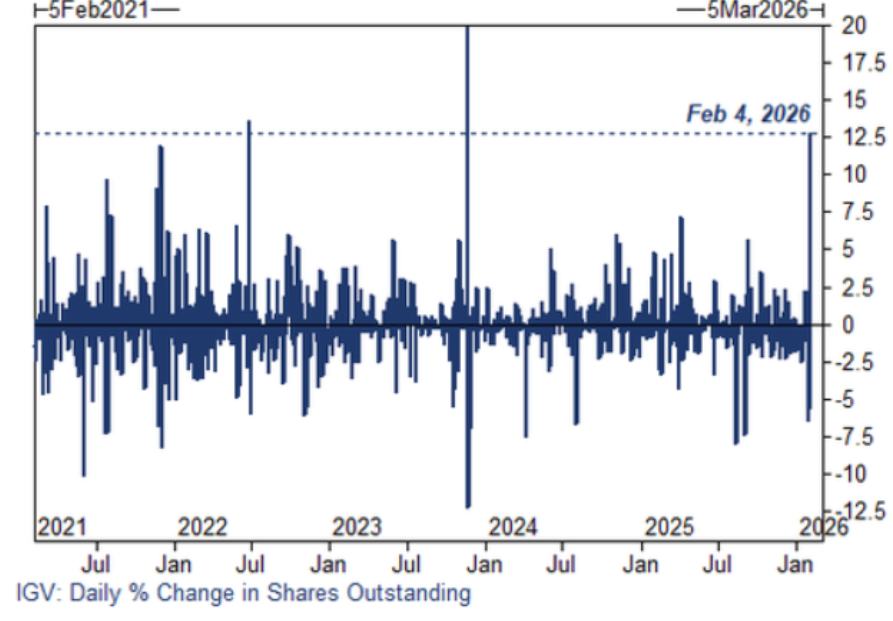
Core Viewpoint - Goldman Sachs strategists predict a strong rebound in the U.S. IPO market in 2026, driven by a solid economic backdrop, increased board confidence, and expected continued accommodative monetary policy [1][8] Group 1: IPO Market Predictions - The estimated IPO fundraising amount for 2026 is projected to reach approximately $160 billion, significantly higher than last year's $48 billion [1][8] - The number of IPOs is expected to increase to around 120, nearly doubling from the previous year [2][8] - The anticipated growth in IPO size and quantity is viewed as a return to normal levels rather than a speculative market boom [2] Group 2: Market Conditions and Risks - Current IPO activity has been mixed, with some companies facing challenges while others, like Veradermics Inc., have seen significant stock price increases [2] - Key risks for the IPO market include potential market volatility, which could hinder actual IPO expansion [2][8] - The heavy representation of software companies in the potential IPO pipeline poses additional risks, especially following recent declines in software stock valuations [2] Group 3: Notable Companies Preparing for IPO - SpaceX is actively planning for an IPO, with an estimated valuation exceeding $1.5 trillion and potential fundraising of several billion dollars [5] - OpenAI is also expected to prepare for an IPO in 2026, with a projected valuation nearing $1 trillion [6] - Other companies like Canva, Strava, and Databricks are being monitored as potential IPO candidates in the upcoming years [7] Group 4: Importance of IPO Activity - A resurgence in IPO activity is crucial for the bullish trend in the U.S. stock market, often occurring in environments of rising risk appetite and favorable financing conditions [8] - The anticipated increase in IPOs is expected to create a positive feedback loop, enhancing demand for risk assets and improving liquidity in the market [8]
Why the Mag 7 Lost $950B in One Week
Investor Place· 2026-02-09 22:00
Core Insights - The recent volatility in tech stocks is attributed to significant capital expenditure announcements from major companies like Alphabet and Amazon, leading to a market reevaluation of investment returns in the AI sector [4][5][6] - The transition from "Stage 1" to "Stage 2" of the AI boom indicates a shift in focus from large tech companies to smaller firms that provide essential infrastructure for AI development [8][10][20] Group 1: Market Reactions and Trends - The S&P 500 software and services sector lost approximately $1 trillion in market value, with major players like Microsoft and Salesforce experiencing sharp declines [2][6] - Following initial losses, tech stocks rebounded significantly, cutting the week's losses in half, indicating ongoing market recovery [2] - Investors are increasingly questioning the return on investment for the substantial capital expenditures planned by major tech firms, leading to a sell-off [6][7] Group 2: Capital Expenditure Insights - Alphabet announced a capital expenditure of $13.9 billion for Q4, with projections for 2026 spending to rise to between $175 billion and $185 billion, nearly doubling previous estimates [4] - Amazon's capital expenditure for 2026 is projected to reach $200 billion, exceeding expectations by about $50 billion, contributing to a total of approximately $710 billion in projected spending from the top five hyperscalers [5] - This spending translates to nearly $2 billion per day being invested in data centers, chips, and networking infrastructure [5] Group 3: Investment Opportunities - The capital flowing into AI infrastructure presents opportunities for smaller companies that manufacture the necessary components and systems, marking the beginning of "Stage 2" in the AI boom [8][10] - Companies involved in providing power systems, networking infrastructure, and memory technologies are positioned to benefit from this infrastructure spending [16] - Specific companies identified as potential winners include Arista Networks, Eaton, and Broadcom, which are well-positioned to capitalize on the growing demand for AI infrastructure [16][18] Group 4: Challenges for Legacy Companies - The rapid advancement of AI tools raises concerns about the viability of legacy software and data services companies, which may struggle to compete with AI-driven alternatives [11][12] - Companies categorized under "KIDS" (Knowledge work, Information collection, Data analysis, Software) face significant risks as AI could render their business models obsolete or less profitable [12][13][14] - The decline in stock prices for KIDS companies, such as FactSet and Morningstar, reflects a broader market reevaluation of these business models in light of AI advancements [14]




从DeepSeek恐慌到Cowork恐慌
3 6 Ke· 2026-02-08 23:50
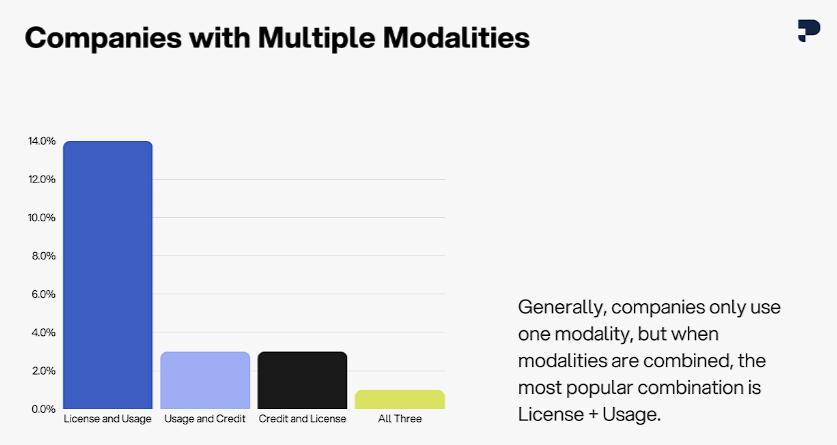
Core Insights - The software sector is experiencing a significant sell-off, termed "SaaSpocalypse," with major companies like Thomson Reuters and Salesforce facing steep declines in stock prices, with the S&P 500 Software and Services Index dropping nearly 13% over five trading days and 26% from its October peak [1] - The launch of Anthropic's Claude Cowork, a general AI agent capable of interacting with user files, has raised concerns about the viability of traditional SaaS business models, as users may achieve results comparable to expensive enterprise software through natural language commands [1] - The current market panic mirrors a previous incident involving DeepSeek, which also caused a rapid sell-off in tech stocks, highlighting a pattern of investor reaction to emerging AI technologies [2][3] Market Reactions - The sell-off triggered by Cowork has been more prolonged than the DeepSeek panic, with the latter's effects dissipating within a day, while Cowork's impact has spread over a week, affecting markets globally [5] - The Cowork panic is driven by a closed-source model from a U.S. company, contrasting with DeepSeek's open-source model from China, suggesting a deeper challenge to established software companies [4] SaaS Pricing Models - Traditional SaaS companies are transitioning from fixed pricing models to usage-based pricing due to the increased efficiency and accessibility of AI, with 79 out of 500 tracked companies adopting point-based pricing, a 126% increase year-on-year [8] - Companies like Salesforce have struggled with pricing strategies, leading to a shift towards usage-based models as they face rising operational costs [8] AI Integration Challenges - Traditional software companies face resistance to price increases associated with AI integration, as seen in Microsoft's case, where customers rejected higher fees for AI features [9] - Many established firms are struggling to effectively incorporate AI into their existing products, leading to inefficiencies and a lack of user engagement [9] Emerging Trends - The rise of Vibe Coding, which allows individuals and companies to create their own tools, poses a threat to traditional software sales, as businesses may prefer to develop customized solutions rather than purchase third-party software [11] - The demand for software is shifting towards solutions that address specific, non-standard needs, indicating a potential decline in the traditional SaaS model [13]

“软件股末日论”点燃大变革! 恐慌抛售之后,市场将捧起AI时代的“软件基石”
美股IPO· 2026-02-07 00:35
Core Viewpoint - A portion of institutional funds is beginning to enter the market for "bottom-fishing" in software stocks that have recently experienced significant declines, agreeing with Jensen Huang's positive outlook on software stocks, suggesting that the market has misjudged strong software giants focused on "AI + core operational processes" [1][4] Group 1: Market Dynamics - The narrative of a "Software-mageddon" is gaining traction, with significant sell-offs in the software sector following the launch of new AI tools by Anthropic, leading to a notable drop in the S&P 500 Software & Services Index, which has fallen approximately 30% since its recent peak at the end of October [3][9] - The software sector faced its most severe sell-off since 2022, with the S&P 500 Software & Services Index experiencing a decline of over 5% in a single day, extending its losing streak to eight consecutive trading days [3][9] - Concerns about AI's impact on traditional SaaS business models have intensified, particularly following the introduction of Anthropic's AI tools, which are designed to handle complex workflows traditionally managed by SaaS providers [7][8] Group 2: Institutional Perspectives - Some institutional investors are starting to view the recent sell-off as an opportunity, believing that high-quality software companies embracing AI may soon experience a technical rebound [4][10] - Analysts from major financial institutions, including Goldman Sachs and Wedbush Securities, suggest that the selling pressure may have peaked, indicating potential for a market bottom and a return of institutional capital to the software sector [16][18] - Rick Sherlund, a prominent analyst, emphasizes that the software industry undergoes significant transformations every 10 to 15 years, and the current AI-driven changes may lead to a new bull market rather than a decline [20] Group 3: Long-term Outlook - Despite fears that AI could completely replace enterprise software, many analysts believe that AI will instead reshape the profitability trajectories of software companies, with a focus on enhancing existing platforms rather than replacing them [12][14] - The market's panic over AI's potential to disrupt software is viewed as exaggerated, with many analysts asserting that established companies with robust platforms, like SAP, will likely benefit from AI advancements [5][19] - The ongoing transition from consumer-facing AI applications to enterprise applications is expected to drive explosive growth in demand for reasoning and computational capabilities [20]


智通港股解盘 | AI负面冲击持续显现比特币又爆仓 底部汽车股被资金挖掘
Zhi Tong Cai Jing· 2026-02-06 13:02
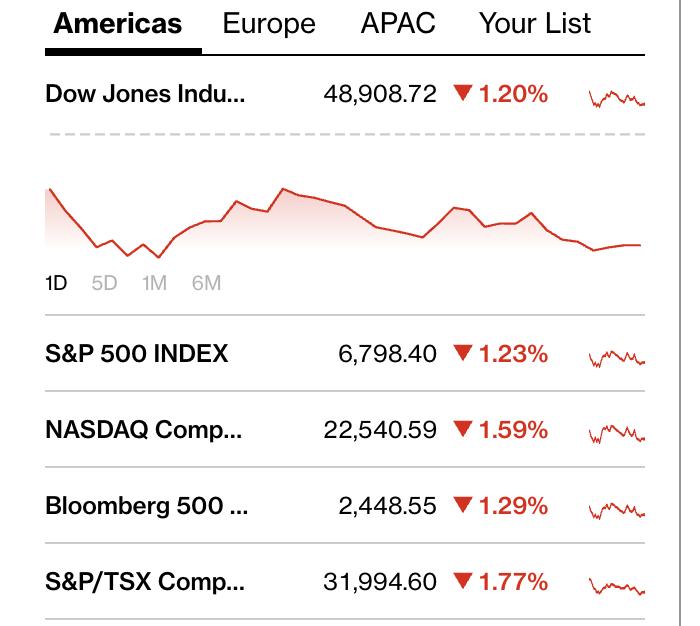
Market Overview - US stock indices fell across the board, with December JOLTS job openings hitting a five-year low, significantly below expectations [1] - Challenger companies announced 108,000 layoffs in January, the highest for the same period since 2009, with a month-on-month increase of 205% [1] - Initial jobless claims rose to 231,000, an increase of 22,000 from the previous week, exceeding expectations, indicating a deteriorating economic situation [1] - Hong Kong stocks were also affected, closing down 1.21% [1] Technology Impact - The decline in job openings is partly attributed to advancements in artificial intelligence, such as Anthropic's Claude Opus 4.6, which outperforms GPT-5.2 in various fields [1] - Financial data service providers like FactSet experienced a significant drop of 10% in stock price, with S&P Global, Moody's, and Nasdaq also declining [1] Automotive Sector - NIO (09866) forecasted adjusted operating profit for Q4 2025 between RMB 700 million (approximately $100 million) and RMB 1.2 billion (approximately $172 million), driven by sales growth and improved product mix [3] - Li Auto (02015) is preparing to launch the new Li L9, featuring advanced technology and a price of RMB 559,800, with a market focus on high-end segments [3] - Both NIO and Li Auto showed positive stock performance, with NIO rising nearly 7% and Li Auto increasing by nearly 4% [3] Consumer Goods - The upcoming Spring Festival is boosting sales in the snack sector, with major companies ramping up production to meet demand [4] - Zhongtong Express (02057) projected total revenue for 2025 between RMB 48.5 billion and RMB 50 billion, a growth of approximately 9.5% to 12.9% from 2024 [4] - SF Express (09699) expects a profit of no less than RMB 238 million for 2025, with a year-on-year increase of over 80% [4] Dairy Industry - Dairy prices are at a low point, with a reduction in dairy cow inventory and losses in farms leading to the exit of inefficient production capacity [5] - The price of milk is expected to stabilize and rise by 2026, benefiting upstream farms and downstream dairy companies [5] - Yurun Dairy (09858) and Mengniu Dairy (02319) saw stock increases of over 4% and 3%, respectively [5] Pharmaceutical Sector - Innovent Biologics (09969) announced a positive earnings forecast, expecting revenue of RMB 2.37 billion for 2025, a year-on-year increase of approximately 134% [6] - The company anticipates its first profitable year with a net profit of around RMB 630 million [6] - Federal Pharmaceutical (03933) received approval for a new drug, enhancing its position in the market [6] Oil Market - Reports indicate that Russia has increased discounts on oil exports to China, aiming to attract demand amid declining purchases from India [7] - If India reduces its imports, China may become the primary buyer of discounted Russian oil, benefiting oil refining companies [7] - Major companies in the Hong Kong market include Sinopec (00386) and Shanghai Petrochemical (00338) [7] Duty-Free Market - China Duty Free Group (01880) reported a nearly 20% year-on-year increase in shopping totals at duty-free stores in Hainan since the new policy implementation [8] - The company holds a significant market share in Hainan's duty-free sector, with a strong supply chain and partnerships with over 1,000 luxury brands [9] - The expansion of duty-free shopping in Hainan is expected to enhance the company's growth prospects [9]


软件股末日论”点燃大变革! 恐慌抛售之后,市场将捧起AI时代的“软件基石
Zhi Tong Cai Jing· 2026-02-06 11:49
Core Viewpoint - The recent narrative of "Software-mageddon" has led to a significant sell-off in the software sector, particularly affecting SaaS stocks, following the launch of new AI tools by Anthropic, which are perceived as threats to traditional software business models [1][4][5]. Group 1: Market Reaction - The S&P 500 Software & Services Index has experienced a decline of approximately 30% since its recent peak at the end of October, marking the most severe sell-off since 2022 [1][6]. - Major software companies, including Thomson Reuters and Salesforce, have seen their stock prices drop significantly, with some experiencing declines of up to 10% in a single day [5][6]. - The sell-off has been exacerbated by disappointing earnings guidance from major companies, including Microsoft, and heightened expectations for AI infrastructure spending [5][6]. Group 2: Institutional Response - Some institutional investors are beginning to enter the market to buy undervalued software stocks, believing that the market has overreacted to the AI threat [2][12]. - Analysts express a divided view on the long-term impact of AI on software companies, with some believing that AI will reshape profit trajectories rather than eliminate the need for existing software [9][14]. Group 3: Expert Opinions - Rick Sherlund, a prominent analyst, argues that the software industry undergoes significant transformations every 10 to 15 years, and companies with strong fundamentals, like SAP, will likely benefit from AI rather than be threatened by it [3][16]. - Nvidia's CEO Jensen Huang emphasizes that the notion of AI completely replacing software is illogical, suggesting that AI will enhance existing software rather than replace it [7][8]. - The current market panic is described as "micro-hysteria," with experts suggesting that the fears surrounding AI's impact on software are exaggerated [8][12]. Group 4: Future Outlook - The software sector is expected to experience a technical rebound as investors reassess the long-term value of companies that integrate AI into their operations [2][11]. - High-quality software companies that embrace AI are likely to emerge stronger from the current turmoil, as the market begins to differentiate between those with robust business models and those that are more vulnerable [11][15].
全球资金流向生变!“Anthropic风暴”重创科技 价值股与债基成“新避风港”
智通财经网· 2026-02-06 11:40
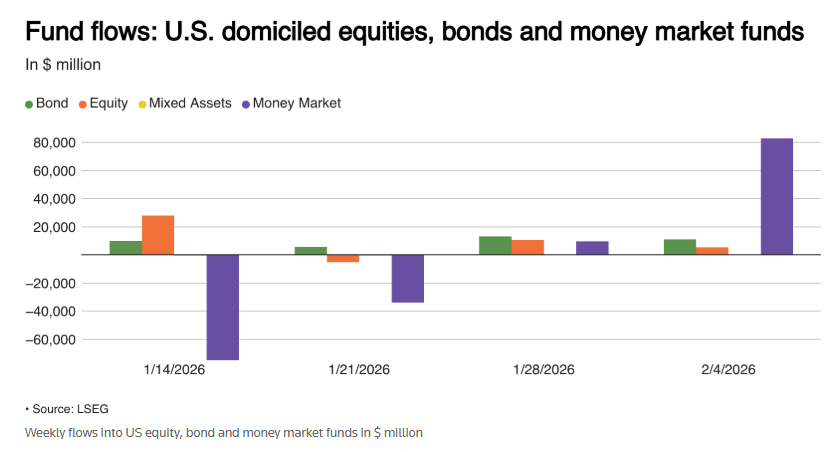
Core Viewpoint - The recent statistics indicate a significant decline in investment demand for U.S. equity funds, attributed to fears surrounding AI's potential to disrupt the software industry, despite strong earnings reports from major companies like Eli Lilly and Super Micro Computer [1] Group 1: Market Trends - U.S. equity funds saw a net inflow of approximately $55.8 billion for the week ending February 4, a sharp decrease of about 48% from the previous week's inflow of $108.2 billion [1] - The introduction of new AI tools by Anthropic has intensified market fears regarding the disruption of the SaaS software industry, leading to a collective crash in software stocks [4] - Major U.S. indices experienced a significant drop following the announcement of advanced AI capabilities that threaten traditional software services [4] Group 2: Fund Flows - Large-cap equity funds recorded a surprising net inflow of about $11 billion, indicating ongoing bullish sentiment towards major tech companies like Google, Nvidia, and Apple [5] - Mid-cap and small-cap equity funds experienced outflows of approximately $15.9 billion and $16.7 billion, respectively, reflecting a shift in investor sentiment [5] - Investors directed $21.1 billion into undervalued industrial sectors and approximately $14.4 billion into metals and mining, while withdrawing about $23.4 billion from the tech sector [5] Group 3: Bond and Cash Market Activity - U.S. bond funds achieved a net inflow of $111.1 billion over the latest week, marking the fifth consecutive week of significant inflows [8] - Short- to medium-term investment-grade bond funds received net investments of about $63.4 billion, the largest weekly inflow since at least 2022 [8] - Money market funds recorded a net inflow of $830.9 billion, the highest since early December, indicating a shift towards cash and bonds amid declining risk appetite [11]
Claude新模型4.6来了,更多饭碗没了:华尔街财务、编译器、安全白帽、PPT…通通失守
3 6 Ke· 2026-02-06 11:24
Core Insights - Anthropic has launched its new model, Claude Opus 4.6, which has significantly impacted the market, causing declines in major financial data service providers and indices [1][3][4] - The model demonstrates enhanced capabilities across various domains, including financial analysis, research, and office tasks, surpassing competitors like OpenAI's GPT-5.2 in performance metrics [6][8][29] Model Performance - Claude Opus 4.6 outperforms OpenAI GPT-5.2 by 144 Elo points in the GDPval-AA evaluation, achieving higher scores in approximately 70% of cases [8][29] - In programming tasks, Opus 4.6 achieved the highest score in the Terminal-Bench 2.0 assessment, showcasing its superior task planning and debugging capabilities [11][24] - The model supports multi-language coding and can efficiently handle large codebases, reducing migration time significantly [26] New Features - Opus 4.6 introduces Adaptive Thinking, allowing the model to autonomously determine when to engage in deep reasoning, along with a context compression feature for managing lengthy dialogues [20][21] - The model maintains its pricing structure, charging $5 for every million tokens input/output, with additional fees for exceeding 200k tokens in context [34][35] Security and Collaboration - The model has demonstrated exceptional capabilities in cybersecurity, identifying over 500 previously unknown high-risk zero-day vulnerabilities during testing [41][42] - Opus 4.6 features Agent Teams, enabling multiple instances of Claude to collaborate on tasks without human supervision, exemplified by a project that produced a C compiler in two weeks [36][40] Market Impact - The launch of Opus 4.6 has raised concerns among investors regarding the potential disruption of traditional industries by AI technologies, leading to significant market volatility [1][4][3] - The model's advancements in reasoning and understanding complex domains like law and finance position it as a leading tool in the AI landscape [29][30]
“软件股末日论”点燃大变革! 恐慌抛售之后,市场将捧起AI时代的“软件基石”
智通财经网· 2026-02-06 09:13
Core Viewpoint - The recent narrative of "Software-mageddon" has led to a significant sell-off in the software sector, particularly affecting SaaS stocks, following the launch of new AI tools by Anthropic, which are perceived as threats to traditional software business models [1][4][5]. Group 1: Market Reaction - The S&P 500 Software & Services Index has experienced a decline of approximately 30% since its recent peak at the end of October, marking the most severe sell-off since 2022 [1][6]. - Major software companies, including Thomson Reuters and Salesforce, have seen significant stock price drops, with some experiencing declines of up to 10% in a single day [5][6]. - The sell-off has been exacerbated by disappointing earnings guidance from major companies, including Microsoft, and heightened expectations for AI infrastructure spending [5][6]. Group 2: Institutional Response - Some institutional investors are beginning to enter the market to buy undervalued software stocks, believing that the market has overreacted to the AI threat [2][12]. - Analysts from firms like Goldman Sachs and Wedbush Securities suggest that the sell-off reflects an exaggerated "Armageddon scenario" and that companies will not abandon their existing software investments for new AI solutions [12][14]. Group 3: Expert Opinions - Rick Sherlund, a prominent technology analyst, argues that the software industry undergoes significant transformations every 10 to 15 years, and companies with strong fundamentals, like SAP, will likely benefit from AI rather than be replaced by it [3][16]. - Nvidia's CEO, Jensen Huang, emphasizes that AI will enhance existing software infrastructure rather than replace it entirely, countering the prevailing panic in the market [7][8]. Group 4: Long-term Outlook - Analysts believe that while AI may disrupt certain aspects of the software industry, it will also create new growth narratives, particularly for companies that can integrate AI into their existing platforms [9][10]. - The market is expected to see a bifurcation, where companies with strong data assets and integration capabilities, such as Microsoft and SAP, are likely to rebound more strongly than those with weaker competitive positions [11][15].
Anthropic Updates Its AI Model, Claude Opus 4.6
Bloomberg Television· 2026-02-05 19:31
Now I want to go back to that headline I just told you about with Anthropic. Let's bring in Bloomberg's Srini Ghaffari to tell us more. So Cherien, the headline here is that Anthropic has updated its AI model clod Opus 4.6% to field complex financial research.Put this headline into context for us, given what we learned earlier this week. That's right. So we are seeing this as what Anthropic is calling its most capable model yet at Enterprise.And specifically, they say that it's a big improvement on the fina ...