Perplexity

Search documents
X @LBank.com
LBank.com· 2026-01-21 16:10
🔥 World Premiere #listing🌠 $SENT (Sentient) will be listed on LBank!@SentientAGISentient is building the world’s first open, community-built AGI network as an alternative to closed systems like OpenAI, Anthropic, xAI, and Perplexity.❤️ Details: https://t.co/Q37JPtCnK6 https://t.co/8XBDkuDBnN ...
喝点VC|a16z 2026预测:创业公司的机会在“有主见”的交互界面
Z Potentials· 2026-01-20 02:57
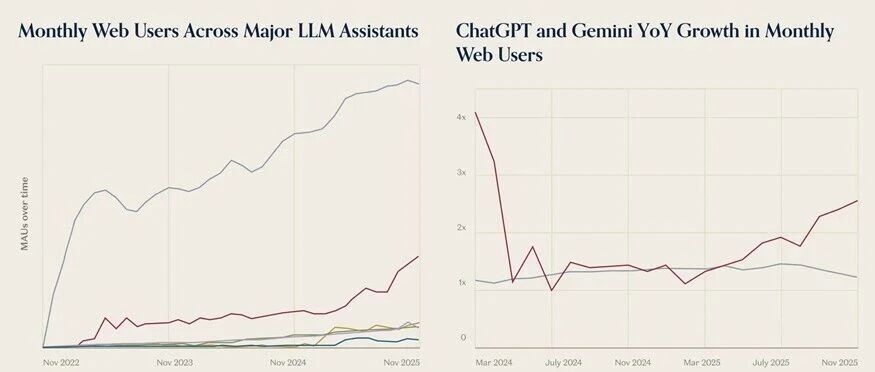
Core Insights - This year marks a significant surge in consumer AI product launches, with major players like OpenAI and Google releasing numerous new tools and features [5][6] - While AI usage is increasing, most consumers still predominantly use a single product, indicating a highly concentrated market where a few players dominate [6][7] - OpenAI's ChatGPT maintains a leading position with an estimated 800 to 900 million weekly active users, significantly outpacing competitors like Gemini [7][9] - Gemini has shown impressive growth, particularly in paid subscriptions, with a nearly 300% increase compared to ChatGPT's 155% [8][12] - The competition landscape suggests that while there are multiple players, the market is leaning towards a few dominant entities capturing the majority of consumer engagement [6][7] OpenAI - OpenAI launched several new features for ChatGPT, including image generation and enhanced user experiences, but these have not significantly improved user retention or engagement [9][10] - ChatGPT's user engagement metrics, such as a daily to monthly active user ratio of 36%, indicate strong retention compared to Gemini's 21% [7][12] - The introduction of new applications like Sora and Atlas has had mixed results, with Sora achieving over 12 million downloads but struggling with user retention [10][11] Google - Google has made substantial progress with its Gemini product, achieving a 155% growth in user engagement and introducing innovative models like Nano Banana [12][13] - The launch of NotebookLM has been particularly successful, doubling its web user base and reaching 8 million monthly active users [12][13] - Despite releasing several products, Google faces challenges in making these offerings easily accessible to users, which could hinder their overall impact [13][14] Other Key Players - Anthropic focuses on professional consumers, enhancing its Claude product with new features aimed at tech-savvy users [15] - Perplexity has targeted efficiency enthusiasts with products like Comet and a new conversational shopping assistant, achieving a significant revenue increase [17] - xAI's Grok has rapidly gained users, reaching 9.5 million daily active users by integrating more deeply with the X platform [18][19] - Meta's AI initiatives have seen mixed results, with its MetaAI app growing but facing challenges in user engagement [20] Opportunities for Startups - The current landscape presents significant opportunities for startups to create specialized consumer experiences, as larger companies focus on core capabilities [21][22] - Successful consumer AI products have emerged by offering unique interfaces and functionalities that exceed what model companies provide [22]


DeepMind首席执行官正“每日”与谷歌首席执行官沟通 该实验室正加大力度与OpenAI展开竞争
Xin Lang Cai Jing· 2026-01-16 08:01
Core Insights - In early 2025, investors questioned Google's ability to keep pace with OpenAI in the AI race, but by the end of the year, Alphabet's stock achieved its best performance since 2009 [1] - Google's resurgence in AI is largely attributed to DeepMind, which was acquired in 2014 for approximately £400 million [1][9] - DeepMind's CEO, Demis Hassabis, emphasized the company's role as the "core engine" of Google's AI development and noted adjustments made to accelerate product deployment in a competitive environment [1][9] Company Adjustments - In 2023, Google merged its Google Brain research division with DeepMind, laying the groundwork for the success of its flagship AI assistant, Gemini [3][11] - Key personnel changes, including the promotion of Josh Woodward to oversee Gemini-related operations, have also contributed to this shift [3][11] - Despite being behind OpenAI after the launch of ChatGPT in November 2022, Google has made strides in product commercialization and rapid deployment of AI technologies [3][11] Competitive Landscape - The current market competition is described as "fierce," with many industry veterans acknowledging it as one of the most intense periods in tech history [2][10] - Google faces competition not only from OpenAI but also from other companies like Amazon, Perplexity, and Anthropic [1][9] Product Development - Hassabis stated that the Gemini series models developed by DeepMind can be quickly integrated into various Google products, with a smoother deployment process observed over the past year [4][12] - The launch of Gemini 2.5 in March 2025 and Gemini 3 in November 2025 received high praise for their performance [4][11] Strategic Communication - Hassabis and Google CEO Sundar Pichai communicate almost daily to discuss strategic matters and technology development, highlighting DeepMind's significance in Google's overall planning [5][13] - This ongoing dialogue facilitates real-time adjustments to product roadmaps and long-term goals, aiming for the rapid and safe realization of general artificial intelligence [6][13] Market Dynamics - There is ongoing debate about whether the current AI boom represents a bubble, with significant investments flowing into AI startups, many of which have high valuations despite underdeveloped products [7][14] - Hassabis acknowledged that while some areas of AI may exhibit bubble-like characteristics, the technology itself is poised to be transformative for humanity [8][15] - He compared the current AI hype to the internet bubble of the late 1990s, suggesting that valuable companies will emerge from this period despite potential market corrections [8][15] Long-term Positioning - Hassabis expressed the need to ensure that the company is well-positioned to thrive regardless of future market conditions, whether they involve continued growth or a potential bubble burst [16] - He believes that the integration of AI with Google's core business places the company in a favorable position to benefit from future developments in the industry [16]
维基百科运营方与微软、元宇宙平台公司达成人工智能内容训练合作协议
Xin Lang Cai Jing· 2026-01-15 10:35
Core Insights - Wikipedia has announced partnerships with major tech companies including Microsoft, Meta, and Amazon, marking a significant step in monetizing its content reliance by these firms [1][4] - The Wikimedia Foundation has signed agreements with several companies, including AI startups Perplexity and Mistral AI, in addition to existing partnerships [1][4] Industry Context - Wikipedia's content is crucial for training AI models, encompassing over 65 million entries in more than 300 languages, serving as a primary data source for tech giants developing generative AI chatbots and smart assistants [2][5] - The increasing demand for Wikipedia's free content for AI training has led to rising server demands and costs for the non-profit organization, which primarily relies on small public donations for funding [2][5] Business Model Evolution - The Wikimedia Foundation is promoting its enterprise service, which allows tech companies to pay for content training access and offers customized data services based on large-scale training needs [2][5] - Ryan Becker, president of Wikimedia Enterprise, emphasized the necessity for tech companies to financially support Wikipedia, recognizing the importance of transitioning from free access to commercial partnerships [6] Leadership Changes - The Wikimedia Foundation has appointed Bernadette Meehan, former U.S. ambassador to Chile, as the new CEO, effective January 20 [3][6]


大模型时代小公司,怎么走出OpenAI的路
新财富· 2026-01-14 08:05
Core Insights - The article discusses the recent IPOs of AI companies, highlighting the significant oversubscription rates and initial stock price surges, indicating strong market interest in AI ventures [3][5] - It emphasizes the challenges faced by AI startups in a landscape dominated by major tech firms like Tencent, ByteDance, and Alibaba, suggesting that these giants create a difficult environment for smaller companies to thrive [7][15] Group 1: Market Dynamics - The IPO of Zhihua Huazhang on January 8, 2026, had an issue price of HKD 116.2 per share, with a subscription rate of approximately 1,159 times, and a first-day price increase of 13.17%, leading to a market cap of nearly HKD 90 billion [3] - MiniMax, established only four years prior, went public on January 9, 2026, at HKD 165 per share, with an oversubscription of over 1,800 times and a first-day price increase of 109.1%, resulting in a market cap exceeding HKD 100 billion shortly thereafter [5] Group 2: Technological Paradigms - The article argues that the current AI landscape is shaped by the "Scaling Law," which suggests that increasing model size, data, and computational power leads to predictable improvements in performance [9][10] - It notes that the success of OpenAI is seen as a unique historical occurrence that may not be replicable, as the current environment is characterized by concentrated computational resources and homogenized model capabilities [12][13] Group 3: Competitive Landscape - The emergence of DeepSeek has altered industry perceptions by significantly reducing training and inference costs, challenging the narrative that only large investments can yield viable models [19][22] - Major companies are now treating models as foundational infrastructure rather than profit centers, which complicates the ability of startups to justify their value propositions to clients [22][23] Group 4: Strategies for Startups - Startups like MiniMax and Zhihua Huazhang are finding sustainable paths by avoiding direct competition with large firms, focusing instead on niche markets or specific applications [26][30] - MiniMax is targeting overseas markets with products centered on companionship and interaction, while Zhihua focuses on complex enterprise applications that larger firms may overlook [28][31] - The article suggests that successful startups must carve out unique positions within existing paradigms rather than attempting to replicate the success of giants like OpenAI [42]

当 AI 接管钱包:Agentic Commerce 如何重构互联网经济?
海外独角兽· 2026-01-14 04:05
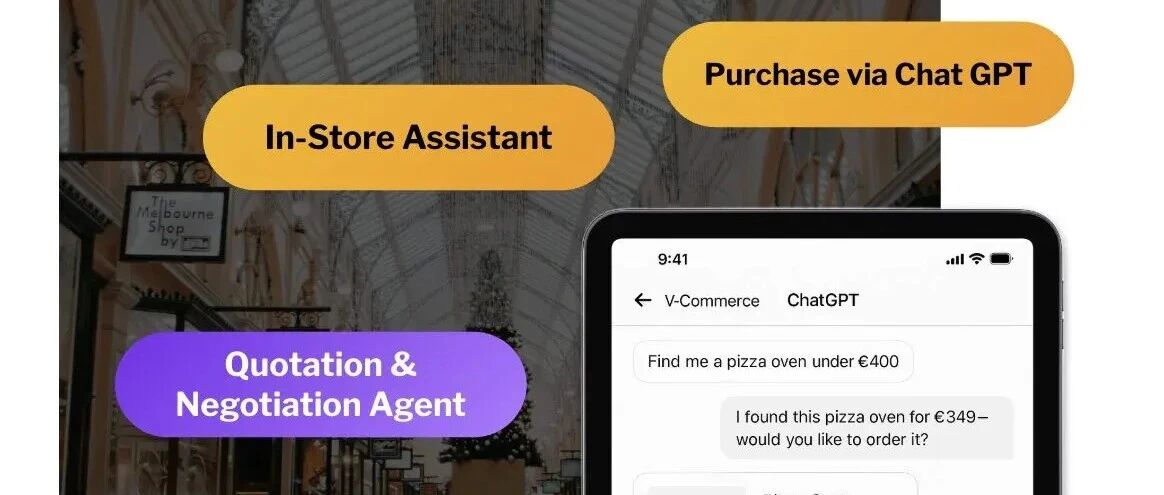
Core Insights - Agentic Commerce represents a significant shift in the way commerce operates, potentially transforming the landscape of internet advertising, e-commerce, and payment infrastructure if successfully implemented [2][5] - The article explores two main questions: 1) Can Agentic Commerce be commercially viable? 2) If successful, how will it reshape the distribution of benefits across the internet ecosystem? [5] Commercial Viability - The article reviews past failures of Meta and Google in e-commerce, contrasting their approaches with those of OpenAI and Perplexity, to identify which third-party models (3P) are most likely to succeed in the future [5][24] - The potential total addressable market (TAM) for three consumer behavior categories—Impulse Buys, Routine Essentials, and Life Purchases—is estimated to be $3 trillion, with Lifestyle and Functional Purchases being the most promising areas for Agentic Commerce [8][9] E-commerce Spectrum - E-commerce is described as a continuous spectrum, with Amazon and Shopify at opposite ends, defined by who acts as the Merchant of Record (MoR) [10][11] - The distinction between "Platform is the MoR" (e.g., Amazon) and "Merchant is the MoR" (e.g., Shopify) affects the business scale, merchant control over customer data, and the potential for disruption in payment systems [12][13] Agentic Commerce Paths - Perplexity and ChatGPT represent two different approaches to Agentic Commerce, with Perplexity acting as the MoR and ChatGPT allowing merchants to retain that role [14][19] - OpenAI's Agentic Commerce Protocol (ACP) decouples the front-end checkout experience from back-end payment processing, allowing merchants to maintain their existing payment service providers while integrating with ACP [15][18] Historical Context - Google and Meta's reluctance to become MoR contributed to their struggles in e-commerce, as they prioritized advertising revenue over the complexities of managing e-commerce transactions [24][26] - The article suggests that if Google or Meta had developed a protocol similar to ACP, their e-commerce trajectories might have been different [26] Impact on Advertising and Payment - The article discusses how Agentic Commerce could redefine the relationship between advertising costs and commission rates, likening both to a form of "digital tax" [32][33] - Shopify is positioned as a structural winner in the Agentic Commerce context, benefiting from its lack of MoR responsibilities and the potential for increased market penetration among small and medium-sized businesses (SMBs) [38][39] Future Considerations - The article envisions a future where a Universal Catalog could be developed to facilitate AI-driven shopping experiences, requiring rich and structured metadata to support precise consumer needs [44]

苹果AI自研不动,库克外包给谷歌Gemini了
量子位· 2026-01-13 09:50
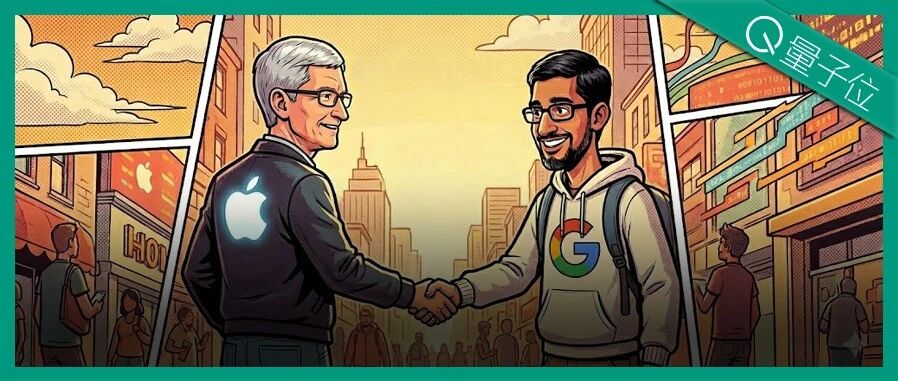
克雷西 发自 凹非寺 量子位 | 公众号 QbitAI 兜兜转转,苹果AI最终选择了谷歌。 今天凌晨,两家公司发布联合声明,官宣达成了深度合作协议, 将基于Gemini模型和谷歌的云技术构建下一代苹果基础模型 。 当然这也不是老马第一次对苹果AI进行输出,去年苹果和OpenAI宣布合作的时候,马斯克就提起来反垄断诉讼,指控这两家公司串谋"确保其 在人工智能市场的持续主导地位"。 苹果AI花落谷歌 根据双方声明,这项合作将带来的成果之一就是"更个性化的Siri",而且今年年内就会上线。 总之,从去年被彭博社古尔曼曝出与谷歌私下接触,双方的合作总算是要尘埃落定。 这则消息无疑对双方都是利好,两家的公司股价齐声上涨,谷歌的市值还首次突破4万亿美元关口。 | 有人欢喜有人忧,隔壁马斯克就是被酸到的一个,他表示考虑到谷歌还有Chrome和安卓,这就是赤裸裸的垄断。 | | --- | 根据双方的合作协议,Gemini将为苹果新版Siri乃至更广泛的Apple Intelligence提供底层技术支持,运行模式将继续采用苹果私有云+端侧结 合的方式,以确保数据隐私。 外界预估苹果每年可能向谷歌支付约10亿美元的授权费用, ...

巨头联手!沃尔玛、谷歌宣布:合作
Huan Qiu Wang Zi Xun· 2026-01-12 23:20
Group 1 - Walmart and Google announced a collaboration to integrate Google's generative AI chatbot Gemini into Walmart's shopping process, allowing consumers to discover products, compare prices, and complete purchases more efficiently [1][3] - The partnership reflects a shift in consumer behavior in the U.S., where more shoppers are now consulting AI before accessing shopping apps or e-commerce websites [3][5] - Walmart's CEO stated that the retail industry is transitioning from traditional web or app searches to AI-driven business models, marking a significant evolution in retail [5] Group 2 - Google is enhancing its AI e-commerce strategy, having introduced a new open technology standard called the Universal Commercial Protocol (UCP) in collaboration with several retailers, including Walmart [5][6] - The UCP aims to establish a common language and interaction standards for AI-driven shopping processes, facilitating direct connections between AI shopping agents, retailers, and payment systems [6] - Other AI companies are also embedding e-commerce functionalities into their chatbots, with OpenAI and Stripe developing a similar open-source solution, indicating potential competition with UCP [8][10] Group 3 - A McKinsey report projects that the global retail market could reach a potential size of $3 trillion to $5 trillion by 2030, driven by AI tools and "agent commerce" [10]


PayPal's Agentic Commerce Expansion: Will it Boost Top-Line Growth?
ZACKS· 2026-01-12 17:20
Core Insights - PayPal Holdings (PYPL) has formed a strategic partnership with Microsoft to implement Copilot Checkout, allowing users to discover, decide, and pay within the Copilot interface [1][9] - This integration enhances AI-driven shopping by merging Microsoft's discovery tools with PayPal's commerce and payment features, providing a seamless customer experience [2] - PayPal's agentic commerce services enable merchants to convert product catalogs into purchasable items through features like store sync [2][9] Group 1: Partnerships and Integrations - PayPal has partnered with Logicbroker, enabling thousands of merchants to activate PayPal's agentic commerce services, including store sync [4] - Collaborations with OpenAI and Perplexity allow for seamless payments and agentic commerce experiences within platforms like ChatGPT and Perplexity Pro [4] - PayPal's ecosystem includes partnerships with Wix, Cymbio, Commerce (BigCommerce and Feedonomics), and Shopware, facilitating AI-driven discovery and checkout [5] Group 2: Market Position and Performance - PayPal shares have declined by 22% over the past six months, underperforming the broader industry and the S&P 500 Index [8] - The stock is currently trading at a forward 12-month P/E of 9.80X, significantly lower than the Zacks Financial Transaction Services industry's average of 20.95X, indicating a cheap valuation [11] - Despite a negative trend in estimate revisions, the Zacks Consensus Estimate for full-year 2026 EPS suggests a year-over-year growth of 9.7% [12]

Google bolsters bet on AI-powered commerce with new platform for shopping agents
CNBC· 2026-01-11 15:00
Core Insights - Google aims to establish the Universal Commerce Protocol (UCP) as an industry standard for AI tools in retail, facilitating a unified shopping experience from discovery to payment [1][6] - The e-commerce sector is becoming a competitive arena for generative AI, with Google competing against OpenAI, Perplexity, and Amazon for consumer engagement [2] Group 1: Universal Commerce Protocol (UCP) - UCP is designed to allow retailers to utilize AI agents and systems without the need to develop their own tools, promoting efficiency and integration across various functions [1][6] - The protocol was co-developed with major companies like Shopify, Etsy, Wayfair, and Target, and will support a new checkout feature in Google's AI Mode or Gemini App [6] Group 2: Competitive Landscape - OpenAI has introduced Instant Checkout, enabling purchases through ChatGPT, which may compete with UCP [3] - Perplexity is collaborating with PayPal to facilitate direct purchases within its chat platform, indicating a trend towards integrated shopping experiences [4] - Amazon's "Shop Direct" feature allows consumers to browse and purchase items from other brands directly on its platform, showcasing its competitive strategy [5] Group 3: Consumer Engagement and Advertising - Google has launched a feature called Business Agent, enabling shoppers to interact with brands in a conversational manner, reflecting a shift towards conversational commerce [7] - The company is testing "Direct Offers," allowing retailers to provide unique discounts based on user intent, enhancing the advertising ecosystem [8]