
LG

Search documents
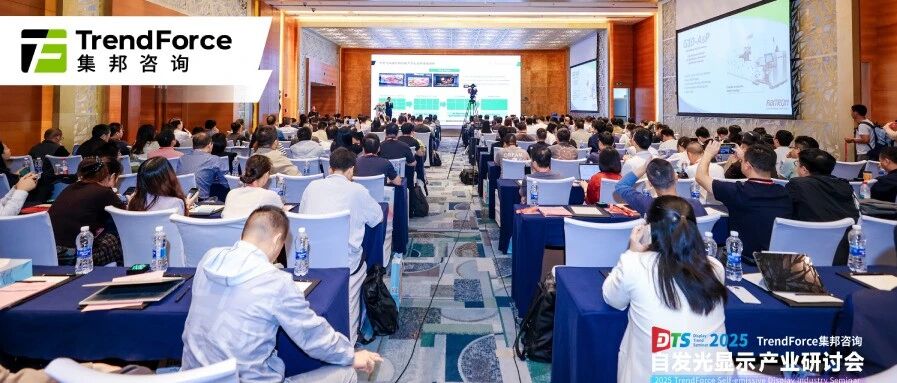
解锁市场展望与机遇,2025自发光显示产业研讨会核心亮点全览
TrendForce集邦· 2025-10-31 04:08
Core Insights - The 2025 Self-Luminous Display Industry Seminar held by TrendForce highlighted the promising future and opportunities in the self-luminous display sector [2][5]. Group 1: Micro LED Commercialization - The commercialization of Micro LED is accelerating, particularly in wearable devices, large displays, automotive displays, and non-display applications, despite facing challenges such as high costs and power consumption [9]. - Major manufacturers like Samsung, LG, and BOE are planning to mass-produce Micro LED displays larger than 100 inches, with cost reduction being a common goal [9]. - In automotive displays, Micro LED's high brightness and contrast are advantageous, but issues like color shift at high temperatures remain [11]. - Micro LED shows potential in non-display applications, such as adaptive headlights and light interconnect technology for AI server cabinets, with interest from major companies like Apple and Microsoft [11]. Group 2: AR Glasses Development - AR glasses are seen as suitable devices for integrating AI functionalities, with major companies prioritizing the release of AI glasses before AR glasses [14]. - The main technologies in display for AR glasses include LCoS, OLEDoS, and LEDoS, with LEDoS gaining market attention for its diverse color technology [16]. - The optical technology for AR glasses is leaning towards waveguide solutions, with diffraction waveguides being a mainstream option [17]. Group 3: Global LED Display Market - The global LED display market is projected to grow slightly to $7.5 billion by 2025, with demand in the domestic market not showing significant improvement due to price declines from increased competition [21][23]. - The market is segmented into developed regions, where demand is weak due to tariffs, and developing regions, where LED display adoption is increasing [21]. - Long-term trends indicate continued penetration into developing markets, small to medium-sized clients, and emerging applications, with a forecasted market size of $10.2 billion by 2029 [23].

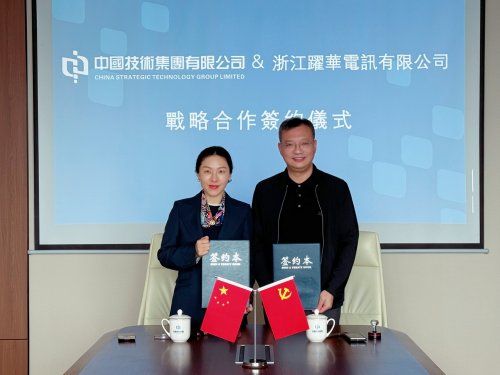
中国技术集团大动作:总部落穗后并购跃华电讯,“生态共建”深耕中东
Sou Hu Wang· 2025-10-31 03:04
Core Insights - The strategic acquisition memorandum signed between China Technology Group and Zhejiang Yuehua Electric Co., Ltd. marks a significant step in the globalization strategy of the Intercontinental Aerospace Technology Group, emphasizing the integration of technology and manufacturing to enhance China's influence in the Middle East market [2][5][9] Group 1: Strategic Importance - The relocation of the headquarters from Hong Kong to Guangzhou is not merely a geographical shift but a strategic move to leverage the Greater Bay Area as a hub for industrial integration and technology export [5][9] - The partnership with Yuehua Electric, a leader in the cable and connector industry, is aimed at enhancing the "technology + manufacturing" model, facilitating the entry into high-growth sectors in the Middle East [9][10] Group 2: Operational Synergies - China Technology Group plans to utilize Guangzhou as an operational hub to integrate high-quality domestic technology resources and promote systematic technology export [5][7] - The collaboration will enable rapid access to the Middle Eastern market, particularly in renewable energy and digital infrastructure, aligning with Dubai's 2050 renewable energy strategy [9][10] Group 3: Manufacturing Capabilities - Zhejiang Yuehua Electric has established a comprehensive competitive advantage with over 90 international certifications and a modern production base, catering to major global clients [7] - The acquisition will enhance the supply chain for renewable energy projects and digital centers in the Middle East, ensuring that Yuehua's products meet local demands for reliability and environmental sustainability [7][10] Group 4: Market Expansion - The partnership aims to create a win-win situation by moving beyond traditional single-product exports to a more integrated approach that includes technology solutions and localized services [9][10] - The collaboration is expected to elevate Yuehua Electric from a domestic supplier to a global industry participant, enhancing its market presence and brand influence in the Middle East [10]
肝胆每相照 冰壶映寒月——河南与韩国庆尚北道30年友谊之路
He Nan Ri Bao· 2025-10-30 23:15
Group 1 - The APEC informal leaders' meeting was held in Gyeongsangbuk-do, South Korea, highlighting the region's significance and its historical ties with Henan, China [1] - Gyeongsangbuk-do is the largest administrative region in South Korea and an important industrial base, home to major companies like Samsung, LG, and POSCO [2] - Henan has a robust manufacturing system, particularly in electronic information, new energy vehicles, and machinery, providing significant opportunities for Korean enterprises [2] Group 2 - The two regions have engaged in extensive cooperation over the past 30 years, including high-level exchanges and signing over 10 agreements [2] - Cultural and educational exchanges have been prominent, with activities such as bilingual speech competitions, art exhibitions, and the establishment of a model village for Sino-Korean cooperation [2] - During the COVID-19 pandemic, both regions supported each other with donations of medical supplies, showcasing their strong friendship [3]
深耕功能高分子材料 能之光前三季度归母净利润4117万元,同比增长6.65%
Quan Jing Wang· 2025-10-30 12:47
Core Insights - The company achieved a revenue of 448 million yuan in the first three quarters of 2025, a slight increase of 0.93% year-on-year, with a net profit of 41.17 million yuan, reflecting a growth of 6.65% year-on-year [1] - The company specializes in the research, production, and sales of polymer additives and functional polymer materials, and is recognized as a national-level "little giant" enterprise [1][2] - The company has developed over 300 product grades based on graft modification technology, serving various industries including automotive, electronics, and photovoltaic components [1][2] Company Performance - The basic earnings per share increased to 0.62 yuan, indicating stable and improving profitability [1] - The company has established a strong market position in the compatibilizer sector, with its core product technology being competitive against domestic peers and some products matching imported counterparts [2][3] Market Position and Growth - The global polymer materials additives industry has seen rapid growth, with China's plastic additives market expected to reach 9.78 billion USD by 2026, growing at a CAGR of 4.78% [2] - The company has a diverse customer base, including domestic listed companies and global Fortune 500 firms, enhancing its market reach [3] Technological Advancements - The company has developed several core technologies, including grafting reaction extrusion technology and supercritical fluid purification technology, enabling large-scale production of high-quality products [2] - The company holds 57 invention patents, with 51 being independently developed, and has established research platforms to support innovation [2] Product Development - The company is actively expanding into functional polymer materials, with sales of adhesive resins and functional masterbatches already initiated [2][4] - The company has developed functional masterbatches tailored for the rapid evolution of photovoltaic cells, enhancing the performance of encapsulation films [3]
春秋电子(603890):PC结构件领先企业 深度受益笔电行业景气回升
Xin Lang Cai Jing· 2025-10-30 12:37
Core Viewpoint - The company has significantly benefited from the recovery of the laptop industry, leading to substantial growth in its performance in 2025 [1][2]. Group 1: Financial Performance - In the first three quarters of 2025, the company achieved a revenue of 3.197 billion yuan, representing a year-on-year increase of 7.21% [1]. - The net profit attributable to shareholders reached 231 million yuan, marking a year-on-year growth of 63.91% [1]. - In Q3 2025, the company recorded a non-GAAP net profit of 114 million yuan, a historical high with a year-on-year increase of 452.42% [2]. Group 2: Market Position and Client Relationships - The company is one of the few notebook component suppliers with independent mold design and production capabilities, providing precision structural component modules to major manufacturers [2]. - It has established long-term stable partnerships with leading global laptop brands such as Lenovo, Dell, HP, Samsung, Toshiba, and LG, as well as with major OEMs like Wistron, Quanta, and Huaqin [2]. - The company collaborates closely with its clients in the R&D process of new products, enhancing its relationships with downstream customers [2]. Group 3: Industry Trends and Future Outlook - The company is expected to benefit from the increasing penetration of AI PCs and the recovery of the PC industry [2]. - It has mastered magnesium alloy manufacturing processes and is positioned to supply components for the growing demand in the new energy vehicle sector [3]. - The company has received certifications from several well-known automotive electronics manufacturers and has formed business relationships with various new energy vehicle manufacturers [3]. - Revenue projections for 2025-2027 are 4.629 billion, 5.639 billion, and 6.767 billion yuan, with year-on-year growth rates of 17.4%, 21.8%, and 20.0% respectively [3]. - Net profit forecasts for the same period are 334 million, 460 million, and 605 million yuan, with year-on-year growth rates of 58.2%, 37.7%, and 31.4% respectively [3].

干货满满!2025自发光显示产业研讨会亮点一览
WitsView睿智显示· 2025-10-30 10:20
Core Viewpoint - The self-emissive display industry is experiencing rapid advancements, particularly in Micro LED and Mini LED technologies, which are expected to drive significant growth and innovation in various applications, including automotive displays, wearables, and cinema technology [2][4][62]. Group 1: Micro LED Developments - Micro LED technology is accelerating commercialization in wearable devices, large displays, and automotive applications, despite challenges such as high costs and power consumption [4][6]. - Major manufacturers like Samsung, LG, and BOE are prioritizing the mass production of Micro LED displays larger than 100 inches, focusing on cost reduction through chip size miniaturization [4][6]. - Micro LED is also showing potential in non-display applications, such as adaptive headlights and AI server interconnects, with major companies like Apple and Microsoft evaluating these technologies [6][8]. Group 2: MIP Technology - MIP technology is enabling the display industry to innovate by achieving "packaging as a module," which addresses cost advantages and modularity, facilitating broader market applications [8][11]. - The MIP technology is evolving faster than expected, moving from niche products to commercial viability, with applications expanding into automotive displays and home theater systems [8][11]. Group 3: Industry Challenges and Compliance - The LED display industry faces challenges such as irrational competition, lack of standards, and safety compliance issues, with a call for a shift towards high-quality development and compliance with regulations [14][16]. - The prevalence of non-compliant products poses risks to public safety, necessitating stricter enforcement of regulations and industry standards [14][16]. Group 4: Cinema Technology Innovations - The cinema industry is leveraging LED technology to enhance viewing experiences, with solutions like the HeyLED movie screen that surpass traditional DLP technology in brightness and contrast [22][25]. - The integration of immersive live streaming and AIGC technology is expected to redefine cinema experiences and expand operational capabilities [25][22]. Group 5: Market Outlook - The global LED display market is projected to grow slightly to $7.5 billion by 2025, with significant contributions from the LED integrated machine and movie screen segments [62][64]. - The competition is intensifying as major LCD manufacturers enter the LED display market, leading to a more defined industry structure and increased pressure on smaller companies [62][64]. Group 6: Emerging Technologies - Innovations in Micro LED technology, particularly in AR/MR applications, are being driven by advancements in silicon substrate GaN technology, which is expected to facilitate larger substrate sizes and lower costs [32][34]. - The introduction of new driving technologies, such as the Infinity MLED solution, is enhancing display performance through improved brightness, color accuracy, and energy efficiency [37][39]. Group 7: Smart Glasses and AI Integration - The smart glasses market is rapidly evolving, with AI applications poised to address existing challenges and enhance user experiences, particularly in the consumer market [56][58]. - The development of AI-powered glasses is seen as a stepping stone towards broader AR integration, with a focus on lightweight designs and practical applications [56][58].

杭可科技20251029
2025-10-30 01:56
Summary of Hangke Technology Conference Call Company Overview - **Company**: Hangke Technology - **Period**: First three quarters of 2025 - **Revenue**: 2.721 billion CNY, up 1.87% year-on-year [2][3] - **Net Profit**: 386 million CNY, up 2.59% year-on-year [2][3] - **Operating Cash Flow**: 444 million CNY, up 89.68% year-on-year [2][3] - **Gross Margin**: 28.8%, with Q3 gross margin exceeding 40% [2][3] Industry Insights - **Market Demand**: The lithium battery industry is experiencing a recovery phase, with significant demand in the energy storage sector [3][15]. - **New Orders**: New signed and pending orders for 2025 are approximately 3.3 to 3.5 billion CNY, with over 60% from domestic clients [2][4]. - **Key Clients**: Major domestic clients include Yiwei Lithium Energy, Guoxuan High-Tech, and BYD; overseas clients include LG, Samsung, and Toyota [2][4]. Q4 Order Expectations - **Energy Storage Focus**: Q4 orders are primarily expected from the energy storage sector, with significant bids from traditional clients and new opportunities from companies like C [5][6]. - **Production Lines**: Over 200 production lines are expected to be tendered in Hubei for energy storage batteries, focusing on capacities greater than 500 Ah [5][6]. Technological Developments - **Solid-State Battery**: The company is focusing on solid-state battery technology, particularly in isostatic pressing, with plans to develop a 500-ton high-pressure fixture machine [8][9]. - **Collaboration**: Partnerships with material suppliers like Dangsheng Technology are ongoing to address solid-solid interface issues [9]. Impact of Export Controls - **Short-Term Effects**: Export controls have caused some short-term disruptions in revenue and order delays [10]. - **Long-Term Benefits**: The company’s production capacity in Korea positions it as a key supplier for Japanese and Korean clients expanding into the European and American markets [10]. Market Trends - **Lithium Battery Industry Adjustments**: The industry has undergone adjustments since 2021, with major manufacturers restarting capital expenditures and expanding production in 2025 [14][15]. - **Future Demand**: The demand for energy storage batteries is expected to exceed that of electric vehicles, driven by rigid electricity needs [15]. Financial Health - **Cash Flow**: The company reported a negative operating cash flow in Q3 due to timing mismatches in customer payments, but overall cash flow remains healthy [21]. - **Personnel Stability**: The workforce has increased to over 4,000, indicating stable operations [22]. Currency Impact - **Exchange Rate Effects**: Currency fluctuations have caused minor losses in Q3, but the overall impact is considered manageable [23]. Conclusion - **Future Outlook**: The company is optimistic about future orders, particularly in the energy storage sector, and is well-positioned to leverage its technological advancements and production capabilities in both domestic and international markets [27][35].

天山电子:前三季度营收13.38亿元 同比增26.48%
Zhong Zheng Wang· 2025-10-29 11:48
Core Insights - Tianshan Electronics reported a revenue of 1.338 billion yuan for the first three quarters of 2025, marking a year-on-year increase of 26.48% [1] - The net profit attributable to shareholders reached 113 million yuan, up 7.75% year-on-year, while the net profit after deducting non-recurring gains and losses was 103 million yuan, reflecting a 15% increase [1] - In Q3 alone, the company achieved a revenue of 483 million yuan, representing a 21.21% year-on-year growth, indicating strong market demand and steady enhancement of core competitiveness [1] Company Overview - Tianshan Electronics specializes in the development, manufacturing, and sales of customized LCD displays/modules, touch modules, and complex modules, establishing itself as a high-tech enterprise with comprehensive supply capabilities in the professional display field [2] - The company's clientele spans various industries, including smart home, smart finance data terminals, communication equipment, industrial control and automation, energy, healthcare, automotive electronics, and consumer electronics, forming long-term strategic partnerships with notable companies like Deep Tianma and BOE [2] - Tianshan Electronics has established a strong reputation and brand influence, exporting products to regions such as Europe, America, Japan, South Korea, and India [2] R&D and Future Plans - The company has built a robust R&D capability covering multiple systems (RTOS/Android/Linux) and has achieved cross-platform integration of core components, with R&D investment reaching 59.52 million yuan, a 24.05% increase from the previous year [2] - Future focus areas include breakthroughs in automotive displays, smart home, and industrial IoT, aiming to expand into new markets and create a comprehensive product matrix [3] - Tianshan Electronics plans to leverage a dual-engine strategy of "customized R&D + global delivery" to drive long-term performance growth and shareholder returns, alongside establishing an industrial fund to expand its business within the electronic information ecosystem [3]
谁才是“洗衣全能王”?中消协发布25款洗衣机测评结果
Bei Jing Shang Bao· 2025-10-28 06:49
Core Insights - The article discusses a comparative test conducted by the China Consumers Association and the Hangzhou Consumer Rights Protection Committee on various washing machines to guide consumers in making informed choices regarding energy-efficient appliances [1] Group 1: Test Overview - A total of 25 washing machines were tested, including 16 drum-type and 9 pulsator-type models from 21 different brands [1] - The testing focused on three main performance areas: usage performance, health and safety performance, and ease of use [1] Group 2: Performance Results - Most samples performed well in terms of energy consumption, cleaning effectiveness, noise during dehydration, and antibacterial performance (for drum-type machines) [1] - Significant differences were noted in the effective volume of washing drums, with some pulsator-type machines showing subpar drum cleaning performance [1] Group 3: Specific Findings - The effective volume of washing drums indicates the internal space available for washing; higher values allow for more laundry [2] - The best-performing drum-type machines had effective volumes of at least 66L, while the best pulsator-type machines had volumes of at least 70L [2] - Seven models demonstrated low energy consumption while achieving high cleaning ratios, indicating superior energy efficiency [2] Group 4: Cleaning and Wear Performance - The cleaning performance was assessed using liquid detergents, with over 50% of drum-type machines achieving a cleaning ratio of at least 1.10 [3] - The wear performance showed that some machines caused minimal damage to fabrics while maintaining high cleaning ratios [3] - Drum-type machines generally outperformed pulsator types in oil stain removal due to their heating capabilities [4] Group 5: Antibacterial Performance - Drum-type washing machines exhibited high antibacterial rates, with most achieving rates of 99.99% or higher [5] Group 6: Consumer Guidance - The China Consumers Association recommends consumers consider four key aspects when purchasing washing machines: capacity, energy efficiency, cleaning performance for specific stains, and noise levels during dehydration [6][7]






特朗普反复横跳,美国上下一片混乱,都只是这个精明商人的生意?
Sou Hu Cai Jing· 2025-10-27 16:43
Core Viewpoint - The article discusses the complexities of Trump's approach to U.S. manufacturing and trade policies, highlighting the limitations of presidential power in influencing corporate decisions and the short-sightedness of capitalists in the American economic system [5][24]. Group 1: Trump's Trade Policies - Trump's tenure has been marked by a focus on bringing manufacturing back to the U.S., yet the reality shows limited success, with many companies opting for global procurement strategies [9][12]. - The article notes that despite Trump's efforts, the manufacturing sector remains heavily reliant on imports, particularly in low-profit areas like textiles and furniture [14][15]. Group 2: Manufacturing Return and Job Creation - In 2024, the U.S. is expected to add 244,000 manufacturing jobs through reshoring and foreign direct investment, with significant growth in the computer, electronics, and electrical equipment sectors [12]. - However, the anticipated job growth in high-tech sectors like semiconductors and clean energy faces challenges, including delays in project timelines and a shortage of skilled labor [12][15]. Group 3: Corporate Influence on Manufacturing - The article emphasizes that the decision to return manufacturing to the U.S. is ultimately driven by corporate interests rather than political will, as capitalists prioritize profit over nationalistic policies [17][24]. - Even with bipartisan support for reshoring, the actual outcomes are limited by the willingness of companies to invest domestically, as seen in the case of the historical Airmus factory, which was closed despite Trump's visit [9][11]. Group 4: Economic System and Short-sightedness - The American economic system is characterized by a capitalist structure that inherently promotes short-term thinking among business leaders, which affects their decisions regarding manufacturing and investment [23][24]. - Trump's dual role as a businessman and politician places him within this short-sighted framework, limiting his ability to enact long-term changes in manufacturing policy [24][25].
