
国电南瑞

Search documents
首次突破4000亿千瓦时
中国能源报· 2026-01-02 06:09
Core Insights - The Northwest Power Grid's annual cross-regional electricity delivery has surpassed 400 billion kilowatt-hours for the first time, reaching 411 billion kilowatt-hours in 2025, marking a 16.4% increase from 2024 and a 71% increase from the end of the 13th Five-Year Plan [1] - The total cross-regional delivery of renewable energy from the Northwest Power Grid reached 140.23 billion kilowatt-hours in 2025, which is a 38.5% increase compared to 2024 [1] - The Northwest Power Grid has established a multi-channel, multi-directional, and multi-drop electricity delivery pattern through 14 cross-regional direct current channels to 24 provinces and regions, enhancing resource optimization [1] Summary by Sections - **Electricity Delivery Milestones** - In 2025, the Northwest Power Grid achieved a significant milestone by delivering over 400 billion kilowatt-hours of electricity, specifically 411 billion kilowatt-hours, which is a notable growth of 16.4% from the previous year [1] - This achievement reflects a 71% increase compared to the end of the 13th Five-Year Plan [1] - **Renewable Energy Contribution** - The renewable energy cross-regional delivery reached 140.23 billion kilowatt-hours in 2025, indicating a substantial growth of 38.5% from 2024 [1] - **Infrastructure and Strategy** - The Northwest Power Grid has effectively utilized its role as a major delivery hub, focusing on high-proportion renewable energy delivery and stable direct current transmission, which has positively impacted local economic and social development [1]


中国企业“出海”迈出新步伐
Ren Min Wang· 2026-01-01 21:56
Group 1 - The forum emphasized the importance of Chinese brands transitioning to "high-quality overseas expansion," focusing on integrating into global sustainable development [3][4] - The 2025 China Outbound Brand Top 100 and Emerging 20 Index report was released, highlighting three paradigms of overseas expansion: high-end manufacturing and hard technology, industrial ecosystem, and global brand trust [3][4] - Notable case studies of successful overseas communication by Chinese brands were presented, showcasing a shift from mere product export to a collaborative approach involving technology and brand integration [4][7] Group 2 - ESG (Environmental, Social, and Governance) has evolved from a supplementary aspect to a prerequisite for Chinese companies going global, with 48.3% of companies deploying environmental monitoring systems [6][7] - The report indicated that 42.3% of companies identified a shortage of ESG professionals as a major barrier to ESG practice, highlighting the need for skilled talent in this area [7][8] - The forum initiated a service platform for sustainable development among outbound Chinese enterprises, aiming to enhance the global presence of Chinese brands [9][10]
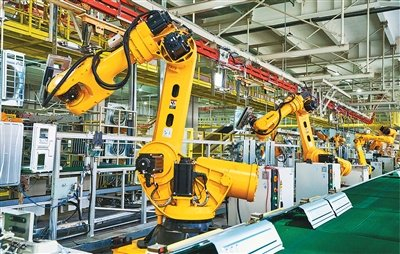
每周股票复盘:国电南瑞(600406)2026年拟开展32.25亿外汇套保
Sou Hu Cai Jing· 2026-01-01 17:51
Core Viewpoint - The company, Guodian NARI Technology Co., Ltd., is undergoing significant management changes and governance updates, alongside plans for financial risk management through foreign exchange hedging in 2026. Group 1: Company Announcements - Guodian NARI's stock closed at 22.77 yuan on December 26, 2025, down 0.31% from the previous week, with a total market capitalization of 180.55 billion yuan, ranking 1st in the power grid equipment sector and 83rd among all A-shares [1] - The company will hold its 10th meeting of the 9th Board of Directors on December 30, 2025, to appoint Luo Hanwu as the new General Manager, who currently holds positions at the State Grid Electric Power Research Institute [1] - The Board approved the unlocking of 11,851,404 shares for 1,276 incentive recipients under the 2021 restricted stock incentive plan, confirming that performance targets have been met [1][4] Group 2: Financial and Governance Updates - The company plans to conduct foreign exchange hedging activities in 2026 with a limit of 3.225 billion yuan, aiming to mitigate currency fluctuation risks [2][4] - The second extraordinary general meeting of 2025 approved several governance changes, including the cancellation of the supervisory board and amendments to the company's governance structure [2][4] - The company intends to engage in related party transactions in 2026, with total expenditures not exceeding 409.83 million yuan, including rental and service fees [2][4] Group 3: Governance Structure Enhancements - Multiple governance documents have been revised to improve the company's governance structure, including rules for various board committees and management systems [3] - The establishment of a branch in Oman is part of the company's strategy to enhance its international presence [3]
海上风电——目前形势、发展趋势及投资策略
Sou Hu Cai Jing· 2026-01-01 13:31
Group 1 - The global offshore wind power installed capacity is currently 83 GW, with China accounting for 50.3%, which is equivalent to the total of all other countries combined [1] - China produces two-thirds of the global wind power equipment, with key components like gearboxes and blades making up over 70% of global supply [1] - The core competitiveness of Chinese companies lies in their comprehensive delivery capabilities across the entire industry chain, rather than just low prices [1] Group 2 - The policy requiring new offshore wind projects to be located at least 30 kilometers from shore or in water deeper than 30 meters is seen as a way to filter out less capable companies [1] - Floating wind power costs currently range from 40,000 to 50,000 yuan per kW, but are expected to drop below 20,000 yuan by 2030 [1] - Companies focusing on large-capacity units (over 16 MW) and flexible DC transmission technology are likely to lead the market in the long term [1] Group 3 - The offshore wind power supply chain outside of China is expected to face bottlenecks by 2030, with Europe experiencing a shortage of installation vessels and Latin America relying on imports for basic cables [1] - The market for submarine cables, which account for 10% of wind power investment, is projected to grow at a compound annual growth rate of over 20% in the next decade [1] - The investment cycle in the offshore wind sector typically spans five years, with state-owned enterprises being the stabilizing force in the market [1] Group 4 - Strategies for investment include taking advantage of policy-induced market dips, investing upstream in the supply chain, and exploring integrated business models that combine offshore wind with hydrogen production or agriculture [1] - The offshore wind sector is expected to undergo a reshuffle, with a projected increase in global installed capacity to 24 million kW by 2026, favoring companies with healthy cash flow and rapid technological iteration [1] - Companies should focus on quality of orders, prioritizing markets with stable relations with China, and adopt an integrated approach to enhance risk resilience [1]
张玉卓检查国资央企元旦假期值班工作
Xin Lang Cai Jing· 2026-01-01 10:32
Group 1 - The core message emphasizes the importance of safety and operational stability during the year-end and New Year period for state-owned enterprises, highlighting their role in ensuring essential services and infrastructure [1][2] - Zhang Yuzhuo, the Secretary of the State-owned Assets Supervision and Administration Commission (SASAC), conducted inspections and communicated with major central enterprises to ensure effective duty management and safety measures during the holiday [1] - The focus is on the need for central enterprises to strengthen risk assessment and emergency response mechanisms, ensuring rapid and efficient handling of any unexpected situations to protect public safety and social stability [2] Group 2 - Central enterprises are urged to strictly implement the central eight regulations and adhere to discipline, promoting frugality and integrity during the holiday season [2] - The SASAC emphasizes the importance of maintaining communication and coordination among enterprises to ensure smooth operations and effective service delivery during the holiday [1][2]
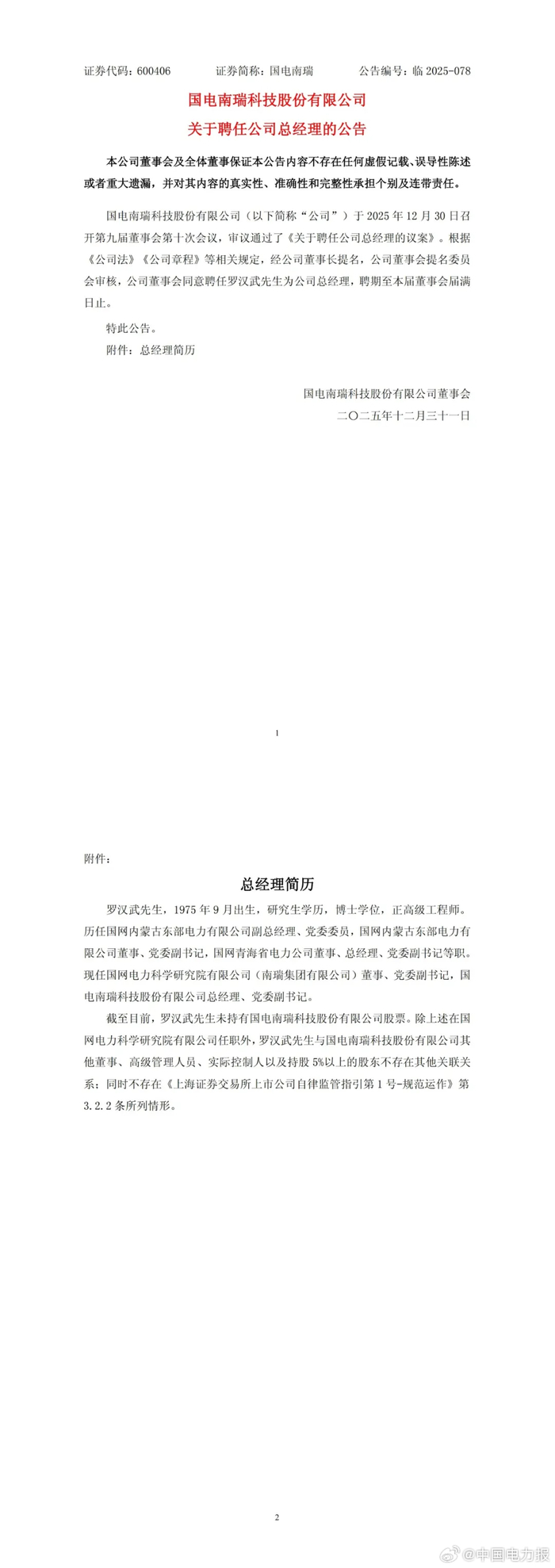
罗汉武出任国电南瑞总经理,曾任国网青海电力总经理
Zhong Guo Dian Li Bao· 2025-12-31 10:08
Group 1 - The core point of the article is the appointment of Luo Hanwu as the General Manager of Guodian NARI Technology Co., Ltd., effective until the current board's term ends [1] - The decision was made during the 10th meeting of the 9th board of directors held on December 30, 2025, in accordance with the Company Law and the company's articles of association [1] - Luo Hanwu has an extensive background in the power industry, having held various leadership positions in State Grid Inner Mongolia Eastern Power Co., Ltd. and State Grid Qinghai Electric Power Co., Ltd. [1][4] Group 2 - Luo Hanwu was born in September 1975, holds a master's degree, a doctoral degree, and is a senior engineer [4] - Currently, he serves as a board member and deputy secretary of the Party Committee at the State Grid Electric Power Research Institute Co., Ltd. (NARI Group Co., Ltd.) [4] - As of now, Luo Hanwu does not hold any shares in Guodian NARI Technology Co., Ltd. and has no other related relationships with the company's directors, senior management, or major shareholders [4]
A股2025市值增长九强省盘点:江苏TOP5企业贡献21%市值增量 洋河股份为市值缩水最严重企业
Xin Lang Cai Jing· 2025-12-31 09:43
Group 1 - In 2025, the market value increment of A-share listed companies in Jiangsu Province reached 24,249 billion yuan, representing a growth of 37.01% compared to the beginning of the year [1] - Leading companies contributed significantly to the market value increment, with WuXi AppTec, Tianfu Communication, Dongshan Precision, Hengrui Medicine, and Hengli Hydraulic contributing 1,115 billion, 1,072 billion, 1,052 billion, 1,026 billion, and 766 billion yuan respectively, accounting for a total of 20.75% of Jiangsu's total market value increment [1] - The companies with the most significant market value reduction in Jiangsu Province included Yanghe Brewery, Guodian NARI, Ninghu Expressway, Jinshiyuan, and Changdian Technology, with each experiencing a decline of no more than 350 billion yuan [1] Group 2 - The formation of a MACD golden cross signal indicates a positive trend for certain stocks [2]

这些省份,为何都在“组CP”?
3 6 Ke· 2025-12-31 02:19
Core Insights - The recent initiation of back-to-back interconnection projects in Yuchuan, Xiangyue, and Minjiang provinces aims to enhance the flexibility and stability of power supply between different regional power grids [1][2]. Group 1: Project Details - The Xiangyue back-to-back interconnection project commenced on December 27 in Chenzhou, Hunan, which will facilitate flexible mutual assistance between the State Grid and the Southern Power Grid, significantly improving Hunan's power supply stability [1]. - The Yuchuan back-to-back interconnection project started on December 26 in Chongqing, designed to strengthen the interconnection between the State Grid and the Southern Power Grid, aiding power mutual assistance between Chongqing and Guizhou [1]. - The Minjiang back-to-back interconnection project began on December 25 in Ruijin, Jiangxi, establishing Jiangxi's first flexible direct current back-to-back converter station, creating a high-speed channel for interconnection between Minjiang and Jiangxi [1]. Group 2: Technical Explanation - Back-to-back interconnection projects involve connecting asynchronously operating power grids through a converter station that enables safe and efficient power transfer between them [2]. - The recent approval of five back-to-back interconnection projects, with a total investment of 24.4 billion yuan, includes the construction of five converter stations with a capacity of 3 million kilowatts and a total line length of 1,227 kilometers [2]. Group 3: Market Implications - The acceleration of building a unified national electricity market is aimed at facilitating cross-provincial electricity trading and optimizing resource allocation [3]. - The implementation of these flexible interconnection projects is expected to significantly enhance the mutual support and emergency response capabilities between regions, providing a solid physical foundation for regular cross-grid electricity trading [3].
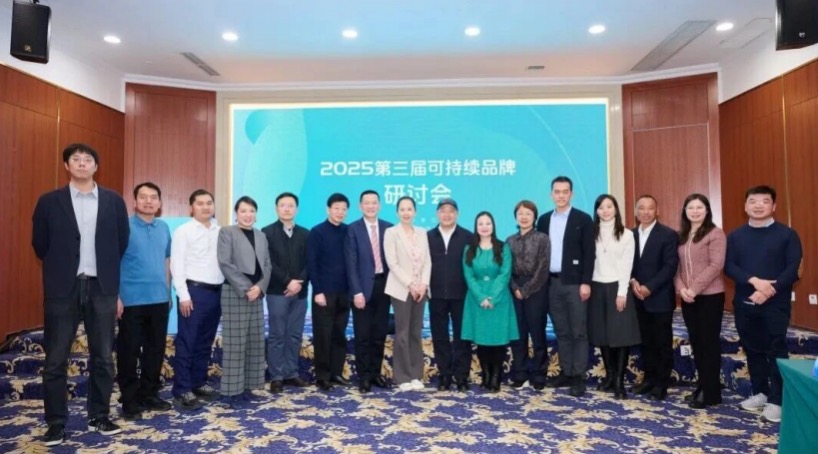
能源企业可持续品牌价值报告发布 国家电网三连冠背后基层实践获行业关注
Zhong Guo Neng Yuan Wang· 2025-12-31 01:42
Core Insights - The seminar focused on sustainable brand development and value enhancement for enterprises, highlighting the role of sustainable branding in leading corporate practices [1] - State Grid Corporation of China ranked first in the sustainable brand value list for energy companies for three consecutive years, showcasing its leadership in sustainable brand building [1] Group 1: Sustainable Brand Development - The seminar was co-hosted by Tsinghua University's National Image Communication Research Center and Zeyang Tianxia, emphasizing the importance of sustainable branding [1] - The "Happiness Benefit Electricity" brand was introduced by State Grid Zhejiang Electric Power Company, showcasing its commitment to sustainable brand construction from a grassroots perspective [3][4] Group 2: Community Engagement and Social Responsibility - The company has initiated various projects since 2016 to address the urgent needs of disadvantaged communities, including the "Happiness Nest," "Happiness Wheel Friends," and "Happiness Light and Shadow" projects [4] - The "Happiness Benefit Electricity" brand represents a shift from ad-hoc actions to systematic brand building, integrating resources and experiences to create lasting social value [4][5] Group 3: Implementation and Impact - A three-in-one model was established to ensure effective execution of the "Happiness Benefit Electricity" brand, focusing on project incubation, resource integration, and communication empowerment [6] - Eight brand actions have been successfully launched, covering various aspects of community welfare, including housing, employment, culture, and elderly care [7] - The practical approach of "Happiness Benefit Electricity" has received high praise from industry experts, highlighting its potential as a replicable model for other state-owned enterprises [7]
以标准数据认证推进碳足迹管理体系建设
Sou Hu Cai Jing· 2025-12-31 01:21
Core Viewpoint - The establishment of a carbon footprint management system is essential for promoting green transformation and enhancing international competitiveness in response to global carbon pricing policies [1] Group 1: Carbon Footprint Management System - The Chinese government aims to establish a carbon footprint management system by 2027 and further improve it by 2030, addressing the need for a unified accounting standard and certification system [1] - The current challenges include a lack of standardized accounting methods, insufficient local databases, and low levels of international recognition [1] Group 2: Standard System Construction - A layered and collaborative standard system is necessary to address the fragmentation of current industry standards and improve international alignment [2] - Focus on key industries such as steel, cement, and aluminum to develop specific standards that reflect the unique characteristics of different sectors [2] Group 3: Emission Factor Database - The creation of a diverse emission factor database is crucial for ensuring the credibility of carbon accounting [3] - A national-level database is set to launch in 2025, supplemented by local and industry-specific databases to support accurate carbon footprint calculations [3] Group 4: Certification and Application Mechanism - A unified carbon footprint certification system is being developed to enhance transparency and drive low-carbon transformation across supply chains [4] - The certification process will prioritize products with high export potential and government procurement [4] Group 5: Value Creation from Carbon Footprint - Encouraging companies to integrate carbon footprint data into their procurement processes can enhance collaboration across the supply chain [5] - Financial institutions are being supported to create differentiated pricing products based on carbon footprints, promoting low-carbon financing options [5] Group 6: International Cooperation - Active participation in international carbon governance is essential, especially in light of the EU's Carbon Border Adjustment Mechanism (CBAM) [6] - Establishing mutual recognition frameworks for carbon footprint data with major trading partners can reduce compliance costs for companies [6]