翰森制药

Search documents
新版医保目录将于2026年1月1日在全国范围内正式实施
Zhong Guo Jing Ji Wang· 2025-12-10 14:31
Group 1 - The new National Medical Insurance Drug List includes 114 new drugs, increasing the total number of drugs to 3,253, with 1,857 Western medicines and 1,396 traditional Chinese medicines [1] - The inclusion of 50 innovative drugs marks a historical high, featuring several "global first" and "first domestic" products, enhancing access to breakthrough therapies for patients [1] - Notable multinational pharmaceutical companies like Novartis and Johnson & Johnson have successfully included multiple new products and indications in the updated insurance list, benefiting a large number of patients [1][2] Group 2 - Domestic pharmaceutical company Heng Rui has 11 anti-tumor products included in the new insurance list, showcasing significant innovations and new indications [2] - Innovative drugs filling gaps in basic medical insurance coverage include Sanofi's anti-CD38 monoclonal antibody and Hansoh Pharmaceutical's third-generation EGFR-targeted drug, both of which offer new treatment standards for critical diseases [3] - Since the establishment of the National Medical Insurance Bureau in 2018, a total of 949 new drugs have been added to the insurance list, significantly boosting the pharmaceutical market and enhancing the clinical medication level in China [4]

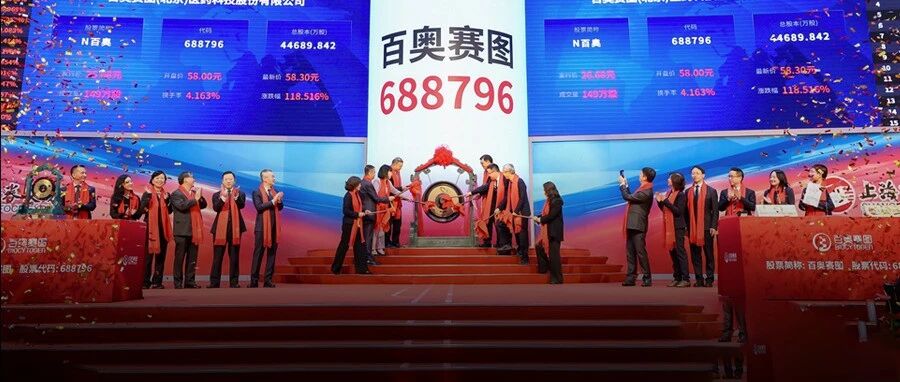
“双引擎”平台破局新药研发,百奥赛图“A+H”上市与盈利双突破背后的逻辑
市值风云· 2025-12-10 10:10
Core Viewpoint - The article discusses the innovative strategies employed by Baiaosaitu in antibody drug development, focusing on their dual-core platform of a human antibody library and a humanized mouse model library, which addresses key challenges in the industry and enhances drug development efficiency [6][12][33]. Group 1: Antibody Drug Development Challenges - The majority of failures in antibody drug development stem from mismatches between candidate antibody molecules and the complex human environment, as well as between preclinical animal models and actual disease mechanisms [5]. - Successful antibody drug development requires high-quality antibody molecules and humanized mouse models that accurately simulate human pathophysiological processes [6][10]. Group 2: Baiaosaitu's Innovative Approaches - Baiaosaitu's "Thousand Mice and Ten Thousand Antibodies" initiative aims to create a comprehensive human antibody sequence library, significantly improving the drug discovery process [8][10]. - The company has developed over 1,000 gene-edited models, including more than 1,700 humanized mouse models, establishing a leading position in the global market [16][18]. Group 3: Financial Performance and Growth - Baiaosaitu's revenue has shown a compound annual growth rate of 40.2% since 2020, with projected revenue of 980 million in 2024, reflecting strong growth [23][27]. - The company achieved profitability for the first time in 2024, with a net profit of 114 million in the first three quarters of 2025, indicating improved financial health [27][30]. Group 4: Market Position and Collaborations - Baiaosaitu has established partnerships with over 950 global clients, including all top ten pharmaceutical companies, highlighting its strong market presence [16][18]. - The company’s humanized mouse model library supports various disease areas, making it a crucial partner for pharmaceutical companies in preclinical evaluations [16][19].

智通港股52周新高、新低统计|12月10日


智通财经网· 2025-12-10 08:42
Core Insights - As of December 10, 30 stocks reached their 52-week highs, with Design Metropolis (01545), Platinum Holdings (00459), and China Boton (03318) leading the increase rates at 40.82%, 35.48%, and 30.23% respectively [1][2] 52-Week Highs - Design Metropolis (01545) closed at 0.124, with a peak of 0.138, achieving a high rate of 40.82% [1] - Platinum Holdings (00459) closed at 0.121, with a peak of 0.126, achieving a high rate of 35.48% [1] - China Boton (03318) closed at 2.090, with a peak of 2.800, achieving a high rate of 30.23% [1] - Other notable stocks include: - China New Holdings (08125) at 25.00% [1] - Qiaoyang International Holdings (08070) at 14.46% [1] 52-Week Lows - The stock with the largest decline was Jingye Mingbang Group (02231), which fell to 0.099, a decrease of 26.40% [2] - Other significant declines included: - Zhonggang Petroleum (00632) at -16.40% [2] - Guofu Hydrogen Energy (02582) at -13.31% [2] - Additional stocks with notable declines: - Haotian International Construction Investment (01341) at -11.11% [2] - Jiaming Group Holdings (01271) at -10.00% [2]
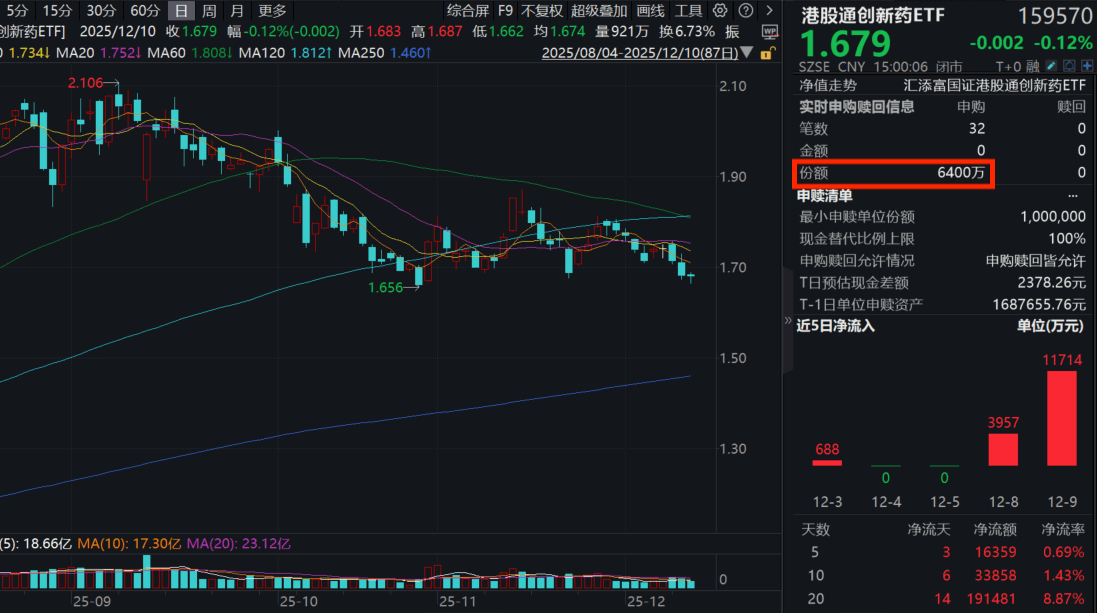
港药探底回升!港股通创新药ETF(159570)连续第二天涌入超1亿元!从2025医保看行业风向:成功率提升,创新导向持续强化!
Sou Hu Cai Jing· 2025-12-10 08:19
Group 1: Market Performance - The Hong Kong Innovation Drug ETF (159570) experienced a slight decline of 0.12% today, with a total trading volume exceeding 1.5 billion yuan [1] - The fund has seen a net inflow of over 1.1 billion yuan yesterday and more than 1 billion yuan today, accumulating a total of over 1.9 billion yuan in the last 20 days [1] - As of December 9, the latest scale of the Hong Kong Innovation Drug ETF reached over 23 billion yuan, leading its peers in the same category [1] Group 2: Federal Reserve and Market Sentiment - The Federal Reserve is expected to announce a 25 basis point rate cut, bringing the federal funds rate to a range of 3.5%-3.75% [3] - There is a notable division within the Federal Open Market Committee (FOMC), leading to the term "hawkish cut" being used, indicating that while a rate cut is expected, further cuts may not be imminent [3] Group 3: Pharmaceutical Sector Developments - The new National Medical Insurance Drug List has added 114 new drugs, including 50 first-class innovative drugs, with an overall success rate of 88%, up from 76% last year [5][8] - The total number of drugs in the National Medical Insurance Drug List has increased to 3,253, enhancing coverage for critical areas such as oncology, chronic diseases, and rare diseases [8] - The first commercial insurance innovative drug list has been released, including 19 drugs from 18 companies, aimed at improving access to high-value innovative drugs [6][13] Group 4: Investment Opportunities - The Hong Kong Innovation Drug ETF (159570) is fully invested in innovative drugs, with the top ten constituent stocks accounting for over 74% of its weight [15] - The index has shown a year-to-date increase of over 90%, outperforming other Hong Kong pharmaceutical indices [16] - The ETF's underlying assets are Hong Kong stocks, allowing for T+0 trading, which may attract more investors [16]
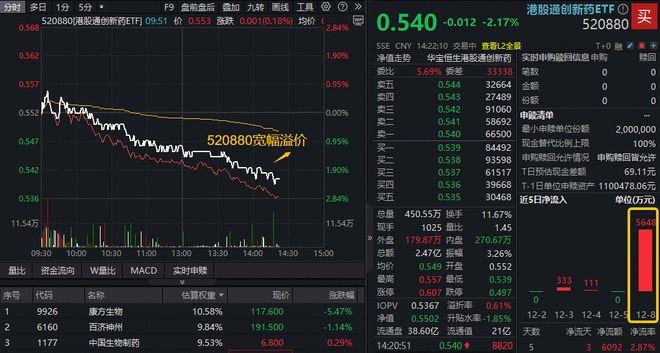
港股创新药水下盘整,520880逼近5个月低点!溢价率逆市走高,买盘资金汹涌
Xin Lang Cai Jing· 2025-12-10 05:56
Core Viewpoint - The Hong Kong innovative drug sector continues to adjust, with the core Hong Kong Stock Connect Innovative Drug ETF (520880) experiencing fluctuations below the surface, nearing its lowest point since July. However, there is a surge in buying interest as funds have entered the market significantly in recent days, indicating active buying momentum [1][6]. Group 1: Market Performance - The Hong Kong Stock Connect Innovative Drug ETF (520880) has seen a net subscription of over 56 million yuan in the last two days, totaling over 113 million yuan [1][6]. - Leading stocks in the sector have shown a trend of more declines than gains, with companies like Kangfang Biotech and China Biopharmaceutical dropping over 2%, while CSPC Pharmaceutical rose over 2% [3][8]. Group 2: Industry Developments - Significant progress has been made in the negotiation of innovative drugs within the national medical insurance framework, with multiple products and new indications successfully included in the national medical insurance catalog. Companies like Innovent Biologics, Kangfang Biotech, and Kelun-Biotech have high negotiation success rates, which helps improve drug accessibility [3][8]. - The commercial insurance catalog is becoming an important incremental market, promoting the commercialization of innovative drugs. The overall industry is witnessing accelerated R&D, expansion of indications, and internationalization [3][8]. Group 3: Future Outlook - Innovative drugs are expected to accelerate their market penetration with the support of medical insurance, particularly in high-incidence areas with unmet clinical needs such as tumors and autoimmune diseases [3][8]. - The outbound model is continuously upgrading, enhancing the global competitiveness of Chinese innovative drug pipelines. New technologies like bispecific antibodies and targeted drugs are driving product differentiation [3][8]. - Policies continue to encourage the development of innovative drugs, providing long-term growth momentum for the industry [3][8]. Group 4: ETF Characteristics - The Hong Kong Stock Connect Innovative Drug ETF (520880) is the largest in its category, with a scale of 2.142 billion yuan and an average daily trading volume of 458 million yuan since its inception [4][12]. - The index tracked by the ETF, the Hang Seng Stock Connect Innovative Drug Select Index, has a significant concentration of leading stocks, with the top ten holdings accounting for over 72% of the index weight, indicating strong leadership in the innovative drug sector [4][11]. - The ETF is designed to be pure and comprehensive, focusing solely on innovative drug R&D companies, and it effectively controls risks associated with less liquid constituent stocks [4][10].
辉瑞恋战减肥药 还惦记上你的猫
经济观察报· 2025-12-10 03:44
Core Insights - Pfizer has entered into a licensing agreement with Chinese company YaoYao Pharmaceutical for the development of a GLP-1 receptor agonist, indicating a strategic move to expand its portfolio in the obesity treatment market, which includes both human and animal applications [2][3][4]. Group 1: Licensing Agreement Details - The agreement grants Pfizer exclusive global rights for the development, use, production, and commercialization of the GLP-1 drug [3]. - Pfizer will pay an upfront fee of $150 million, milestone payments totaling $350 million, and up to $1.585 billion in sales milestone payments, bringing the total potential deal value to $2.085 billion [3]. - This deal aligns with similar licensing agreements in the GLP-1 space, which have also seen total transaction values around $2 billion [3]. Group 2: Market Context and Trends - GLP-1 drugs are currently among the top-selling medications for diabetes and obesity, with significant market potential due to the rising prevalence of obesity [3]. - In the U.S., 61% of cats and 59% of dogs are reported to be overweight or obese, highlighting a substantial market for veterinary applications of GLP-1 drugs [4][5]. - The global pet population exceeds 1 billion, indicating a large potential market for animal health products, including obesity treatments [4]. Group 3: Historical Context and Future Prospects - Pfizer has faced challenges in developing its own GLP-1 drugs, having terminated three oral GLP-1 candidates and only one currently in clinical II phase [4]. - The company previously launched an animal obesity drug, Dirlotapide, which was withdrawn due to adverse effects, but is now exploring the potential of GLP-1 drugs for treating pet diabetes and other conditions [5][6]. - The veterinary market for GLP-1 drugs is being explored by other companies, such as Okava, which is conducting clinical trials for a GLP-1 drug aimed at pets [5].


辉瑞恋战减肥药 还惦记上你的猫
Jing Ji Guan Cha Wang· 2025-12-10 02:05
Core Insights - Pfizer has made a significant investment in acquiring rights to a GLP-1 receptor agonist developed by Chinese company药友制药, indicating a strategic move into the obesity treatment market, which is currently experiencing high demand due to the rising prevalence of obesity globally [2][3] Group 1: Transaction Details - The agreement grants Pfizer exclusive global rights for the development, use, production, and commercialization of the GLP-1 drug, with a total potential transaction value of $2.085 billion, including an upfront payment of $150 million and milestone payments [3] - This transaction aligns with similar deals in the industry, where Chinese pharmaceutical companies have engaged in licensing agreements for GLP-1 drugs, typically valued around $2 billion [3] Group 2: Market Context - The GLP-1 class of drugs has become increasingly popular for treating diabetes and obesity, with the highest global sales recorded for two GLP-1 drugs in the first three quarters of 2025 [2] - The market for pet obesity is also being recognized, with Pfizer's agreement explicitly mentioning animal indications, highlighting the potential for GLP-1 drugs in treating obesity in pets [4] Group 3: Competitive Landscape - Pfizer has faced challenges in developing its own GLP-1 drugs, having terminated three oral GLP-1 candidates between 2023 and 2025, with only one currently in clinical phase II [3] - The competitive landscape includes other companies like Okava, which is conducting clinical trials for a GLP-1 drug aimed at pets, indicating a growing interest in this niche market [4]

红杉中国杨云霞:下一代疗法风口下 坚守长期投资逻辑
2 1 Shi Ji Jing Ji Bao Dao· 2025-12-09 23:07
Core Insights - The core viewpoint emphasizes that Biotech will remain a mainstream investment direction in the medical field, particularly focusing on the iteration of second-generation technology paradigms, such as advancements in ADC drugs and CAR-T therapies [1][2]. Group 1: Investment Trends - There is a notable phenomenon of "asset grabbing" in the market, driven by the transition of innovative drug enthusiasm from the secondary market to the primary market [1]. - As of September this year, over 40% of the innovative assets introduced by the top 20 multinational pharmaceutical companies (MNCs) in China are from local biotech firms, with half of these being next-generation therapies like dual antibodies and ADCs [2]. - Biotech companies have secured 75% of external licensing transactions, with five companies, including Hengrui Medicine and Innovent Biologics, accounting for 20% of these deals [2]. Group 2: Challenges and Opportunities - Despite the growth, the industry faces multiple challenges, including the risk of resource wastage and product homogeneity due to blind competition [3]. - The focus should shift from speed to quality improvement and differentiated innovation to avoid collective setbacks in the industry [3]. - Building a bridge between technology development and clinical needs is crucial for efficient commercialization, as demonstrated by Sequoia China's efforts in the neuroscience field [3]. Group 3: BD Transactions and Value Creation - The core value of business development (BD) transactions lies in the synergy of capital, brand, and capability, which can provide stable cash flow and enhance brand credibility for biotech companies [4]. - High-quality BD collaborations can significantly aid biotech firms in learning from leading pharmaceutical companies, thus enhancing their operational capabilities [4]. - The perception that Chinese biotech assets are undervalued in international markets needs to be addressed to improve their global competitiveness [5]. Group 4: Strategic Investment Considerations - The essence of primary market investment is to buy today and realize returns in 5 to 10 years, necessitating a focus on long-term value rather than short-term market trends [6]. - Sequoia China emphasizes the importance of selecting the right direction and team when investing, as these factors are critical for maximizing value returns [6]. - The current market environment, including the opening of the Sci-Tech Innovation Board and the surge in biotech listings in Hong Kong, provides more financing opportunities for companies, but they must ensure their fundamentals are solid before going public [6].
港股通创新药跌出性价比?520880资金面现积极信号!医保商保双目录落地,机构:创新药崛起具备持续性
Xin Lang Cai Jing· 2025-12-09 11:33
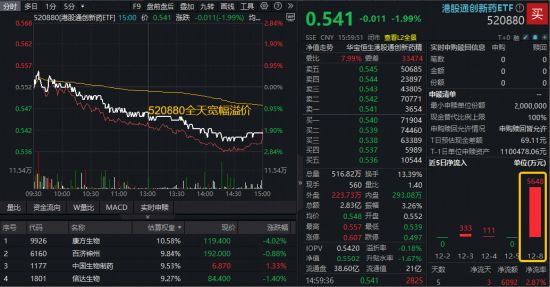
Core Viewpoint - The Hong Kong stock market for innovative drugs continues to decline, with the Hang Seng Index falling below the six-month moving average, indicating ongoing adjustments in the sector [1][3]. Market Performance - On December 9, the Hong Kong innovative drug ETF (520880) experienced a decline of 1.99%, marking two consecutive days of losses, with a trading volume of 283 million yuan [1]. - Major stocks within the ETF saw significant declines, including Kangfang Biotech down 4%, Sanofi Biotech down 3.63%, and Innovent Biologics down 1.4% [1]. Investment Opportunities - Analysts suggest that the current market conditions may present a favorable opportunity for long-term investment in core innovative drug assets, as the index has retraced over 18% since early September, indicating a sufficient adjustment and risk release [3]. - There are positive signals in the funding landscape, with over 56 million yuan net subscriptions for the innovative drug ETF on the previous day, the highest in nearly a month, indicating strong buying interest [4]. Policy Developments - The 2025 National Medical Insurance Drug List has successfully added 114 new drugs, including 50 innovative drugs, with an overall success rate of 88%, significantly higher than the 76% in 2024 [5]. Business Development - Kelun-Biotech has granted exclusive rights to Crescent for the development of ADC drug SKB105 outside Greater China, along with exclusive rights for CR-001 bispecific antibody in Greater China, which includes an upfront payment of 80 million USD and potential milestone payments of up to 1.25 billion USD [6]. - Analysts recommend focusing on innovative drug companies with rich pipeline layouts, high potential single products, and leading technology platforms [6]. ETF Characteristics - The Hong Kong innovative drug ETF (520880) has a significant concentration in leading companies, with the top ten holdings accounting for over 72% of the index, showcasing the strength of the innovative drug sector [7]. - The ETF has a total market value of 2.142 billion yuan and has the highest liquidity among similar ETFs, with an average daily trading volume of 458 million yuan since its inception [7].
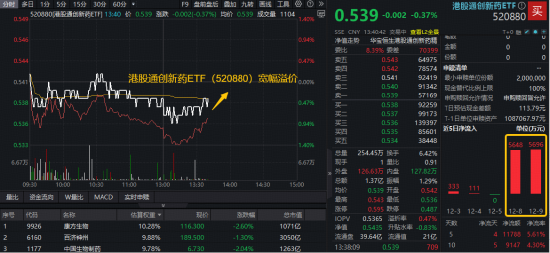
ETF盘中资讯 港股通创新药午后加速走低,康方生物挫逾5%!100%创新药研发标的“520880”跌超2%溢价飙升
Jin Rong Jie· 2025-12-09 07:05
Core Viewpoint - The Hong Kong innovation drug sector is experiencing a downturn, with the Hong Kong Stock Connect Innovation Drug ETF (520880) declining over 2% and major stocks like Kangfang Biotech and 3SBio dropping more than 5% [1][3] Group 1: Market Performance - The Hong Kong innovation drug sector has entered a phase of adjustment since early September, with the Hong Kong Stock Connect Innovation Drug ETF (520880) index retreating over 19%, indicating that previous high risks have been sufficiently released [3] - There is a surge in "bottom-fishing" capital, with over 56 million yuan entering the market recently, leading to a spike in the premium of the Hong Kong Stock Connect Innovation Drug ETF [1][3] Group 2: Policy and Market Opportunities - A favorable policy announcement was made with the release of the 2025 National Medical Insurance Drug List, which added 114 new drugs, including 50 innovative drugs, achieving an overall success rate of 88%, significantly higher than the 76% in 2024 [5][6] - The introduction of the first version of the "Medical Insurance + Commercial Insurance Dual Directory" by the National Medical Insurance Bureau is expected to boost investment enthusiasm in innovative drugs [6] Group 3: Investment Insights - Analysts suggest that the current market conditions may present a good opportunity for medium to long-term investment in core innovative drug assets [3][6] - The Hong Kong Stock Connect Innovation Drug ETF (520880) is highlighted for its unique advantages, including a pure focus on innovative drug companies, a high concentration of leading firms (over 72% in the top ten), and better risk control through the management of less liquid stocks [6][7]