京新药业

Search documents
京新药业(002020) - 关于与Gedeon Richter Plc.签署专利许可协议的公告
2025-08-07 10:15
证券代码:002020 证券简称:京新药业 公告编号:2025037 浙江京新药业股份有限公司 本公司及董事会全体成员保证公告内容的真实、准确和完整,没有虚假记 载、误导性陈述或重大遗漏。 一、许可协议签署概况 2025 年 8 月 7 日,浙江京新药业股份有限公司(以下简称"公司"或"京新 药业")与 Gedeon Richter Plc.(以下简称"Gedeon Richter")签署了《专 利许可协议》(以下简称"协议或本协议")。根据协议,Gedeon Richter 将授 予京新药业一项专利独占许可,京新药业可在许可区域(中国大陆)内使用该专 利开发、制造和商业化盐酸卡利拉嗪制剂及原料药(API)。 盐酸卡利拉嗪为非典型抗精神病药物,属于多巴胺 D2、D3 受体部分激动剂。 主要用于成人精神分裂症的治疗、成人双相Ⅰ型障碍相关躁狂或混合发作的急性 期治疗、成人双相 I 型障碍(双相抑郁症)相关抑郁发作的治疗以及抗抑郁治疗 (ADT)中的重度抑郁症(MDD)辅助治疗。目前,盐酸卡利拉嗪已获得美国 FDA 批准用于治疗成人精神分裂症、双相躁狂、双相抑郁以及作为抗抑郁治疗(ADT) 中的重度抑郁症(MDD) ...

赛诺菲降脂药波立达退市 百亿PCSK9抑制剂市场格局重塑
2 1 Shi Ji Jing Ji Bao Dao· 2025-08-05 23:11
Core Viewpoint - Sanofi's new lipid-lowering drug, Praluent (alirocumab injection), will cease promotion and gradually exit the Chinese market by July 2025 due to global supply issues and strategic adjustments in its cardiovascular market approach [2][4]. Summary by Sections Product Withdrawal - Praluent was approved in China in December 2019 and included in the national medical insurance list in 2021, with its price reduced from 1982 yuan to 306 yuan per injection, a drop of over 80% [4]. - The withdrawal is attributed to increased competition from domestic PCSK9 inhibitors and supply challenges exacerbated by global raw material shortages [4][10]. Market Competition - The PCSK9 inhibitor market in China is becoming increasingly competitive, with several domestic products entering the market [8][10]. - By 2030, the domestic PCSK9 market is expected to exceed 10 billion yuan [9]. Financial Performance - Sanofi reported a second-quarter product sales revenue of 99.94 billion euros (approximately 110 billion USD), a 10.1% increase, and a half-year revenue of 198.89 billion euros (approximately 219 billion USD), a 9.9% increase [5]. - The cardiovascular segment's performance has been underwhelming, indicating challenges in this area [7]. Future Opportunities - The exit of Praluent opens up opportunities for domestic pharmaceutical companies to capture market share, leveraging price advantages and localized marketing strategies [10][11]. - Competitors like Amgen's Repatha and Novartis's Leqvio are also gaining traction, with Leqvio achieving sales of 333 million USD in the first half of 2024 [10][11]. Market Dynamics - The competition is expected to drive innovation, leading to the development of more effective and affordable lipid-lowering products [11]. - The stock market has reacted positively to the news of Praluent's exit, indicating investor confidence in the prospects of domestic alternatives [11].


京新药业(002020.SZ):公司产品暂未涉及减肥领域
Ge Long Hui· 2025-08-05 08:09
格隆汇8月5日丨京新药业(002020.SZ)在互动平台表示,公司产品暂未涉及减肥领域。 ...
知名降脂药将撤离中国市场
2 1 Shi Ji Jing Ji Bao Dao· 2025-08-04 14:27
Core Viewpoint - The withdrawal of the once-prominent cholesterol-lowering drug, Praluent (alirocumab), from the Chinese market highlights the intense competition and challenges faced by pharmaceutical companies in this sector [1][2][3]. Company Summary - Sanofi confirmed the cessation of Praluent's supply in China due to global supply issues and a strategic shift in its cardiovascular market approach, including the acquisition of rights for new drugs [1][3]. - The price of Praluent dropped significantly from 1982 yuan to 306 yuan per injection after being included in the national medical insurance list, marking an 84.56% decrease [1][3]. - Sanofi's second-quarter product sales reached approximately 99.94 billion euros (about 110 billion USD), with a year-on-year growth of 10.1% [4]. Industry Summary - The PCSK9 inhibitor market in China is becoming increasingly competitive, with several domestic companies entering the space, which is expected to exceed 10 billion yuan by 2030 [6][7]. - Currently, there are seven approved PCSK9-targeting products in China, with four being domestic drugs, indicating a shift in market dynamics following Praluent's exit [7][8]. - Analysts suggest that domestic pharmaceutical companies can capitalize on Praluent's withdrawal to expand their market share and enhance product promotion strategies [8][9].
知名降脂药将撤离中国市场
21世纪经济报道· 2025-08-04 14:25
Core Viewpoint - The withdrawal of the once-prominent cholesterol-lowering drug, Poylid, from the Chinese market highlights the intense competition in the pharmaceutical industry, particularly in the PCSK9 inhibitor segment [2][3]. Summary by Sections Market Dynamics - Poylid, a PCSK9 inhibitor, was approved for the Chinese market in December 2019 and was included in the national medical insurance list in 2021, leading to a significant price drop from 1982 yuan to 306 yuan per injection, a decrease of 84.56% [1][4]. - The drug will cease promotion in China starting July 2025 due to global supply issues and a strategic shift in Sanofi's cardiovascular market approach [1][4]. Competitive Landscape - The market for PCSK9 inhibitors is becoming increasingly competitive, with more domestic products being included in the insurance reimbursement list, making the market more diversified [4][9]. - Currently, there are seven approved PCSK9 products in China, with Poylid's exit leaving six competitors, four of which are domestic products [9][10]. Financial Performance - Sanofi reported a product sales revenue of 99.94 billion euros (approximately 110 billion USD) in Q2, with a year-on-year growth of 10.1% [5]. - The cardiovascular segment's performance has been underwhelming, indicating challenges in this area for Sanofi [6]. Future Opportunities - The exit of Poylid presents a significant opportunity for domestic PCSK9 inhibitor manufacturers to capture market share and accelerate product promotion [10][11]. - Analysts predict that the competition will drive innovation, leading to the development of more effective and affordable cholesterol-lowering products [10]. Market Reaction - Following the announcement of Poylid's withdrawal, stocks of domestic pharmaceutical companies, such as Jingxin Pharmaceutical, saw an increase, reflecting investor optimism regarding the prospects for domestic alternatives [11].

赛诺菲降脂药波立达撤离中国,百亿PCSK9抑制剂市场格局重塑
2 1 Shi Ji Jing Ji Bao Dao· 2025-08-04 12:29
Core Viewpoint - Sanofi's new lipid-lowering drug, Praluent (alirocumab injection), will cease promotion and gradually exit the Chinese market due to global supply issues and strategic adjustments in the cardiovascular market [1][2]. Group 1: Product and Market Dynamics - Praluent was approved in China in December 2019 for the prevention of cardiovascular events in adults with atherosclerotic cardiovascular disease (ASCVD) and for lowering LDL cholesterol in patients with primary hypercholesterolemia [2]. - The drug was included in the National Medical Insurance catalog in 2021, with its price reduced from 1982 yuan to 306 yuan per injection, a decrease of over 80% [2]. - Despite its initial success, Praluent faced intense competition from domestic PCSK9 inhibitors, leading to its decision to exit the market [2][4]. Group 2: Competitive Landscape - The Chinese PCSK9 market is expected to exceed 10 billion yuan by 2030, with multiple domestic competitors entering the space [5]. - Currently, there are seven approved PCSK9 products in China, with four being domestic drugs. Following Praluent's exit, the remaining six products will compete for market share [5][6]. - Competitors like Amgen's Repatha and Novartis' Leqvio have shown strong market performance, with Leqvio achieving sales of $333 million in the first half of 2024 [6]. Group 3: Future Opportunities - The exit of Praluent presents an opportunity for domestic pharmaceutical companies to expand their market share and accelerate product promotion [7]. - Analysts suggest that the competition will drive innovation, leading to the development of more effective and affordable lipid-lowering products [7]. - The stock prices of domestic companies, such as Jingxin Pharmaceutical, have risen in response to Praluent's withdrawal, indicating investor confidence in the potential for domestic alternatives [7].
300199,突然直线20%涨停,成交近47亿创历史新高
Zheng Quan Shi Bao· 2025-08-04 11:30
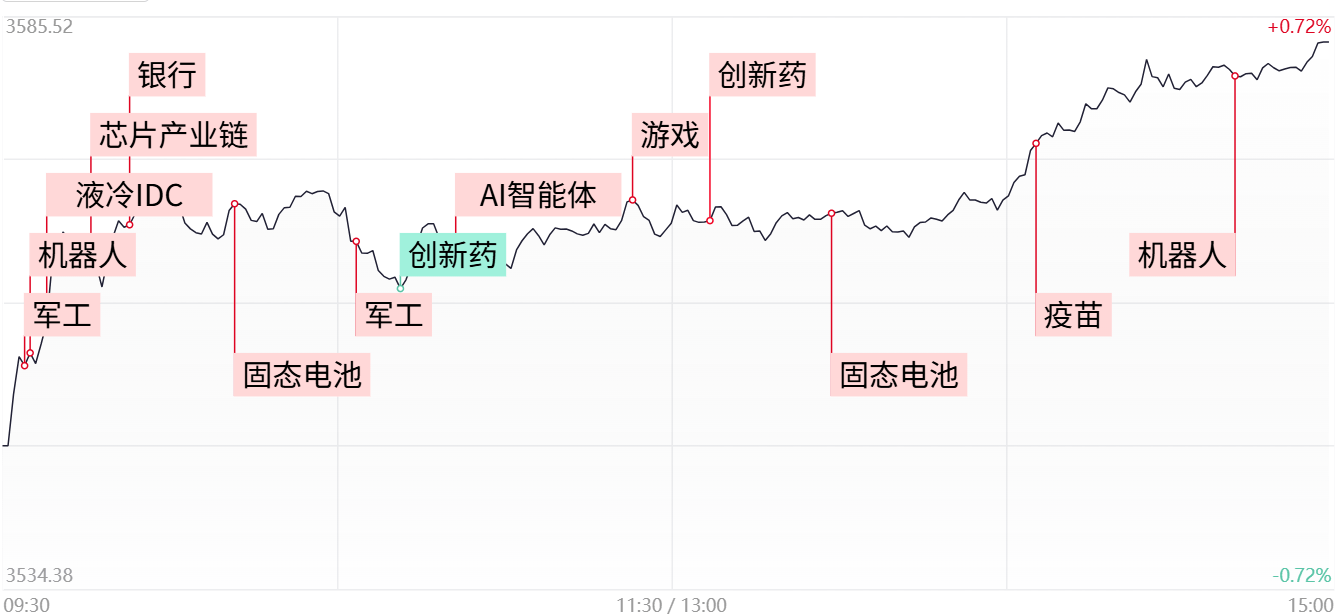
Market Overview - A-shares opened lower but rallied towards the end of the trading session, with the Shenzhen Component Index recovering above 11,000 points and the ChiNext Index gaining support around 2,300 points [1] - Nearly 4,000 stocks rose, while trading volume shrank to 1.52 trillion yuan [1] Sector Performance - Defense, precious metals, gaming, and humanoid robotics sectors saw significant gains, while commercial vehicles, sports, professional chains, and photovoltaic equipment sectors experienced declines [3] - The machinery equipment sector attracted over 11.5 billion yuan in net inflows, with defense and military industries receiving over 9.7 billion yuan [3] - Other sectors like electronics and automotive also gained over 5 billion yuan, while building materials, social services, real estate, and food and beverage sectors saw net outflows exceeding 1 billion yuan [3] Company Highlights - Hanyu Pharmaceutical surged, reaching a 20% limit up, marking a two-and-a-half-year high with a trading volume of 4.69 billion yuan and a turnover rate of 29.65% [3] - The innovative drug sector index rose for the sixth consecutive day, achieving a record closing high, with several companies like Hanyu Pharmaceutical, Haichen Pharmaceutical, and others hitting their upper limits [5] Strategic Developments - Hanyu Pharmaceutical signed a strategic cooperation agreement with digital asset platform KuCoin to explore the first RWA tokenization pilot project in mainland China, focusing on innovative drug development [5] - The collaboration aims to introduce a new financing and value discovery mechanism in the biopharmaceutical sector, leveraging Hanyu's expertise in GLP-1 peptide drugs [5] - Hanyu also announced a strategic partnership with Borui Pharmaceutical to enhance collaboration in peptide drug development and commercialization [6] Market Outlook - Huatai Securities indicated that the A-share market may enter a period of increased volatility, with a relatively controllable downside risk [6] - The market's reduced trading volume suggests a cautious stance among investors, with a focus on high-dividend stocks and sectors like large finance, innovative drugs, and military industries for medium-term strategic allocation [6]

涨停复盘:军工、机器人、创新药等多点开花
Sou Hu Cai Jing· 2025-08-04 10:55
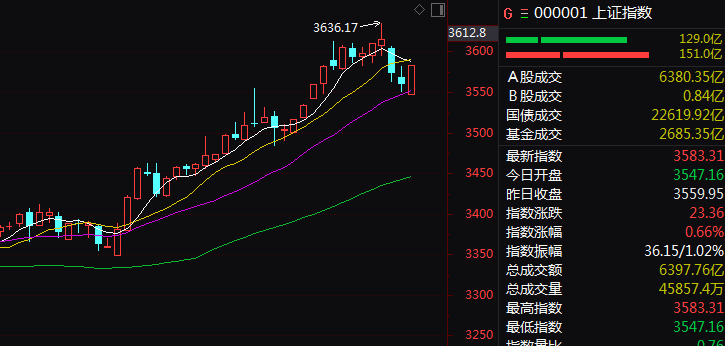
截至收盘,沪指涨0.66%,报3583.31点,深成指涨0.46%,报11041.56点,创业板指涨0.5%,报2334.32点,科创50指数涨1.22%,报1049.41点。沪深两市合 计成交额14985.5亿元。 四、涨停揭秘 | 金融界股灵通复盘(8.4) | | | | | | --- | --- | --- | --- | --- | | 简称 | | 最终封板 | 儿天儿板 | 原因 | | 创新药 | | | | | | 000534. SZ | 万泽股份 | 9:55 | 2天2板 | 高温合金+大飞机+微生态活菌+创新药 | | 603811. SH | 诚意药业 | 10:01 | 首板涨停 | 中报预增+氨糖+海洋医药 | | 601089. SH | 福元医药 | 11:08 | 2天2板 | 创新药+小核酸药物+医药产品 | | 002020. SZ | 京新药业 | 13:14 | 首板涨停 | 创新药+回购+降脂新药进展 | | 600513. SH | 联环药业 | 13:46 | 首板涨停 | 创新药+LH-1801+科技创新债+国企改革 | | 300199. SZ | 翰 ...

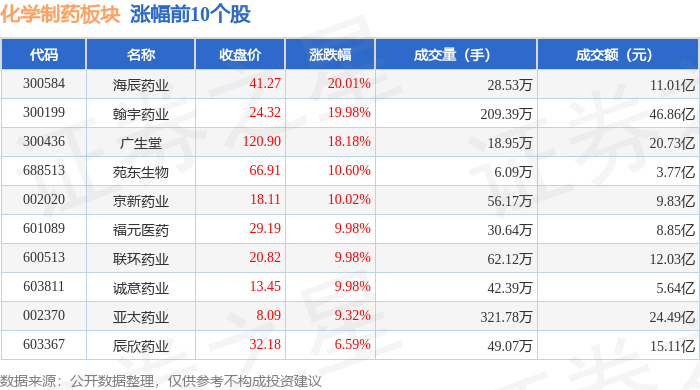
化学制药板块8月4日涨0.48%,海辰药业领涨,主力资金净流入9700.43万元
Zheng Xing Xing Ye Ri Bao· 2025-08-04 08:30
Group 1 - The chemical pharmaceutical sector increased by 0.48% on August 4, with Hai Chen Pharmaceutical leading the gains [1] - The Shanghai Composite Index closed at 3583.31, up 0.66%, while the Shenzhen Component Index closed at 11041.56, up 0.46% [1] - Hai Chen Pharmaceutical's stock price rose by 20.01% to 41.27, with a trading volume of 285,300 shares and a transaction value of 1.101 billion [1] Group 2 - The top gainers in the chemical pharmaceutical sector included Han Yu Pharmaceutical, which rose by 19.98% to 24.32, and Guangsheng Tang, which increased by 18.18% to 120.90 [1] - The sector saw a net inflow of 97.0043 million in main funds, while retail investors contributed a net inflow of 1.279 billion [2] - The main funds showed significant net outflows in several companies, including Hai Chen Pharmaceutical, which had a net inflow of 182 million, but retail investors had a net outflow of 579.696 million [3]


有些股票的价格还在2800点
雪球· 2025-08-04 08:04
Core Viewpoint - The article discusses the current state of the stock market, highlighting that while the Shanghai and Shenzhen indices have reached 3600 points, many stocks have seen significant declines, indicating a potential re-evaluation of value in the consumer sector and other industries [2][4]. Group 1: Consumer Sector Challenges - The consumer sector is experiencing a downturn, with notable declines in stocks such as Qiaqia Food (-15.91%) and Fuling Pickles (-4.21%), reflecting a broader trend of value reassessment in national brands amidst the new consumption era [7]. - The transition in the soy sauce industry from "volume growth" to "price growth" is causing short-term profit pressures as companies invest in high-end products, similar to Japan's Kikkoman's long-term transformation [7]. Group 2: Innovation and Market Dynamics - The pharmaceutical and medical device sectors are facing harsh realities, with price reductions in generic drugs and medical devices forcing companies to reassess their R&D investments [9]. - The divergence between the performance of the CSI 300 index (+3.05%) and individual stocks illustrates the market's short-term voting behavior versus long-term valuation [9]. - Companies with stable cash flow, clear competitive landscapes, and untapped growth potential are seen as value opportunities in the current market [9]. Group 3: Investment Opportunities - Low stock performance is viewed as a starting point for re-evaluating value, prompting questions about the sustainability of business models, management's value creation for shareholders, and whether current valuations reflect pessimistic expectations [10]. - The article emphasizes that true investment opportunities often lie in market sentiment lows, where companies like Jin Zai Food and Jingxin Pharmaceutical may show signs of improvement [10]. - The stock market is characterized by dynamic boundaries between low performance and high growth, necessitating a long-term perspective to navigate short-term fluctuations [10].