
裕同科技

Search documents
裕同科技:2025年第二次临时股东大会决议公告
Zheng Quan Ri Bao· 2025-08-11 15:15
(文章来源:证券日报) 证券日报网讯 8月11日晚间,裕同科技发布公告称,公司2025年第二次临时股东大会于2025年8月11日 召开,审议通过了《关于注销公司部分已回购股份并减少注册资本的议案》。 ...


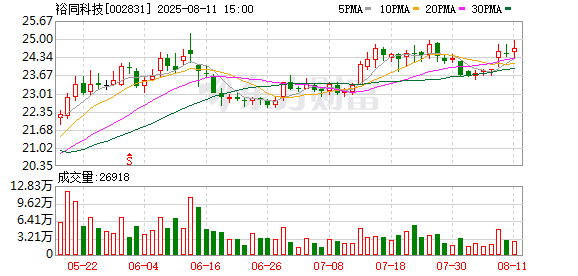
裕同科技(002831) - 关于注销部分回购股份减少注册资本暨通知债权人的公告
2025-08-11 10:15
证券代码: 002831 证券简称:裕同科技 公告编号:2025-036 深圳市裕同包装科技股份有限公司 关于注销部分回购股份减少注册资本暨通知债权人的公告 本公司及董事会全体成员保证公告内容真实、准确和完整,没有虚假记载、 误导性陈述或者重大遗漏。 深圳市裕同包装科技股份有限公司(以下简称"公司")于2025年7月25日召开 的第五届董事会第十三次会议、第五届监事会第九次会议,于2025年8月11日召开的 股东大会,审议通过了《关于注销公司部分已回购股份并减少注册资本的议案》, 具体内容详见公司披露在"巨潮资讯网"上的相关公告。 根据《中华人民共和国公司法》《上市公司股份回购规则》《深圳证券交易所 上市公司自律监管指引第9号——回购股份》等有关法律法规以及《公司章程》的规 定,公司回购专用证券账户中的库存股应当在完成回购后三年内转让或者注销。鉴 于公司在上述回购股份存续期内未实施员工持股计划或者股权激励计划,且上述回 购股份10,000,053股存续时间即将期满三年,因此公司拟注销上述已回购的股份,共 10,000,053股,并相应减少公司注册资本。本次注销完成后,将导致公司股份总数减 少10,000,05 ...
裕同科技(002831) - 2025年第二次临时股东大会法律意见书
2025-08-11 10:15
北京市中伦(广州)律师事务所 关于深圳市裕同包装科技股份有限公司 2025 年第二次临时股东大会的 法律意见书 二〇二五年八月 根据深圳市裕同包装科技股份有限公司("裕同科技"或"公司")的委托, 北京市中伦(广州)律师事务所("本所")就公司 2025 年第二次临时股东大会 ("本次股东大会")所涉及的召集、召开程序、召集人资格和出席会议人员的资 格、本次股东大会的提案、表决程序及表决结果等相关问题发表法律意见。 本法律意见书系根据《中华人民共和国公司法》("《公司法》")、《中华人民 共和国证券法》、《上市公司股东大会规则》("《股东大会规则》")、《律师事务所 从事证券法律业务管理办法》("《证券法律业务管理办法》")及《深圳市裕同包 装科技股份有限公司章程》("《公司章程》")的有关规定出具。 为出具本法律意见书之目的,本所经办律师("本所律师")列席了本次股东 大会,并依照现行有效的中国法律、法规以及中国证券监督管理委员会("中国 证监会")相关规章、规范性文件的要求和规定,对裕同科技提供的与题述事宜 有关的法律文件及其他文件、资料进行了审查、验证。同时,本所律师还审查、 验证了本所律师认为出具本法 ...
裕同科技(002831) - 2025年第二次临时股东大会决议公告
2025-08-11 10:15
深圳市裕同包装科技股份有限公司 2025 年第二次临时股东大会 证券代码:002831 证券简称:裕同科技 公告编号:2025-035 深圳市裕同包装科技股份有限公司 2025 年第二次临时股东大会决议公告 本公司及董事会全体成员保证公告内容真实、准确和完整,没有虚假记载、误 导性陈述或者重大遗漏。 特别提示: 1、本次股东大会未出现否决议案的情形。 2、本次股东大会未涉及变更前次股东大会决议。 一、会议召开和出席情况 (一)会议召开情况 (1)现场会议召开时间:2025年8月11日(星期一)下午14:30 (2)网络投票时间: (a)通过深圳证券交易所交易系统进行网络投票的具体时间为:2025 年 8 月 11 日上午 9:15—9:25,9:30—11:30;下午 13:00—15:00; (b)通过深圳证券交易所互联网投票系统投票的具体时间为:2025年8月11日 上午9:15—下午15:00。 3、股权登记日:2025年8月6日 4、召开地点:深圳市宝安区石岩街道水田社区石环路1号公司三楼会议室 5、召开方式:现场投票与网络投票表决相结合 6、召集人:公司董事会 7、主持人:董事长王华君先生 8、本次 ...
轻工制造行业定期报告:SUZANO提涨8月浆价北京购房政策优化
Huafu Securities· 2025-08-10 08:04
Investment Rating - The report maintains an "Outperform" rating for the industry [3] Core Insights - Suzano announced a price increase of $20 per ton for commodity pulp in the Asian market for August, indicating a potential recovery in pulp and paper prices from current cyclical lows [2][4] - The report highlights the ongoing price adjustments in the paper industry, with various paper types experiencing different price movements, suggesting a recovery trend driven by supply-demand dynamics [4][50] - The report emphasizes the importance of policy catalysts in the home furnishing sector, particularly in light of recent housing policy optimizations in Beijing [4][31] Summary by Sections Home Furnishing - Recent policy changes in Beijing allow families to purchase multiple properties outside the city center, which is expected to stimulate the housing market [4][31] - Major home furnishing companies are currently valued at historical lows, presenting potential investment opportunities as market sentiment improves [4][31] Paper Industry - As of August 8, 2025, various paper prices are reported: double glue paper at 4993.75 CNY/ton (unchanged), copper plate paper at 5320 CNY/ton (unchanged), white card paper at 3955 CNY/ton (down 35 CNY/ton), box board paper at 3463.4 CNY/ton (up 12.8 CNY/ton), and corrugated paper at 2582.5 CNY/ton (up 46.25 CNY/ton) [4][50] - The report notes that the current pulp and paper prices are at cyclical lows, with expectations for a rebound due to supply-demand imbalances [4][50] Consumer Goods - The report discusses the launch of new health-focused products in the personal care sector, indicating a shift towards higher quality and compliance with health standards [4][6] - The collaboration between Morning Glory stationery and popular anime IPs is expected to enhance brand visibility and sales [4][6] Export Chain - In July, China's total exports increased by 7.2% year-on-year, with significant growth in exports to ASEAN countries [4][6] - The report suggests that the ongoing shift of production capacity to Southeast Asia may enhance the long-term competitiveness of companies with overseas supply chain layouts [4][6] Packaging - New regulations in Shanghai aimed at reducing single-use plastics are expected to drive demand for recyclable and biodegradable packaging solutions [4][6] - The report recommends companies involved in eco-friendly packaging solutions as potential investment opportunities [4][6] New Tobacco Products - The introduction of new electronic cigarette products in the UK is anticipated to boost market share for refillable devices [4][6] - The report highlights the potential for growth in the new tobacco sector, particularly for companies with strong partnerships and product offerings [4][6] Textile and Apparel - The textile and apparel sector has shown resilience, with notable increases in revenue for key players despite some challenges [4][6] - The report identifies leading companies in the apparel sector as potential investment opportunities based on their performance [4][6]


包装印刷业董秘群体观察:7位董秘全年零接待 盛通股份肖薇接待调研165次
Xin Lang Zheng Quan· 2025-08-08 10:17
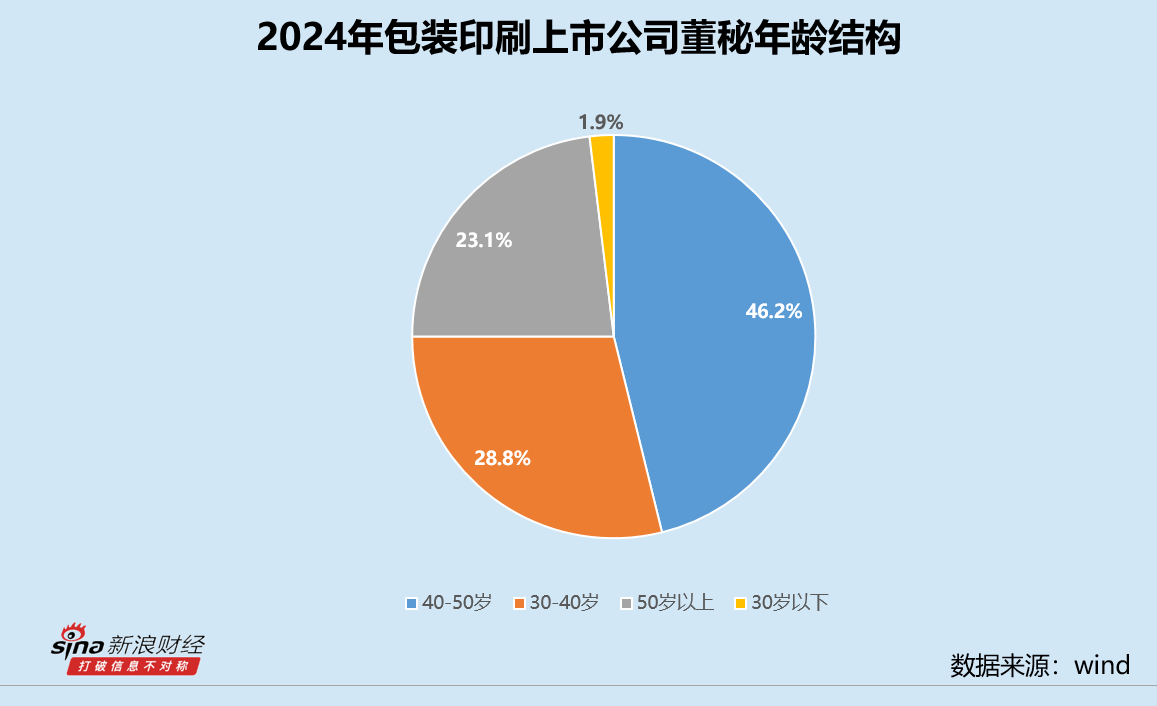
Core Insights - The report highlights that in 2024, the total salary of A-share listed company secretaries reached 4.086 billion yuan, with an average annual salary of 754,300 yuan [1] Group 1: Salary and Compensation - In 2024, the average annual salary for secretaries in the packaging and printing sector was 735,100 yuan, significantly higher than the average salary of 676,300 yuan in the light manufacturing industry, reflecting a year-on-year increase of 2.6% [11] - The median annual salary for secretaries was 586,300 yuan, with the highest and lowest salaries differing by 2.0104 million yuan [11] - Approximately 23.1% of secretaries earned over 1 million yuan annually, with only one secretary earning less than 200,000 yuan during the 2023-2024 period [11] - The highest-paid secretary was Gao Jun from Zijiang Enterprises, earning 2.21 million yuan, while the lowest was Zhan Xuan from Hujiang Materials, earning only 129,600 yuan [12][14] Group 2: Demographics and Education - The average age of secretaries in the packaging and printing sector is 43.38 years, with 46.2% aged between 40-50 years, 28.8% between 30-40 years, and 23.1% over 50 years [1][3] - Male secretaries dominate the field, comprising approximately 63.5% of the total, with an average age of 44.77 years, while female secretaries account for 36.5% with an average age of 41.11 years [1] - In terms of educational background, 50% of secretaries hold a bachelor's degree, while 42.3% have a master's degree and 7.7% have a diploma [5] Group 3: Tenure and Experience - The majority of secretaries in the packaging and printing sector have a tenure of 5-10 years, accounting for about 28.8%, followed by those with 1-3 years at 25.0% [3] - The longest-serving secretary is Qi Liguo from Donggang Co., who has held the position since March 2006, totaling over 19 years [3] - During the reporting period, five secretaries left their positions, with Lin Wei from Global Printing having served for 10 years before leaving due to job adjustments [3] Group 4: Engagement and Interaction - Approximately 67.3% of secretaries in the packaging and printing sector conducted fewer than 10 investor meetings in 2024, with some having zero interactions [8] - The highest number of meetings was conducted by Xiao Wei from Shengtong Co., who held 165 meetings throughout the year, averaging one to two meetings every working day [8]

轻工制造行业周报:海外烟草龙头2025H1财报梳理:新型烟草增速向好-20250804
Guoxin Securities· 2025-08-04 09:48
Investment Rating - The report maintains an "Outperform" rating for the light industry sector [6][10]. Core Insights - Recent financial reports from major overseas tobacco companies for H1 2025 show overall stable performance, with new tobacco products continuing to drive growth. British American Tobacco, Philip Morris International, and Japan Tobacco have all raised their annual forecasts [18]. Summary by Relevant Sections British American Tobacco (BAT) - For H1 2025, BAT reported revenues of £12.069 billion, a decrease of 2.2% year-on-year, with new tobacco products accounting for 13.7% of total revenue [2][19]. - The revenue from heated tobacco products was £440 million, showing a slight increase of 0.8%, while the revenue from new oral tobacco products surged by 38.1% to £470 million [20][21]. Philip Morris International (PMI) - PMI's Q2 2025 net revenue reached $10.14 billion, reflecting a year-on-year increase of 7.1%, with smoke-free tobacco products making up 41.6% of total revenue [3][28]. - The global shipment of heated tobacco units was 38.8 billion, up 9.2% year-on-year, with IQOS market share in Japan increasing to 31.7% [29]. Japan Tobacco - Japan Tobacco reported Q2 2025 revenues of ¥907.6 billion, a 9.4% increase year-on-year, with heated tobacco product shipments rising by 31.2% [4][38]. - The company has adjusted its annual revenue growth forecast to 8.4% and operating profit growth to 14.6% [38]. Altria - Altria's Q2 2025 revenue was $6.1 billion, down 1.7% year-on-year, with oral tobacco product revenue increasing by 5.9% [5][12]. Market Overview - The light industry sector experienced a relative return of +0.16% last week, despite a decline of 1.59% in the overall sector [6][9]. - Furniture retail sales in June increased by 28.7% year-on-year, while building materials sales saw a decline of 8.9% [6][12]. Investment Recommendations - The report recommends focusing on leading companies in the home furnishing sector, such as Oppein Home, Sophia, and Kuka Home, as well as in the paper and packaging sectors, highlighting Sun Paper and Yutong Technology as key investment opportunities [9][16].


周观点:分歧中酝酿生机,周期中挖掘复苏-20250803
Xinda Securities· 2025-08-03 09:29
Investment Rating - The industry investment rating is "Positive" [2] Core Viewpoints - The report highlights that there are opportunities for recovery in the light industry manufacturing sector amidst existing divergences and cyclical challenges [2] - The report emphasizes the importance of monitoring the paper price recovery as the supply side experiences disturbances, particularly in the pulp market, with expectations for price increases in Q3 and Q4 [2][3] - The new tobacco segment shows resilience with British American Tobacco reporting stable performance in new products, indicating potential growth in the mid-single digits for new tobacco products [3] - The report notes the impact of updated tariffs on exports, suggesting a potential recovery in orders as clarity on tariff policies emerges in August [4] - The packaging sector is expected to benefit from competitive advantages and improved supply chain management, with companies like Zhongxin and Yongxin poised for growth [6] - The smart glasses market is anticipated to gain momentum as major tech companies emphasize the importance of AI integration in wearable technology [6] - The cross-border e-commerce landscape is evolving with changes in U.S. tax policies, which may clarify the global strategies of domestic sellers [7] - The report discusses the structural opportunities in the maternal and infant industry due to new government subsidies, which are expected to stimulate demand in lower-tier markets [9][10] - The home appliance sector is likely to stabilize as government funding for consumption upgrades is implemented [16] - The tools sector is projected to see a recovery in demand as the U.S. may initiate interest rate cuts, which could boost housing transactions [17] Summary by Sections Pulp and Paper - Global pulp supply disturbances are noted, with companies like Altri and UPM adjusting production strategies, leading to expectations of price recovery in Q3 and Q4 [2][3] New Tobacco - British American Tobacco's H1 results show a slight decline in overall revenue but stable performance in new tobacco products, indicating potential for growth [3] Exports - Recent updates on tariffs may lead to a recovery in orders, with a focus on companies that can adapt to the changing landscape [4] Packaging - Companies in the packaging sector are expected to leverage cost advantages and improve supply chain efficiencies for growth [6] Smart Glasses - The smart glasses market is set to expand as major tech firms invest in AI capabilities [6] Cross-Border E-commerce - Changes in U.S. tax policies are expected to clarify the operational landscape for cross-border e-commerce sellers [7] Maternal and Infant Industry - New government subsidies are anticipated to stimulate demand in the maternal and infant sector, particularly in lower-tier markets [9][10] Home Appliances - The home appliance sector is expected to stabilize with government support for consumption upgrades [16] Tools - The tools sector may see demand recovery as the U.S. considers interest rate cuts, potentially boosting housing market activity [17]

智能眼镜系列:传统到智能,镜片制造龙头有望提份额
Changjiang Securities· 2025-08-03 08:04
Investment Rating - The industry investment rating is "Positive" and maintained [11] Core Insights - The report focuses on the traditional lens industry and the emerging trend of smart glasses, highlighting the growth potential for light industry companies [2][8] - The traditional lens market in China is expanding steadily, with youth defocus lenses rapidly gaining market share as a mature myopia treatment solution [6][25] - Smart glasses are positioned to "free hands," with technology and ecosystem maturing, supported by favorable policies [8][44] Summary by Sections Traditional Lenses - **Scale**: The lens industry in China is continuously expanding, with a 5-year CAGR of approximately 5% for retail revenue, 3% for volume, and 2% for average price from 2019 to 2024. The retail revenue is projected to reach 38.2 billion yuan in 2024 [6][16] - **Structure**: Youth defocus lenses are rapidly increasing in market share, with a projected retail sales revenue of 16 billion yuan in 2024, accounting for 42% of total lens sales [25][28] - **Pattern**: Domestic manufacturers lead in production, with foreign brands maintaining a premium. The largest domestic supplier is 康耐特光学, holding an 8.5% market share [7][31] - **Channels**: Sales are primarily through offline optical stores and e-commerce, with offline stores accounting for 73% of sales in 2024 [35][38] Smart Glasses - **Market Potential**: The smart glasses market is expected to grow significantly, with global sales projected to reach 5.5 million units in 2025 and 90 million units by 2030 [8][47] - **Manufacturing**: Smart glasses require higher technical specifications for lenses, particularly XR lenses, which presents an opportunity for leading domestic manufacturers to increase their market share [48][50] - **Distribution**: Offline retail channels are crucial for smart glasses, with major players like 博士眼镜 leading in store numbers [48][50] Weekly Insights - The report notes strong performance in sectors like trendy toys, personal care, and export chains, with a clear trend in the new tobacco industry and stable performance in home and packaging sectors [9][51]
机器学习因子选股月报(2025年8月)-20250730
Southwest Securities· 2025-07-30 05:43
Quantitative Factors and Construction Factor Name: GAN_GRU Factor - **Construction Idea**: The GAN_GRU factor is derived by processing volume-price time-series features using a Generative Adversarial Network (GAN) model, followed by encoding these time-series features with a Gated Recurrent Unit (GRU) model to generate a stock selection factor [4][13][41] - **Construction Process**: 1. **Input Features**: 18 volume-price features such as closing price, opening price, turnover, and turnover rate are used as input data. These features are sampled every 5 trading days over the past 400 days, resulting in a feature matrix of shape (40,18) [14][17][18] 2. **Data Preprocessing**: - Outlier removal and standardization are applied to each feature over the 40-day time series - Cross-sectional standardization is performed at the stock level [18] 3. **GAN Model**: - **Generator**: An LSTM-based generator is used to preserve the sequential nature of the input features. The generator takes random noise (e.g., Gaussian distribution) as input and generates data that mimics the real data distribution [23][33][37] - **Discriminator**: A CNN-based discriminator is employed to classify real and generated data. The discriminator uses convolutional layers to extract features from the 2D volume-price time-series "images" [33][35] - **Loss Functions**: - Generator Loss: $$ L_{G} = -\mathbb{E}_{z\sim P_{z}(z)}[\log(D(G(z)))] $$ where \( z \) represents random noise, \( G(z) \) is the generated data, and \( D(G(z)) \) is the discriminator's output probability for the generated data being real [24] - Discriminator Loss: $$ L_{D} = -\mathbb{E}_{x\sim P_{data}(x)}[\log D(x)] - \mathbb{E}_{z\sim P_{z}(z)}[\log(1-D(G(z)))] $$ where \( x \) is real data, \( D(x) \) is the discriminator's output probability for real data, and \( D(G(z)) \) is the discriminator's output probability for generated data [27] 4. **GRU Model**: - Two GRU layers (GRU(128,128)) are used to encode the time-series features, followed by an MLP (256,64,64) to predict future returns [22] 5. **Factor Output**: The predicted returns (\( pRet \)) from the GRU+MLP model are used as the stock selection factor. The factor is neutralized for industry and market capitalization effects and standardized [22] Factor Evaluation - The GAN_GRU factor effectively captures the sequential and cross-sectional characteristics of volume-price data, leveraging the strengths of GANs for feature generation and GRUs for time-series encoding [4][13][41] --- Factor Backtesting Results GAN_GRU Factor Performance Metrics - **IC Mean**: 11.43% (2019-2025), 10.97% (last year), 9.27% (latest month) [41][42] - **ICIR**: 0.89 [42] - **Turnover Rate**: 0.82 [42] - **Annualized Return**: 38.52% [42] - **Annualized Volatility**: 23.82% [42] - **IR**: 1.62 [42] - **Maximum Drawdown**: 27.29% [42] - **Annualized Excess Return**: 24.86% [41][42] GAN_GRU Factor Industry Performance - **Top 5 Industries by IC (Latest Month)**: - Home Appliances: 27.00% - Non-Bank Financials: 23.08% - Retail: 20.01% - Steel: 14.83% - Textiles & Apparel: 13.64% [41][42] - **Top 5 Industries by IC (Last Year)**: - Utilities: 14.43% - Retail: 13.33% - Non-Bank Financials: 13.28% - Steel: 13.23% - Telecommunications: 12.36% [41][42] GAN_GRU Factor Long Portfolio Performance - **Top 5 Industries by Excess Return (Latest Month)**: - Textiles & Apparel: 5.19% - Utilities: 3.62% - Automobiles: 3.29% - Non-Bank Financials: 2.56% - Pharmaceuticals: 1.47% [2][43] - **Top 5 Industries by Average Monthly Excess Return (Last Year)**: - Home Appliances: 5.44% - Building Materials: 4.70% - Textiles & Apparel: 4.19% - Agriculture: 4.09% - Utilities: 3.92% [2][43]