
Rokid

Search documents
高德发布智能眼镜行业解决方案:可看红绿灯读秒、播放景点解说
Zheng Quan Shi Bao Wang· 2025-06-05 11:12
6月5日,高德地图旗下高德开放平台正式发布智能眼镜解决方案,标志着其在空间计算与智能穿戴领域 的技术创新迈入新阶段。 作为专业领先的出行和位置服务解决方案提供商,阿里巴巴集团旗下高德地图依托AI大模型、北斗高 精定位技术,并应用Planner-Executor创新技术理念和架构,率先推出全球首个集"感知、规划、执行、 表达"于一体的全链路AI导航智能体(NaviAgent),重新定义了智能出行的行业技术理念,为与各领域 合作伙伴深度协同打下坚实的技术底座。 目前,高德已与Rokid、雷鸟创新、逸文、星纪魅族等AR行业领军企业达成战略合作,共同推出基于智 能眼镜的导航智能体(NaviAgent)应用,建设"AI+AR"导航新生态。 通过深度场景化的Agent能力,高德智能眼镜解决方案实现了本地生活服务与导航功能的深度融合:一 方面,它可提供深层次结构化信息查询服务,涵盖用户评分、榜单排行、门票价格、开放时间等多维度 内容;另一方面,依托智能语音交互系统,支持用户执行包含路径偏好设定的复杂导航指令。 不仅如此,基于地图导航生态与大规模数据基座的高阶导航HUD展示,可动态感知实时路径、后方来 车、红绿灯读秒等信息, ...

氪星晚报|Rokid消费级AR眼镜将在速卖通独家首发;飞天茅台部分地区批发价跌破2000元;外交部回应稀土出口管制措施
3 6 Ke· 2025-06-05 10:52
Group 1: Leadership Changes - Starbucks appointed Mike Grams as Chief Operating Officer, part of a leadership restructuring aimed at boosting performance [1] - Grams previously served as North America Chief Store Officer, taking over responsibilities after the departure of Sara Trilling [1] - Meredith Sandland was appointed as North America Chief Store Development Officer, reporting to Grams [1] Group 2: Product Launches and Market Expansion - Rokid's new consumer-grade AR glasses will exclusively launch on AliExpress during the overseas 618 shopping festival, part of a broader initiative to help 1,000 new brands achieve significant sales [2] - Lawson and FamilyMart in Japan began selling government reserve rice in select stores, with plans to expand to approximately 13,800 stores nationwide [3] Group 3: Price Trends and Market Reactions - The wholesale price of Feitian Moutai has dropped below 2,000 yuan per bottle in some regions, with retail prices around 2,100 yuan [4] - Historically, Moutai has responded to price declines with measures like limiting supply, but no such actions have been reported this time [4] Group 4: Workforce and Business Restructuring - Procter & Gamble announced plans to lay off 7,000 employees globally over the next two years, representing 15% of its non-production workforce, as part of a restructuring of non-core businesses [5] - The company also plans to exit certain product categories and markets [5] Group 5: Executive Appointments - Canada Goose appointed Xie Lin as the new President for the China region, responsible for direct operations in the mainland market [6] - Xie previously held senior roles at Inditex Group, including at Zara, focusing on retail, e-commerce, and marketing [6] Group 6: Technology and Market Coverage - iFlytek's Super Brain platform now covers 90% of domestic smart robot manufacturers, with 60% utilizing a full-link interaction solution [7] - The platform includes various types of robots, enhancing the capabilities of the domestic robotics industry [7] Group 7: Mergers and Acquisitions - Hims&Hers Health announced the acquisition of London-based digital health platform ZAVA to expand its European market presence [9] - The acquisition aims to enhance market coverage in the UK and facilitate entry into Germany, France, and Ireland [9] Group 8: Consumer Behavior Insights - Meituan's Vice President reported that platinum and above members have a 342% higher average spending in travel compared to other membership levels, indicating a shift in consumer behavior towards travel [10] - The data shows that over half of the high-spending members are under 30 years old, highlighting a trend among younger consumers [10] Group 9: Industry Regulation and Guidance - The Ministry of Commerce in China is addressing "involution" in the automotive industry by enhancing market tracking and policy guidance to promote healthy competition [11] - The ministry plans to collaborate with relevant departments to address market bottlenecks and better meet diverse consumer needs [11] Group 10: International Trade and Policy - China's Ministry of Foreign Affairs responded to questions regarding rare earth export controls, stating that the measures are non-discriminatory and align with international practices [12]
最新AI眼镜格局报告:百镜大战拉开序幕,阿里DeepSeek高通成幕后赢家
量子位· 2025-06-05 10:28
Core Viewpoint - The article discusses the rising popularity and market dynamics of AI glasses, highlighting the competition among various products and manufacturers in the sector [1][3]. Group 1: Market Overview - AI glasses are gaining traction, with products like Ray-Ban Meta and Rokid Glasses leading the market [1][5]. - The market is characterized by a "hundred glasses battle," indicating intense competition, although actual product availability remains limited [1][5]. - The integration of large language models and multi-modal capabilities is enhancing the functionality of AI glasses, making them more appealing to a broader audience [3][6]. Group 2: Product Features and Trends - The most common features of AI glasses include AI voice interaction and translation capabilities, with various models offering additional functionalities [12]. - AI shooting glasses are currently leading in sales volume, with products like Ray-Ban Meta and 雷鸟V3 being prominent examples [14][15]. - The evolution of AI glasses is expected to transition from being supplementary tools to comprehensive smart wearable solutions that integrate various functionalities [17]. Group 3: Competitive Landscape - The competitive factors for AI glasses include design, hardware, software, model capabilities, and content ecosystem [19][22]. - Different types of companies, such as internet firms, mobile manufacturers, XR companies, and startups, are entering the AI glasses market, each bringing unique advantages based on their existing technologies and resources [27][29]. - XR companies are particularly influential, with over half of the currently available AI glasses coming from this sector, showcasing their significant role in the market [31]. Group 4: Future Outlook - The report outlines three stages of value development for AI glasses, indicating a shift from tool-based functionalities to service-oriented and companion-like experiences in the long term [22]. - The future of AI glasses will likely focus on enhancing user experience through improved design, weight reduction, and software capabilities [23][25].


最新AI眼镜格局报告:百镜大战拉开序幕,阿里DeepSeek高通成幕后赢家
量子位· 2025-06-05 10:28
Core Viewpoint - The article discusses the rising popularity and competitive landscape of AI glasses, highlighting the transition from niche tech enthusiasts to a broader consumer base, and the ongoing "battle of the hundred glasses" in the market [1][3]. Group 1: Market Overview - AI glasses are increasingly recognized as a hot category in AI hardware, with various products like Ray-Ban Meta and Rokid Glasses gaining traction [1][3]. - The current market features a limited number of AI glasses available for immediate delivery, despite numerous announcements of upcoming products [5]. - The integration of large language models and multi-modal capabilities is enhancing the functionality of AI glasses, making them more appealing to consumers [3][6]. Group 2: Competitive Landscape - The report identifies key players in the AI glasses market, including major manufacturers and emerging startups, with a focus on their unique advantages based on their existing business models [27][29]. - The competition is characterized by a diverse range of products, with XR companies leading the market, accounting for over half of the released AI glasses [31]. Group 3: Technological Advancements - The integration of advanced models like Tongyi Qianwen and DeepSeek is crucial for enhancing the semantic understanding and multi-modal interaction capabilities of AI glasses [6]. - Qualcomm's Snapdragon AR1 chip is highlighted as a dominant choice among manufacturers due to its high maturity and performance in image processing and AI capabilities [8][10]. Group 4: Product Features and Trends - Common features of AI glasses include AI voice interaction and translation, with variations in additional functionalities depending on the product type [12]. - AI shooting glasses are currently leading in sales volume, with products like Ray-Ban Meta and Thunder V3 being prominent examples [14][15]. - The future of AI glasses is expected to evolve towards a comprehensive smart wearable solution that integrates various functionalities, including audio, camera, and display capabilities [17][22]. Group 5: Competitive Factors - The competitiveness of AI glasses is influenced by several factors, including design, hardware, software, model capabilities, and content ecosystem [19][21]. - Different stages of product development emphasize varying competitive elements, with the current focus on providing specific functional tools and future aspirations towards a more integrated service experience [22].

Rokid AR Spatial新品发布:定价为648美元,速卖通独家首发
news flash· 2025-06-05 03:28
Core Viewpoint - Rokid has launched its new product, Rokid AR Spatial, which will officially debut overseas on June 15, with AliExpress as the exclusive global launch platform. The product is part of the "BigSave" brand export plan, featuring advanced AR technology at a competitive price point compared to similar products in the market [1] Group 1 - Rokid AR Spatial is designed for practicality and immersion, featuring the world's first intelligent adjustment system for refractive power and interpupillary distance, making it lightweight and comfortable for extended wear [1] - The retail price of Rokid AR Spatial is set at $648, offering a similar core multi-screen spatial experience as Apple's Vision Pro, which is priced at $3,500 [1] - On the AliExpress platform, users can benefit from additional platform incentives, bringing the effective price down to as low as $518 [1]
AI眼镜「预选赛」格局报告
量子位· 2025-06-05 00:55
Investment Rating - The report provides a positive investment rating for the AI glasses industry, indicating strong growth potential and market opportunities [2]. Core Insights - The AI glasses market is expected to experience significant growth, driven by advancements in technology and increasing consumer interest in augmented reality (AR) applications [12][15]. - Major players in the market include Ray-Ban Meta, which is highlighted for its innovative product offerings and market presence [9][34]. - The report emphasizes the importance of integrating AI and AR technologies to enhance user experience and functionality in AI glasses [10][14]. Summary by Sections AI Glasses Definition and Classification - AI glasses are categorized into three main types: AI-only, AI+AR, and AR-only, each with distinct hardware components and functionalities [10][12]. - Key products in the market include Ray-Ban Meta and INMO GO2, showcasing the diversity in design and technology [9][10]. Current Market Status - The AI glasses market is currently valued at approximately $1 billion, with projections to grow significantly by 2025 [12][15]. - The report notes a competitive landscape with several emerging players alongside established brands, indicating a dynamic market environment [12][34]. Market Trends and Projections - The report forecasts a compound annual growth rate (CAGR) of around 35% for the AI glasses market from 2023 to 2025, reflecting robust demand and technological advancements [15][30]. - Consumer preferences are shifting towards multifunctional devices that combine AI and AR capabilities, driving innovation in product development [12][15]. Key Product Features - AI glasses are characterized by lightweight designs, advanced hardware components, and features such as voice recognition and real-time data processing [10][12]. - The report highlights the importance of user-friendly interfaces and seamless integration with mobile devices to enhance consumer adoption [10][12]. Pricing and Market Segmentation - The pricing for AI glasses varies significantly, with entry-level models starting around $700 and high-end models reaching up to $5000 [30][31]. - The market is segmented into various price ranges, catering to different consumer demographics and preferences [30][31].

4 Stocks From the Tech Industry of China to Keep an Eye On in 2H25
ZACKS· 2025-06-04 15:21
Core Insights - China's technology sector is expected to show resilience in H2 2025, leveraging global trade pressures to foster indigenous innovation despite facing significant U.S. tariffs and export restrictions [2] - Major Chinese tech companies are pivoting investments towards AI infrastructure and emerging technologies, with strong demand for AI outpacing supply [2] - The semiconductor industry in China has captured over 25% of the global market share in advanced packaging technologies, showcasing its competitive edge [5] Company Highlights - **NetEase**: - Demonstrated strong financial momentum with Q1 2025 gaming revenues increasing by 12.1% year over year to RMB24.0 billion and net income rising by 35% to RMB10.3 billion [9][11] - Upcoming game titles and a robust pipeline position the company for growth in the second half of 2025 [10][11] - **Alibaba**: - Reported Q4 fiscal 2025 non-GAAP earnings surged by 23% year over year to $1.73 per ADS, exceeding estimates by 16.89% [12][13] - The Cloud Intelligence segment achieved 18% revenue growth, with AI-related products maintaining triple-digit growth for seven consecutive quarters [12] - **Taiwan Semiconductor**: - Achieved Q1 2025 revenues of $25.53 billion, a 35% year-over-year increase, with net income rising by 53% to nearly $11 billion [15] - Plans to increase capital spending to between $38 and $42 billion in 2025 to meet growing AI-driven demand for advanced chips [16] - **Tencent**: - Reported Q1 revenues of RMB180 billion, a 13% year-over-year increase, with gaming division growth accelerating [17] - Integrated AI capabilities are enhancing user engagement and advertising effectiveness, positioning the company favorably in the market [18][19] Industry Trends - The robotics sector in China is advancing with innovations such as sophisticated humanoid robots, while the electric vehicle ecosystem is bolstered by companies like Zeekr and Great Wall Motor [6] - Augmented reality companies in Beijing are developing advanced AR solutions, reflecting China's strategy to lead in high-tech sectors [7] - The overall technological advancements and significant investments in development present substantial growth opportunities for investors in the Chinese tech landscape [8]




科技巨头竞逐AR眼镜赛道 技术突破与生态构建成破局关键
Shang Hai Zheng Quan Bao· 2025-06-02 18:26
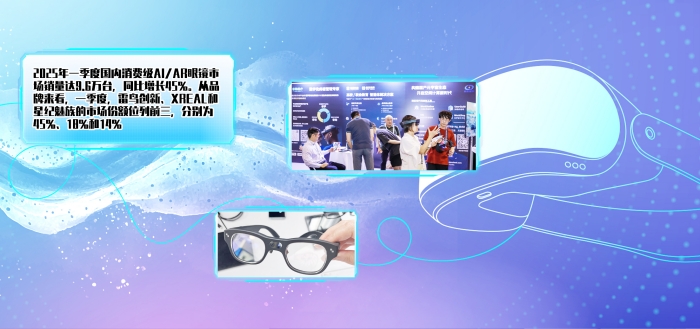
Core Insights - The AR glasses market is transitioning from niche products to mainstream consumer adoption, driven by major tech companies like Google and Lenovo entering the space with new products [2][3] - The industry is expected to see significant growth, with a projected 45% year-on-year increase in sales of consumer-grade AI/AR glasses in Q1 2025, reaching 96,000 units sold [4] - Key challenges include addressing technical limitations and privacy concerns, which require collective efforts from the industry to resolve [2][10] Industry Developments - Major tech companies are launching new AR glasses, with TCL's Thunder Innovation releasing the Thunder X3 Pro and Google collaborating with XREAL on Project Aura [2][3] - The entry of these giants is seen as a crucial market education step, enhancing consumer awareness and confidence in AR glasses [3][4] - The market is currently dominated by a few vertical companies, despite the influx of larger players, indicating a potential shakeout among early-stage startups [4] Market Dynamics - The AR glasses market is characterized by a significant share of screen-based products, which accounted for 80% of the market in Q1 2025, while non-screen AI glasses made up 20% [4] - Leading brands in the market include Thunder Innovation, XREAL, and Starry Meizu, with respective market shares of 45%, 18%, and 14% [4] - The industry consensus is that 2025 will be a pivotal year for the AI/AR glasses sector, marking a critical juncture for market evolution [4] Technological Advancements - The development of AI and display technologies is crucial for the industry's progress, with companies focusing on Micro-LED and waveguide solutions [5][7] - Thunder Innovation's X3 Pro features advanced Micro-LED technology, with display costs comprising about 50% of the total product cost [5][6] - Collaborations with AI model developers are becoming common, enhancing the functionality of AR glasses with features like real-time translation and scene recognition [5] Application Expansion - AR glasses applications are expanding beyond entertainment into everyday life, with partnerships formed for navigation and payment functionalities [8] - Companies like Rokid and Thunder Innovation are collaborating with mapping services to enhance AR navigation capabilities [8] User Experience Challenges - The industry faces challenges in achieving a user-friendly experience characterized by lightweight, affordable, and long-lasting products [9] - Current AR glasses typically weigh around 50 grams, with prices primarily in the thousand-yuan range and battery life between 2 to 4 hours [9] - Key indicators for mainstream adoption include weight under 50 grams, pricing below 2000 yuan, and the integration of essential AI services [9] Privacy and Security Concerns - Privacy issues are a significant challenge for the AI/AR glasses industry, as devices require cameras that raise public concerns [10] - Companies are implementing measures like mandatory recording indicators and collaborating on safety technology to address these concerns [10][11] - The establishment of industry standards and evaluation metrics is underway to enhance product quality and user experience [10]




今年最尴尬的科技产品,可能是AI眼镜
阿尔法工场研究院· 2025-06-02 13:38
Core Viewpoint - The AI glasses market is rapidly evolving with numerous new products launched, but a killer feature is still needed for widespread consumer adoption [3][14][15]. Group 1: Market Dynamics - In May 2023, multiple companies including Thunderbird, Google, and Lenovo launched new AI glasses, totaling ten new products in the month [1][3]. - The competitive landscape is characterized by a "three kingdoms" scenario at the forefront, with Google and Qualcomm standardizing systems and chips, thus lowering production barriers [2][4]. Group 2: Product Development - The AI glasses industry is reaching a mature stage, with hardware and software consensus among manufacturers [4][8]. - Upcoming AI glasses are expected to feature high-end smartphone-like chip configurations, with Qualcomm's SoC becoming the mainstream choice [5][7]. - Recent AI glasses weigh under 40g, significantly lighter than previous models, enhancing user comfort for prolonged wear [7]. Group 3: Software Integration - AI glasses manufacturers are leveraging advancements in AI large models to enhance functionality, with companies like Rokid collaborating with Alibaba to enrich their software ecosystems [8][10]. - Some manufacturers are adopting Android systems to expedite software development, allowing for a broader range of applications [10][12]. Group 4: Consumer Insights - The current consumer demand for AI glasses leans more towards display capabilities rather than AI functionalities, as evidenced by the market dominance of AR glasses [15]. - Despite the advancements, many consumers find the AI features underwhelming, particularly in terms of speed and practicality [16][17]. Group 5: Future Outlook - The industry is experiencing a "Cambrian explosion" of product offerings, raising questions about market absorption capacity [13]. - There is a need for further refinement in AI glasses to enhance user experience and practical applications, suggesting a period of adjustment between the products and market expectations [18].

消费电子行业研究周报:AI眼镜密集发布,看好软硬件方案成熟带动渗透率提升
Tianfeng Securities· 2025-06-02 06:23
Investment Rating - Industry Rating: Outperform the Market (Maintained Rating) [1] Core Viewpoints - The report highlights the recent surge in AI glasses releases, indicating a growing market for AI glasses as a new frontier for large models [9] - The performance of major overseas tech companies, such as Nvidia and Microsoft, has been strong, with significant revenue growth driven by AI contributions [9] - The report emphasizes the potential of Micro OLED technology and its expanding applications in various sectors, including AR glasses [9] Summary by Sections AI Glasses Market - Multiple domestic AI glasses have been launched recently, with notable products from companies like Raybird and Rokid, indicating a trend towards integrating AI capabilities into consumer electronics [4][12] - Raybird's new flagship AR glasses, RayNeo X3 Pro, feature advanced technology such as Micro-LED displays and a Snapdragon AR1 platform, enhancing user experience and energy efficiency [12][14] - Rokid has partnered with Gaode Map to introduce a smart navigation application for its AR glasses, aiming to improve user interaction through voice and visual cues [18][19] - The market for AR glasses is heating up, leading to increased investment in upstream near-eye display projects, with several domestic companies expanding their Micro OLED production capacity [22][23] Overseas Tech Performance - Nvidia reported Q1 2026 revenue of $44.062 billion, a 69% year-over-year increase, with significant growth in data center and gaming sectors [34] - Microsoft's Q3 2025 revenue reached $70.1 billion, a 13% increase, driven by strong performance in its cloud services, particularly Azure [38][41] - Meta's Q1 2025 revenue was $42.314 billion, reflecting a 16% year-over-year growth, with substantial investments planned for AI infrastructure [34] Micro OLED Technology - The report notes that Micro OLED technology is expected to see further development in 2025, with increased investment in related projects to meet rising demand [23] - Companies like Yisui Technology are investing heavily in Micro OLED production capabilities, anticipating a growing market for these displays in various applications [25]

