老百姓

Search documents
老百姓大药房连锁股份有限公司关于为全资子公司提供担保的进展公告
Shang Hai Zheng Quan Bao· 2025-09-08 19:51
Summary of Key Points Core Viewpoint - The company has provided a guarantee for its wholly-owned subsidiary, Hunan Fengwoda Pharmaceutical Logistics Co., Ltd., to support its operational funding needs through a bank credit application totaling 10,000 million RMB [2][4][6]. Group 1: Guarantee Overview - The company has applied for a total bank credit limit of 1,591 million RMB for the year 2025, with a guarantee amount not exceeding 98 million RMB [2]. - The guarantee is valid from the date of approval by the annual general meeting until the next annual general meeting [2]. Group 2: Financial Status of the Subsidiary - As of December 31, 2024, Hunan Fengwoda had total audited assets of 470,654.77 million RMB and total liabilities of 425,248.92 million RMB, resulting in a net asset of 45,405.85 million RMB [3]. - For the first half of 2025, the unaudited total assets were 620,899.58 million RMB, with liabilities of 559,164.13 million RMB, leading to net assets of 61,735.45 million RMB [3]. Group 3: Guarantee Agreement Details - The guarantee is a joint liability guarantee, covering all debts related to loans, financing, and other financial activities as per the main contract [4]. - The subsidiary has not provided any counter-guarantee for this arrangement [4]. Group 4: Necessity and Reasonableness of the Guarantee - The guarantee is deemed necessary for the subsidiary's operational development and aligns with the company's overall interests and strategic goals [6]. - The subsidiary is reported to have stable financial conditions and good creditworthiness, indicating its ability to repay due debts [6]. Group 5: Board of Directors' Opinion - The board has approved the guarantee, stating it is in line with the company's actual situation and complies with relevant laws and regulations [7]. - The total external guarantees amount to 980 million RMB, which is 13.69% of the company's latest audited net assets, with no overdue guarantees reported [7].

老百姓(603883) - 关于为全资子公司提供担保的进展公告
2025-09-08 08:30
证券代码:603883 证券简称:老百姓 公告编号:2025-048 老百姓大药房连锁股份有限公司 关于为全资子公司提供担保的进展公告 本公司董事会及全体董事保证本公告内容不存在任何虚假记载、误导性陈述 或者重大遗漏,并对其内容的真实性、准确性和完整性承担法律责任。 重要内容提示: 担保对象及基本情况 | | | 被担保人名称 | | | 丰沃达医药物流(湖南)有限公司 | | --- | --- | --- | --- | --- | --- | | | | 本次担保金额 | 10,000 | 万元 | | | 担 保 象 | 对 | 实际为其提供的担保余额 | 10,000 | 万元 | | | | | 是否在前期预计额度内 | 是 | □否 | □不适用:_________ | | | | 本次担保是否有反担保 | □是 | 否 | □不适用:_________ | (二)内部决策程序 公司已于 2025 年 4 月 29 日召开第五届董事会第九次会议、2025 年 6 月 30 日召开了 2024 年年度股东大会,审议通过《关于公司及子公司 2025 年度申请银 行综合授信额度及提供担保的议案》, ...
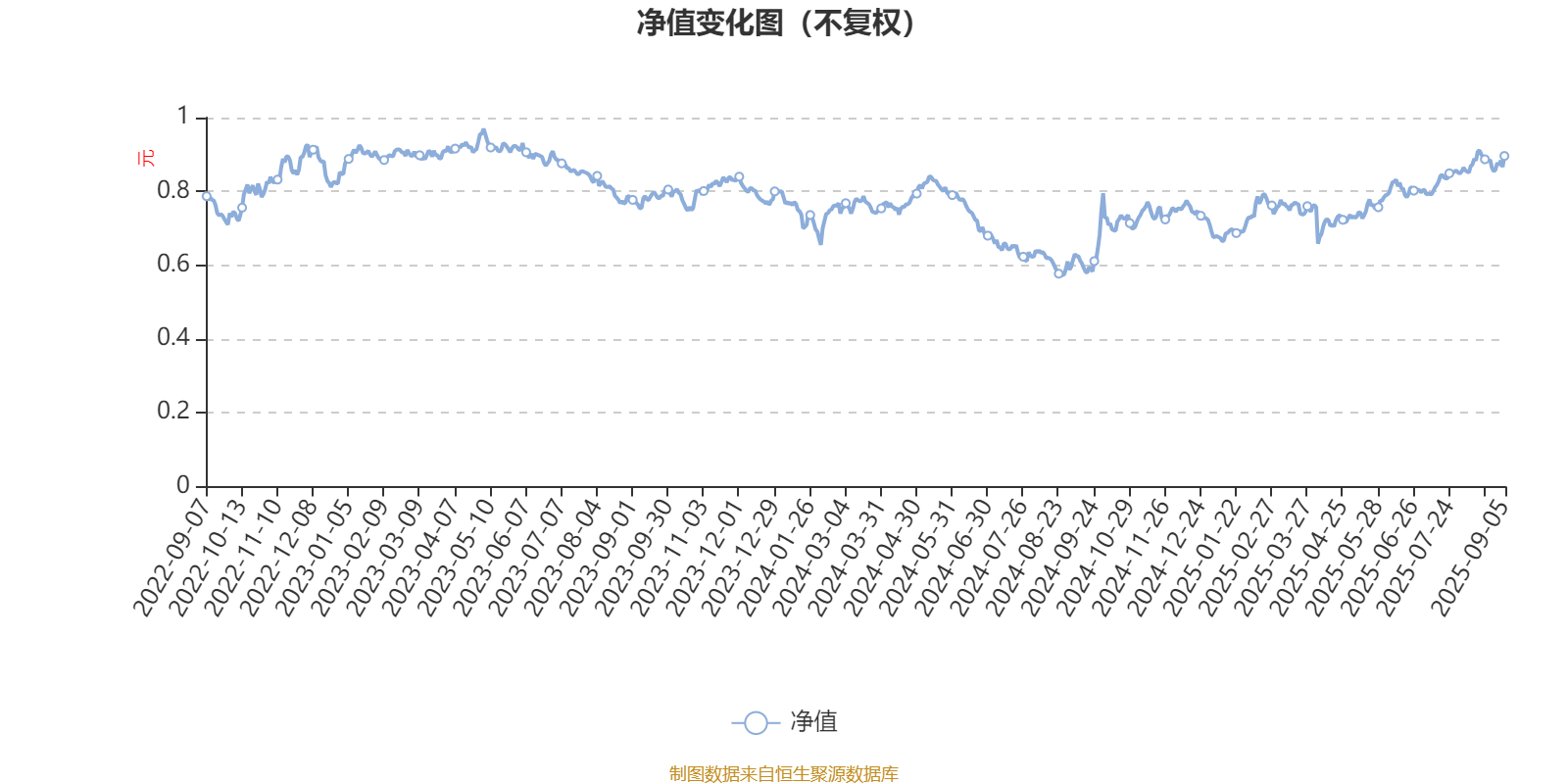
国泰医药健康股票A:2025年上半年利润7467.79万元 净值增长率13.15%
Sou Hu Cai Jing· 2025-09-08 02:20
Group 1 - The core viewpoint of the article highlights the performance and strategy of the Guotai Medical Health Stock A Fund, which reported a profit of 74.68 million yuan in the first half of 2025, with a net value growth rate of 13.15% [3] - As of September 5, 2025, the fund's unit net value was 0.896 yuan, and the fund manager, Xu Zhibiao, oversees six funds, all of which have positive returns over the past year [3] - The fund's investment strategy focuses on the medical sector, particularly in areas such as medical services, retail, and OTC devices, while avoiding heavily crowded innovative drug stocks in the A-share market [3] Group 2 - The fund's performance metrics indicate a near-term net value growth rate of 13.26% over the past three months, 17.70% over the past six months, and 42.25% over the past year, ranking it 47/54, 48/54, and 40/53 among comparable funds, respectively [6] - The fund's weighted average price-to-earnings ratio (TTM) is approximately 29.06 times, significantly lower than the peer average of -135.64 times, while the weighted average price-to-book ratio is 2.52 times compared to the peer average of 4.24 times [12] - The fund's weighted revenue and net profit growth rates (TTM) for the first half of 2025 are both 0.06%, with a weighted annualized return on equity of 0.09% [20] Group 3 - As of June 30, 2025, the fund's three-year Sharpe ratio is 0.2117, ranking 13/46 among comparable funds, while the maximum drawdown over the same period is 40.92%, ranking 21/47 [27][29] - The fund's average stock position over the past three years is 92.98%, higher than the peer average of 88.2%, with a maximum position of 94.25% at the end of 2021 [32] - The fund has a high concentration of holdings, with the top ten stocks consistently accounting for over 60% of the portfolio, including companies like Kefu Medical and Sanofi Pharmaceutical [43]

国海证券晨会纪要-20250908
Guohai Securities· 2025-09-08 01:05
Group 1: Company Performance Highlights - The report indicates that Meinian Health achieved a revenue of 4.1 billion yuan in H1 2025, with a year-on-year decline of 2.28%, and a net loss of 221 million yuan, which is an increase in loss by 2.59% year-on-year [4][6] - Zhongjian Technology reported a significant revenue increase of 59.46% year-on-year, reaching 464 million yuan in H1 2025, with a net profit growth of 99.15% [8][9] - Jinfat Technology's revenue for H1 2025 was 31.6 billion yuan, reflecting a 36% year-on-year increase, while net profit rose by 54% [15][16] Group 2: Strategic Initiatives and Innovations - Meinian Health is advancing its "All in AI" strategy, integrating AI technology into health management, generating 140 million yuan in revenue from AI-related services, a 62.36% increase year-on-year [6][7] - Zhongjian Technology is benefiting from the growing demand for high-performance carbon fiber in aerospace and high-end equipment, with a focus on expanding production capacity [8][11] - Jinfat Technology is leveraging new materials and innovative products to capture emerging market opportunities, with significant growth in its modified plastics and new materials segments [15][17] Group 3: Financial Projections and Ratings - Meinian Health's revenue projections for 2025-2027 are 10.4 billion, 11.4 billion, and 12.6 billion yuan, with net profits expected to grow significantly in the coming years [7] - Zhongjian Technology's revenue forecasts for 2025-2027 are 1.06 billion, 1.27 billion, and 1.59 billion yuan, with a "buy" rating maintained due to strong growth prospects [13] - Jinfat Technology anticipates revenues of 646 billion, 737 billion, and 828 billion yuan for 2025-2027, with a "buy" rating reflecting its leadership in the modified plastics industry [19]





“线上8元,线下32元” ,实测10家药店
Xin Lang Cai Jing· 2025-09-07 11:26
Core Viewpoint - There is a significant price discrepancy between online and offline pharmacies for the same medications, with some prices being more than three times higher in physical stores compared to online platforms [1][2][5]. Group 1: Price Discrepancy - A survey of ten pharmacies revealed that the same medication can have a price difference of over three times between online and offline sales [1][6]. - For example, the "仁和" artificial cow bile metronidazole capsules cost 8.68 yuan online but 32 yuan offline, resulting in a difference of 23.32 yuan [1][6]. - Other examples include "可益甘" artificial cow bile metronidazole capsules priced at 5.8 yuan online and 15.8 yuan offline, and "百多邦" mupirocin ointment at 19.2 yuan online versus 23.2 yuan offline [5][6]. Group 2: Reasons for Price Differences - Pharmacy staff indicated that online prices are often lower due to platform subsidies, although not all medications follow this trend [2][9]. - Consumers have the option to choose between online and offline purchases based on their preferences, but online shopping may incur additional delivery fees [2][9]. - Legal experts noted that the price difference alone does not constitute price fraud; it must be assessed in the context of whether the pharmacy transparently communicates the reasons for the price difference [11][12]. Group 3: Regulatory Responses - The National Medical Insurance Administration has issued directives to compare offline pharmacy prices with online platforms to address unreasonable pricing [10]. - Local regulations have been established, such as in Shaanxi Province, where offline prices cannot exceed 20% of the online price displayed by the same pharmacy [10]. - Zhejiang Province has mandated that online prices should not exceed 1.3 times the listed price, emphasizing the need for price consistency across different sales channels [10].
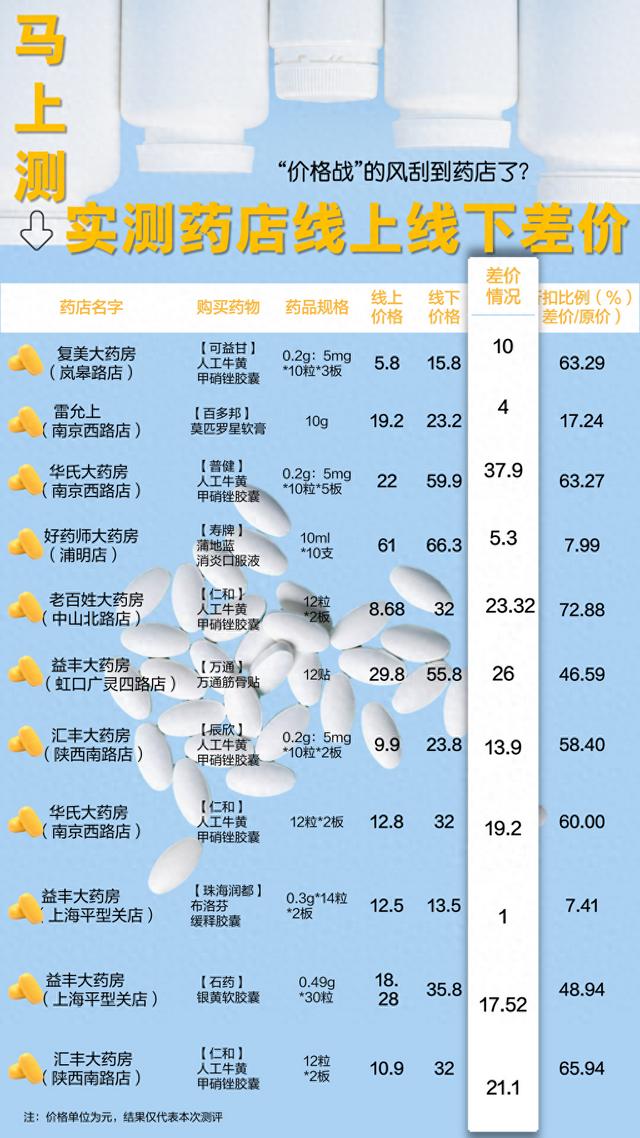
同店同药线上线下差价3倍多 药店:线上便宜因平台有补贴
Xin Lang Cai Jing· 2025-09-06 06:19
Core Insights - There is a significant price discrepancy between online and offline sales of the same medication, with some offline prices being over three times higher than online prices [1] - The price differences are attributed to subsidies provided by online platforms, although not all medications follow this trend [1] - Regulatory measures have been implemented to ensure that offline prices do not exceed a certain percentage above online prices, promoting price consistency [1] Group 1 - The price of "Renhe" artificial cow bile capsules (12 capsules * 2 packs) at a physical store is 32 yuan, while the online price is only 8.68 yuan, resulting in a price difference of 23.32 yuan [1] - Staff from various pharmacies indicated that the lower online prices are due to platform subsidies, and consumers have the option to choose based on their needs [1] - There are policies in place requiring that the offline retail prices of medications be compared with online prices, and any significant discrepancies should prompt adjustments by pharmaceutical companies [1] Group 2 - Some local regulations mandate that the offline sales price at designated pharmacies should not exceed 20% above the price displayed on online platforms [1] - The presence of minimum order requirements for online purchases can offset the perceived savings from online shopping [1] - The overall trend indicates a growing scrutiny of pricing practices in the pharmaceutical retail sector, aiming to protect consumer interests [1]

铭记历史 缅怀先烈 他们经历的抗战丨“老百姓的支持是我们的力量源泉”
He Nan Ri Bao· 2025-09-05 23:22
Group 1 - The article highlights the memories of a 97-year-old veteran, Wu Zhenyu, who recalls his experiences during the anti-Japanese war and his early interactions with the Communist Party [2][3] - Wu Zhenyu's initial understanding of the Communist Party was shaped by his teachers, who were underground members, and the harsh living conditions faced by the local population during the war [3][4] - The arrival of the Eighth Route Army was seen as a beacon of hope for the local people, as they were disciplined and friendly, which encouraged Wu Zhenyu to join the army [5][6] Group 2 - Wu Zhenyu participated in significant battles against Japanese forces, contributing to the defeat of local collaborators and Japanese troops, which he recalls with pride [7][8] - The support from the local population was crucial for the success of the military efforts, as highlighted by Wu Zhenyu's reflections on the importance of community backing during the war [8]

连锁药房中报发“减速”信号 来听三位从业者如何说
Mei Ri Jing Ji Xin Wen· 2025-09-04 14:35
Core Insights - The retail pharmacy industry in China has experienced rapid growth over the past 15 years, with the number of pharmacies increasing from 381,400 in 2009 to over 680,000 by the end of 2024, indicating a significant market expansion [1] - However, the industry is now facing a slowdown, with approximately 39,000 retail pharmacies closing in 2024, marking the first negative growth in the number of pharmacies [1][2] - Major pharmacy chains are signaling a halt in expansion plans, with companies like Lao Bai Xing planning to open only 1,000 new stores in 2025, primarily through franchising [2] Industry Trends - The pharmacy sector is witnessing a shift from aggressive expansion to a focus on survival, with many operators now discussing strategies to minimize losses rather than pursue growth [5][9] - The average profit margin for leading pharmacy companies has drastically decreased to between 1% and 3%, leading to a significant number of closures [9][10] - The industry is expected to see a further decline in the number of pharmacies, with estimates suggesting a reduction to around 400,000 pharmacies in the next three to five years [7][9] Market Dynamics - The influx of online platforms has severely impacted the profitability of brick-and-mortar pharmacies, with many pharmacies forced to sell products at a loss to compete [7][8] - The previous trend of acquiring pharmacies at high prices has created a bubble, making it difficult for companies to divest or sell stores profitably [4][7] - The industry is transitioning from a phase of broad growth driven by scale to a more structural growth phase, requiring adjustments to the oversaturated market [10][11]
“亏得没办法了” 一连锁药房老板自述:忙活一年净亏了2000多万元!
Mei Ri Jing Ji Xin Wen· 2025-09-04 08:56
Core Viewpoint - The rapid growth of China's chain pharmacy industry over the past 15 years is now facing a significant slowdown, with a notable decline in the number of retail pharmacies and a shift in focus from expansion to survival strategies [1][2][10]. Industry Overview - As of the end of 2024, the total number of pharmacies in China exceeded 680,000, with an average of 4.6 pharmacies per 10,000 people, significantly higher than levels in Japan and the United States [1]. - The industry experienced its first negative growth in retail pharmacy numbers in 2024, with approximately 39,000 pharmacies closing, and a net decrease of about 3,000 pharmacies in the first quarter of 2025 [1][2]. Business Strategies - Major pharmacy chains, such as 老百姓 (603883.SH), have indicated a pause in expansion plans, focusing instead on converting existing stores to franchise models [1]. - The industry is shifting from a focus on scale and expansion to survival, with many operators now discussing strategies to reduce losses rather than increase profits [3][8]. Market Dynamics - The pharmacy market is experiencing a structural shift, with many operators recognizing that the previous strategy of aggressive expansion is no longer viable [2][10]. - The influx of capital into the industry led to inflated valuations and a bubble in the number of pharmacies, with many operators previously opening stores not for sales but for resale [2][9]. Financial Performance - The profit margins for leading pharmacy companies have drastically decreased, with net profit margins reported between 1% and 3%, indicating a challenging financial environment [8]. - The operational costs, including online sales pressures and competitive pricing, have further squeezed profit margins, leading to significant losses for many operators [6][7]. Future Outlook - Industry experts predict that the number of pharmacies in China could decline to around 400,000 over the next three to five years, as many operators continue to close unprofitable stores [7][10]. - The current market environment is characterized by a focus on cash flow management and cost control, with many operators exploring various strategies to adapt to the changing landscape [8][9].

连锁药房老板自述:忙活一年净亏2000多万元
Hu Xiu· 2025-09-04 06:41
Core Viewpoint - The rapid growth of China's chain pharmacy industry has come to a halt, with significant closures expected in the coming years, indicating a shift from expansion to survival strategies [1][2][3][34]. Industry Overview - Over the past 15 years, the number of pharmacies in China has increased from 381,400 in 2009 to over 680,000 by the end of 2024, with a market size exceeding 153.1 billion yuan [1]. - The industry is experiencing its first negative growth phase, with approximately 39,000 retail pharmacies closing in 2024 and a net decrease of about 3,000 pharmacies in the first quarter of 2025 [3][13]. Company Strategies - Some listed pharmacy companies, such as 老百姓 (老百姓), have signaled a pause in expansion, with plans to open only 1,000 new stores in 2025, primarily through franchising [4][5]. - The focus has shifted from aggressive expansion to cost-cutting and survival, with many companies now discussing how to reduce losses rather than how to grow [15][28]. Market Dynamics - The influx of capital into the pharmacy sector led to inflated valuations and a bubble in the number of pharmacies, with many opening not to sell drugs but to sell the pharmacies themselves [11][24]. - The current market conditions have made it difficult for pharmacies to sell stores, as valuations have dropped significantly, with market values now at only 30-40% of sales revenue [24]. Financial Performance - A chain pharmacy operator reported a loss of over 20 million yuan in the previous year, with ongoing closures and layoffs as part of a strategy to reduce financial burdens [18]. - The profit margins for pharmacies have drastically decreased, with some companies reporting net profit margins as low as 1-3%, leading to a bleak outlook for the industry [27][28]. Future Outlook - The industry is expected to see a continued decline in the number of pharmacies, with estimates suggesting a reduction to around 400,000 pharmacies in the next three to five years [25]. - The shift from a growth-driven model to a more sustainable structure is necessary, as the previous reliance on rapid expansion is no longer viable [34].