
中国交建

Search documents
专访北大汇丰商学院朱兆一:中东市场存在少量泡沫但具有长期潜力,中企精耕细作方能立足
Zheng Quan Shi Bao· 2025-10-20 04:33
Core Insights - Chinese companies are entering a mature phase of overseas expansion, with the Middle East emerging as a key market due to its long-term potential and strategic importance in global industrial layout [1][2][3] - Understanding local needs and integrating into the local ecosystem are essential for Chinese enterprises to establish a long-term presence in the Middle East [1][4] Summary by Sections Investment Trends - The Middle East, particularly Saudi Arabia and the UAE, has become a favored destination for Chinese investments, attracting 84% and 79% of surveyed companies respectively [1][2] - The current phase of overseas expansion can be categorized into three stages: resource-based, asset acquisition, and the current focus on capacity output and localized operations [3][4] Market Characteristics - The Gulf Cooperation Council (GCC) countries, especially the UAE, Saudi Arabia, Kuwait, and Qatar, represent significant economic potential, with a young population and strong purchasing power driven by oil resources [4][5] - While there are signs of market saturation in some sectors, the overall long-term value of the Middle East remains intact despite minor bubbles [4][5] Changes in Business Approach - There has been a shift from large state-owned enterprises targeting massive projects to a rise in localized entrepreneurship, with companies establishing headquarters in Dubai and focusing on local operations [7][8] - Chinese enterprises are contributing positively to the local ecosystem by enhancing diversity, transferring technology, and forming effective partnerships with local teams [8][9] Key Success Factors - Successful Chinese companies in the Middle East share three common traits: reliable local partners, well-structured teams, and thorough localization efforts [10][11] - The competitive landscape is complex, with significant challenges in understanding local regulations and the need for product customization [12]
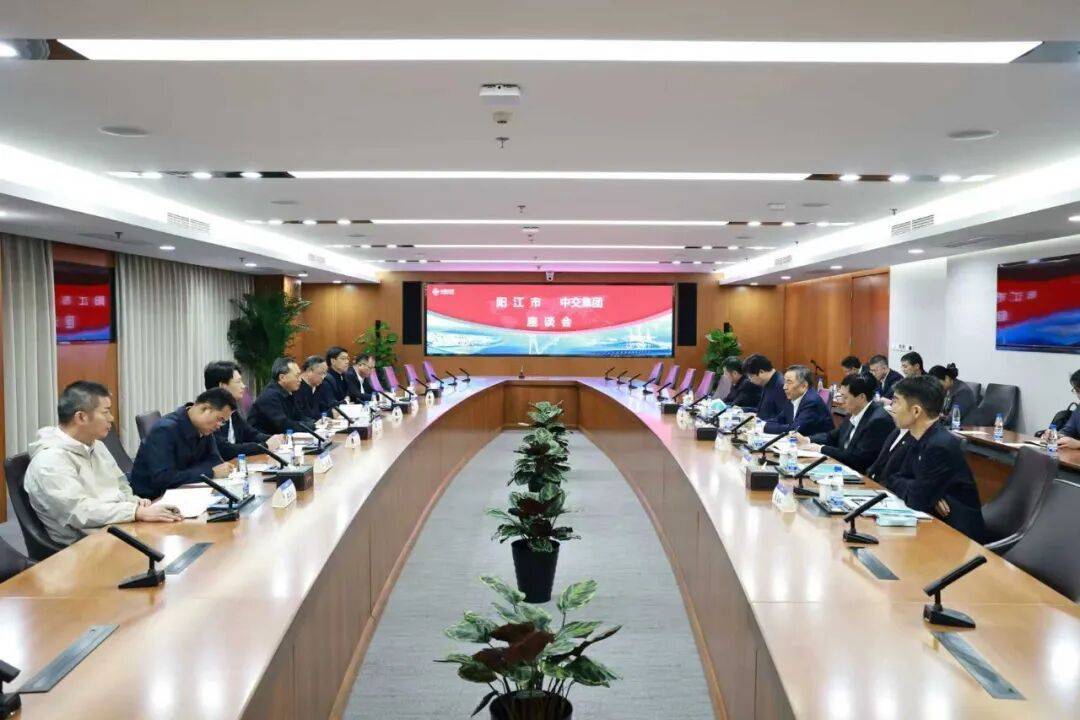
中交集团党委书记、董事长宋海良与阳江市委书记卢一先举行会谈
Sou Hu Cai Jing· 2025-10-20 01:51
Core Insights - The meeting between China Communications Construction Group (CCCC) and the Yangjiang municipal government focuses on enhancing cooperation in marine economy, transportation infrastructure, urban-rural development, green ecology, and port channels [1][3] - CCCC aims to leverage its integrated advantages in various sectors to deepen collaboration with Yangjiang, contributing to the city's high-quality development [3][4] Group 1: CCCC's Strategic Goals - CCCC emphasizes its commitment to marine ecological civilization and active participation in the marine economy, showcasing its comprehensive capabilities across transportation, urban development, and green initiatives [3] - The company adheres to the "Five Has" principle, which includes mutual needs, advantages, consensus, engagement, and win-win cooperation, to enhance practical and efficient collaboration with Yangjiang [3] Group 2: Yangjiang's Development Plans - Yangjiang is focused on better integrating into the Guangdong-Hong Kong-Macao Greater Bay Area, developing a modern marine industry system, and creating a livable coastal city [4] - The municipal government seeks to optimize the business environment to support CCCC's development in the region, aiming for a collaborative approach to advance Yangjiang's marine economy [4]


中国迈向世界工程教育舞台中央
Zhong Guo Qing Nian Bao· 2025-10-19 23:21
Group 1 - The core message emphasizes the transition of China from a follower to a leader in engineering education standards, highlighting the establishment of international recognition agreements for graduate-level engineering education [1][2][6] - The China Excellent Engineer Training Alliance was formed to promote high-quality engineering talent development, with a focus on international cooperation and the establishment of unified standards for graduate engineering education [2][3] - The collaboration with international organizations aims to fill the gap in global engineering talent certification systems and support the United Nations' sustainable development goals [2][4] Group 2 - The establishment of 40 national excellent engineer colleges and the recruitment of over 20,000 engineering master's and doctoral students demonstrate China's commitment to enhancing engineering education [3][4] - The dual mentor and dual curriculum approach adopted by universities ensures that engineering education meets real industry needs, thereby supporting technological advancement [4][5] - The proposed international mutual recognition agreement for graduate engineering education aims to create a universal quality standard to address challenges in sustainable development and artificial intelligence [7][8] Group 3 - The need for a new standard for excellent engineer education is driven by the rapid development of technology and the increasing demands for high-level engineering talent [7][8] - The focus on cultivating engineers with a global perspective and practical skills is essential for meeting the needs of enterprises and supporting international cooperation [9] - The integration of Chinese standards with international requirements is crucial for facilitating the global mobility of high-level engineering talent [8][9]
基建受益增量资金和政策催化,重视低估值及高股息投资机会
Tianfeng Securities· 2025-10-19 14:14
Investment Rating - The industry rating is maintained as "Outperform" [5] Core Viewpoints - The construction sector is expected to benefit from increased funding and policy catalysts, with a focus on undervalued and high-dividend investment opportunities [13][19] - The construction index decreased by 1.06% during the week, underperforming the broader market by 0.74 percentage points, while the construction transformation and M&A sectors showed positive growth [4][30] - The government is accelerating the implementation of 500 billion yuan in new policy financial tools to support major projects, which is expected to enhance infrastructure growth in the fourth quarter [2][13] Summary by Sections Infrastructure Funding and Policy - The Ministry of Finance will continue to advance the 2026 new local government debt limit to ensure funding for key projects, with an increase of 100 billion yuan from the previous year, totaling 500 billion yuan [2][13] - The issuance of special bonds and long-term special government bonds is progressing rapidly, with a total issuance of 1.148 trillion yuan for the year, nearing 90% of the target [15][16] Valuation and Dividend Analysis - Central state-owned enterprises in the construction sector are showing significantly low price-to-earnings (PE) ratios, with China Chemical at a PE of less than 5%, and price-to-book (PB) ratios also low, indicating potential undervaluation [3][24] - China Construction currently has a dividend yield of 4.86%, outperforming other central state-owned enterprises [3][24] Regional Investment Opportunities - The western region's fixed asset investment grew by 6.6% in the first half of the year, with significant projects in Xinjiang and Tibet expected to catalyze further investment opportunities [19][20] - Key projects include the China-Kyrgyzstan-Uzbekistan railway and the Yaxia hydropower station, which are anticipated to drive demand for construction and related services [20][21] Recommended Stocks - Recommended stocks include China Chemical, China Railway Construction, and China Communications Construction, which are expected to benefit from strategic infrastructure projects and regional growth [9][37] - The report highlights the importance of focusing on high-dividend and low-valuation stocks within the construction sector, particularly in the context of ongoing government support for infrastructure development [3][21]




感受“中国速度” 迎接发展机遇
Ren Min Ri Bao· 2025-10-18 22:02
Core Points - The opening of the Serbia section of the Hungary-Serbia railway marks a significant milestone in the collaboration between China and Central Eastern European countries, showcasing advanced railway technology and infrastructure development [1][2] - The railway, which connects Belgrade to Budapest, spans 341.7 kilometers, with the Serbian section measuring 183.1 kilometers and designed for a maximum speed of 200 kilometers per hour [1] - The project is primarily financed by the Export-Import Bank of China and constructed by a consortium led by China Railway International Co., Ltd. and China Communications Construction Company [1] Summary by Sections Project Overview - The Hungary-Serbia railway is a flagship project of China-Central Eastern Europe cooperation, with the Serbian section officially opening to passenger service [1] - The railway significantly reduces travel time between Belgrade and Subotica, from nearly 5 hours to just over 1 hour [1][2] Economic Impact - The railway is expected to enhance connectivity and modernize Serbia's transportation infrastructure, contributing to the country's development [1][2] - The opening of the railway has already led to increased passenger traffic, with the Belgrade to Novi Sad section having transported over 12.6 million passengers since its opening in March 2022 [2] Future Developments - The Hungarian section of the railway is under construction and is expected to be operational by spring next year, further enhancing economic opportunities for both countries [2]

答卷十四五·央企惠民生|从赋能到共生,央企解锁乡村振兴新密码
Zhong Guo Zheng Quan Bao· 2025-10-17 02:25
Core Insights - Central enterprises are actively participating in rural revitalization efforts across China, focusing on infrastructure, education, and agricultural development to enhance local economies and improve living standards [1][5][11] Group 1: Infrastructure and Energy Projects - The National Energy Group has implemented key projects in Qinghai, including photovoltaic power generation, education infrastructure, and industry revitalization, generating stable income for local communities [1] - The group has built 15 solar kindergartens in the region, contributing to the modernization of rural education [1] Group 2: Agricultural Development - The China Inspection and Certification Group has established a red date research institute in Xinjiang, enhancing the marketability of local red dates through traceability and quality assurance [2] - China National Chemical Corporation has invested 348 million yuan in modern agricultural initiatives across several provinces, resulting in an average annual increase in agricultural output of 8%-10% [3] Group 3: Employment and Economic Contributions - The China Communications Construction Group has created a village-level construction enterprise in Yunnan, generating contracts worth nearly 70 million yuan and providing employment for over 11,200 people [2] - China National Offshore Oil Corporation has developed an agricultural brand in Hainan, leading to a significant increase in local production and income [3] Group 4: Education Initiatives - China Coal has invested 14.5 million yuan in educational programs in Guizhou, achieving a 100% college admission rate for students in its specialized class [9][10] - The South Power Grid is establishing reading houses in rural areas, aiming to benefit approximately 510,000 students by 2025 [10] Group 5: Health and Well-being - The China National New Group has built a new medical facility in Hubei, significantly improving access to healthcare for local residents [8] - The facility has seen a total outpatient volume of 16,856 since its opening, reducing the financial burden of medical expenses for villagers [8]

从赋能到共生 央企解锁乡村振兴新密码
Zhong Guo Zheng Quan Bao· 2025-10-16 22:25
Core Viewpoint - Central enterprises in China are actively participating in rural revitalization efforts, leveraging their resources and expertise to improve local economies and infrastructure, thereby enhancing the quality of life for rural residents [1][2][3]. Group 1: Investment and Economic Development - The National Energy Group has implemented key projects in Qinghai, including photovoltaic power generation, education infrastructure, and industrial revitalization, generating stable income and improving local living standards [1]. - The China Inspection and Certification Group has established a red date research institute in Xinjiang, enhancing market recognition and traceability for local agricultural products, which significantly boosts local economies [2]. - Central enterprises have invested over 120 billion yuan in various assistance programs since the 14th Five-Year Plan, contributing to the economic development of 256 counties [3]. Group 2: Technological Innovation - Central enterprises are integrating advanced technologies into agricultural practices, such as AI and big data, to enhance production efficiency and product quality, leading to increased income for local farmers [4][5]. - The China Telecom-supported bio-fertilizer processing plant in Sichuan exemplifies the use of smart technology to optimize agricultural production, resulting in a threefold increase in product value [4]. Group 3: Education and Healthcare - The China Coal Group's "Rural Revitalization Class" in Guizhou has achieved a 100% college admission rate for its students, showcasing the impact of educational investment on local youth [7]. - The establishment of a new medical facility in Hubei by China Guoxin has significantly improved healthcare access for local residents, reducing their medical expenses [6]. Group 4: Community Engagement and Social Responsibility - Central enterprises are focusing on community engagement through various initiatives, such as building schools and healthcare facilities, which contribute to the overall development of rural areas [8][9]. - The South Power Grid's "Nanwang Zhixing Book House" initiative aims to enhance educational resources in rural areas, benefiting approximately 510,000 students by 2025 [8].
中国交建:公司高度重视市值管理
Zheng Quan Ri Bao Wang· 2025-10-16 11:13
Core Viewpoint - The company emphasizes the importance of market value management, integrating it with strategy, performance, and shareholder returns [1] Group 1 - The company will focus on enhancing its core competitiveness and ensuring profit quality [1] - The company plans to improve information disclosure and strengthen communication with investors [1] - The controlling shareholder has included market value management in a multi-dimensional assessment system to incentivize quality and efficiency improvements [1] Group 2 - The company aims to continuously optimize market value management to create long-term value for shareholders [1]
基础建设板块10月16日跌1.18%,中国核建领跌,主力资金净流出9.82亿元
Zheng Xing Xing Ye Ri Bao· 2025-10-16 08:27
Market Overview - On October 16, the infrastructure sector declined by 1.18%, with China Nuclear Engineering leading the drop [1] - The Shanghai Composite Index closed at 3916.23, up 0.1%, while the Shenzhen Component Index closed at 13086.41, down 0.25% [1] Stock Performance - Notable gainers in the infrastructure sector included: - Guosheng Technology (603778) with a closing price of 4.33, up 9.90% [1] - ST Huawang (603007) with a closing price of 6.33, up 4.98% [1] - ST Zhengping (603843) with a closing price of 5.70, up 4.97% [1] - Major decliners included: - China Nuclear Engineering (601611) with a closing price of 11.44, down 7.59% [2] - Xinjiang Communications Construction (002941) with a closing price of 19.32, down 6.17% [2] - ST Yuancheng (603388) with a closing price of 1.35, down 4.93% [2] Capital Flow - The infrastructure sector experienced a net outflow of 9.82 billion yuan from institutional investors, while retail investors saw a net inflow of 7.59 billion yuan [2][3] - Key stocks with significant capital flow included: - Guosheng Technology (603778) with a net inflow of 33.33 million yuan from institutional investors [3] - Hongrun Construction (002062) with a net inflow of 29.68 million yuan from institutional investors [3] - ST Lingnan (002717) with a net inflow of 15.89 million yuan from institutional investors [3]

中国交建10月15日获融资买入4565.70万元,融资余额12.42亿元
Xin Lang Cai Jing· 2025-10-16 01:35
Core Insights - China Communications Construction Company (CCCC) experienced a slight increase in stock price by 0.11% on October 15, with a trading volume of 271 million yuan [1] - The company reported a financing buy-in of 45.657 million yuan and a net financing buy-in of 11.509 million yuan on the same day, indicating strong investor interest [1] - CCCC's total financing and securities balance reached 1.247 billion yuan, which is above the 60th percentile of the past year, suggesting a high level of financing activity [1] Financing Overview - On October 15, CCCC's financing buy-in was 45.657 million yuan, with a current financing balance of 1.242 billion yuan, accounting for 1.18% of the circulating market value [1] - The financing balance is significantly above the 60th percentile level over the past year, indicating a robust financing environment [1] - In terms of securities lending, CCCC repaid 10,600 shares and sold 2,800 shares, with a securities lending balance of 4.9012 million yuan, also above the 80th percentile of the past year [1] Business Performance - As of June 30, CCCC reported a total revenue of 337.055 billion yuan for the first half of 2025, reflecting a year-on-year decrease of 5.71% [2] - The net profit attributable to shareholders was 9.568 billion yuan, down 16.06% compared to the previous year [2] - The company's main business revenue composition includes 88.48% from infrastructure construction, 6.92% from dredging, 4.08% from infrastructure design, and 3.63% from other activities [1] Shareholder Information - As of June 30, 2025, CCCC had 148,600 shareholders, a decrease of 4.65% from the previous period, while the average circulating shares per person increased by 5.19% to 85,600 shares [2] - The company has distributed a total of 48.735 billion yuan in dividends since its A-share listing, with 13.182 billion yuan distributed in the last three years [3] - Major institutional shareholders include Hong Kong Central Clearing Limited and various ETFs, indicating a diversified shareholder base [3]