
xAI

Search documents
SpaceX併購xAI:AI太空時代正式開啟!下一個10年最大財富主線
堆金積玉· 2026-02-10 11:31
一旦掌握這7個人生複利公式,你的人生將開始快速成長 https://youtu.be/Uz0awqTLJeA 會員頻道的內容會依照這7個公式,一步步陪你實踐 👉 加入會員頻道,從第1個公式開始實踐:https://bit.ly/goldenrich-members ☕️ 如果你想免費支持我們,這裡有個簡單的方法: 👉 https://bit.ly/GET-IBKR 🙏 點擊連結沒有任何費用,每次點擊都能幫助支持我們的頻道。IB盈透證券:全球領先、備受信賴的投資平台,交易覆蓋150個市場,低成本、資金靈活,是多元化投資的理想選擇! (Disclosures: https://bit.ly/content-disclosure) SpaceX併購xAI:AI太空時代正式開啟!下一個10年最大財富主線 最近市場丟出一顆不小的震撼彈,SpaceX正式收購xAI,兩家公司完成整合,成為馬斯克商業版圖裡規模最大的一次合併動作,SpaceX的估值也直接被推升到大約1.25兆美元。 而且時間點很敏感,因為SpaceX本來就被市場預期可能走向IPO。在這個節骨眼突然出手併購,背後到底代表什麼訊號?又可能對資本市場產生什麼影響? ...

SpaceX Could Rocket Musk to Trillionaire Status
Yahoo Finance· 2026-02-10 10:46
Core Insights - Elon Musk's merger of SpaceX and xAI has created a combined entity valued at $1.25 trillion, significantly increasing Musk's net worth to approximately $845 billion [1][2] - The merger indicates a strategic shift in Musk's financial focus from Tesla to SpaceX, which now represents nearly two-thirds of his wealth [2][3] - Musk's ownership in the new entity is estimated at around 43%, valued at over $530 billion, reflecting a rapid transformation in his financial landscape [3] Financial Implications - For Musk to achieve trillionaire status, SpaceX would need to reach a valuation of approximately $1.6 trillion, assuming Tesla's stock price remains stable [5] - SpaceX's merger with xAI is viewed as a strategic move to access larger capital markets, particularly for funding AI model development [4] Market Dynamics - Musk's shift in focus towards SpaceX is driven by lucrative contracts with the federal government, valued at over $20 billion, amidst declining brand value and core sales for Tesla [7] - The merger has sparked discussions about Musk's ambitions in the aerospace and AI sectors, highlighting the potential for growth in these industries [2][4]

阿波罗接近达成30亿美元级芯片融资交易,关联马斯克xAI
Xin Lang Cai Jing· 2026-02-10 10:00
知情人士透露,华尔街大型私人信贷公司之一阿波罗全球管理公司(Apollo Global Management) 即 将达成一笔交易:向一家投资工具提供约34 亿美元贷款,用于购买英伟达芯片,并租赁给刚与 SpaceX 合并的埃隆・马斯克旗下 xAI。 这笔交易将是阿波罗第二次大手笔投资用于向 xAI 租赁芯片的投资工具。去年 11 月,阿波罗已提供过 一笔类似的35 亿美元贷款。该人士称,阿波罗还计划对新设立的投资工具进行股权投资,该工具目标 是合计募集53 亿美元的股权与债务资金。 这笔投资最快将于本周敲定,目的是缓解 xAI 的部分资金压力。马斯克正雄心勃勃地打造全球最大规 模的数据中心,用于训练 AI 模型。长期投资马斯克旗下公司的Valor Equity Partners 正在安排此次交 易。 该投资工具是 Valor 更大规模计划的一部分:计划募集200 亿美元的股权与债务,用于采购 AI 芯片并部 署在 xAI 数据中心。 过去,包括格拉西亚斯在内的 Valor 合伙人曾在关键时期进驻马斯克旗下公司提供支持:包括特斯拉产 能危机期间、以及马斯克重组推特(后更名为 X)之后。 管理资产规模超9000 ...

刚刚,又一位xAI华人离职,曾和马斯克并排坐发Grok 3
3 6 Ke· 2026-02-10 09:55
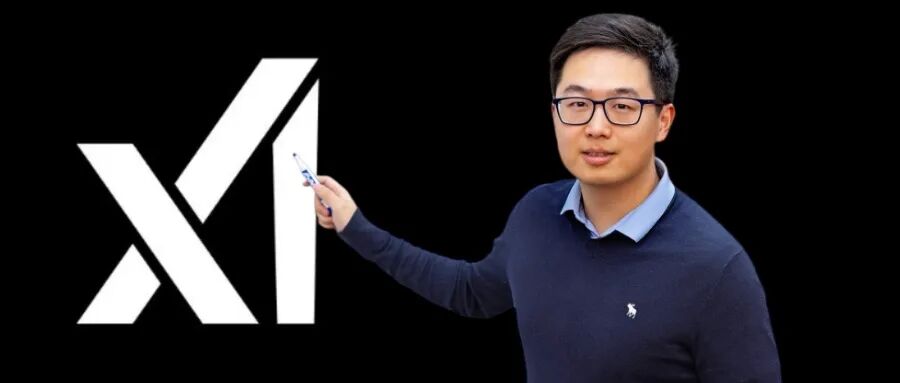
Core Insights - Wu Yuhua, co-founder of Elon Musk's AI startup xAI, announced his departure from the company, raising questions about the reasons behind this decision and its potential implications for xAI's future [2][10] Group 1: Background of Wu Yuhua - Wu Yuhua, born in 1995 in Hangzhou, is a highly accomplished individual with a strong academic background, graduating with a perfect GPA from the University of New Brunswick in 2015 and earning a PhD under AI pioneer Geoffrey Hinton at the University of Toronto [3] - He completed postdoctoral research at Stanford University and has interned at Google DeepMind's AlphaGo team and OpenAI [3][4] Group 2: Contributions to xAI - At xAI, Wu Yuhua focused on developing the Grok model, leveraging his expertise in mathematical reasoning, which led to significant advancements in the model's performance in mathematics and logic [4][6] - He was one of five Chinese co-founders at xAI, and his contributions were highlighted during the Grok 3 launch event [6] Group 3: Team Dynamics and Departures - Since early 2024, xAI has experienced a series of departures among its core co-founders, including notable figures like Kyle Kosic and Christian Szegedy, raising concerns about team stability [8] - The timing of Wu Yuhua's departure, shortly after Musk's announcement of SpaceX's acquisition of xAI, has led to speculation regarding the impact of the acquisition on team dynamics [10]
刚刚,又一位xAI华人离职!曾和马斯克并排坐发Grok 3
Sou Hu Cai Jing· 2026-02-10 09:52
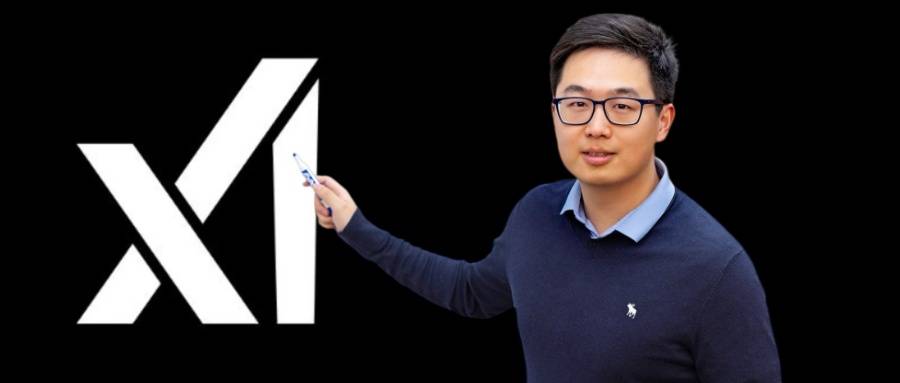
Core Insights - Wu Yuhua, co-founder of Elon Musk's AI startup xAI, announced his departure from the company, raising questions about the reasons behind this decision and its potential implications for xAI's future [2][10] Group 1: Background of Wu Yuhua - Wu Yuhua, born in 1995 in Hangzhou, is a highly accomplished individual with a perfect GPA from the University of New Brunswick and a PhD from the University of Toronto under AI pioneer Geoffrey Hinton [3] - He completed postdoctoral research at Stanford University and has interned at Google DeepMind and OpenAI [3][4] - His main research focus has been on developing machines with reasoning capabilities, contributing to projects like STAR, Alpha Geometry, and Minerva [4] Group 2: Contributions to xAI - At xAI, Wu Yuhua's core responsibility was to apply his expertise in mathematical reasoning to the development of the Grok model, achieving significant results in mathematical and logical reasoning [4][6] - He was one of five Chinese co-founders at xAI, and his contributions were highlighted during the Grok 3 launch event [6] Group 3: Team Dynamics and Departures - Since early 2024, xAI has experienced a series of departures among its core co-founders, including Kyle Kosic, Christian Szegedy, and Igor Babuschkin, with Wu Yuhua's exit following closely after the announcement of SpaceX's acquisition of xAI [8][10] - The recent departures, particularly of two Chinese co-founders within a month, may lead to concerns regarding team stability and trust in xAI's leadership [10]
金融时报:马斯克的太空数据中心,梦想还是现实?
Feng Huang Wang· 2026-02-10 09:11
Core Viewpoint - Elon Musk is betting on the future of AI in space by merging SpaceX with the struggling xAI, aiming to create a $1.25 trillion giant and potentially launch an IPO, with a focus on building data centers in space powered by solar energy and cooled by the vacuum of space [1] Group 1: Feasibility and Industry Perspectives - Industry executives and researchers believe that Musk's timeline for launching data centers in space is ambitious but increasingly feasible due to declining launch costs and rising AI computing demands [2] - Will Marshall, CEO of Planet, states that the project is timely and not just a publicity stunt for Musk's IPO, as they are already collaborating with Google on a pilot project for orbital data centers [2] - The concept of generating computing power in space dates back to Isaac Asimov's 1941 short story, with modern innovations focusing on using solar energy to power AI chips and transmitting processed data back to Earth via satellite networks [3] Group 2: Competitive Landscape - Other tech leaders, including Jeff Bezos, are also pursuing similar concepts, with Bezos predicting the construction of "giant gigawatt data centers" in space [4] - Google plans to collaborate with Planet to launch prototype satellites equipped with AI chips by early 2027 as part of its "Project Sunroof" [4] - Startups like Starcloud and Aetherflux aim to launch GPU chips into space within the next 12 months, driven by the rising energy consumption associated with AI [4] Group 3: Cost and Technical Challenges - The former CEO of SES, Steve Collar, acknowledges that while Musk's ideas may be ahead of their time, they align with future trends, particularly the efficient use of solar energy in the cold environment of space [5] - Philip Johnston, co-founder of Starcloud, asserts that the technology will be validated within two to three years, predicting that all computing power will be built in space within the next decade [6] - However, the economic viability of this concept hinges on several unproven assumptions, including significant reductions in launch costs and the ability of current AI hardware to withstand space conditions [6][7] Group 4: Future Outlook - A report from Google suggests that if launch costs can drop from at least $1,000 per kilogram to below $200 per kilogram, the operational costs of space data centers could become comparable to those on Earth [6] - Some believe that advancements in reusable rockets, such as SpaceX's Starship and Blue Origin's New Glenn, could change the economic calculations for launching satellites [7] - Despite the optimism, many in the tech industry remain skeptical about overcoming the technical and economic hurdles, with concerns about the weight and complexity of server racks in space [8]
马斯克的万亿豪赌:把AI数据中心送上天,是天才构想还是科幻泡沫?
Hua Er Jie Jian Wen· 2026-02-10 07:54
Core Viewpoint - Elon Musk is planning a $1.25 trillion venture to merge SpaceX with his AI startup xAI, betting on the future of AI in space rather than on Earth [1] Group 1: Industry Trends - Major tech giants are also exploring space-based AI capabilities, with Jeff Bezos working on Project Prometheus and Google planning the Suncatcher project in collaboration with Planet [1] - Aetherflux's founder highlights that the AI boom has created a "once-in-a-century energy usage inflection point," suggesting that space offers theoretically "unlimited energy" [2] Group 2: Economic Viability - Deutsche Bank reports that deploying a 1 GW capacity data center in space currently costs seven times more than on Earth, but predicts this cost gap will close rapidly by 2032 [3][4] - The cost of launching payloads must drop significantly, from approximately $1,600 per kilogram to $67 per kilogram, and satellite costs must be optimized to below $2 million each for space data centers to become economically viable [3][4] Group 3: Technical Challenges - Engineers warn of significant physical challenges, including heat dissipation issues in the vacuum of space, which could require extensive and fragile cooling structures [5][6] - Space is filled with radiation and debris, necessitating expensive protective measures for electronic equipment, which could further complicate the feasibility of space-based data centers [6] Group 4: Geopolitical Concerns - There are concerns about who will control space-based infrastructure, with warnings that if U.S. companies dominate, it could pose risks for global service availability [7] - The potential for monopolistic control over space-based resources raises alarms about regulatory challenges and competition in the tech industry [7] Group 5: Investment Considerations - The race for space-based computing has begun, but the economic rationale is heavily dependent on extreme assumptions about launch costs [8] - Investors are advised to consider more efficient energy solutions on Earth, such as nuclear or geothermal data centers, rather than investing in costly space infrastructure [8]
“Seedance时刻”来临!节前,AI应用股疯涨
Ge Long Hui· 2026-02-10 07:21
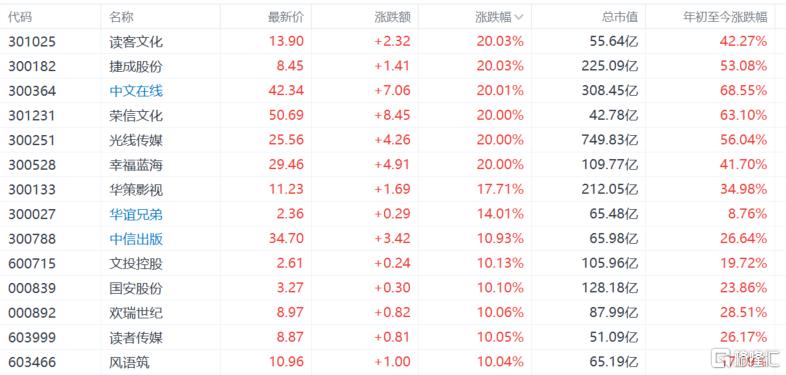
Core Viewpoint - The market is experiencing a significant shift towards the AI sector, with various companies in the AI application and industry chain showing strong performance and growth [1][2]. Group 1: Market Performance - AI-related stocks such as Jiecheng Co., Zhongwen Online, and Xingfu Lanhai have seen their shares hit the daily limit, with Jiecheng Co. rising by 20.03% and Zhongwen Online by 20.01% [2][3]. - Notable stock performances include: - Jiecheng Co. at 8.45, up by 1.41, with a market cap of 225.09 billion and a year-to-date increase of 53.08% [3]. - Zhongwen Online at 42.34, up by 7.06, with a market cap of 308.45 billion and a year-to-date increase of 68.55% [3]. - Happiness Blue Sea at 29.46, up by 4.91, with a market cap of 109.77 billion and a year-to-date increase of 41.70% [3]. - In the Hong Kong market, stocks like Zhiyu and Yuedu Group have also shown significant gains, with Zhiyu rising over 14% and Yuedu Group over 13% [2][4]. Group 2: AI Technology Development - The launch of Seedance 2.0, an AI video generation model, has been a pivotal moment in the AI application market, being described as a "director-level" full-process generation engine [5][6]. - Seedance 2.0 utilizes a "dual-branch diffusion transformer" architecture, capable of generating both video and audio simultaneously, achieving over 90% usability in practical applications [7][8]. - The model is expected to significantly reduce production costs for short dramas and indicates a shift towards industrialized production in AI video [9][10]. Group 3: Competitive Landscape - The global AI model competition is intensifying, with major players like Alibaba, Google, and others launching their models, marking the beginning of a "model war" [12][13]. - The emergence of various AI models, including Grok Imagine and Claude Opus, highlights the rapid advancements in AI technology and the competitive dynamics within the industry [13][14]. - Analysts suggest that the recent developments in AI video models are pushing the boundaries of technology in the video generation field, similar to the competition seen in large language models in 2025 [14][15].
Juno markets 官网:SpaceX与xAI合并,垂直整合模式如何运作?
Sou Hu Cai Jing· 2026-02-10 06:39
这一整合动作的核心驱动力在于业务协同。SpaceX拥有全球规模最大的近地轨道卫星网络,星链业务 已部署超过1.5万颗卫星,为155个国家和地区的用户提供互联网服务,2025年营收约150亿至160亿美 元。xAI则专注于大语言模型研发,其Grok系列产品需要海量算力支持,每月现金消耗约10亿美元。 埃隆·马斯克旗下的太空探索技术公司(SpaceX)与人工智能企业xAI在2月初完成合并,这笔全股票交 易缔造了一家估值达1.25万亿美元的非上市实体。根据交易条款,SpaceX估值1万亿美元,xAI估值2500 亿美元,合并后公司预计在中期进行首次公开募股。 马斯克在内部备忘录中阐述的战略愿景显示,合并旨在构建"地球上及地球之外最具雄心的垂直整合创 新引擎"。具体而言,SpaceX计划将数据中心部署至太空,利用太阳能供电突破地面能源限制,为AI训 练提供算力支持。这一构想若得以实现,可能改变当前AI算力依赖地面数据中心的格局。 从资本层面观察,此次合并也为潜在的IPO铺路。原计划以1.5万亿美元估值募资500亿美元的SpaceX, 通过绑定当下热门的AI概念,丰富了上市叙事。不过,太空数据中心的商业可行性、建设成本 ...

马斯克从未如此“孤注一掷”
Xin Lang Cai Jing· 2026-02-10 06:38
Core Viewpoint - Elon Musk is merging SpaceX with his AI company xAI, betting on the future of artificial intelligence to extend his business empire into new territories, despite the risks involved [1] Group 1: SpaceX Overview - SpaceX launched nearly 4,000 satellites in 2025, accounting for about 85% of the global total that year [2] - The company generated total revenue of $16 billion in 2025, with an operating profit of approximately $8 billion [2] - SpaceX's Starlink satellite internet service has around 9 million users, more than tripling in two years [2] Group 2: xAI Overview - xAI generated about $500 million in revenue from its Grok chatbot model last year, significantly lower than OpenAI's $13 billion revenue [2] - The company is incurring monthly losses of around $1 billion due to heavy investments in data centers [2] - xAI has accumulated significant debt, including $5 billion for data center construction and $12 billion from the acquisition of social media platform X [3] Group 3: Financial Challenges - The merger will create a new company aiming to raise $50 billion with a valuation of at least $1.5 trillion, which may deter conservative institutional investors [4] - SpaceX will also need to cover $2 billion in interest from EchoStar Communications, a debt incurred during a spectrum acquisition [3] - Tesla's vehicle sales declined by 9% in 2025, marking the second consecutive year of decline, with European sales dropping by 25% [4] Group 4: Strategic Implications - Musk's strategy includes transforming Tesla into a "physical AI" company focused on autonomous taxis and humanoid robots, which require substantial investment and time to become profitable [4] - Musk's rivalry with OpenAI's CEO Sam Altman may be influencing his aggressive push into the AI sector, as he seeks to dominate the industry [4]