宁波银行

Search documents
宁波银行再次下调定存金利率 活期利率降至0
Zhong Guo Jing Ying Bao· 2026-01-28 06:25
这一判断也得到了浙江大学城市学院副教授、中国城市专家智库委员会常务副秘书长林先平的呼应。他 分析指出, 2025年以来国际金价累计涨幅超60%,近期沪金期货单日涨跌额最高达41.84元/克,银行需 要对冲价格波动风险。 除了市场波动这一直接诱因外,银行自身的经营与监管压力亦是关键推手。苏商银行特约研究员武泽伟 强调,在整体净息差承压的背景下,下调此类业务利率有助于节省资金成本。同时,这也响应了金融监 管强化投资者适当性管理的导向。通过提高隐性门槛,可以引导风险承受能力较弱的投资者更审慎决 策,履行"卖者有责"的职责。 林先平进一步强调,商业银行净息差已降至1.42%的20年新低,定存金的黄金持有、对冲成本进一步压 缩盈利空间;且监管要求也在升级,2025年8月实施的反洗钱新规要求大额现金购金需上报,叠加投资 者适当性管理强化,推动银行收紧相关业务。 宁波银行发布公告称,自2026年1月28日(周三)起调整定存金产品定存利率。调整后的定存金产品定 存利率分别为:活期0%,1个月0.3%,3个月0.3%,6个月0.4%,12个月0.5%。 同时,宁波银行在公告中提醒,由于近期贵金属价格波动加剧,请投资者增强贵金属 ...


2025银行综合评选获奖名单重磅出炉!这些银行榜上有名
Xin Lang Cai Jing· 2026-01-28 06:00
1月28日金融一线消息,"2025(第十三届)银行综合评选"活动获奖名单今日正式揭晓!本次评选活动 从多领域、多视角对银行机构各方面进行了综合评估,最终评选出多家行业佼佼者。 本次评选活动经过网络投票、第三方机构调研、专家评审、综合审核多项环节,最终角逐出"综合评 选""业务价值评选""社会责任评选""五大篇章评选"四大类26个奖项,20家银行机构上榜,充分体现了 银行业的发展趋势和行业标杆。 于时代脉搏中坚守使命,于转型发展中谱写新篇。本次获奖银行机构在过去一年的发展中展现了卓越的 综合实力和优秀的专业素养,在业务经营、服务能力、风控管理、创新发展等多方面取得了卓越成绩, 赢得了广泛的赞誉和认可。期待各银行机构在未来能够继续发挥自身优势和综合实力,坚守初心和使 命,为银行业高质量发展与金融强国建设贡献更多力量。 以下为获奖名单: 综合评选 中国工商银行获评"年度最佳国有商业银行" 中国进出口银行获评"年度最佳政策性银行" 招商银行获评"年度最佳股份制商业银行" 宁波银行获评"年度最佳城市商业银行" 北京农村商业银行获评"年度最佳农村商业银行" 微众银行获评"年度最佳民营银行" 业务价值评选 交通银行获评"年 ...






【独家发布】2025年中国中小银行行业政策梳理及上下游产业链全景分析
Xin Lang Cai Jing· 2026-01-28 04:49
Core Insights - The article emphasizes the positive role of small and medium-sized banks in supporting China's long-term economic development, particularly in fostering private enterprises and local economies while advancing financial market reforms [2][16] - It highlights the significant growth in total assets and liabilities of small and medium-sized banks, indicating their expanding market presence and competitiveness [16] Summary by Sections Overview of the Small and Medium-Sized Banking Industry - Small and medium-sized banks are defined as those excluding the six major state-owned banks, encompassing various types such as national joint-stock banks, urban commercial banks, rural commercial banks, and private banks [3][17] - These banks play a crucial role in providing diverse financial services, including cash management, online banking, investment banking, and microfinance [5][19] Industry Policies - The Chinese government has shown strong support for the development of small and medium-sized banks, with policies aimed at enhancing their operational environment and promoting rural revitalization [7][21] - Key policies include the "Opinions on Further Deepening Rural Reform" and measures to support micro-enterprise financing, which guide these banks to leverage their local advantages [21][23] Industry Chain - The upstream of the small and medium-sized banking industry includes IT service providers, payment platforms, and financial market participants, which support banks in digital transformation and service innovation [10][24] - The midstream consists of the banks themselves, which provide essential financial services to meet the diverse needs of consumers and businesses [10][24] - The downstream includes consumers and enterprises that utilize banking services for consumption, investment, and financing, reflecting a growing demand for financial services [11][25] Financial Performance - In 2024, the total assets of small and medium-sized banks reached 192.25 trillion yuan, a year-on-year increase of 6.39%, while total liabilities were 177.36 trillion yuan, up 6.27% [16] - By November 2025, total assets are projected to grow to 201.6 trillion yuan, with liabilities increasing to 186.07 trillion yuan, indicating a continued upward trend in the sector [16]




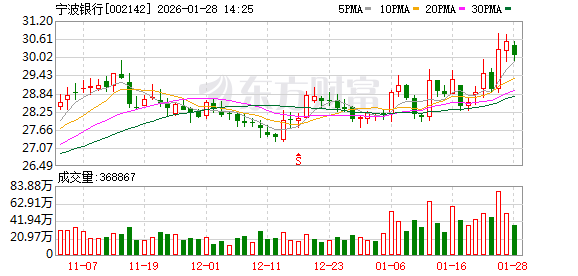
宁波银行将在1月28日起调整定存金产品定存利率
Jin Tou Wang· 2026-01-28 03:18
2026年1月27日,宁波银行(002142)发布公告称,宁波银行决定自2026年1月28日(周三)起调整定存 金产品定存利率。调整后的定存金产品定存利率分别为:活期0%,1个月0.3%,3个月0.3%,6个月 0.4%,12个月0.5%。如有疑问,请垂询宁波银行各营业网点,或致电咨询宁波银行客服热线:95574。 同时,由于近期贵金属价格波动加剧,请您提高贵金属业务的风险防范意识,基于自身财务状况、风险 承受能力理性投资,从资产配置角度合理配置贵金属资产。请及时关注持仓情况,合理控制仓位,注意 分散配置,避免单一重仓贵金属。 ...
【行业深度】一文洞察2026年中国中小银行行业发展前景及投资趋势研究报告
Sou Hu Cai Jing· 2026-01-28 02:35
Core Insights - The article emphasizes the significant role of small and medium-sized banks in supporting China's long-term economic development through flexible market mechanisms and high service efficiency [2] - It highlights the ongoing transformation and competitive pressures faced by these banks, leading to strategies aimed at enhancing market competitiveness and expanding their asset base [2][8] Group 1: Industry Overview - Small and medium-sized banks are defined as all banks excluding the six major state-owned banks, and they include various types such as national joint-stock banks, urban commercial banks, rural commercial banks, and private banks [4] - These banks have become a crucial part of China's financial ecosystem, holding a substantial share of total assets in the banking sector [2] Group 2: Financial Performance - In 2024, the total assets of China's small and medium-sized banks reached 192.25 trillion yuan, marking a year-on-year growth of 6.39%, while total liabilities were 177.36 trillion yuan, up 6.27% [2] - By November 2025, total assets increased to 201.6 trillion yuan, reflecting a growth of 6.49%, with total liabilities at 186.07 trillion yuan, a rise of 6.66% [2] Group 3: Policy Environment - The Chinese government has shown strong support for the development of small and medium-sized banks, with policies aimed at enhancing their role in financing small and micro enterprises and promoting rural revitalization [8] - Key policies include the "Opinions on Further Deepening Rural Reform" and measures to support small and micro enterprise financing, which guide these banks to leverage their local advantages [8][10] Group 4: Industry Chain - The upstream of the small and medium-sized banking industry chain includes IT service providers, payment platforms, and financial market participants, which support banks in innovation and service delivery [11] - The midstream consists of the banks themselves, which provide essential financial services to meet diverse consumer and business needs [11][12] Group 5: Competitive Landscape - As competition intensifies, small and medium-sized banks are adopting strategies such as capital supplementation, attracting strategic investors, and differentiated operations to enhance their market position [2][8] - The focus on small and micro enterprise financing has led to significant achievements in expanding the industry’s total assets [2]
金银疯涨,为何银行门槛提高,基金暂停申购了?
Huan Qiu Wang· 2026-01-28 02:20
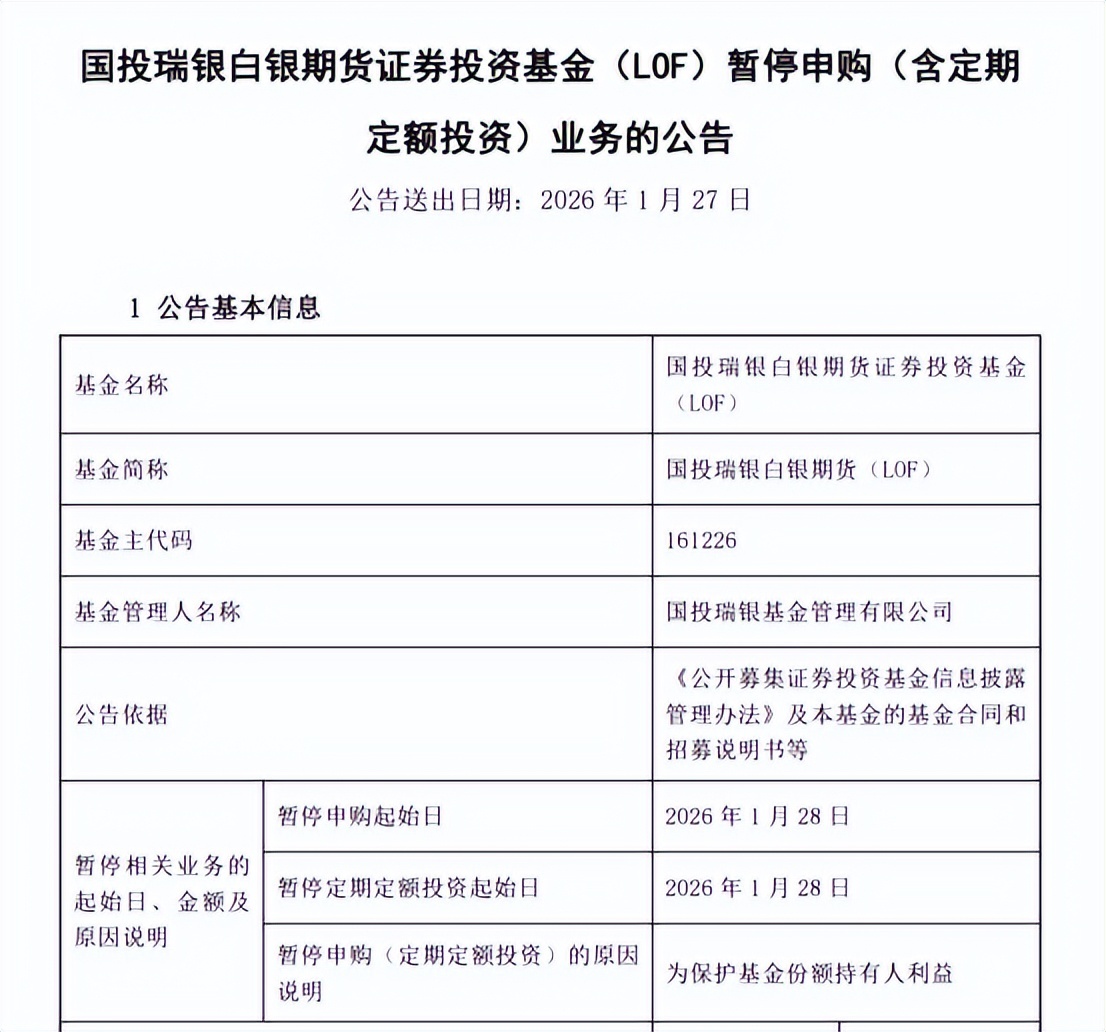
Group 1 - The core point of the news is that the Guotou Ruijin Silver Futures LOF fund has suspended subscriptions since January 28 to protect the interests of existing fund holders amid a rapid increase in silver prices [1][3] - The suspension is a risk control measure taken by the fund manager to prevent irrational inflows of capital that could disrupt the normal operation of the investment portfolio [3][4] - The fund had previously issued 18 risk alerts regarding trading price premiums in January, indicating a significant premium of secondary market prices over net asset values [3] Group 2 - The surge in silver prices has been notable, with COMEX silver and London silver exceeding $100 per ounce on January 23, and reaching as high as $117 per ounce on January 26 before a slight decline [3][4] - The investment frenzy in silver is mirrored by similar actions in the gold market, where the E Fund Gold Theme LOF also announced a suspension of A-class subscriptions starting January 28 due to rising gold prices [4] - Banks are adjusting their risk management for gold-related products, requiring risk assessments for clients engaging in gold accumulation services, reflecting the heightened volatility and investment attributes of gold [7][9]


双融日报-20260128
Huaxin Securities· 2026-01-28 01:32
2026 年 01 月 28 日 双融日报 --鑫融讯 分析师:万蓉 S1050511020001 wanrong@cfsc.com.cn 市场情绪:55 分(中性) 最近一年大盘走势 资料来源:Wind,华鑫证券研究 -10 -5 0 5 10 15 20 25 30 (%) 沪深300 相关研究 | 1、《双融日报》2026-01-27 | | --- | | 2、《双融日报》2026-01-26 | | 3、《双融日报》2026-01-23 | ▌ 华鑫市场情绪温度指标:(中性) 华鑫市场情绪温度指标显示,昨日市场情绪综合评分为 55 分,市场情绪处于"中性"。历史市场情绪趋势变化可参 考图表 1 ▌ 热点主题追踪 今日热点主题:化工、银行、消费 1、化工主题:"十五五"规划强调扩大内需,叠加美国降息 周期,化工品需求预期提升。行业供需双底基本确立,政策 助力产能出清,且资本开支连续两年负增长,供给端持续收 缩。市场普遍预计,2026 年化工行业将迎来周期拐点,有望 实现从估值修复到业绩增长的"戴维斯双击",开启新一轮 上 升 周 期 。 相 关 标 的 : 卫 星 化 学 ( 002648 ) 、 云 ...
中国银河证券:低配比例继续扩大 大行、股份行持续受关注
智通财经网· 2026-01-28 01:29
Core Viewpoint - The report from China Galaxy Securities indicates that the public fund's heavy stockholding data for Q4 2025 shows a continued low preference for the banking sector, despite ongoing interest in state-owned and joint-stock banks [1] Group 1: Active Fund Holdings - The proportion of active funds underweight in the banking sector has increased, with a current underweight ratio of 8.88%, up by 0.5 percentage points [1] - The total market value of active fund holdings in banks is 30.545 billion yuan, reflecting a 1.52% increase quarter-on-quarter, with a holding ratio of 1.88%, up by 0.07 percentage points, remaining at a near five-year low [1] - The rankings of bank holdings among active funds show state-owned banks at 0.31%, joint-stock banks at 0.61%, city commercial banks at 0.77%, and rural commercial banks at 0.19%, with state-owned banks seeing a notable increase of 0.08 percentage points [1][2] Group 2: Passive Fund Holdings - The total market value of passive fund holdings in banks is 110.423 billion yuan, with a holding ratio of 7%, up by 1.56 percentage points, ranking 6th among the Shenwan first-level industries [3] - The holding ratios for state-owned banks, joint-stock banks, city commercial banks, and rural commercial banks are 0.88%, 5.63%, 0.42%, and 0.08%, respectively, all showing increases, particularly joint-stock banks which rose by 1.37 percentage points [3] Group 3: Northbound Capital Flows - Northbound capital has seen a slight net outflow from the banking sector, with total holdings amounting to 177.26 billion yuan, up by 2.06%, and a holding ratio of 6.85%, increasing by 0.12 percentage points [4] - The net outflow from the banking sector was 5.08 billion yuan, with notable net purchases in banks such as China Merchants Bank, Industrial and Commercial Bank of China, and Ningbo Bank, amounting to 4.356 billion, 1.419 billion, and 1.344 billion yuan, respectively [4]

基金经理瞄准顺周期方向
Zhong Guo Zheng Quan Bao· 2026-01-27 20:57
Core Viewpoint - The non-ferrous metal sector has become a prominent investment focus in the A-share market since the beginning of 2026, with significant inflows into related ETFs and a rise in the popularity of fund managers specializing in this sector [1][2]. Group 1: Performance and Fund Inflows - The non-ferrous metal sector has shown remarkable performance, becoming the best-performing industry in the A-share market as of January 27, 2026, with ETFs tracking this sector collectively rising over 20% [1]. - As of January 26, 2026, non-ferrous themed ETFs have seen a net inflow exceeding 34 billion yuan, with leading products attracting significant investments, including over 13 billion yuan for the Southern CSI Non-Ferrous Metals ETF and over 9 billion yuan for the Huaxia CSI Sub-Sector Non-Ferrous Metals ETF [2]. Group 2: Fund Manager Strategies - Fund managers have adjusted their holdings within the non-ferrous sector, with notable increases in positions in companies like Shandong Gold and Zijin Mining, while reducing exposure to others like Tongling Nonferrous Metals [3]. - In addition to focusing on the non-ferrous sector, fund managers have diversified their portfolios by including cyclical sectors such as chemicals, oil and gas, coal, and transportation, aiming to balance their holdings [3][4]. Group 3: Future Outlook and Economic Indicators - Fund managers are optimistic about the potential recovery of domestic Producer Price Index (PPI) data, which could signal a mild recovery in the domestic economy over the next six months, driven by continued policy support [1][5]. - The anticipated changes in the PPI and the implementation of "anti-involution" policies are expected to enhance the competitive landscape for traditional industries, including steel, coal, and chemicals, leading to significant revaluation opportunities for leading companies in these sectors [5].
银行股配置重构系列九:从主动基金 Q4 持仓看配置思路
Changjiang Securities· 2026-01-27 15:25
Investment Rating - The investment rating for the banking sector is "Positive" and is maintained [12] Core Insights - In Q4 2025, active funds did not significantly reduce their holdings in bank stocks, with a stable allocation ratio of 1.86% compared to the previous quarter. This reflects a general decline in market risk appetite. However, it is anticipated that the allocation ratio may decrease further in Q1 2026 due to a significant rebound in risk appetite and the relative underperformance of bank stocks at the beginning of the year [2][6] - The selection of individual stocks has shifted towards a focus on fundamental trends, with Ningbo Bank seeing the most significant increase in allocation due to improved asset quality and performance expectations. The bank has established a turning point in retail asset quality and is expected to lead the sector in performance [7][8] - The report suggests that the core investment strategy for 2026 should prioritize high-performing regional banks, particularly city commercial banks, as they are expected to maintain superior growth rates amid a stable credit structure [9] Summary by Sections Active Fund Holdings - As of Q4 2025, the allocation ratio of active public funds to bank stocks remained stable at 1.86%, indicating a recovery in market risk appetite. The allocation ratio is expected to hit a new low in Q1 2026 due to a resurgence in risk appetite and the underperformance of bank stocks [6][8] - City commercial banks experienced a reduction of approximately 1.7 billion in total holdings, but Ningbo Bank was notably increased by 860 million, reflecting a shift towards stocks with improving fundamentals [7][8] Stock Selection Trends - The focus on stock selection has shifted from high dividend yields to fundamental trends, with Ningbo Bank being the most significantly increased stock in Q4 2025. The bank's asset quality indicators have shown continuous improvement, and it is expected to see a growth in performance in 2026 [7][8] - Conversely, stocks like Chengdu Bank have been reduced significantly, reflecting concerns over performance volatility and ongoing adjustments in business structure [7] Market Dynamics - The banking sector has faced downward pressure due to capital outflows from active funds and index funds, leading to undervaluation in bank stocks. The report recommends seizing opportunities in quality city commercial banks at lower price levels [9][33] - The report highlights that the allocation strategy for 2026 should focus on high-quality city commercial banks, as they are expected to outperform in terms of earnings growth amid a stable credit environment [9]