工业有色

Search documents
权益ETF周度跟踪:工业有色和稀土获逆势布局-20260308
HUAXI Securities· 2026-03-08 07:52
Report Industry Investment Rating No information provided in the given content. Core Viewpoints of the Report - Combining the "Gain/Loss - Crowding" quadrant chart and ETF fund flow, there are gaming opportunities in the industrial non - ferrous metals and rare earth sectors [1]. - The oil and gas and power grid equipment sectors led the gains from March 2 - 6, becoming the market's main lines, while the gaming and media sectors had significant declines [1]. - Industrial non - ferrous metals and rare earths received reverse capital increases, presenting potential opportunities, while the power grid equipment may be volatile in the short term, and the oil and gas sector's future is highly uncertain [1]. Summary by Directory 1. Market Review: Oil and Gas and Power Grid Equipment Led the Gains - **Overall Market Trend**: From March 2 - 6, the market declined and then stabilized. As of March 6, 2026, the closing price of the Wind All - A Index was 6783.03, a 2.30% drop from February 27 [6]. - **Performance of Major Indexes**: Large - cap stocks outperformed. The Shanghai Composite Index and CSI 300 Index fell 0.93% and 1.07% respectively, while the STAR 50 Index and CSI 1000 Index had larger declines of 4.95% and 3.64% [7]. - **ETF Fund Flow**: Stock - type ETFs had a net outflow of 7.349 billion yuan from March 2 - 6, a narrower outflow compared to February 24 - 26. Broad - based index ETFs had a net outflow of 42.875 billion yuan, while theme index ETFs had a net inflow of 23.533 billion yuan, and industry index ETFs had a net inflow of 13.731 billion yuan [10][11]. - **Market Focus**: The market focused on the oil and gas and power grid equipment sectors. The oil and gas index rose 9.50% with a crowding degree of 3.7%, reaching a new high since 2020. The power grid equipment index rose 5.49%, and its crowding degree increased from the 98.7% percentile to the 99.7% percentile since 2020. The gaming and media sectors fell 7.44% and 7.04% respectively, and their crowding degrees decreased for the second consecutive week. The rare earth and industrial non - ferrous metals sectors fell 7.00% and 4.74% respectively, with a slight decrease in crowding degree [14][15]. 2. Future Focus: Rare Earths and Industrial Non - Ferrous Metals May Present Gaming Opportunities - **Fund Flow Analysis**: Industrial non - ferrous metals and rare earths received reverse capital increases. The Industrial Non - Ferrous Metals ETF Wanjia and Rare Earth ETF Jiashi fell 4.91% and 7.15% respectively, but had net inflows of 559 million yuan and 1.991 billion yuan [22]. - **Power Grid Equipment**: The power grid equipment ETF had a net inflow of 5.284 billion yuan from March 2 - 5, accounting for 17.49% of its fund size. However, its crowding degree reached 3.92%, at the 99.7% percentile since 2020, and there may be a risk of adjustment [23]. - **Oil and Gas**: The oil and gas ETF had a net inflow of 5.108 billion yuan from March 2 - 5. The sector's future depends on the development of the US - Iran situation [26]. - **Gaming and Media**: The media ETF and gaming ETF fell 7.29% and 6.99% respectively, with net outflows of 1.505 billion yuan and 538 million yuan. If the HALO trading trend remains unchanged, these two industries will continue to face pressure [26].
量化择时周报:趋势指标进入边缘位置,由重仓位到重结构
ZHONGTAI SECURITIES· 2026-02-01 13:30
Investment Rating - The industry rating is "Overweight," indicating an expected increase of over 10% relative to the benchmark index in the next 6 to 12 months [16]. Core Insights - The market is currently in an upward trend, with the core observation being whether the profit-making effect is positive. The market trend line is near 6800 points, and the profit-making effect is at the zero value edge, suggesting the potential for a halt in the upward trend [5][8]. - The short-term outlook indicates continued outflows from broad-based ETFs, particularly the CSI 300 ETF, which is exerting pressure on the index. A significant drop in non-ferrous metals has also dampened short-term risk appetite [7][8]. - The industry trend configuration model suggests waiting for reversal signals in the liquor and real estate sectors, while the TWO BETA model continues to recommend the technology sector, focusing on rebound opportunities in commercial aerospace [6][8]. Summary by Sections Market Overview - The WIND All A index is in an upward trend, with a significant distance of 6.77% between the short-term (20-day) and long-term (120-day) moving averages, indicating a continued upward trend [5][9]. - The market experienced a decline of 1.59% last week, with small-cap stocks (CSI 1000) down 2.55% and mid-cap stocks (CSI 500) down 2.56%. The CSI 300 saw a slight increase of 0.08%, while the SSE 50 rose by 1.13% [2][7]. Valuation Metrics - The PE ratio of the WIND All A index is at the 90th percentile, indicating a high valuation level, while the PB ratio is at the 50th percentile, suggesting a moderate valuation level [9][11]. Positioning Recommendations - The report recommends a 70% allocation to absolute return products based on the WIND All A index, reflecting a cautious but optimistic stance on market conditions [9][10]. - The performance trend model highlights the importance of focusing on the computing power-related industry chain and suggests waiting for significant volume reductions in high-performing cyclical sectors such as industrial non-ferrous metals and chemicals [6][14].
基金经理瞄准顺周期方向
Zhong Guo Zheng Quan Bao· 2026-01-27 20:57
Core Viewpoint - The non-ferrous metal sector has become a prominent investment focus in the A-share market since the beginning of 2026, with significant inflows into related ETFs and a rise in the popularity of fund managers specializing in this sector [1][2]. Group 1: Performance and Fund Inflows - The non-ferrous metal sector has shown remarkable performance, becoming the best-performing industry in the A-share market as of January 27, 2026, with ETFs tracking this sector collectively rising over 20% [1]. - As of January 26, 2026, non-ferrous themed ETFs have seen a net inflow exceeding 34 billion yuan, with leading products attracting significant investments, including over 13 billion yuan for the Southern CSI Non-Ferrous Metals ETF and over 9 billion yuan for the Huaxia CSI Sub-Sector Non-Ferrous Metals ETF [2]. Group 2: Fund Manager Strategies - Fund managers have adjusted their holdings within the non-ferrous sector, with notable increases in positions in companies like Shandong Gold and Zijin Mining, while reducing exposure to others like Tongling Nonferrous Metals [3]. - In addition to focusing on the non-ferrous sector, fund managers have diversified their portfolios by including cyclical sectors such as chemicals, oil and gas, coal, and transportation, aiming to balance their holdings [3][4]. Group 3: Future Outlook and Economic Indicators - Fund managers are optimistic about the potential recovery of domestic Producer Price Index (PPI) data, which could signal a mild recovery in the domestic economy over the next six months, driven by continued policy support [1][5]. - The anticipated changes in the PPI and the implementation of "anti-involution" policies are expected to enhance the competitive landscape for traditional industries, including steel, coal, and chemicals, leading to significant revaluation opportunities for leading companies in these sectors [5].
量化择时周报:牛市格局仍在延续,主题投资重回主线-20260125
ZHONGTAI SECURITIES· 2026-01-25 13:29
Quantitative Models and Construction Methods 1. **Model Name**: Timing System Model **Model Construction Idea**: The model uses the distance between the short-term moving average (20-day) and the long-term moving average (120-day) of the WIND All A Index to determine the market trend[2][7] **Model Construction Process**: - Define the short-term moving average (20-day) and long-term moving average (120-day) of the WIND All A Index - Calculate the difference between the two moving averages - If the short-term moving average is above the long-term moving average and the absolute difference exceeds 3%, the market is considered to be in an upward trend - Latest data: 20-day moving average = 6668, 120-day moving average = 6245, difference = 6.78%[2][7] **Model Evaluation**: The model effectively captures the market's upward trend and provides a clear signal for timing decisions[2][7] 2. **Model Name**: Industry Trend Allocation Model **Model Construction Idea**: This model identifies industry opportunities based on medium-term reversal expectations and performance trends[6][7] **Model Construction Process**: - Use medium-term reversal expectation signals to identify industries with potential recovery, such as innovative healthcare - Apply the TWO BETA model to recommend sectors like technology, commercial aerospace, space photovoltaics, and stablecoin concepts - Use performance trend signals to highlight opportunities in semiconductors, industrial metals, and chemicals[6][7] **Model Evaluation**: The model provides actionable insights into sector allocation, focusing on industries with strong growth potential or recovery signals[6][7] 3. **Model Name**: Position Management Model **Model Construction Idea**: This model determines the recommended equity allocation based on valuation levels and market trends[8] **Model Construction Process**: - Assess the valuation levels of the WIND All A Index using PE and PB ratios - Combine valuation levels with short-term trend signals to recommend an equity allocation - Current recommendation: 80% equity allocation for absolute return products based on the WIND All A Index[8] **Model Evaluation**: The model provides a systematic approach to managing equity exposure, balancing valuation and trend considerations[8] --- Model Backtesting Results 1. **Timing System Model**: - Moving average distance: 6.78% (absolute value > 3%, indicating an upward trend)[2][7] - Profitability effect: 2.7% (positive, supporting the upward trend)[2][7] 2. **Industry Trend Allocation Model**: - Recommended sectors: Innovative healthcare, technology, commercial aerospace, space photovoltaics, stablecoin concepts, semiconductors, industrial metals, and chemicals[6][7] 3. **Position Management Model**: - Recommended equity allocation: 80%[8] --- Quantitative Factors and Construction Methods No specific quantitative factors were explicitly mentioned in the report. The analysis primarily focuses on models rather than individual factors. --- Factor Backtesting Results No specific factor backtesting results were provided in the report. The focus remains on model-level performance and recommendations.
中小金融机构更危险了?
表舅是养基大户· 2025-12-03 13:33
Group 1 - The core viewpoint of the article emphasizes the orderly promotion of mergers and acquisitions among small financial institutions, indicating a trend towards consolidation in the financial sector, with 2025 potentially marking the beginning of a significant clearing of financial institutions [1][2][7]. - The article highlights various recent cases of consolidation across different financial sectors, including the merger of CICC with Dongxing and Xinda in the securities industry, and the acquisition of Jun Kang Life by Fuze Life initiated by Shandong state-owned assets [5][6]. - It notes that the clearing of small financial institutions is fundamentally due to an oversupply of financial resources, driven by the need to manage risks, leading to a trend where stronger institutions will dominate [7][8]. Group 2 - The article discusses the current state of the private equity industry, noting a lack of new standout private equity firms emerging, as many have faced challenges in maintaining their platforms and sales channels [6]. - It suggests that the long-term outcome of clearing excess homogeneous supply will optimize resource allocation across society, which is beneficial in the mid to long term [8]. - The article advises investors to be cautious about the risks associated with smaller institutions and to seek those with differentiated advantages for sustainable growth [9].


大曝光!这些基金“擒牛”
天天基金网· 2025-10-25 06:27
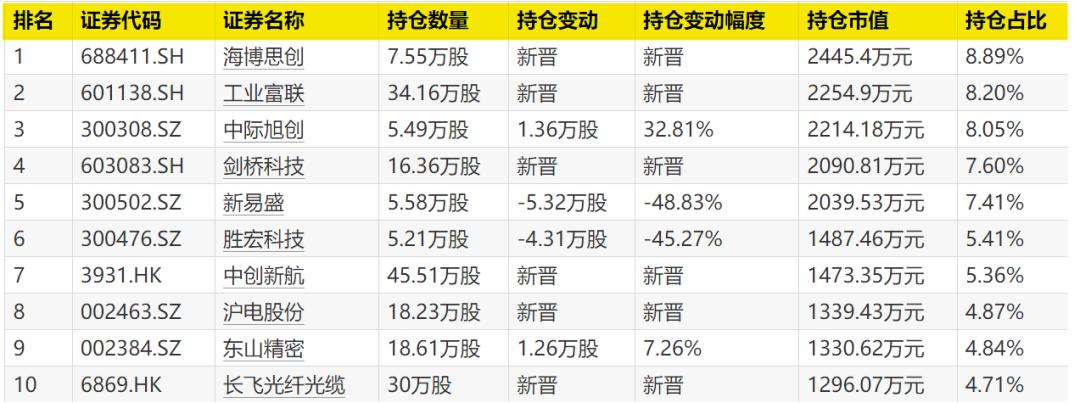
Core Viewpoints - The current bull market in A-shares is likely to continue, with market valuations remaining reasonable despite significant gains this year [3][7][10] Group 1: Fund Performance and Holdings - The performance of several funds, including融通产业趋势, 平安核心优势, and 万家趋势领先, has been notable, with year-to-date net value increases of 93.69%, 88.95%, and nearly 80% respectively [5][10][12] - Key holdings in融通产业趋势 include海博思创, 工业富联, and 中际旭创, with significant year-to-date price increases of 313.46%, 218.92%, and 301.99% respectively [5][6] - 平安核心优势 has focused on innovative pharmaceuticals, with major holdings like 康方生物 and 信达生物 showing year-to-date gains of 89% and 133.74% [8][10] Group 2: Investment Trends and Strategies - Investment managers are optimistic about sectors such as artificial intelligence, energy storage, and the internet, indicating a shift from pessimistic to reasonable valuations in the tech growth sector [4][7] - 万家趋势领先's strategy for the fourth quarter includes focusing on industrial non-ferrous metals and precious metals, anticipating price increases due to global economic shifts and supply chain restructuring [12][13] - The report highlights a trend towards innovative drugs entering the performance release cycle, with a significant portion of these companies expected to achieve profitability this year [10]




大曝光!这些基金“擒牛”
Zhong Guo Ji Jin Bao· 2025-10-25 05:49
Group 1 - The core viewpoint of the article indicates that the recent quarterly reports from various funds reveal a strong focus on sectors such as artificial intelligence, innovative pharmaceuticals, and non-ferrous metals, with many funds holding "doubling stocks" in their top ten positions [1][2][10] - The report highlights that the A-share market has seen significant gains this year, but historical patterns suggest that the current upward trend is likely not over, with overall market valuations remaining at reasonable levels [1][6] Group 2 - The top three holdings of the Rongtong Industrial Trend fund include Haibo Sichuang, Industrial Fulian, and Zhongji Xuchuang, with year-to-date stock price increases of 313.46%, 218.92%, and 301.99% respectively [2][4] - The fund's net asset value has increased by 93.69% in the first three quarters of the year, ranking it 9th among ordinary stock funds, with a stock position of 89.55% [5][6] Group 3 - The Ping An Core Advantage fund's top three holdings are Kangfang Bio, Xinda Bio, and Kelong Botai Bio-B, with year-to-date stock price increases of 89%, 133.74%, and 167.97% respectively [7][9] - The fund has achieved an 88.95% increase in net asset value this year, ranking in the top 2% among over 4,500 mixed equity funds, with a stock position of 90.3% [9] Group 4 - The top three holdings of the Wanji Trend Leading fund are Shandong Gold, Luoyang Molybdenum, and Zhongjin Gold, with significant stock price increases of 181.32%, 184.07%, and 160.32% respectively [10][11] - The fund's net asset value has increased by nearly 80% in the first three quarters, ranking in the top 5% among mixed equity funds, with a stock position of 75.80% [10][11] Group 5 - The fund managers express optimism about sectors such as artificial intelligence, energy storage, and the internet, indicating a belief in continued market growth [6][9] - The Wanji Trend Leading fund manager anticipates several trends for the fourth quarter, including rising prices for physical assets and a potential turning point for PPI, which could lead to a recovery in asset prices and a shift in market style [11]