海底捞

Search documents
力挺华与华!西贝创始人贾国龙喊话有关部门:应监管网络乱象
Nan Fang Du Shi Bao· 2026-01-16 01:50
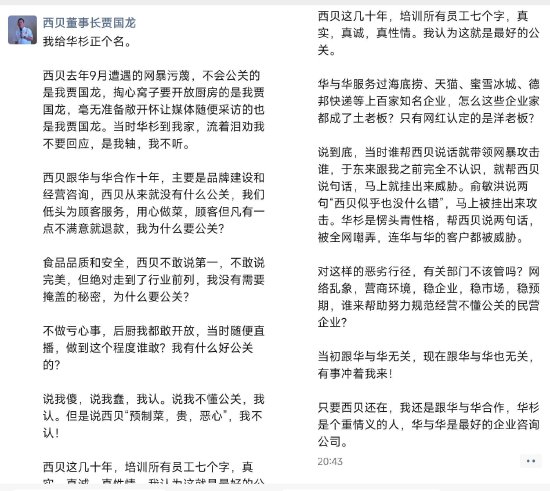
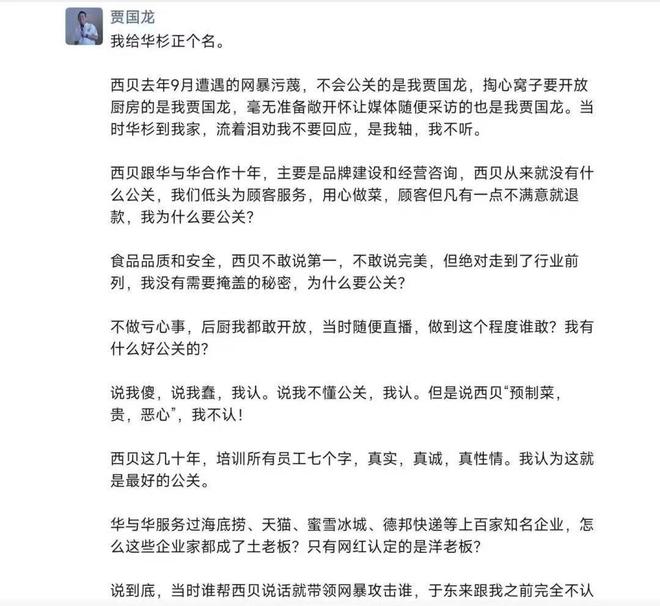
1月15日晚,贾国龙发布朋友圈称,西贝去年9月遭遇的"网暴污蔑",不会公关的是他本人,开放厨房、 敞开怀接受媒体采访也都是他本人的决定,华与华创始人华杉曾"流着泪"劝阻他不要回应,是他自己不 听劝。 贾国龙指出,西贝跟华与华合作十年,主要是品牌建设和经营咨询,他质疑称,"华与华服务过海底 捞、天猫、蜜雪冰城、德邦快递等上百家知名企业,怎么这些企业家都成了土老板?只有网红认定的是 洋老板?" 贾国龙力挺华杉,将继续合作 并喊话有关部门应监管网络乱象 贾国龙决定做自己。 1月15日晚,西贝创始人贾国龙再次通过朋友圈发声,力挺此前在西贝风波中备受争议的华与华,他认 为华与华正是因为帮西贝说话而遭到攻击。在1月15日这一天内,贾国龙已两度公开发声。稍早前,他 通过朋友圈长文详细回应了关店传闻和外界对西贝门店卖预制菜的质疑。 从两条朋友圈的发言来看,贾国龙对于被评价不懂公关颇为在意。在最新的朋友圈中,他再次表态,以 西贝的食品品质和安全,"有什么好公关的?"他称,"说我不懂公关,我认。但是说西贝'预制菜,贵, 恶心',我不认!西贝这几十年,培训所有员工七个字,真实,真诚,真性情。我认为这就是最好的公 关。" 贾国龙直言 ...

回眸2025丨探寻中国市场的活力与秩序
Jing Ji Ri Bao· 2026-01-16 00:19
Group 1: Economic Overview - In the past year, China's economy faced challenges, with retail sales exceeding 45.6 trillion yuan, growing by 4.0%, indicating consumer spending remains a stabilizing force [1] - By the end of December, the number of business entities reached 195 million, with over 100 million tax-related entities, reflecting robust market vitality [1] Group 2: Platform Economy Regulation - The competition among major platforms like JD, Taobao, and Meituan in the food delivery sector involved nearly 100 billion yuan in investments, leading to improved service quality and better treatment for delivery riders [2][3] - Regulatory bodies played a crucial role in maintaining fair competition, shifting the focus from subsidy wars to enhancing service quality and ensuring food safety [2][3] Group 3: Addressing Deep-rooted Issues - Regulatory efforts in 2025 targeted the "algorithmic hegemony" and unreasonable rules imposed by platforms, leading to the cancellation of controversial refund policies and promoting fairer trading practices [3] - Major platforms committed to creating a win-win ecosystem for consumers, merchants, and delivery riders, with initiatives like eliminating penalties for late deliveries and increasing social security coverage for riders [3][4] Group 4: Combating "Involution" Competition - "Involution" competition emerged as a significant challenge in 2025, characterized by price wars that compromised product quality and safety, as seen in the drastic decline of profit margins for brands like Laiyifen [6][7] - The government emphasized the need to shift competition from price-cutting to value creation, with regulatory measures aimed at addressing unfair practices and enhancing product quality [6][7][8] Group 5: Food Safety and Standards - The "pre-made dish" controversy highlighted public concerns over food safety, prompting regulatory bodies to accelerate the establishment of national standards for the industry [10][11] - Regulatory measures included comprehensive food safety oversight and the introduction of transparency in food production processes to restore consumer trust [11][12] Group 6: Market Dynamics and Innovation - The regulatory framework aims to create a balanced market environment where quality and innovation are prioritized over low prices, allowing businesses to thrive without compromising standards [9][12] - The response from the industry includes innovative dining experiences and significant investments in product development, indicating a shift towards higher quality offerings [9][12]


探寻中国市场的活力与秩序
Jing Ji Ri Bao· 2026-01-15 21:28
Economic Overview - In the past year, China's economy faced challenges, with total retail sales of consumer goods exceeding 45.6 trillion yuan, growing by 4.0%, indicating that consumption remains a stabilizing force for the economy [1] - By the end of December, the number of business entities in China reached 195 million, with over 100 million tax-related entities, reflecting sustained market vitality [1] Consumer Trends - Consumer activity is shifting from traditional shopping to experiential scenarios, such as enjoying hot pot while watching movies or visiting stores for service experiences, indicating a new market dynamic focused on quality and experience [1] - The pursuit of quality and experience has become a new driving force in the market, presenting challenges for regulators [1] Platform Economy Regulation - The competition among platforms like JD.com, Taobao, and Meituan in the food delivery sector has led to significant investments, with nearly 100 billion yuan spent in just six months, resulting in improved service quality and better treatment for delivery personnel [2][3] - Regulatory bodies have played a crucial role in maintaining fair competition, shifting the focus from subsidy wars to enhancing service quality and ensuring food safety [2][3] Addressing Deep-rooted Issues - Regulatory efforts in 2025 targeted the "algorithmic hegemony" and unreasonable rules imposed by platforms, leading to the cancellation of controversial refund policies and the establishment of fairer trading conditions [3] - Major platforms committed to creating a win-win ecosystem for consumers, merchants, and delivery personnel, with initiatives to eliminate penalties for late deliveries and improve social security coverage for riders [3][4] Market Corrections - In 2025, major food delivery platforms collectively reduced merchant commissions by 52 million yuan, addressing issues of excessive fees and fines, thereby sharing growth benefits more equitably among ecosystem participants [4] - Regulatory measures included the introduction of compliance management documents and guidelines to enhance the scientific and standardized operation of online markets [5] Combatting "Involution" Competition - "Involution" competition, characterized by price wars and product homogeneity, has been identified as a significant challenge, prompting regulatory focus on promoting high-value competition rather than low-level price cuts [6][7] - The government has initiated actions against substandard products and unfair practices, with a focus on maintaining market integrity and safety [6][7] Food Safety and Standards - The "pre-prepared food" controversy highlighted the need for unified national standards in the food industry, leading to accelerated efforts in standard formulation and enhanced food safety regulations [9][10] - Regulatory bodies are emphasizing comprehensive food safety oversight across the supply chain, addressing public concerns about food safety and ensuring transparency in food production [10][11] Conclusion - The collective efforts in 2025 aimed to create a fairer and more trustworthy market environment, allowing all value-creating entities and workers to thrive, ultimately leading to a balance between market vitality and order [12]
机器人租赁从零散服务走向生态化布局
Xin Lang Cai Jing· 2026-01-15 18:26
Core Insights - The future of the robotics industry is shifting towards a rental model similar to shared power banks, enabling convenient access to robots for various applications [1] - The industry is moving from fragmented services to an ecosystem approach, focusing on standardization and scalability to create a win-win situation for agents, developers, and end-users [1] Group 1: Industry Transformation - The robotics rental industry is undergoing a transformation to establish industry rules and a cohesive ecosystem [1] - The chairman of Qingtian Rental, Jiang Qingsong, expressed confidence in the industry, emphasizing the need for collaboration across the supply chain to unlock new potentials [1] - Qingtian Rental aims to achieve significant milestones by 2026, including partnerships with over 10 manufacturers, 200 premium service rental companies, 3,000 content creators, and 400,000 rental customers [1] Group 2: Platform Features and Network - Qingtian Rental's CEO, Li Yiyan, highlighted the platform's core functionalities, which connect users, merchants, and creators, providing operational support and content management [2] - The platform has established a nationwide rental network, reaching 50 key cities and forming a localized service network with over 600 service providers [2] - Qingtian Rental plans to expand its reach to over 200 cities by 2026, ensuring nationwide delivery capabilities for robotic services [2] Group 3: Industry Applications and Collaborations - Various ecosystem partners shared insights on the practical applications of robotics, including how intelligent robots can enhance service experiences and operational efficiency [3] - Companies expressed interest in collaborating to develop content ecosystems and shared paths for co-creating and sharing within the robotics industry [3] - The insurance sector is exploring mechanisms to support the high-quality development of the robotics industry [3]

高瓴出手!机器人租赁赛道火了
Shang Hai Zheng Quan Bao· 2026-01-15 15:48
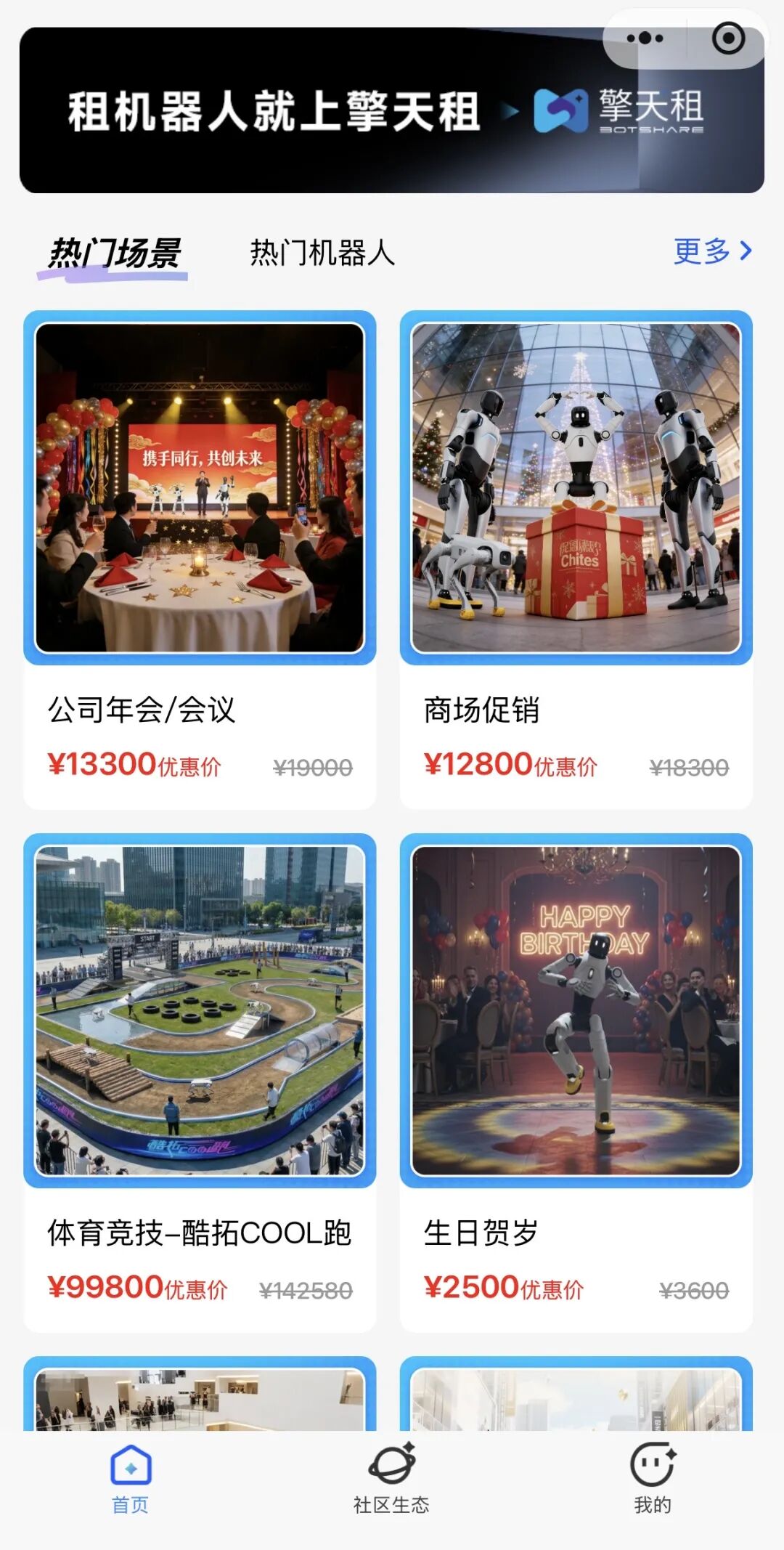
Group 1 - The first financing round for the global robot rental platform, Qingtian Rental, has been completed, led by GL Ventures with participation from several other investors [1] - Qingtian Rental is viewed as the "Didi of the robot industry," offering a standardized, low-cost, and scalable Robot as a Service (RaaS) model through resource integration [1][12] - The platform has already registered over 200,000 users and maintains an average of over 200 rental orders per day within three weeks of launch [12] Group 2 - The rental prices for robots on the platform range from 200 yuan to over 10,000 yuan per day, with specific examples such as the Lingxi X2 for 2,299 yuan per day [8] - Qingtian Rental aims to collaborate with over 10 robot manufacturers by 2026, expanding beyond its parent company, Zhiyuan Robotics [12] - The robot rental market is expected to reach a scale of no less than 10 billion yuan next year, driven by platform operations addressing the fragmentation and communication gaps in the market [12] Group 3 - Qingtian Rental has established partnerships with various chain brands such as Meiyijia and Haidilao, applying robot services in high-frequency scenarios like store promotions and operational activities [13] - The platform's approach reduces the trial and error costs of introducing new technologies into traditional settings, facilitating rapid deployment and optimization of robots in real commercial environments [13]
「机器人+」高瓴创投领投!机器人租赁成资本新焦点,擎天租上线三周完成种子轮融资
Hua Xia Shi Bao· 2026-01-15 14:40
Core Insights - The robot rental platform "Qingtian Rent" has quickly gained attention in the market, completing its seed round of financing just three weeks after launch, indicating strong investor interest in the service and application layer of the robotics industry [2][3] - The platform aims to address the "last mile" challenge in robot commercialization by offering flexible, on-demand rental services rather than traditional one-time sales [2][4] Financing and Investment - Qingtian Rent's seed round was led by GL Ventures, with participation from Fosun Capital, Muhua Innovation, Dafeng Fund, and Zhangjiang Group's Intelligent Company [3] - The funds will be used for national market expansion, platform technology and service system development, and deep collaboration with local governments and industry ecosystems [3] Market Potential - The robot rental market is projected to reach at least 10 billion yuan this year, reflecting a significant growth opportunity [2] - The platform has already registered over 200,000 users and maintains an average of over 200 rental orders per day, showcasing rapid adoption [5] Business Model and Services - Qingtian Rent's model transforms robots into flexible production factors that can be quickly deployed and paid for based on performance, rather than being sold outright [4] - The platform also offers additional services such as robot customization and collaboration with content production teams, enhancing its value proposition [4] Strategic Goals - The company aims to connect with over 10 robot manufacturers, develop 200 premium service providers, and serve 400,000 rental customers by 2026, establishing a nationwide robot service network [7] - Plans are in place to expand the service network to 200 cities within the year, making robot services as accessible as utilities [7] Competitive Landscape - The rental model is expected to mirror the growth trajectory of the drone industry, where rental services became popular before widespread adoption in other sectors [5] - Qingtian Rent is positioning itself as a neutral third-party platform, aiming to include various robot brands and avoid exclusivity, although challenges in compatibility and service standards remain [6]
机器人租赁时代爆发:「擎天租」种子轮融资,三周斩获20万用户
Xin Lang Cai Jing· 2026-01-15 14:10
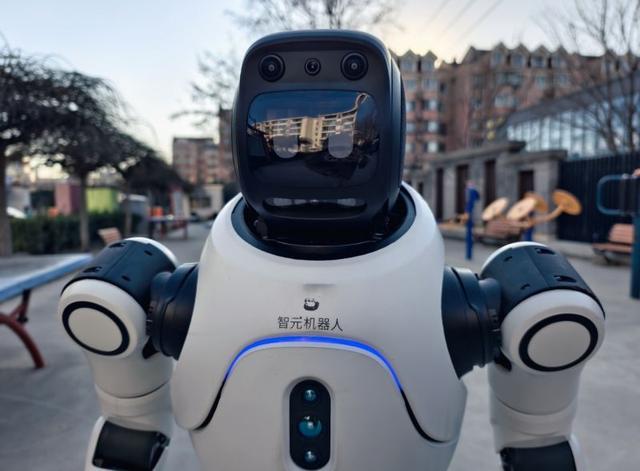
Core Insights - The article highlights the emergence of "Qingtian Rental," the world's first robot rental platform, aimed at addressing the high costs associated with humanoid robots, which can exceed hundreds of thousands of dollars, making them inaccessible for many businesses [1][3][10] Group 1: Company Overview - "Qingtian Rental" was officially launched on December 22, 2025, in Shanghai, initiated by leading companies in the embodied intelligence sector, including Zhiyuan Robotics and Feikuo Technology [3][10] - The platform employs a "shared rental + platform scheduling" model, transforming high-cost robot products into on-demand, standardized service capabilities, thus overcoming barriers to robot adoption [3][10] Group 2: Growth and Expansion - The platform has experienced rapid growth, with over 200,000 registered users within three weeks and an average of over 200 rental orders per day [5][10] - Recently, "Qingtian Rental" announced the completion of its seed round financing, led by GL Ventures, with participation from several investment firms. The funds will be used for national market expansion, technology optimization, and collaboration with local governments and industry ecosystems [5][11] Group 3: Market Validation and Partnerships - The rental model has been validated across various high-frequency scenarios, with partnerships established with well-known brands such as Meiyijia, Haidilao, and Mixue Bingcheng, where robots are utilized for store traffic, brand events, and operational activities [6][12] - The platform has also reported a surge in order demand during the New Year period, indicating market acceptance of the robot rental model [6][12] Group 4: Future Strategy - The chairman of "Qingtian Rental," Jiang Qingsong, proposed a "1234 strategy" aiming to connect with over 10 robot manufacturers, develop 200 premium service providers, gather 3,000 content creators, and serve 400,000 rental customers by 2026 [8][14] - The platform plans to expand its service network to 200 cities nationwide, making robot services as readily available as utilities like water and electricity [8][14]

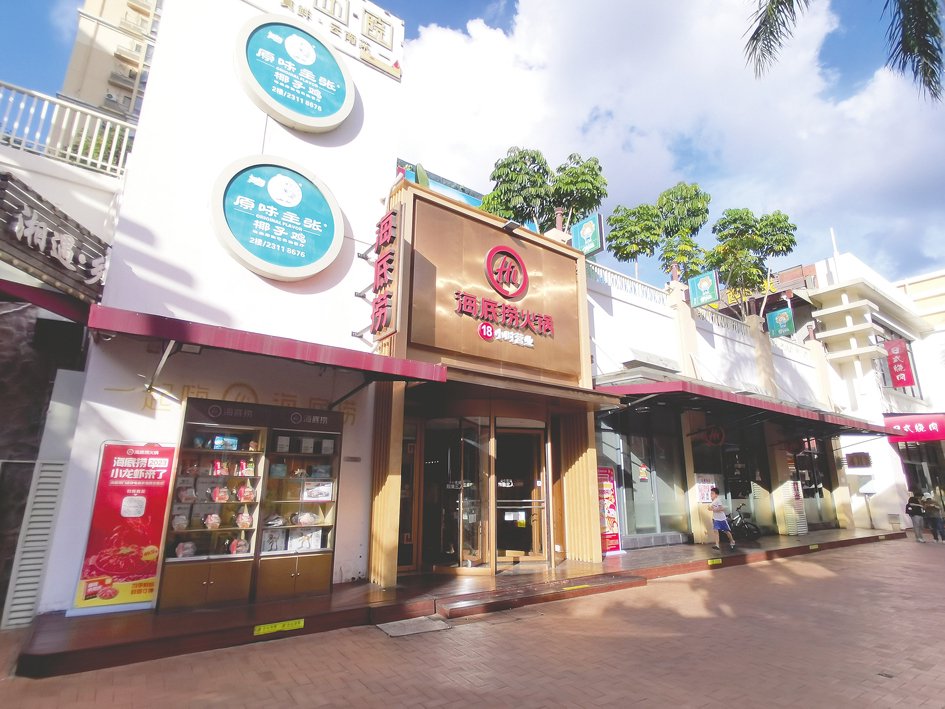
4年三换帅!创始人张勇重掌海底捞 创新业务能否“捞”出新天地?
Mei Ri Jing Ji Xin Wen· 2026-01-15 13:40
Core Viewpoint - Haidilao has undergone a significant management restructuring, with Zhang Yong returning as CEO, indicating a shift towards a governance structure that emphasizes founder leadership during a challenging period for the company's core hotpot business [1][4][9]. Management Changes - On January 13, Haidilao announced the resignation of Guo Yiqun as CEO and executive director, with Zhang Yong appointed as the new CEO, maintaining his role as chairman [1][4]. - This marks the third CEO change in four years, reflecting ongoing strategic adjustments within the company [3][7]. - Guo Yiqun will continue to play a crucial role in the company, focusing on the automation and digitalization of management processes [4][6]. Board Composition - The board has appointed four new executive directors, all with extensive experience in operational and core functional roles, to support innovation and long-term development [5][6]. - The average tenure of the new executive directors is nearly 20 years, indicating a strong internal leadership pipeline [6]. Business Performance - Haidilao's financial performance has shown a decline, with revenue for the first half of 2025 at 20.703 billion yuan, down 3.7% year-on-year, and net profit at 1.755 billion yuan, down 13.7% [9]. - The average table turnover rate decreased to 3.8 times per day, down from 4.2 times in the previous year, attributed to increased competition and changing consumer behavior [9]. Strategic Focus - The company is accelerating its exploration of new growth avenues, including takeout, multi-brand strategies, and franchising, particularly through the "Pomegranate Plan," which has successfully incubated 14 restaurant brands [9][10]. - The takeout business has seen a significant increase, with revenue growing nearly 60% to 928 million yuan, driven by a focus on single-serving hotpot offerings [9]. Future Outlook - The return of Zhang Yong as CEO is viewed as timely and necessary to balance resources and enhance efficiency across multiple business lines [10].

西贝贾国龙再发声:当时谁帮西贝说话就被挂出来攻击,于东来跟我完全不认识
Xin Lang Cai Jing· 2026-01-15 13:29
Core Viewpoint - The chairman of Xibei, Jia Guolong, acknowledges the company's plan for "large-scale store closures" while defending Huashan against online attacks, questioning the bias against domestic brands compared to foreign ones [1][4]. Group 1: Company Background and Operations - Xibei has been collaborating with Huayi Huayi for ten years, focusing on brand building and business consulting [6]. - The company emphasizes customer service, offering refunds for any dissatisfaction, and claims to prioritize food quality and safety, asserting it ranks among the industry's leaders [6]. Group 2: Online Attacks and Public Relations - Jia Guolong expresses frustration over the online harassment faced by Xibei, stating that those who supported the company were also targeted, including notable figures like Yu Donglai and Yu Minhong [1][4]. - He criticizes the notion that domestic entrepreneurs are labeled as "local bosses" while foreign counterparts are favored, highlighting a perceived bias in public perception [1][6]. Group 3: Call for Regulatory Action - Jia questions the lack of regulatory oversight regarding online harassment and the impact on the business environment, urging for measures to stabilize enterprises and market expectations [3][7]. - He reaffirms the commitment to continue working with Huayi Huayi, describing Huashan as a loyal and principled individual [7].
西贝贾国龙为华与华“正名”:当初和现在都跟华与华无关,有事冲我来!
Xin Lang Cai Jing· 2026-01-15 13:29
他还表示,"当初跟华与华无关,现在跟华与华也无关,有事冲着我来!" 他称,"只要西贝还在,我还是跟华与华合作,华杉是个重情义的人,华与华是最好的企业咨询公司。" 以下为西贝董事长贾国龙朋友圈全文: 1月15日,西贝董事长贾国龙在承认将"大规模关店"后,再发朋友圈为华杉发声正名。 贾国龙回忆:"说到底,当时谁帮西贝说话就带领网暴攻击谁,于东来跟我之前完全不认识,就帮西贝 说句话,马上就挂出来威胁。俞敏洪说两句"西贝似乎也没什么错",马上被挂出来攻击。华杉是愣头青 性格,帮西贝说两句话,被全网嘲弄,连华与华的客户都被威胁。" 他强调,对这样的恶劣行径,有关部门不该管吗?网络乱象,营商环境,稳企业,稳市场,稳预期,谁 来帮助努力规范经营不懂公关的民营企业? 说我傻,说我蠢,我认。说我不懂公关,我认。但是说西贝"预制菜,贵,恶心",我不认! 西贝这几十年,培训所有员工七个字,真实,真诚,真性情。我认为这就是最好的公关。 华与华服务过海底捞、天猫、蜜雪冰城、德邦快递等上百家知名企业,怎么这些企业家都成了土老板? 只有网红认定的是洋老板? 说到底,当时谁帮西贝说话就带领网暴攻击谁,于东来跟我之前完全不认识,就帮西贝说句话 ...