清陶能源

Search documents
新一轮动力电池革命,是直接往里加“矿石”?
电动车公社· 2025-12-09 16:04
Core Viewpoint - The article discusses the evolution and advantages of oxide electrolytes in solid-liquid batteries, highlighting their commercial viability and potential to replace traditional liquid batteries in the future [11][83]. Group 1: Evolution of Oxide Electrolytes - Oxide electrolytes have a history of over 60 years, being the earliest solid-state electrolytes discovered [11]. - Initial discoveries in the 1960s showed that certain refractory materials could exhibit conductivity under specific conditions, leading to the exploration of oxides as battery electrolytes [11][12]. - The development of lithium oxides in the 1990s marked a significant shift in research focus, resulting in various oxide electrolyte types [15][16]. - Lithium lanthanum titanate (LLTO) was synthesized in 1987, demonstrating a significant improvement in conductivity compared to earlier oxides [22][23]. - LLTO has been successfully used in commercial applications, such as in the NIO ET7 and Zhiji L6 vehicles [33]. Group 2: Advantages of Oxide Electrolytes - Oxide electrolytes are more compatible with liquid electrolytes compared to sulfide and polymer electrolytes, which enhances their performance in solid-liquid batteries [47][49]. - They exhibit high stability and can withstand high temperatures (up to 800°C) without degradation, making them safer and more reliable [59][63]. - The production process for oxide electrolytes is less complex and requires lower investment compared to sulfide electrolytes, leading to lower costs and easier scalability [67][69]. - The cost of oxide solid-liquid batteries is currently only 5-10% higher than that of liquid batteries, with potential for further cost reductions [69]. Group 3: Challenges and Future Prospects - While oxide electrolytes excel in solid-liquid batteries, they face challenges in full solid-state battery applications due to interface issues [75][78]. - Research is ongoing to combine oxide and polymer electrolytes to create composite solid-state electrolytes that can leverage the strengths of both materials [82]. - The future of solid-liquid batteries depends on overcoming the conductivity limitations of oxide electrolytes to enhance fast-charging capabilities [85][86].


浙江台州壮大实体经济根基
Jing Ji Ri Bao· 2025-11-26 22:44
Core Insights - Jack Technology Co., Ltd. has launched the AI sewing machine "Ai 10" and humanoid robots, showcasing Taizhou's innovation capabilities in high-end equipment [1] - Taizhou has focused on the development of the real economy, promoting digital and intelligent transformation in manufacturing, resulting in an 8.3% year-on-year growth in industrial output value for the first nine months of the year [1] - The establishment of the first provincial-level low-altitude economy industry fund in Taizhou Bay New Area has attracted over 80 upstream and downstream enterprises for development [1] - The second phase of the 10GWh solid-state lithium battery industrialization project by Qingtai Energy is progressing rapidly in the Chengjiang Industrial Zone of Huangyan Economic Development Zone [1] - The CNC and Intelligent Manufacturing Technology Innovation Center, co-established by Yuhuan City and Tianjin University, has achieved a transformation rate of over 75% for its results [1] - The municipal government emphasizes leveraging the advantages of a vibrant private economy, diverse manufacturing sectors, and numerous listed companies to enhance the quality and resilience of development through practical measures [1]

推动制造业数字化、智能化转型 浙江台州壮大实体经济根基
Jing Ji Ri Bao· 2025-11-26 22:36
Core Insights - Jack Technology Co., Ltd. from Taizhou, Zhejiang, recently launched the AI sewing machine "Aitu Ai 10" and humanoid robots, showcasing the city's innovation capabilities in high-end equipment [2] - Taizhou has focused on developing its real economy, promoting digital and intelligent transformation in manufacturing, leading to a solid foundation for the real economy [2] - In the first nine months of this year, Taizhou's industrial output value above designated size increased by 8.3% year-on-year, with high-tech industry investment, manufacturing investment, and industrial technological transformation investment growing by 15.1%, 14.4%, and 24.1% respectively [2] Industry Developments - The Taizhou Bay New Area has established Zhejiang's first provincial-level low-altitude economy industry fund, with over 80 upstream and downstream enterprises gathering for development [2] - The second phase of the 10GWh solid-state lithium battery industrialization project by Qingtai Energy, a major industrial project in Zhejiang, is progressing rapidly in the Chengjiang Industrial Zone of Huangyan Economic Development Zone [2] - The CNC and Intelligent Manufacturing Technology Innovation Center, co-established by Taizhou's Yuhuan City and Tianjin University, has become a model for regional collaborative innovation, with a current achievement transformation rate exceeding 75% [2] Strategic Direction - The Secretary of the Taizhou Municipal Committee, Shen Mingquan, stated that the city will leverage its vibrant private economy, diverse manufacturing sectors, and numerous listed companies to systematically advance the construction of a modern industrial system [2] - The focus will be on intelligent, green, and integrated development, with practical measures aimed at enhancing the quality, efficiency, and resilience of growth [2]
固态电池量产,新能源2.0启程
2 1 Shi Ji Jing Ji Bao Dao· 2025-11-26 22:34
向外看,全球汽车产业主要国家和企业,在固态电池领域也取得了不小的进展,国际竞争压力不容小 觑。美日韩等汽车强国和欧洲车企,试图以固态电池作为战略"翻盘"的关键抓手。新能源2.0启程之 际,中国企业需要保持危机感,持续加大研发投入,向创新要竞争力。 目前大多数纯电车辆实际续航只有三五百公里,固态电池量产后续航可以达到1000公里左右。从产业深 层逻辑看,固态电池的量产将是对"安全底线"的有效回应。固态电池用固态电解质取代易燃的液态电解 液,从物理与化学结构上解决热失控问题,与国家最新发布的强制性电池安全新国标《电动汽车用动力 蓄电池安全要求》中关于"不起火、不爆炸"的要求相适配。守住安全底线,新能源汽车才能真正变 成"大众标配",建立起持久的市场信任。 过去三十年是新能源汽车发展的1.0时代。"九五"至"十一五"时期,我国以"三纵三横"布局解决了从无到 有的问题,"三纵"为混合动力、纯电动、燃料电池汽车,"三横"为动力总成控制、驱动电机、动力电 池。这个阶段的成功以500辆新能源车服务2008年奥运会为标志。2009年至2012年为产业化起步阶段, 25个城市启动"十城千辆"示范工程,到2012年推广新能源车2 ...
企业现场提诉求、部门当场作答 成都这场产业链企业专场活动政企面对面解难题
Mei Ri Jing Ji Xin Wen· 2025-11-22 04:26
Core Viewpoint - The event "Jin Jie You Cu" focused on addressing the needs of advanced energy industry enterprises, highlighting the importance of collaboration between government and businesses to enhance the energy sector in Chengdu [1][2]. Group 1: Enterprise Needs and Government Response - Key enterprises such as Chuan Kai Electric and Tongwei Solar expressed concerns regarding technical collaboration, funding support, and application scenarios, emphasizing the need for a platform for ongoing communication [1]. - The Chengdu government agencies, including the Science and Technology Bureau and the Economic and Information Bureau, provided immediate responses to the enterprises' requests, outlining solutions and timelines for implementation [1]. Group 2: Industry Development and Innovation - Chengdu has integrated the advanced energy industry into its 17 key industrial chains, with significant achievements such as the establishment of a national-level advanced manufacturing cluster and the inclusion of green hydrogen in the new industrial track [2]. - The industrial ecosystem is thriving, with 515 large-scale industrial enterprises and three billion-level leading companies, showcasing a complete industrial chain in hydrogen, photovoltaics, and lithium batteries [2]. - The revenue of large-scale industrial enterprises reached 130 billion yuan in the first three quarters of 2025, marking a 13.1% year-on-year growth, indicating robust development [2]. Group 3: Innovation and Technological Advancements - The region has established 40 technology innovation platforms and developed over 140 major technological equipment, with notable achievements in photovoltaic efficiency and solid-state battery technology [3]. - Significant progress has been made in hydrogen energy applications, including the operation of a solid-state hydrogen storage system and the establishment of a zero-carbon station in Ganzi [3].

钛深科技:以触觉感知世界 掘金电池检测与机器人新蓝海
Zhong Guo Zheng Quan Bao· 2025-11-19 21:32
Core Viewpoint - The article highlights the advancements and strategic direction of Titanium Deep Technology (钛深科技), focusing on its innovative flexible tactile sensing technology and its applications in battery safety and humanoid robotics. Group 1: Technology and Innovation - Titanium Deep Technology's flexible tactile sensor technology, known as "离电触觉传感技术," addresses the limitations of traditional pressure sensors by utilizing a pressure sensing principle that allows for temperature and pressure detection simultaneously [2][3] - The company has developed a comprehensive capability from material formulation to process equipment and solution design, enabling low-cost and large-scale applications without relying on traditional semiconductor processes [2][3] - The technology is positioned as a next-generation sensing core, with characteristics such as high sensitivity, transparency, flexibility, high density, and wide applicability [2] Group 2: Market Applications - The company has successfully implemented its technology in critical power supply systems for large-scale events, providing a safety monitoring system that can detect minute changes in battery conditions, offering early warnings for potential failures [3][4] - Titanium Deep Technology is also exploring applications in humanoid robotics, where its sensors can enhance the precision of robotic interactions with the physical world, addressing the need for tactile feedback in delicate tasks [4][5] Group 3: Competitive Advantage - The company claims to have no direct competitors, as it has transitioned from merely selling detection hardware to becoming a data service provider for battery health management [5] - The cost advantages of flexible sensing technology are particularly significant in large-area and high-density applications, making it a more viable option compared to traditional visual solutions [5] - The company emphasizes a strategy of ensuring independent survival before planning capital market pathways, focusing on scaling production to solidify its market position [5] Group 4: Investment and Collaboration - Recently, A-share listed company Fulaient (福莱蒽特) invested 25 million yuan in Titanium Deep Technology, acquiring a 6.1106% stake, indicating confidence in the potential of flexible sensing technology [5][6] - The collaboration aims to leverage Fulaient's expertise in material synthesis to develop new types of flexible sensing polymer composite materials, enhancing the application of Titanium Deep Technology's sensors in various fields [6]

"储能电芯很缺""光伏链主企业还有五倍、十倍以上成长空间""2025第八届中国国际光伏与储能产业大会"传递出这些行业信息
Mei Ri Jing Ji Xin Wen· 2025-11-19 10:59
Core Insights - The term "anti-involution" has become a prominent topic in the photovoltaic industry this year, highlighting the issue of excessive competition leading to price declines across various segments of the solar product supply chain [1][3] - The energy storage sector appears to be recovering faster than the photovoltaic industry, with a notable increase in demand for energy storage cells, despite some caution from industry participants regarding market conditions [1][2] Industry Overview - The photovoltaic industry is currently experiencing an oversupply situation, with significant price drops across the supply chain. For instance, prices for polysilicon, silicon wafers, batteries, and modules have decreased by approximately 10%, 20%, 15%, and 2% respectively since the beginning of the year [2] - Major companies in the photovoltaic sector are still facing operational pressures, with many reporting losses. However, recent quarterly reports indicate some recovery, with leading firms like Tongwei and Longi Green Energy showing reduced losses [2] Competitive Landscape - Companies are focusing on cost reduction and efficiency improvements while also pushing for innovation in response to the competitive pressures of "involution." The shift towards larger 210mm silicon wafers is seen as a way to enhance energy conversion efficiency [2] - The industry is urged to adopt a "big picture" mindset, balancing individual competitiveness with the overall health of the industry ecosystem to avoid detrimental competition [3][5] Technological Developments - New technologies in solar cells, such as perovskite and various combinations of existing technologies, are being explored, although stability and maturity remain concerns [6] - The energy storage market is witnessing a surge in demand, particularly for lithium iron phosphate batteries, driven by the declining costs of photovoltaic products and the economic viability of energy storage solutions [7][8] Market Dynamics - The energy storage sector is projected to grow significantly, with new installations expected to reach 73.76 million kilowatts by the end of 2024, accounting for over 40% of global installations and an annual growth rate exceeding 130% since the 14th Five-Year Plan [8] - The need for innovative business models and fair profit-sharing mechanisms among various stakeholders in the energy sector is emphasized to ensure sustainable growth and collaboration [9][10] Future Outlook - The photovoltaic industry is expected to achieve high-quality collaborative development over the next five to ten years, provided that anti-involution measures are effectively implemented [3][5] - The integration of energy storage with renewable energy sources is anticipated to create a more efficient and economically viable energy system, particularly in regions with high renewable energy generation [11]
“储能电芯很缺”“光伏链主企业还有五倍、十倍以上成长空间”“2025第八届中国国际光伏与储能产业大会”传递出这些行业信息
Mei Ri Jing Ji Xin Wen· 2025-11-18 14:02
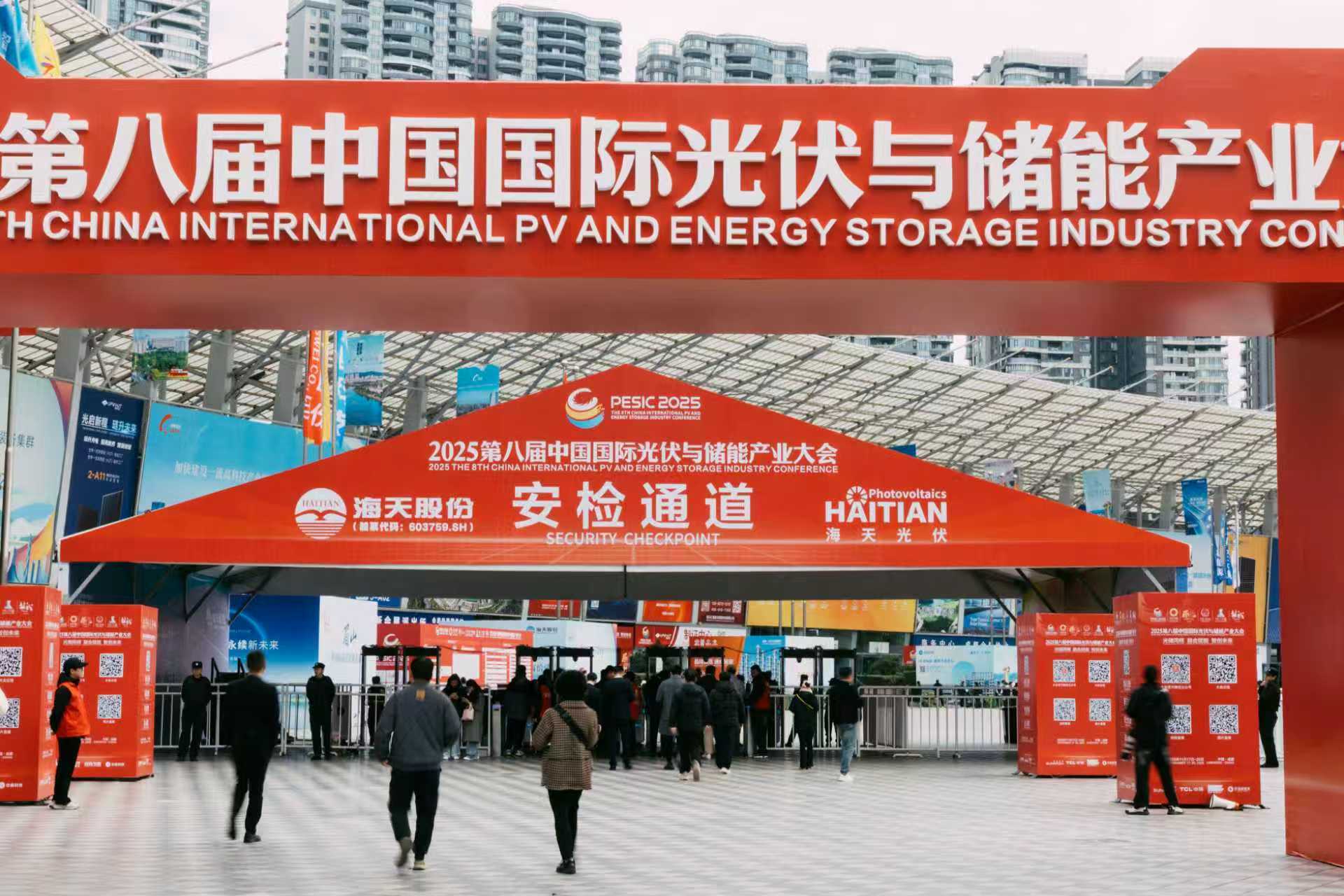
Core Insights - The term "anti-involution" has become a prominent topic in the photovoltaic (PV) industry this year, highlighting the issue of excessive competition leading to price declines across various segments of the solar product supply chain [1][3] - The integration of solar and energy storage systems is becoming more cost-effective, with component costs accounting for approximately 30% of the total system cost [1] Industry Overview - The 2025 8th China International Photovoltaic and Energy Storage Industry Conference took place from November 17 to 20, where industry leaders discussed the current state of the PV and energy storage markets [4] - The PV industry is experiencing a supply-demand imbalance, with significant price drops across the supply chain. For instance, prices for polysilicon, silicon wafers, batteries, and modules have decreased by approximately 10%, 20%, 15%, and 2% respectively since the beginning of the year [4][5] - Despite the challenges, some leading companies like Tongwei and Longi Green Energy have reported a reduction in losses in their third-quarter results [4] Market Dynamics - The energy storage sector is showing signs of recovery, attributed to the price declines in the PV industry, which have made energy storage systems more economically viable [3][9] - There is a notable demand for energy storage solutions, particularly in regions with high renewable energy generation, driven by changes in pricing mechanisms [9][10] - The market for energy storage is expected to grow significantly, with projections indicating that by the end of 2024, new energy storage installations will reach 73.76 million kilowatts, accounting for over 40% of global installations [10] Technological Developments - New technologies in solar cells, such as perovskite and various combinations of existing technologies, are being explored, although stability and maturity remain concerns [8] - The focus on safety and efficiency in energy storage technologies is leading to innovations, including solid-liquid hybrid storage systems [9][11] Strategic Insights - Industry leaders emphasize the need for a balanced competitive environment to avoid excessive internal competition, which can hinder overall industry growth [5][7] - The importance of self-sufficient core technologies is highlighted as essential for maintaining competitive advantages and ensuring the sustainability of the industry [11][12] - Future growth in the renewable energy sector is anticipated to be supported by advancements in energy storage and the establishment of a new power system that integrates renewable sources effectively [15]
“储能电芯很缺”“光伏链主企业还有五倍、十倍以上成长空间”⋯⋯“2025第八届中国国际光伏与储能产业大会”传递出这些行业信息
Mei Ri Jing Ji Xin Wen· 2025-11-18 13:53
Core Insights - The photovoltaic industry is experiencing significant price declines due to excessive competition, leading to a focus on "anti-involution" as a key theme for 2023 [1][5][6] - The energy storage sector is showing signs of recovery, partly driven by falling prices in the photovoltaic supply chain, although some industry players remain cautious about market conditions [3][4][10] Industry Overview - The "2025 8th China International Photovoltaic and Energy Storage Industry Conference" highlighted the need for companies to maintain a broader perspective while competing, ensuring the overall health of the industry ecosystem [3][6] - The photovoltaic industry is currently facing a supply-demand imbalance, with prices for polysilicon, silicon wafers, batteries, and modules dropping approximately 10%, 20%, 15%, and 2% respectively since the beginning of the year [5][12] Company Strategies - Companies are focusing on cost reduction and efficiency improvements while also increasing innovation to survive in a challenging market [4][11] - The production capacity of major companies, such as Meike Co., is currently at 60 GW, primarily in the silicon wafer sector, indicating a supply surplus [4] Market Dynamics - The energy storage market is experiencing high demand, particularly for lithium iron phosphate batteries, driven by changes in clean energy integration costs [10][11] - The anticipated growth in energy storage installations is significant, with projections indicating that by the end of 2024, new energy storage installations will reach 73.76 million kW, accounting for over 40% of global installations [11] Technological Advancements - New technologies in photovoltaic cells, such as perovskite and various combinations of existing technologies, are being explored, with the next five years seen as critical for assessing their viability [9][12] - The industry is urged to focus on core technology independence to enhance competitiveness and ensure sustainable growth [12][13] Future Outlook - The photovoltaic industry is expected to evolve towards a more integrated energy system, combining generation, storage, and consumption, particularly in regions with high renewable energy output [15] - The establishment of a fair and efficient market mechanism for energy resources is deemed essential for the sustainable development of the industry [13][15]

光启技术 (1)
2025-11-16 15:36
Summary of Conference Call Records Industry Overview: Solid-State Battery Market - The solid-state battery market is driven by policies, corporate R&D, and technological breakthroughs, including a 6 billion RMB R&D initiative by the Ministry of Industry and Information Technology (MIIT) in 2024, and advancements from companies like SAIC and CATL [2][3] - CATL plans to begin small-scale production of solid-state batteries by 2027 and aims for mass production by 2030, claiming a global leadership position in solid-state battery research and industrialization [2][5] - Guoxuan High-Tech has completed its first experimental line for solid-state batteries with a design capacity of 0.2 GWh and plans to establish a 12 GWh quasi-solid-state production line [2][6] - Qingtao Energy is collaborating with SAIC to mass-produce solid-state vehicles by 2027 [2][7] Key Developments in Solid-State Battery Technology - The solid interface contact issue is being addressed through interface engineering modifications and breakthroughs in materials and processes [2][8] - Companies recommended for attention in this sector include Rongqi Technology and Xikuang Co., as well as Naknor and Kexin Electromechanical [2][8] Market Demand and Production Capacity - It is expected that orders for lithium battery equipment will significantly increase by the end of this year and into next year, benefiting companies like Rongqi Technology and Xikuang Co. [4][9] - By 2030, global shipments of power batteries and energy storage batteries are projected to reach 5.1 TWh, necessitating over 6 TWh of lithium battery equipment capacity [4][9] - Current lithium battery equipment capacity utilization is at 91%, with a forecasted capacity of 2.2 TWh by the end of 2025, indicating a need for an additional 2.8 TWh of capacity before 2030 [4][10] Financial Insights and Capital Expenditure - Major domestic companies, including CATL, EVE Energy, and Guoxuan High-Tech, have reported a total capital expenditure exceeding 49 billion RMB in the first three quarters of 2025, reflecting a 35% year-on-year increase [10] - CATL's investment in construction projects reached 37.366 billion RMB, a 48% increase year-on-year, indicating a strong optimistic outlook for the power and energy storage battery sectors [10] Military Industry Trends and Company Positioning - The military industry, particularly in domestic demand, is currently underappreciated but is at a critical transition point [11] - Guangqi Technology is a leader in the metamaterials sector, with a significant share of the global market and a strong focus on developing artificial composite materials for defense applications [11][12] - The company has made significant advancements in drone technology and has secured a 2 billion RMB procurement contract, indicating its competitive edge in military equipment and emerging applications [12] Financial Projections for Guangqi Technology - Revenue projections for Guangqi Technology over the next three years are 2.5 billion RMB, 5.6 billion RMB, and 7.5 billion RMB, with corresponding profits of 960 million RMB, 1.88 billion RMB, and 2.35 billion RMB, highlighting its strong technological barriers and leadership in the domestic military and civilian sectors [12]