
固液电池

Search documents
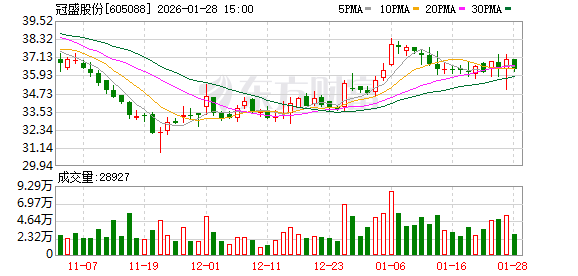
冠盛股份:固液电池产线建设前期已签署多份战略合作协议
Zheng Quan Ri Bao· 2026-01-28 09:47
Group 1 - The core viewpoint of the article is that Guansheng Co., Ltd. has signed multiple strategic cooperation agreements for the construction of solid-liquid battery production lines, indicating a proactive approach to capacity expansion [2] - The company emphasizes that the transition from strategic agreements to actual orders is a critical threshold for capacity rollout [2]


当“蔚小理”跌出头部:2026车企淘汰赛全面加速
首席商业评论· 2026-01-01 04:42
Core Viewpoint - The Chinese automotive market is undergoing a significant transformation, with a shift from traditional fuel vehicles to electric vehicles (EVs), leading to a competitive landscape focused on profitability and safety in the face of potential negative growth in 2026 [2][5][20]. Group 1: Market Transformation - The penetration rate of new energy vehicles in China rose from 5.4% in 2020 to 53.6% by November 2025, indicating a rapid transition compared to Europe [3]. - The automotive industry's value metrics have shifted from traditional components to new standards such as range, smart cabin experience, and assisted driving capabilities [3]. - By 2025, the market dynamics have changed, with new energy vehicles becoming the dominant force, moving from trendsetters to market leaders [3]. Group 2: Competitive Landscape - In 2025, the focus for automotive companies will shift from competing between new energy and fuel vehicles to finding ways to remain profitable in a low-margin environment [5][20]. - The market is witnessing a significant increase in market share for domestic brands, with projections indicating that domestic brands will exceed 65% market share [8]. - The sales performance of new entrants like Xiaomi has been inconsistent, highlighting the challenges of maintaining consumer trust amid safety concerns [10]. Group 3: Safety and Technology - The automotive industry is experiencing a profound value return, with safety becoming a critical factor rather than a cost option [12]. - By 2025, many vehicles are equipped with L2-level smart driving features, and advancements in battery technology have led to significant improvements in range and charging speed [12][14]. - New regulations are set to enforce stricter safety standards for electric vehicle batteries, emphasizing the importance of safety in the competitive landscape [16][18]. Group 4: Future Outlook - The automotive market is expected to face a potential decline in growth, with forecasts suggesting a 1% to 3% increase or a possible 2% negative growth in 2026 [20][21]. - Policy changes, such as the reduction of tax incentives for new energy vehicles, may impact sales growth, particularly in the price-sensitive segment [21][23]. - Companies are encouraged to explore global markets and innovate in technology to create new value, with a focus on L3-level autonomous driving and smart vehicle integration [25][28].



新一轮动力电池革命,是直接往里加“矿石”?
电动车公社· 2025-12-09 16:04
Core Viewpoint - The article discusses the evolution and advantages of oxide electrolytes in solid-liquid batteries, highlighting their commercial viability and potential to replace traditional liquid batteries in the future [11][83]. Group 1: Evolution of Oxide Electrolytes - Oxide electrolytes have a history of over 60 years, being the earliest solid-state electrolytes discovered [11]. - Initial discoveries in the 1960s showed that certain refractory materials could exhibit conductivity under specific conditions, leading to the exploration of oxides as battery electrolytes [11][12]. - The development of lithium oxides in the 1990s marked a significant shift in research focus, resulting in various oxide electrolyte types [15][16]. - Lithium lanthanum titanate (LLTO) was synthesized in 1987, demonstrating a significant improvement in conductivity compared to earlier oxides [22][23]. - LLTO has been successfully used in commercial applications, such as in the NIO ET7 and Zhiji L6 vehicles [33]. Group 2: Advantages of Oxide Electrolytes - Oxide electrolytes are more compatible with liquid electrolytes compared to sulfide and polymer electrolytes, which enhances their performance in solid-liquid batteries [47][49]. - They exhibit high stability and can withstand high temperatures (up to 800°C) without degradation, making them safer and more reliable [59][63]. - The production process for oxide electrolytes is less complex and requires lower investment compared to sulfide electrolytes, leading to lower costs and easier scalability [67][69]. - The cost of oxide solid-liquid batteries is currently only 5-10% higher than that of liquid batteries, with potential for further cost reductions [69]. Group 3: Challenges and Future Prospects - While oxide electrolytes excel in solid-liquid batteries, they face challenges in full solid-state battery applications due to interface issues [75][78]. - Research is ongoing to combine oxide and polymer electrolytes to create composite solid-state electrolytes that can leverage the strengths of both materials [82]. - The future of solid-liquid batteries depends on overcoming the conductivity limitations of oxide electrolytes to enhance fast-charging capabilities [85][86].

固态电池企业进展
数说新能源· 2025-12-05 03:28
Core Viewpoint - The article discusses advancements in solid-state battery technology, focusing on lithium metal and oxide electrolytes, highlighting their high energy density and safety features. Group 1: Technology and Industrial Progress - The technology route emphasizes lithium metal anodes combined with oxide electrolytes, achieving energy densities of 450–550 Wh/kg and aviation-grade safety [6] - The first pilot line with 450 Wh/kg capacity was established in 2023, with a 2GWh production line expected to be operational by December 2025 [6] - Customer certifications have been obtained from leading companies, with successful mass deliveries in drones and robotics [6] Group 2: Application Cases - In the low-altitude economy, a specific aircraft model's endurance improved from 23 minutes to 48 minutes, with future goals of exceeding 1 hour [6] - In robotics, the technology addresses energy density challenges, reducing battery swap frequency in scenarios like marathons [6] - The lithium metal anode is noted for its recyclability, contributing to environmental benefits [6] Group 3: Technical Layout and Safety - The company covers three electrolyte systems: liquid, semi-solid, and all-solid, focusing on safety and material innovation [6] - The semi-solid battery combines oxide electrolytes with in-situ polymerization technology to enhance electrical performance and safety [6] - Safety tests include a 150°C thermal box test and five consecutive puncture tests, with temperature rises only reaching 72.5°C, meeting aviation standards [6] Group 4: Market Predictions and Company Strength - Large-scale production of semi-solid batteries is anticipated by 2026, with small-scale production of all-solid batteries expected by 2030, potentially achieving over 80% market penetration in the long term [6] - The company holds 252 patents (196 invention patents) and has raised 360 million yuan in Series B financing, with production capacity plans of 10,000 tons for oxide electrolytes by 2028 and 1,000 tons for sulfide by 2026 [6] - The technology principle involves polymer monomer polymerization to form solid electrolytes with self-healing capabilities [6]

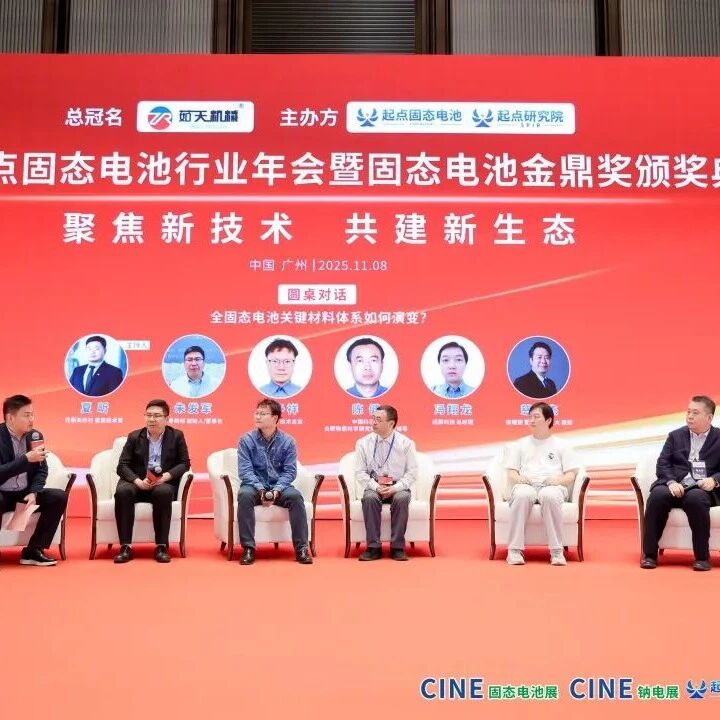
圆桌对话:全固态电池关键材料体系如何演变?
起点锂电· 2025-11-08 12:40
Core Viewpoint - The 2025 Qidian Solid-State Battery Industry Annual Conference highlighted the evolution and future of solid-state battery technologies, emphasizing the importance of collaboration among industry leaders to address challenges and explore new opportunities in the sector [2]. Group 1: Industry Trends and Perspectives - The conference gathered over 500 key players from the solid-state battery supply chain and more than 1000 high-level representatives to discuss new trends and opportunities in the industry [2]. - Experts discussed the positioning of semi-solid and solid-state batteries, suggesting that semi-solid batteries may not merely be transitional but could establish a significant market presence due to their safety and energy density advantages [4][5]. - The consensus among experts is that solid-state batteries face significant challenges, particularly regarding the solid electrolyte and interface issues, which are critical for their future commercialization [6][10]. Group 2: Material Systems and Innovations - The discussion revealed that no single material can address all challenges in solid-state battery development, leading to the exploration of composite materials to enhance performance [9]. - Various electrolyte systems, including sulfide, oxide, polymer, and halide, were examined, with each having its strengths and weaknesses, indicating a need for further innovation and modification to improve conductivity and stability [8][11]. - The potential of silicon-carbon anodes was highlighted as a promising solution for enhancing energy density and safety in solid-state batteries, with ongoing research aimed at overcoming existing challenges [10][12]. Group 3: Future Outlook - Experts expressed optimism about the future of solid-state batteries, believing that with continued collaboration and innovation, the industry can overcome current obstacles and achieve significant advancements [12]. - The need for a breakthrough in materials science was emphasized, with hopes for a versatile material that can meet the diverse requirements of solid-state battery applications [9].
固态电池“文字游戏”,要到头了!
电动车公社· 2025-11-05 16:18
Core Viewpoint - Solid-state batteries are considered the ultimate solution for power batteries, but the term has become muddled with various interpretations and marketing tactics, leading to confusion in the industry [2][4][6]. Group 1: Definition and Standards - The China Society of Automotive Engineers released the "Full Solid-State Battery Determination Method," establishing a standard for solid-state batteries based on the weight loss of the electrolyte after vacuum baking [5]. - The definition helps clarify the concept but does not address the ambiguity surrounding semi-solid batteries, which remain a gray area without clear standards [8][12]. Group 2: Industry Developments - Recent discussions suggest that regulatory bodies are considering standardizing the term "semi-solid battery" to "solid-liquid battery," which would clearly differentiate it from traditional liquid and full solid-state batteries [14][16]. - Solid-liquid batteries have already been implemented in various applications, including electric vehicles and mobile devices, indicating their commercial viability [19][20][22]. Group 3: Technical Advantages - Solid-liquid batteries can address interface issues that hinder full solid-state batteries, as their electrolyte's fluidity helps fill gaps between the electrode and electrolyte, improving conductivity [27][31]. - The production cost of solid-liquid batteries is close to that of liquid batteries, with estimates showing they can be produced at 1.2 times the cost of liquid batteries, potentially decreasing to 10% or even 5% more in the future [45][48]. Group 4: Comparison with Liquid Batteries - Solid-liquid batteries offer significant safety advantages, reducing the risk of combustion by replacing flammable liquid electrolytes with non-flammable solid electrolytes [51]. - They also exhibit better low-temperature performance, maintaining 85-90% capacity at -20°C, compared to liquid batteries that can drop to 60-70% capacity [59][60]. Group 5: Challenges and Future Outlook - Despite their advantages, solid-liquid batteries face challenges in conductivity compared to liquid batteries, which can achieve higher charging speeds [64][66]. - The transition from liquid to solid-liquid batteries is seen as a crucial step towards the eventual adoption of full solid-state batteries, with expectations for small-scale applications by 2030 and broader adoption by 2035 [74][76][80].
【新能源周报】新能源汽车行业信息周报(2025年10月27日-11月2日)
乘联分会· 2025-11-04 08:43
Industry Information - The term "semi-solid battery" is proposed to be renamed as "solid-liquid battery" to avoid confusion with solid-state batteries, which are seen as the future direction due to their higher safety, energy density, lifespan, and faster charging capabilities [9] - Shanghai's Haitong International Automobile Terminal has achieved a record high automobile export volume of 1.109 million units in the first three quarters of this year [10] - The commercial insurance premium income for new energy vehicles exceeded 100 billion yuan, reaching 108.79 billion yuan, with a year-on-year growth of 36.6% [11] - Anhui province ranked first in the country with an automobile production of 2.4044 million units in the first three quarters, significantly outpacing Guangdong [12] - The profit of the automobile manufacturing industry increased by 3.4% year-on-year from January to September [13] - The establishment of 10 measurement talent training centers has been approved, including those focused on new energy vehicles [13] - Huawei's HarmonyOS has delivered over 1 million units in just 43 months [13] - A new project for producing 1.6 million sets of chassis components has officially commenced [13] - The first automotive chip standard verification platform in China has been put into operation [16] - The demand for energy storage has significantly boosted the performance of the lithium battery industry in the third quarter [21] Policy Information - The National Energy Administration has released several important standards related to electric vehicle charging infrastructure [26] - Shenzhen's vehicle replacement subsidy policy will cease after October 28, 2025, due to budget constraints [30] - Guizhou province has implemented a management plan for electric vehicle charging infrastructure construction [30] - The Ministry of Industry and Information Technology is promoting the development of green industries, including new energy vehicles [20] Company Information - Seres Group plans to go public in Hong Kong with a maximum issue price of 131.50 HKD per share, aiming for a total issuance scale of approximately 17 billion USD [43] - Nio has achieved over 90 million battery swaps, with an average daily swap volume exceeding 100,000 [43] - Xpeng Motors has entered the Baltic states and Cambodia markets [43] - BYD's new car registrations in Europe increased nearly fourfold in September [43] - The establishment of Zhejiang Li Auto Battery Co., Ltd. has been completed with a registered capital of 70 million yuan [24]




“半固态电池”或将更名“固液电池”,还将带来哪些新变化?
Zhong Guo Qi Che Bao Wang· 2025-10-30 02:45
Core Viewpoint - The potential renaming of "semi-solid battery" to "solid-liquid battery" has sparked significant interest in the industry, highlighting long-standing concerns about terminology confusion and its implications for market clarity and development [2][3]. Industry Terminology and Clarity - The term "semi-solid battery" has been criticized for being vague and easily confused with "solid-state battery," leading to misconceptions among consumers and manufacturers [3]. - The proposed term "solid-liquid battery" more accurately describes the technology, as it retains some liquid electrolyte while incorporating solid electrolyte materials to enhance performance [3]. - Industry experts emphasize the need for clearer terminology to facilitate communication, collaboration, and standardization within the battery sector [5]. Technological Advancements - Solid-liquid batteries theoretically offer improved energy density and charging speed compared to traditional lithium batteries, although they still carry some risks associated with liquid components [3][9]. - In contrast, solid-state batteries utilize entirely solid electrolytes, providing higher energy density, faster charging, and enhanced safety due to the absence of liquid components [4]. Industry Development and Collaboration - The renaming initiative aims to standardize battery classifications, which could foster better communication and cooperation among industry players, including material suppliers, battery manufacturers, and automotive producers [5][6]. - Enhanced clarity in terminology is expected to lead to more precise alignment of development goals across the supply chain, promoting collaborative research and production efforts [6][7]. Market Implications - Solid-liquid batteries are anticipated to play a crucial transitional role in the battery market until solid-state technology matures, addressing consumer demands for higher energy density, faster charging, and improved safety [9]. - The introduction of solid-liquid batteries is expected to alleviate consumer concerns regarding range anxiety in electric vehicles by extending driving range and reducing charging times [9]. Future Prospects - The technological advancements and industry experience gained from solid-liquid batteries are likely to benefit the future development of solid-state batteries, facilitating faster industrialization and scaling of production [10].

收评:沪指放量涨超1%逼近4000点 两市成交额超2.3万亿元
Xin Hua Cai Jing· 2025-10-27 07:32
Market Overview - A-shares' three major indices collectively rose, with the Shanghai Composite Index approaching the 4000-point mark, reaching a new 10-year high at 3996.94 points, up 1.18% with a trading volume of 1.0434 trillion yuan [1] - The Shenzhen Component Index rose 1.51% to 13489.40 points, with a trading volume of 1.2967 trillion yuan, while the ChiNext Index increased by 1.98% to 3234.45 points, with a trading volume of 615.4 billion yuan [1] - The total trading volume of the Shanghai and Shenzhen markets was 2.34 trillion yuan, an increase of 365.9 billion yuan compared to the previous trading day [1] Sector Performance - The storage chip sector saw significant gains, with companies like Jiangbolong, Tuojing Technology, and Zhaoyi Innovation reaching historical highs [2] - The small metals sector also performed well, with Xiamen Tungsten and Dongfang Tantalum both hitting the daily limit [2] - The computing hardware sector remained active, with companies such as Xinyisheng and Shengyi Technology reaching new highs [2] - Conversely, the gaming sector experienced declines, with stocks like Youzu Network and Giant Network falling [2] - The wind power equipment sector also lagged, with companies like Haili Wind Power and Pangu Intelligent seeing significant drops [2] Institutional Insights - Jifeng Investment noted that the market is in a strong rebound phase, driven by both expectations and fundamentals, with the possibility of breaking through the 4000-point mark increasing [3] - The firm highlighted the importance of focusing on sectors with expected earnings growth, particularly in semiconductors, consumer electronics, artificial intelligence, and low-altitude economy [3] - Rongzhi Investment pointed out that despite the market reaching new highs, caution remains prevalent among investors, as indicated by low sentiment indicators [3] - The firm emphasized the need for quality stock selection and allocation in light of upcoming important meetings and policy directions [3] Future Outlook - Huafu Fund anticipates that strategic emerging industries such as new energy, new materials, and aerospace will see significant market growth, potentially creating trillion-level markets [4] - The fund highlighted that sectors like quantum technology and hydrogen energy could become new economic growth points over the next decade [4] - Overall, the technology sector is expected to be a focal point for investment, with defensive asset combinations being beneficial [4] Regulatory News - Relevant authorities are reportedly preparing to standardize the naming of "semi-solid batteries" to "solid-liquid batteries" to avoid market confusion [5] Economic Data - According to the National Bureau of Statistics, profits of large-scale industrial enterprises in China grew by 3.2% year-on-year in the first nine months of 2025, totaling 53,732 billion yuan [6] - State-owned enterprises saw a slight decline in profits, while private enterprises experienced a growth of 5.1% [7]
半固态电池或将更名固液电池
Xin Lang Cai Jing· 2025-10-27 06:17
Core Viewpoint - The battery industry is moving towards a clearer understanding with the proposed renaming of "semi-solid batteries" to "solid-liquid batteries," addressing confusion in market perception and promoting standardized development [2] Industry Insights - The term "semi-solid battery" has inherent ambiguity, allowing for a wide range of liquid electrolyte content (1%-99%) to be classified under this label, leading to market confusion [2] - Some companies have exploited this ambiguity by marketing products with 5%-10% liquid electrolyte as "solid-state batteries," misleading consumers and obscuring the true technological maturity and safety of these products [2] - The new name "solid-liquid battery" accurately reflects the coexistence of solid and liquid electrolytes, distinguishing it from "all-solid-state batteries" and clarifying its transitional technology position [2] Market Implications - The unified naming convention serves as a "transparent benchmark" for the industry, enabling consumers to better understand product characteristics and preventing companies from using naming strategies to obscure technological differences [2] - This change is expected to refocus competition on core metrics such as solid electrolyte content and safety performance, rather than marketing gimmicks [2] - The renaming is seen as a calibration to eliminate market excesses, guiding industry resources towards practical advancements in solid-liquid hybrid systems and cost control [2] Technological Development - The shift from "semi-solid" to "solid-liquid" represents a respect for technological essence and a commitment to consumer rights, marking a significant step towards maturity and rationality in China's power battery industry [2] - This renaming not only improves naming standards but also establishes a crucial bridge for technological innovation and market order [2]