GlobalFoundries

Search documents
GlobalFoundries Certifies Ansys Lumerical Photonic Design Tools for GF Fotonix™ Platform
Prnewswire· 2025-03-27 13:00
Core Insights - Ansys and GlobalFoundries have collaborated to certify four Ansys photonic solvers for the GF Fotonix platform, enhancing the design capabilities for passive and active photonic components [2][4] - The GF Fotonix platform is the only commercially available foundry platform that allows for the monolithic integration of photonic and electronic components, catering to high-speed optical communications [3][6] - The certified Ansys solutions include FDTD, MODE, CHARGE, and HEAT, which support a wide range of design capabilities essential for photonic integrated circuits (PICs) [4][6] Company Overview - Ansys has over 50 years of experience in simulation software, enabling innovators to bridge the gap between design and reality [6] - The company's mission focuses on powering innovation that drives human advancement across various industries, including semiconductors and medical devices [7] Industry Context - The demand for high-capacity chips has surged due to the rise of compute-heavy technologies like AI, necessitating advanced design tools for photonic chip development [5] - The collaboration aims to address design challenges in photonic chip design, which is often time-consuming and costly, thereby empowering customers to develop next-generation technologies [5][6]



越南首个晶圆厂,即将开建
半导体芯闻· 2025-03-19 10:34
Core Viewpoint - The Vietnamese government has approved the construction of the country's first wafer manufacturing plant, with a total investment of 12.8 trillion VND (approximately 500 million USD), aiming for completion by 2030. This initiative is part of a broader strategy to position Vietnam as a leading semiconductor nation by 2040-2050 [1][2]. Group 1: Investment and Development Plans - The plant will focus on producing specialized chips for high-tech applications such as artificial intelligence and defense technology, with local government covering up to 30% of costs and providing tax incentives [1]. - Vietnam's semiconductor strategy, signed by the Prime Minister, outlines three phases: establishing at least 100 chip design companies, one manufacturing plant, and 10 packaging/testing facilities by 2030; expanding to 200 design companies, two wafer fabs, and 15 packaging/testing sites by 2040; and reaching 300 design companies, three manufacturing plants, and 20 packaging/testing facilities by 2050, with an annual revenue target exceeding 100 billion USD [2]. Group 2: Challenges and Industry Insights - Building an advanced chip factory may cost 50 billion USD or more, making Vietnam's 500 million USD budget seem insufficient. Industry experts suggest focusing on easier goals like chip packaging before attempting advanced manufacturing [2]. - Vietnam plans to leverage foreign investments and partnerships with domestic tech companies like Viettel to rapidly enhance its semiconductor capabilities, already hosting nearly 175 foreign semiconductor projects valued at around 12 billion USD, primarily in packaging and testing [2].
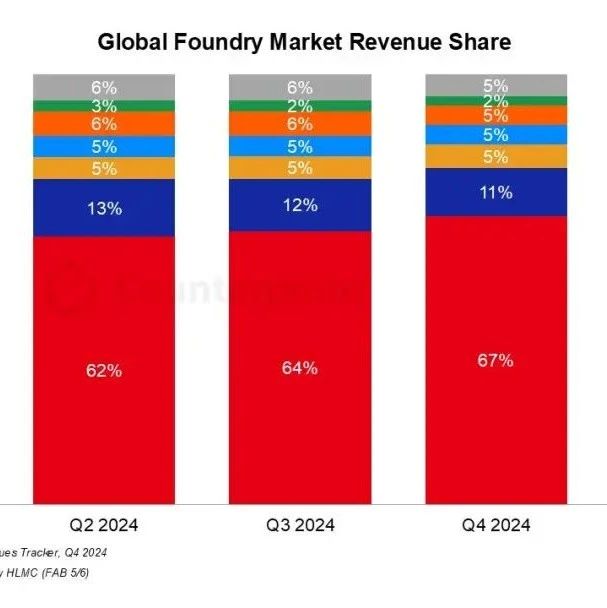
2024 年 Q4 全球晶圆代工行业收入同比增长 26%
Counterpoint Research· 2025-03-18 09:14
Core Viewpoint - The global wafer foundry industry is expected to see a 26% year-on-year revenue growth and a 9% quarter-on-quarter growth in Q4 2024, driven primarily by strong AI demand and the ongoing recovery of the Chinese market [1][3]. Summary by Sections Industry Performance - The advanced process capacity utilization remains high, driven by AI and flagship smartphone demand, particularly for TSMC's N3 and N5 processes [1][3]. - The overall utilization rate for global (excluding China) mature process foundries hovers between 65%-70%, with 12-inch processes recovering faster than 8-inch processes due to weaker demand in automotive and industrial sectors [1][3]. Demand Recovery - Non-AI demand is gradually recovering, particularly in consumer electronics and PC semiconductor sectors, supported by pre-production demand related to U.S. tariffs and demand driven by Chinese subsidies [1][3]. - Advanced packaging demand remains strong and stable, with TSMC actively expanding its CoWoS-L and CoWoS-R capacities, alleviating previous market concerns regarding capacity and order adjustments [1][3]. Company-Specific Insights - TSMC's revenue share reached a record 67% in Q4 2024, up from 64% in the previous quarter, primarily due to high capacity utilization in advanced processes [4]. - Samsung Foundry experienced a slight quarter-on-quarter revenue decline in Q4 2024, attributed to lower-than-expected demand for Android smartphones, leading to a decrease in its market share from 12% to 11% [5]. - SMIC's performance in Q4 2024 met expectations, with revenue growth driven by the recovery in consumer electronics and domestic localization efforts, although overall capacity utilization decreased from 90.4% to 85.5% [6]. - UMC's performance in Q4 2024 was stable, supported by occasional urgent orders in consumer electronics, but faced pricing pressure and a negative impact from a January earthquake [7]. - GlobalFoundries reported stable performance in Q4 2024, with strong wafer shipments offsetting seasonal weakness in the smartphone sector, driven by automotive demand and growth in communication infrastructure [8]. Analyst Commentary - The strong performance of the wafer foundry industry in Q4 2024 is largely attributed to the surge in AI and flagship smartphone demand, maintaining high capacity utilization in advanced processes [9].

分析人士:特朗普或重创美国芯片
半导体行业观察· 2025-03-13 01:34
彭博社撰文回顾了半导体行业协会早先的预测,即如果没有《芯片与科学法案》,美国在半导体市 场的市场份额将降至 10% 以下。这表明特朗普政府在废除该法律之前应该三思而后行。 《芯片与科学法案》于 2022 年在拜登总统的领导下颁布,是一项 520 亿美元的战略,旨在加强美 国半导体制造业并减少对亚洲供应商的依赖。该法案提供 390 亿美元的补助金来促进芯片制造业, 110 亿美元用于研发,以及 25% 的制造业项目税收抵免。企业还可以获得高达 750 亿美元的贷款和 担保。 税收抵免预计将耗费超过 850 亿美元的政府收入,超过最初的估计,并反映了可观的投资水平。特 朗普认为,关税将在产生联邦收入的同时更好地鼓励国内投资,并计划在 2025 年 4 月之前对半导 体进口征收新关税。一些人认为,台积电承诺在其美国园区额外投资 1000 亿美元是为了避免对台湾 生产的芯片征收关税。 如果您希望可以时常见面,欢迎标星收藏哦~ 来源:内容 编译自tomshardware ,谢谢。 上周,美国总统唐纳德·特朗普呼吁共和党议员废除拜登政府时期通过的《芯片与科学法案》,因为 他认为这是在浪费纳税人的钱。共和党议员对这项提议并 ...
全球晶圆厂TOP 10,中国大陆三家入围
半导体行业观察· 2025-03-11 00:53
Core Viewpoint - The global wafer foundry industry is experiencing a polarized development in Q4 2024, with advanced processes benefiting from the growth of emerging applications like AI servers and new flagship smartphones, leading to a nearly 10% quarter-on-quarter revenue increase for the top ten foundries, reaching a record high of $38.48 billion [1]. Group 1: Industry Overview - The advanced process segment is seeing growth due to demand from AI servers and new smartphone platforms, which is offsetting the decline in demand for mature processes [1]. - The new tariff policies from the U.S. government are beginning to impact the wafer foundry industry, with increased orders for TVs and PCs expected to continue into Q1 2025 [1]. - China's subsidy policy for upgrading appliances has led to increased inventory replenishment, further boosting demand for advanced chips from TSMC [1]. Group 2: Company Performance - TSMC's revenue in Q4 2024 is projected to grow to $26.85 billion, maintaining a market share of 67% [2]. - Samsung Foundry's revenue is expected to decrease slightly by 1.4% to $3.26 billion due to client transitions [2]. - SMIC's revenue is forecasted to increase by 1.7% to $2.2 billion, benefiting from new 12-inch capacity and improved product mix [2]. - UMC's revenue is expected to decrease marginally by 0.3% to $1.87 billion, while GlobalFoundries is projected to grow by 5.2% to $1.83 billion [2]. Group 3: Market Dynamics - HuaHong Group's revenue is anticipated to increase by 6.1% to $1.04 billion, driven by improved capacity utilization [3]. - Tower's revenue is expected to grow by 4.5% to $387 million, while VIS is projected to see a 2.3% decline to $357 million due to weakened consumer demand [3]. - Nexchip's revenue is expected to increase by 3.7% to $344 million, marking a rise in market ranking [3]. - PSMC's revenue is expected to decline, resulting in a drop in market ranking, although it remains slightly above Nexchip for the year [3].
这个国家,将建首个晶圆厂
半导体行业观察· 2025-03-05 01:03
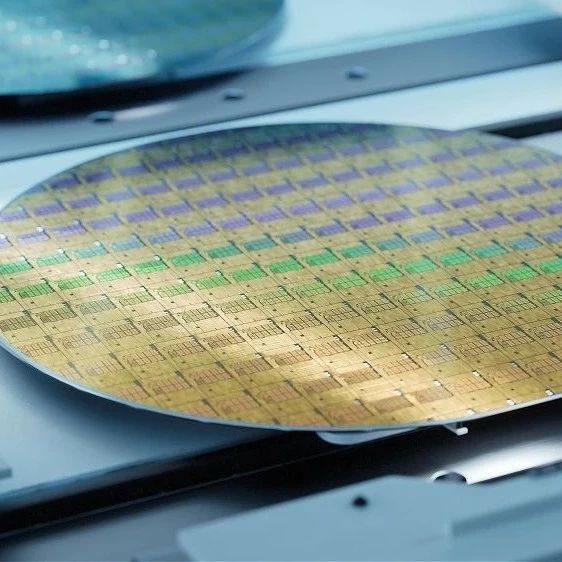
Core Viewpoint - Vietnam is set to build its first semiconductor wafer fabrication plant with a budget of 12.8 trillion VND (approximately 500 million USD), aiming to enhance its semiconductor ecosystem and attract foreign investment in the industry [1][2]. Investment and Development Plans - The Vietnamese government has approved a significant investment plan for a semiconductor factory, which will include tax incentives allowing companies to retain 20% of taxable income for reinvestment in the local semiconductor ecosystem [1]. - Vietnam is actively negotiating with several U.S. semiconductor companies, including GlobalFoundries and PSMC, to establish a semiconductor manufacturing presence in the country [3][5]. - The government aims to complete the first semiconductor manufacturing plant by around 2030, with plans to support local companies like Viettel in building their own facilities [5][10]. Industry Growth and Export Statistics - By 2021, semiconductors accounted for 19% of Vietnam's technology exports, up from 11% in 2011, with a compound annual growth rate of 37.6% during that period [8]. - In 2023, Vietnam's semiconductor equipment exports reached 7.53 billion USD, with over half going to the U.S., making Vietnam the third-largest chip exporter to the U.S. after Malaysia and Taiwan [8][10]. Strategic Vision for Semiconductor Industry - Vietnam's long-term strategy includes establishing six wafer fabrication plants and achieving an annual revenue of approximately 25 billion USD by 2030, with projections of 50 billion USD by 2040 and 100 billion USD by 2050 [13][14][15]. - The strategy will be implemented in three phases, focusing on attracting foreign investment, enhancing domestic capabilities, and ultimately creating a self-sufficient semiconductor ecosystem [16][20][22]. Challenges and Competitive Landscape - The high cost of building semiconductor fabs, estimated at up to 50 billion USD, poses a significant challenge for Vietnam as it competes with countries like China, the U.S., South Korea, and the EU, which have announced substantial funding for their semiconductor industries [6][12]. - Vietnam's semiconductor industry currently relies heavily on foreign direct investment, primarily in assembly, testing, and packaging, with limited domestic production capabilities [10][12].


AMD Lisa Su,是如何力挽狂澜的
半导体行业观察· 2025-03-04 00:53
Core Viewpoint - Lisa Su, CEO of AMD, emphasizes the importance of long-term decision-making in the semiconductor industry, reflecting on her career and the pivotal choices made during her leadership at AMD [1][2]. Group 1: Company Background and Leadership - AMD's market capitalization is currently $162 billion, and it has undergone significant transformation under Lisa Su's leadership since she became CEO in 2014 [1]. - When Su took over, AMD was facing severe challenges, with stock prices around $3 per share and rumors of impending bankruptcy due to fierce competition from Intel and Nvidia [3]. - Su's leadership has been marked by a strategic shift from personal computing to high-performance computing and gaming, leading to a substantial recovery in AMD's business [3][6]. Group 2: Strategic Decisions and Market Position - In 2014, AMD evaluated entering the smartphone chip market but ultimately decided to focus on high-performance computing, which aligned better with the company's strengths [2]. - Under Su's guidance, AMD transitioned its manufacturing partnership to Taiwan Semiconductor Manufacturing Company (TSMC) in 2018, enhancing its production capabilities [3]. - AMD's stock price has increased over 60 times since Su became CEO, reflecting the company's successful turnaround [6]. Group 3: Future Prospects and AI Market - AMD is positioning itself to compete in the AI sector, launching the MI300X chip as a competitor to Nvidia's top products, with expected sales of $1 billion by mid-2024 [8]. - The company anticipates significant growth in the AI industry, projecting a market valuation of $400 billion by 2027 [8]. - Despite being overshadowed by Nvidia, AMD's advancements in AI technology indicate a promising future for the company under Su's leadership [8].