Lazada

Search documents
一份投入两份增长 天猫商家“双11”可在Lazada同时开卖
Zheng Quan Ri Bao Wang· 2025-10-17 04:16
目前已入驻Lazada的品牌来自多个行业,包括智能生活类的图拉斯、梦享家,母婴护理类的袋鼠妈妈, 新锐美妆个护品牌PassionalLover、CECE,以及国际知名品牌飞利浦新安怡、乐扣乐扣等。 这些商品可在马来西亚、新加坡、泰国、越南、菲律宾5个海外市场销售,相当于为天猫商家零门槛开 拓5个海外市场。目前,已有超过3500家天猫品牌报名,成功入驻了Lazada。 今年"双11",这些品牌将首次在国内和东南亚同时开卖,实现"一份投入,两份增长"。Lazada方面,据 记者了解,这一项目的优先级非常高,由Lazada总裁千城直接负责。今年"双11"Lazada将投入上亿元营 销补贴,整合站外站内流量资源,共同助推天猫品牌海外成交。除此之外,Lazada还将为天猫商家提供 从选品、上架、履约到售后的全链路支持,为商家精准链接东南亚高质量消费者,助力商家实现品牌声 量和销量的双爆发。 本报讯 (记者梁傲男)2025天猫"双11"将于10月20日晚8点正式开卖。10月16日,记者从天猫获悉,今 年"双11",所有天猫商家在国内获得爆发的同时,可在Lazada同步开卖,在东南亚5个市场也获得生意 增长。 "双11"之 ...
天猫双11:商家可在Lazada同时开卖,已有超3500家品牌报名
Xin Lang Ke Ji· 2025-10-17 03:09
Lazada方面,据了解,这一项目的优先级非常高,由Lazada总裁千城直接负责。今年双11将投入上亿元 营销补贴,整合站外站内流量资源,共同助推天猫品牌海外成交。除此之外,Lazada还将为天猫商家提 供从选品、上架、履约到售后的全链路支持。(闫妍) 责任编辑:韦子蓉 当订单产生的时候,天猫商家只要发货到国内中转仓,Lazada将负责后续的跨境运输和售后,全程无需 注册、无需组建海外团队。 这些商品可在马来西亚、新加坡、泰国、越南、菲律宾5个海外市场销售,相当于为天猫商家零门槛开 拓5个海外市场。目前,已有超3500家天猫品牌报名,成功入驻了Lazada。 新浪科技讯 10月17日上午消息,2025天猫双11将于10月20日晚8点正式开卖。从天猫获悉,今年双11, 所有天猫商家在国内获得爆发的同时,可在Lazada同步开卖,在东南亚5个市场也获得生意增长。 据介绍,双11之前,天猫已与Lazada完成商家系统打通。天猫商家无需注册新店,只需在后台签署协 议,就会在Lazada生成一个一模一样的"镜像店铺",商品、库存、营销、优惠等都会同步更新。 ...
第17个“双11”大战在即!京东“抢跑”告捷 刘强东奇袭下一战场:竟是联手“卖车”?
Mei Ri Jing Ji Xin Wen· 2025-10-14 21:34
Core Insights - JD.com announced a collaboration with GAC Group and CATL to launch an affordable car during the "Double 11" shopping festival, focusing on user insights and sales rather than manufacturing [3][4] - JD.com reported a 47.6% year-on-year increase in active users on its app during the initial phase of "Double 11," with over 70% growth in orders for electronics [3][4] - The competition for "Double 11" is intensifying, with various platforms like Tmall and Douyin launching promotions, indicating a shift towards service-oriented consumption [6][8] Group 1 - JD.com will not directly manufacture the car but will provide user insights and resources for purchasing and maintaining vehicles, while GAC handles manufacturing and CATL supplies battery technology [3][4] - The car is aimed at meeting 90% of daily commuting needs and is designed to make car buying as convenient as purchasing a smartphone [3][4] - JD.com is investing 2 billion yuan in promotional activities and incentives for merchants, aiming to attract new businesses to the platform [5] Group 2 - The 17th "Double 11" festival benefits from an extended timeline due to the overlap with the National Day and Mid-Autumn Festival holidays, enhancing promotional opportunities [6] - Major influencers and platforms are adjusting their strategies, with some facing challenges due to changes in their line-up, impacting overall growth [6][8] - The competition is shifting towards service offerings, with JD.com likely to expand into automotive after-sales services and other service-related sectors [8]


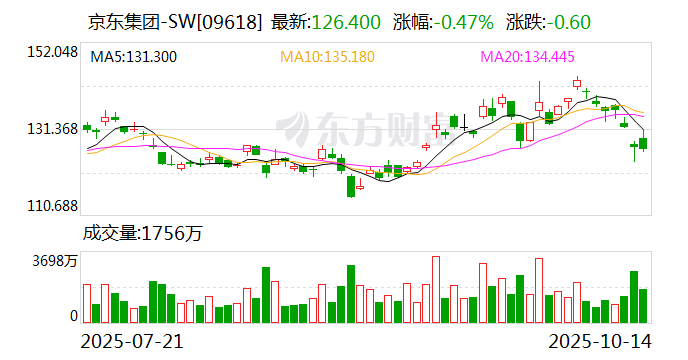
第17个“双11”大战在即!京东“抢跑”告捷,刘强东奇袭下一站场:竟是联手“卖车”?
Mei Ri Jing Ji Xin Wen· 2025-10-14 14:53
Core Insights - JD.com announced a collaboration with GAC Group and CATL to launch an affordable car during the "Double 11" shopping festival, focusing on user insights and sales rather than manufacturing [1][2] - JD.com reported a 47.6% year-on-year increase in active users on its app during the initial phase of "Double 11," with over 70% growth in orders for electronic products compared to the previous year [1][2] - The company is investing 2 billion yuan in promotional activities and incentives for merchants, aiming to attract new businesses and enhance its competitive edge during the shopping event [3][4] Company Strategy - JD.com is positioning itself to scale automotive after-sales services, potentially including battery maintenance, leveraging its existing car maintenance business [2][5] - The company aims to make car purchasing as convenient as buying a smartphone, addressing consumer pain points in the automotive sector [1][2] - The strategy includes a focus on service consumption, with a shift in policy support from product replacement to service consumption, indicating a broader competitive landscape for e-commerce [5][6] Market Dynamics - The "Double 11" event this year benefits from an extended timeline due to the overlap with the National Day and Mid-Autumn Festival, enhancing sales opportunities [3][4] - Competitors like Tmall and Douyin are also ramping up their promotional activities, indicating a highly competitive environment for e-commerce platforms [3][4] - Live commerce is expected to play a significant role in driving growth during the "Double 11" event, although the future may see a diversification of e-commerce strategies beyond just live streaming [6]
阿里把天猫商家搬上Lazada,双11战火燃向东南亚
雷峰网· 2025-10-11 00:27
Core Viewpoint - The collaboration between Lazada and Tmall aims to create a seamless cross-border e-commerce experience in Southeast Asia, leveraging Tmall's brand strength and Lazada's local market knowledge to enhance brand supply and consumer experience [1][15][19]. Group 1: Project Overview - Lazada has initiated the "One-Click Easy Overseas" project, allowing Tmall merchants to sell products in five Southeast Asian markets: Malaysia, Singapore, Thailand, Vietnam, and the Philippines [1][2]. - Tmall and Lazada's integration is designed to simplify the process for merchants, enabling them to quickly enter the Southeast Asian market without the need for extensive local operations [11][12]. Group 2: Strategic Differences - Each platform has distinct strategies: Tmall focuses on a diverse product range with a "light" approach, while Lazada aims to build a quality marketplace emphasizing brand recognition [4][5][6]. - Tmall's model is about helping merchants sell domestic products abroad, whereas Lazada's goal is to import global brands to serve local consumers [6][10]. Group 3: Market Dynamics - Southeast Asia has a growing middle class of approximately 150 million people who are willing to pay for quality and service, indicating a demand for branded products [9][19]. - The e-commerce penetration rate in Southeast Asia is lower than in China, with brand e-commerce GMV accounting for only 30%, highlighting a significant market opportunity [9][10]. Group 4: Competitive Landscape - The Southeast Asian e-commerce market is competitive, with platforms like Shopee and TikTok Shop also vying for brand partnerships and consumer attention [18][19]. - Lazada's early entry and established brand mall (LazMall) provide a competitive edge, but ongoing support and effective operations are crucial to retain brands [18]. Group 5: Implementation Challenges - Successful execution of the integration depends on local acceptance and the ability to adapt to diverse consumer preferences across Southeast Asian countries [17][18]. - The project must address potential conflicts with existing local distributors of international brands to ensure effective market growth [18][19]. Group 6: Future Outlook - The upcoming Double 11 shopping festival will serve as a critical test for the Lazada and Tmall collaboration, measuring buyer growth, profitability, and transaction scale [20]. - The partnership represents a strategic exploration of how Chinese brands can establish a foothold in overseas markets, focusing on quality supply and consumer trust for sustainable growth [20].

Lazada与天猫系统打通 “品牌化”突围东南亚电商战局
Zhong Guo Jing Ying Bao· 2025-09-30 23:14
Core Insights - Alibaba's Lazada is enhancing its cross-border e-commerce capabilities by integrating with Tmall, allowing merchants to easily enter five Southeast Asian markets with minimal costs through the "One-Click Easy Overseas" initiative [1][4] - The Southeast Asian e-commerce market reached $128.4 billion, with Shopee, Lazada, and TikTok Shop holding over 80% market share, indicating a competitive landscape [2] - Lazada's strategy focuses on brand-centric development, leveraging Alibaba's extensive merchant network to enhance brand visibility and sales in the region [3][5] Group 1: "One-Click Easy Overseas" Initiative - The initiative allows Tmall merchants to seamlessly set up stores on Lazada, with real-time synchronization of inventory, marketing, and customer service managed by Lazada [1][4] - Merchants only need to supply goods to a domestic warehouse, while Lazada handles international logistics, customer service, and returns [4][5] - This model aims to reduce the operational burden on merchants, making it easier for them to enter the Southeast Asian market [4] Group 2: Market Position and Strategy - Lazada has been focusing on brand development since 2018, launching LazMall to cater to higher-end consumer goods, which has become a core part of its strategy [2][3] - The platform aims to capture the growing demand for quality products among the 150 million middle-class consumers in Southeast Asia, where e-commerce penetration remains low [3] - Lazada's approach includes not only facilitating Chinese brands' entry but also importing global brands to meet local market needs [3][5] Group 3: Competitive Landscape - The competitive landscape in Southeast Asia is intensifying with new players like TikTok and Temu, but Lazada's brand-focused strategy is seen as a key advantage [2][3] - Alibaba's various e-commerce platforms, including Taobao and AliExpress, are also accelerating their overseas initiatives, indicating a broader strategy to enhance global market presence [6] - Lazada differentiates itself by focusing specifically on the Southeast Asian market, providing tailored support and insights for brands looking to expand [6]
天猫品牌出海东南亚,为什么第一步是Lazada?
36氪· 2025-09-28 09:32
Core Viewpoint - Lazada is focusing on "branding" as its highest strategy, leveraging Alibaba's organizational benefits to integrate domestic and international operations, aiming to enhance brand presence in Southeast Asia [5][6][7]. Group 1: Strategic Direction - Lazada has been integrating local and international brands since its acquisition by Alibaba in 2018, introducing initiatives like LazMall and the "Double 11" shopping festival [5][6]. - The company aims to tap into the growing middle-class market in Southeast Asia, which currently has 150 million consumers, by positioning itself as a platform for quality and branded products [6][11]. - The integration with Tmall allows for a "system-level" connection, enabling merchants to mirror their Tmall stores on Lazada, thus facilitating cross-border business with lower costs [6][14][15]. Group 2: Market Opportunities - The demand for quality products among Southeast Asian consumers is rising, with Lazada identifying "quality users" as a key demographic [6][11]. - Short-tail categories, such as consumer electronics and beauty products, are seen as having significant opportunities for growth due to local supply gaps [20][21]. - Brands that focus on emotional value, like Pop Mart, are gaining traction, and Lazada is actively engaging in marketing strategies to connect these brands with local consumers [22][23]. Group 3: Operational Enhancements - Lazada offers various operational models to assist brands in entering the Southeast Asian market, including a "one-click light export" option for Tmall merchants [24]. - The platform emphasizes the importance of local insights and intelligent full-chain support to help brands navigate the complexities of local operations [17][25]. - The company is committed to evolving its approach to ensure that brands not only enter the market but also adapt their products to meet local consumer needs [25].
天猫品牌出海东南亚,为什么第一步是Lazada?
3 6 Ke· 2025-09-28 07:53
Core Viewpoint - Lazada is focusing on "branding" as its highest strategy to compete in the Southeast Asian e-commerce market, leveraging organizational synergies from Alibaba's e-commerce group to enhance both domestic and international operations [1][2]. Group 1: Strategic Direction - Lazada's strategy is to integrate with Tmall, allowing merchants to mirror their Tmall stores on Lazada, thus facilitating low-cost cross-border operations while maintaining domestic sales [3][8]. - The company aims to tap into the growing middle-class market in Southeast Asia, which currently has 150 million consumers, by targeting "quality users" who seek branded products [2][6]. Group 2: Brand Integration and Market Position - The integration with Tmall allows for streamlined inventory management, marketing, and pricing, enhancing Lazada's ability to offer competitive pricing and brand recognition to Southeast Asian consumers [3][8]. - Lazada is positioned as the highest in average order value and brand penetration among Southeast Asian e-commerce platforms, indicating a strong market presence [6]. Group 3: Product Strategy and Market Opportunities - Short-tail product categories, such as consumer electronics and beauty products, are prioritized for initial market entry due to their standardization and scalability [15]. - The company recognizes specific local consumer needs, such as the demand for high-quality outdoor products and beauty items tailored to Southeast Asian climates, as significant market opportunities [14][18]. Group 4: Brand Collaboration and Consumer Engagement - Lazada collaborates with brands like Pop Mart to enhance consumer engagement through events that connect products with emotional value, thereby strengthening brand loyalty [16]. - The platform aims to provide localized marketing support to help brands establish emotional connections with consumers in the region [16][17].
天猫品牌出海东南亚,为什么第一步是Lazada?
36氪未来消费· 2025-09-28 02:16
Core Viewpoint - Southeast Asia's e-commerce market is highly competitive, with Lazada adopting a "branding" strategy to leverage its integration with Alibaba's e-commerce ecosystem, aiming to enhance its market position and attract more local and international brands [3][4][5]. Group 1: Branding Strategy - Lazada has positioned "branding" as its highest strategic priority, integrating domestic and international operations to capitalize on organizational synergies [3][4]. - The platform has introduced LazMall, which features both local and international brands, and is recognized as Southeast Asia's largest online brand mall [4]. - The "branding" strategy is a response to market changes, with Lazada targeting the growing middle-class consumer base in Southeast Asia, which now numbers 150 million [4][5]. Group 2: System Integration with Tmall - Lazada's president, Wei Meng, emphasizes the importance of "system-level" integration with Tmall, allowing merchants to mirror their Tmall stores on Lazada, thus facilitating low-cost cross-border operations [5][11]. - This integration enables efficient inventory management, pricing synchronization, and marketing strategies, enhancing the visibility of Tmall brands in Southeast Asia [11][12]. - The initial batch of Tmall brands entering Lazada includes well-known names like Philips and Babycare, indicating a significant potential for growth [5][12]. Group 3: Market Opportunities and Consumer Trends - The Southeast Asian market presents substantial opportunities for brands, particularly in consumer electronics and beauty products, where local supply is often insufficient [17][18]. - Lazada is focusing on short-tail categories initially, as they are easier to scale and standardize, while long-tail categories like apparel will be approached later due to their complexity [18]. - The platform is also observing trends in emotional consumption, as seen with brands like Pop Mart, and is actively engaging in local marketing initiatives to strengthen brand-consumer connections [19]. Group 4: Challenges and Future Directions - While Lazada is facilitating the entry of Chinese brands into Southeast Asia, it acknowledges the challenges of supply chain and logistics that these brands face [20][21]. - The company aims to support brands in localizing their products and operations, which is essential for long-term success in the Southeast Asian market [21]. - Lazada's overall goal is to successfully implement its branding strategy and achieve growth through enhanced brand offerings and consumer engagement [15].

“双11”前与天猫完成系统打通 Lazada能否撬开东南亚电商市场新局面?
Mei Ri Jing Ji Xin Wen· 2025-09-26 12:44
Core Viewpoint - Lazada has upgraded its brand strategy by integrating with Tmall, allowing Tmall brands to easily enter five Southeast Asian markets, enhancing its competitive position in the region [1][5][6]. Group 1: Strategic Integration - Lazada has launched the "One-Click Easy Overseas" project, enabling Tmall brands to access markets in Malaysia, Singapore, Thailand, Vietnam, and the Philippines without significant barriers [1][2]. - The integration allows Tmall merchants to mirror their stores on Lazada, with synchronized product listings, inventory, and marketing efforts [1][2][4]. - This strategic move is part of Lazada's ongoing brand strategy upgrade, focusing on quality user experience and service [4][5]. Group 2: Market Context - Southeast Asia's e-commerce market is growing, with a projected GMV of $128.4 billion in 2024, reflecting a 12% year-on-year increase [6][7]. - Lazada faces significant competition, particularly from Shopee, which holds a 51% GMV share in Thailand compared to Lazada's 25% [7]. - The region's e-commerce penetration remains low, indicating potential for growth, especially as consumer demand for branded products increases [5][6]. Group 3: Brand Strategy and Trends - The shift towards brand-focused strategies is becoming essential in Southeast Asia, as low-price strategies are losing effectiveness [8]. - The introduction of a VAT on low-priced imports in Thailand signals a move towards fair competition, further emphasizing the need for brands to establish trust and quality [8]. - Industry experts suggest that brand globalization aligns with current trade policies, making it a viable path for Chinese companies [8][9].