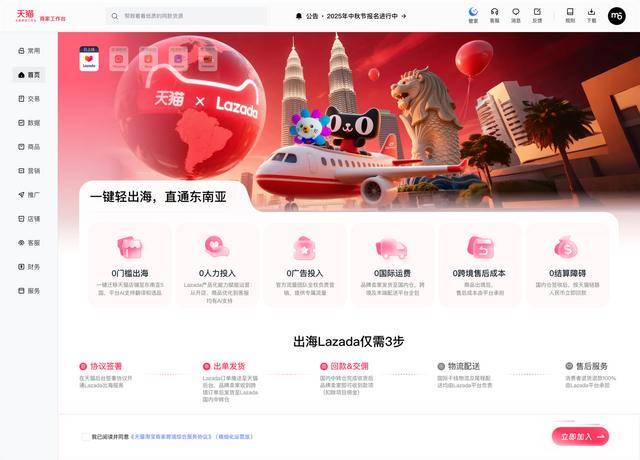
LazMall

Search documents
Lazada的东南亚破局记丨东盟“独角兽”
2 1 Shi Ji Jing Ji Bao Dao· 2025-12-17 12:21
Core Insights - Lazada achieved its first monthly profit in July 2024, marking a significant transformation in the competitive landscape of Southeast Asian e-commerce [1] - The Southeast Asian e-commerce market has grown from $4 billion to $184 billion over the past decade, shifting focus from subsidies to user retention and operational efficiency [2] - Lazada's strategy emphasizes brand and quality differentiation, leveraging partnerships with Tmall to facilitate low-cost market entry for brands [2] Group 1 - Lazada was founded in Singapore in 2012, initially operating in a blue ocean market where online shopping accounted for only 1% of total retail sales [1] - The platform's gross merchandise volume (GMV) exceeded $1 billion within three years of its launch, and it became part of Alibaba's ecosystem in 2016 [1] - The integration with Alibaba introduced AI-driven strategies and a robust supply chain, enabling Lazada to modernize its operations [1] Group 2 - The competitive landscape has stabilized into a triopoly among Shopee, Lazada, and TikTok Shop, with a shift towards quality and service-driven competition [2] - The rise of a young, quality-seeking middle-class consumer group in Southeast Asia presents opportunities for Lazada to enhance its internal capabilities [2] - During this year's "Double 11" shopping festival, LazMall, Lazada's online brand mall, saw sales increase by 11 times, with average order value rising by 141% [2] Group 3 - Lazada's development illustrates that clear strategic focus and ecosystem collaboration can lead to sustainable growth in emerging markets [3] - The Southeast Asian market is transitioning from a "traffic war" to a "value competition," especially with the entry of Chinese cross-border e-commerce [3]
Lazada的东南亚破局记
2 1 Shi Ji Jing Ji Bao Dao· 2025-12-17 12:06
Group 1 - Lazada achieved its first monthly profit in July 2024, marking a significant transformation in the competitive landscape of Southeast Asian e-commerce [1] - The Southeast Asian e-commerce market has grown from $4 billion to $184 billion over the past decade, indicating a shift from a subsidy-driven growth model to a focus on user retention, experience optimization, and operational efficiency [2] - The market is stabilizing with a competitive landscape dominated by Shopee, Lazada, and TikTok Shop, leading to a saturation in homogeneous traffic competition [2] Group 2 - Lazada's strategy emphasizes differentiation through "branding" and "quality," with a new project in collaboration with Tmall aimed at facilitating brand expansion into Southeast Asia at low marginal costs [2] - The success of LazMall during this year's "Double 11" shopping festival, with sales increasing by 11 times and average order value rising by 141%, highlights the effectiveness of its strategic focus on quality products [2] - The evolution of Lazada demonstrates that clear strategic focus and ecosystem synergy can lead to high-quality, sustainable growth in emerging markets facing low-price competition [3]
“低价”失灵,东南亚电商该押注“品牌”了
Sou Hu Cai Jing· 2025-12-03 04:43
Core Insights - Lazada's recent survey indicates a significant shift in Southeast Asian consumer behavior towards high-quality, trustworthy products, with 90% of respondents actively shopping in various mall environments, reflecting a growing demand for reliable services and genuine products [2][6][12] Group 1: Consumer Behavior Trends - 90% of surveyed consumers are willing to pay higher prices for brand products in trusted mall environments, highlighting a readiness to accept brand premiums [8] - 31% of consumers are willing to pay an additional 10%-30% for guarantees on genuine products and service commitments [9] - Over 80% of consumers have faced supply shortages when seeking genuine brand products, with 80% willing to try new or overseas brands when their preferred brands are unavailable [11] Group 2: Market Transition - The report emphasizes a transition from a "low-trust marketplace" to a "high-trust brand ecosystem" in Southeast Asian e-commerce, driven by platforms like LazMall, Shopee Mall, and TikTok Shop Mall [12][13] - Lazada's strategy aligns with this consumer preference shift, moving from a traditional low-trust model to a quality-driven e-commerce approach centered around LazMall [12] - LazMall has become a significant profit driver for Lazada, with a 39% increase in overall GMV during the Double 11 event and a 53% increase in the number of brands achieving over $1 million in GMV since the September 9 event [12][13] Group 3: Competitive Landscape - Shopee Mall and TikTok Shop Mall are also pivotal in the transition towards a high-trust brand ecosystem, with Shopee Mall's order growth in the Philippines projected to be twice that of the overall platform [14] - In Malaysia, Shopee Mall and authorized dealers are expected to see a 59% year-on-year revenue increase in 2024, while in Vietnam, Shopee Mall's revenue is projected to exceed 50% of Shopee's overall revenue [14] - TikTok Shop in the Philippines is experiencing a sales growth rate for brands with Mall badges that is approximately 2.2 times the platform's overall growth [14]

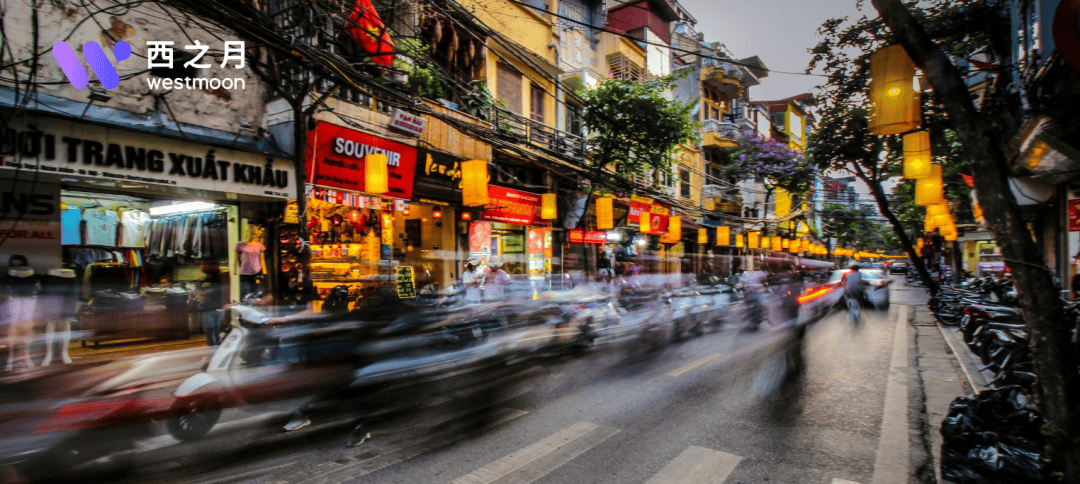
阿里把天猫商家搬上Lazada,双11战火燃向东南亚
雷峰网· 2025-10-11 00:27
Core Viewpoint - The collaboration between Lazada and Tmall aims to create a seamless cross-border e-commerce experience in Southeast Asia, leveraging Tmall's brand strength and Lazada's local market knowledge to enhance brand supply and consumer experience [1][15][19]. Group 1: Project Overview - Lazada has initiated the "One-Click Easy Overseas" project, allowing Tmall merchants to sell products in five Southeast Asian markets: Malaysia, Singapore, Thailand, Vietnam, and the Philippines [1][2]. - Tmall and Lazada's integration is designed to simplify the process for merchants, enabling them to quickly enter the Southeast Asian market without the need for extensive local operations [11][12]. Group 2: Strategic Differences - Each platform has distinct strategies: Tmall focuses on a diverse product range with a "light" approach, while Lazada aims to build a quality marketplace emphasizing brand recognition [4][5][6]. - Tmall's model is about helping merchants sell domestic products abroad, whereas Lazada's goal is to import global brands to serve local consumers [6][10]. Group 3: Market Dynamics - Southeast Asia has a growing middle class of approximately 150 million people who are willing to pay for quality and service, indicating a demand for branded products [9][19]. - The e-commerce penetration rate in Southeast Asia is lower than in China, with brand e-commerce GMV accounting for only 30%, highlighting a significant market opportunity [9][10]. Group 4: Competitive Landscape - The Southeast Asian e-commerce market is competitive, with platforms like Shopee and TikTok Shop also vying for brand partnerships and consumer attention [18][19]. - Lazada's early entry and established brand mall (LazMall) provide a competitive edge, but ongoing support and effective operations are crucial to retain brands [18]. Group 5: Implementation Challenges - Successful execution of the integration depends on local acceptance and the ability to adapt to diverse consumer preferences across Southeast Asian countries [17][18]. - The project must address potential conflicts with existing local distributors of international brands to ensure effective market growth [18][19]. Group 6: Future Outlook - The upcoming Double 11 shopping festival will serve as a critical test for the Lazada and Tmall collaboration, measuring buyer growth, profitability, and transaction scale [20]. - The partnership represents a strategic exploration of how Chinese brands can establish a foothold in overseas markets, focusing on quality supply and consumer trust for sustainable growth [20].


天猫品牌出海东南亚,为什么第一步是Lazada?
36氪· 2025-09-28 09:32
Core Viewpoint - Lazada is focusing on "branding" as its highest strategy, leveraging Alibaba's organizational benefits to integrate domestic and international operations, aiming to enhance brand presence in Southeast Asia [5][6][7]. Group 1: Strategic Direction - Lazada has been integrating local and international brands since its acquisition by Alibaba in 2018, introducing initiatives like LazMall and the "Double 11" shopping festival [5][6]. - The company aims to tap into the growing middle-class market in Southeast Asia, which currently has 150 million consumers, by positioning itself as a platform for quality and branded products [6][11]. - The integration with Tmall allows for a "system-level" connection, enabling merchants to mirror their Tmall stores on Lazada, thus facilitating cross-border business with lower costs [6][14][15]. Group 2: Market Opportunities - The demand for quality products among Southeast Asian consumers is rising, with Lazada identifying "quality users" as a key demographic [6][11]. - Short-tail categories, such as consumer electronics and beauty products, are seen as having significant opportunities for growth due to local supply gaps [20][21]. - Brands that focus on emotional value, like Pop Mart, are gaining traction, and Lazada is actively engaging in marketing strategies to connect these brands with local consumers [22][23]. Group 3: Operational Enhancements - Lazada offers various operational models to assist brands in entering the Southeast Asian market, including a "one-click light export" option for Tmall merchants [24]. - The platform emphasizes the importance of local insights and intelligent full-chain support to help brands navigate the complexities of local operations [17][25]. - The company is committed to evolving its approach to ensure that brands not only enter the market but also adapt their products to meet local consumer needs [25].
天猫品牌出海东南亚,为什么第一步是Lazada?
3 6 Ke· 2025-09-28 07:53
Core Viewpoint - Lazada is focusing on "branding" as its highest strategy to compete in the Southeast Asian e-commerce market, leveraging organizational synergies from Alibaba's e-commerce group to enhance both domestic and international operations [1][2]. Group 1: Strategic Direction - Lazada's strategy is to integrate with Tmall, allowing merchants to mirror their Tmall stores on Lazada, thus facilitating low-cost cross-border operations while maintaining domestic sales [3][8]. - The company aims to tap into the growing middle-class market in Southeast Asia, which currently has 150 million consumers, by targeting "quality users" who seek branded products [2][6]. Group 2: Brand Integration and Market Position - The integration with Tmall allows for streamlined inventory management, marketing, and pricing, enhancing Lazada's ability to offer competitive pricing and brand recognition to Southeast Asian consumers [3][8]. - Lazada is positioned as the highest in average order value and brand penetration among Southeast Asian e-commerce platforms, indicating a strong market presence [6]. Group 3: Product Strategy and Market Opportunities - Short-tail product categories, such as consumer electronics and beauty products, are prioritized for initial market entry due to their standardization and scalability [15]. - The company recognizes specific local consumer needs, such as the demand for high-quality outdoor products and beauty items tailored to Southeast Asian climates, as significant market opportunities [14][18]. Group 4: Brand Collaboration and Consumer Engagement - Lazada collaborates with brands like Pop Mart to enhance consumer engagement through events that connect products with emotional value, thereby strengthening brand loyalty [16]. - The platform aims to provide localized marketing support to help brands establish emotional connections with consumers in the region [16][17].
天猫品牌出海东南亚,为什么第一步是Lazada?
36氪未来消费· 2025-09-28 02:16
Core Viewpoint - Southeast Asia's e-commerce market is highly competitive, with Lazada adopting a "branding" strategy to leverage its integration with Alibaba's e-commerce ecosystem, aiming to enhance its market position and attract more local and international brands [3][4][5]. Group 1: Branding Strategy - Lazada has positioned "branding" as its highest strategic priority, integrating domestic and international operations to capitalize on organizational synergies [3][4]. - The platform has introduced LazMall, which features both local and international brands, and is recognized as Southeast Asia's largest online brand mall [4]. - The "branding" strategy is a response to market changes, with Lazada targeting the growing middle-class consumer base in Southeast Asia, which now numbers 150 million [4][5]. Group 2: System Integration with Tmall - Lazada's president, Wei Meng, emphasizes the importance of "system-level" integration with Tmall, allowing merchants to mirror their Tmall stores on Lazada, thus facilitating low-cost cross-border operations [5][11]. - This integration enables efficient inventory management, pricing synchronization, and marketing strategies, enhancing the visibility of Tmall brands in Southeast Asia [11][12]. - The initial batch of Tmall brands entering Lazada includes well-known names like Philips and Babycare, indicating a significant potential for growth [5][12]. Group 3: Market Opportunities and Consumer Trends - The Southeast Asian market presents substantial opportunities for brands, particularly in consumer electronics and beauty products, where local supply is often insufficient [17][18]. - Lazada is focusing on short-tail categories initially, as they are easier to scale and standardize, while long-tail categories like apparel will be approached later due to their complexity [18]. - The platform is also observing trends in emotional consumption, as seen with brands like Pop Mart, and is actively engaging in local marketing initiatives to strengthen brand-consumer connections [19]. Group 4: Challenges and Future Directions - While Lazada is facilitating the entry of Chinese brands into Southeast Asia, it acknowledges the challenges of supply chain and logistics that these brands face [20][21]. - The company aims to support brands in localizing their products and operations, which is essential for long-term success in the Southeast Asian market [21]. - Lazada's overall goal is to successfully implement its branding strategy and achieve growth through enhanced brand offerings and consumer engagement [15].

东南亚电商Lazada已与天猫完成系统打通 为商家增加5个海外市场
Zheng Quan Shi Bao Wang· 2025-09-26 04:23
Core Insights - Lazada has integrated its system with Tmall to enhance its brand strategy, allowing Tmall merchants to easily enter five Southeast Asian markets without any upfront investment [1] - The initiative, named "One-Click Easy Overseas," enables Tmall merchants to create a store on LazMall, with automatic updates for products, inventory, marketing, and promotions [1] - Lazada's president emphasized the importance of internal collaboration and system integration in this project, which aims to support high-quality brand merchants [1] Group 1 - Lazada has positioned itself as a brand mall since its inception, responding to the growing demand for branded products among Southeast Asian consumers [2] - The integration with Tmall is a continuation and upgrade of Lazada's branding strategy, aimed at delivering more quality brands directly to Southeast Asia [2] - Southeast Asia is recognized as a primary destination for domestic brands looking to expand internationally, with a projected e-commerce market size of $128.4 billion by 2024 [2] Group 2 - Shopee, Lazada, and TikTok Shop collectively hold over 80% market share in Southeast Asia, establishing a competitive triopoly in the region [2] - Lazada's localized team, which is well-versed in the Southeast Asian market, is a unique advantage for the company [2]
Lazada全面打通天猫 向天猫商家开放东南亚市场
Sou Hu Cai Jing· 2025-09-16 05:47
Group 1 - Lazada, a Southeast Asian e-commerce platform under Alibaba, has opened its localized operational capabilities to Tmall merchants for the first time [1] - Notable brands such as Biaoxia, Babycare, Philips, and Lock&Lock have confirmed their participation in this initiative [1] - The integration allows merchants to enter the Southeast Asian market without incurring international shipping costs or overseas after-sales service expenses [1] Group 2 - The project represents a system-level integration between Tmall and Lazada, enabling merchants to quickly set up LazMall stores to cater to Southeast Asian consumers [1] - Merchants can upload product information that is automatically translated by AI, eliminating the need for re-registration or local team formation [1] - The entire process, including multilingual customer service, advertising investment, and international shipping costs, will be managed by Lazada, which will also cover cross-border return costs [1] Group 3 - The core design of the project aims to lower the barriers for brands to enter the Southeast Asian market, allowing them to test the waters at a lower cost while retaining the option to gradually localize [1]