
Scale AI

Search documents
数据公司正在把高级牛马当饲料榨干?
虎嗅APP· 2026-01-12 13:34
Core Viewpoint - The article discusses the evolving role of AI trainers and data annotators, highlighting the paradox of high pay and job insecurity in the AI training industry, where human expertise is being commodified and potentially replaced by AI itself [5][24][37]. Group 1: Job Nature and Experience - The job of an AI trainer involves providing data to AI systems, often requiring the sharing of proprietary knowledge and experience, which raises concerns about the commodification of human expertise [8][9]. - The role is increasingly seen as a "one-time buyout" of past experiences, where once the AI has learned from an individual, it no longer requires their input [9][10]. - The demand for AI trainers is growing, with a projected talent gap of up to one million in China over the next five years, as the role has evolved to require higher educational qualifications and specialized knowledge [10][13]. Group 2: Job Market Dynamics - The entry barriers for data annotation jobs have risen significantly, with many positions now requiring advanced degrees and relevant work experience, contrasting sharply with earlier, more accessible roles [13][14]. - The competition for these roles is fierce, with a hiring rate of approximately 50%, indicating a highly selective process [14]. - The nature of the work is becoming more complex, moving from simple data labeling to tasks requiring logical reasoning and creative problem-solving [18][21]. Group 3: Economic Aspects - Salaries for AI trainers can be attractive, with some positions offering hourly rates as high as 1,000 yuan, but the reality often includes a wide range of pay and the potential for unpaid trial work [21][27]. - The industry is characterized by a lack of job security, as many trainers fear being replaced by the very AI systems they help to train, leading to a sense of being disposable [29][30]. - The business model of AI data companies is increasingly precarious, with high turnover rates and a lack of true competitive advantage, making the future of data annotation roles uncertain [32][34]. Group 4: Industry Trends - The article notes a shift in the AI training landscape, where companies are increasingly seeking to automate data annotation processes, potentially reducing the need for human trainers [30][34]. - The rise of AI has led to a re-evaluation of the role of human trainers, with some companies positioning themselves to leverage human expertise while also developing AI systems capable of performing similar tasks [34][37]. - The future of work in this context raises questions about the long-term role of humans in AI development, as the industry continues to evolve rapidly [37].


给AI大模型做排名的LMArena最新估值17亿美元,半年翻三倍
Hua Er Jie Jian Wen· 2026-01-07 13:51
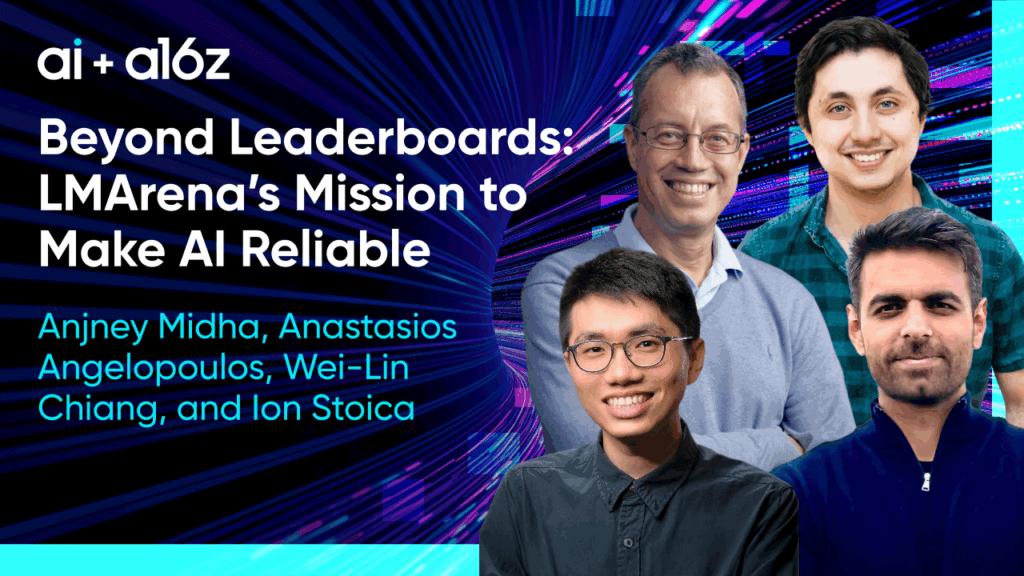
Core Insights - LMArena is rapidly emerging as a key infrastructure in the AI industry, focusing on performance evaluation and ranking of large models, with a recent funding round of $150 million raising its post-money valuation to $1.7 billion, nearly tripling since its seed round in May 2025, indicating strong market demand for independent AI assessment platforms [1] Funding and Valuation - The latest funding round was led by existing investors Felicis and the University of California's investment department, with the funds primarily allocated for computing costs to support evaluations for clients like OpenAI, Google, xAI, and Microsoft, as well as expanding the technical team [1] Unique Evaluation Mechanism - LMArena's core competitive advantage lies in its unique crowdsourced evaluation model, where global internet users anonymously select the best outputs from two options, allowing the company to compile rankings across various AI fields, including programming and image generation [3] - This mechanism positions LMArena as an "arena" for AI models, providing early market feedback to developers even before public releases, which is crucial for establishing technical superiority in a competitive landscape [3] Financial Performance and User Base - LMArena has demonstrated strong growth, with an annualized consumption run rate reaching $30 million last month, indicating rapid revenue potential based on customer usage [2][4] - The company currently boasts over 5 million monthly users across 150 countries, which includes both visitors checking rankings and those actively participating in model evaluations, forming a substantial data moat for the company [4] Controversies and Competitive Challenges - Despite its rapid growth, LMArena faces criticism regarding the accuracy and professionalism of its feedback mechanism, as some model manufacturers argue that relying on unpaid internet users may lead to biased rankings and does not reflect expert opinions [5] - This criticism highlights the tension between public and expert evaluations, with competitors like Scale AI opting for paid expert feedback to emphasize the rigor and professionalism of their assessments, posing a challenge for LMArena to maintain market trust while scaling [6]
网民票选AI王者,LMArena一夜变17亿美元独角兽
3 6 Ke· 2026-01-07 10:07
Core Insights - LMArena has emerged as a significant player in the AI industry, recently raising $150 million in funding, leading to a valuation of $1.7 billion, and transforming from a campus project to a prominent platform for AI evaluation [1][6][19]. Company Development - LMArena originated from a project called Chatbot Arena initiated by graduate students and professors at UC Berkeley in 2023, aiming to anonymously compare different AI chatbots [2][4]. - The platform quickly gained popularity, transitioning to a for-profit company in May 2025 with a valuation of $600 million after securing $100 million in seed funding [5]. Funding and Growth - On January 6, 2026, LMArena announced a new funding round of $150 million led by Felicis and UC's investment arm, with participation from notable firms like Andreessen Horowitz and Kleiner Perkins, raising total funding to over $250 million [6][19]. - The platform now boasts over 5 million monthly active users across 150 countries, generating more than 60 million conversations each month [6]. Voting Mechanism - LMArena employs a unique "blind box PK" voting mechanism, allowing users to vote on AI models without knowing their identities, which enhances engagement and fairness [10][9]. - The platform uses an Elo rating system to calculate scores based on user votes, creating a dynamic leaderboard for various AI models [10][11]. Industry Impact - Major AI labs, including OpenAI and Google, utilize LMArena to test their models before public release, indicating the platform's growing influence in the AI evaluation space [13][18]. - Despite facing criticism regarding the potential for vote manipulation and the validity of crowd-sourced evaluations, LMArena's rankings have become a de facto industry standard [15][22]. Future Plans - LMArena aims to evolve into a comprehensive AI evaluation service, leveraging its recent funding to expand computational resources and develop enterprise-level AI assessment services [19][21]. - The company is also exploring the use of user voting data to train AI models, potentially enhancing the quality of AI responses through reinforcement learning [21].
AI圈大洗牌!硅谷AI掀抢人潮,华人狂揽1亿签约金,欧美大佬失势
Sou Hu Cai Jing· 2026-01-06 13:15
Core Insights - The AI industry in Silicon Valley is experiencing a dual phenomenon of layoffs and talent acquisition, with a shift from research-focused roles to practical implementation roles [1][3] - Chinese engineers are becoming the backbone of AI development in the U.S., with 38% of top AI talent in Silicon Valley being graduates from Chinese universities, surpassing those trained domestically [3][11] - Meta has been aggressively acquiring companies and talent, spending over $2 billion to acquire the Chinese-founded company Manus and offering signing bonuses up to $100 million to attract talent [5][11] Industry Dynamics - The AI sector has transitioned from a focus on technical breakthroughs to a focus on monetization and practical applications, as evidenced by OpenAI's revenue of $13 billion against a computing cost of $9 billion [7][17] - The departure of Turing Award winner Yann LeCun from Meta highlights the ideological divide within the company, as it shifts towards a product-centric strategy under the leadership of Chinese talent like Alexandr Wang [9][11] - The talent market is highly competitive, with companies like xAI and OpenAI relying heavily on Chinese engineers for critical algorithm development and model optimization [11][15] Talent Landscape - Chinese engineers are increasingly occupying central roles in AI companies, with a significant presence in leadership positions and core teams, as seen in Meta's new Superintelligence Lab [11][13] - The industry is witnessing a rise in both opportunities and challenges, as exemplified by the case of engineer Li Xuechen, who faced legal repercussions for violating company protocols despite being offered a lucrative position at OpenAI [15][17] - The demand for hybrid talent in AI infrastructure is soaring, with companies like NVIDIA acquiring teams to enhance model efficiency, indicating a shift in competitive focus [15][17] Conclusion - The AI industry is moving towards practical applications, with a clear preference for engineers who can deliver market-ready products over those focused solely on theoretical research [17][18] - The success of Chinese engineers in Silicon Valley is reshaping the traditional workplace dynamics, providing new opportunities for returnees to contribute to the AI landscape in China [18]


AI科学家杨立昆披露离职Meta内幕 爆料Llama 4模型训练造假
Xin Lang Cai Jing· 2026-01-06 06:02
Core Insights - Yann LeCun, a Turing Award winner and former Chief AI Scientist at Meta, revealed deep reasons for his departure from the company, citing an irreconcilable position within the organization regarding the focus on large language models versus his research on world models [1][2] - Meta's shift in AI strategy under CEO Mark Zuckerberg led to a lack of communication and alignment, resulting in the marginalization of the generative AI department and a series of failed product launches, including the Llama series [1][2] - LeCun has established the Advanced Machine Intelligence Labs, focusing on developing advanced machine intelligence that does not rely on language, aiming to understand the physical world through video data [3] Summary by Sections Departure Reasons - LeCun felt out of place at Meta due to the company's focus on large language models, which he believes are a dead end for achieving superintelligence [1] - The pressure from Zuckerberg to accelerate generative AI development led to a breakdown in communication and a conservative approach that stifled innovative ideas [1][2] Leadership Changes - The appointment of Alexander Wang, CEO of Scale AI, to lead Meta's new AI project was met with skepticism by LeCun, who noted Wang's lack of research experience and understanding of how to motivate researchers [2] - LeCun expressed concerns about the impact of this leadership change on the generative AI department, which has seen many departures and a loss of trust from Zuckerberg [2] New Ventures - LeCun's new venture, Advanced Machine Intelligence Labs, aims to create AI that can understand physical laws through video data, moving away from language-based models [3] - The new model architecture proposed by LeCun is expected to show a prototype within 12 months, with larger applications anticipated in the coming years, paving the way for future advancements in AI [3]
AI godfather says Meta’s new 29-year-old AI boss is ‘inexperienced’ and warns of staff exodus
CNBC· 2026-01-05 16:00
Core Insights - Yann LeCun, former chief AI scientist at Meta, criticized the company's current AI leadership, labeling Alexander Wang as "inexperienced" and warning of potential staff departures [1][2][3][4] Group 1: Leadership and Talent Acquisition - Alexander Wang, co-founder of Scale AI, was appointed as Meta's chief AI officer in 2025 after Meta acquired a 49% stake in his startup [1][2] - Meta is engaged in a competitive talent acquisition strategy, reportedly offering $100 million signing bonuses to attract top talent from competitors like OpenAI [2] Group 2: Internal Challenges and Concerns - LeCun expressed concerns about Wang's lack of experience in research practices, stating that he is knowledgeable but lacks the necessary background to lead effectively [3] - Meta CEO Mark Zuckerberg has reportedly lost confidence in the AI team following accusations of manipulating benchmarks for the Llama 4 model, leading to a sidelining of the entire Gen AI organization [3] - LeCun indicated that many employees have already left Meta, and more are likely to follow due to a lack of innovative direction, as the company focuses on safer, proven projects [4]

2026:你的同事可能不是人,你的文凭可能是废纸?
虎嗅APP· 2026-01-05 13:28
Core Insights - The article presents ten disruptive predictions for 2026 from prominent figures in Silicon Valley, focusing on the themes of intelligence, economy, and physical advancements [4][6]. Group 1: Intelligence - Prediction 1: AI model sizes will increase by 100 times due to advancements in software and algorithms, particularly through a technique called "quantization" [9][12]. - Prediction 2: AI may solve one of the Millennium Prize Problems, enhancing our understanding of complex physical systems like fluid dynamics [14][17]. - Prediction 3: New AI terminologies will emerge, creating opportunities for young entrepreneurs to build billion-dollar companies with minimal resources [19][23]. Group 2: Economy - Prediction 4: The concept of "digital transformation" will become obsolete, as companies will need to rebuild their capabilities from scratch using AI, potentially reducing workforce size by 10 to 20 times [27][29]. - Prediction 5: Automation will achieve a 90% competency rate in high-value tasks, leading to a significant shift in job roles and the value of human labor [32][34]. - Prediction 6: The emergence of full-stack AI employees will challenge traditional workplace trust, as AI could perform roles typically held by humans at a fraction of the cost [36][37]. Group 3: Physical - Prediction 8: Space exploration will advance significantly, with potential commercial activities like mining water ice on the Moon becoming a priority [46][50]. - Prediction 9: The development of Level 5 autonomous driving and humanoid robots will revolutionize urban environments, transforming how cities are designed and function [53][55]. - Prediction 10: Advances in biotechnology may lead to breakthroughs in reversing aging, marking a potential turning point in human longevity [56][60].
杨立昆自曝离开Meta内幕:与扎克伯格不合,对29岁新上司不满,力挺“世界模型”遭冷落
Sou Hu Cai Jing· 2026-01-05 09:02
Core Insights - Yann LeCun, a Turing Award winner and a key figure in deep learning, has left Meta to become the Executive Chairman of AMI Labs, revealing internal turmoil at Meta regarding its AI strategy and leadership changes [1][12] Group 1: Departure from Meta - LeCun confirmed speculation about his departure from Meta, citing a crisis of integrity related to the Llama 4 model's testing results and a significant shift in the company's AI strategy [1][5] - The internal conflict escalated after Meta's CEO, Mark Zuckerberg, made a controversial decision to invest approximately $14.3 billion in acquiring a 49% stake in Scale AI, appointing 28-year-old Alexandr Wang as Chief AI Officer [6][8] Group 2: AI Strategy and Leadership Changes - The introduction of Wang led to a restructuring of Meta's AI research, consolidating various departments under his leadership, which marginalized LeCun's role [8][11] - Wang's focus on large language models (LLMs) as the sole path to achieving superintelligence conflicted with LeCun's belief in the importance of foundational research and alternative approaches [9][10] Group 3: Cultural and Operational Shifts - The shift in strategy resulted in a loss of academic freedom within Meta's AI research labs, leading to a culture that prioritized commercial viability over scientific exploration [11][12] - A new policy mandated that research papers must be approved for commercial relevance before publication, causing discontent among researchers and contributing to significant talent attrition [11][12] Group 4: Formation of AMI Labs - Following his departure, LeCun founded AMI Labs, aiming to explore scientific paths that were sidelined in the competitive landscape of tech giants, with an initial funding target of €500 million and a valuation of €3 billion [12][14] - LeCun has chosen not to take on the CEO role at AMI Labs, preferring to focus on scientific endeavors while leaving management to experienced professionals [14]

看好 Meta 的三大理由
美股研究社· 2026-01-04 11:22
Core Viewpoint - Meta remains the undisputed leader in the social media sector, which lays a solid foundation for building its artificial intelligence moat [1] Group 1: AI Development and Data Advantage - Meta generates millions of posts and comments daily across its social applications, providing unparalleled data for training its large language models [1] - The company is developing two new large language models, codenamed "Mango" and "Avocado," expected to launch in the first half of 2026, led by the "Super Intelligence" team formed by CEO Mark Zuckerberg [4] - Meta's acquisition of Scale AI for $15 billion enhances its AI capabilities, with analysts believing the new models have outstanding potential due to Meta's strong acquisition history [4][7] - Meta's revenue for the last 12 months approached $190 billion, with Instagram contributing significantly to this figure, showcasing a remarkable return on investment from past acquisitions [5] - WhatsApp, acquired for $16 billion, has over 3 billion monthly active users, indicating substantial monetization potential, and is expected to drive revenue growth for Meta from 2026 to 2027 [6] Group 2: Competitive Edge and Market Position - Meta possesses unmatched data resources necessary for training large language models, with estimates suggesting Instagram alone generates around 100 million posts daily [10] - The daily active to monthly active user ratio for Facebook and Instagram is close to 70%, indicating a significant user engagement level [11] - Meta's data advantage lies in the rich user interaction feedback from social media, which is more detailed than data from search engines like Google [12] - The company is actively acquiring promising AI startups, such as Manus for approximately $2 billion, which has a validated market presence with annual sales exceeding $100 million [12][13] Group 3: Valuation and Future Outlook - Meta's current valuation is attractive, with a projected dynamic price-to-earnings ratio of 21.7 for the fiscal year 2026, significantly below its historical average [2][15] - Even with modest growth in earnings per share, the price-to-earnings ratio could drop below 20 in the following years [15] - Analysts believe that despite potential risks, Meta's numerous favorable factors make it a company worth watching [16]

杨立昆谈从Meta离职的两大原因 透露全新模型架构
Xin Lang Cai Jing· 2026-01-04 05:56
Core Insights - Yann LeCun is leaving Meta to establish a new company called Advanced Machine Intelligence Labs, where he will serve as Executive Chairman, allowing him the same research freedom as at Meta [2][13] - LeCun expresses skepticism about large language models, arguing that they are fundamentally limited and that true human-like intelligence requires understanding the physical world [2][11] - He proposes a new model architecture called "world model" based on V-JEPA, which learns from video and spatial data to understand the physical world, enabling planning, reasoning, and long-term memory [3][14] Company Developments - LeCun's new company will be led by Alex LeBrun, co-founder and CEO of the French medical AI startup Nabla [2][13] - Meta has made significant investments in AI, including a $15 billion investment in Scale AI and hiring its young CEO, Alexandr Wang, to lead new AI initiatives [10][21] - Meta's internal struggles with AI strategy have led to a shift in focus towards large language models, which LeCun believes is a misguided approach [20][23] Research and Innovation - LeCun's research emphasizes the importance of learning from experiences and understanding the physical world, which he believes is essential for developing advanced AI [5][24] - The proposed world model aims to enhance AI's predictive capabilities by incorporating a "pseudo-emotional mechanism" based on past experiences [24] - LeCun anticipates that a prototype of this technology will be visible within the next 12 months, with broader applications expected in the coming years [24][25]