
Synchron

Search documents
修复瘫痪、增强常人,脑机接口会成未来人类「外挂」吗?
36氪· 2025-12-07 09:55
Core Viewpoint - The article discusses the emerging potential of brain-computer interfaces (BCIs) in consumer healthcare over the next five to ten years, highlighting significant advancements and investments in the field, particularly in the context of medical applications and the integration of AI technologies [4][10]. Group 1: Industry Developments - In mid-2025, Neuralink, led by Elon Musk, secured $650 million in funding, reaching a valuation of $9 billion, expanding its focus from severe motor function disorders to include rehabilitation for patients with speech and vision impairments [4]. - In August, Sam Altman initiated the establishment of Merge Labs, aiming to raise $250 million from OpenAI to utilize ultrasound technology for reading and modulating brain signals [5]. - In November, Synchron raised $200 million in Series D funding, while Paradromics received FDA approval to commence human clinical trials for speech function restoration using BCIs [6]. Group 2: Chinese Market Dynamics - Chinese BCI startups, such as Borui Kang and Ladder Medical, are progressing steadily under strict medical device regulations, leveraging domestic clinical resources to advance clinical trials and product optimization [7]. - Ladder Medical's invasive BCI system completed China's first prospective clinical trial at Huashan Hospital in March, and in November, it entered the "green channel" of the National Medical Products Administration, potentially shortening the clinical validation to market access timeline [7]. Group 3: Application Scenarios - The primary application scenarios for BCIs include brain-controlled systems for decoding motor and speech intentions, neuroregulation for managing brain disorders, and sensory reconstruction for restoring lost sensory functions [11][12]. - The clinical value of BCIs in treating diseases is expected to be validated within the next three to five years, improving patients' quality of life and work capabilities [13]. Group 4: Future Prospects - The consumer healthcare attributes of BCIs are anticipated to emerge in the next five to ten years, transforming human-machine interaction and enhancing efficiency through direct brain control of intelligent devices [14]. - The goal of Ladder Medical's BCI system is to enable severely disabled patients to control external electronic devices and improve their quality of life, including daily activities and re-engagement with the digital world [15][17]. Group 5: Data and AI Integration - The accumulation of single-cell data from BCIs is crucial for advancing neuroscience understanding and enhancing product design and application scenarios [21][23]. - AI and algorithms will play a significant role in processing complex brain data, with the potential to develop a foundational model that improves the performance of future patients' decoding capabilities [24]. Group 6: Human-Machine Fusion - The integration of BCIs with AI is seen as a necessary evolution, creating a seamless connection between humans and machines, which could lead to enhanced capabilities beyond current human limits [27][29]. - The article emphasizes the importance of maintaining human control over AI systems to prevent loss of agency, advocating for a harmonious coexistence between humans and intelligent systems [29].

X @Forbes
Forbes· 2025-12-04 22:01
"This is the technology that could really expand the human potential."Thousands of patients have conditions that limit their ability to communicate and interact with others. Thomas Oxley, CEO of Synchron, explains how this technology can assist at the #ForbesHealth Summit. https://t.co/qamWxk3w2v ...
实质性突破!应和脑科学介入脑机接口长期动物数据惊艳亮相IEEE NER 2025
思宇MedTech· 2025-11-24 04:18
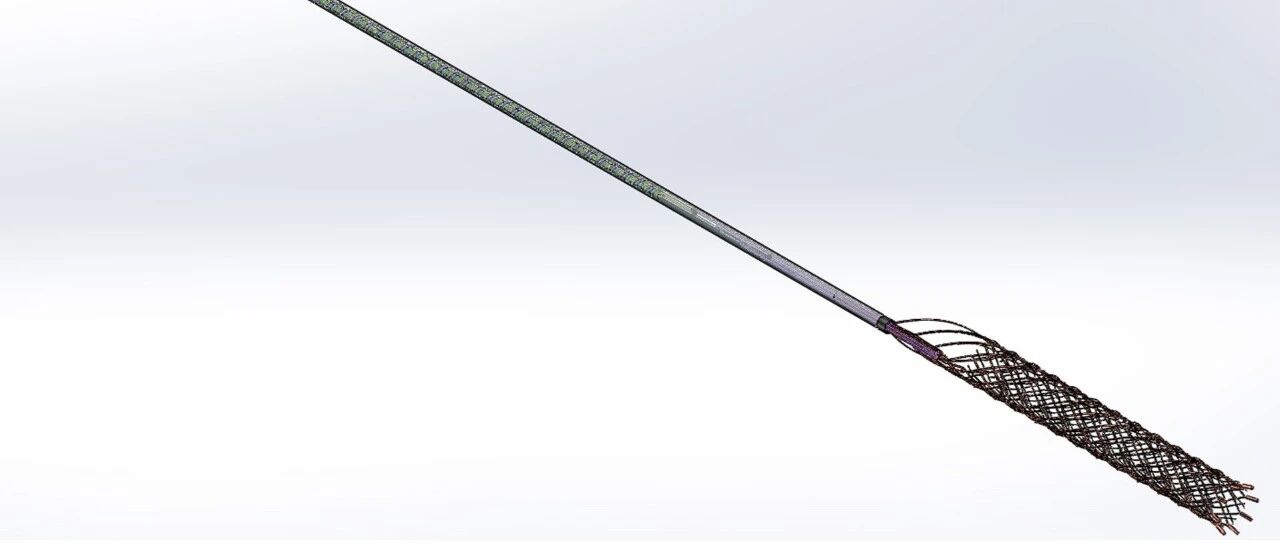
Core Viewpoint - The article highlights the significant breakthrough achieved by Shenzhen Amygdala Neuro in the field of brain-computer interfaces (BCI) with the development of an endovascular electrode array that demonstrates long-term stability in large animal models, paving the way for clinical applications of BCI technology [2][12]. Group 1: Research Findings - The study successfully validated a mechanical architecture of an endovascular electrode array in large animal models, demonstrating nearly six months of dual-mode (recording + stimulation) functional stability [3][12]. - The research involved three adult sheep, where the electrode array was precisely implanted in the superior sagittal sinus, covering the motor cortex area, and monitored for nearly six months [4][12]. - Electrochemical impedance spectroscopy (EIS) measurements indicated good long-term electrochemical stability of the endovascular electrode in a vascular environment, with initial impedance around 1188 Ω, increasing to 2333 Ω by day 31, and then stabilizing at 1365 Ω by day 140 [6][12]. Group 2: Signal Recording and Stimulation - The study utilized the Apollo-I system to collect electrocorticography (ECoG) signals, revealing stable recordings of typical brain rhythms across various frequency bands (θ, α, β, low γ) [9][12]. - The stimulation results indicated that the threshold for eliciting body responses increased over time, with early responses at 1-2 mA (68% success rate) dropping to 3-5 mA (50% success rate) by day 112 [10][12]. - The electrode's ability to stimulate and record over a long duration supports the feasibility of using endovascular electrode arrays for neural modulation in clinical settings [11][12]. Group 3: Competitive Landscape - Synchron recently completed a $200 million Series D funding round, marking one of the largest single-round financings in the BCI field, which has drawn significant attention from the medical device industry [12]. - The article contrasts Amygdala Neuro's approach with Synchron's Stentrode™, highlighting the use of a mechanically woven nitinol stent and platinum-iridium microelectrodes, which offers advantages in terms of cost and flexibility for domestic BCI device development [12][13]. Group 4: Company Mission and Vision - Amygdala Neuro is committed to advancing brain-computer interface and neural modulation technologies, aiming to become a leading provider of solutions in neuroscience and high-reliability product manufacturing [16].
14亿融资!脑机接口明星公司完成D轮
思宇MedTech· 2025-11-17 06:28
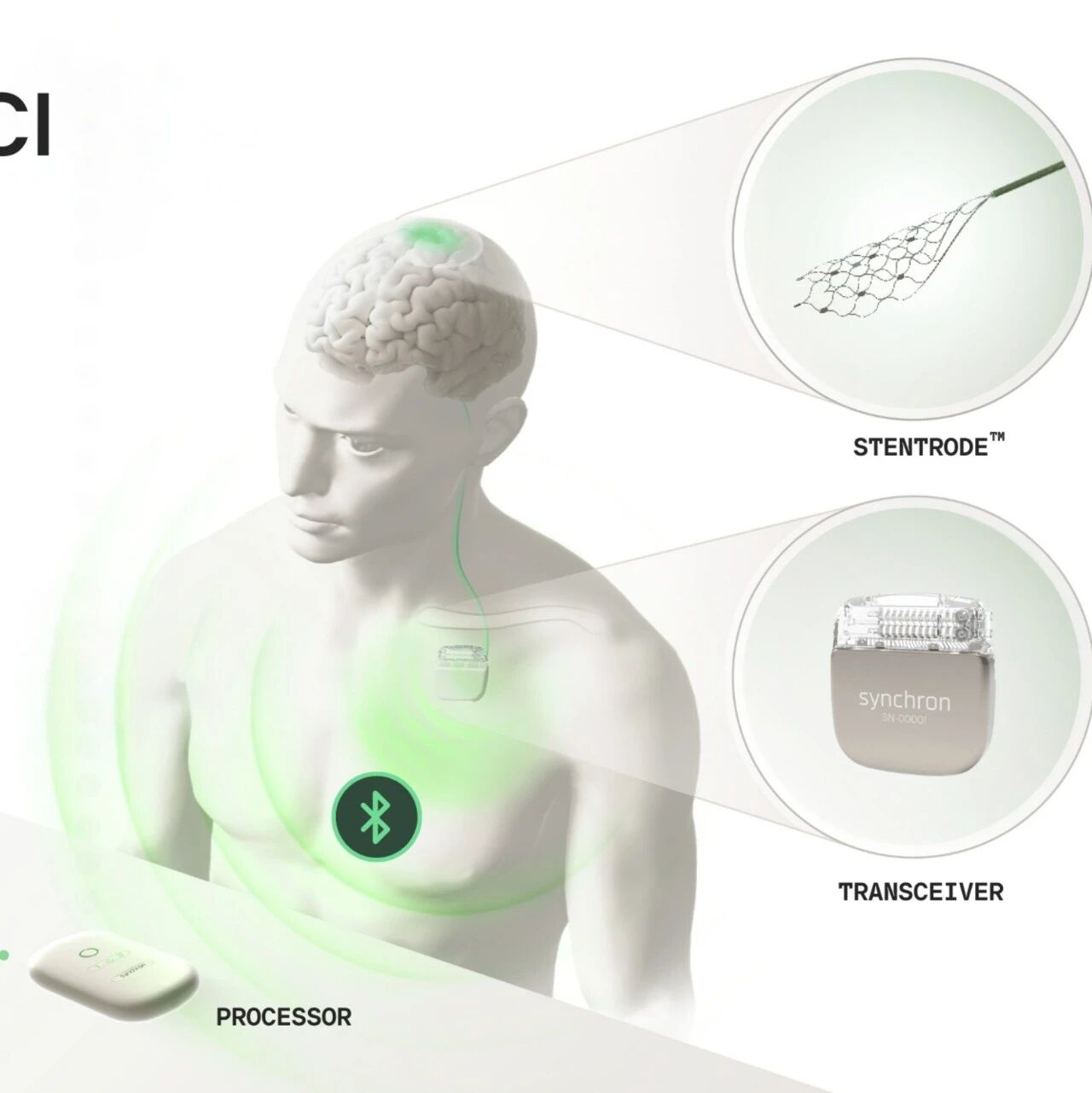
近日,美国神经科技公司 Synchron 宣布完成 2 亿美元(约合人民币14亿) D 轮融资 ,由 Double Point Ventures 领投,ARCH Ventures、Khosla Ventures、Bezos Expeditions 等多家知名机构参投。 这是脑机接口(Brain-Computer Interface,BCI)领域迄今规模最大的单轮融资之一。公司表示,本轮资金将用于加速其核心产品 Stentrode 系统 的商业化进程,包 括注册申报、制造能力建设以及下一代高通道脑接口的开发。 这一消息引发全球医疗器械界的高度关注。长期以来,BCI 技术主要停留在科研与神经康复阶段,而 Synchron 率先进入"可植入、可量产、可使用"的临床化阶段, 标志着该赛道进入实质性产业化周期。 # 公司简介 Synchron 成立于 2016 年,总部位于纽约,是 全球首批专注于 "经血管植入"脑机接口 的医疗器械公司之一。 不同于传统 BCI 需要开颅植入电极,Synchron 通过导管从颈静脉进入脑血管,将电极阵列部署在靠近运动皮层的血管壁上,实现神经信号的采集与传输。 这一非开颅路径的创新使其系 ...
脑机接口行业深度报告:脑科学产业与政策趋势共振
China Post Securities· 2025-11-14 08:35
Investment Rating - The report maintains an investment rating of "Outperform" for the brain-computer interface (BCI) industry [1] Core Insights - Continuous policy support is evident, with the Ministry of Industry and Information Technology and six other departments releasing implementation opinions to promote BCI innovation [2] - Significant technological and clinical breakthroughs have been achieved, including China's first invasive clinical trial for BCI technology [2] - The global BCI market is projected to exceed $10 billion, with a compound annual growth rate (CAGR) of over 13% from 2019 to 2023 [2] Summary by Sections What is Brain-Computer Interface? - BCI is defined as a communication system that establishes a direct connection between the brain and external devices, enabling interaction through brain wave recognition [7][10] - The technology is expected to revolutionize medical rehabilitation, assistive communication, and intelligent control [7] Why is BCI at a Critical Turning Point for Industrialization? - Policy support has intensified, with a clear roadmap for BCI standardization and development outlined by various government bodies [35][41] - The industry is expected to see significant advancements in technology and clinical applications, with a focus on creating a robust ecosystem by 2030 [35][46] Investment Recommendations - Companies to watch include Sanbo Brain Science, Zhongke Information, Entropy Technology, and Yanshan Technology, which are involved in clinical applications or product development [2]
“十五五”规划点名,科技巨头押注,脑机接口为啥火?
Guan Cha Zhe Wang· 2025-11-10 08:41
Core Insights - Brain-computer interfaces (BCIs) are emerging technologies that allow for direct communication between the brain and external devices, gaining significant attention from both domestic and international tech giants [1][3]. Industry Overview - The BCI industry is recognized in China's "14th Five-Year Plan" and is attracting investments from major players like Elon Musk and others [1]. - BCIs can be categorized into invasive, semi-invasive, and non-invasive types, each with its own advantages and disadvantages [30][31]. Current State of Research - Current understanding of the brain is still rudimentary, with researchers likening the process of decoding brain signals to deciphering ancient scripts [5][6]. - The development of BCIs is seen as a cyclical process where advancements in technology lead to better understanding of the brain, which in turn enhances BCI systems [6][7]. Company Positioning - Companies in the BCI space can be classified based on their focus on hardware, software, or a full-chain approach, with each having its own academic and technical roots [7][9]. - The company 岩思类脑 aims to develop core algorithms that serve as a foundational layer for the BCI industry, similar to how OpenAI operates in the AI space [10][11]. Data and Model Training - The company emphasizes the importance of large datasets for training AI models in the BCI field, noting that China has a significant advantage in data availability compared to other countries [14][22]. - High-quality data is crucial for effective model training, with a focus on signal-to-noise ratio and data diversity [18][19]. Technological Advancements - Recent advancements include the ability to decode speech from brain signals in patients with epilepsy, showcasing the potential for practical applications of BCIs [35][36]. - The company has also developed a non-invasive BCI application for gaming, demonstrating the technology's versatility and potential for consumer engagement [44][48]. Market Challenges - The BCI market faces challenges in product commercialization, particularly for invasive devices that require medical certification before they can be widely used [48][49]. - Non-invasive products have yet to achieve a level of functionality that encourages consumer adoption, necessitating improvements in usability [48][49]. Future Outlook - The BCI industry is expected to see significant growth in the next 3 to 5 years, with the potential for widespread consumer adoption of effective BCI devices [50]. - The competitive landscape is characterized by rapid advancements in technology and increasing investment, positioning BCIs as a critical area of focus in global tech competition [57][64].

X @Bloomberg
Bloomberg· 2025-11-06 10:09
Synchron raised $200 million to advance its work building brain implants that doctors can insert through blood vessels https://t.co/OynU8Rg0RK ...
被纳入医保的脑机接口 我们什么时候能用上?
2 1 Shi Ji Jing Ji Bao Dao· 2025-11-03 14:49
Core Insights - The concept of brain-computer interfaces (BCIs) has been around since the 1970s, but their practical application remains limited despite advancements in personal computing [2][3] - In September 2023, Zhejiang Province included "non-invasive BCI adaptation fees" in basic medical insurance, indicating the technology's potential and the push for its integration into healthcare [2][11] - Global companies, including Synchron and Neuralink, are advancing BCI applications, with claims of enabling paralyzed patients to control devices and future possibilities like consciousness uploading [4][6] Industry Development - China's BCI technology is rapidly evolving, with significant milestones such as the first invasive BCI clinical trial completed in March 2025, allowing a patient to play games using thought [7] - In September 2025, a BCI surgery for epilepsy treatment was successfully performed at Southern Medical University, showcasing the technology's clinical applications [8] - The BCI market in China is projected to grow from 3.2 billion yuan in 2024 to over 5.5 billion yuan by 2027, reflecting increasing demand and investment [9] Policy and Support - The early inclusion of BCI technology in medical insurance aims to lower barriers for patients and accelerate its practical application, laying a foundation for widespread adoption [11] - The "Implementation Opinions on Promoting the Innovative Development of the BCI Industry" set clear industry goals for 2025, emphasizing safety and reliability alongside technological advancement [12] Regional Leadership - Guangdong Province is leading in BCI development, with 80 key enterprises in the field by 2024, covering the entire industry chain from research to application [14] - The province has demonstrated strong innovation capabilities, with 360 related patents filed by 2024, ranking second nationally [15] - Guangdong's robust medical device sector, with 4,883 production enterprises, supports its BCI advancements, particularly in the second and third categories of medical devices [17][19]
被纳入医保的脑机接口,我们什么时候能用上?
2 1 Shi Ji Jing Ji Bao Dao· 2025-11-03 14:12
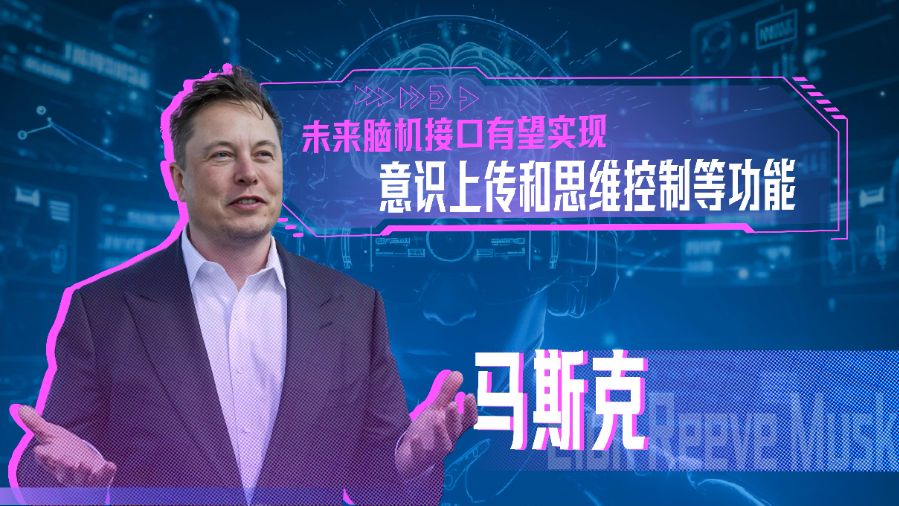
(原标题:被纳入医保的脑机接口,我们什么时候能用上?) 20世纪70年代, 个人计算机才刚刚诞生, 但事实真的是这样吗? 其实,我们与脑机接口的距离比想象的要近。 今年9月, 浙江省医保局正式将"非侵入式脑机接口适配费"纳入基本医保。 脑机接口的概念就已经被提起。 可到了2025年, 个人计算机早已走进千家万户, 脑机接口却好像依旧属于科幻小说。 为什么这项技术还未彻底普及应用, 就已经开始加入医保了? 虽然脑机接口还未走入生活, 但已经展现出足够的潜力。 全球的前沿企业, 都在推动脑机接口在临床上的应用。 美国脑机接口公司Synchron, 使瘫痪患者可以通过脑信号控制外部设备。 马斯克频繁宣传其公司Neuralink的潜力, 声称未来脑机接口有望实现意识上传和思维控制等功能。 中国的脑机接口技术, 也在蓬勃发展。 2025年3月,中国完成首例侵入式脑机接口临床试验, 一名四肢截肢的患者通过植入设备, 经过训练后用意念即可玩游戏。 2025年9月,南方医科大学珠江医院完成华南首例脑机接口治疗癫痫手术, 通过24小时监测脑电活动, 在发作前精准阻击癫痫。 中国脑机接口市场规模逐年提升, 2024年已达32亿元 ...
十五五”规划点名,十万亿级市场启幕,脑机接口升维“国家战略
Hua Xia Shi Bao· 2025-10-26 00:38
Group 1: Core Economic and Social Development Strategies - The "15th Five-Year Plan" emphasizes the construction of a modern industrial system, a strong domestic market, and coordinated regional development [1] - The plan aims to cultivate emerging and future industries, with a focus on sectors like quantum technology, bio-manufacturing, hydrogen energy, nuclear fusion, brain-machine interfaces, embodied intelligence, and 6G mobile communication [2][5] Group 2: Brain-Machine Interface (BMI) Industry Development - The BMI technology is recognized for its potential to transform economic structures and improve social welfare, with applications in medical rehabilitation and industrial manufacturing [2] - The "Implementation Opinions" issued in July 2025 will elevate the BMI industry to a national strategic level, aiming for breakthroughs in core technologies by 2027 and positioning the industry among the world's leaders by 2030 [3][5] - The BMI industry is projected to create a market scale in the hundreds of billions, generating numerous high-skilled jobs and enhancing China's competitive edge in global technology [5][6] Group 3: Policy and Market Support - The policy framework for BMI has evolved from local pilot projects to a comprehensive national strategy, fostering a collaborative environment among various government departments [3] - Local governments are responding rapidly, with initiatives like the establishment of specialized action plans and funding to support BMI innovation and development [3][4] - The integration of AI with BMI is expected to enhance the efficiency of brain signal decoding, leading to significant advancements in the industry [5][6] Group 4: Commercialization and Market Applications - Companies are exploring diverse business models in the BMI sector, including partnerships for clinical applications and consumer products, indicating a dual focus on B2B and B2C markets [6] - The BMI technology is anticipated to transition from niche applications to widespread use, aligning with China's goals for health and digital economy [6][7] - The current trajectory of BMI development in China highlights significant advancements in medical applications, particularly in areas like Parkinson's disease and mental health, supported by strong policy and market demand [6][7]