平安银行

Search documents
107股连续5日或5日以上获融资净买入
Zheng Quan Shi Bao Wang· 2026-01-21 03:24
Group 1 - The core point of the article highlights that as of January 20, a total of 107 stocks in the Shanghai and Shenzhen markets have experienced net buying through financing for five consecutive days or more [1] - The stock with the longest consecutive net buying days is Huatian Hotel, which has seen net buying for 12 consecutive trading days [1] - Other notable stocks with significant consecutive net buying days include China Merchants Bank, Ping An Bank, Focus Media, New China Life Insurance, Hongfuhuan, Kaile Shares, New Industry, and China Ping An [1]





中小微企业贷款贴息、民间投资专项担保……财政部连发五项重要政策
Sou Hu Cai Jing· 2026-01-21 03:12
Group 1 - The Ministry of Finance and other departments have released five policy documents aimed at optimizing financial support for personal consumption loans, equipment updates, private investment guarantees, service industry loans, and small and micro enterprise loans [1][9][29] - The personal consumption loan subsidy policy has been extended until December 31, 2026, with adjustments to the subsidy standards and an expanded range of supported financial institutions [4][5][6] - The equipment update loan subsidy policy includes a 1.5% subsidy on fixed asset loans for equipment updates, applicable for up to two years, and has been expanded to include various sectors such as construction, aviation, and digital technology [10][11][12] Group 2 - The private investment guarantee plan has a total quota of 500 billion yuan, to be implemented over two years, focusing on supporting small and micro enterprises in various sectors including technology upgrades and service industry enhancements [17][18] - The plan includes a risk-sharing mechanism where banks will bear at least 20% of the loan risk, while the government guarantee fund will cover up to 80% [19] - The government will also reduce guarantee fees and increase the compensation limit for the guarantee fund to enhance support for private investments [20] Group 3 - The service industry loan subsidy policy has been extended to December 31, 2026, with an increased subsidy cap of 10 million yuan per loan and a 1% annual subsidy rate [23][24] - The policy now includes additional sectors such as digital, green, and retail industries, expanding the scope of financial support [24][25] - The implementation of these policies will involve streamlined processes for fund allocation and enhanced collaboration among financial institutions and regulatory bodies [26][28]






中山证券涉诉,卷入4.9亿元纠纷
Zhong Guo Ji Jin Bao· 2026-01-20 22:28
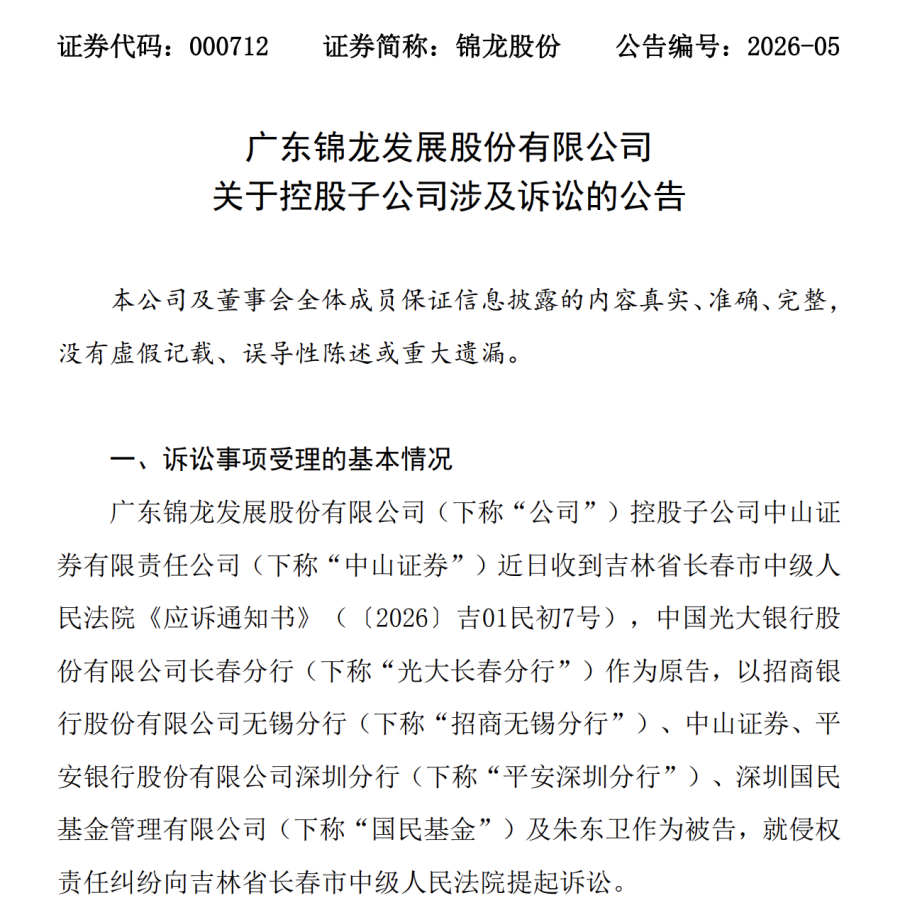
1月20日晚间,锦龙股份一纸公告揭开了中山证券的新麻烦:光大银行长春分行以原告身份发起诉讼,要求中山证券与招商银行 无锡分行、平安银行深圳分行等共计五家被告连带赔偿3.5亿元本金及1.394亿元资金占用费,涉案总金额高达4.89亿元。 中山证券并非首次涉诉。就在2025年10月,中山证券在另一起诉讼的终审判决中,被判对一笔2700万元的债务在30%范围内承担 连带赔偿责任。 "旧案"曝光 中山证券涉诉 纠纷的起因是2014年5月,招商无锡分行委托中山证券设立定向资产管理计划,要求投资3.5亿元于平安深圳分行作为受托人的委 托贷款,投资期限为2014年5月30日至2015年5月29日。授权委托中山证券代表招商无锡分行与平安深圳分行、柳河米业签订《委 托贷款合同》;明确该投资系由招商无锡分行决策,投资安全及任何风险收益均由招商无锡分行负责。 与此同时,在证券行业整体营收、利润高增长的发展态势下,中山证券却逆势掉队。财务数据显示,2025年中山证券营业收入同 比下滑29.17%,净利润更是大幅下滑88.06%。一边是诉讼纠纷缠身,另一边是业绩指标大幅下滑,中山证券正面临严峻考验。 中山证券经营承压 随后,中山证券根 ...
存款集中到期窗口开启 银行留客强化AUM考核
Zhong Guo Zheng Quan Bao· 2026-01-20 21:05
Core Insights - The high-interest deposits are set to mature starting from October 2025, with a significant amount of funds, estimated to be in the tens of trillions, facing a critical decision point in 2026 [1][2] - The current downward trend in deposit rates has led to a shift in investment strategies among different risk-averse customer segments, with over half expected to reinvest in deposits while others may explore wealth management products and capital markets [1][2] Group 1: Market Dynamics - The concentration of high-interest deposit maturities is expected to peak in the first quarter of 2026, aligning with traditional banking practices for attracting new business [1] - The estimated scale of maturing high-interest deposits this year is projected to reach tens of trillions, indicating a substantial liquidity event in the market [2] Group 2: Customer Behavior - There is a notable divergence in product selection among customer groups based on their risk tolerance, with 50%-60% of maturing deposits likely to be reinvested in deposit products [2][3] - Customers prioritizing safety over yield are likely to convert maturing fixed deposits into demand deposits before potentially reinvesting in fixed deposits again [2] Group 3: Industry Response - Banks are undergoing a systemic transformation in response to the pressures of deposit outflows, focusing on product innovation and marketing strategies to retain customers [3][4] - The shift in assessment metrics from solely deposit volume to a broader asset management perspective encourages banks to prioritize comprehensive customer asset management [4] - Financial institutions are developing deposit-replacement products that offer better returns than traditional deposits, catering to clients willing to accept slight fluctuations in net value [4]
圆信永丰兴瑞6个月定期开放债券型发起式证券投资基金2026年基金定期开放申购、赎回、转换业务公告
Shang Hai Zheng Quan Bao· 2026-01-20 18:31
公告送出日期:2026年1月21日 1 公告基本信息 ■ 2申购、赎回(转换)业务的办理时间 登录新浪财经APP 搜索【信披】查看更多考评等级 本基金的申购开放期:2026年1月22 日-2026年1月28日,赎回开放期:2026年1月22 日-2026年1月28 日,转换转入开放期:2026年1月22 日-2026年1月28日,转换转出开放期:2026年1月22 日-2026年1月 28日。下一个封闭期自2026年1月29日起至 2026年7月28日止。 本基金办理申购、赎回、转换的开放日为开放期内上海证券交易所和深圳证券交易所交易日(本公司公 告暂停申购、赎回时除外)。 在开放期内,投资人在基金合同约定之外的日期和时间提出申购、赎回或转换申请且登记机构确认接受 的,其基金份额申购、赎回价格为该开放期下一开放日基金份额申购、赎回的价格;但若投资人在开放 期最后一日业务办理时间结束之后提出申购、赎回或者转换申请的,视为无效申请。 3 申购业务 3.1 申购金额限制 投资者通过基金管理人的直销柜台申购本基金份额,单个基金交易账户每次申购最低金额为人民币1元 (含申购费)。 基金管理人可在法律法规允许的情况下,调 ...
招行、浦发成功将卫星送上太空!通过遥感技术,银行可远程实现对楼盘贷后风险的实时监测
Mei Ri Jing Ji Xin Wen· 2026-01-20 16:13
Core Viewpoint - Multiple banks have recently launched satellites to enhance their risk management capabilities through satellite remote sensing technology, which allows for real-time monitoring of loan projects and collateral status, addressing the limitations of traditional inspection methods [3][5][6]. Group 1: Satellite Launches - On January 16, 2026, CMB's "Zhaoyin Jinkui" and SPDB's "Puyin Shuzhi" satellites were successfully launched, part of China's first global low Earth orbit satellite IoT constellation, "Tianqi Constellation" [1][3]. - This marks the third satellite launched by CMB, following "Zhaoyin 1" and "Zhaoyin 2" launched in December 2024 and March 2025, respectively [6]. Group 2: Technological Integration - The "Zhaoyin Jinkui" satellite is a low Earth orbit narrowband IoT satellite, complementing two previously launched broadband satellites, forming a collaborative communication matrix for CMB [5]. - CMB's remote sensing technology is integrated into its financial risk control system, achieving over 95% accuracy in monitoring construction progress of mortgage properties nationwide [5]. Group 3: Industry Trends - SPDB's "Puyin Shuzhi" satellite is part of the "Tianqi Constellation" and aims to enhance the bank's smart risk control and comprehensive service system, especially in extreme scenarios like natural disasters [8]. - The adoption of satellite remote sensing technology in the banking sector is becoming more widespread, with the costs of network deployment decreasing due to the ongoing commercial space boom [8].

多家银行卫星,近期集中上天
3 6 Ke· 2026-01-20 13:43
Core Viewpoint - The recent surge in commercial aerospace has prompted banks to actively participate in satellite launches to enhance their risk control capabilities, utilizing satellite remote sensing technology for real-time monitoring of loan projects and collateral status [1][2]. Group 1: Satellite Launches by Banks - Multiple leading banks, including China Merchants Bank and Shanghai Pudong Development Bank, have successfully launched satellites, with the latest being "Zhaoyin Jinkui" and "Puyin Shuzhi" satellites, part of China's first global low-orbit satellite IoT constellation, "Tianqi Constellation" [2][3]. - The satellites are aimed at improving smart risk control and comprehensive service systems, especially in extreme scenarios like natural disasters, enabling rapid recovery and provision of essential financial services [2][3]. Group 2: Applications of Satellite Technology - The satellite technology is being utilized for post-loan monitoring, with China Merchants Bank achieving over 95% accuracy in monitoring construction progress of mortgage properties through high-resolution satellite imagery [2][3]. - The integration of satellite data is expected to enhance risk management and provide more precise financial products and services to clients [3]. Group 3: Industry Trends and Future Outlook - The use of satellite remote sensing technology is becoming an integral part of banks' digital risk control systems, with major banks like ICBC and Bank of China highlighting its role in enhancing credit risk management in their 2025 semi-annual reports [4]. - Smaller banks are also beginning to adopt satellite technology, with institutions like Shanghai Rural Commercial Bank integrating satellite remote sensing with big data and AI to improve risk control capabilities [5]. - As the costs of satellite launches and data procurement decrease, the penetration of satellite remote sensing technology in the banking sector is expected to increase, benefiting larger banks with complex business scenarios [5].
多家银行卫星,近期集中上天
财联社· 2026-01-20 11:47
Core Viewpoint - The recent surge in commercial aerospace has prompted banks to actively participate in satellite launches to enhance their risk control capabilities, utilizing satellite remote sensing technology for real-time monitoring of loan projects and collateral status [1][2]. Group 1: Satellite Launches by Banks - Multiple leading banks, including China Merchants Bank and Shanghai Pudong Development Bank, have successfully launched satellites as part of the "Tianqi Constellation," China's first global low-orbit satellite IoT network [2]. - The satellites are aimed at improving smart risk control and comprehensive service systems, particularly in extreme scenarios like natural disasters, enabling rapid recovery and provision of essential financial services [2][3]. - China Merchants Bank's "Zhaoyin Jinkui" satellite is designed for post-loan monitoring, achieving over 95% accuracy in construction progress monitoring through high-resolution satellite imagery [2][3]. Group 2: Industry Trends and Applications - The use of satellite remote sensing technology is becoming increasingly common among banks, with several major banks already implementing it to optimize their business and risk management [3][4]. - The integration of satellite data is seen as a significant upgrade in risk control methods, particularly beneficial in areas like rural revitalization, green finance, and supply chain finance, addressing information asymmetry and reducing credit risks [4]. - Major banks, such as ICBC and Bank of China, have reported plans to enhance their credit risk management through satellite technology in their 2025 semi-annual reports [4]. Group 3: Future Prospects and Challenges - Smaller regional banks are also beginning to engage in satellite technology, with institutions like Shanghai Rural Commercial Bank enhancing their smart supply chain platforms through the integration of satellite remote sensing and other technologies [5]. - Analysts suggest that while the costs associated with satellite launches and data integration are currently high, larger banks are better positioned to adopt these technologies, whereas smaller banks may need to collaborate or procure data services [5]. - As the deployment of low-orbit satellite networks accelerates and data costs decrease, the penetration of satellite remote sensing technology in the banking sector is expected to increase [5].

消费贷贴息加码:增信用卡分期、城商行等机构
Xin Lang Cai Jing· 2026-01-20 10:41
Core Viewpoint - The Chinese government has extended the personal consumption loan interest subsidy policy until the end of 2026, including credit card installment payments in the subsidy scope, to stimulate domestic consumption and support economic growth [3][12][13]. Policy Extension and Scope Expansion - The personal consumption loan interest subsidy policy's deadline has been extended from August 31, 2026, to December 31, 2026 [4][14]. - Credit card installment payments are now included in the subsidy, with an annual interest subsidy rate of 1% [5][14]. - The policy aims to enhance consumer spending and support the healthy development of credit card businesses [5][14]. Increase in Eligible Institutions and Scenarios - The policy has expanded the range of eligible institutions to include city commercial banks rated 3A and above, rural cooperative financial institutions, foreign banks, consumer finance companies, and auto finance companies [6][16]. - The central and provincial finances will cover 90% and 10% of the subsidy funds, respectively, maintaining the previous funding ratio [6][16]. - The policy encourages innovation in consumer credit products and aims to create more financial support scenarios for consumption, enhancing the coverage and activity of service consumption [8][18]. Impact on Consumer Behavior and Market Dynamics - The subsidy policy is expected to significantly lower the actual costs for consumers, thereby boosting their willingness to spend [5][10]. - The policy's implementation has already led to a substantial increase in consumer loan applications and disbursements, indicating strong market demand [17]. - The removal of previous limits on subsidy amounts is anticipated to provide consumers with greater flexibility and choice, potentially leading to increased consumption [19][20]. Recommendations for Implementation - To optimize the implementation of the subsidy policy, it is suggested to enhance the precision of policy design, improve execution efficiency, and ensure better coordination among related policies [20]. - There is a call for dynamic adjustments to the supported industries and consumption areas based on local consumption trends and industrial planning [20].

平安银行多家分行行长调整
Xin Lang Cai Jing· 2026-01-20 09:44
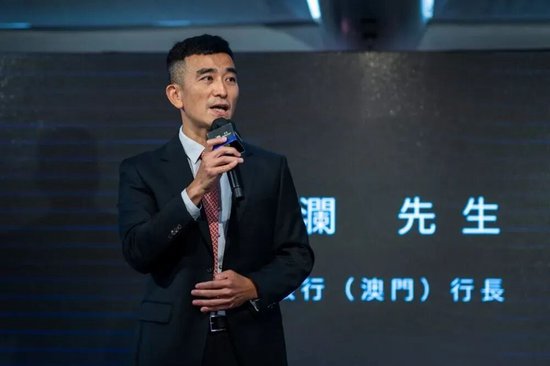
Group 1 - The article summarizes the recent appointments of over ten branch presidents and vice presidents at Ping An Bank as the year comes to a close [1][30] - Wang Lan, previously the president of Ant Bank (Macau), has joined Ping An Bank as the president of the Hong Kong branch, bringing over 20 years of experience in finance and digital banking [3][32] - Wang Jun, the president of the Jinan branch, has retired after serving as the branch president since 2022 [5][34] - Li Zhongwen has been appointed as the president of the Jinan branch, previously serving as the president of the Nanjing branch [7][36] - Wang Jianfei has been appointed as the president of the Nanjing branch, previously serving as the president of the Chengdu branch [9][38] - Zhang Xinqiang has been appointed as the president of the Chengdu branch, previously serving as the president of the Changchun branch [11][40] - Huang Wei, former deputy general manager of the bank's asset custody department, has been appointed as the president of the Changchun branch [13][42] Group 2 - As of June 30, 2025, Ping An Bank has a total of 110 branches (including the Hong Kong branch) and a total of 1,134 operating institutions [28][57] - The bank's total assets amount to RMB 2,203.525 billion, with the Shenzhen branch holding RMB 783.117 billion in assets [28][57] - The bank employs a total of 40,761 staff members, with 32,047 in business roles, 6,454 in technical roles, and 2,260 in management support [29][58] - Ping An Bank has established three development pathways for talent, focusing on management, professional, and frontline roles, and has implemented a talent cultivation strategy [29][58] - The bank emphasizes the development of composite talents and encourages cross-departmental rotations to build a team with diverse expertise [29][58]