重庆银行

Search documents
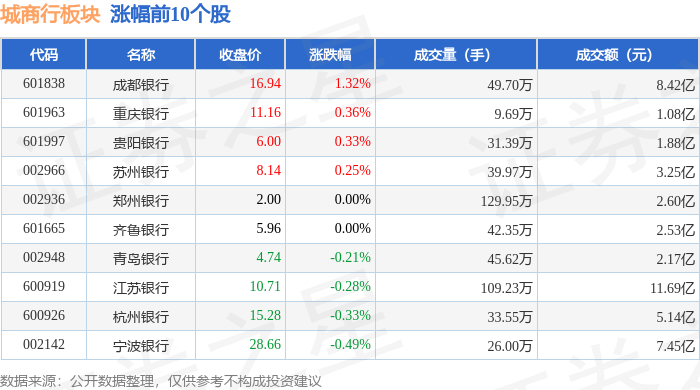
城商行板块11月24日跌0.54%,上海银行领跌,主力资金净流入5649.9万元
Zheng Xing Xing Ye Ri Bao· 2025-11-24 09:12
Core Viewpoint - The city commercial bank sector experienced a decline of 0.54% on November 24, with Shanghai Bank leading the drop, while the overall market indices showed slight increases [1][2]. Group 1: Market Performance - The Shanghai Composite Index closed at 3836.77, up 0.05%, and the Shenzhen Component Index closed at 12585.08, up 0.37% [1]. - The city commercial bank sector's individual stock performance varied, with Chengdu Bank rising by 1.32% to a closing price of 16.94, while Shanghai Bank fell by 1.70% to 9.84 [1][2]. Group 2: Trading Volume and Turnover - Chengdu Bank had a trading volume of 497,000 shares and a turnover of 842 million yuan, while Shanghai Bank had a trading volume of 655,100 shares and a turnover of 649 million yuan [1][2]. - The overall net inflow of funds in the city commercial bank sector was 56.49 million yuan, with retail investors showing a net outflow of 70.16 million yuan [2][3]. Group 3: Fund Flow Analysis - Chengdu Bank saw a net inflow of 97.44 million yuan from major funds, while retail investors had a net outflow of 51.42 million yuan [3]. - Suzhou Bank experienced a net inflow of 40.11 million yuan from major funds, but a net outflow of 32.86 million yuan from retail investors [3].


西部证券晨会纪要-20251124
Western Securities· 2025-11-24 02:57
Group 1 - The macroeconomic outlook for 2026 emphasizes a shift towards "革故鼎新" (reform and innovation), indicating a notable recovery in nominal economic growth and a rebalancing of the economy towards domestic demand [2][6][8] - The banking sector is expected to see a stabilization in performance with a focus on the differences in asset-liability structures, suggesting a strategy of selecting low-risk quality stocks [3][20][21] - The AI industry is highlighted as a significant macroeconomic influencer, with discussions around its potential bubble and the implications of its financialization [3][13][15] Group 2 - The computer industry report discusses the full-stack AI capability chain established by Alibaba and Google, focusing on their respective strategies in chip development, cloud services, and application integration [4][24][25] - Alibaba's strategy includes a shift towards consumer markets while maintaining a strong enterprise focus, leveraging its cloud infrastructure and self-developed chips [24][26][27] - Google's advancements in AI are driven by its proprietary TPU chips and the Gemini model, which enhance its competitive edge in the AI application space [25][26][27] Group 3 - The banking sector's performance is projected to stabilize with a focus on dividend expansion and the identification of quality banks that align with policy directions [20][21][22] - The report anticipates a steady growth in bank earnings, with a particular emphasis on the recovery of net interest margins and non-interest income [22][23] - The overall banking landscape is expected to benefit from a supportive macroeconomic environment, with government investments and policies aimed at sustaining economic growth [20][21] Group 4 - The report on the electronic sector highlights the growth of companies like Longxin Technology and Zhongrong Electric, focusing on their advancements in AI-related products and market expansion [38][42] - The performance of these companies is driven by increasing demand in data centers and automotive electronics, with significant revenue growth reported [35][42] - Investment recommendations suggest a positive outlook for these companies based on their innovative product offerings and market positioning [40][44]
银行周报(2025/11/17-2025/11/21):多家银行股东及管理层踊跃增持-20251123



GUOTAI HAITONG SECURITIES· 2025-11-23 12:42
Investment Rating - The report assigns an "Accumulate" rating for the banking sector [5]. Core Insights - Since the beginning of the year, many banks' shareholders and executives have actively increased their holdings, ranking first among 31 industries in terms of the amount of increase. Notable banks with significant increases include Nanjing Bank, Suzhou Bank, Everbright Bank, Shanghai Pudong Development Bank, and Chengdu Bank [2][5]. - The net amount of shareholding changes in the banking sector is approximately 9.03 billion, with an increase of about 12.63 billion, ranking second only to the transportation industry. The decrease amounts to about 3.60 billion [5]. - More than half of the banks have disclosed plans for major shareholders or executives to increase their holdings, with the top three banks in terms of increased amounts being Nanjing Bank (7.38 billion), Suzhou Bank (1.74 billion), and Everbright Bank (1.24 billion) [5]. Summary by Sections Related Reports - The report references several related reports on banking, including topics such as mid-term dividend acceleration and credit issuance tracking [4]. Industry and Company Dynamics Tracking Major News - The People's Bank of China announced the LPR rates for one year and five years remain unchanged at 3.0% and 3.5%, respectively [11]. - Recent surveys indicate that operating loan rates have dropped significantly, with some banks offering rates below 2.5% [11]. Major Announcements - Wuxi Bank plans to implement a mid-term dividend of 0.11 yuan per share, totaling 241 million [12]. - Nanjing Bank's major shareholder, France's BNP Paribas, increased its holdings by 128 million shares, representing 1.04% of the total share capital [12]. Weekly Data Tracking - During the period from November 17 to November 21, the banking sector experienced a decline of 0.87%, outperforming the CSI 300 index by 2.90 percentage points [5][14]. - The average interest rate for the six-month national large banks and joint-stock banks increased by 7 basis points to 0.68% [5].
大消费大跳水,医疗、科技、银行紧随其后
Ge Long Hui· 2025-11-23 04:37
银行也没能幸免,截至收盘下跌1.85%。其中重庆农村商业银行大跌4.43%,光大银行、重庆银行、邮 储银行、民生银行等多股跌幅均在3%上方。 内容只是个人观点,仅供参考,不作为投资依据!欢迎关注交流,互相学习、共同探讨! 大消费低开低走后全天弱势,截至收盘大跌3.36%。其中京东健康大跌8.6%,金沙江中国、美高梅、康 方生物、信达生物、药明生物等多股跌幅均在5%上方。 恒生医疗低开低走,盘中虽有反弹,但最终还是无功而返,截至收盘下跌3.02%。其中三生制药大跌 9.44%,百济神州、药明康德、石药集团等超10只个股跌幅在4%上方。 开盘后执行跳水,随后全天震荡下行,截至收盘恒生指数2.38%。大消费跌幅居前,恒生医疗、互联 网、恒生科技、银行等紧随其后。 ...

超2600亿元!上市银行中期分红再加码
Guo Ji Jin Rong Bao· 2025-11-21 14:01
Core Viewpoint - The A-share listed banks in China are accelerating the implementation of mid-term dividend distributions, with over 26 banks already announcing plans totaling more than 260 billion yuan, indicating a trend towards increased shareholder returns in a stable macroeconomic environment [1][4][5]. Group 1: Dividend Distribution Progress - As of November 21, 2023, 13 banks have released their mid-term dividend distribution announcements, with major banks like Citic Bank and Wuxi Bank set to complete cash dividend distributions soon [2]. - The total mid-term dividend amount for A-share listed banks in 2024 was reported at 257.7 billion yuan, with 23 banks participating, showing a significant increase compared to the previous year [4]. - The six major state-owned banks are expected to distribute a total of 204.7 billion yuan, with each bank's dividend ratio exceeding 30% [4]. Group 2: Factors Supporting Dividend Increases - The current stable macroeconomic environment, improved operational capabilities of banks, and active market capital inflows are seen as strong support for maintaining or even increasing mid-term dividends in the coming years [5][6]. - The regulatory push for companies to enhance investor returns is also contributing to the trend of higher dividend payouts, which is expected to boost market confidence and the attractiveness of bank stocks [5]. Group 3: Individual Bank Announcements - Everbright Bank has approved a mid-term profit distribution plan, proposing a cash dividend of 1.05 yuan per 10 shares, totaling 6.204 billion yuan, which represents 25.2% of its net profit attributable to shareholders [3]. - The announcement from the Bank of Communications indicates a cash dividend of 1.563 yuan per 10 shares, amounting to 13.811 billion yuan, which is 30% of its net profit attributable to the parent company's shareholders [2].
全国首家万亿级“A+H”股上市城商行,重庆银行如何成长与破局?
Xin Lang Cai Jing· 2025-11-21 14:00
Core Viewpoint - Chongqing Bank's recent equity changes reflect the optimization reform requirements from the Chongqing State-owned Assets Supervision and Administration Commission, with significant implications for its long-term strategic layout and brand development in the western financial sector [4][8]. Group 1: Equity Changes - On November 14, Chongqing Bank announced an equity change, with its largest shareholder, Chongqing Yufu Capital, reducing its stake from 23.45% to 21.93% following a series of announcements in August [4][6]. - The bank's stock price has shown a positive trend, with a year-to-date increase of 24.9%, closing at 11.12 yuan per share as of November 21 [10]. - The bank's recent equity adjustments are part of a broader trend of resource optimization among local state-owned enterprises in the financial sector [8]. Group 2: Financial Performance - As of September 30, 2025, Chongqing Bank's total assets reached 1,022.75 billion yuan, marking a 19.39% increase from the end of 2024 [11]. - The bank reported a revenue of 11.74 billion yuan and a net profit of 4.879 billion yuan for the third quarter of 2025, reflecting year-on-year growth of 10.4% and 10.19%, respectively [5][11]. - However, the bank faces challenges in its intermediary business, with net commission income decreasing by 27.6% year-on-year [11][13]. Group 3: Capital Adequacy - The bank's capital adequacy ratios have shown a decline, with the core tier one capital adequacy ratio dropping to 8.57%, approaching regulatory limits [14]. - The bank's capital structure has been under pressure, with a need for capital replenishment highlighted by the recent performance metrics [15]. Group 4: Regulatory Issues - Chongqing Bank was fined 2.2 million yuan for internal control and compliance issues, including inadequate loan due diligence and imprudent investment practices [15][20]. - The bank's non-performing loan ratio was reported at 1.14% as of the third quarter, with specific segments, such as retail credit, showing higher delinquency rates [17][19].
银行股再“逆袭”,走强并非偶然丨每日研选
Shang Hai Zheng Quan Bao· 2025-11-21 01:17
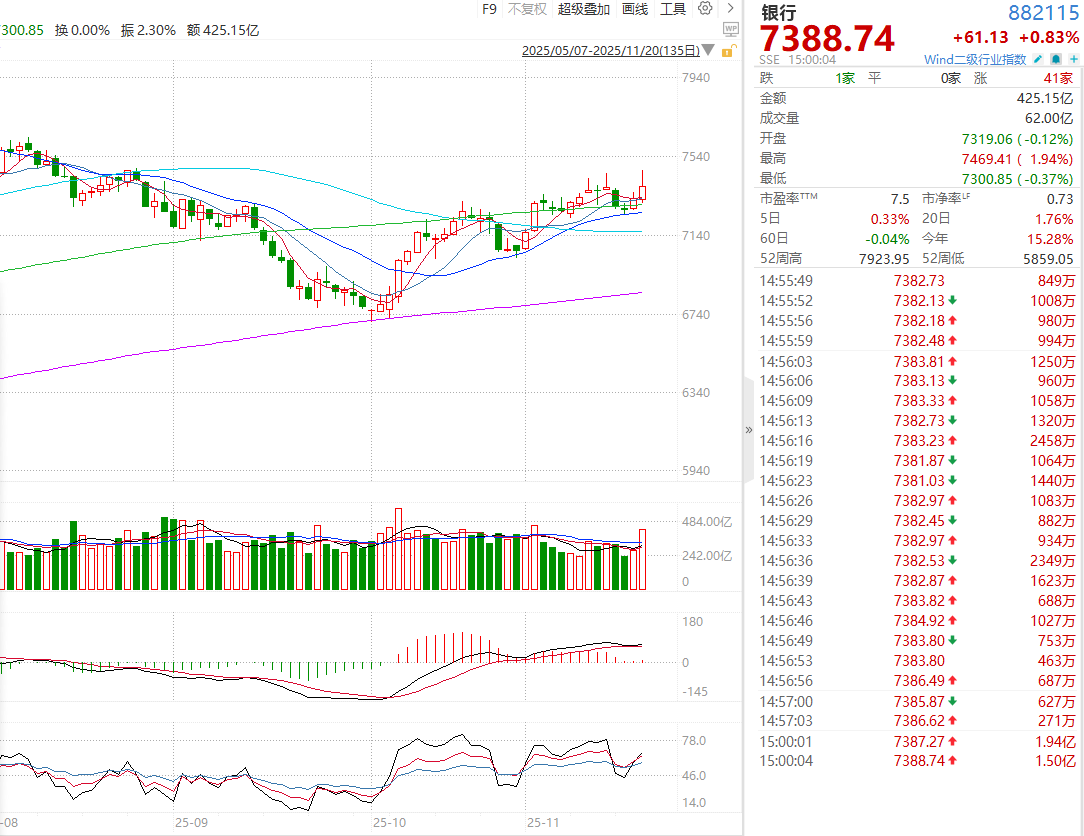
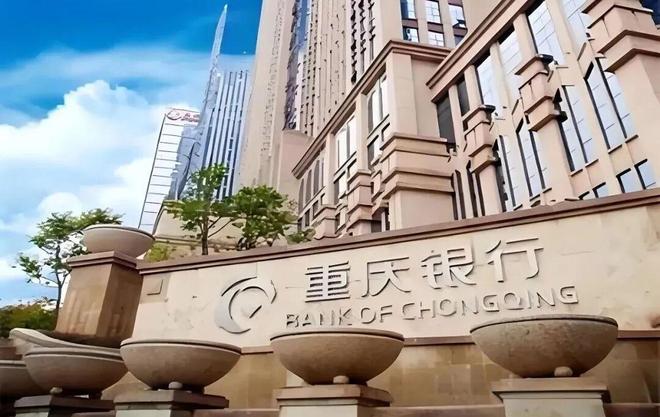
Core Viewpoint - The banking sector is experiencing a significant inflow of funds, indicating a potential new cycle of stable profitability, driven by a combination of favorable policies, improving performance, and changing market conditions [1][2][3]. Group 1: Market Performance - On November 20, the banking sector saw a net inflow of 2.16 billion yuan, leading all sectors in the Shenwan first-level industry classification [1]. - The overall trading volume for banking stocks reached 42.51 billion yuan, with main funds flowing in at 23.30 billion yuan and flowing out at 21.14 billion yuan [1]. - High dividend yields in the banking sector are attracting funds as a reliable "safe haven" amid market volatility [1]. Group 2: Policy Environment - The central bank aims to maintain relatively loose social financing conditions and strengthen the execution and transmission of monetary policy [2]. - There is an expectation of a reasonable slowdown in loan growth due to structural changes in social financing and economic development [2]. - Structural monetary policy tools are being implemented to support key areas of the economy, enhancing the banking sector's ability to operate steadily [2]. Group 3: Performance Improvement - By Q3 2025, commercial banks' net profit increased by 2% year-on-year, with large commercial banks and city commercial banks seeing profit growth of 4% and 9%, respectively [2]. - The optimization of credit structure and consumer policy support are expected to further improve banks' asset quality and profitability [2]. Group 4: Future Outlook - Analysts believe the banking sector is entering a new cycle of stable profitability, with long-term capital still actively entering the market [3]. - A favorable macro environment, including potential improvements in PPI and long-term interest rates, could enhance the banking sector's profitability [3]. - The strategy of combining leading banks with smaller banks is expected to elevate valuations, with specific banks like Industrial Bank and CITIC Bank showing potential for price elasticity [3]. Group 5: Valuation and Investment Appeal - The banking sector's valuation remains low historically, making it attractive for medium to long-term investments [4]. - High dividend assets represented by state-owned banks offer significant value compared to risk-free rates [4]. - Recommended stocks include CITIC Bank, Construction Bank, Agricultural Bank, and others, highlighting their investment appeal [4].


中国银行股价创历史新高,市净率仍未修复
2 1 Shi Ji Jing Ji Bao Dao· 2025-11-21 00:31
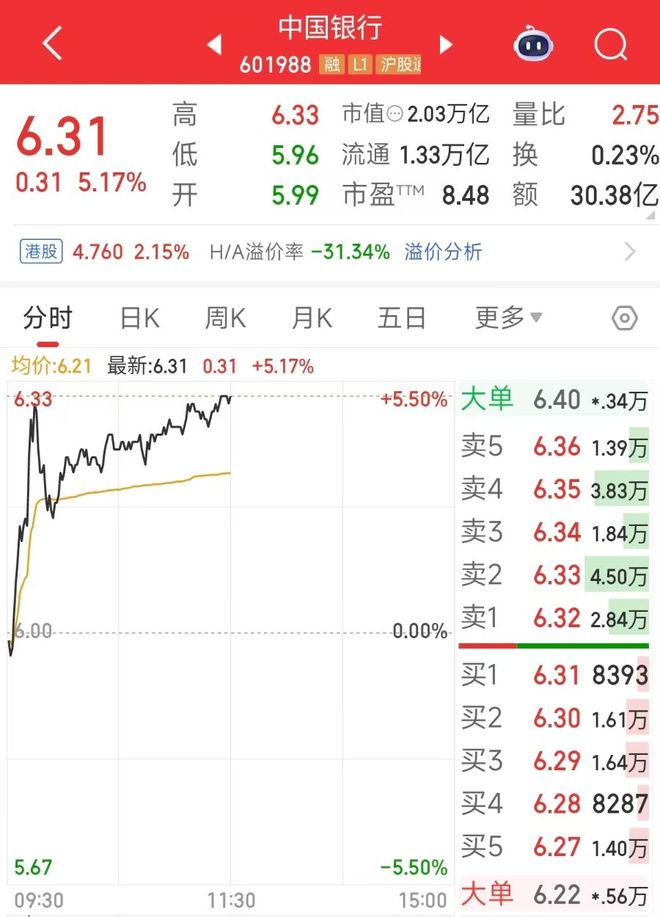
Group 1 - The banking sector experienced significant movement on November 20, with China Bank (601988.SH) reaching a historical high of 6.33 CNY per share, while Construction Bank (601939.SH) rose by 4.73% and Postal Savings Bank (601658.SH) increased by 3.84%, leading to a 1.93% rise in the banking index (881155.TI) [1] - As of the midday close, China Bank's market-to-book ratio was 0.76, indicating that it has not yet recovered to above 1, with only Agricultural Bank and China Merchants Bank among 42 A-share listed banks having a market-to-book ratio greater than 1, reflecting investor skepticism about the banks' book values [3] Group 2 - Tianfeng Securities noted that in a low interest rate environment, the divergence between loan growth and bond investment growth in banks' asset structures may become more pronounced, suggesting a reversal in the competitive landscape of the banking system [3] - Open Source Securities indicated that bond market interest rates may have reached a favorable allocation point for state-owned banks, predicting significant bond purchasing activity in Q4, while emphasizing that bank valuations remain historically low and suggesting an increase in bank sector allocations [3] - The recommendation includes allocating to large state-owned banks like Agricultural Bank and Industrial and Commercial Bank as core holdings, while also suggesting core allocations to leading comprehensive banks such as China Merchants Bank, CITIC Bank, and Industrial Bank, with flexible allocations to Jiangsu Bank, Chongqing Bank, and Chongqing Rural Commercial Bank [3]

中国银行创新高,保险资金为何偏爱银行股?
Jiang Nan Shi Bao· 2025-11-20 09:24
Core Viewpoint - The banking sector is gaining attention in the capital market due to a combination of declining interest rates, policy support, and low valuations, leading to increased investment from long-term funds like insurance capital [1][2]. Group 1: Reasons for Insurance Capital Favoring Bank Stocks - Insurance capital seeks stable and reliable assets due to a mismatch in the average duration of liabilities (over 12 years) and assets (approximately 6 years), resulting in over 2 trillion yuan needing investment annually [1]. - Bank stocks are attractive due to their high dividend yields, low valuations, and low volatility, with an average dividend yield of 3.86%, significantly higher than the 10-year government bond yield of 1.82% as of November 19, 2025 [1][2]. Group 2: Valuation and Stability of the Banking Sector - The banking sector's price-to-book ratio is at 0.63, indicating extreme low valuation and providing a safety cushion [2]. - The banking sector has shown a volatility of only 14.90% over the past three years, which is significantly lower than the 24.80% volatility of the CSI 300 index, making it suitable for long-term holding as a core asset [2]. Group 3: Impact of IFRS 9 on Insurance Companies - The implementation of IFRS 9 accounting standards requires insurance companies to estimate and recognize expected credit losses at the initial recognition of assets, affecting profits even before actual losses occur [2]. - This new standard encourages insurance companies to classify more equity investments as FVOCI (Fair Value Through Other Comprehensive Income), which helps to isolate short-term market fluctuations from profit statements, making bank stocks a suitable choice for long-term holding [2]. Group 4: Preferred Bank Stocks Among Insurance Capital - Insurance capital shows a preference for state-owned banks like Industrial and Commercial Bank of China and China Construction Bank due to their stable dividends and strong liquidity [3]. - Quality joint-stock banks such as China Merchants Bank and Industrial Bank are favored for their robust profitability and potential for valuation recovery [3]. - High-growth regional banks like Chengdu Bank and Suzhou Bank are also attractive due to their high ROE and asset quality, indicating potential for price appreciation [3]. - Hong Kong-listed bank stocks, such as CITIC Bank and Chongqing Bank, are appealing due to higher dividend yields and more attractive valuations [3]. Group 5: Implications for Ordinary Investors - For ordinary investors, bank stocks offer a combination of high dividends and low valuations, providing defensive characteristics and cash flow returns in the current market environment [5]. - As market trends shift towards stable returns, bank stocks can play a crucial role in balancing risk and securing stable dividends within an investment portfolio [5].

银行股年末行情可期,高股息成避风港
Huan Qiu Wang· 2025-11-20 08:57
Core Viewpoint - The strong performance of bank stocks in China is supported by improving fundamentals, with significant increases in stock prices and market capitalization, indicating investor confidence in the sector [1][3]. Group 1: Stock Performance - On November 20, Chinese bank stocks rose, with China Bank's stock price increasing by 4%, reaching a historical high and a total market capitalization of 1.84 trillion yuan [1]. - The banking sector index has seen a cumulative increase of 7.15% since the National Day holiday, with several banks, including Chongqing Bank and Agricultural Bank, experiencing over 20% growth during this period [1]. Group 2: Financial Performance - In the third quarter, 42 banks reported a total net profit attributable to shareholders of 1.68 trillion yuan, a year-on-year increase of 1.2%, with a 2.81% growth in the third quarter alone, reflecting steady improvement in profitability [3]. - High dividend yields are a key attraction for investors, with 34 out of 42 banks having a dividend yield exceeding 3%, and 13 banks exceeding 5%, while the median dividend yield stands at 4.28% [3]. Group 3: Shareholder Activity - Significant shareholder buybacks have provided strong support for bank stock performance, with over 10.7 billion yuan in buybacks this year, leading the industry [4]. - Major shareholders have expressed confidence in the future growth prospects and long-term investment value of banks, with buybacks serving as a means to expand business scale and supplement capital [4]. Group 4: Market Trends and Outlook - Historical data indicates a 70% probability of absolute returns for bank stocks in November and December, with an 80% probability in January, suggesting a favorable seasonal trend for bank investments [4]. - In the current low-interest-rate environment, high-dividend bank stocks are seen as a safe haven for investors, especially as speculative trading decreases [4]. Group 5: Challenges Facing the Industry - The banking sector faces challenges, including a net interest margin of only 1.42% and a non-performing loan ratio of 1.52%, indicating potential profitability pressures if trends do not reverse [5]. - The investment focus is shifting from growth in scale to risk management, asset quality, and stable profitability, necessitating banks to enhance service efficiency and embrace digital transformation to remain competitive [5].